






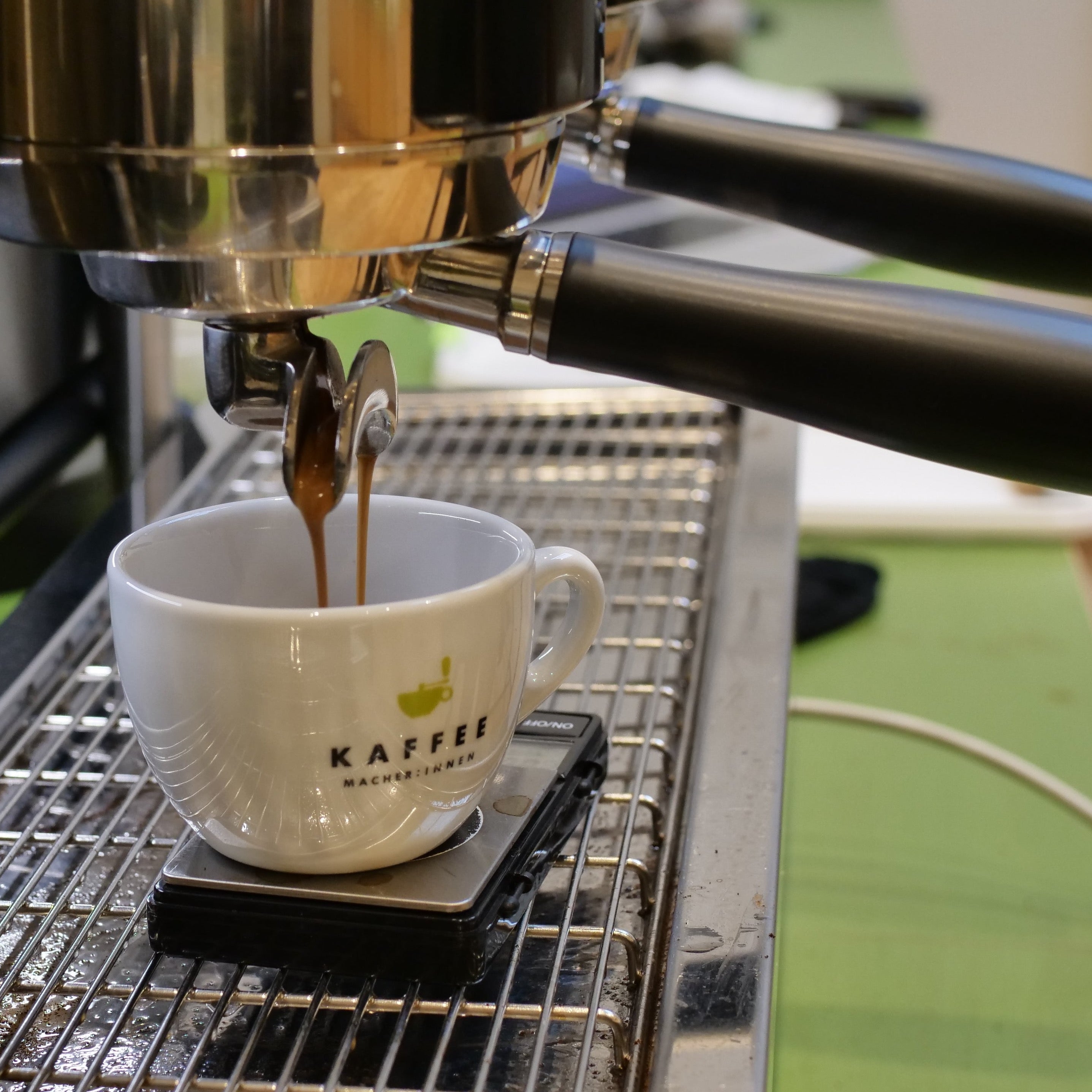

Making good espresso at home is not about the machine. It's about six consistent steps and an espresso recipe you can stick to.
In this article, we'll walk through the espresso preparation process step by step: How much coffee goes in the basket? How do you find the right grind size? What measures should you take if the espresso tastes too bitter or too sour?
What I'm summing up in this guide can be applied to any espresso machine. We're using the DeLonghi Dedica and a single-dosing grinder, the DF54, as examples. In terms of price-to-performance, this is a great beginner setup. But you can adapt this process to any espresso machine and almost any grinder and get great espresso results.
My name is Benjamin Hohlmann. I was a Swiss and German coffee master in various disciplines and founded a coffee company with a roastery, cafés, and a farm. For many years, I've been sharing everything I've learned about espresso in articles and videos. Welcome to my guide for making espresso.
The standard recipe at a glance
This produces 30 to 45 grams of espresso in the cup. The grind is fine — so fine that the ground coffee forms light clumps. More on that in a moment.
This recipe is our starting point. Once you're confident in preparing and repeating this recipe building block, you'll start breaking out of the recipe corridor for making extraordinary coffees. As a basic espresso recipe, it will help you gain confidence and reach your goal quickly. It works with most coffees and almost every espresso machine.
The espresso recipe: Understanding brew ratio
An espresso recipe consists of three numbers: the amount of coffee you're using. The amount of beverage — how much espresso lands in the cup by weight. The third factor is the brew time, the time from pressing the button or pulling the lever until you stop the shot — we've documented here when the brew time really starts. In coffee terminology, this is called "in," "out," and extraction time.
The ratio between "in" and "out" is called the brew ratio or beverage ratio. It determines the intensity of the espresso. On the palate, we perceive intensity as texture: the espresso is either syrupy and thick in the cup or feels lighter and more juicy.
| Ratio | At 18 g coffee | Character | Best for |
|---|---|---|---|
| 1:2 | 36 g | strong, dense, lots of texture | darker roasts, classic espresso |
| 1:2.5 | 45 g | balanced, sweeter | our standard for most coffees |
| 1:3 | 54 g | lighter, clearer, more liquid | switchers from automatic or capsule machines |
The classic espresso definition for many is 1:2. We prefer to work a bit longer.
"Every coffee has a point where it's at its sweetest and most balanced. With a bit more water in the ratio, we hit this so-called sweet spot better."
There's also a personal reason: these very short, almost ristretto-style espressos are often too heavy with complex coffees. They're too strong, too concentrated, and don't reach balance. That's why our standard recipe is 1:2.5.
If the espresso is too strong for you, don't increase the coffee amount. That's the most common mistake we see. More coffee in the basket means a different brew ratio — and usually more over-extraction sourness. Instead, change the amount in the cup — the amount of water used — and lengthen the brew ratio accordingly.

How much coffee goes in the basket?
Your basket is designed for a specific amount of coffee. Some baskets specify it — a 17-gram VST has it marked. If not, you can find it yourself in two minutes.
| Basket / Machine | Starting value |
|---|---|
| E61 brew group, 58 mm | approx. 17–18 g |
| DeLonghi Dedica, 51 mm (our recommended single-walled basket) | 14–16 g |
| Specification on the basket available | Specification ± 1 g |
These manufacturer specifications are often quite accurate. We'd still check them because coffees vary in density. There are two simple tests for this.
The impression test. Grind your estimated amount, distribute it evenly, tamp, and insert the portafilter slowly. Then pull it out again. There should be no impression from the shower head visible in the coffee bed. On some machines, there's a screw in the middle. You shouldn't find that marked either. If you see an impression, there's too much coffee.
The coin test. Place a coin on the tamped coffee and insert again. Now there should be a very gentle impression. Then you have enough coffee in the basket and still have a little room at the top.
You need this space. There should be about 2 to 5 millimeters between the coffee bed and the shower head so the powder can expand as it gets wet.
If you're using a hand grinder, deliberately dose half to one gram below the basket's nominal capacity. Hand grinders have fixed click stops, and sometimes the right grind size falls exactly between two clicks. You can then fine-tune via coffee amount. Michel's rule of thumb: better half a gram too little than too much.
Making espresso in six steps

Step 1: Properly heating the machine and portafilter
The step most frequently skipped. An espresso machine isn't ready to brew just because the light is on.
With a Dedica, warm-up takes a few minutes. Larger machines with boiler or thermoblock need 5, 10, or 15 minutes — in extreme cases, even 30. The goal is a brew temperature of at least 91 and at most 94 to 95 degrees. If you aim for 92 or 93 degrees, you're on the right track.
You should only partially rely on the manufacturer's light signals. The portafilter especially is often not hot yet. It should be about 80 to 85 degrees, hot enough that you can't hold it for long. You can speed this up by running hot water through the inserted portafilter once.
A cold portafilter pulls the brew water temperature down. That's why we keep it inserted during operation.
Step 2: Grind fresh and find the starting grind size
Coffee is ground fresh. Always. As soon as coffee is ground, its surface area multiplies, the reaction with oxygen starts immediately, and many of the finest aromas evaporate.
The grind size controls how fast water flows through the coffee. Coarse means: little resistance, water rushes through and can't evenly extract the coffee. Too fine means: water barely gets through, coffee and water are in contact too long, and bitterness ends up in the cup. We're looking for the middle ground.
For beginners, there's a trick that works without a single shot: Look at the ground coffee.
If it looks like polenta, with recognizable ground particles, you're in filter territory. If you're fine enough that the first clumps form, you've reached espresso territory — or are already too fine. Michel has stuck to this indicator for years, and it works with practically any grinder.
A small caveat we differ on: Michel starts exactly where the clumps begin. I think you're often already a bit too fine at that point. In practice it doesn't matter: you're within a window of plus or minus ten seconds either way instead of nine or forty-five.
One more note: if you have a very old grinder that spits out whole cubes well before the espresso range, this method won't work.
We've described this in detail in the article Espresso grind size: How fine must espresso be ground?
Step 3: Dosing and weighing
Weigh the coffee. Even if your grinder has a timer.
There are two reasons for this. First, the basket won't be properly filled otherwise. Second — and this is more important — you can't define a recipe at all without a known coffee amount. If you have a different amount in the basket each time, you'll never know what made the difference.
How precise this needs to be can be quantified: one gram more coffee lengthens the shot time by around four seconds. If you want to keep the variation under a second, you need dosing precision of about 0.25 grams.
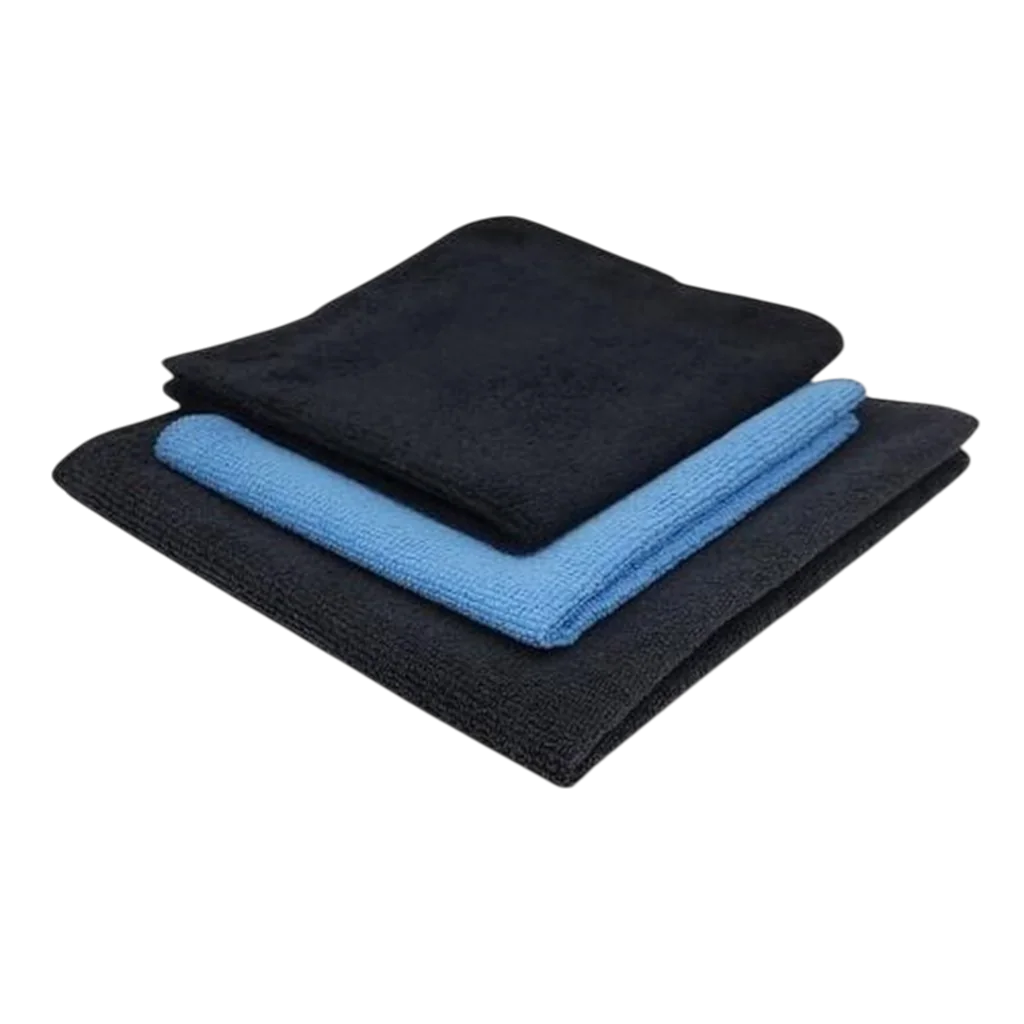
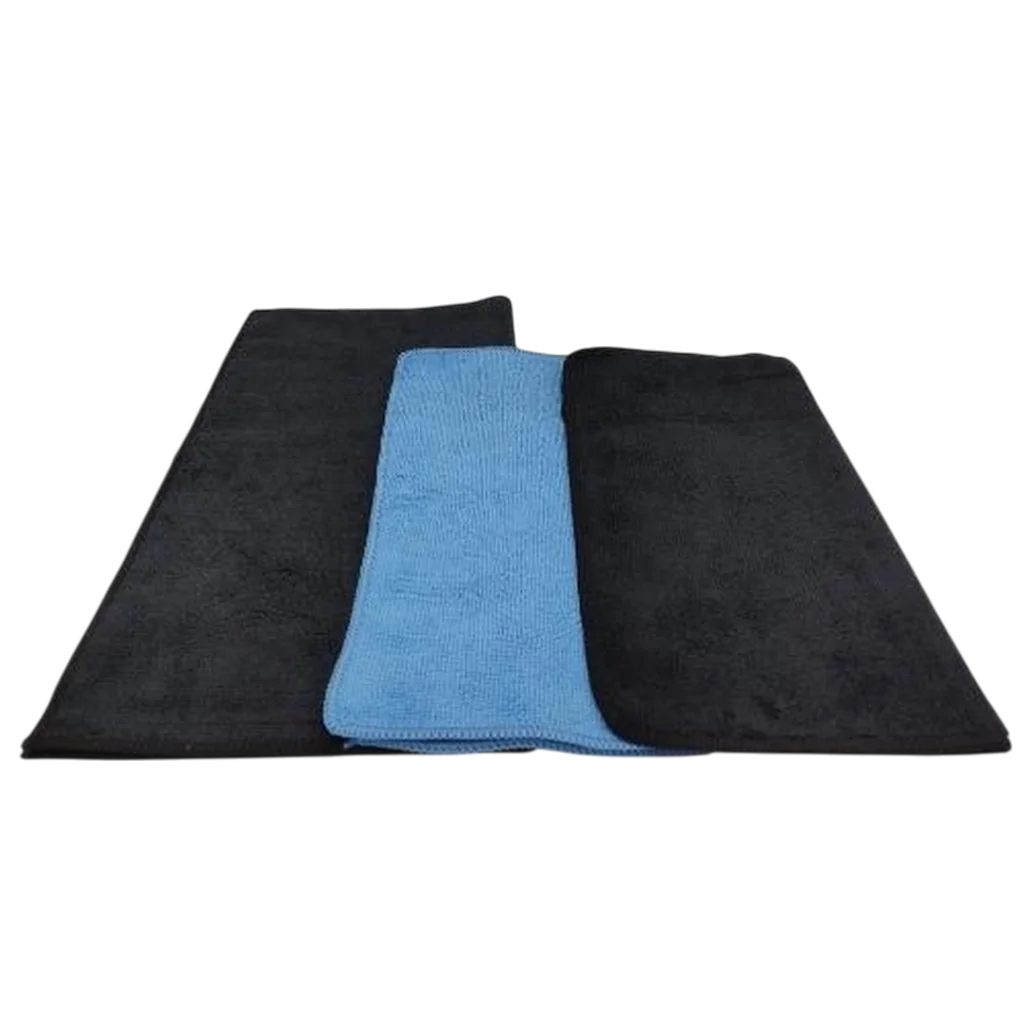
Before the coffee goes in the basket: wipe the portafilter once. With a cloth, not a brush. No old coffee grounds and no residual moisture should remain. Old coffee in the basket gets brewed a second time and tastes bitter. Additionally, this old coffee creates different resistance than the fresh ground.
A word about dosing cups if you're doing single dosing: a cup should sit on the portafilter, not in it. Cups that fit completely inside and have a thick rim leave a coffee-free zone at the basket edge. This is one of the most reliable ways to create channeling.
Step 4: Distribute and tamp
Distribution comes before tamping. This sounds obvious but it's where most shots go wrong.
If there's a hill in one spot and a valley in another, when you tamp, you're just compressing what's already there. From above, everything looks even afterward. Underneath, there's still a hole. And that's exactly where water flows faster later.
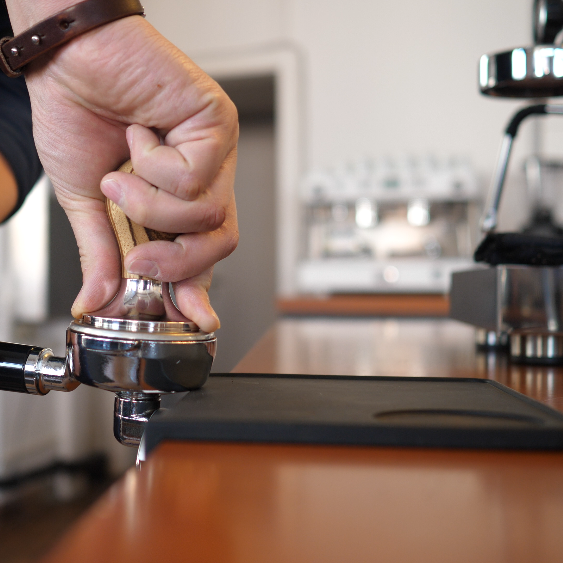
There are several ways to distribute. By hand, by tapping the portafilter on the side, or with a WDT tool — a needle tool. I personally prefer vertical tamping: tap the portafilter once or twice on a rubber mat so the powder settles. The side karate moves aren't my thing because coffee easily flies off the edge. How necessary distribution is depends heavily on how your grinder distributes the coffee in the basket and whether you use a dosing cup.

First circling into the lower layers, then once more at the surface.
When a WDT tool makes sense: whenever your grinder produces clumps. A small channel forms around each clump when tamping because it's a firmer, more compact unit than loose ground coffee. The needle tool breaks them up.
If you use one, work with thin needles, five to eight. Guide them into the lower layers first, circling, and end slowly in the middle. Then do the same at the surface. Not too fast — you don't want strong impact on the coffee, just gentle distribution. And do it the same way each time, otherwise you won't gain reproducibility.
We usually advise against levelers. They make the surface look nice, almost tamped, and that's exactly the problem. If the leveler is set too deep, you're already tamping with the outer wings — and not necessarily straight. Clean horizontal and vertical distribution achieves the same result without this risk.

Now for tamping — and here we can ease your mind.
We measured this. Michel, together with a food technologist, pulled 150 double espressos, 50 each with 10, 15, and 20 kilograms of tamping pressure, everything else as consistent as possible: Rancilio Specialty with precise flowmeter, Etzinger etzMax, 18.5 grams with maximum 0.1 gram variation, 93 degrees, automated tamping with the Puqpress, each shot measured with the VST refractometer.
| Tamping pressure | Ø Shot time | Ø TDS |
|---|---|---|
| 10 kg | 24.24 s | 8.05 % |
| 15 kg | 23.54 s | 8.00 % |
| 20 kg | 24.20 s | 7.98 % |
150 shots, 50 per level. Raw data and ANOVA analysis in detail.
The variance analysis shows no significant difference in either measurement. Marco Wellinger from ZHAW in Wädenswil confirmed this with his own study and went even lower: below about 5 to 6 kilograms it becomes critical. Above that, it barely matters.
In practice this means: press with about 10 kilograms, or even a bit more. It doesn't matter going higher. You shouldn't go much below 8 kilograms. If you want to get a feel for it, place a bathroom scale on the floor and press on it. You'll notice six kilos is surprisingly light.
Michel's conclusion after 150 shots: don't worry how hard you tamp, just tamp. A level surface is what matters.
What really counts instead is the tamper size. Baskets marked 58 mm often have an effective inner diameter of 58.8 to 58.9 mm. A 58 mm tamper leaves a ring standing at the edge that never gets properly compressed. Use one with 58.4 or 58.5 mm. Our own KM tamper sits flush with the edge and still prevents a vacuum from forming when you pull it out, lifting the coffee puck.
Two things to finish this step, or everything falls apart:
Don't tap the tamper against the portafilter. That was taught practice in the 2010s to make powder fall off the edges. The coffee puck jumps away from the basket wall each time. The result is channeling.
Keep your tamping surface dry. A single drop of coffee on the mat is enough for the tamper to stick there and tear apart your tamped surface.
Then quickly wipe over the bayonet mount so the portafilter is clean in the upper area. Otherwise your shower will get dirty over time, and then water runs past the portafilter on the sides.

Step 5: Rinse, insert, start immediately
Between each espresso, rinse once. Either right after the last shot or just before the next one.
This has two reasons. First: the shower head gets cleaned of old coffee. Do a quick test sometime. Pull an espresso, remove the portafilter, place a glass underneath, and let water run. You'll see how much residue was still hanging up there. The second reason is temperature: with some machines, like classic dual-boiler systems, a longer flush brings the brew group back to the target temperature. This is called cooling flush.
With other machines, the temperature drops too much from rinsing. Then rinse right after the shot instead. You need to get to know your machine here.
After rinsing, wipe the drip tray with a cloth.
And then comes the point where Michel is uncompromising: start immediately.
Once the portafilter is inserted, it sits under a warm, wet shower head. The coffee doesn't care where the water comes from: it starts to swell and extract. From five seconds on, we measure differences in extraction behavior. From ten seconds, we taste them clearly. After that, it goes downhill quickly: instead of a thick espresso, eventually just water comes out.
So prepare everything beforehand. Scale on the drip tray, cups on it, tared. Your hand is already on the button or lever as you insert the portafilter.

"Inserting a portafilter should be silent."
Anyone who shoves the portafilter into the brew group with force and bumps it somewhere will dislodge the coffee puck from the edge. A crater forms there, water runs off faster, and it's missing elsewhere. This gets penalized at World Championships and also at our home barista championships.
Step 6: Extract and measure
Now the espresso is running. Keep two things in view: the amount on the scale and the time.
Stop just before reaching the target amount: at 18 grams coffee and a ratio of 1:2.5, just before 45 grams in the cup. The tail end brings you the last grams.
Watch the first drops. If they come clear like water instead of thick, you have channeling. You don't need to drink this cup.
The time you measure is your most important diagnostic value. It tells you which direction the grind size needs to go.
Dialing in the espresso: the three-shot principle
The first espresso almost never lands right. That's normal and happens to us too.
Michel demonstrated this for us under difficult conditions: three unknown grinders, the grind scale covered with tape, no numbers to orient to. He dialed all three in with a total of seven extractions to the standard recipe.
The logic behind it:
Shot 1 tells you where you stand. Start at the clump point from step 2. Dose, tamp, pull, and time it.
Shot 2 tells you what an adjustment does. Correct in small steps, not whole numbers. Between two numbers on many grinders there's a lot of space. Important: after every adjustment, first empty the retention. On a Eureka Mignon that's about three grams you discard. Otherwise you're grinding a mix of old and new grind size and the whole process doesn't work.
Shot 3 is the conclusion. Now you know roughly how many clicks correspond to how many seconds, and you can adjust deliberately.
The direction is simple:
Espresso runs too fast → grind finer. More resistance holds the water longer. On most grinders, finer means smaller numbers.
Espresso runs too slow → grind coarser. Less resistance. Larger numbers.
A note for those who watch the second hand: technically, shot time is a consequence of other parameters, not the control itself. For home use, it's still the best tool you have: it's simple to measure and correlates well with what lands in the cup. Just don't get hung up on an exact number. A 34-second shot can taste better than a 26-second one.
And: always change only one variable. If you adjust grind, amount, and ratio at the same time, you won't know what made the difference at the end.
Two situations where you need to adjust even though you've done nothing wrong: with every new bag of coffee — even the same coffee, because the roast differs — and in high humidity, because the powder swells and creates more resistance. On muggy summer days, a step coarser helps.

Troubleshooting: symptom, cause, correction
This table is the part you can print out or keep open on your phone.
| Symptom | Most likely cause | Correction | Check |
|---|---|---|---|
| Runs through in under 20 seconds | Grind too coarse | Grind finer, empty retention | Shot time |
| Runs over 40 seconds or just drips | Grind too fine | Grind coarser | Shot time |
| Tastes sour and thin, little body | Under-extraction from too coarse grind | Grind finer or lengthen ratio | Shot time, taste |
| Tastes bitter, dry in mouth | Over-extraction from too fine grind | Grind coarser or shorten ratio | Shot time, taste |
| Tastes sour and bitter and dry at the same time | Channeling | Check distribution and tamping, insert silently | First drops: thick or watery? |
| First drops clear like water | Channeling, channel in the puck | Rework puck preparation | Bottomless portafilter |
| Water runs past portafilter on the sides | Shower head or bayonet dirty | Remove shower head and clean, wipe portafilter | Visual inspection |
| Channeling always in the same spot | Shower head partially clogged | Remove shower head, clear all holes | Visual inspection against light |
| Barely any crema, coffee looks flat | Coffee too old, CO₂ is gone | Check roast date | Roast date |
| Coffee spurts during shot, uneven extraction | Coffee too fresh | Let rest 1.5 to 2 weeks | Roast date |
| Espresso tastes rancid or musty | Portafilter or shower head dirty | Clean, backflush | Look at rinse water |
| First shot of the morning tastes off | Machine not hot, cleaner residue, old coffee in retention | Wait to heat up, run water, discard first grind | — |
| Results vary for no apparent reason | Delay between inserting and starting | Prepare everything, start immediately | Procedure |
| Acidity increases over months | Boiler or heating coil scaled, resulting in lower temperature | Descale or have descaled | Water hardness |
Sour or bitter? First identify it correctly
Before you correct anything, you need to know what you're tasting. And this is where there's a trap that's well documented: inexperienced tasters in Western coffee cultures regularly describe sour espressos as "bitter." If you grind coarser in response, you make it worse.
Two anchors to tell them apart:
Acidity hits you immediately, right at the front of your tongue, in the first moment. It can be sharp and biting, or lively and interesting. That's a difference worth practicing. Testing with lemon (sour) and artichoke (bitter) helps when practicing and identifying.
Bitterness comes at the back, in the aftertaste, and often comes with a dry, flat mouth feel.
A balanced espresso naturally tastes sweet. If you taste sweetness, you're on track.
And something else that often gets overlooked: Acidity belongs in coffee. With complex luxury goods, it's what keeps the flavor alive. An espresso with no acidity at all is pretty flat. Imagine a wine without acidity.
If the espresso is still too sour despite correct timing and ratio, it's usually one of three things:
We've written this up in detail in Espresso is sour? 6 tips for less acidity.
What you really need
Surprisingly little. But one thing is worth not skimping on.
A grinder. It's the biggest lever and more important than the espresso machine. It's about how the particles are cut and how evenly they're distributed. A decent electric espresso grinder costs about 200 euros and up. In the lower price range, a solid hand grinder from around 100 euros is the better choice. It makes espresso just as good as much more expensive electric grinders and has virtually no retention. We've included a selection of excellent hand grinders in our shop. Which electric grinders we recommend is in the big espresso grinder test.
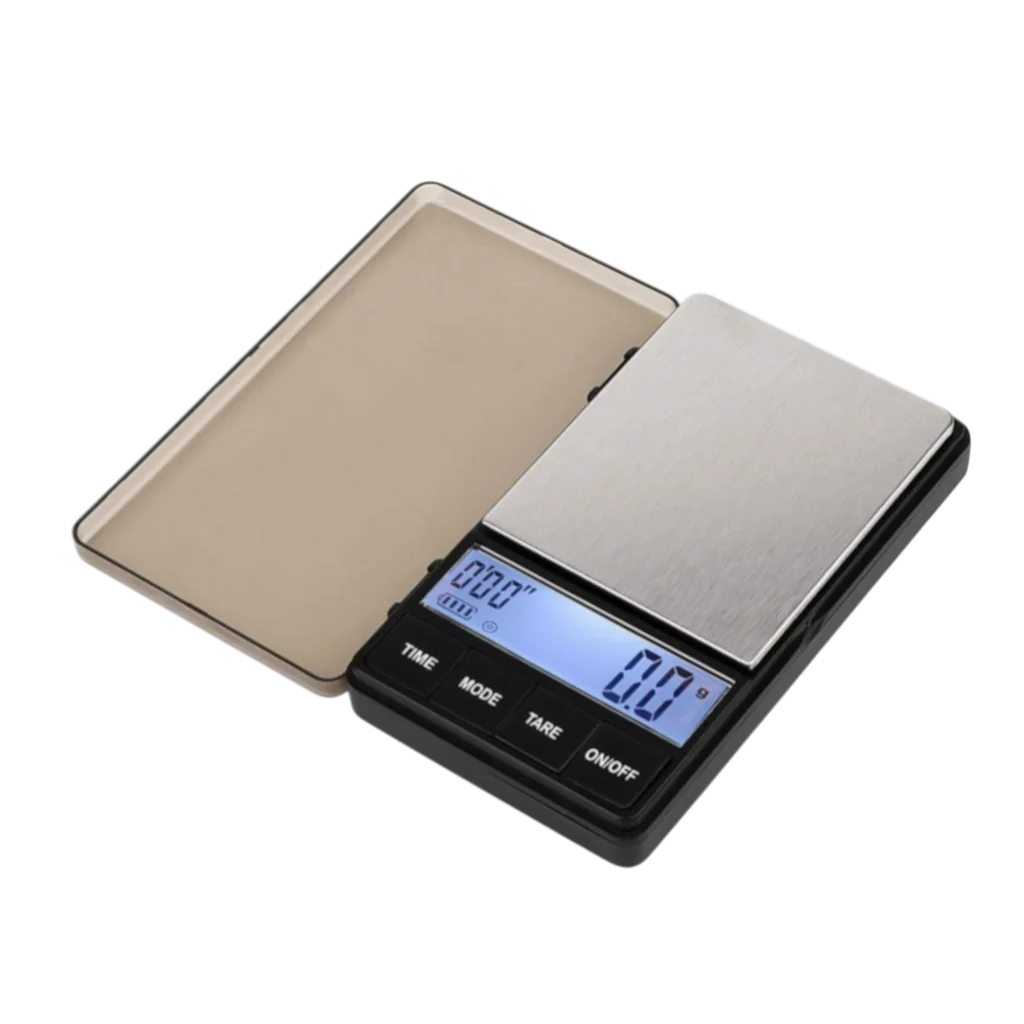
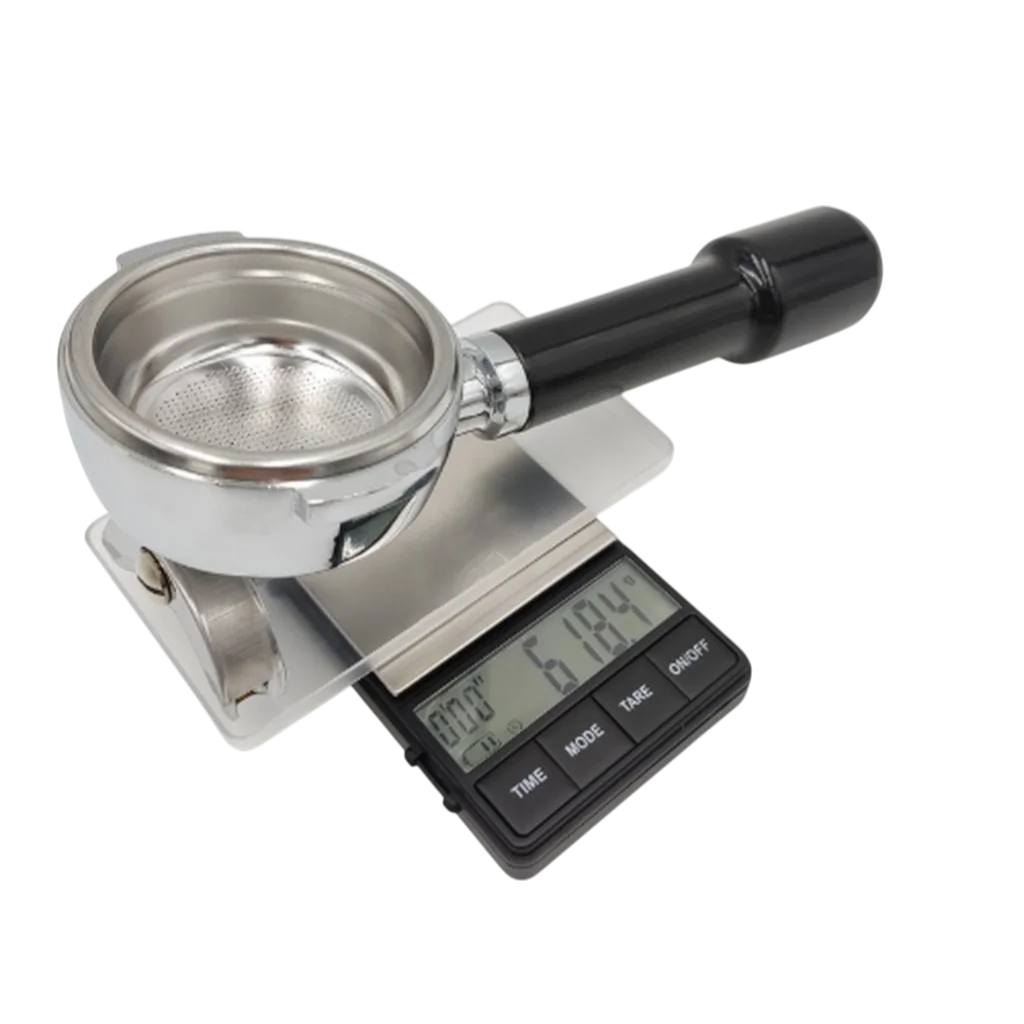
A scale. Any kitchen or letter scale works. Good if it reacts quickly to weight changes. Models with a timer take the counting off your hands. Some models even show you during brewing how many milliliters per second are landing in the cup. You'll find our selection at the scales.
A fitting tamper. 58.4 or 58.5 mm for a 58 mm basket. An air channel in the base prevents a vacuum from forming when you pull it out — lifting the coffee puck along — like with our KM tamper.
Optional: a WDT tool. Five to eight thin needles. Useful when your grinder produces clumps, with dark roasts, and in dry rooms. Our needle tool is built exactly for this.
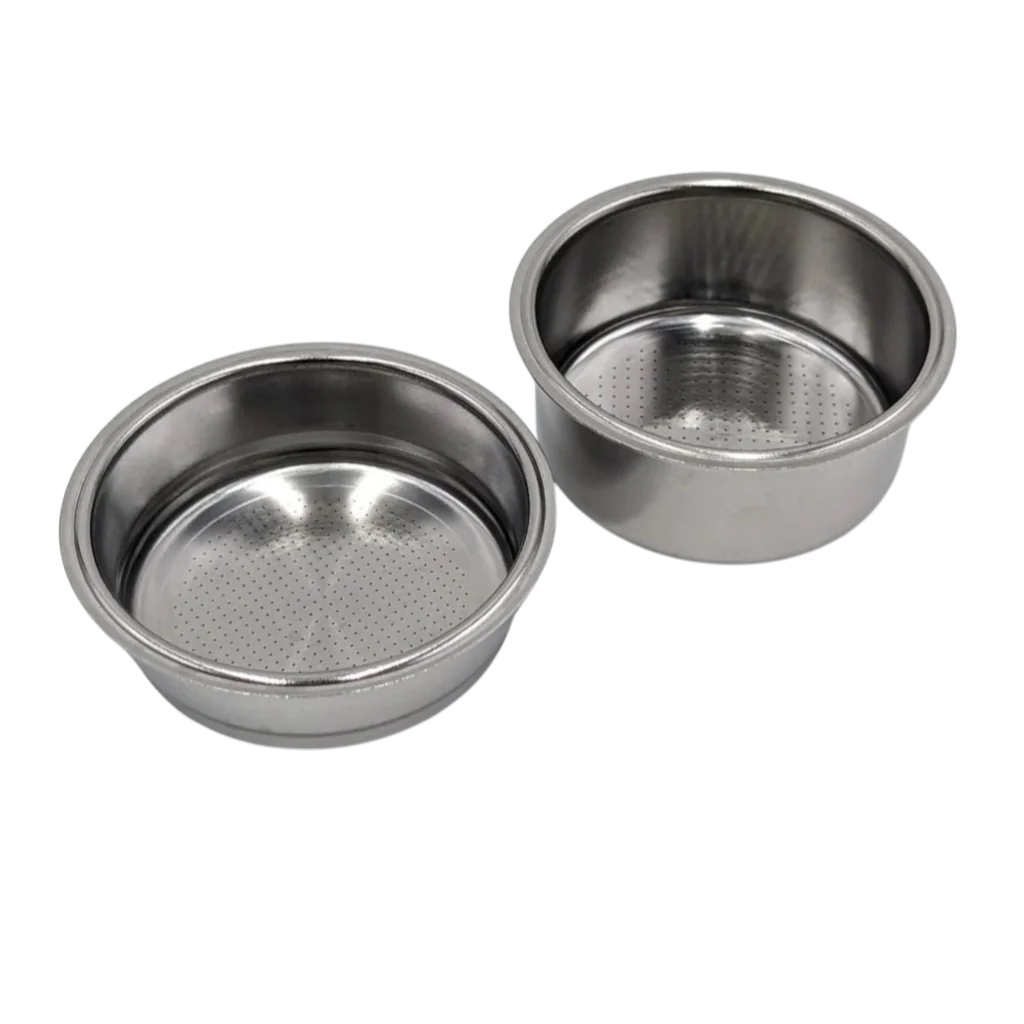
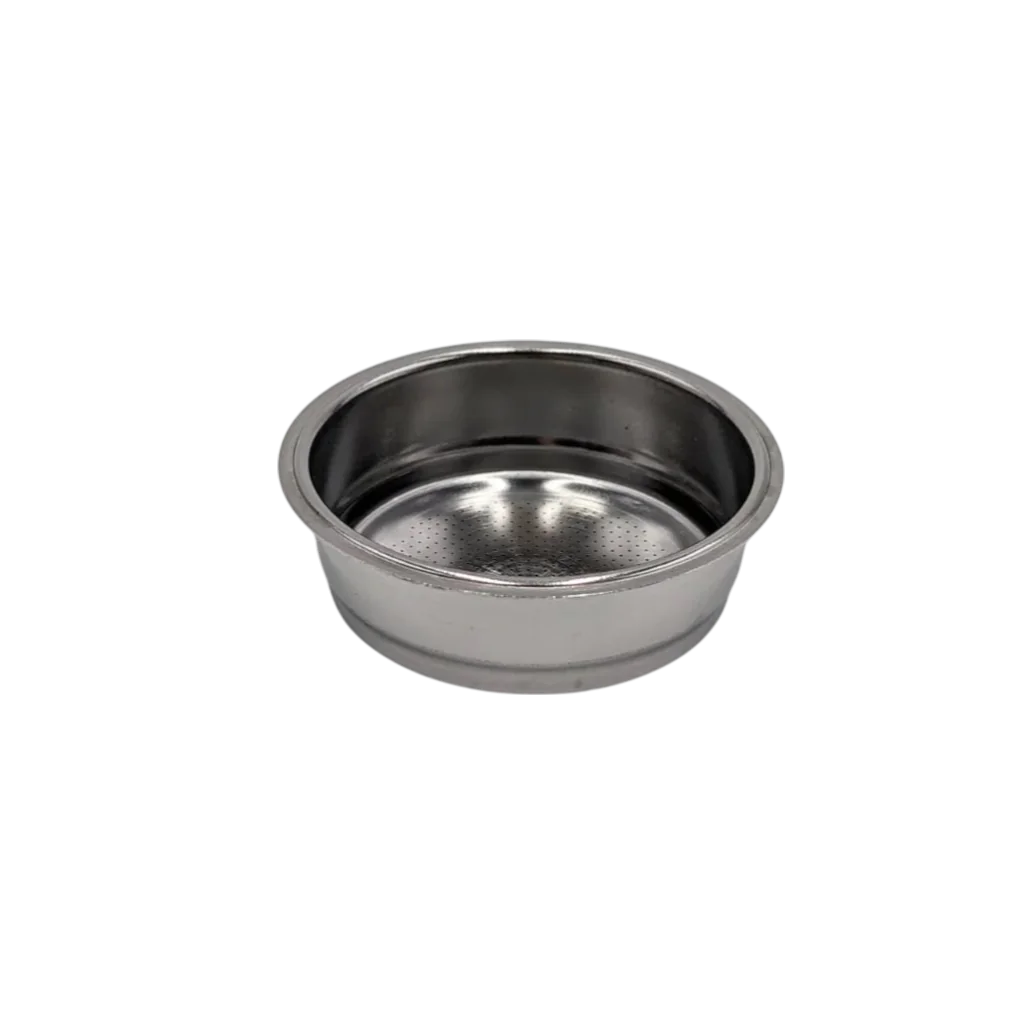
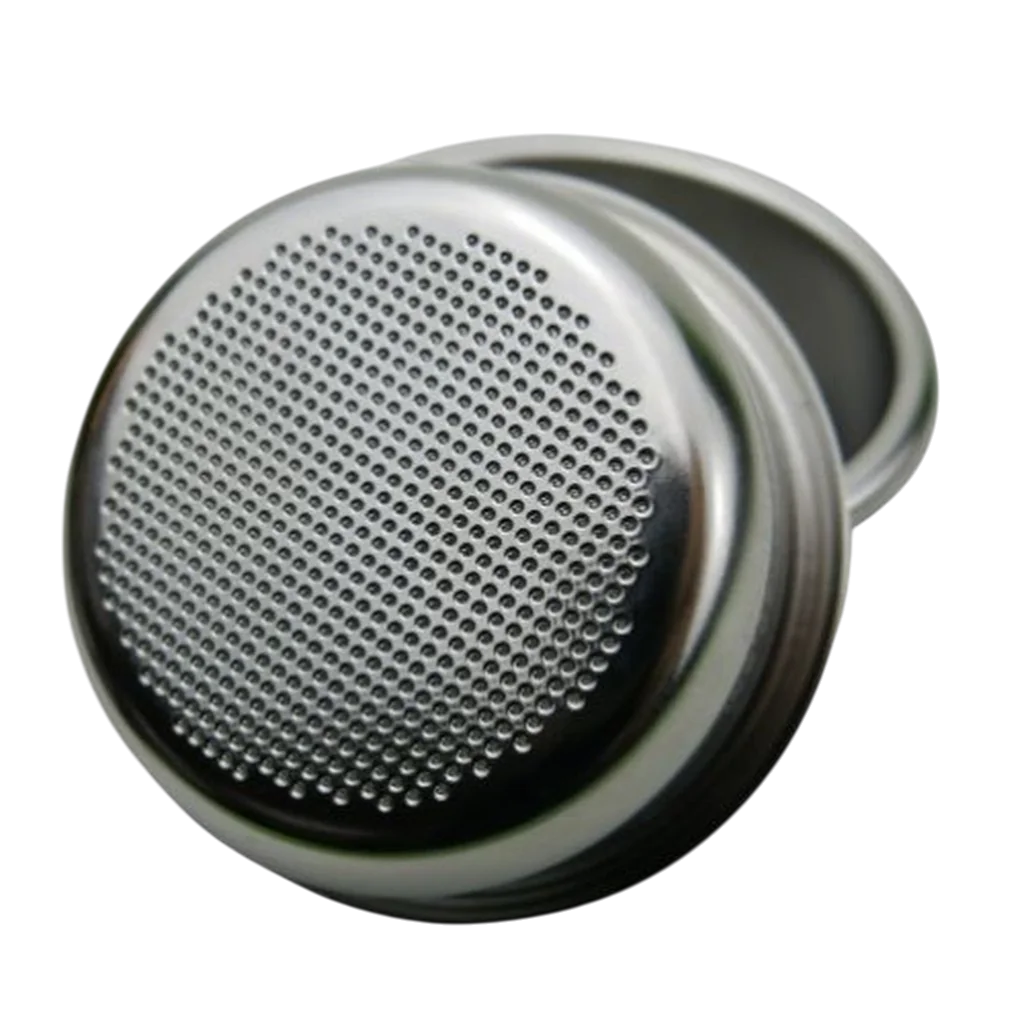
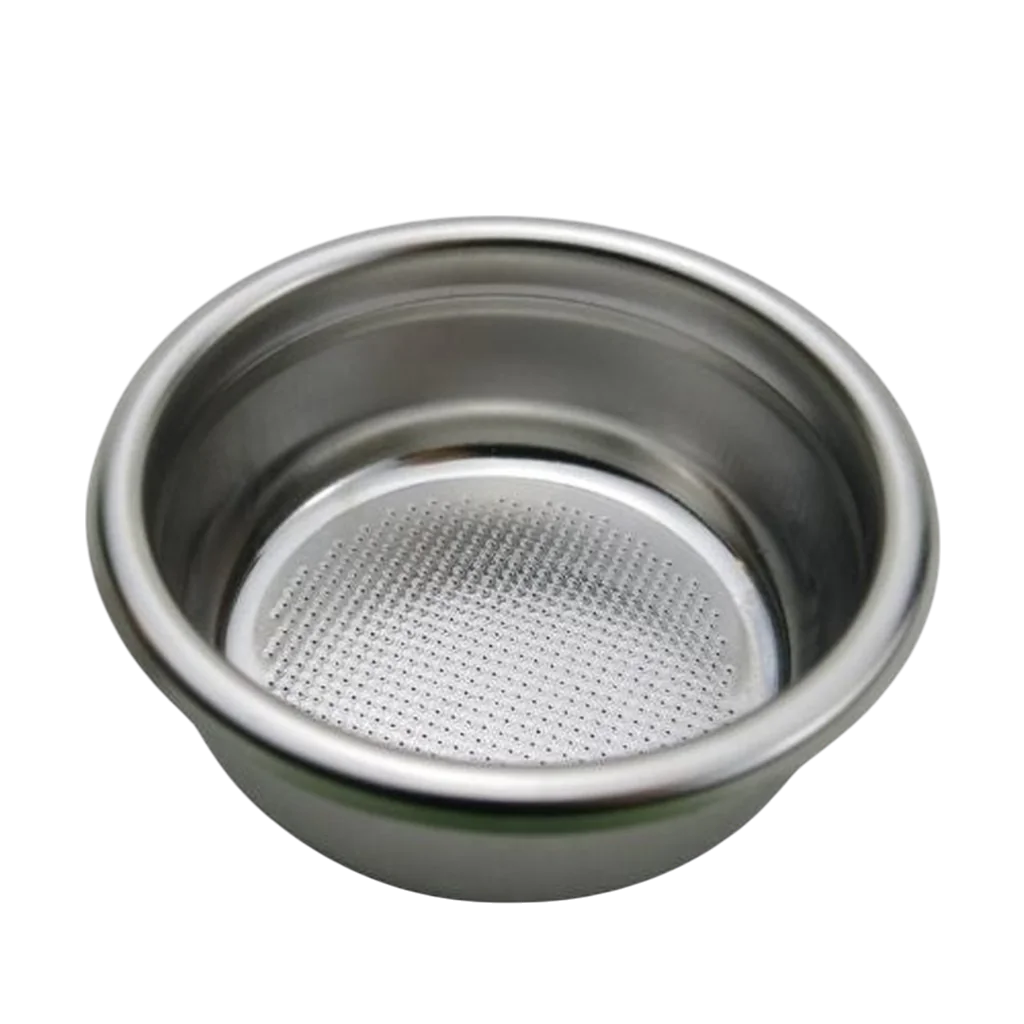
A good basket. Cylindrical, cleanly punched holes, no double bottom. We have a selection in our baskets.
Soft water. For espresso we recommend a total hardness in the range of 3 to maximum 6 German degrees of hardness. Anything over 15 °dH is hard. This not only scales the machine but also buffers away the acidity in the coffee. More on this in the coffee water article.
What you don't need: a double-walled basket. It simulates pressure that the coffee puck itself doesn't build and delivers a spurting crema instead of real crema. As long as you're not grinding yourself, it's a useful crutch. Once you start grinding fresh and adjusting grind size, it hides exactly the feedback you need. Why that is, we explain in the article Double-walled basket.
Espresso is learned fastest when someone stands next to you and tastes along. That's exactly what our courses are for — in person in Basel and the Ruhr area or as an online course for home.
Frequently asked questions
How many grams of coffee for a double espresso?
Depending on the basket, 15 to 18 grams. For an E61 brew group, 17 to 18 grams is a good start; for a DeLonghi Dedica, 14 to 16 grams. Check it with the impression or coin test.
How long should an espresso run?
25 to 30 seconds from pressing the button. Under 20 seconds gets sour, well over 35 seconds gets bitter.
Why do we always brew double?
Because the taste result is better. The geometry of the single basket doesn't fit well with the espresso machine and prevents even extraction of all the powder. More coffee allows more even extraction.
When does the extraction time start?
From pressing the button or pulling the lever. Sometimes the first drop doesn't come until 10 to 15 seconds into extraction time. If you orient to that, you don't have a consistent measurement.
How hard do I need to tamp?
About 10 kilograms. Going higher doesn't matter. You shouldn't go much below 8 kilograms. More important than the pressure is that you tamp straight.
How fresh must the coffee be?
For espresso, one and a half to two weeks after roasting. After that, roughly two to four weeks. Coffee that's too fresh still has too much CO₂ and extracts unevenly.
Do I need to reset the grind size with every new bag?
Usually yes, at least slightly. Even the same coffee has a different roast. Switching from light to dark is often several steps.
My espresso tastes sour and bitter at the same time. What is that?
Channeling. The water found a channel, extracts too much there (bitter), and leaves the rest of the puck under-extracted (sour). Check distribution, tamping, and whether you bump when inserting.
Do I really need a scale?
Yes. Without a known coffee amount, you can't define a recipe, and without a known beverage amount, you don't know what brew ratio you're in.
Is a leveler worth it?
Usually not. Clean horizontal and vertical distribution achieves the same thing. A leveler set too deep tampers with the wings — and rarely straight.
Conclusion
Good espresso at home is no magic, but it requires care in three places: a grinder that grinds fine and evenly, a scale so you actually have a recipe, and a process you run the same way each time.
Start with 18 grams in the basket, aim for 45 grams in the cup in 25 to 30 seconds, and dial in the grind size over three shots. Once that's solid, move on to fine-tuning — and from there on, your taste decides, not the stopwatch.
And if it doesn't taste right sometime: the troubleshooting table above covers pretty much everything we encounter in our courses.
Further reading
- Espresso grind size: How fine must espresso be ground?
- 20 mistakes when making espresso
- Channeling – avoiding channel formation in the espresso puck
- What influence does tamping pressure have?
- Espresso extraction time: When does the brew time really start?
- Double espresso: amount, preparation and difference from single
- Pre-brewing in espresso: What does pre-infusion really do?
- Espresso temperature
- The right coffee water
- Double-walled basket: What's behind it?