





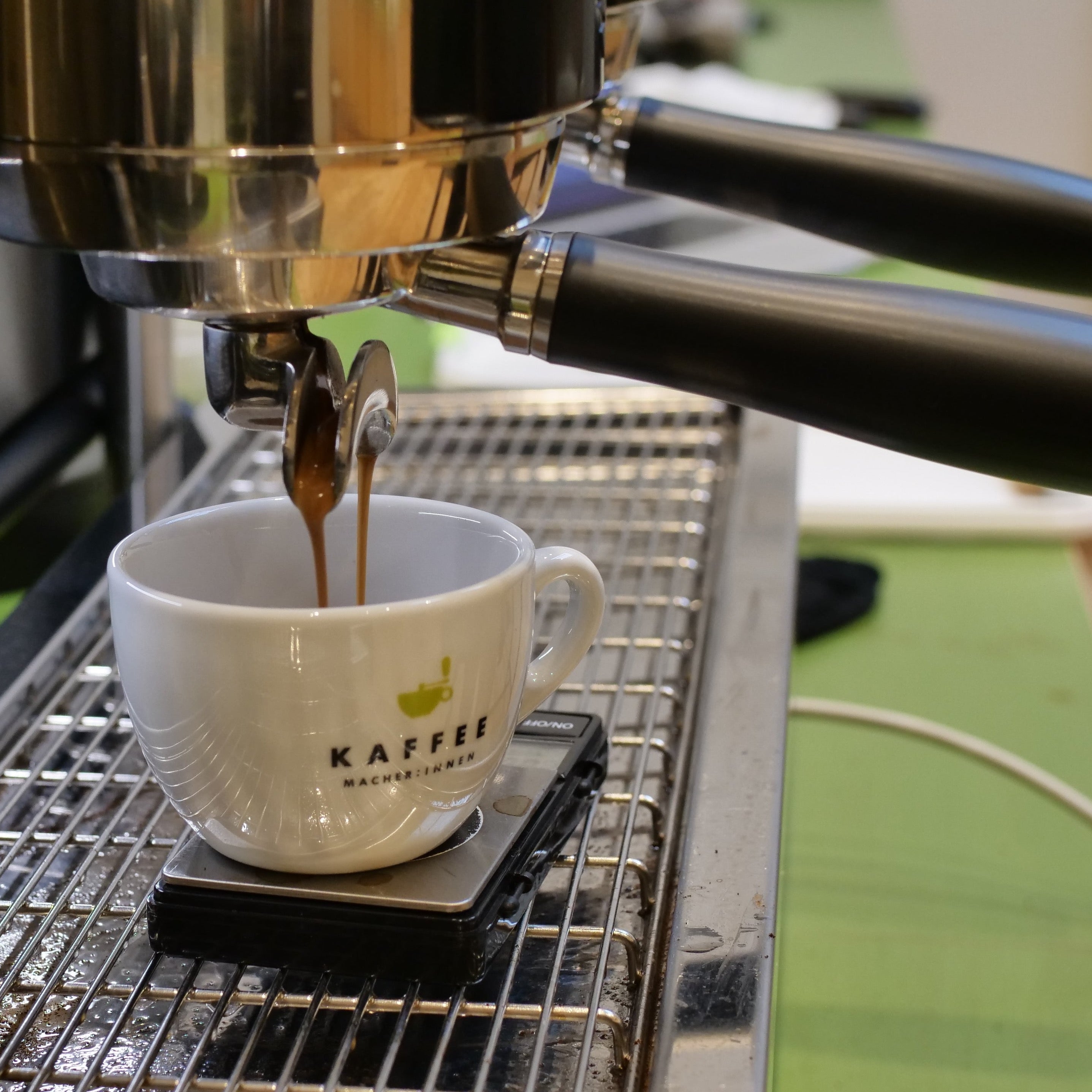

The brewing temperature during espresso extraction is crucial for taste. Light and dark roasts react differently to temperatures, but they have one thing in common: too cold and too hot is not particularly tasty.
As recently as 2010, participants at the Swiss Barista Championships could determine how hot the machine should be set for the coffee they brought. In a range of 90° – 94°, technicians made it possible for baristas to adjust the machine to individual brewing temperatures for their respective espressos.
Even today, the rulebook for the World Barista Championships states that the machine should be set between 90.5° and 96°.
Espresso will be brewed on a machine with brewing temperature set to between 90.5-96degrees Celsius (195-205 degrees Fahrenheit)
Rules&Regulations, World Barista Championship, S. 12
This is somewhat surprising, as barista championships otherwise define every contingency more precisely. And the flavor range between 90.5 and 96 degrees is enormous.
Anyone at home with their espresso machine who can determine the brewing temperature themselves via PID control is more precise. Because we know: different brewing temperatures lead to different flavor notes in the cup.
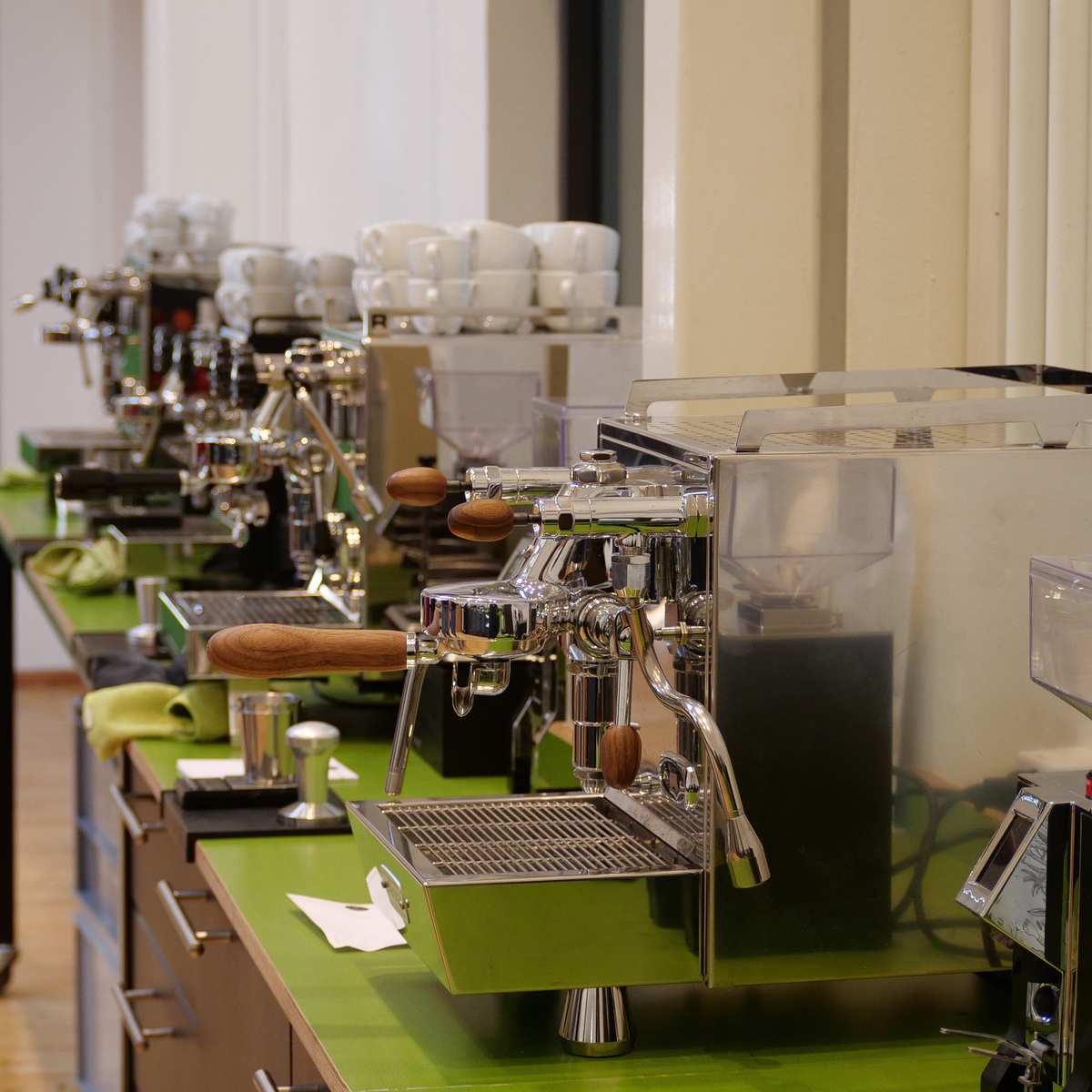
We have calibrated all machines to 93° in our Coffee Academy – always. We liked the coffees best this way, whether light or medium-dark – that means well-balanced in taste and pleasant in texture. With the 93°, we also test all our coffee roasts in quality control. We can say that we have gotten used to the 93° extraction temperature.
In forums, extraction recommendations from roasteries and other guides, however, we repeatedly find the recommendation of 88° – 96° as the perfect brewing temperature. As mentioned, this is an enormous range and massively influences the taste.
How we measure the brewing temperature and how you can measure it at home, we have described here.
Our Test: the same coffee at 88°, 93° and 96°
We wanted to know more precisely and set up a test apparatus. We tested a medium-light espresso roast at three different brewing temperatures.
Goal: At which temperature does the coffee taste best?
Machine: Astoria Storm
Brewing Profile: Slow ramp-up to a total of 8 bar at 2ml flow rate
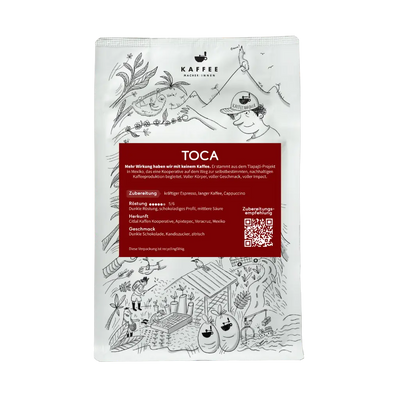
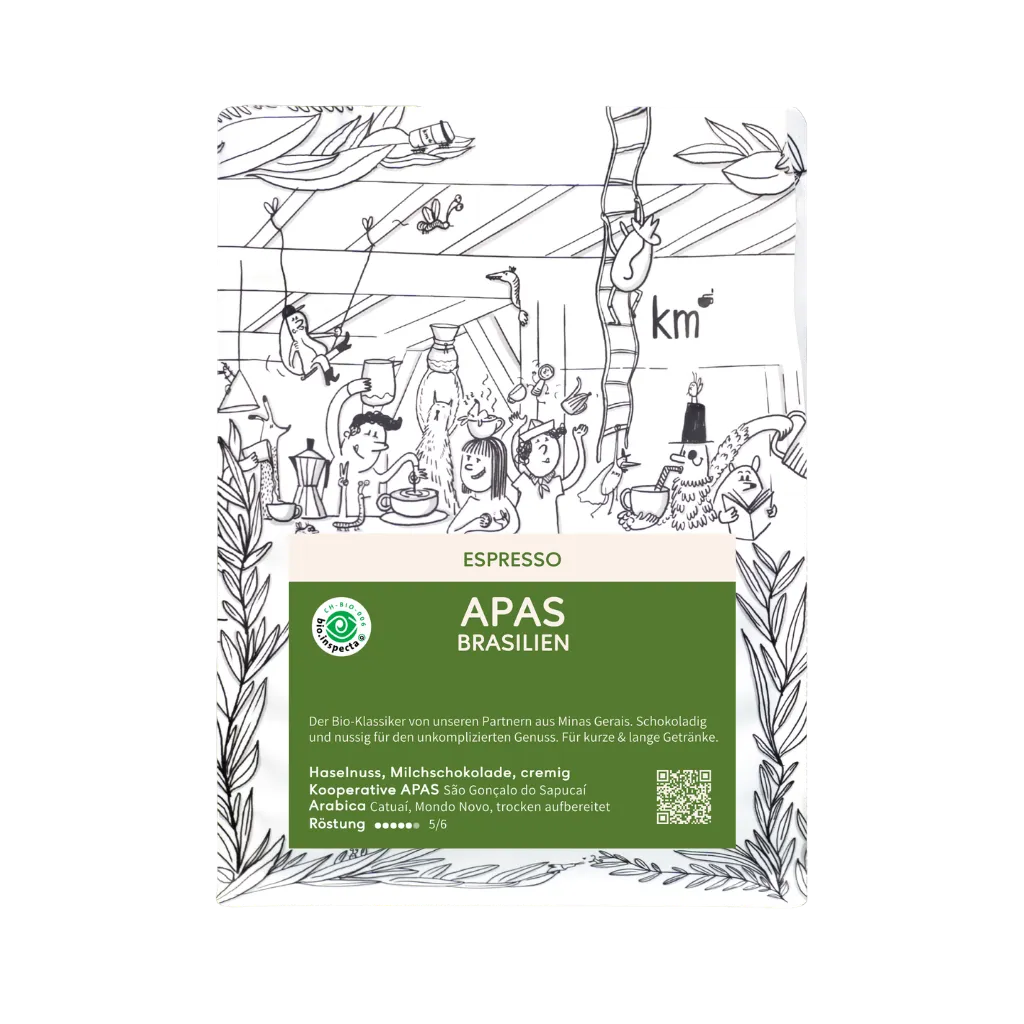
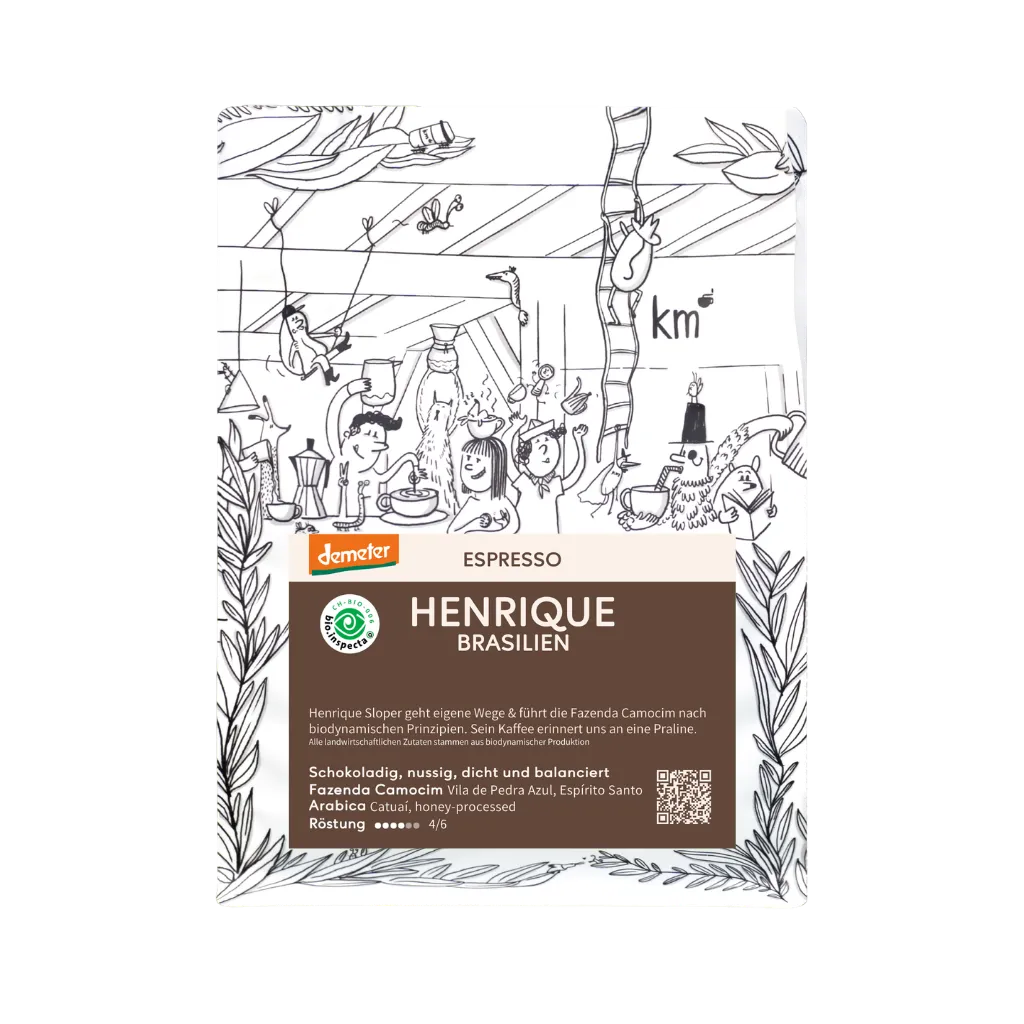
Coffee: Blend of 33% each from three light-roasted Brazilian coffees: Alessandro, Henrique and APAS.
Dosing: 19g
Brew Yield: 47g +/- 1g
- Before each extraction, we flushed the brew group for 5 seconds. On the one hand, to rinse away the powder stuck to the shower screen, on the other hand, to ensure the temperature stabilized. After that, we clamped the portafilter directly and started the extraction.
- The blend of three coffees in equal parts helped us understand which facet of the coffee was emphasized. Alessandro is a fruity coffee, APAS is classically nutty-chocolatey and Henrique has a bright acidity. We hoped that the respective extraction parameters would highlight a different side of the coffee.
- We made nine extractions each and removed the outliers at the top and bottom (learn more about espresso preparation)

Espresso Extraction at 93°
| Cup | °C | in | out | t | TDS | Extraction |
| 1 | 93 | 19 | 48 | 35 | 7.45 | 18.82 |
| 2 | 93 | 19 | 48.5 | 35 | 7.58 | 19.34 |
| 3 | 93 | 19 | 46.5 | 35 | 7.9 | 19.33 |
| 4 | 93 | 19 | 47 | 35 | 7.82 | 19.34 |
| 5 | 93 | 19 | 48 | 33 | 7.27 | 18.36 |
| 6 | 93 | 19 | 48 | 30 | 7.35 | 18.56 |
| 7 | 93 | 19 | 47.6 | 34 | 7.98 | 20.16 |
| 7.70 | 19.28 |
Sensory Evaluation
- as expected, the texture was medium-high and round
- the sweetness was well perceptible
- the acidity and bitterness were significantly higher in the 5th extraction than in the others (tbd)
- in 6 of 7 extractions, the acidity was well integrated
Espresso Extraction at 96°
| Cup | °C | in | out | t | TDS | Extraction |
| 1 | 96 | 19 | 47 | 35 | 8.15 | 20.16 |
| 2 | 96 | 19 | 48 | 35 | 8.06 | 20.36 |
| 3 | 96 | 19 | 48.5 | 35 | 8.11 | 20.70 |
| 4 | 96 | 19 | 48 | 35 | 8.02 | 20.26 |
| 5 | 96 | 19 | 47 | 35 | 8.2 | 20.28 |
| 6 | 96 | 19 | 48 | 36 | 8.11 | 20.48 |
| 7 | 96 | 19 | 47.6 | 34 | 8.09 | 20.26 |
| 8.1 | 20.35 |
Sensory Evaluation
- "Headache coffee" – the acidity was no longer well integrated, the bitterness in 5 of 7 extractions was in the high range
- the texture decreased noticeably in all coffees – although the TDS, i.e., the number of dissolved solids, was high, the coffee felt watery
- no coffee was really pleasant to drink
Espresso Extraction at 88°
| Cup | °C | in | out | t | TDS | Extraction |
| 1 | 88 | 19 | 47.6 | 32 | 7.58 | 18.99 |
| 2 | 88 | 19 | 47.3 | 30 | 7.35 | 18.3 |
| 3 | 88 | 19 | 47 | 33 | 7.5 | 18.55 |
| 4 | 88 | 19 | 47 | 33 | 7.59 | 18.78 |
| 5 | 88 | 19 | 46.5 | 35 | 7.7 | 18.84 |
| 6 | 88 | 19 | 47.6 | 33 | 7.6 | 19.04 |
| 7 | 88 | 19 | 48 | 31 | 7.72 | 19.5 |
| 7.62 | 18.39 |
Sensory Evaluation
- the coffee was dominantly sour, showing an unpleasant acidity that was not supported by sweetness
- the aftertaste was harsh and astringent
- no coffee could convince us this way
Findings
We tried to pull the extractions as identically as possible. The data set is limited, but gives an impression and a first tendency. To substantiate all of this scientifically, of course, one would need a larger test apparatus, more sensory panelists and various coffees.
However, we were able to see and taste first tendencies:
Sensory
- at 93°, the medium-light roasted espresso tasted best
- even a darker espresso we tested (but only with three extractions each) tastes best to us at 93°
- the acidity became unpleasantly sour at 88° extraction temperature
- at 96°, the coffee fell apart into its individual components and was no longer balanced
Extraction
- at 88°, channeling occurred repeatedly – we had to repeat the extraction. We are still discussing what exactly caused this
- the TDS scatter was higher at 93° than at the other measured temperatures
TDS and Extraction Rate
- at 96° extraction temperature, more particles were dissolved from the coffee, resulting in a higher TDS value
- the extraction rate was also higher, which is generally considered positive – but in this case, it was simply not tasty
- very light-roasted espressos, however, perform significantly better at temperatures of 94° and higher
- a more detailed test on this would be worth considering
Development of Extraction Rate and Taste
It became clear that higher temperatures result in a higher extraction rate. At the same time, it became apparent that a higher extraction rate does not necessarily correlate with better taste – it depends entirely on the coffee. With the Decent Espresso Machine, we are currently testing brewing an espresso with light filter roasts – and it tastes very good. We are playing with temperatures significantly higher than 93°, but also with different time ratios (extractions up to 60 seconds).

When it comes to taste, we could only really enjoy the 93° extractions.
Darker coffees tend to taste better at lower temperatures, as this reduces the number of particles dissolved from the coffee. The low temperature also makes the coffee seem a bit fresher, because it tips slightly into acidity – and this gives the coffee a better balance.
Darker coffees are already quite soluble and would produce an even more burnt flavor and grainy texture at high brewing temperatures. Therefore, and of course there are always exceptions, we recommend for darker coffees a range of 91°-92° extraction temperature, for medium-light coffees 93°-94° and for light-roasted coffees 94°-95°.
Our Recommendations for the Best Espresso Extractions
| dark espresso | min. 90° | max. 93° |
| medium-light espresso | min. 92° | max. 94° |
| light espresso | min. 93° | max. 96° |
As with so many things, coffee is also a matter of taste. Try it, compare and venture into new coffees – this way you'll learn quickly and find your personal standard for how you want to extract your coffee.
How the coffees tasted exactly, we documented in this video.
Want to learn more about espresso preparation? In addition to our articles, we recommend you visit our Barista Courses. In our new online courses you can also participate digitally.