




Growing Together 2026: What we signed with 16 coffee producers in Basel
 Philipp Schallberger
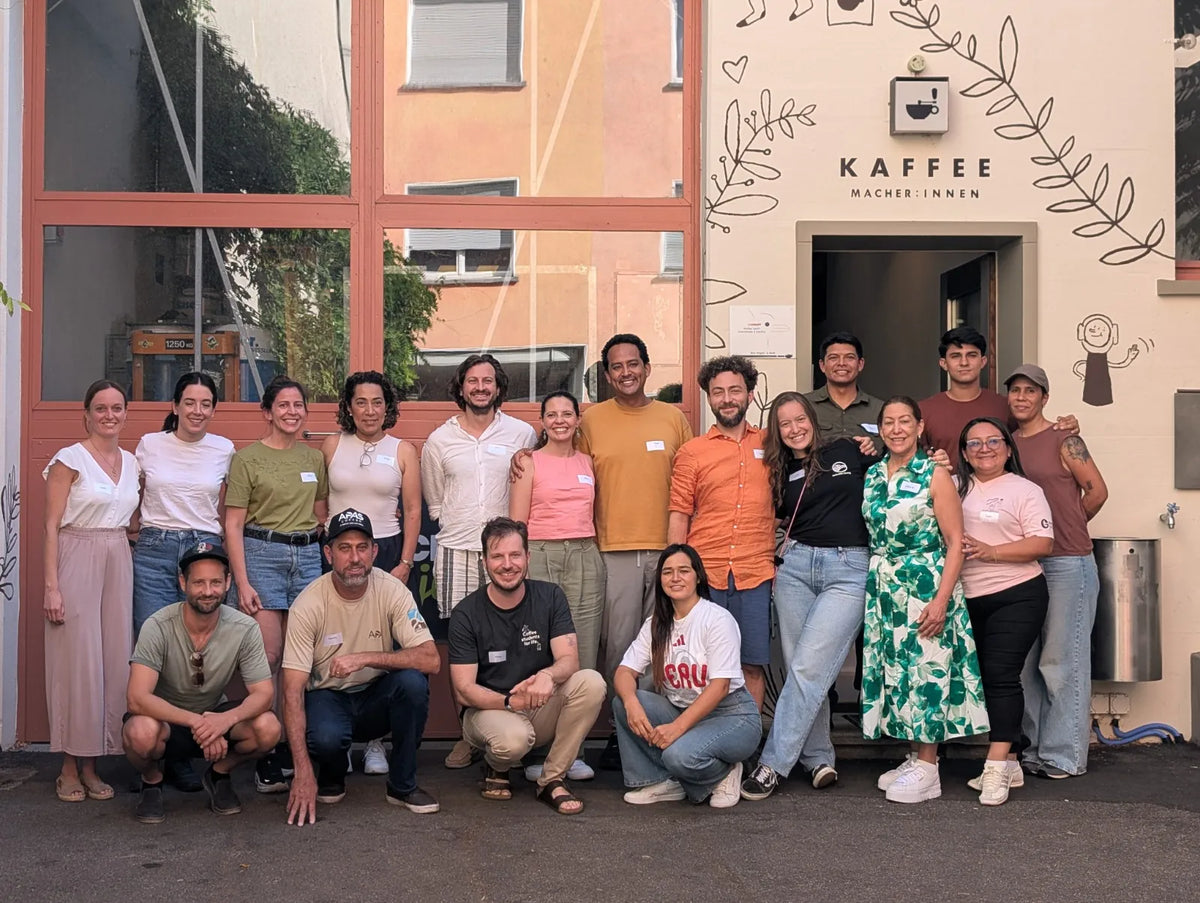
At the end of June, 16 coffee producers from eight countries came to us in Basel for three days. We talked about opportunities and challenges, about prices and advance payments, and about the stories roasteries tell about fincas—usually without asking the fincas themselves. In the end, we formulated our discussion results in five sentences, the Manifesto Creciendo Juntos. It is our compass for a partnership-based collaboration.
This time, the origin came to us
Normally, we travel to our partners in coffee-producing countries two to three times a year. Between harvests, everyday life is less stressful, and we have time to look back together and plan the next projects. Then we go home and tell our team and you about our new experiences. From June 29 to July 1, we reversed that.
To Basel came
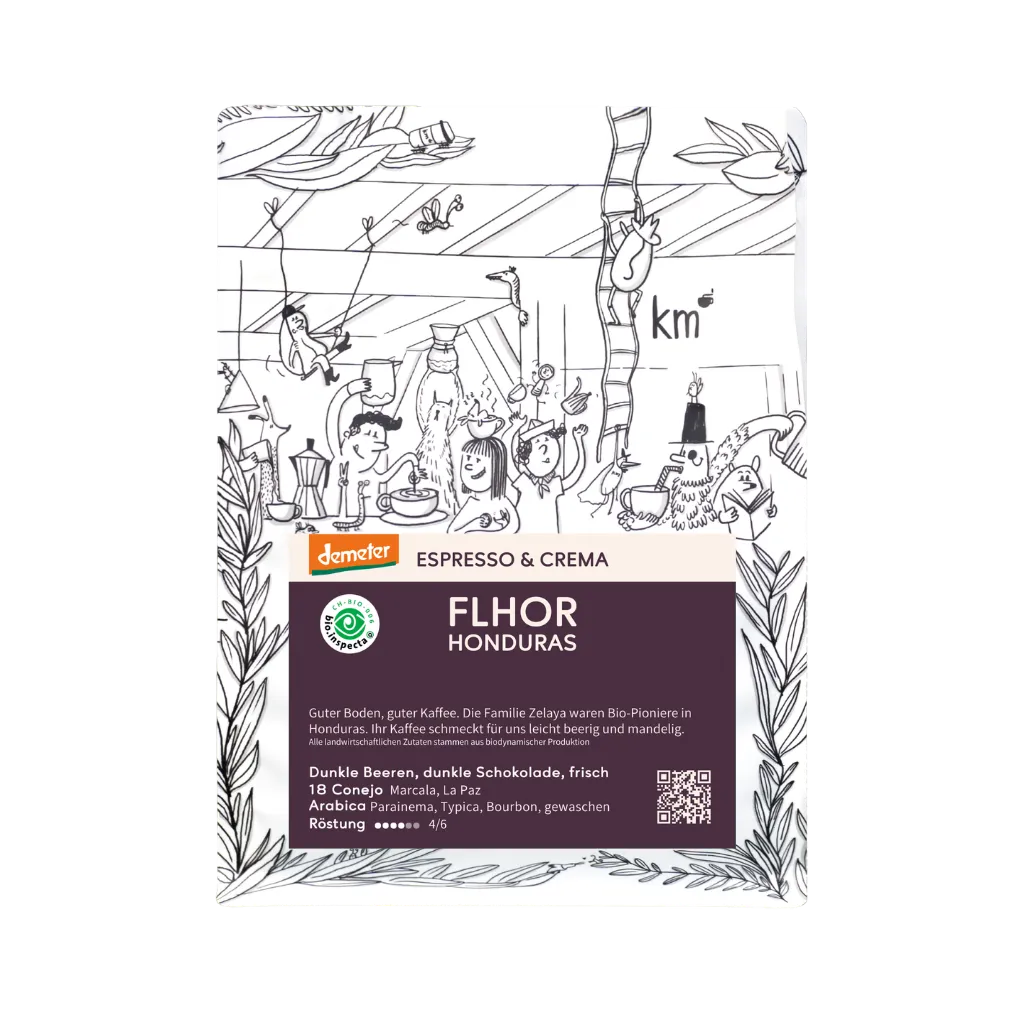
- Flhor and Mario from 18 Conejo from Honduras,
- Claudia and Lenin from BridAzul from Nicaragua,
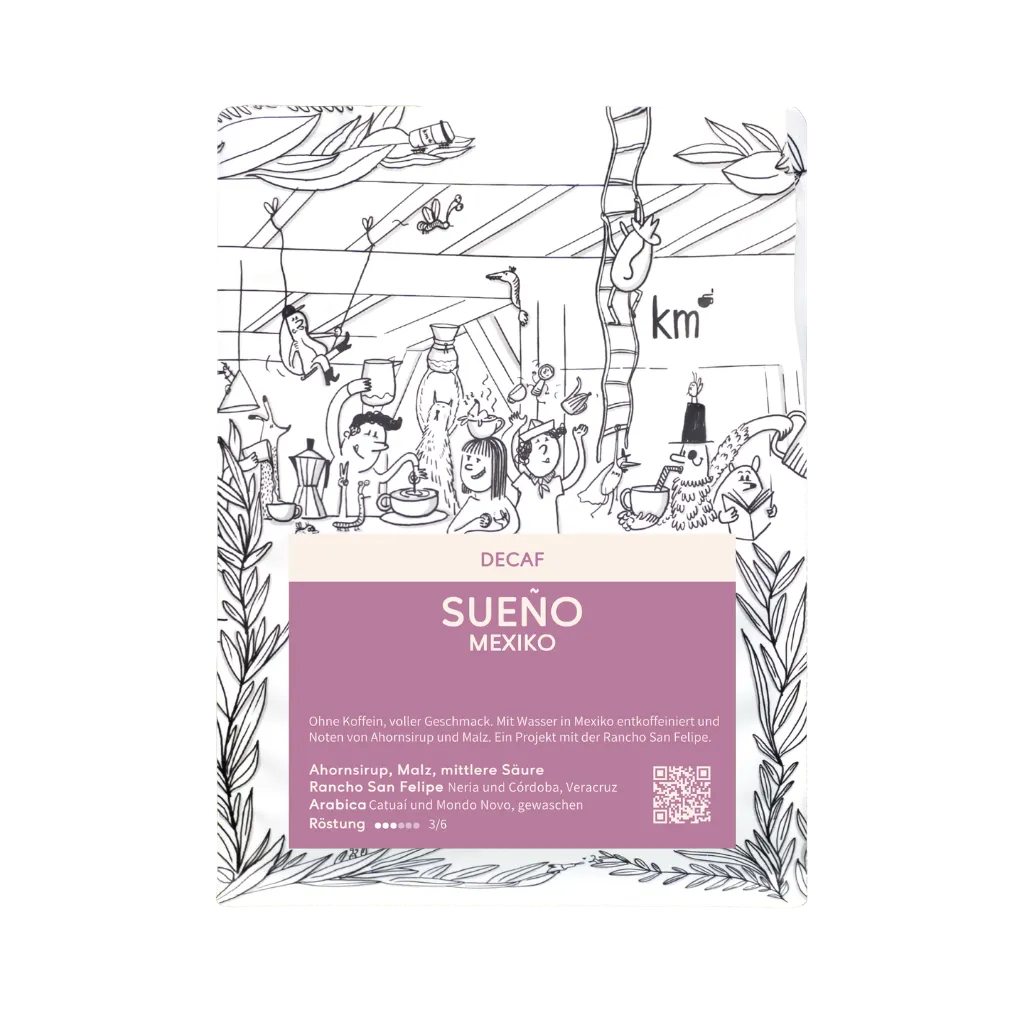
- Melisa and Beni from Rancho San Felipe and
- Vera from Kua'nu Raíces from Mexico,
- Mauricio from Apas Coffee and
- Luisa from Farmers Coffee from Brazil,
- Iliana, Diana and Irene from Finca Puerto Rico from Colombia,
- Yulma from Finca San Isidro from Guatemala,
- César from Chacra d'Dago and
- Sonia and Yudeli from Gocta Coffee from Peru as well as
- Luca from Mt. Sunzu from Zambia.
In spring, we sent invitations with these objectives:
Responses came quickly and were positive. Many of our partners had already traveled to Europe for the World of Coffee in Brussels, so we could combine both.
«I've always wanted something like this,»
said Iliana from Finca Puerto Rico when we gathered feedback in the closing round. It's so rare that producers can exchange with each other, and that a roastery receives direct feedback from multiple sides.
Yulma learned from Iliana about certifications, while Mauricio learned from Luca about irrigation systems. Melisa shared her doubts about growth, while Claudia brought up access to credit. It was an exchange on many levels, where everyone could share from their own experience.
How five sticky notes became five sentences
On the first day, we talked openly about price discovery. And we showed what producers rarely get to see: where and how much we buy, how our roasting volume is distributed across individual coffees, what our customers drink, which flavor profiles resonate, where we see development and where we don't. Instead of consulting a market study, we completely shared our own figures.
Then came the topics that the producers themselves brought with them, in an open-space format: compost systems for small fincas, labor migration on farms, decaf, financing models between production and purchase, dealing with roasteries that buy large quantities, and the new EU regulations EUDR and CSDDD.

Luisa from Farmers Coffee (Brazil) and Melisa from Rancho San Felipe (Mexico)
A long-debated program item came from Johanna Jacobi, who introduced Participatory Guarantee Systems (PGS). PGS are certifications that a group issues to itself rather than receiving from an external body. We discussed whether we as a group could build something like that, but ultimately decided against it. Some are taking the idea to their own region, but in the end, nobody wanted a shared seal.
But from this decision came the form of the Manifesto: we exchanged intensively and found a common language, but we didn't want to squeeze ourselves into a corset. As guiding principles forming a compass, however, everyone could find themselves reflected.
It wasn't written by our team, but by everyone together, under the leadership of Vera Espíndola. She collected everything that each side expects from the other and what they offer themselves. This was followed by a matrix of sticky notes where we organized which stories about a finca can be told by whom and how. We then sharpened the wording and formulated it in German, English, Spanish and Portuguese.
Five sentences we're willing to be measured by
1. We talk with each other, not about each other
Stories make coffee even more lively. So we check them together before we tell them: Is that accurate? Do we all see ourselves reflected in them?
That hits us directly. We sell coffee through stories too, and we've mostly written them alone so far. From now on, any text about a finca goes to the finca before it goes online.
2. Strong partnerships, strong coffee
We strengthen our relationships by being human first. We listen carefully because otherwise we don't know what the other person really needs.
This sentence addresses a level often forgotten in the coffee industry: empathy is the basic prerequisite for a functioning partnership. Those who listen learn things they can no longer ignore: that a harvest fails, that someone wants to give up the farm, or that a loan is due.
3. Advance trust is our currency
As partners, we plan early and together because we all need planning retention. If the finca needs an advance payment, we discuss it and find the best solution. The contract seals at the end what we've already clarified beforehand.
We dropped one word in Basel: pre-financing. We used it ourselves for a long time. In the group, we noticed that it sounded like a gesture, like a favor the buying side does the finca. If we're honest, it has something patronizing about it.
In other industries, the same thing is simply called an advance payment. When someone orders a kitchen, they pay in advance, and nobody sees that as generosity. Why should it be different with coffee? The semantic difference may be small, but language creates reality, and with the new word the sentence felt more authentic for everyone.
4. The exchange price is not a coffee price
Every finca is different. So the calculation isn't done by the exchange or the buying side, but by the finca: cost of living, production costs, investments, margin. These factors are the non-negotiable starting point for the buying side.
If we only look at the exchange price, we'll never pay the cost-reflective price. Producers know what they need. And if they don't, we support them in figuring it out.
5. We act transparently to drive change
Those who buy expose themselves. Those who sell do too. We talk about our crises and development plans, and we do so early. One-sided transparency is not.
We process about 140 tons of green coffee per year. How that's distributed across our supply partners is detailed in our transparency report.
Who controls us?
Nobody, at least no office with a stamp. That was the decision against a shared PGS, and we still think it's the right one. An agreement without control, however, is cheap—we know that too.
That's why we're publishing it. Whoever works with us, today or tomorrow, can hold us to any of these five sentences, in Spanish, Portuguese, English, or German.
And: The Manifesto doesn't belong to us. The "we" in it means everyone who was in Basel at the end of June 2026.
Do you roast or produce coffee and want to orient yourself by it?
Take it, quote it, translate it. And tell us where it doesn't fit for you, because that's exactly where it gets interesting.
When and where the next Creciendo Juntos will take place is still open.