



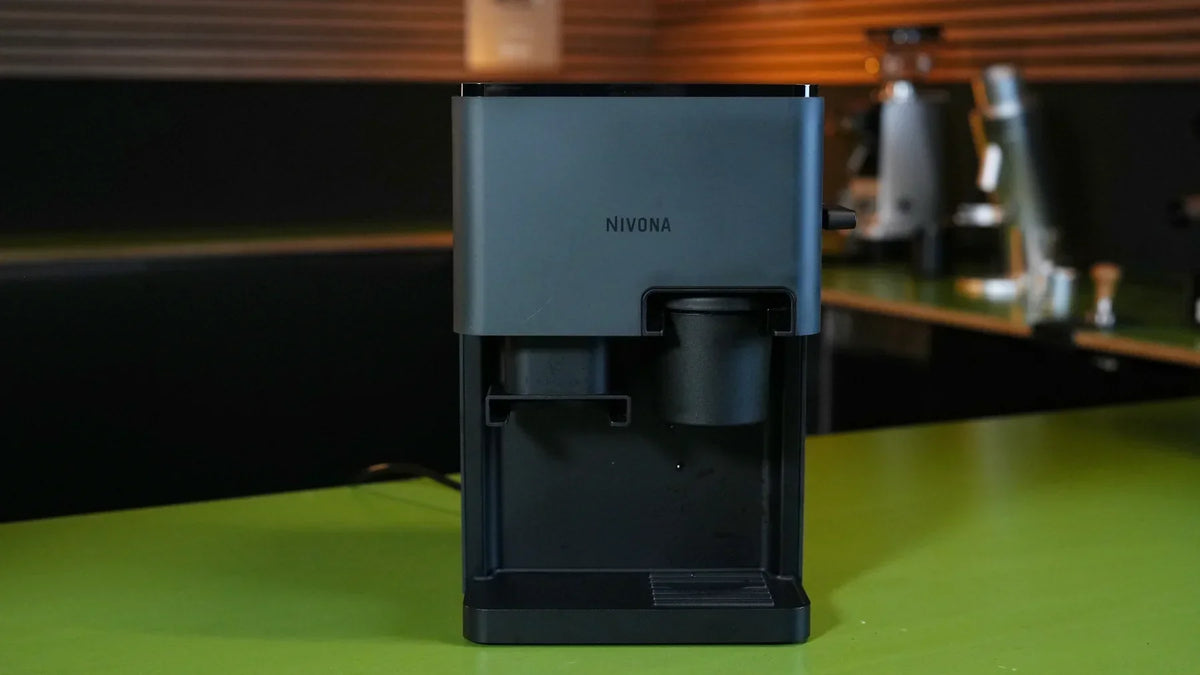
Nivona Cube 4102 in the test: The fully automatic machine where you distribute yourself

The Nivona Cube is a super-automatic espresso machine that borrowed a few tricks from portafilter machines. The most important one: you can see the ground coffee before brewing and level it yourself. In doing so, the Nivona Cube tackles the exact flaw that conventional bean-to-cup machines constantly struggle with. Nivona sets the MSRP at 479 Euros, though retail prices sit closer to around 430 Euros, and about 500 Swiss Francs in Switzerland. We tested it according to our KM protocol, including particle size distribution analysis measured in collaboration with the ZHAW in Zurich. The key question: is a well-distributed coffee puck enough to pull a truly great coffee from a super-automatic machine?
The Concept: Remove Basket, Level Coffee, Insert Basket
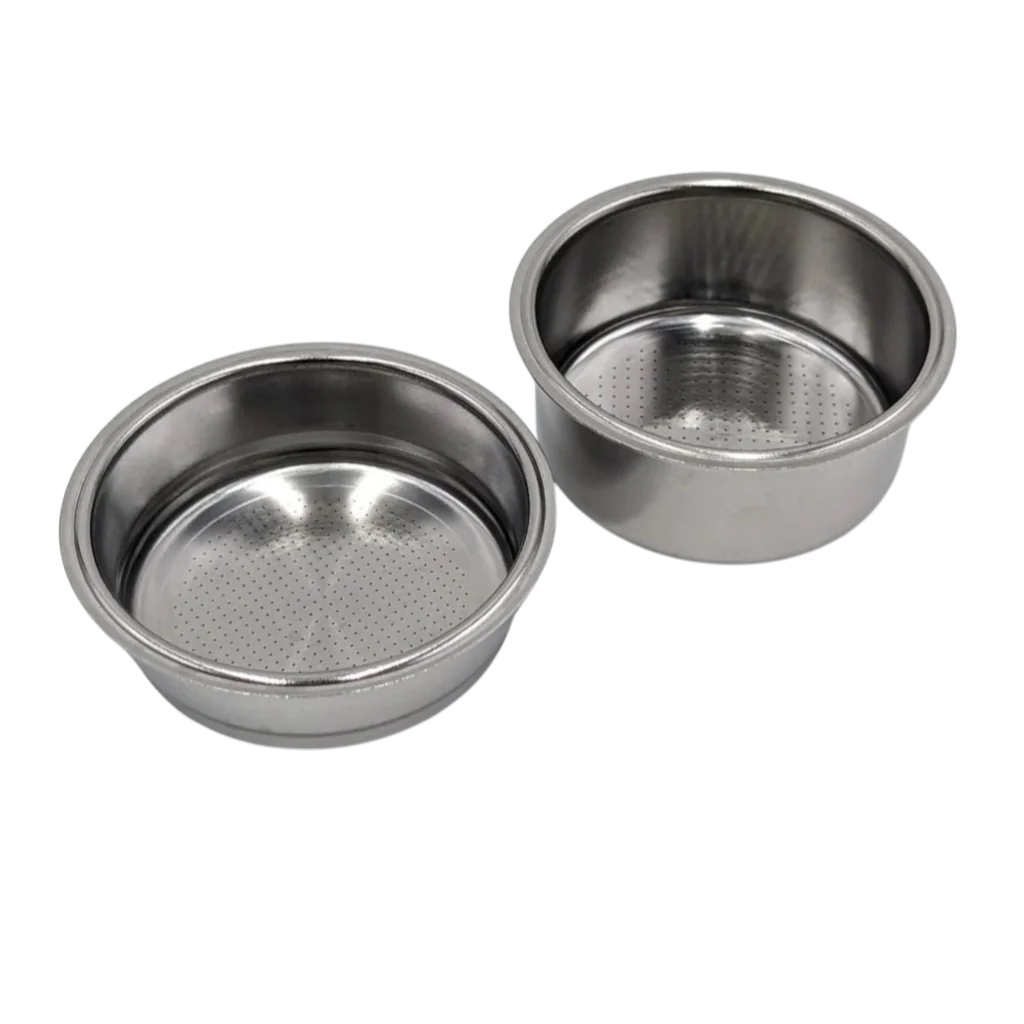
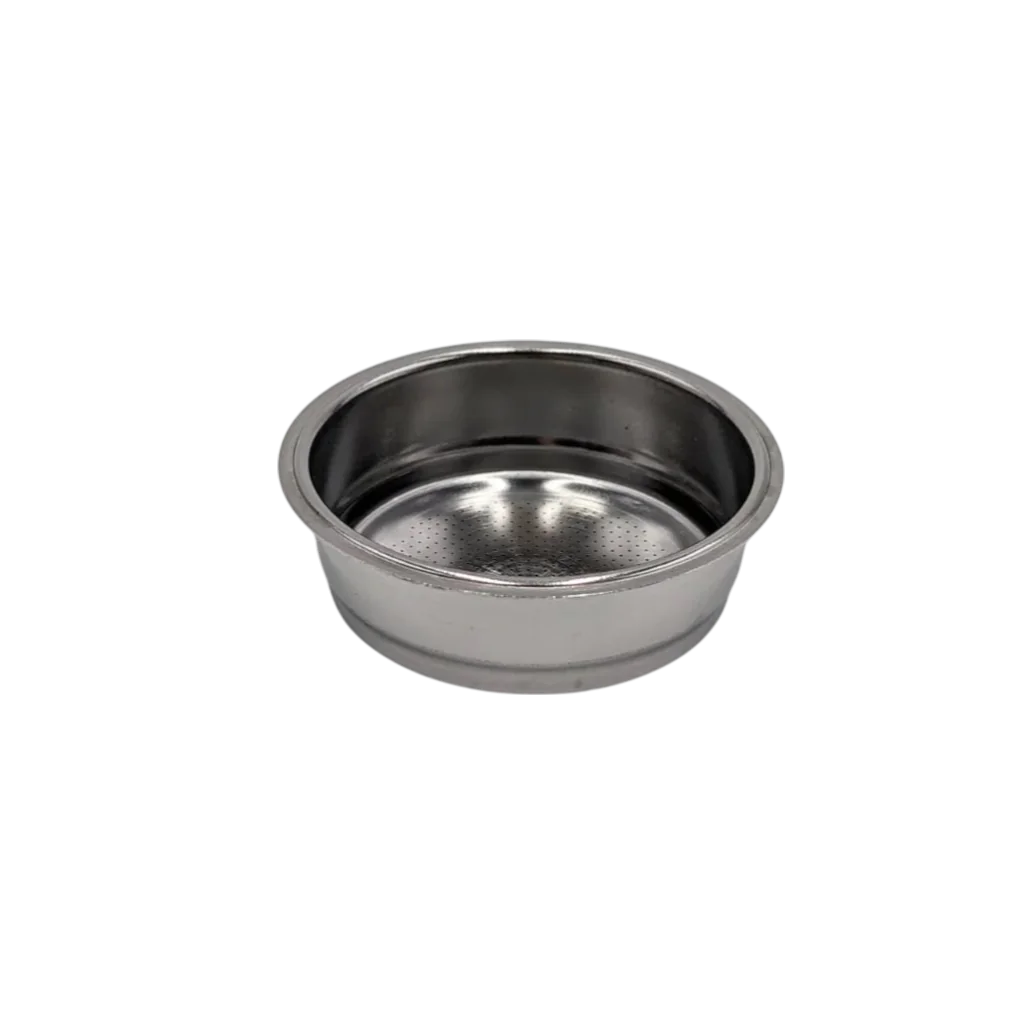
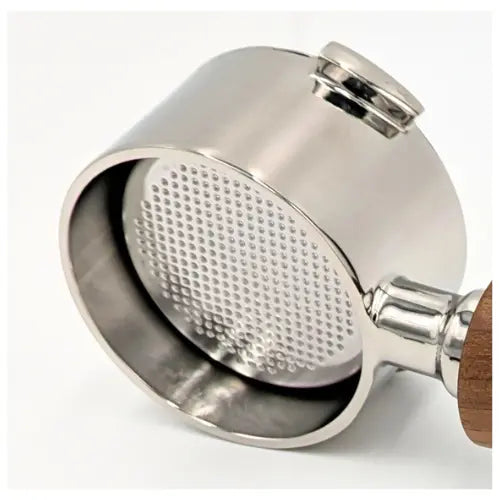
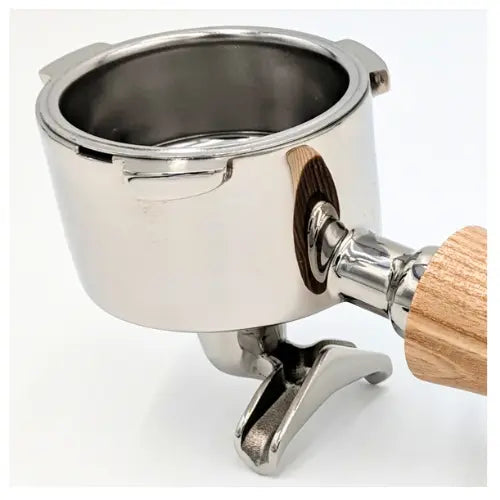
Instead of a permanently installed brew group with a piston, the Cube features a removable brew basket called the Click Cup by Nivona. Michel Indelicato, runner-up Barista Champion on our team, quickly settled on calling it the "basket," and we are sticking with that. You lock this basket into the front grinder slot; the machine recognizes it instantly and displays only what you need at that exact moment: the dose amount. One press of the bean icon, and the hardened steel conical burr grinder gets to work.
For 12 grams, the Cube grinds for eight seconds—a comfortable pace for daily use. Ground distribution inside the basket is surprisingly solid right out of the grinder, and that is where you come in. A quick tap and gentle shake level out the mound. This simple manual step would be a massive leap in quality for any other super-automatic machine, where a piston presses down on an uneven bed of coffee, forcing water to find the path of least resistance. That is how channeling happens, resulting in thin, hollow cups that taste both bitter and sour at the same time. Here, the Nivona Cube resembles a classic portafilter machine far more than any traditional bean-to-cup maker.
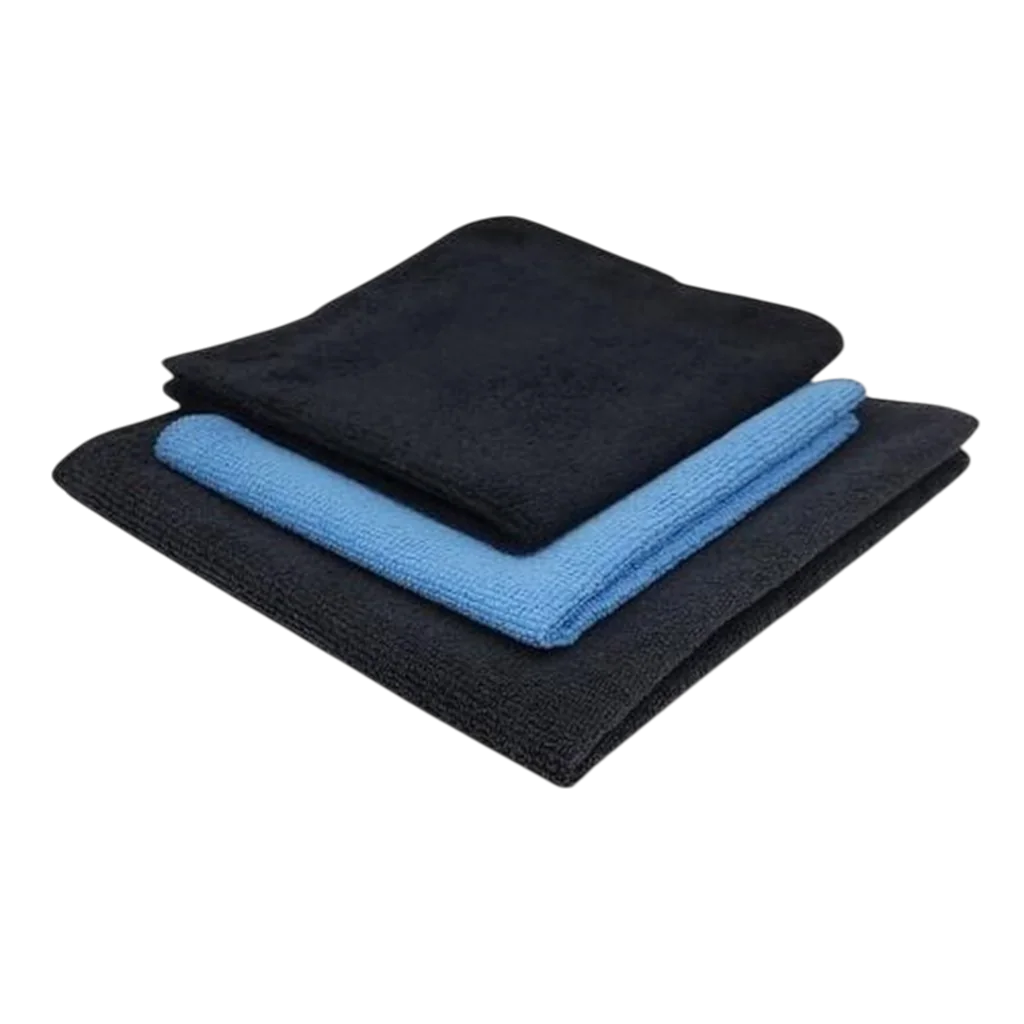
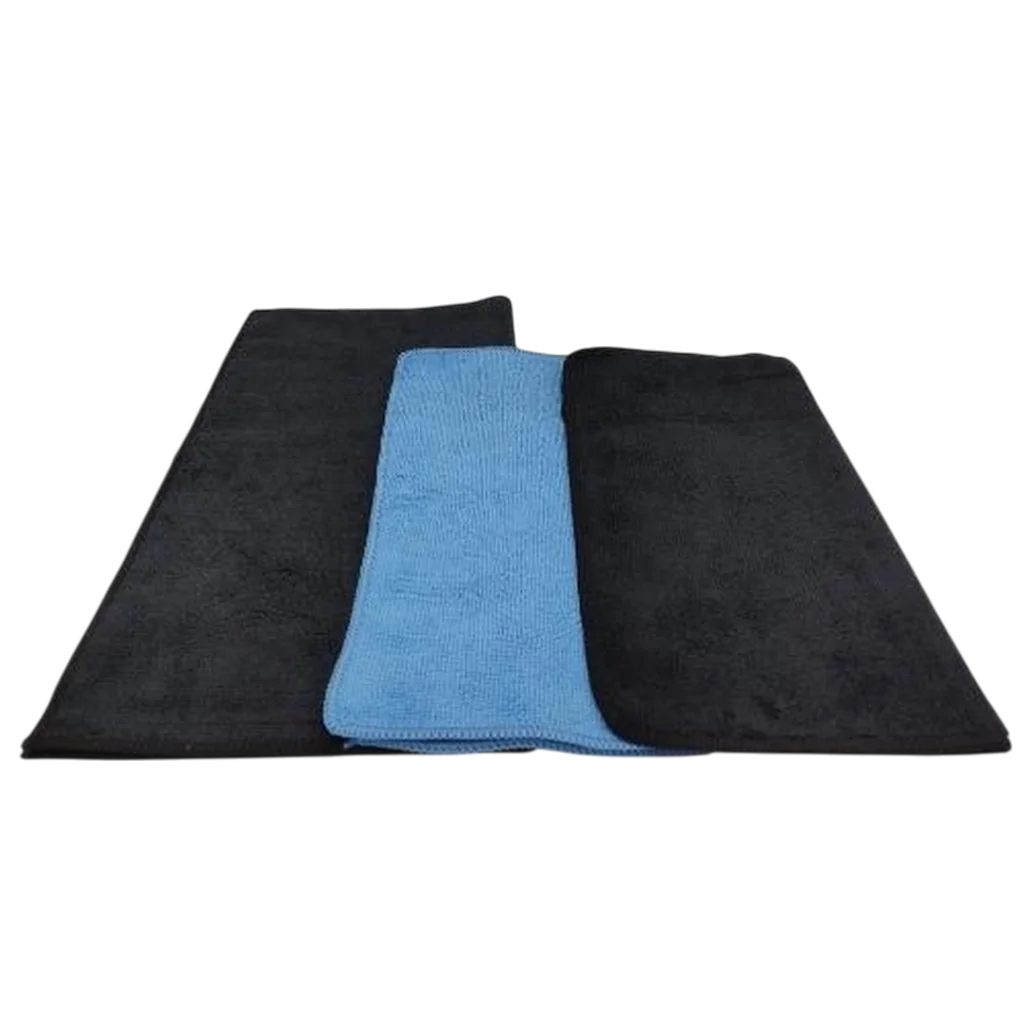
Tamping happens automatically as soon as you press the basket into the brew position. The piston extends deeper for smaller doses than for larger ones, yielding a cleanly compacted puck without pinholes. After brewing, you rotate the basket once, and the spent coffee puck pops out top-side, ready to be knocked into a knock box. Afterwards, wipe it down with a cloth—preferably black, so coffee particles remain invisible. Note: the basket is not dishwasher safe.
Grinder Bottleneck: Main Peak at 367 Microns
When we test an espresso grinder, our target range sits between 200 and 300 microns; exceptional grinders can go even finer. Above 300 microns, particle distribution becomes too scattered for a uniform extraction. The Cube registers an X50 of 347.9 microns, with its main peak at 367 microns and a fine peak at 31.1 microns. That resembles a café crème profile rather than an espresso distribution profile.

We also tested the built-in grinder on our reference espresso machine, using identical baskets and testing procedures as with all other grinders. Even at the finest setting, we couldn't achieve a classic espresso flow rate of a 25-second extraction. This isn't just about burr quality; the grinder simply cannot grind fine enough. Conversely, if you manually fill the basket with pre-ground coffee ground finer, the Cube chokes completely. We verified this using various coffees.
The remaining grinder metrics are respectable. At 76.5 decibels, the Cube stays below our 80 dB threshold, keeping it pleasantly quiet. Ground coffee exits the chute at just under 28°C (82°F), another good figure. For dosing consistency across five shots, we measured a standard deviation of 0.47 grams, with outliers ranging between 11.2 and 12.5 grams. This is average, but given the hands-on workflow where you visually inspect the basket, it matters far less.
Grinder Retention: 13.6 Grams is More Than a Full Dose
Retention, or exchange volume, refers to stale coffee trapped inside the grinder after grinding. On the Cube, we measured an absolute retention of 13.6 grams—about 3 grams in the exit chute and the rest inside the grinding chamber. For context: a single dose is 12 grams. Stale retention exceeds the brew dose itself, which is a clear dealbreaker.
In practice: your first coffee in the morning will be brewed with yesterday's stale coffee. To get a high-quality cup, you effectively have to purge and discard that first shot.
The difference is night and day for both espresso and lungo. The initial shot drawn from a cold basket simply lacks flavor.
Crema Valve: Pressure Comes from the Valve, Not the Grind
Like almost all domestic bean-to-cup machines, the Cube relies on a crema valve (pressurized system). The brewing chamber remains sealed until pressure hits two to four bar, depending on the machine, at which point the valve opens and coffee sprays into the cup. The reasoning: since built-in grinders in super-automatics usually grind too coarse, proper pressure wouldn't build up otherwise. The valve creates pressure artificially, producing the thick crema layer behind its marketing name.
Technically, this operates identically to a pressurized (dual-wall) basket, bringing distinct trade-offs. You will get crema even out of old, stale coffee, but you can't observe true flow rate or dial in your grind size. The machine doesn't require you to, either. Without a crema valve, an espresso brewed at this coarse grind size would simply rush into the cup.
Brew Temperature: Why We Don't Provide Absolute Numbers
For espresso machine temperature testing, we lock in a Scace portafilter to simulate real brewing resistance. A Scace tool does not fit into the Cube. Instead, Michel attached a thin temperature probe directly under the shower screen, slim enough to allow brewing. The only resistance in the system was the crema valve, which doesn't replicate true puck resistance.
Under these conditions, we measured around 85°C (185°F) at the highest of the three temperature settings. With true backpressure, it would likely reach around 88°C (190°F). Since this remains an estimate, we intentionally omit absolute scoring according to our standard temperature testing protocol. As a baseline guideline, 85°C to 88°C sits on the lower end for super-automatic extraction.
Our practical advice: select the highest temperature setting for almost all coffees; drop down one level only for very dark roasts. Sensory evaluations delivered the best results on max heat. Note that the thermoblock requires a brief moment to heat up before initiating the first shot.
Pre-Infusion: One-Third Wetted, Yielding No Benefit
The Cube executes a pre-infusion cycle before every shot, which cannot be disabled. We inspected its effectiveness by stopping extraction immediately after pre-wetting and removing the basket. The result: less than one-third of the coffee puck was damp.
The purpose of pre-infusion is to saturate the entire puck evenly so water flows uniformly without channeling during main extraction. Pre-wetting only one-third fails to achieve this. Most manufacturers do it this way, but it remains flawed engineering.
Espresso: 12g In, ~30g Out, ~6% TDS
If you want to drink espresso with the Cube, you can, using this recipe: finest grind setting, maximum dose, and smallest shot volume.
TDS (Total Dissolved Solids), measuring dissolved coffee compounds relative to water, lands at roughly 6 percent. For comparison: filter coffee measures 1.2 to 1.4 percent, a clean café crème sits between 1.5 and 2.5 percent, and espresso begins around 6 percent. Technically speaking, this qualifies as espresso.
Sensory quality is surprisingly solid, ranking among the better espressos we've pulled from a super-automatic. However, it strongly reminds us of an espresso pulled from a DeLonghi Dedica using pressurized baskets and an entry-level grinder. The cup reaches espresso territory, but clear limitations remain: the crema valve, lower temperatures, and above all, the grinder.
The Star Performer: A Rich, Bold Lungo
Where the Cube truly shines is with longer shots. Volume outputs feature four steps: roughly 30, 50, 70, and 110 milliliters. We strongly recommend the third setting (70 ml).
This setting requires at least 30 seconds of extraction time, which is long, but produces impressive cup results. The fourth setting at 110 ml is over-extracted and astringent.
With grind size set to level 3 out of 5, the Constant profile selected, and max temperature, the machine brews a cup that tastes more like an extended espresso than a thin café crème: cocoa, natural sweetness, a heavy body, and pleasant bitterness without harshness. Most importantly, the coffee tastes clean, thanks to having full manual control over the brew basket. It is easily the best long coffee we've tasted from a super-automatic machine in a long time.
If you prefer a large mug in the morning, pull two consecutive shots: grind and brew twice using 24 grams total for a 140 ml yield. That keeps the body rich and flavorful.
Brew Profiles: Constant Takes the Crown
Nivona markets its three brew profiles as the Aroma Balance System, presenting pressure and flow graphs on their website. We cannot verify these curves without a Scace portafilter, but we can evaluate shot time and taste.
Dynamic throttles flow briefly post-pre-infusion before ramping up quickly. On espresso, this produced metallic, harsh bitterness—at least when paired with our Compadre roast.
Constant builds pressure slowly and smoothly over a longer duration. Sensorial-wise, it mimics a traditional vibration-pump portafilter machine and delivered the most balanced results across various roasts. This is our top recommendation.
Intense extends extraction time by five to eight seconds. For a lungo, this makes little sense, as adjusting grind size finer is preferable to choking pump pressure. However, it can serve as a fun playground for lighter roasts.
When comparing profiles yourself, run two back-to-back shots on the same grind setting, ensuring the system is preheated and retention is purged.
Daily Usage Drawbacks
Keep in mind that there is no milk frother. The drip tray is the smallest we've seen, and spout clearance measures just over 10 cm—fine for standard espresso cups, but tight for taller mugs. Beans occasionally catch in the plastic grid of the bean hopper.
On our test units, we noticed the brew chamber is open at the bottom; initial shots didn't seal completely, leaving stray drips post-extraction. We experienced rare instances of sudden pressure releases. After multiple consecutive shots, water in the reservoir warmed up to 40°C (104°F). Lastly, a helpful practical tip: wait a moment after brewing for pressure to release before lifting the lever and pulling out the basket.
Who Should Buy the Nivona Cube?
If you drink espresso exclusively at home, we recommend a setup like a DeLonghi Dedica paired with a single-wall basket and a dedicated grinder like the DF54. Alternatively, a used Gaggia Classic or Lelit Anita sits in a similar price bracket. Separate setups take up little more counter space than the Cube. We outline these options in our espresso machine buying guide.
We generally advise against espresso machines with built-in grinders at this price point, and the Cube highlights why: the integrated grinder is the main bottleneck. Buying a standalone grinder allows you to upgrade components independently down the road.
However, the Cube is compelling for mixed households wanting both short and long coffee drinks without dealing with dirty internal brew groups. If you want a rich 80 ml cup that tastes close to an espresso, this machine hits the spot. Plus, cleaning is effortless: mess stays inside a removable basket that wipes clean with a towel in seconds.
We see great potential in this hybrid design and hope other manufacturers adopt it. Alternative concepts exist, such as the Jura Ono. At World of Coffee in Brussels, Austrian startup Datum Coffee showcased a similar concept using a 58mm portafilter, premium materials, and a upgraded grinder. We look forward to seeing where this trend goes.
Verdict: A Super-Automatic That Asks the Right Questions
The Nivona Cube fixes what conventional bean-to-cup machines get wrong. You see the ground coffee, level it yourself, achieve even extraction, and clean the brew chamber in seconds. At around 430 to 479 Euros, it offers a thoughtful concept in a compact footprint.
Clear limitations remain: the grinder cannot grind fine enough (367-micron peak), lacking resistance is compensated by a crema valve, pre-infusion wets only a third of the puck, and 13.6g of retention is excessive. Pure espresso lovers get better results from a small espresso machine paired with a standalone grinder. But if you want a bold, clean 70 ml lungo in a compact machine without milk capabilities, the Cube delivers surprisingly well. We would buy the Cube over a traditional bean-to-cup machine due to superior cup quality.
Technical Specifications Overview
| Feature | Value |
|---|---|
| Price | approx. €479 MSRP, retail approx. €430 / approx. 500 CHF (as of August 2026) |
| Heating System | Thermoblock, 1,455 Watts |
| Pump Pressure | 15 bar (manufacturer spec) |
| Grinder | Hardened steel conical burr grinder, 5 adjustment steps |
| Dose Range | approx. 6–7 g (minimum) to approx. 12.3 g (maximum) |
| Grind Time | 8 seconds for 12 g |
| Grinder Noise Level | 76.5 dB |
| Particle Distribution | X50 347.9 µm, main peak 367 µm, fine peak 31.1 µm (measured with ZHAW) |
| Absolute Retention | 13.6 g |
| Brew Temperature | approx. 85 °C measured without resistance on highest setting (no absolute measurement possible) |
| Brew Profiles | 3 (Dynamic, Constant, Intense) |
| Temperature Levels | 3 |
| Shot Volumes | approx. 30 / 50 / 70 / 110 ml |
| Milk System | None |
| Bean Hopper | 250 g |
| Water Tank | 1.4 l |
| Dimensions (W x H x D) | 21 x 32 x 21 cm |
| Weight | 5 kg |
| Cup Clearance | just over 10 cm |
As always, we purchased this machine ourselves for testing.