





You have a DeLonghi Dedica, a KitchenAid Artisan, or another compact entry-level machine. The espresso looks like it's from a café: dense crema, nice color. But it doesn't taste good. Or you've bought a decent portafilter, the coffee suddenly runs watery through it, and the crema is gone. What happened?
The culprit is in the portafilter. More precisely: in the basket itself.

What a basket should actually do
When brewing espresso, pressure is created because water is forced against the resistance of the coffee puck. The puck must be able to build this resistance. This requires three things: fresh coffee, the right grind size, and a basket that doesn't distort this process.
A normal, single-walled basket works transparently: it filters the espresso but doesn't artificially slow the flow. What goes in comes out. The extraction happens in the puck.
Double-walled – what that means
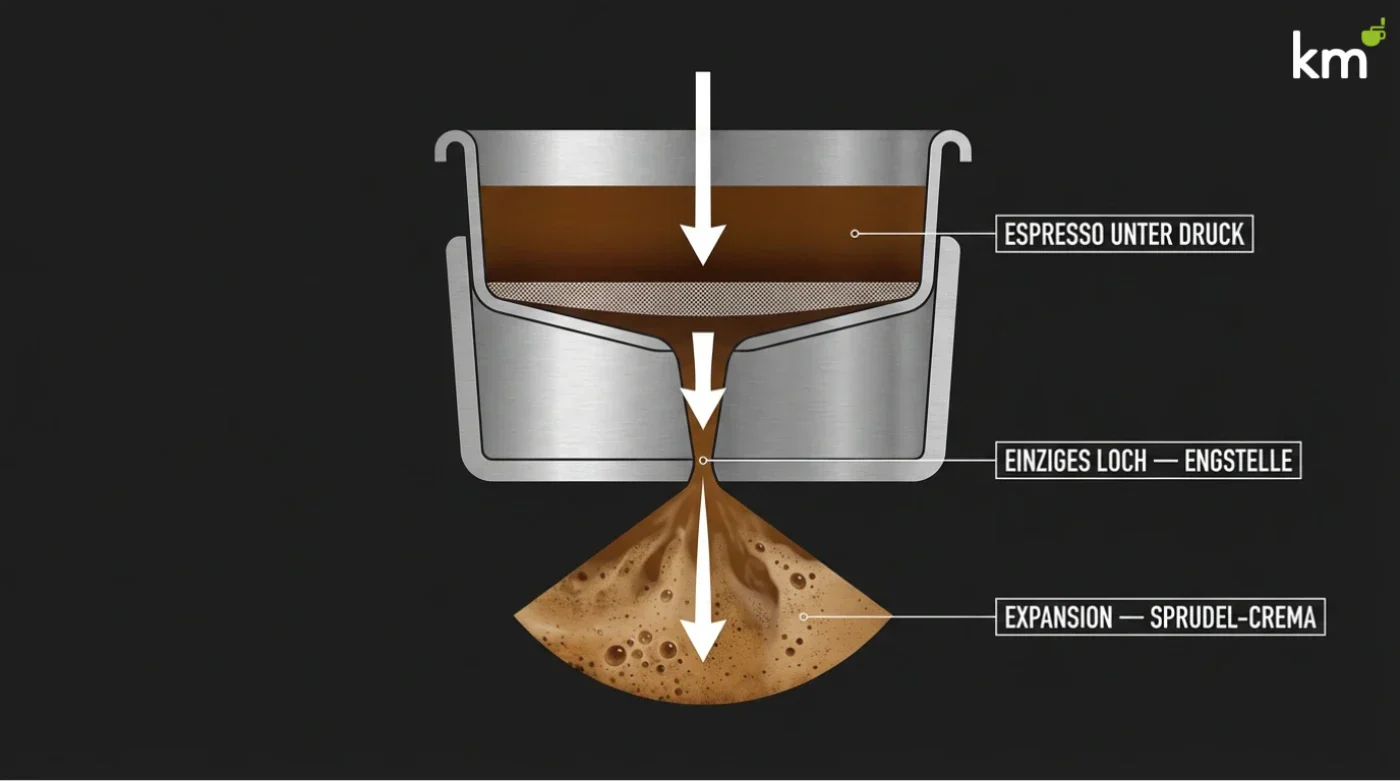
A double-walled basket has a second layer built in. From above, it looks like any other basket. From below, there's only a single tiny hole – that's the second wall. The espresso runs through the coffee puck, passes through the first basket surface, then must pass through this bottleneck.
At exactly this point, something decisive happens: pressure builds up before the bottleneck. Behind it, it suddenly drops to atmospheric pressure – and at that moment, dissolved CO₂ escapes from the liquid. Foam is created.
But this isn't typical espresso crema, and the difference is mechanical: Real crema forms because CO₂ bonds with coffee oils and fine coffee particles during extraction under ~9 bar pressure to create a stable emulsion. In the pressure basket, this doesn't happen. The foam forms only after the bottleneck, through pressure release – not through the extraction process itself. The result is a fizzy crema: airier, less viscous, different in texture.
This isn't a mistake but intentional. The basket simulates the pressure that the coffee puck itself can't generate.
The photo shows it well: In the sawed cross-section, you can see the two layers of metal, the gap between them. All the espresso must pass through this single small hole at the bottom.

Why these machines need these baskets
Inexpensive entry-level machines come with double-walled baskets as standard. The reason is simple: most buyers don't grind their own coffee. They buy pre-ground coffee from the supermarket. In almost all cases, this coffee is too coarse for espresso – and often already weeks or months old.
Old coffee loses CO₂. CO₂ fills the spaces between the coffee particles in the puck and builds resistance. Without enough CO₂, without the right grind size: the espresso runs through, no pressure, no crema.
The double-walled basket fixes this problem. It's a crutch – but a useful one, as long as the prerequisites aren't met.

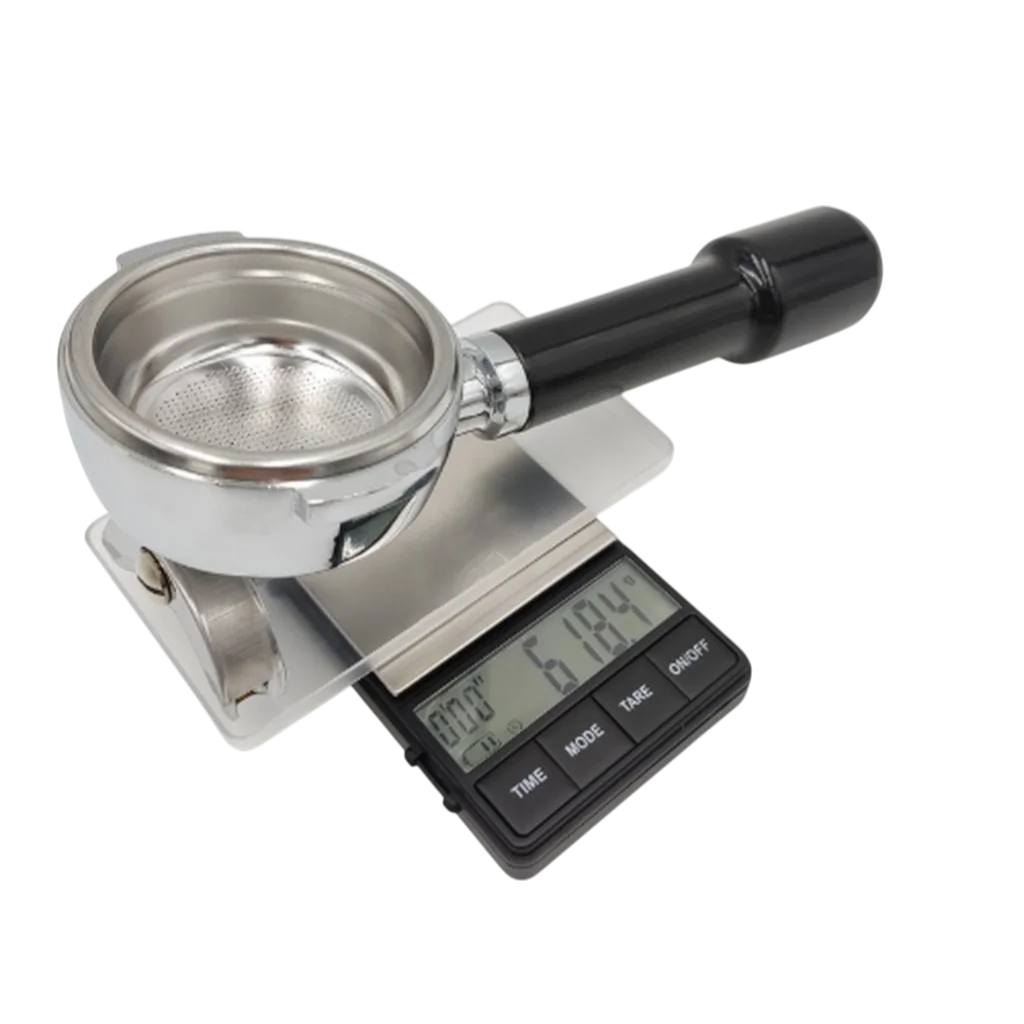
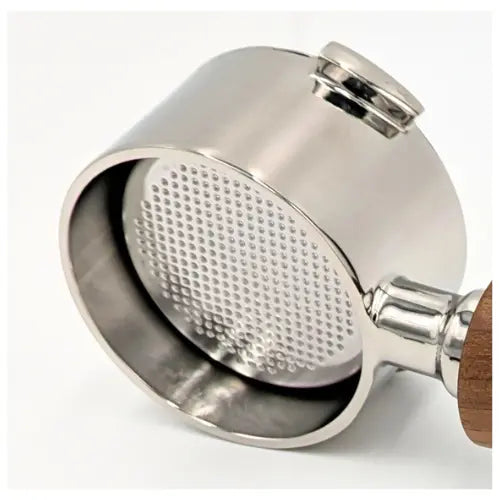
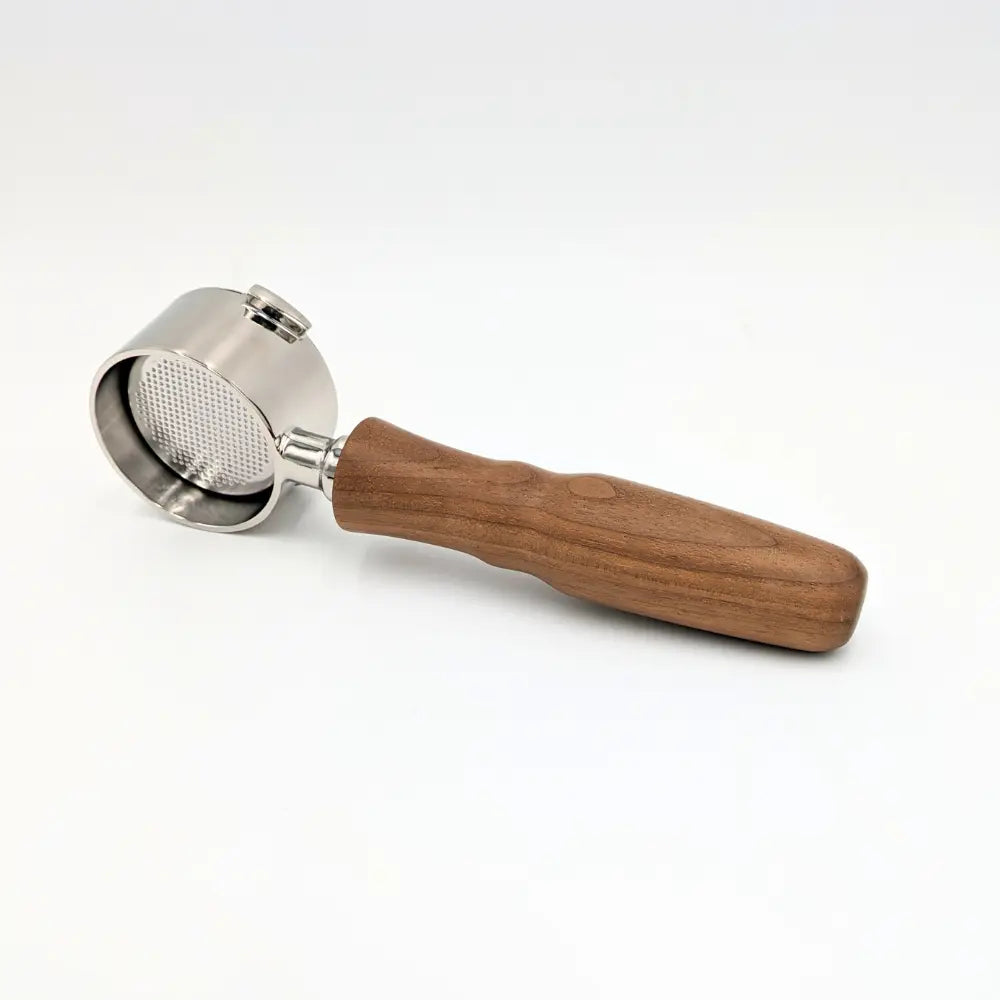
Here you can see the bottomless portafilter that we developed specifically for the Dedica. Bottomless portafilters are more advanced territory though. It's better to start with the 2-spout portafilter, which we also offer.
The problem when switching to single-walled
That's exactly where the source of the most common confusion lies: someone buys a better portafilter or a different basket, switches to single-walled – and suddenly the nice crema is gone. The coffee runs thin.
The basket is now working correctly. And that's exactly what reveals the real problem: the coffee is too old, ground too coarsely, or both. The single-walled basket can no longer hide that.
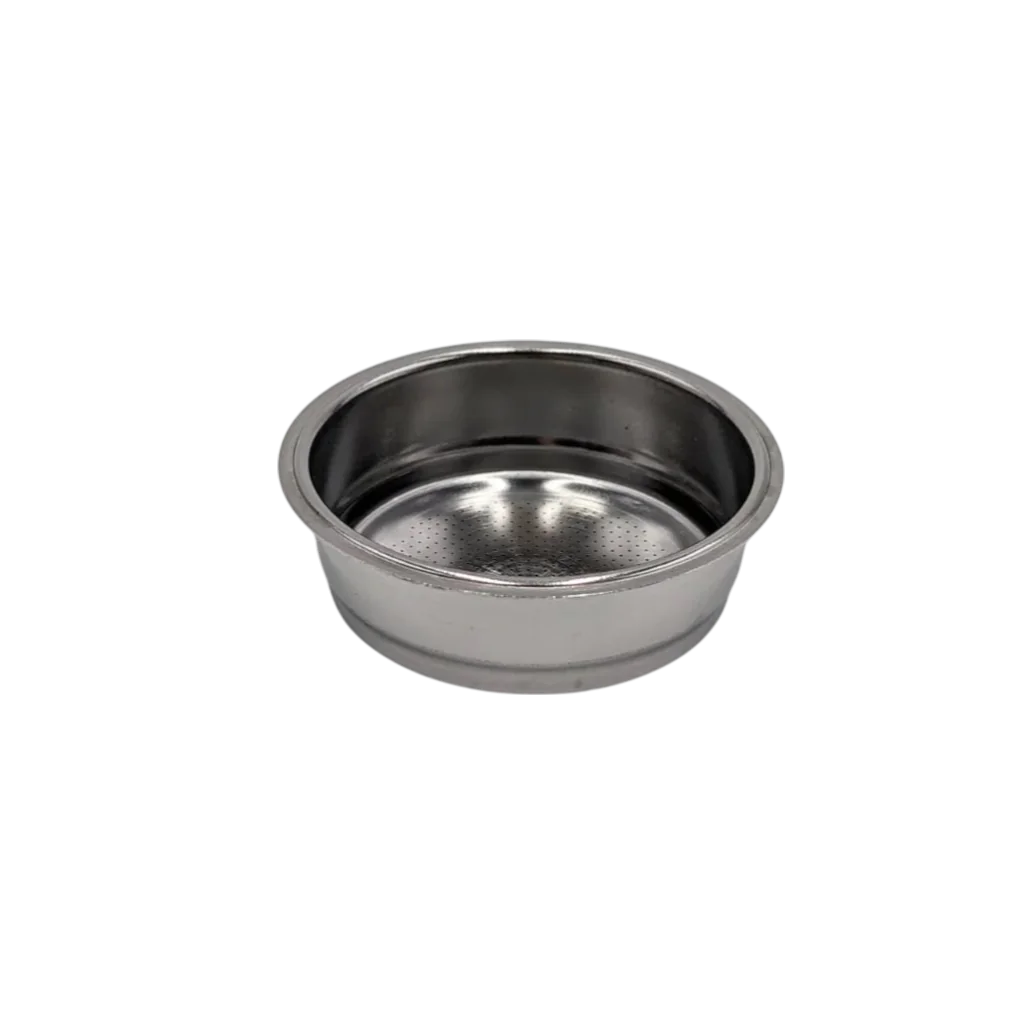
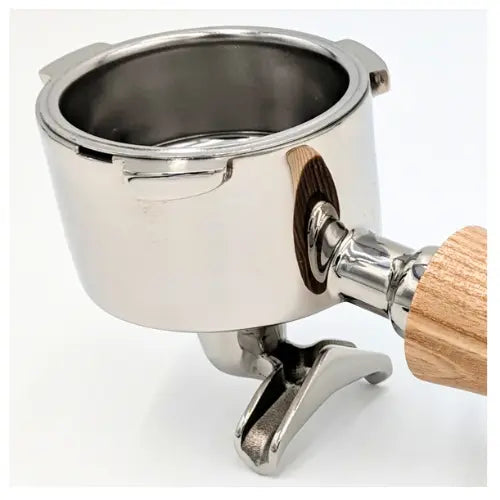
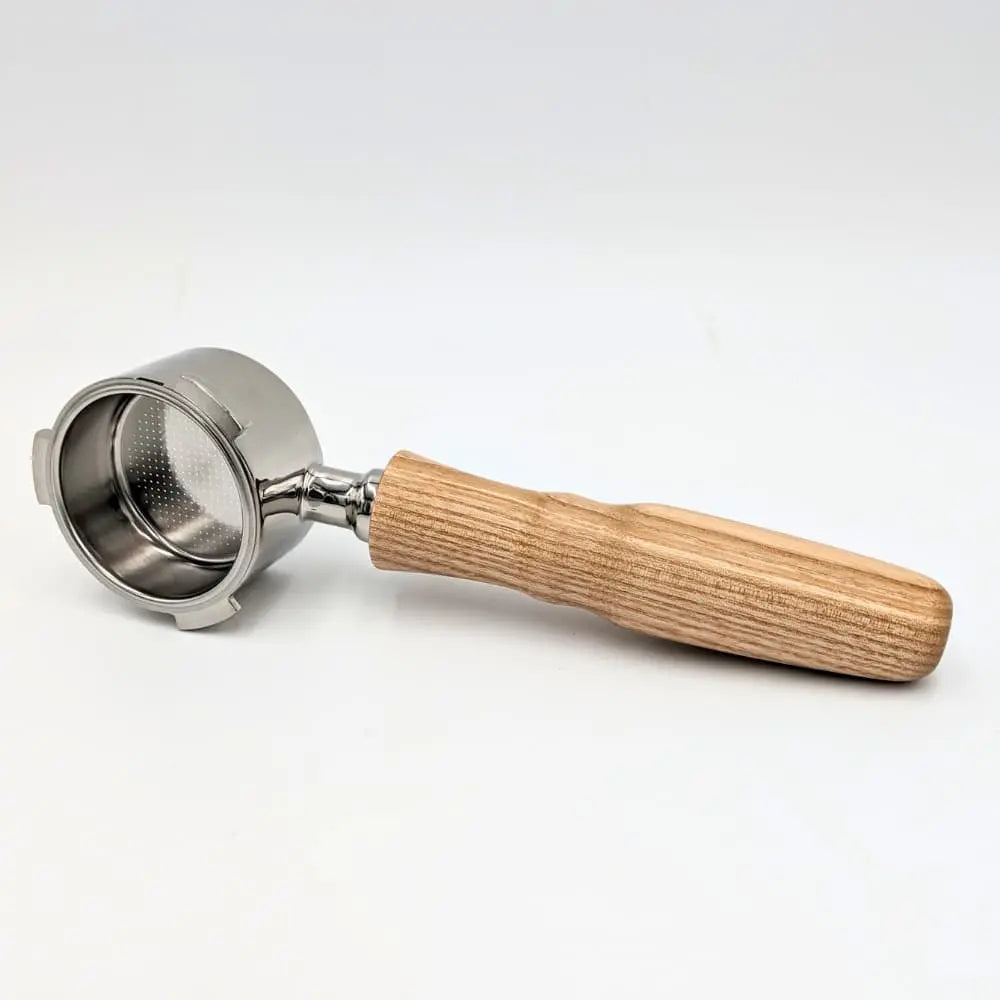
For the DeLonghi Dedica, we've developed our own portafilter with 2-spout outlet and distribute it. We also offer precision baskets in 51 mm – designed for working with fresh, properly ground coffee. Those who switch to single-walled get a setup that matches the ambition.
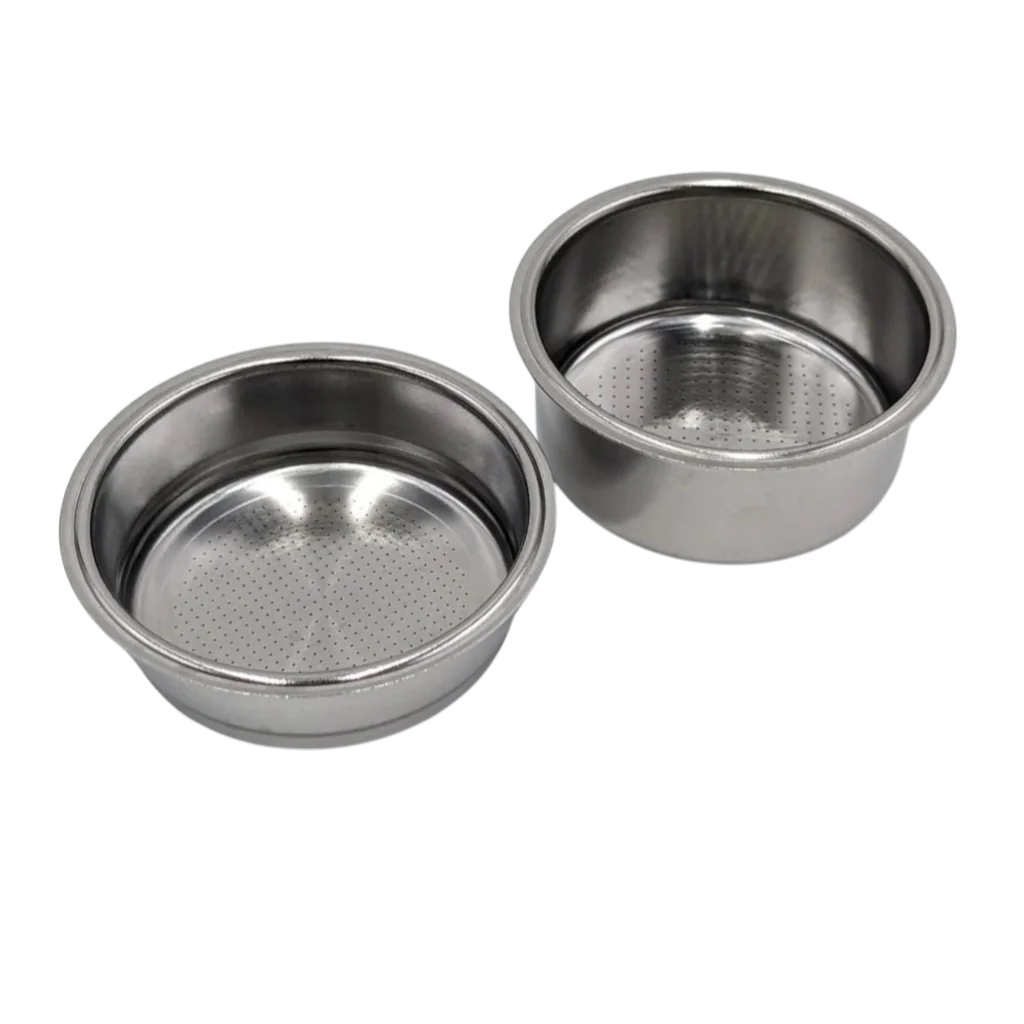
From above, both basket types look the same. The difference shows up only in the cross-section and in the result in the cup.
What now? The next logical step
The single-walled basket only works if the other factors are right:
Fresh coffee. Two to three weeks after roasting is optimal. Maximum three to four months, depending on packaging. After that, there isn't enough CO₂ for clean extraction.
The right grind size. Pre-ground coffee usually lacks both: fineness and freshness. Inexpensive grinders often lack fineness. Anyone who wants to make espresso seriously needs a grinder that can grind fine enough – and one that can be adjusted for espresso.
A good hand grinder costs less than a DeLonghi Dedica. Entry-level single-dosing grinders cost about twice as much. This is the biggest quality jump in espresso and it doesn't happen at the machine, but at the grinder.
Those who take this step will notice: the crema that now forms is denser, creamier, different. Not the fizzy variety from the pressure basket.

Crema = Quality?
Short answer: No.
Crema shows that the coffee is fresh and the grind size is right. It's an indicator of these two factors. A coffee can have a lot of crema and still not taste good – simply because the bean doesn't convince or the extraction is off.
When no crema forms at all, it shows that the coffee has past its peak or the puck isn't building enough resistance. That's a warning sign, not a quality indicator in itself.
When the double-walled basket makes sense – and when it doesn't
The pressure basket makes sense as long as the basic prerequisites for single-walled brewing are missing: no grinder, no fresh coffee, no way to adjust the grind size. It was developed for this scenario, and it serves its purpose.
But anyone who starts to really understand espresso – grinding fresh, adjusting the grind size, working with a scale – will get nothing more out of the double-walled basket. On the contrary: it hides the feedback you need.
Switching to single-walled isn't an upgrade that automatically tastes better. It's the step where the tweaking begins.
Want to get the most out of your Dedica?
In our online course, Felix (German Barista Champion 2024) and Andrea show you step by step how to make consistently good espresso. 6 modules, 20+ lessons, lifetime access.