




A double espresso is standard in most cafés. At home, there's still confusion: how much coffee goes in? How much liquid comes out? And why does the single often taste worse? We clarify quantities, ratios, and the difference that matters in the cup. (You can find basics on preparation in our espresso brewing guide.)
What a double espresso is
A double espresso (doppio) uses twice the amount of coffee compared to a single espresso and delivers twice the amount into the cup. The standard values:
Double espresso: 16–20 g coffee in, 32–40 g espresso out (approx. 40–50 ml in the cup). Single espresso: 7–10 g coffee in, 14–20 g espresso out (approx. 20–25 ml in the cup).
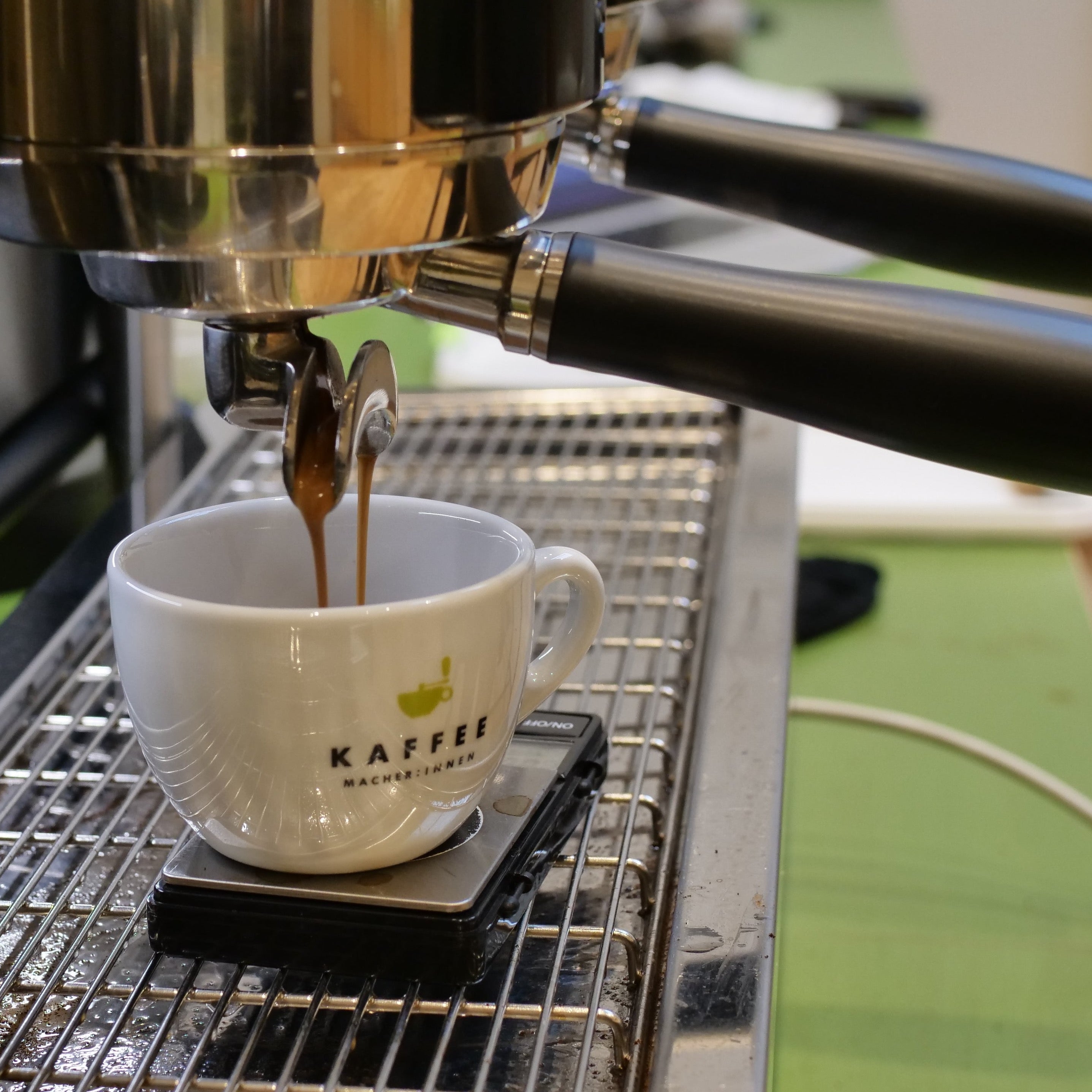
At Kaffeemacher, we usually work with 18 g of coffee for a doppio. That's the amount most double baskets are designed for. Into the cup comes 36 g at a brew ratio of 1:2 and 45 g at a ratio of 1:2.5, which we recommend for many coffees.

Grams, milliliters, volume — why that's not the same
A common confusion: 36 g of espresso is not 36 ml. Espresso contains crema, and crema has less density than water. In practice, 36 g of espresso is rather 40–50 ml volume in the cup. The exact amount depends on how much crema your coffee produces.
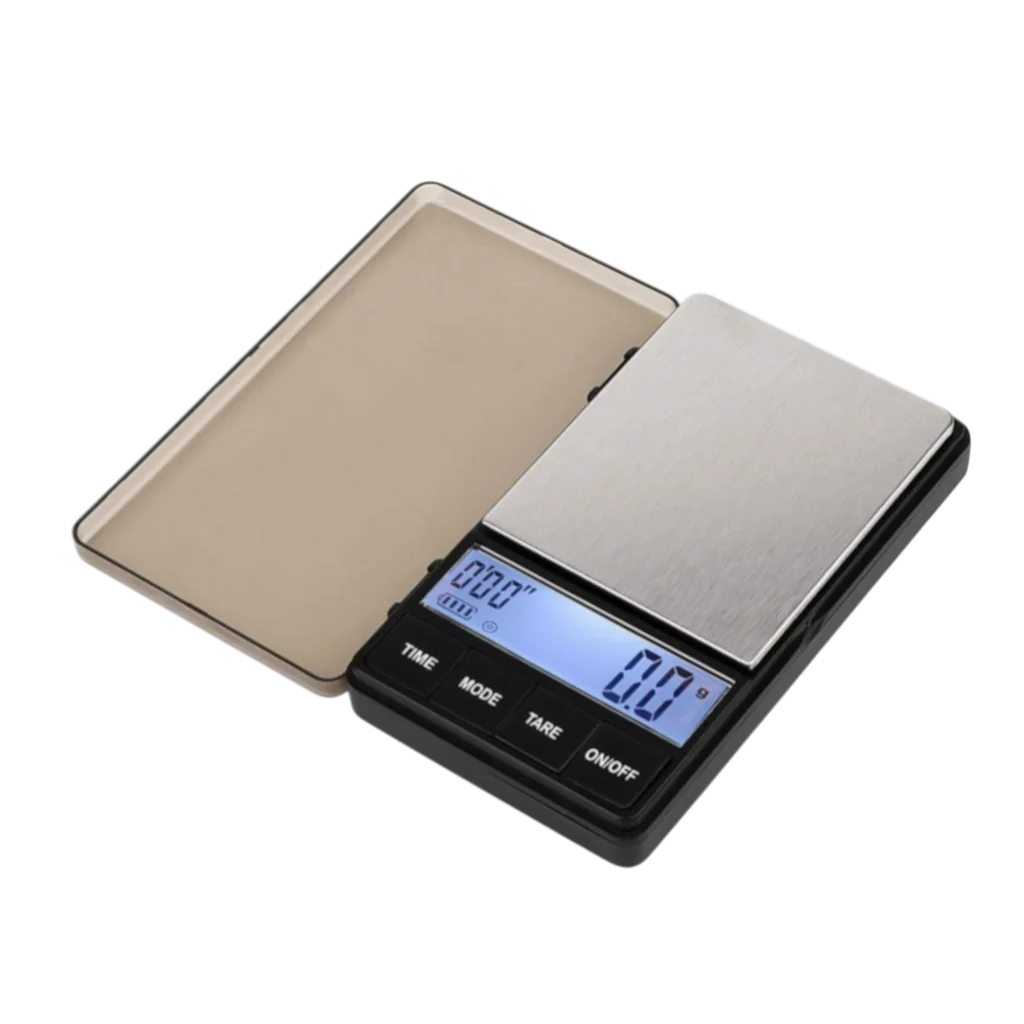
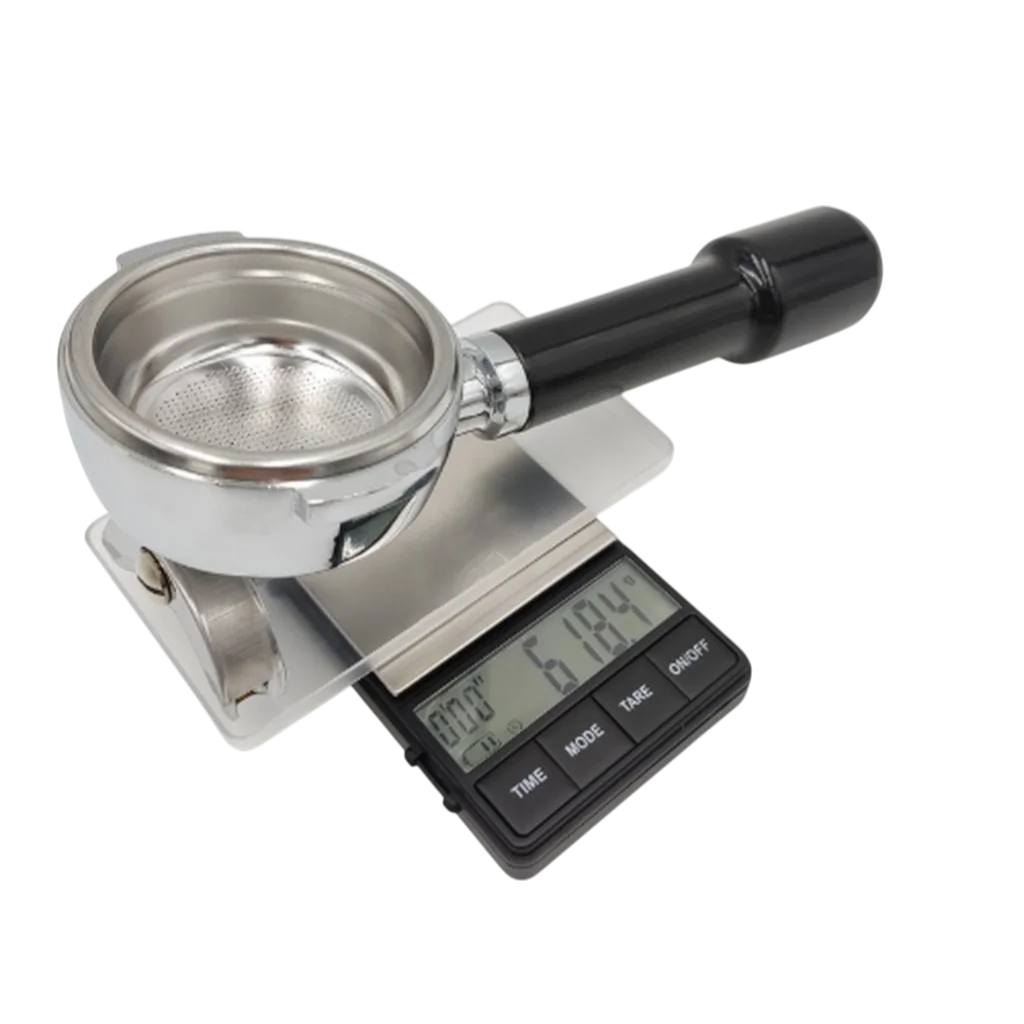
That's why we always weigh espresso in grams, not milliliters. A measuring cup is useless for espresso recipes. A scale that displays accurately to 0.1 g is affordable in our shop and makes your espresso preparation immediately more reproducible. It's the most sensible investment you can make in your setup.

Why the doppio almost always tastes better
We generally recommend the double espresso. Not because more coffee is automatically better, but for a physical reason.
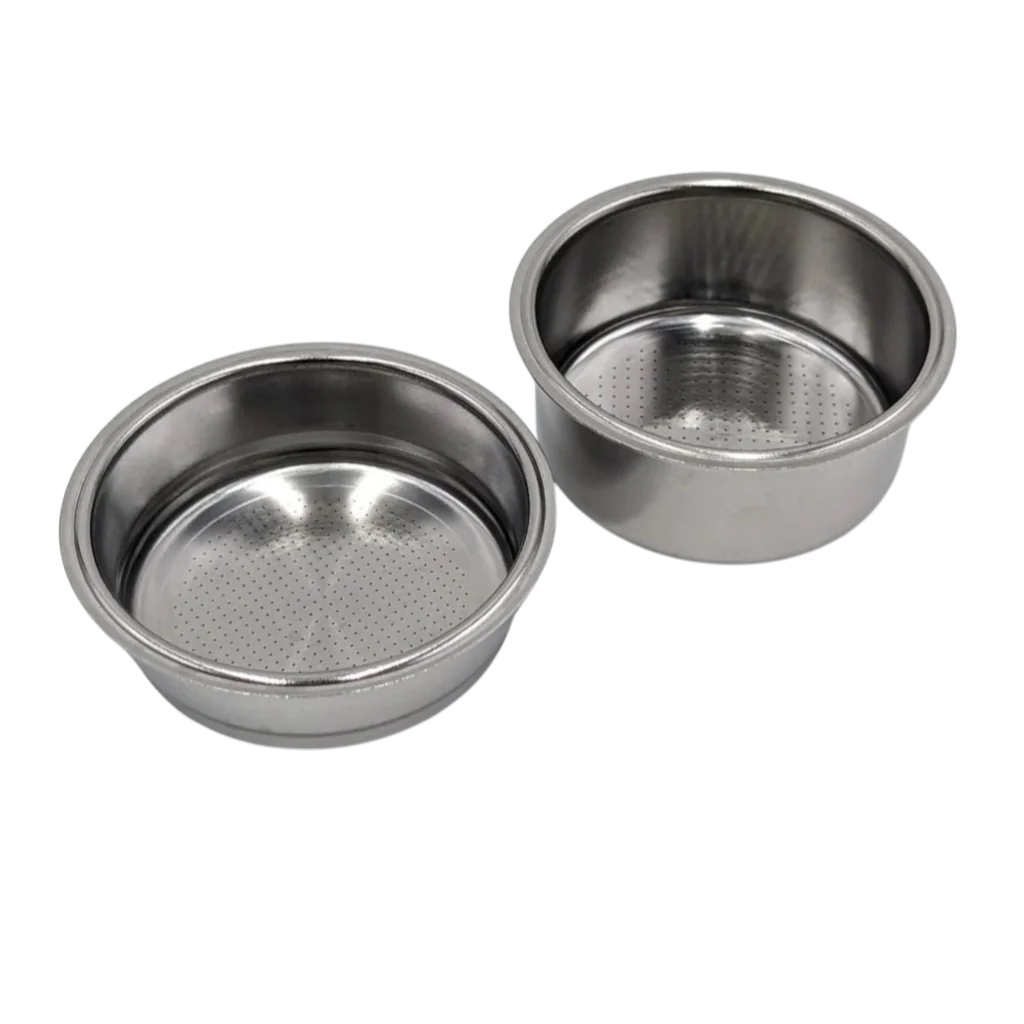
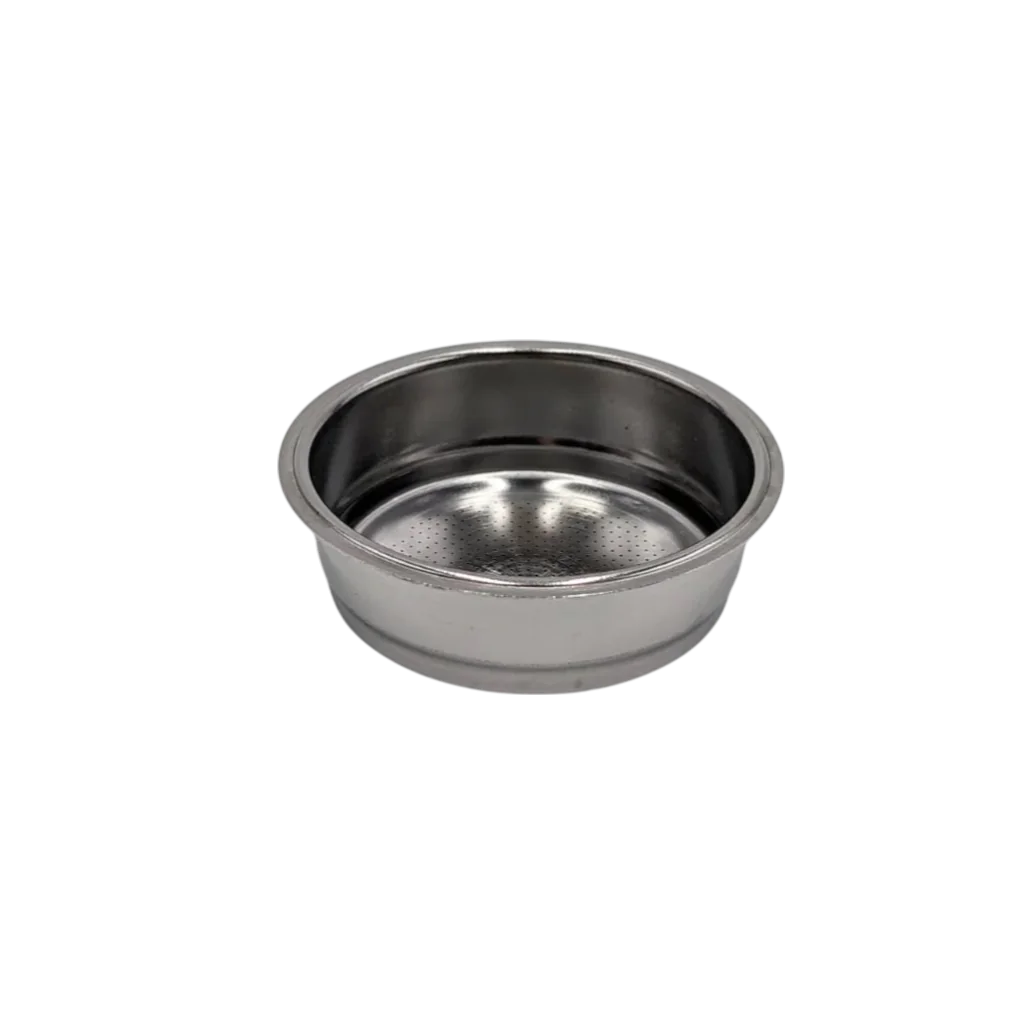
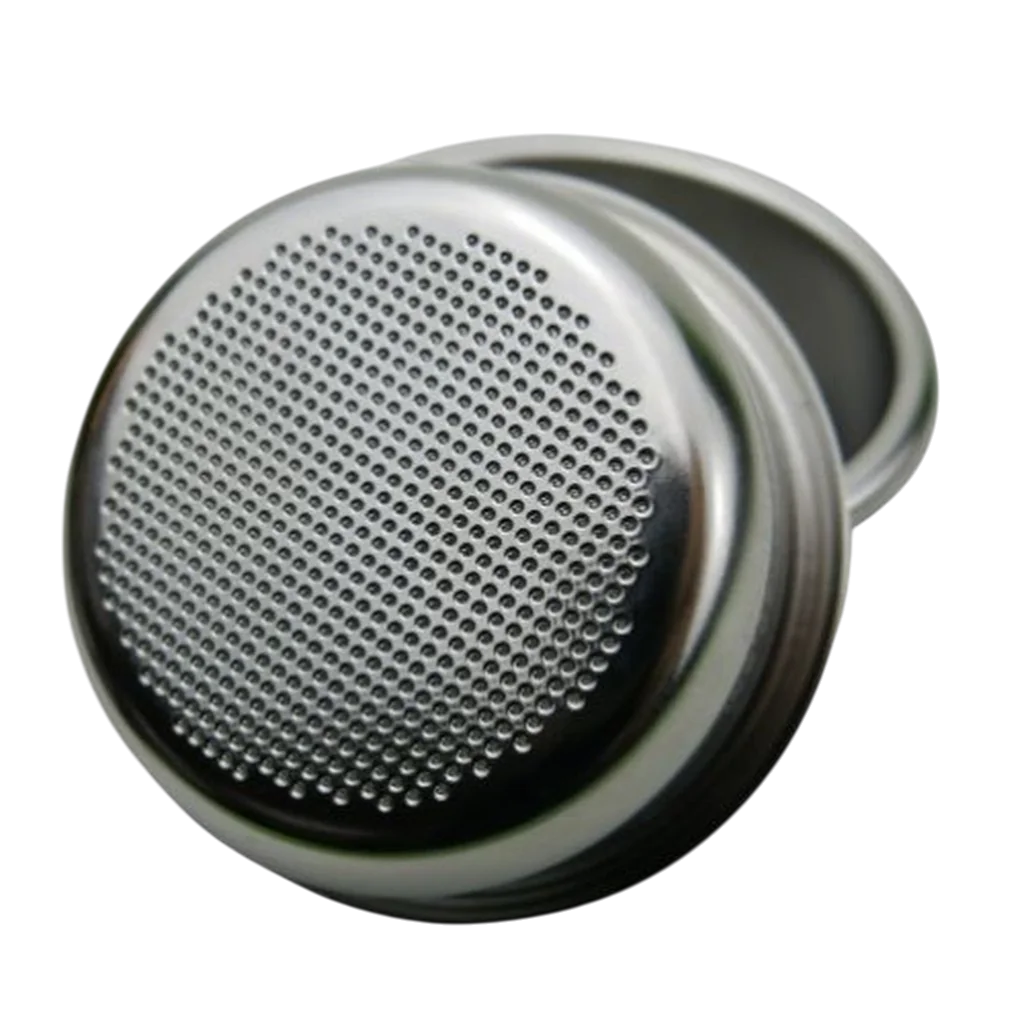
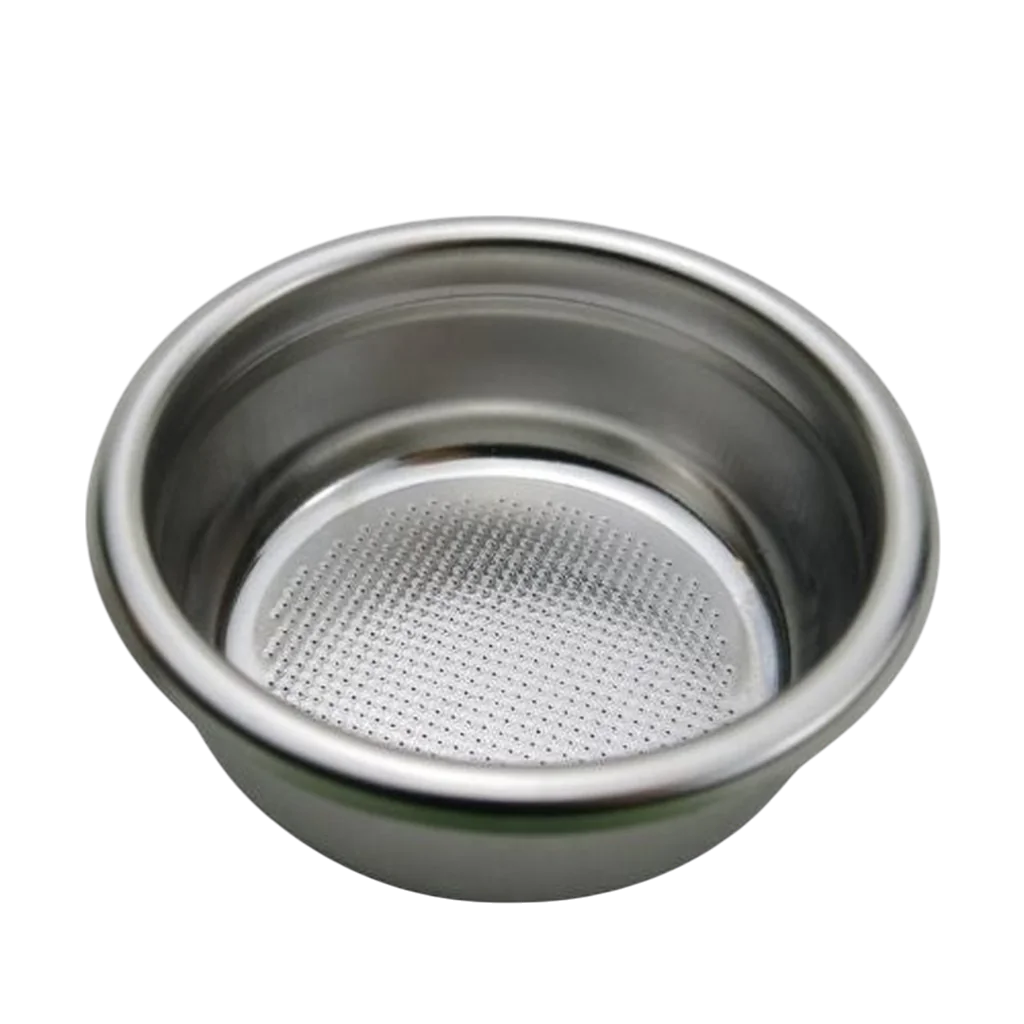
A double basket is designed for a specific amount of coffee — its geometry, depth, and hole distribution in the bottom. If you only fill 7–10 g into a single basket, a thin layer of coffee forms that builds up significantly less resistance than intended. Small density fluctuations in the puck that don't matter with the doppio immediately become channels with the single: water pushes coffee particles to the side, the resulting gap allows water to flow through faster, which further enlarges the channel. The result is often uneven extraction — overextracted in some places, underextracted in others. The espresso then tastes simultaneously sour and bitter — a typical channeling problem.
At 16–20 g of coffee in the double basket, the puck is as deep as the basket intends. Water distributes more evenly, the puck resists small irregularities better. Extraction becomes more homogeneous, the taste clearer. Many problems that beginners have with single espresso disappear with the doppio automatically — not because a miracle happens, but because the equipment is used the way it was built.
If you only want a small amount of espresso: still make a doppio and drink half. Or use the rest for a cappuccino. The result is usually better than a single from the single basket. And most of the time someone in the household or a neighbor is happy.
Single espresso insider tip
A compromise is 14–15 grams in double baskets or large single baskets like we have in our shop. Our single basket can hold up to 14 grams of coffee. With a brew ratio of 1:2, you then get 28 grams of espresso. This way, even the single espresso becomes a tasty shot.

Brew ratio: The number that really matters
The brew ratio describes how much coffee goes in and how much espresso comes out. At a 1:2 ratio, 1 g of coffee yields 2 g of espresso.
18 g coffee → 36 g espresso = 1:2. This is the standard range for most coffees. Lighter roasted coffees often tolerate a bit more water (1:2.5), darker roasted sometimes less (1:1.5 to 1:1.8).
Where 1:2 sits in the global comparison is shown by a field study by André Eiermann (2024): He measured a total of 106 espresso shots in 85 cafés from 11 countries using a refractometer. Specialty coffee cafés averaged 9.4% TDS (dissolved solids in the cup). A well-pulled doppio with 18 g and 36 g yield lands exactly in this range. Commercial cafés came in at 6.4% TDS, fully automatic machines at 5.2%. So the 1:2 ratio is not an arbitrary value — it's the parameter that espresso bars use when they care about extraction quality. Those familiar with traditional southern Italian espresso are actually well below this ratio with this approach: Neapolitan espresso is often pulled considerably more concentrated.
One more thing on whether doppio and single espresso taste identical at the same ratio: usually similar, but not necessarily the same. A thicker puck extracts in horizontal layers — the top coffee layers become saturated earlier and extract differently than the bottom layers, which still work in the full extraction window. If you switch between single and double basket and wonder about a taste difference at the same recipe: that's the reason.
Our recipes always specify coffee amount, brew ratio, and time window. With these three values, you can transfer any recipe to your machine.
Shot time: Single vs. double espresso
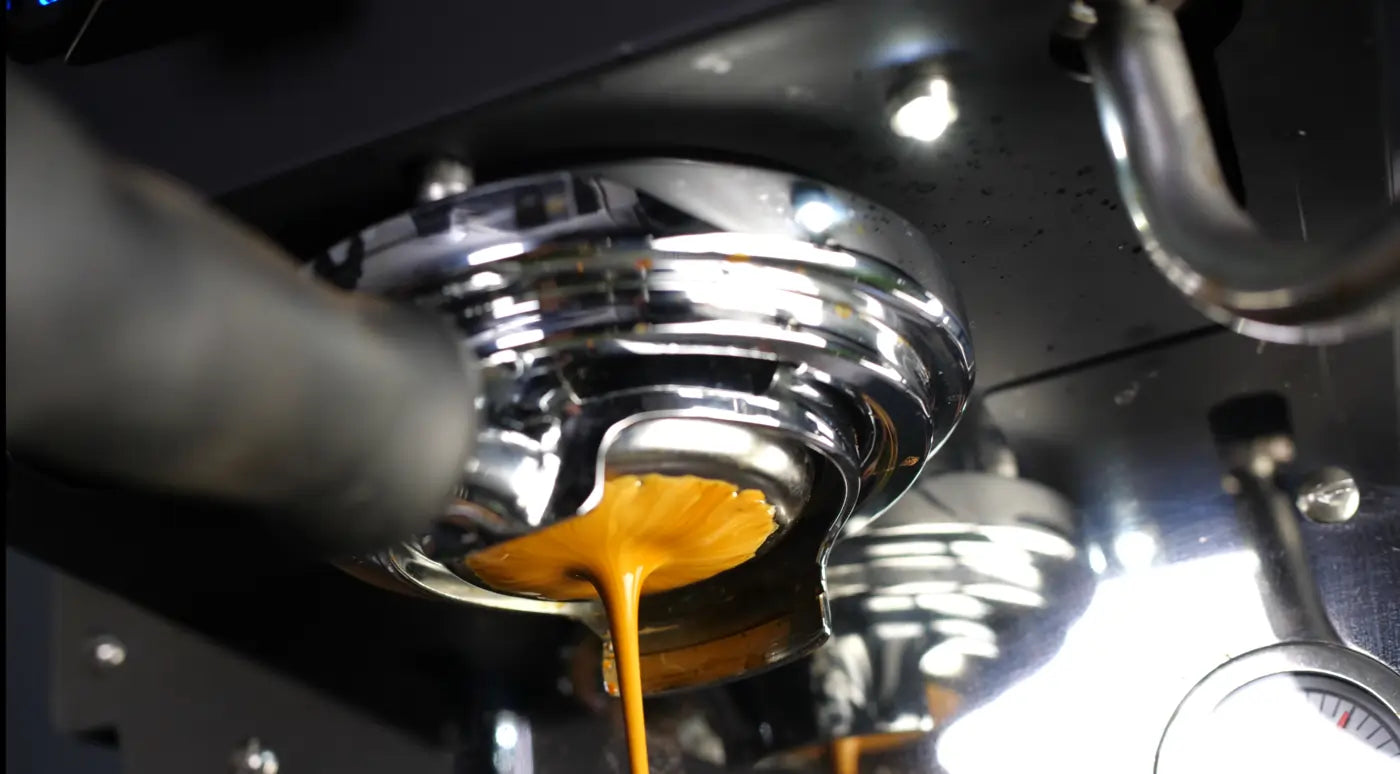
Does a double espresso have to run longer? Not necessarily. With double the coffee amount in the larger basket and double the water amount, resistance and flow practically scale with it. The extraction time often stays in the same window at the same brew ratio — typically 25–30 seconds.
If your doppio runs significantly faster or slower than the single at the same parameters, it's almost always the grind size that's the problem. When switching between single and double basket, you need to adjust the grind size because the cake thickness changes and thus the resistance.
Our advice: settle on one basket size (preferably the double basket) and optimize your grind size for it. Constantly switching between single and double basket makes adjustment unnecessarily complicated.

Caffeine: Double as much?
Yes, roughly. A double espresso contains approximately twice as much caffeine as a single because twice as much coffee powder is extracted. At 18 g of coffee, you land at approx. 120–140 mg of caffeine depending on variety and roast level — this value varies because caffeine content differs depending on Arabica variety and origin. A single espresso with 9 g of coffee contains accordingly around 60–70 mg.
For comparison: a cup of filter coffee (200 ml) contains 80–120 mg of caffeine depending on preparation. So the double espresso has slightly more caffeine than regular filter coffee, even though it looks much smaller in the cup.
 Our Sueño espresso is decaffeinated using the chemical-free Mountain Water Decaf process in Mexico. If you like to enjoy espresso in the evening, you'll find the perfect companion for your espresso hobby in Sueño.
Ristretto, lungo, and espresso: The variants
Besides the standard 1:2 ratio, there are two common variants that are often confused with the doppio:
Ristretto (1:1 to 1:1.5): Same amount of coffee, but less water. 18 g coffee → 18–27 g espresso. Shorter, more concentrated, less bitter, but often more acidic. The ristretto is not a "stronger espresso," but a different balance of flavor compounds. If you drink a very small, very intense espresso in a traditional southern Italian café, you're in this range — there, less coffee is often used, but short shots that produce a similar concentration.
Lungo (1:3 to 1:4): Same amount of coffee, but more water. 18 g coffee → 54–72 g espresso. Thinner, more volume, often more bitter because extraction runs longer. Not the same as an Americano, where hot water is added to the finished espresso.
The coffee amount stays the same for all variants. What changes is only the water amount — and thus the brew time and the taste. If an espresso tastes too sour, a bit more water (toward 1:2.5) can help. If it tastes too bitter, a bit less (toward 1:1.8).
Café Crème (Switzerland): Switzerland's most popular coffee drink is not a lungo — even though it comes into the cup in a similarly large amount. The difference lies in the recipe: Café Crème is brewed with 12–15 g of coffee in the double basket and a ratio of 1:8 to 1:10, with a significantly coarser grind than espresso. From 15 g of coffee, around 120–150 g goes into the cup in 25–30 seconds. If you prepare a café crème as a lungo — same grinder setting, just more water — you get an over-extracted, bitter coffee. A good café crème needs its own grinder setting, ideally a second grinder. Everything about the history, brewing recipes, and the question of whether coffee cream is really necessary is explained in our comprehensive café crème article.
Key figures at a glance
Double espresso: 16–20 g coffee, 32–40 g into the cup, 25–30 seconds. Brew ratio 1:2 as a starting point. Usually tastes better than the single because extraction runs more evenly. Contains approx. 120–140 mg caffeine.
Want to understand your brew time better? Then read our article Espresso extraction time: When does brew time really start? — including the +3-second rule for vibration pumps.
And if your espresso doesn't taste good despite the right amount: take a look at how to set the grind size correctly and what you can do if the espresso tastes too sour.