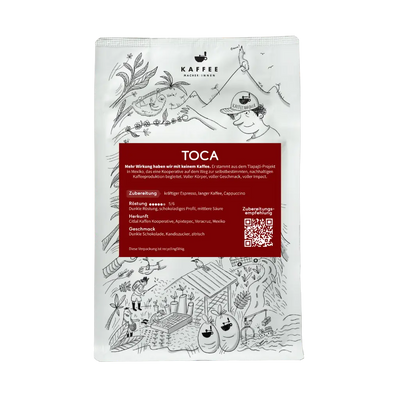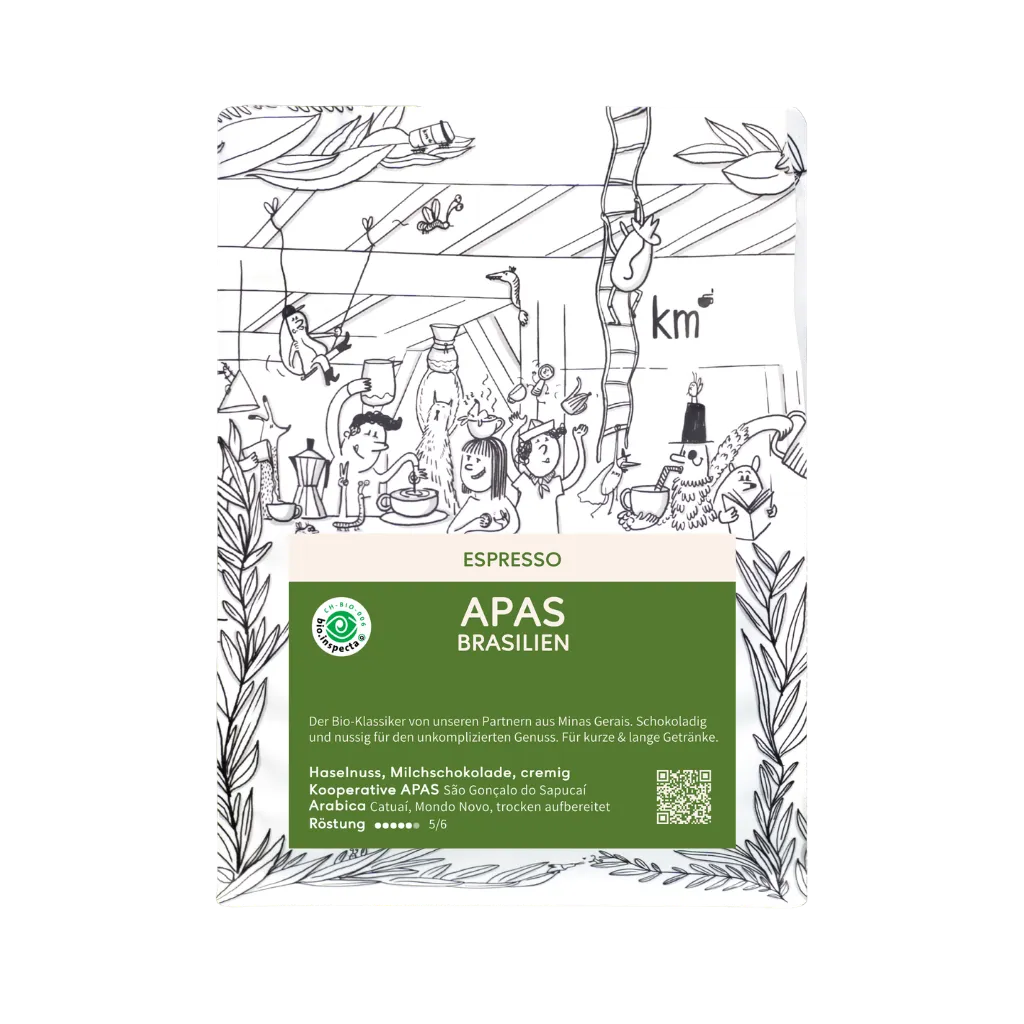

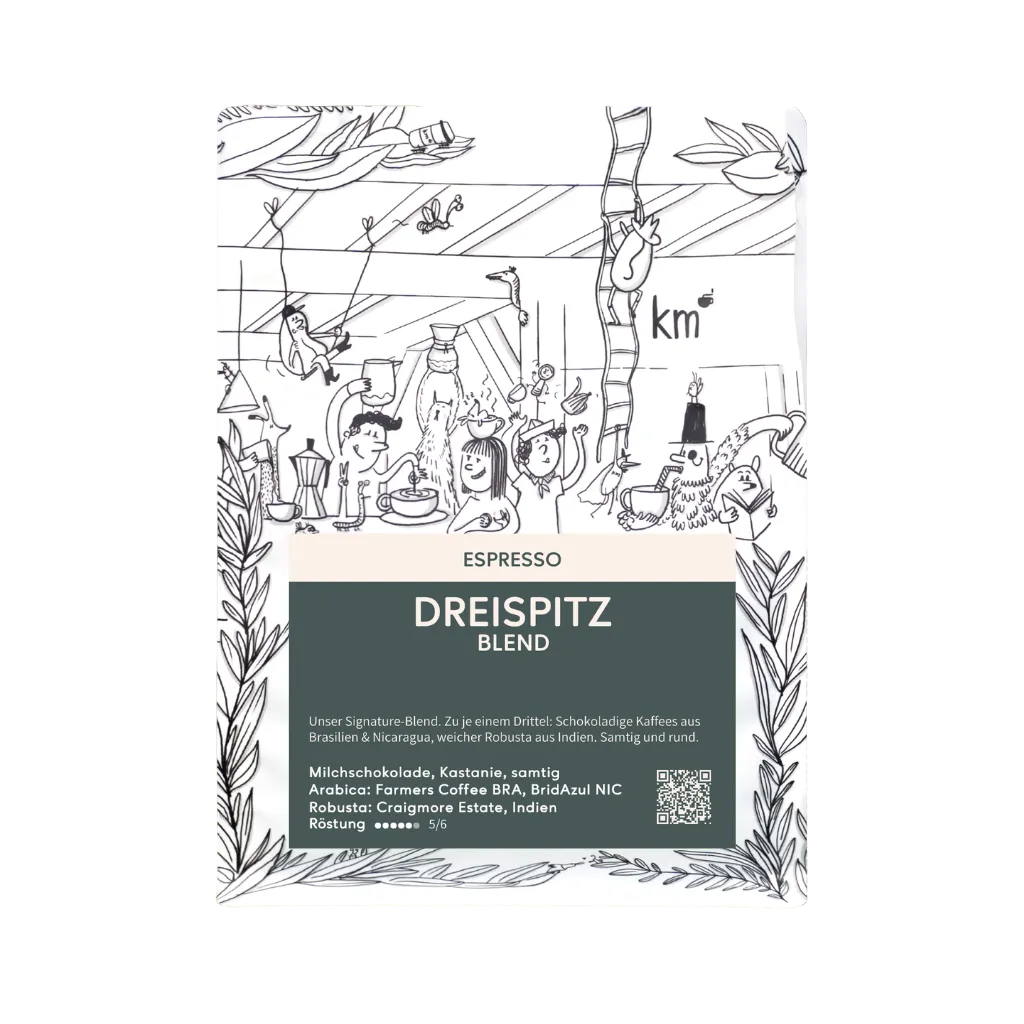

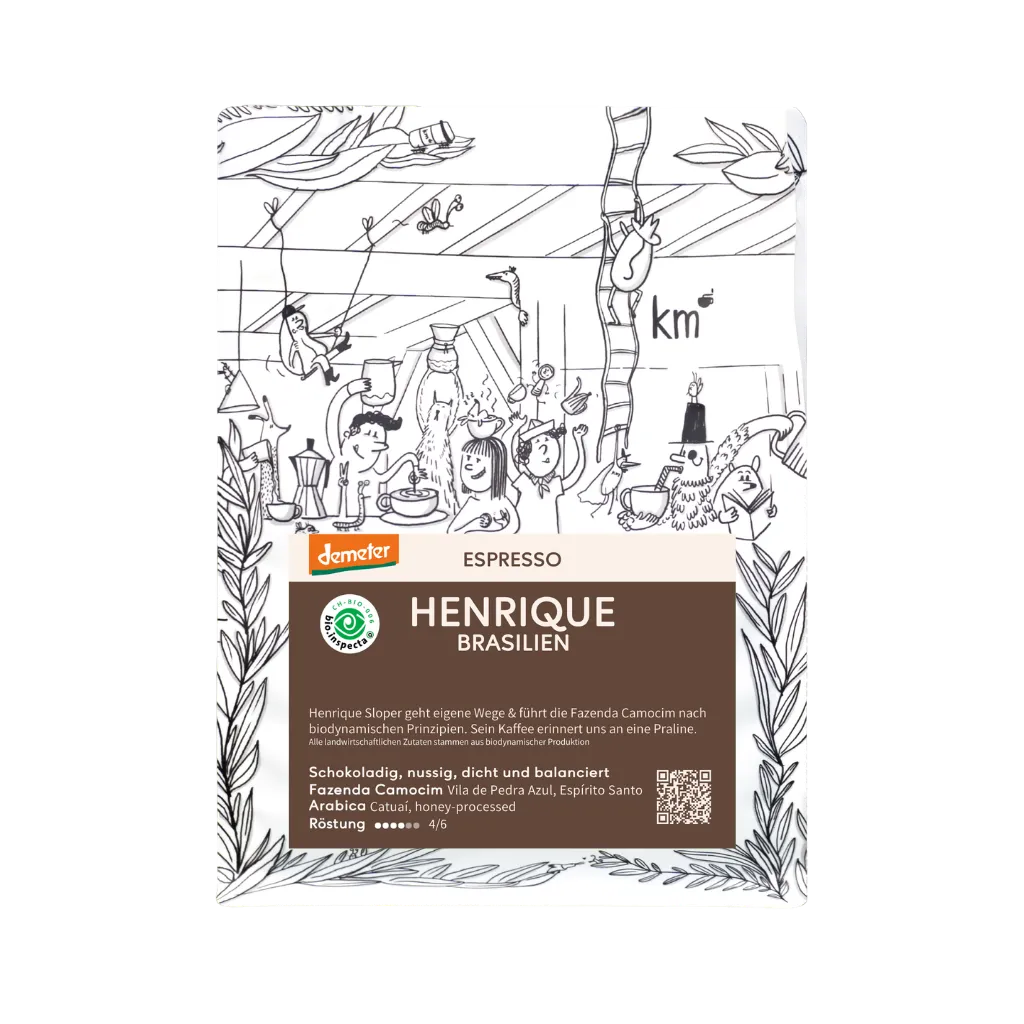



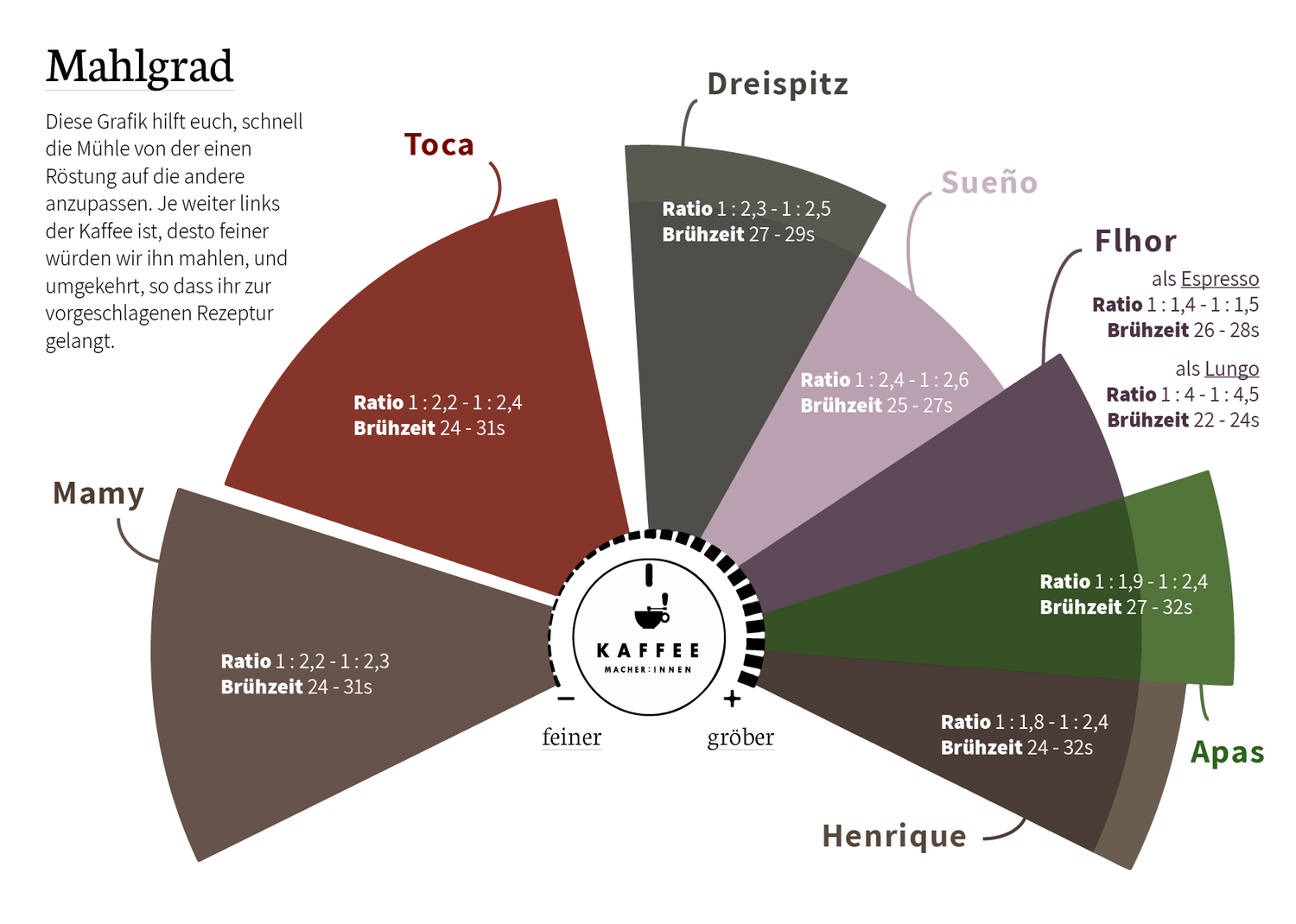

The espresso cheat sheet is designed to help you adjust our espressos easily and quickly. It also shows you how to switch from one coffee to another in order to get good results quickly and save coffee.
Extraction times for our espresso roasts / sweet spot vs. sweet range
We often talk about a sweet spot in espresso extraction, a point where the espresso tastes better to us. We source green coffees and roast them in such a way that this sweet spot is rather a sweet range, meaning a range where the coffee truly shines.
General remarks:
- the darker a coffee, the shorter we extract it on extraction systems that quickly ramp up from 0 to 8-9 bar.
- the lighter a coffee, the longer we typically extract it
- With espresso machines featuring pressure profiling, such as lever machines, the San Remo YOU or the Decent, we also extract darker roasts longer. Their pressure profiles can be individually tailored to the coffee, and the extraction time tends to be longer than with an immediate pressure increase.
- for more information on how we set specialty espressos: check out this video

The optimal grind size for our espresso roasts
Grind size settings are not transferable. Not between different grinders, and not even between two identical models from the same manufacturer. The burr settings, the retention figure, and the particle distribution make espresso grinders particularly individual in nature.
However, we can make general assessments about grind size if we establish a reference framework. On the far left of our scale is very fine (Mamy), slightly to the right (Toca) is fine, and somewhat coarser is the Apas. We recommend grinding the Henrique even coarser than the Apas.
Especially if you're familiar with our coffees or use them as a reference, you can now put them in relation to each other, and adjusting your grinder settings when switching should become even easier.
Changing grinder settings made easy
With the graphic above, it should be even easier for you to quickly adjust the grind size when switching between our coffees. The coffees on the left side we grind finer, the coffees on the right side coarser. The distance between each coffee on the graphic is chosen the way we would set it on the grinder.
Example 1: Switching from Toca to Henrique
- you have a Toca in your grinder and want to switch to Henrique
- we wouldn't grind just a bit coarser (then you'd end up at Dreispitz), but significantly coarser
Example 2: Switching from Apas to Mamy
- The Apas is in your grinder and you want to switch to Mamy
- You refer to the graphic and would grind significantly finer
Coffee characteristics and grinder settings
With the help of the following information, you'll find it easier to adjust a coffee. These are general assessments we've documented based on our experience.

Drink ratios / brew ratio / A matter of taste
The ratio of ground coffee used to the amount of coffee beverage in the cup is called brew ratio - although there's a significant difference here. With filter coffee, brew ratio is understood as the ratio between the dose of roasted coffee and the water poured over the coffee grounds. With espresso, however, we're talking about the ratio between the ground coffee used and the brewing amount in grams in the cup.
The days of ultra-strong espressos are increasingly a thing of the past. Just over a decade ago, it was common to get high-dosed and under-extracted double espressos in specialty cafés. Too often, these drinks were unbalanced.
By using a less tight ratio, we increase the extraction of the coffee grounds and support the balance of the espresso. By increasing the water flow through the grounds, we also increase the extraction rate, which can give the coffee more sweetness.
Fundamentally, by choosing the right brew ratio, we're navigating a compromise between texture, balance of sweetness and acidity, and the intensity of aroma.
As varied as tastes are, so too are the chosen brew ratios.
Here we've summarized our preferences:
- lighter roasts we prefer in a larger brew ratio, e.g. 1:2.4 and higher
- darker roasts we prefer in a smaller brew ratio, e.g. 1:2.2 and higher
- Robusta roasts like the Mamy we particularly like in the ratio 1:2
- especially very floral coffees impress us at longer extractions like 1:2.6 and more