




Espresso is not a simple beverage. Specialty espresso is even less so. What lands in the cup is a concentrate, intense and aromatic. For espresso to taste good, many small details must be right. We have explained in detail here the basics of espresso preparation.
Especially with more complex specialty coffees, we need to adjust the espresso grinder significantly to get a balanced coffee. So how can we proceed to arrive at a sweet and balanced espresso that we would want to drink a second cup of?
Traditional Espresso and Specialty Espresso
First, we need to clarify what we mean exactly when we talk about traditional espresso and specialty espresso.
Traditional Espresso: darker roast, limited aromatics

Specialty Espresso: medium to lighter roast, complex aromatics
We find supporters for both categories. If you prefer something a bit "more Italian," you'll certainly be in good hands with traditional espresso. Often roasting notes take center stage, the coffees have plenty of body, are heavy, and have less acidity.
Specialty espressos, in our understanding, are coffees that
- consist of higher quality, often more complex green coffees
- are generally roasted medium-dark to light and thus
- forego intense roasting notes
Also interesting: what exactly is specialty coffee?
What does this mean for extraction?
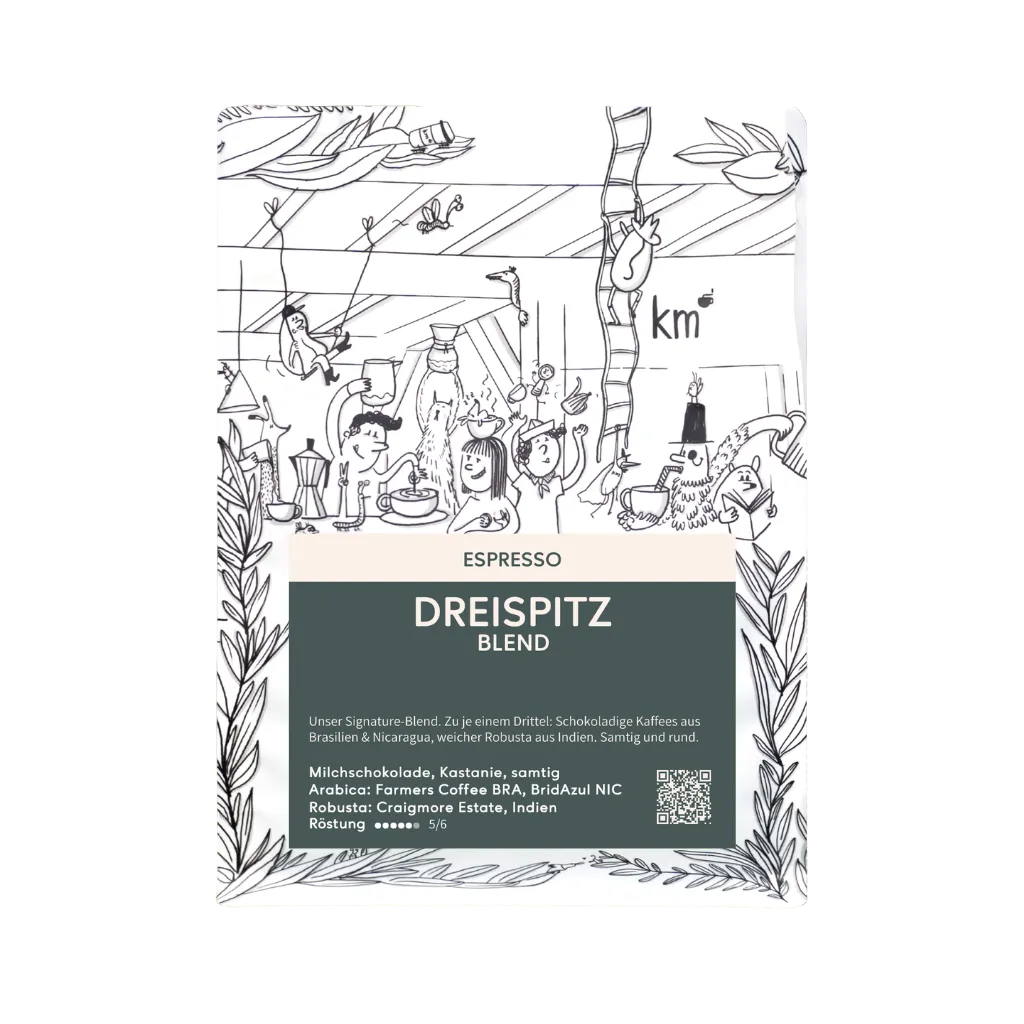
In our test, we tasted two coffees from our roastery together. The more traditional coffee is the Dreispitz, a 3-blend with Brazil, Nicaragua, and India in equal parts each, roasted medium-dark.
The specialty espresso was the Leica, a honey-processed coffee from our Santa Rita finca in Nicaragua. We roast this coffee considerably lighter than the Dreispitz.
 Left: the Dreispitz – the darker crema provides information about the roast level
Right: the Leica – the lighter crema indicates a lighter roast
Grinder Setting and Dosage
The recipe for extraction is:
19g powder amount, 54g extraction amount in the cup (or 27g per cup)
For the first extraction, we chose the same fine grind.
Extraction Time
Interestingly, the Leica specialty espresso came through the portafilter in just over 20 seconds.
The more traditional Dreispitz espresso, however, needed more than 40 seconds until we reached 27g per espresso cup. The darker espresso had twice as long an extraction time at the same grind.
Why?
Darker roast = more brittle = more fines = faster water uptake = more resistance to water = longer extraction
Lighter roast = harder beans = fewer fines = less quickly soluble = less resistance to water = faster extraction
And what does that mean in terms of taste?
Dreispitz in 41sec: flat, little acidity, dense, not very round, dull
Leica in 20sec: lots of acidity, little sweetness, somewhat watery, bitter
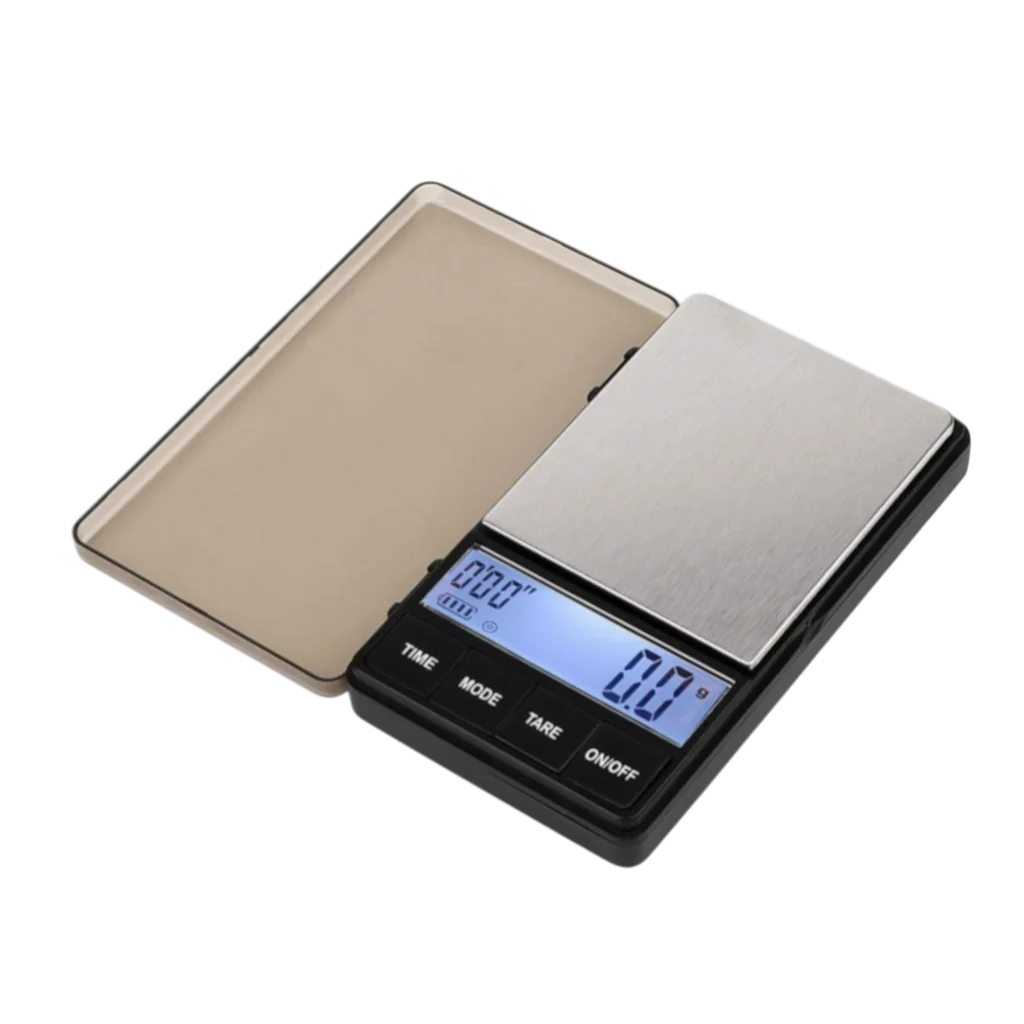
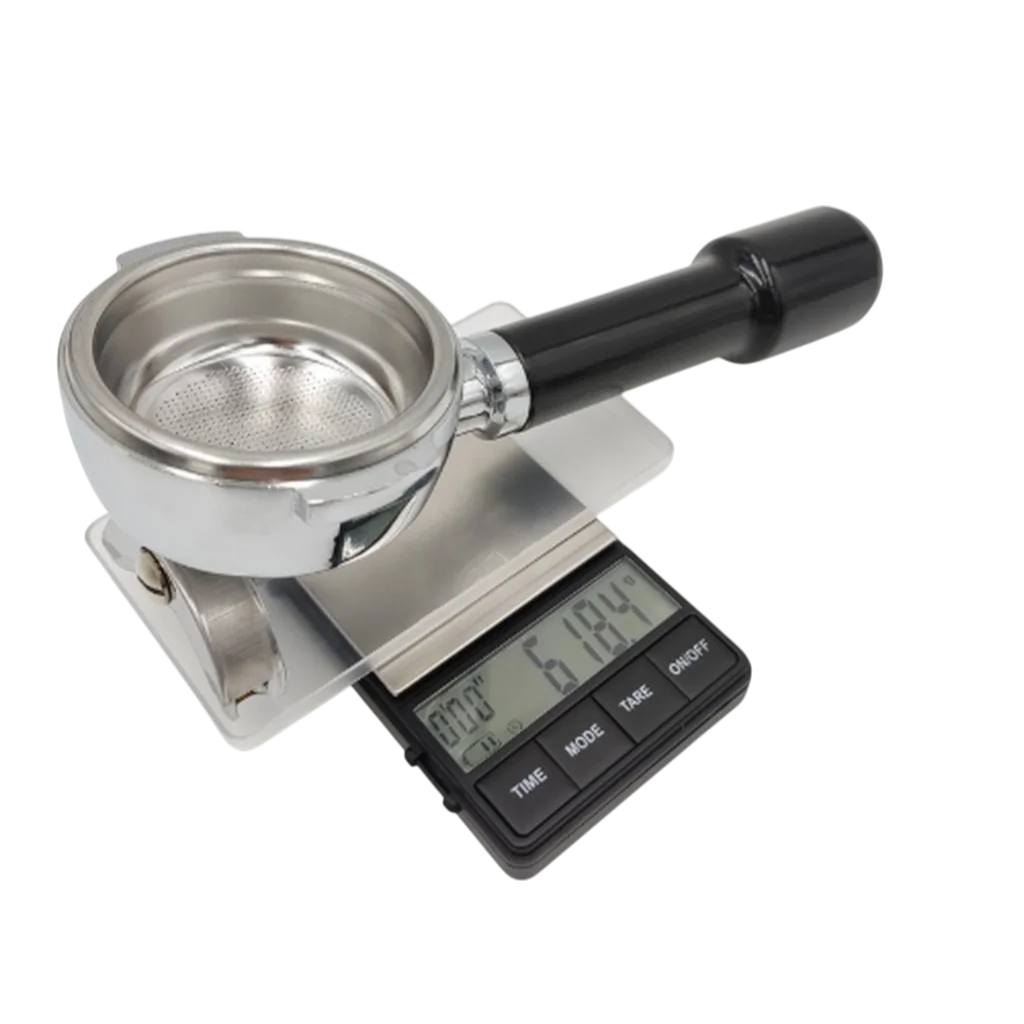
 We always recommend working with a gram scale. Especially when you're adjusting grinders, scales make you quick and efficient.
What do we need to change now?
Specialty Espresso Leica:
To tap into the potential of a lightly roasted specialty espresso made from dense beans, you should really grind very fine.
We set our Anfim Pratica espresso grinder to almost the finest grind and increased the extraction time to 26 seconds.
The coffee was now round, sweet, the acidity integrated very well into the soft texture. We could now detect significantly more flavor notes and the aftertaste was long and sweetish.
Traditional Espresso Dreispitz:
Darker roasted coffees are generally more enjoyable when extracted somewhat shorter. At just under 30sec, we have the Dreispitz in a zone where the coffee is really a lot of fun.
We ground significantly coarser, extracted for 30sec, and the coffee tasted completely different.
The coffee was much more balanced, had a bright acidity, an acidity that positively brightened the coffee, supported by plenty of heavy sweetness. The texture was syrupy/creamy.
Working with Gram Scales
On the left we see 19g Dreispitz in the basket, on the right we see 19g Leica. The darker roasted coffee (left) takes up significantly more volume in the portafilter. This makes it all the more important to work with scales and not rely on the naked eye.
So, experiment, push the limits of the grinder and the coffee, and only then evaluate the coffee. But we definitely take away: one size fits all doesn't apply to espresso settings.