



























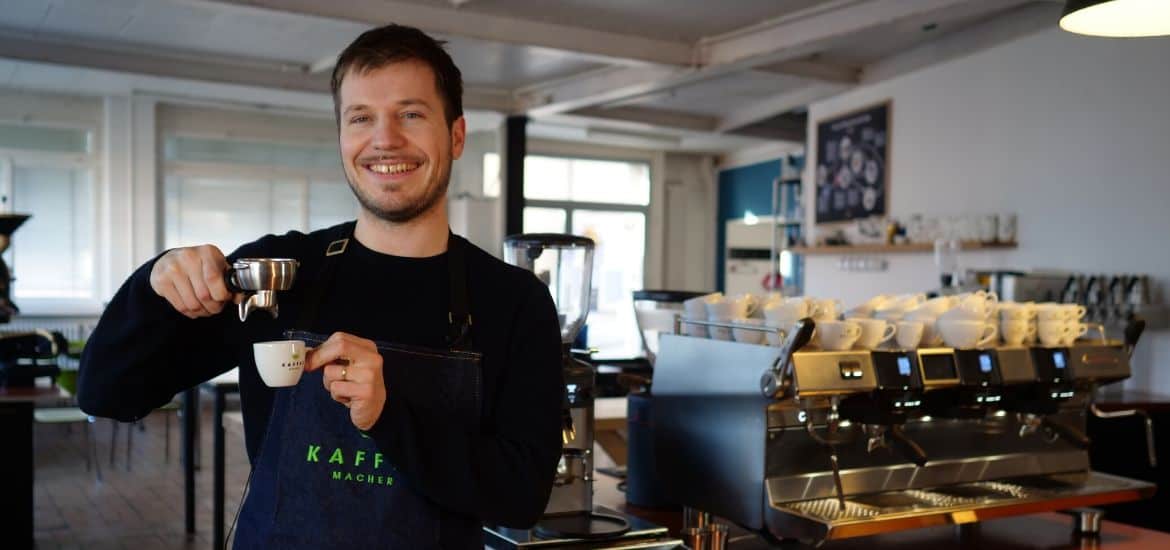

Espresso is not a simple beverage. Specialty espresso even less so. What lands in the cup is a concentrate, intense and aromatic. For espresso to taste good, many small details must be right. We have explained in detail here the basics of espresso preparation.
Especially with more complex specialty coffees, we need to adjust the espresso grinder significantly to get a balanced coffee. So how can we go about achieving a sweet and balanced espresso, one we'd actually want to drink a second cup of?
Traditional Espresso and Specialty Espresso
First we need to clarify what we mean when we talk about traditional espresso and specialty espresso.
Traditional Espresso: darker roast, limited aromatics

Specialty Espresso: medium to lighter roast, multi-layered aromatics
We find supporters for both categories. If you prefer something a bit "more Italian", you're certainly in good hands with traditional espresso. Often roasting notes take center stage, the coffees have plenty of body, are heavy, and have less acidity
Specialty espressos are, by our understanding, coffees that
- consist of higher-quality, often more complex green coffees
- are generally roasted medium-dark to light, and thus
- forgo intense roasting notes
Also interesting: what exactly is specialty coffee?
What does this mean for extraction?
In our test we tasted two coffees from our roastery against each other. The more traditional coffee is the Dreispitz, a 3-blend with equal parts Brazil, Nicaragua, and India, roasted medium-dark.
The specialty espresso was the Leica, a honey-processed coffee from our Finca Santa Rita in Nicaragua. We roast this coffee considerably lighter than the Dreispitz.
 Left: the Dreispitz – the darker crema reveals the roast degree
Right: the Leica – the lighter crema indicates a lighter roast
Grinder Setting and Dose
The recipe for extraction is:
19g ground dose, 54g extraction amount in the cup (or 27g per cup)
For the first extraction we chose the same fine grind.
Extraction Time
Interestingly, the Leica specialty espresso shot through the portafilter in just over 20 seconds.
The more traditional Dreispitz espresso, however, took more than 40 seconds until we reached 27g per espresso cup. So the darker espresso had twice the extraction time at the same grind level.
Why?
Darker roast = more brittle = more fines = faster water uptake = more water resistance = longer extraction
Lighter roast = harder beans = fewer fines = less quickly soluble = less water resistance = faster extraction
And what does that mean in terms of taste?
Dreispitz in 41sec: flat, little acidity, dense, not very round, dull
Leica in 20sec: lots of acidity, little sweetness, somewhat watery, herbaceous
 We always recommend working with a gram scale. Especially when you're adjusting your grinders, scales make the work quick and efficient.
So what do we need to change?
Specialty Espresso Leica:
To unlock the potential from a light roasted specialty espresso made of dense beans, you really should grind very fine.
We set our Anfim Practica espresso grinder to almost the finest grind setting and increased the extraction time to 26 seconds.
The coffee was now round, sweet, the acidity integrated beautifully into the soft texture. We could now detect significantly more flavor notes and the aftertaste was long and sweet.
Traditional Espresso Dreispitz:
Darker roasted coffees generally perform better when extracted a bit shorter. At just under 30 seconds we're with the Dreispitz in a zone where the coffee is really a lot of fun.
We ground considerably coarser, extracted for 30 seconds and the coffee tasted completely different.
The coffee was much more balanced, had a bright acidity that positively brightened the coffee, supported by plenty of heavy sweetness. The texture was syrupy/creamy.
Working with Gram Scales
On the left we see 19g Dreispitz in the basket, on the right we see 19g Leica. The darker roasted coffee (left) takes up significantly more volume in the portafilter. This is why it's so important to work with scales and not rely on the naked eye alone.
So, experiment, push the limits of your grinder and your coffee, and only then evaluate the coffee. But one thing we definitely take away: one size fits all doesn't apply to espresso settings.

