
















The term "specialty coffee" has existed for 40 years. It is established, but it needs a contemporary classification. What was initially a technical, purely sensory analysis has changed. Today, fair trade relationships and more ecological production play an increasingly important role - but expectations are too high. Because in the end, it is actors who do something: a term does nothing at all.
What exactly is specialty coffee?
To define what something is, it sometimes helps to say what it is not. In the case of defining specialty coffee, that's easier. Specialty coffees are, for example, not coffee specialties - that which is often associated with exorbitantly decorated ice cream bowls or dessert-like coffees. Specialty coffee refers exclusively to the product coffee.
Specialty coffee is first and foremost a quality characteristic that relates to the sensory quality and goodness of green coffee. Trained Q-Arabica Graders go through a challenging sensory-practical examination of the Coffee Quality Institute. In our team, Nadja Schwarz, Michel Indelicato, Benjamin Hohlmann, David Wistorf, and Philipp Schallberger have completed Q-Grader training. From October 2025, there will be a new assessment form, the Coffee Value Assessment, which we discuss in detail here.
Determining sensory quality through cupping
When three Q-Arabica Graders rate a coffee according to the SCA's cupping protocol, the average rating is considered the final grading of a coffee.

Before tasting, we let the coffee brew for four minutes and then break the coffee crust
Coffees are rated on a scale of 0-100. This rating system was developed by the SCA in 1984 and was the first 100-point based system for coffee. It has been revised visually several times since then, but the categories to be examined have hardly changed. Today, the form is the global standard for sensory evaluating coffee.
The quality and intensity of aroma, flavor, aftertaste, acidity, body, and the balance of various attributes are examined. It is also checked whether the respective coffee is free of sensory defects, the defects. Phenolic-medicinal, pea-like, or leathery notes occur repeatedly depending on quality and processing conditions.
An old and a new definition of specialty coffee
The pure focus on sensory qualities was especially decisive in the early stages of differentiation in the coffee market. The term itself comes from Erna Knutsen, now an icon in the coffee industry, who mentioned "specialty coffee" in 1974 in the Tea & Coffee Trade Journal. Eight years later, the SCAA, the Specialty Coffee Association of America, was founded. The early SCAA centered on high sensory quality and - what is now a minimum standard - origin designation.
According to the Coffee Guide, awareness of environmental issues grew in the 1970s, which led to programs and certifications with a focus on ecological coffee production. In the early 2000s, quality became even more important, paired with barista training, supply chain transparency, and the boom of newly founded coffee roasteries. What is now summarized as the "third wave of coffee" referred to an even stricter focus on increasingly higher coffee quality. However, according to the Coffee Guide, this is a misconception, because:
3rd wave coffee is an experience, specialty coffee is the product that is drunk in it. (p.142)
A new definition of specialty coffee?
Today it is much more difficult to provide a universally valid definition of specialty coffee. The expectation of what specialty coffee should be and fulfill is constantly rising. Perhaps it has to do with the fact that the separation between "mass-market coffee" and "specialty coffee" is made so often, and in doing so, the former is mixed not only with lower quality but also with unfair trading practices. The alternative to this, as it sometimes appears, would be specialty coffee, and would then better handle all the missed opportunities in mass-market coffee.

According to the chart from the Coffee Guide - The Fourth Edition (2021), the likelihood of more sustainably produced coffee increases with higher quality. "Specialized" coffee would represent only more than 6% of global coffee production in this definition.
But everything - as so often - is neither black nor white. There are gray areas in the coffee industry too. Many "mass-market coffees" can have been produced with high ecological awareness. And the opposite is also the case: many specialty coffees, i.e., coffees with a high degree of flavor differentiation, may be delicious but were produced considerably less ecologically. Or as Johanna Jacobi said to me in a podcast:
There are things you can't taste in coffee. For example, child labor, or glyphosate.
How can we enjoy something when we know that the social and ecological conditions don't match our expectations? The definition question has increasingly become a values discussion.
The social and ecological dimensions are no longer absent from a discussion about coffee quality today. Most roasteries would probably tend to agree that coffee must be convincing not only sensorily, but also socially and environmentally.
An example definition
In that sense, the new specialty concept probably really needs to be significantly more loaded, and sustainability becomes part of it. But sustainability is a big word and maximally vague. So it might help to separate things after all - as in this fictional example:
- We rate coffee X with 84 points and it is thus a specialty coffee according to the SCA's rating scale. It has an intense aroma of blackberries, delicate acidity, a soft body, and a long aftertaste.
- We source coffee X from a cooperative with 200 members that is certified organic and fair trade. The cooperative trains producers in the production of their own organic fertilizer, finances harvests upfront with credits and low interest rates, and ensures contemporary education for the children and further training outside the coffee sector for the parents
In this example, sensory quality is clearly separated from expectations for sustainable coffee production and sustainable business management.
Don't make a blend - don't mix
It doesn't help much to load the specialty concept so heavily that it becomes increasingly unclear. As a roastery, we decided to only buy specialty coffee with more than 80 points because we have above-average sensory expectations for coffee.

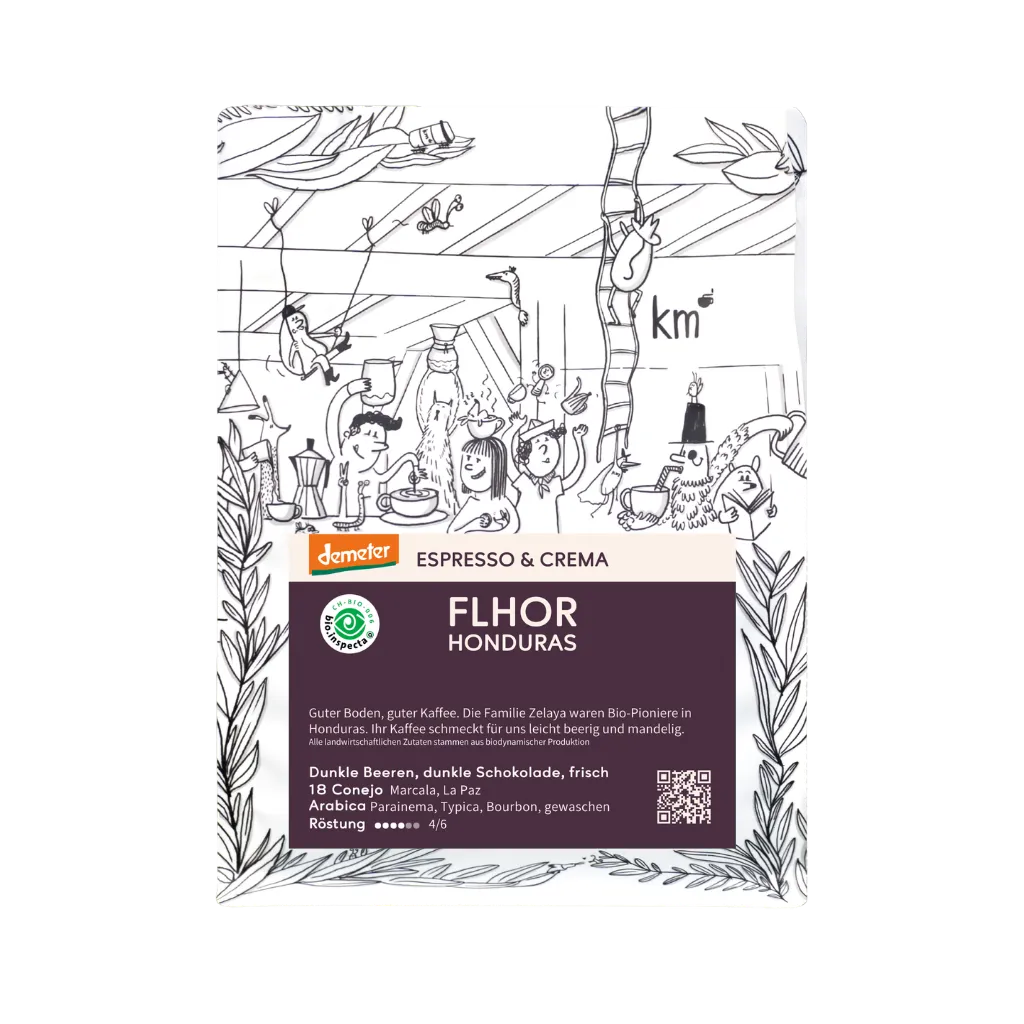
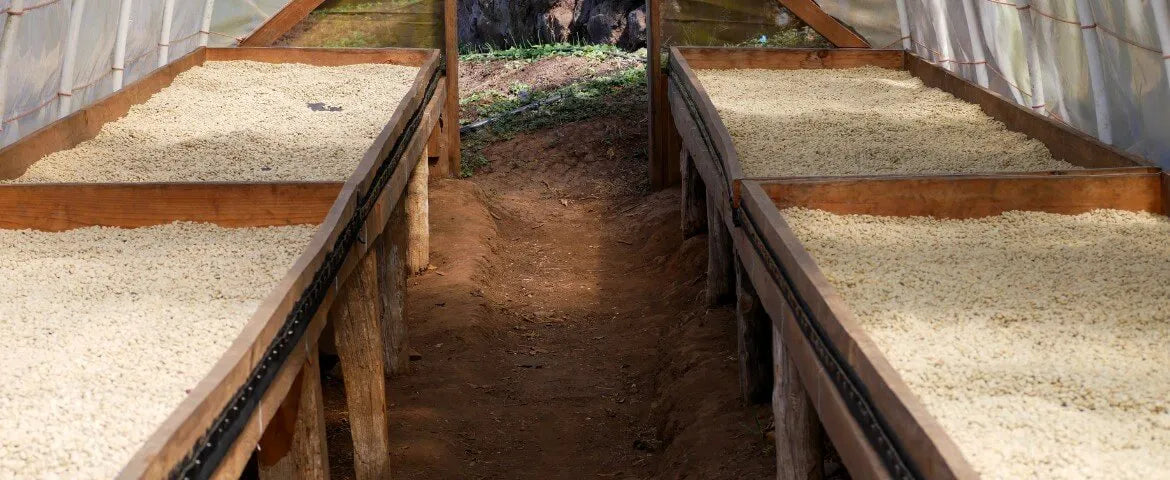
At our partners at 18 Conejo in Honduras, coffee is sorted by hand. The good ones in the pot, the bad ones in the bucket - nothing mixed.
At the same time, we aim to dive into each coffee chain, understand it, and establish a partnership with the producers. This way, larger projects can be tackled long-term and together, which focus on and attempt to improve the social, economic, and ecological dimensions. If we were to mix these two interpretations of the specialty concept - sensory and sustainability - it would bring more confusion than understanding.
Specialty coffee also for roasted coffee?
Basically, the rating of coffee only applies to green coffee. With precise tasting, detailed feedback can be given to producers so they could improve their post-harvest processes.
Of course, the tasting method can also be applied to coffees roasted by roasteries. However, it should be noted that these are generally roasted too dark in the market to reach a clear result. Through dark roasting, coffee typically loses complexity and is overlaid by roast notes.

Juan Boillat from the roastery team roasts according to individual roast profiles for each coffee
Many roasteries avoid roasting sensorially more complex specialty coffees because they may be targeting a different market. Because the flavor of specialty coffees can differ marginally to drastically from an average coffee. When roasteries do choose these coffees, many roast them darker because the more complex, floral, and fruity notes are too unfamiliar. Also, the increased acidity in these coffees is rather unfamiliar and motivates many roasteries to roast darker. If the fine differences are then evened out again, it would, however, also be conceivable from an economic perspective to roast "more typical" coffee.
Specialty coffee in preparation
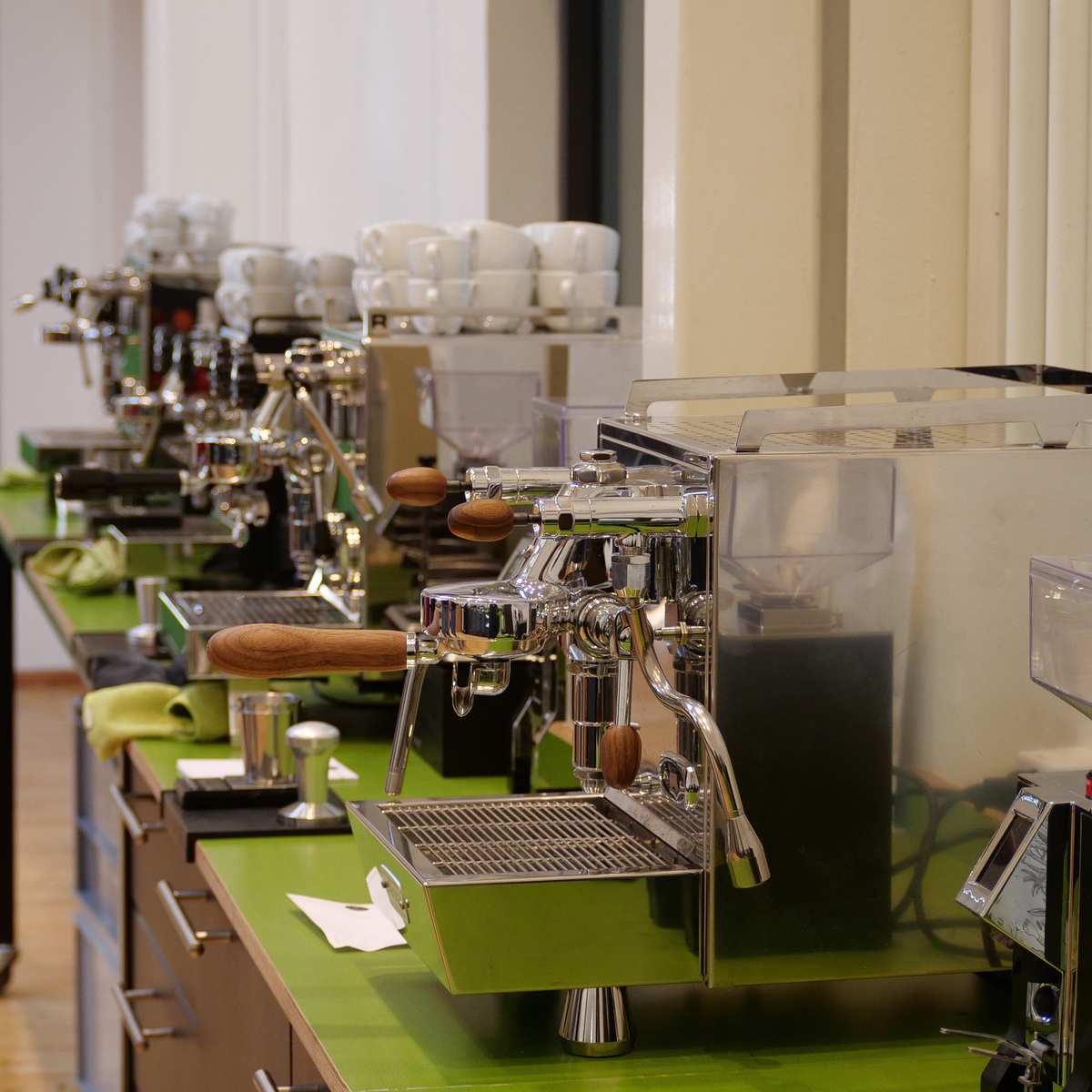
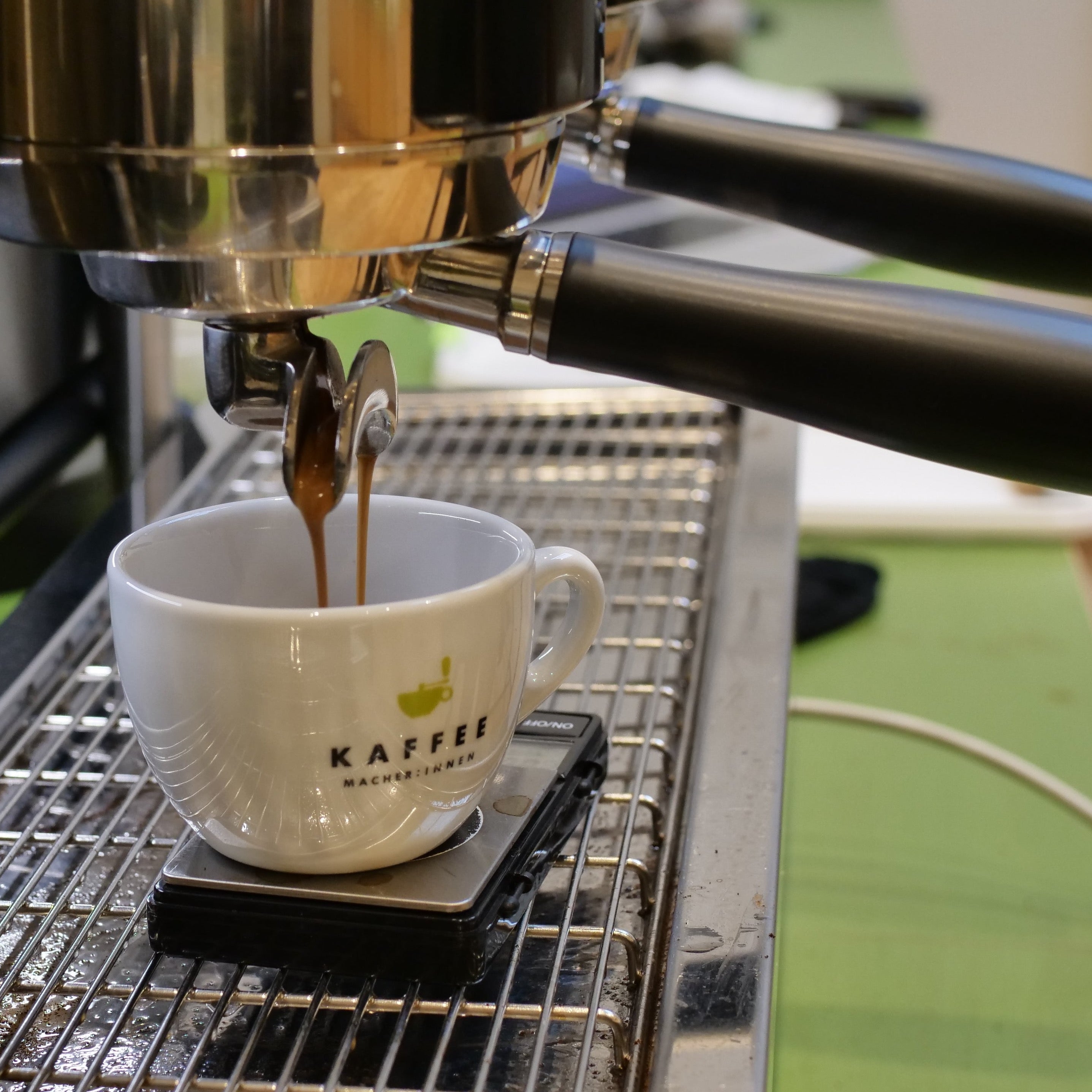
Preparing specialty coffee can sometimes be a bit demanding. Yes, there are increasingly more specialty coffee capsules, but the process of preparation and the understanding of what happens in it are left out. But it is precisely this that excites many people when they approach a specialty product.
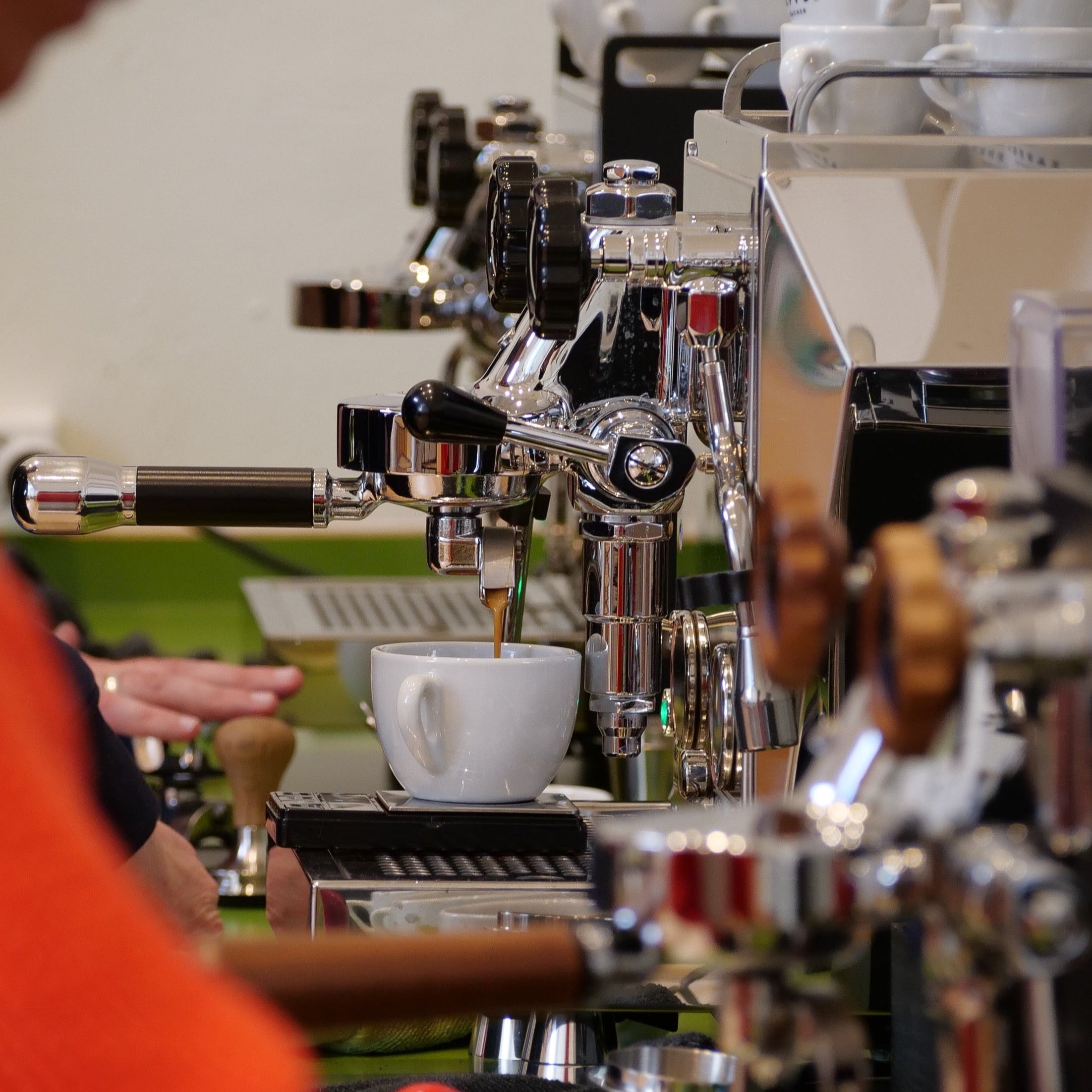
The cornerstones that require a good espresso are in preparation:
- the grind size,
- the ratio between dose and extracted coffee
- puck preparation to avoid channeling
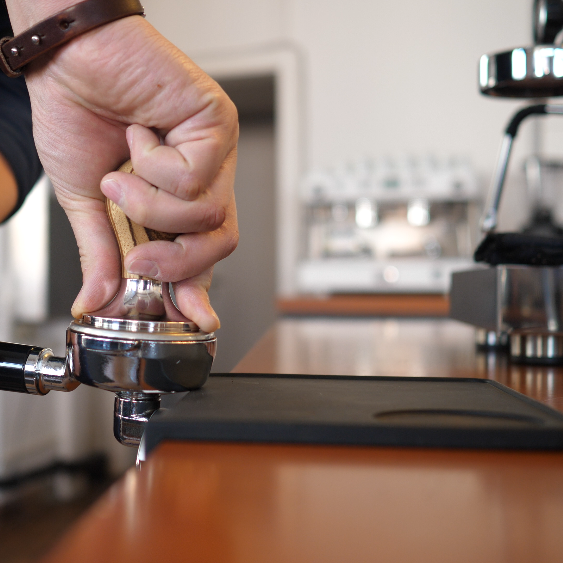
- and tamping
Especially lighter roasts, which due to lower solubility often require longer extraction time for a balanced cup, require different recipes than darker roasted coffees. As a rule, lighter roasted coffees can be ground much more finely.
Filter coffee is more forgiving, which is mainly due to the length of extraction. Depending on the system, this ranges from a minimum of 1:30 minutes (Aeropress) to 5 minutes (Chemex). Specialty roasteries often rely on very characteristic coffees for filter coffee, where aromas are in the foreground, and these are easy to extract. To extract the full load of balance, however, more attention to detail is needed.
Conclusion
The definition of what specialty coffee exactly is was set in stone with the first version of the SCA's cupping form in 1984. This tasting analyzed exclusively the sensory component of coffee.
40 years later, 40 years more climate change, 40 years more intensification of precarious working conditions, and 40 years of intensive agriculture, we now stand at a different point.
It is understandable that a concept that produces differentiation would eventually be loaded with even more expectations. However, the term will solve nothing, only the actors who use the term "specialty coffee" will. In that sense, we rely on a clear separation between sensory analysis and supply chain design.
If specialty coffee is marketed in a way that suggests it can solve all problems, then that is not only a deception of consumers but also of the concept itself, which was never intended for such expansion.
* More on coffee and climate change in this video
** More on the greenhouse effect in this blog