
















Coffee is subject to climate change. Our new video is about who will grow coffee where and how in the future, what it will taste like, and whether it will become more expensive.
Last summer I read a book that has shaped my thinking and actions ever since. It's called "The Good Ancestor" by Roman Krznaric.
In it, Krznaric discusses concepts that can help us think for future generations and thus critically examine our actions.
We know that our decisions have long-term consequences: in our private lives, professionally, and yes, also when drinking coffee.
Because the coffee plant planted today will face increasingly difficult circumstances in the future. It might become drier, or wetter, or cooler, hotter, or there might be new mutations of diseases that will affect the coffee plant.
The effects of climate change influence coffee production, but exactly how and where is still not foreseeable. So it's actually not guaranteed that we'll still be able to drink coffee in 2050. In short: we will still drink coffee in 27 years, but not in the same way as today.
In the podcast series Coffea Futurica, I talk with guests about future scenarios on how we can grow, process, roast, trade, and prepare coffee better.
The Coffee of the Future
Perhaps the coffee will still taste similar, but what happens on the way to our coffee cup will have changed dramatically.
We all shape the future of coffee.
◉ Through the intention of how we buy coffee
◉ Through the preference of what we like in coffee
◉ Through the idea of what kind of agriculture we want to support
I recently laid out these thoughts in a video and discuss the following points.
The following questions are discussed in detail in the video; here is a short summary.
Where does coffee of the future come from?
Brazil, as the world's largest coffee producer, will be hit hard by global warming. Certain regions are warming significantly and drought stress is increasing.
In other regions, a changing climate suddenly opens up new opportunities: in a few years, the climate in Uruguay or Portugal will be suitable for coffee cultivation. The demographic upheavals that come with this are all still incalculable — but they will be distinctly noticeable.
Who grows it?
Small farms that today already lack direct market access, are in debt, and know little about their coffee's potential will disappear from the scene. The financial and psychological burden is too great to plant a product with a long horizon in an increasingly unpredictable environment, one that doesn't yield fruit for three years.
The future belongs to producers who are well-connected and flexible, who can adapt their knowledge and soil potential to circumstances, and who are as entrepreneurial as they are skilled in sensing coffee quality.
What will coffee taste like in the future?
The same and different. The large mass will probably taste similar, because coffee from warmer regions often shows less complexity. And as it gets warmer, there will be more regions producing coffee with a mass market taste. More specialized coffees will continue to exist, but demand is rising rapidly here too, making the market more competitive.
Will coffee become more expensive in the future?
Yes, it will probably gradually become more expensive. This has to do with rising cost of living, hopefully with ever better wages also for coffee producers, and with competition for labor. There will be more mechanization in some places than in others, but the industrialization of coffee production is not equally possible everywhere.
So I would argue: if coffee doesn't become more expensive, we need to view that critically.
Prices have risen everywhere in the last year, so why shouldn't a product that travels around the world once also become more expensive?
Above all, there will be one segment in the coffee market that will grow strongly: the one that has recognized that nature is not free. In this segment, coffees will have the price it takes to shape agriculture in a way that makes sense for people and the environment.
What is our role in this? And what can we do?
All of us who drink coffee, those of us who roast, buy, and produce? We can all help shape the coffee of the future.
Two simple means are:
1. Those who buy directly from roasteries have the opportunity to ask where the coffee comes from exactly, how it was produced, and whether this coffee is produced in a way that respects people and the environment.
2. Those who buy coffee at the supermarket can opt for double-certified coffees (organic and fair trade). Perhaps the coffee world becomes only slightly better that way, but above all it won't become worse. And that's a good start.
As a company with the purpose of viewing coffee as a whole, providing impulses, and making the world a little better through coffee, the current and future challenges are a driving force like never before for us to help shape the future.
Where there are questions and uncertainties, there are opportunities. We stay on it, seek answers, and want to use these opportunities with all those involved in the coffee chain.
More on "Coffee of the Future": Podcast Coffea Futurica
Our coffees from projects focused on regenerative agriculture:
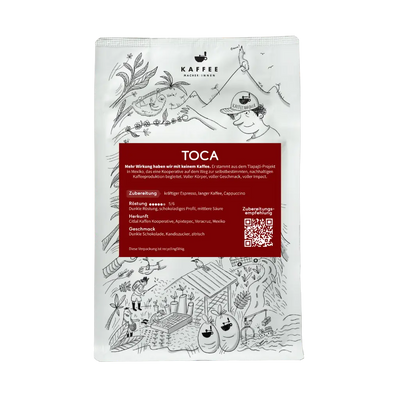
Toca - Espresso, Mexico
here we support a newly created cooperative in its transition from conventional to organic and regenerative production
Mamy - Espresso, Guinea
The project by Macenta Beans works with Canephora producers who by nature don't use synthetic fertilizers and grow coffee in the rainforest
Flhor - Espresso, long coffee, Honduras
18 Conejo are our long-standing partners with a focus on biodynamic coffees. As the first certified organic producer, 18 Conejo remains a pioneer in natural cultivation to this day
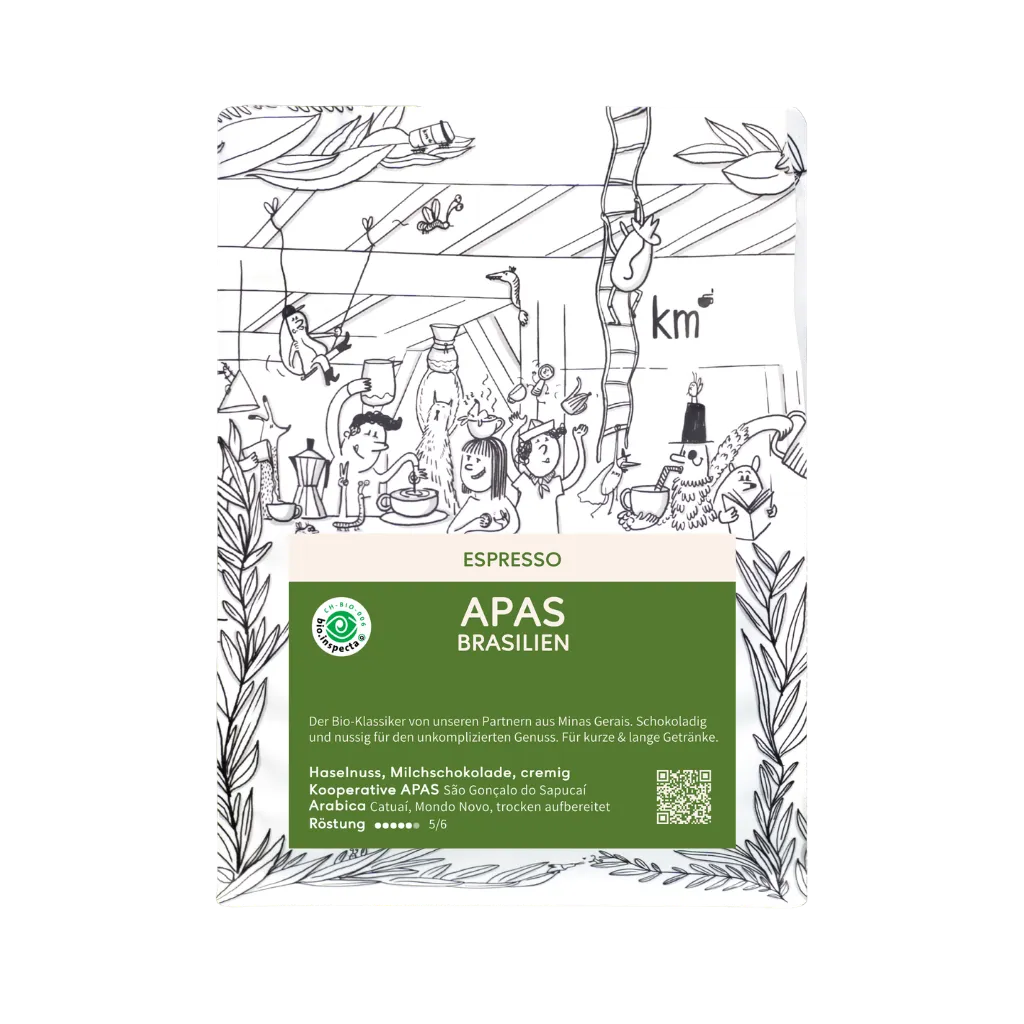
Apas - Espresso, Brazil
In January 2023, the first container of organic-certified Apas coffee set sail. A milestone in our partnership, because organic coffee in Brazil is a rarity.