


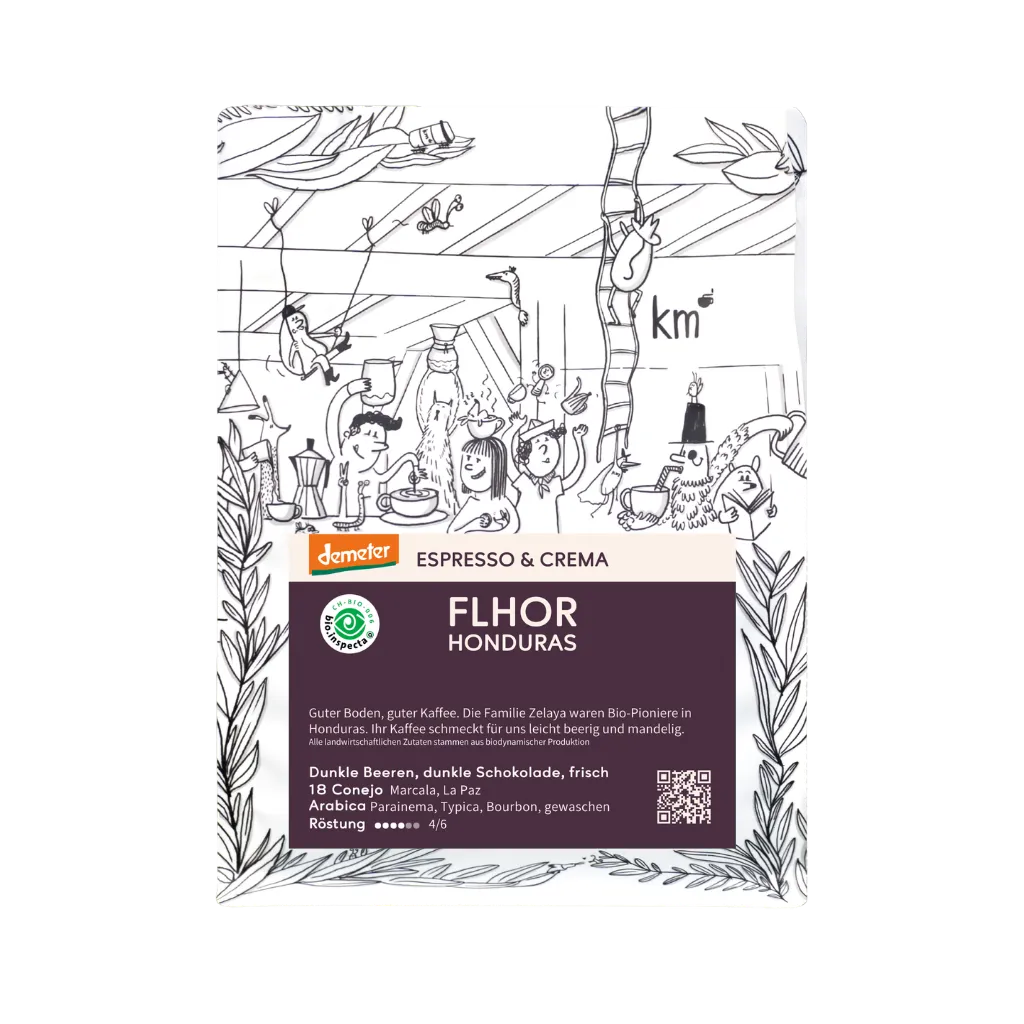

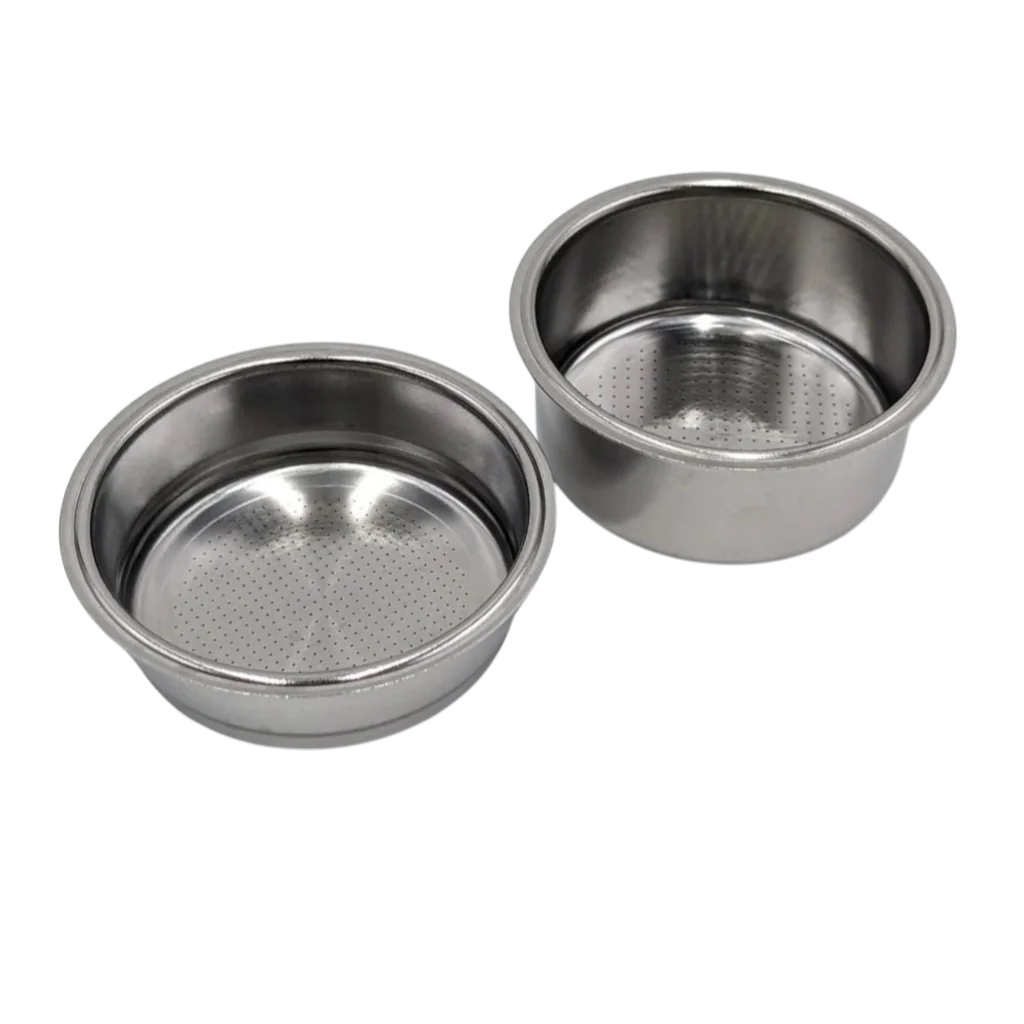

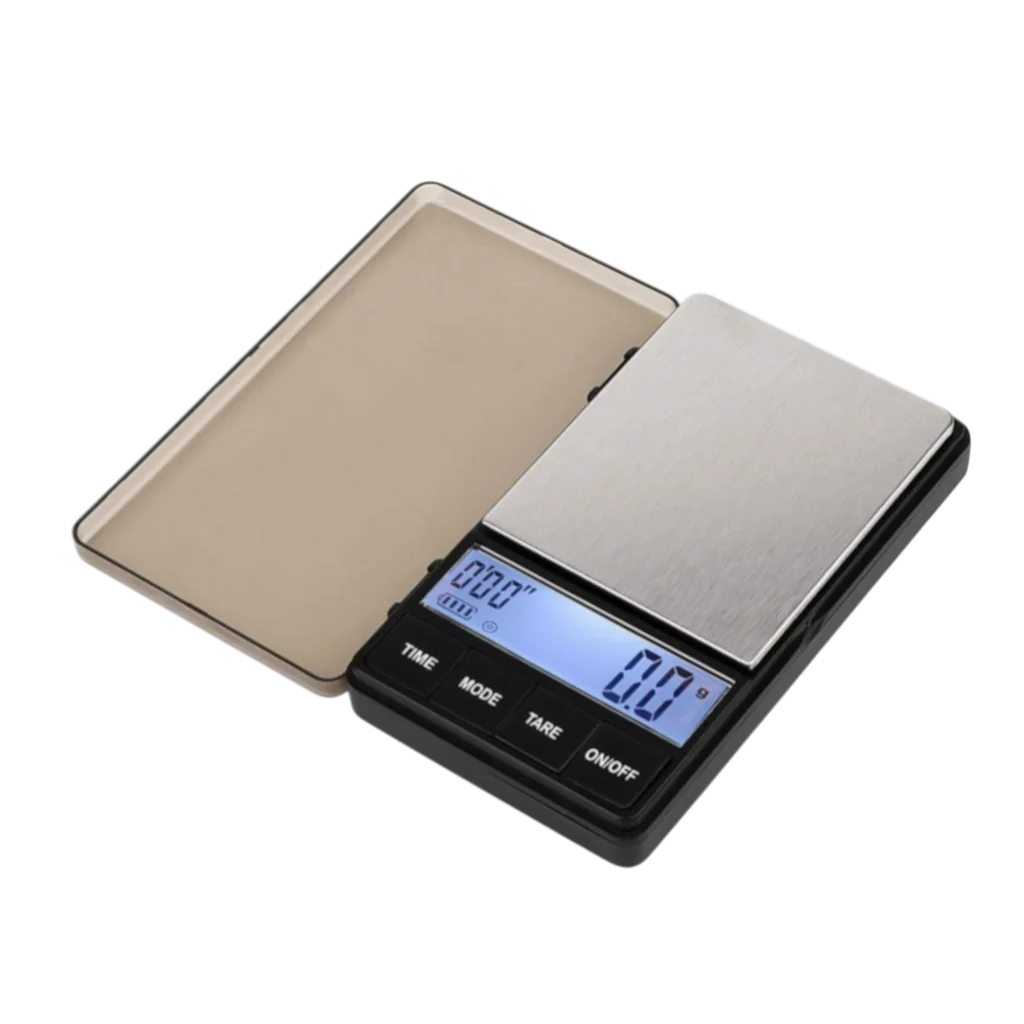
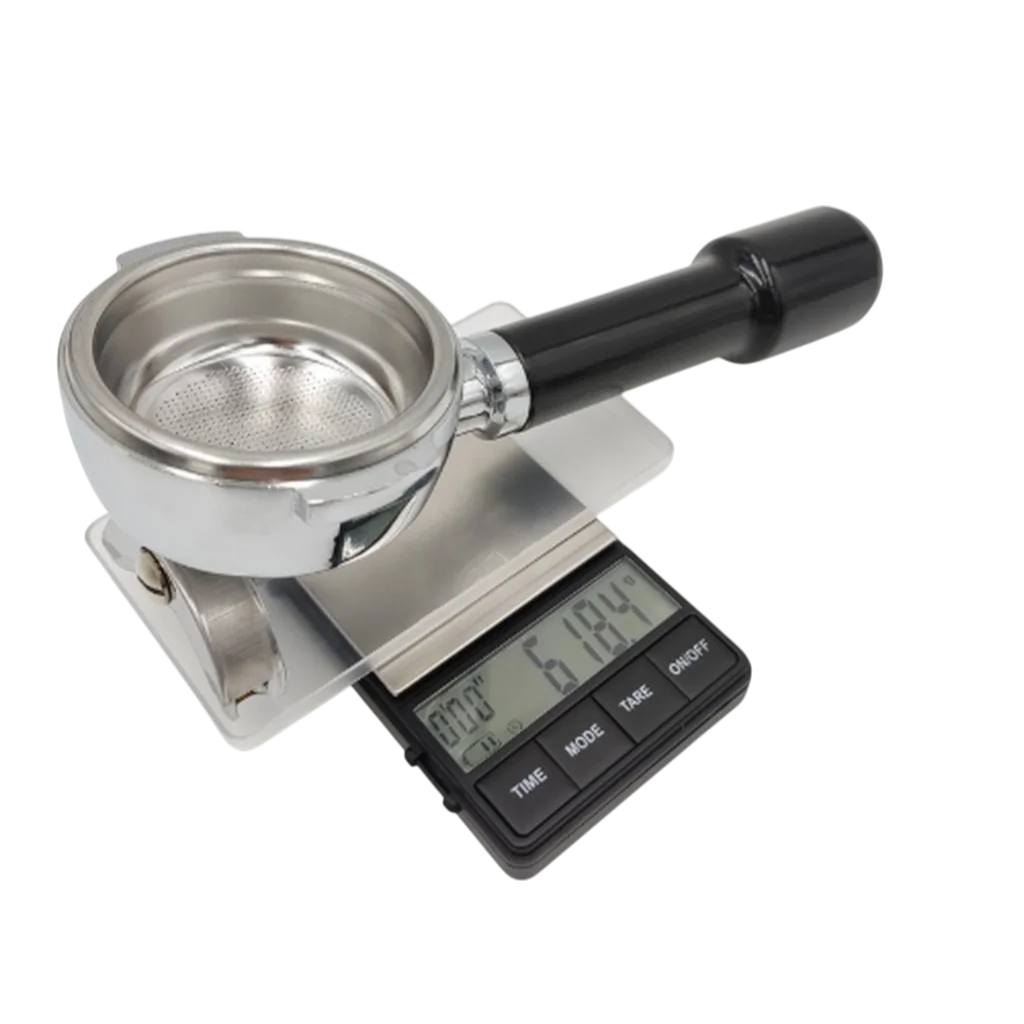



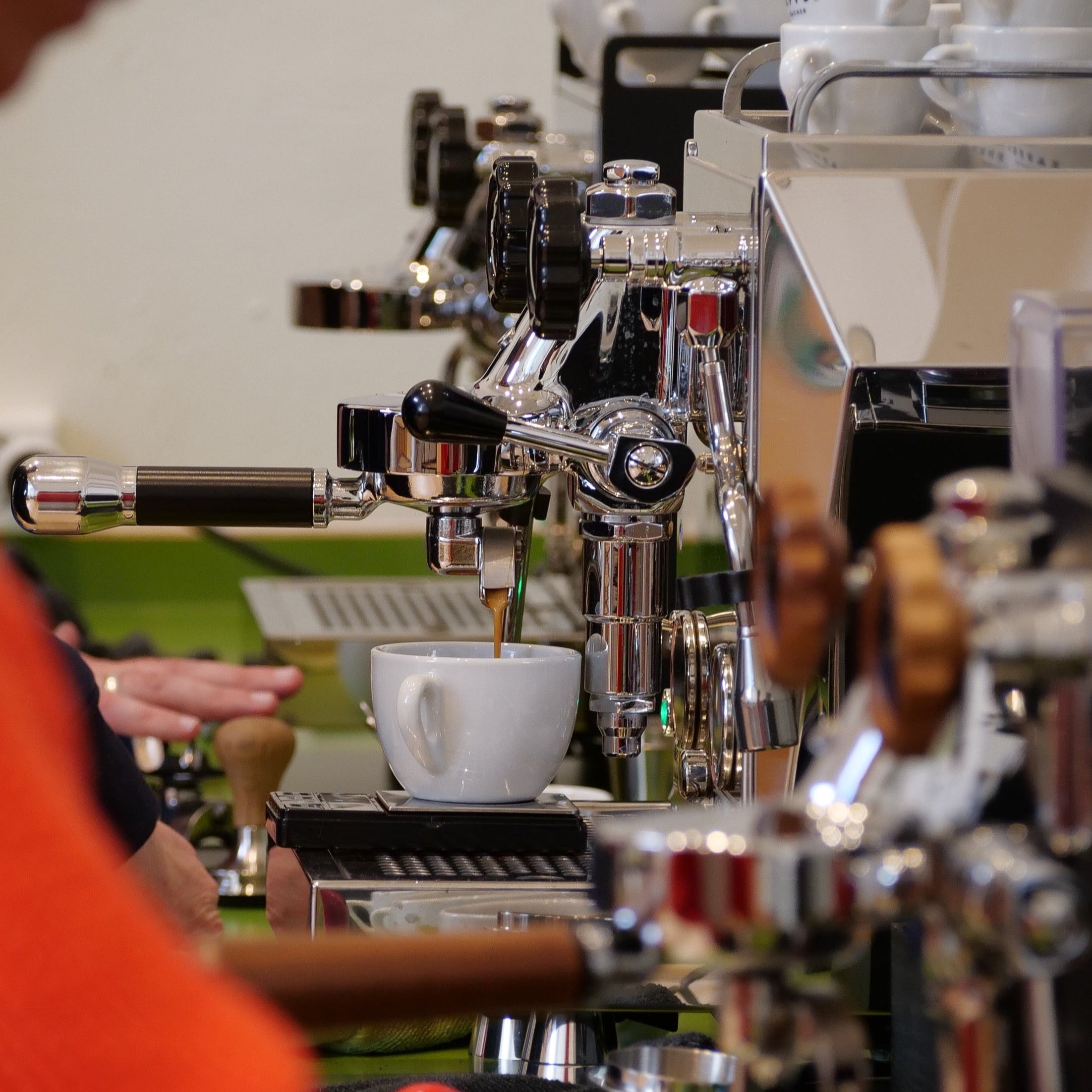

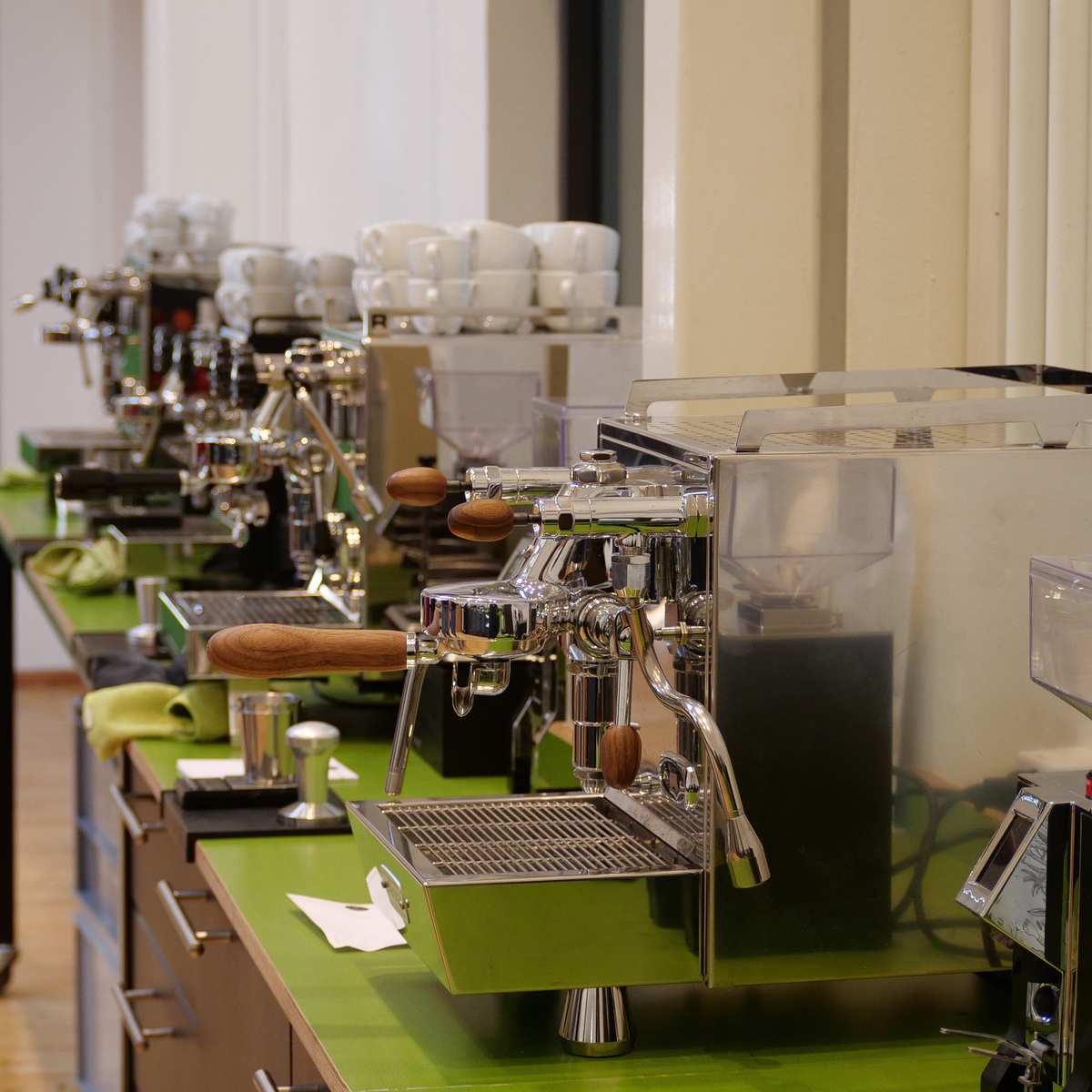

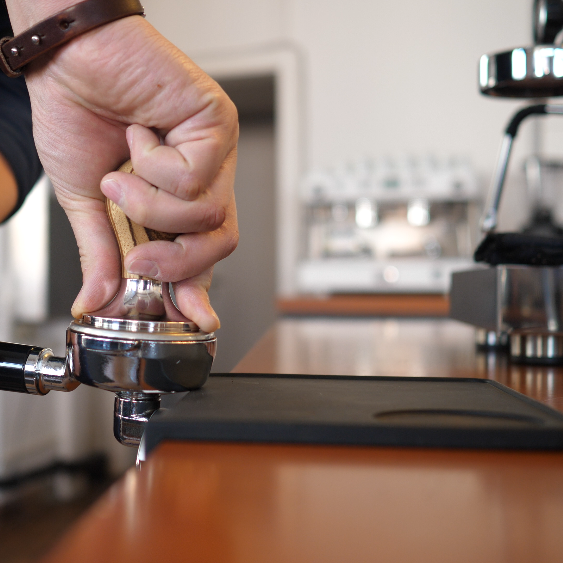



What is coffee? We have compiled 30 questions that are frequently asked of us. The answers are intended to help you get a comprehensive picture of coffee, its history and future, the coffee plant, various machine types, as well as preparation and the most common mistakes, history and origin, and enjoyment.
History and Distribution
1. What is coffee?
The term "coffee" often means different things: On the one hand, coffee is a caffeinated luxury item and on the other hand a plant genus, which has more than 120 species. Depending on who you ask along the coffee chain, they have a different explanation of what coffee is. In cultivation, coffee is a fruit that is picked when ripe. In processing, the so-called processing, coffee is technically a seed that is dried to 10-12% residual moisture. In trade, coffee is a so-called commodity, a raw material, a trade good that is shipped from one port to the next. For roasteries, the still-green raw coffee is the raw material that releases the aroma precursors already present during the roasting process. And for consumers, coffee can be the reason for a meeting, a ritual, an experience, or even an addictive substance.
2. Where does coffee come from and how was it discovered?
Coffee originates from the area south of the Sahara, which today is assigned to Ethiopia and South Sudan. The catchment area extends into the Congo Basin. Coffee originally grew in forests and is accustomed to the neighborhood of trees.

Where coffee originally comes from: between the Congo Basin and present-day Ethiopia, you can still find the highest genetic diversity of coffee species today.
It was only later, when coffee began to be cultivated for economic use, that intensive cultivation in densely planted plots was adopted. The conversion from mixed to monoculture favored the spread of plant diseases, such as the notorious coffee rust, or roya. Many myths surround the discovery of coffee - whether it was goats that first ate coffee cherries and then danced, whether it was a monk, a prophet, or someone else, can never be conclusively proven. Most legends agree on one thing: the region where coffee was discovered.
More about Roya, the devastating coffee disease: to the blog
3. Spread of the coffee plant
Coffee is produced today in more than 60 countries, around the globe in the so-called coffee belt (approximately 23 degrees of latitude north and south of the equator). In the coffee belt, until a few years ago, there was a relatively stable subtropical climate that the sensitive coffee plant needs. In all countries except present-day Ethiopia and South Sudan, coffee was not originally native, but was imported by administrators and missionaries of the colonial powers. Coffee did not spread of its own accord, but was actively transported through the "new world" by the colonial powers. The economic exploitation of coffee was the primary objective. This was accompanied by the botanical research of the coffee plant, which was foreign to the European colonial powers. Primarily scientists from Britain, Holland, and France analyzed and typologized the coffee plant.
More on the spread and colonial history of coffee: to the blog
Botany and Agronomy
4. How much coffee is produced worldwide?
In 2022, 171 million 60kg bags of coffee were produced worldwide (ICO.org). Of this, 58% is Arabica and 42% is Robusta (Canephora). Since coffee grows on the northern and southern hemispheres, it is also subject to different growth cycles.

While, for example, coffee is just beginning to bloom in Mexico, it is already being harvested in Peru, and vice versa. We see that some countries like Brazil, Vietnam, or Honduras produce more coffee annually, while other countries gradually produce less. The reasons are socio-demographic and climatic in nature. In Nicaragua, for example, increasingly more young people are leaving the country to seek their fortune in the USA. Since coffee is picked manually everywhere except Brazil, and the workforce will be lacking in the medium term, there will be less and less coffee in many parts of the world.
5. What is the difference between Arabica and Robusta?
Arabica and Robusta (botanically correctly: Canephora) are the two best-known and most widely planted coffee species. As of 2021, 124 different coffee species have been catalogued so far. Coffea Arabica and Coffea Canephora are only two of them, but those that exist globally today and together account for more than 99% of the world's coffee supply. Both species are further divided into varieties - for example, Coffea Arabica var. Caturra, or Coffea Canephora var. Robusta.

"Robusta" is therefore a variety of the species Canephora - when we say Arabica and Robusta, we're actually comparing apples and oranges. However, this naming has become firmly established in everyday usage. "Robusta" is, as the name suggests, significantly more robust against diseases, has twice as much caffeine, and a different aroma profile than Arabica. Arabica grows in a cooler climate, develops lighter and more floral flavors, and is more susceptible to diseases and pests.
More on the coffee plant and taxonomy: here
Cultivation and Processing
6. Where is coffee grown?
Today, coffee is grown and processed in approximately 60 countries. However, the five largest producing countries (Brazil, Vietnam, Colombia, Indonesia, and Ethiopia) produce more than 75% of the world's coffee supply, resulting in highly consolidated coffee production. The majority of producing countries export coffee, but usually only the highest qualities. The lower qualities often remain on the farm or in local markets. In the meantime, demand for high-quality coffee is also rising in producing countries, which often goes hand in hand with a country's economic development and changing consumption patterns. Climate change has an enormous impact on coffee growing areas - Brazil and Central America will be hard hit by 2050: in some places it will be much hotter, in others drier or more humid.
More on the future of coffee: here
7. How is coffee grown?
Coffee is primarily grown in three different systems: without shade, in partial shade, in shade. Shade in this case implies the presence of trees. In Brazil, for example, much of the production is done without shade. Based on the sun grown coffee approach, its own industry has developed: coffee is planted in precise rows so it can be harvested mechanically. Shade trees "interfere" with this. In mixed systems, trees provide shade and thus lower the metabolism of the plants, which causes less stress and requires less input (fertilizer). The soil is exposed to less UV radiation and more covered by organic material that falls from the trees.

Coffee grown in partial shade, Honduras
In the agroforestry system, i.e., planting coffee plants in forests, the coffee plants benefit from high biodiversity, natural barriers against diseases, and a high humus content. In this full shade system, harvesting is done exclusively by hand.
8. How is coffee harvested?
In the system described above without shade, which is practiced in Brazil, mechanical work can be done. Both the cutting of branches, the application of fertilizers and pesticides, as well as harvesting can be mechanized with specially designed harvesting machines. This increases efficiency and reduces production costs. Wherever coffee is picked by hand, production costs are higher. Manual harvesting is the only method in hilly topography and in forest mixed systems. Pickers are close to the plant, quickly see what a plant needs, and can assess the point of best ripeness visually and individually for each tree.

Which red is the right red?
Both harvesting systems have their advantages. For uniform ripeness of the cherries, you need either a perfectly planned and uniform ripening stage of the trees that can be mechanically picked, or trained pickers who can judge the color of the cherries.
9. How is coffee processed?
Once the coffee cherries are picked, the clock starts ticking. By removing the coffee fruit from the tree, metabolic activity in the coffee seed, the future bean, increases. The coffee must now be processed quickly to avoid off-flavors. We basically distinguish between two fundamentally different processing methods: either the fruit pulp remains on the seed and dries that way. This method is known as dry processing or natural. If the fruit pulp along with the pectin-containing mucilage (mucilage or miel) is removed by friction using a pulping machine, we're talking about washed coffees.

A pulping machine on Santa Rita, Nicaragua
Between these two extremes - keeping all the fruit pulp on or removing all the fruit pulp - there are now hundreds of different intermediate stages that work with more or less fermentation and thus create flavors that weren't present before.
Coffee, Climate, Sustainability
10. Climate change and coffee
Coffee is subject to climate change. Where exactly it can be grown in the future is difficult to say. A 2022 study by ZHaW shows where climate patterns are increasingly shifting.

The crux of the matter: Coffee depends on stable weather patterns so that the plants are not confused and can at the same time nourish fruit and develop new flowers. Coffee trees planted today will face increasingly difficult circumstances in the future. Producers are already facing the decision today of whether coffee cultivation makes long-term sense, or whether they should abandon their farms. Taste-wise, the general coffee flavor will also shift - on one hand, there will be more Robusta because it handles high temperatures better. On the other hand, it will become increasingly daring aromatically because new fermentation techniques allow flavors to be introduced into coffee that wouldn't otherwise be there.
More about the coffee of the future in this video
11. What is sustainable coffee?
Perhaps the easier question would be: which coffee is not sustainable? Those are coffees that are sold far too cheaply. If you think something is too cheap, then it's probably not sustainable, because someone else has to bear the costs. But if we assume that sustainable coffee should create a long-term basis for life for all those involved, including the environment, soils, and the actors on the chain, then we can ask the coffee roasteries the following things: where exactly does the coffee come from? How was it grown? Were the prices set by the producers themselves? But at the preparation level, we can also ask ourselves: do I brew exactly the amount of water for my filter coffee, or far too much? Do I let my espresso machine heat up for 30 minutes for an espresso in the morning? Sustainable coffee has many faces - with a critical eye on our own actions, we can constantly question ourselves.
12. How can I consume coffee sustainably?
As a rule of thumb, we like to suggest: whoever buys double-certified coffee, i.e., Fair Trade and Organic (FTO), doesn't do much wrong. Increasingly more roasteries are buying double-certified coffee, and it's now also available in supermarkets. The cooperatives that offer such coffees are controlled by two different audit bodies. With double-certified coffees, good intentions are being pursued. Errors in the system always exist, such as the illegal excesses of the so-called Combos, where Fair Trade coffee is sold too cheaply. But it's even more sustainable when buyers - i.e., retailers and roasteries - take responsibility themselves and address individual challenges in the respective coffee-producing countries. So it's worth it for consumers to ask coffee roasteries where exactly the coffee comes from, how the price was determined, and whether the coffee was grown naturally.
Coffee and Quality
13. How is the quality of coffee assessed?
Coffees are checked sensorially using the infusion method, the so-called cupping. They are evaluated on a rating scale from 0-100. The rating system dates from 1984 and will be replaced by a new rating system starting October 1, 2025. We have discussed and analyzed the Coffee Value Assessment, or CVA, here.

The hundred points are divided into 70 points for positive qualitative properties and 30 points for the intensity of sweetness, uniformity, and a clean and clearly structured cup profile. Examined attributes are aroma, flavor, finish, acidity, body, and the balance of various attributes. It is also checked whether a coffee is free of sensory defects. A bean with a strong defect, such as phenol, can make a liter of coffee undrinkable.
More on tasting and specialty coffee: to the article
14. What is good coffee?
Short answer: the coffee that tastes good to you is good. In a slightly longer answer, we need to address three different perspectives: those of the producers, the trade, and the roasteries. From the perspective of producers, defect-free coffees and those with a good balance of sweetness and acidity are rated better by buyers and thus paid higher prices. From the perspective of trade, higher-quality coffees with the so-called differential sell better and are priced higher - a special aroma and uniformity in the coffee are emphasized. Roasteries, on the other hand, often choose between quantity or quality. Those who want quality buy these coffees that producers, quality laboratories, exporters, and importers have marked as good coffee. The roasting style of each roastery emphasizes the character of the coffee or adapts it so that it appeals to its own customers. And in the end, they decide what is good - even if everyone involved has done their best.
One thing is decisive for us: good coffee is not only sensorially good, but also includes the people and the environment.
More on how we understand sustainability can be found here.
15. Do coffee varieties from different regions differ?
Yes. But: there are no "best coffee beans from the best growing regions in the world" - as with any food, there is good and less good coffee everywhere at the same time. What matters is the cultivation, the uniform ripeness level, the clean and detailed processing, and then the sorting of the coffee. If these factors are in place, there's already a solid coffee. After that, it's about the finer points.

Coffee drying at BridAzul in Ocotal, Nicaragua
And the more small puzzle pieces like varieties, local growing conditions such as altitude, temperature, and shade, post-harvest processes like targeted fermentations, and then slow and monitored drying come together, the more complex the coffee becomes. Plus, one can - somewhat cautiously - talk about general flavor profiles. Nadja Schwarz keeps a record here of coffees from different countries. In her blog articles, she also discusses the respective flavor profiles.
Trade
16. How is coffee traded?
The sale and purchase of raw coffee is handled largely through the coffee exchange, where exporters, importers, and trading houses engage in business through futures contracts. The reference price in this trading system is the coffee exchange price, the Coffee C Futures, which primarily puts supply and demand into relation. The exchange price is further influenced by harvest outlooks and currency fluctuations, especially the US Dollar and Brazilian Real. Speculation, in which more coffee than necessary is bought or sold, is the third effect in the formation of coffee prices on the exchange. These "reference prices" do not reflect production costs and thus remain fictional, but are binding for more than 90% of coffee producers, provided they cannot build their own sales channels and partnerships.
17. Coffee and Fair Trade, Fairtrade
In 1994, the first raw coffees were imported under the TansFair label. Other labels and organizations were to follow, and in 2022, 17 organizations agreed on a common logo. Since then, Fairtrade has guaranteed a minimum price, which in March 2023 increased from 140 cents per pound to 180 cents per pound. Previously, the 140 cents per pound for Arabica coffee had been valid since 2011. For a long time, these 140 cents were considered production costs - however, this price also did not account for real living costs and inflation. At the same time, however, the minimum price postulated somewhat higher income from coffee, since the coffee exchange price was lower in almost all cases (except for a few exceptions (price increases due to frost or roya outbreaks)). Unfortunately, however, the Fairtrade label does not guarantee 100% protection that the Fairtrade price was actually paid. Time and again, Combos, a reprehensible practice by buyers who negotiate down the price of Fair Trade coffees, occur. Moreover, the market for Fair Trade-certified coffee is still far too small: in Germany in 2021, only 5% of total coffee consumption was Fair Trade-certified coffee, even though the communicated awareness of the issue seems high.
Roasting
18. How is coffee roasted?
A green coffee bean, or raw coffee, is the dried seed of the coffee cherry. Depending on the origin and regulations, the coffee arrives at the roastery with 9-12% residual moisture.

Juan Boillat from the roasting team
The raw coffee is heated in a roaster - the temperatures in the roaster typically range from 200 to 450 degrees. The residual moisture in the coffee bean transfers the heat to the inside of the bean. During the roasting process, chemical and physical reactions take place: the bean turns brown through browning reactions, it increases in size by at least 100%, loses weight (water loss), and the aroma precursors are converted into aromas through Maillard reactions, which we can then recognize in the beverage. Shorter roasts (+/- 10 minutes) especially emphasize the origin character of the coffee. Longer roasts of 15 minutes or more give the coffee more roasting notes. The signature and intention of a roastery can be read in the selection of raw coffees and the roasting style.
19. What is a gentle long-time roast?
Gentle long-time roasting is primarily a marketing gimmick. The term is emblematic of a reaction against past times when large roasteries roasted large quantities in very short periods. These raw coffees were of mediocre quality and the often-too-fast roasting could not add anything positive to the end product. So those who roast slower, in smaller batches, and thus more "gently," would be doing much better than the large roasteries.
To this day, this David vs. Goliath interpretation sometimes persists, suggesting that smaller roasteries would have a quality advantage. But there is much to argue against this.
Taking longer to roast than the often-derided "industrial roasts" of earlier days makes theoretical sense, but practically we make the coffees similar to each other with long roasts. We do reduce harsh chlorogenic acids, but texture, sweetness, and a balancing acidity also suffer. Economically and ecologically, long-time roasts are also questionable since more coffee could be roasted in the same time.
20. Home coffee roasting
Since coffee roasting is not an art but a craft, you can also achieve good and not just drinkable results at home. Roasting coffee at home is a little adventure: it cracks, creates a lot of smoke, and you should ventilate your kitchen well. The basis for good roasted coffee is good raw coffee.
We have a small selection in our webshop where you can get our raw coffees. Popcorn pans, stovetop roasters, bread makers, or the small home roasting machines work as roasting machines. In this blog, we summarize that it's primarily about time and energy during roasting. Over a certain period of time, we add a certain amount of energy to the raw coffee. Important for this is that the coffee stays in motion at all times, otherwise it will burn unevenly, regardless of the roasting system. Instructions, tips, and plenty of motivation can be found here.
Beverages
21. What is the difference between an espresso, a long coffee, and a filter coffee?
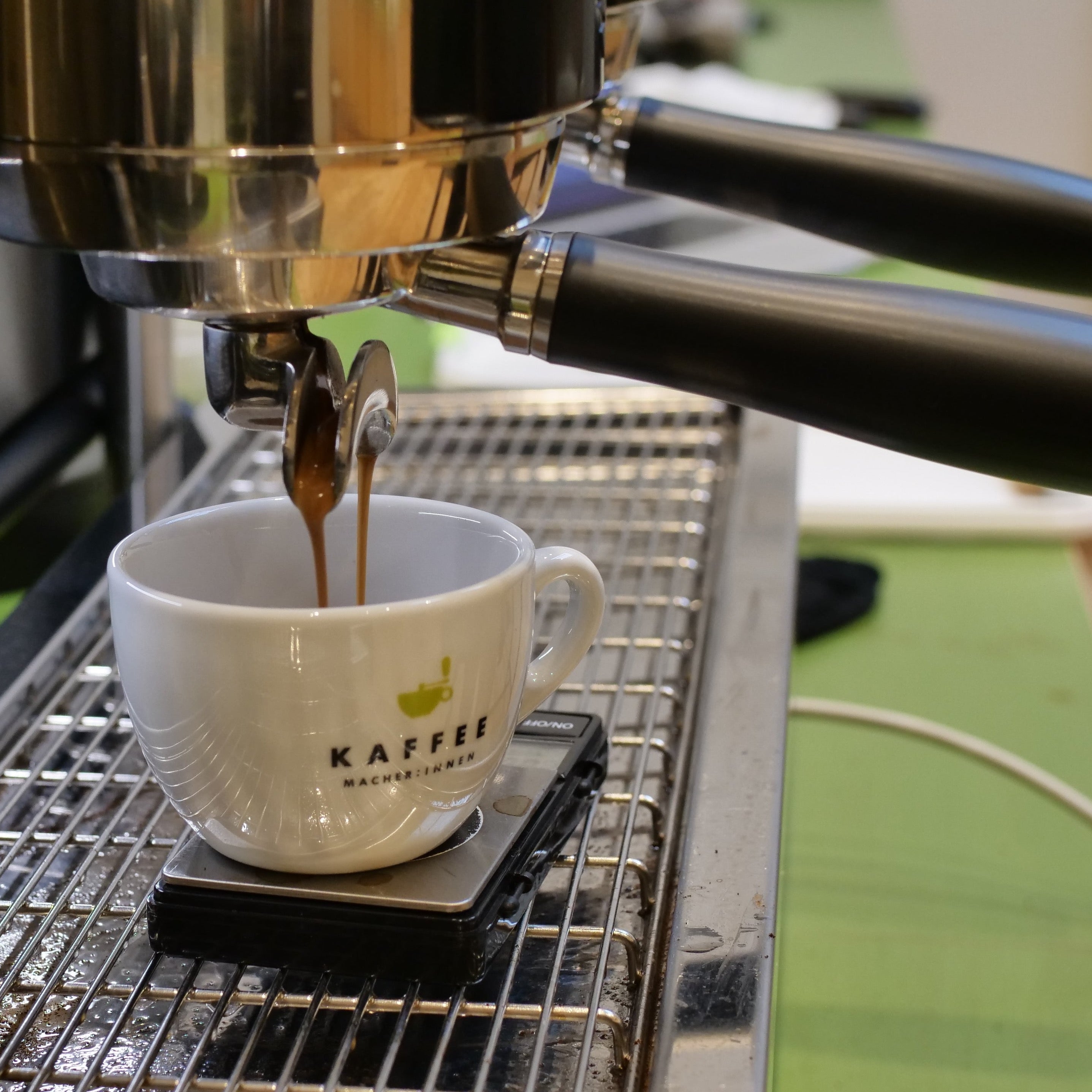
The size of the cup and the volume of the beverage seem obvious. What's less obvious is what's in the brewed coffee. And since Nespresso redefined espresso - 5.3g of coffee powder to 40ml of water - different interpretations exist as to what exactly an espresso and what a longer coffee is. We define espresso as a coffee beverage in which we set 1 part coffee powder to 2 to 2.5 parts of brew water in the cup.

An overview of coffee beverages and their strength
For example, we take 18g of finely ground coffee powder, which we compress with a tamper and prepare in the portafilter machine. We measure the beverage in the cup with a gram scale. For an intense espresso, we stop the extraction when we have 36g of coffee in the cup. 1:2.5 would then be 45g of brew water and somewhat milder. For a long coffee, we standardly take 12g of coffee and brew it to 120ml of brew water in the cup, which corresponds to a 1:10 ratio. We typically brew filter coffees at a 1:16 to 1:18 ratio - pour 18g of coffee powder over with 290ml of water to get a balanced beverage.
22. How much caffeine does a cup of coffee contain?
Arabica beans contain approximately 1.2% caffeine, while Canephora/Robusta beans contain 2.2% caffeine. Those who want as much caffeine as possible would brew themselves a large pot of filter coffee from 100% Robusta beans. However, this is not about the type of beverage - espresso and filter coffee have almost the same caffeine content since it is very quickly soluble and lands in the coffee during extraction. What matters is the amount of powder used. Those who brew a coffee capsule with 5.4g coffee, a double espresso with 18g, or filter coffee with 40g powder consume different amounts of coffee. Conversely, you can calculate it this way:
three coffee capsules of 6g powder each (=18g powder) have the same caffeine content as a double espresso, which is also brewed with 18g of coffee powder.
And those who brew a filter coffee with 18g will also find similar caffeine content there.
23. Do dark roasts and strong coffees have more caffeine?
No. Caffeine breaks down only minimally during roasting. Coffee beans themselves, whether lightly or darkly roasted, have the same caffeine content. However: darker roasts result when the final temperature in the roaster is high and the bean is already in a slight burning process. Matter is burned and the bean loses weight. If we now want to pull an espresso with 18g of powder, we need more dark beans to get to the desired 18g of coffee. Lighter roasts pyrolyze less during roasting, so we burn less matter, and the coffee retains more of its original weight. Thus, we need fewer light coffee beans to reach the desired 18g of coffee powder. Darker roasts have more caffeine in the coffee beverage because more coffee beans are needed for brewing.
24. Is coffee healthy?
In reasonable amounts, coffee is safe for the human body. Let our coffee professor Chahan Yeretzian from ZHaW Wädenswil explain this directly.
Coffee at Home
25. How and where to store coffee?
At room temperature, not in the sun, in the original packaging, and sealed. We recommend not storing coffee in the refrigerator. Michel provides clear information in this video about where
26. What are the most important tips for making the perfect coffee at home?
Making good coffee is like putting together a 100-piece puzzle. The more pieces are in the right place, the more a complete picture emerges of what the coffee can do. There are some puzzle pieces that you can determine yourself at home. It's especially important to determine what the coffee beans (not ground) are intended for. Is it filter coffee, automatic machines, or espresso? Here we recommend doing your homework on roastery websites to find out which coffee is recommended for which type of preparation. If the coffee is darkly roasted, that gives a strong espresso, but not a balanced filter coffee, and vice versa. To gain control over the preparation, we recommend always working with a gram scale. Soft water helps bring out the aroma of the coffee. Hard water makes the coffee dull.
Information on the correct amount of coffee powder: Blog
To the article for perfect coffee water: Article
27. What are the most common mistakes in coffee preparation?
The best way to make good coffee is to follow a recipe. Anything else would be left to chance - which is often what happens. "One to two teaspoons of ground coffee" would not be a precise recipe specification for a filter coffee. "18g polenta-fine ground, lightly roasted coffee" is already more precise.
When we follow a simple recipe for brewing coffee, the way we bake a cake, we get much more consistency in beverage quality.
No recipe, no consistency. Just using a scale to measure the coffee and to measure the extraction amount helps a lot. The right water temperature (for example from a kettle with temperature settings) and a coffee grinder that produces uniform grounds do the rest. It's important to always change only one parameter of the recipe so we don't have multiple moving targets.
28. How does coffee taste from different coffee machines?
It seems like a new machine is launched every month that can brew even better coffee. Basically, in each of these processes, hot water is pressed or passed through ground coffee. Sometimes with more, sometimes with less pressure and more or less temperature, with coarser or finer grind - what sounds like nuances, however, results in a completely different beverage.

Lots of crema from freshly roasted coffee from a portafilter machine
Coffee pad machines are mainly intended for longer coffees since the ground powder is quite coarse. Automatic coffee machines can brew short and long coffees, with their strength clearly in longer extractions. Portafilter machines can theoretically do everything well, but only if all other parameters are tuned - there's lots of potential for error here. Filter coffee machines come in every price range. The better machines differ in that they drip water of constant temperature evenly and in different places over the coffee bed. Capsule machines deliver noticeably better short drinks than long ones - this is mainly because the amount of powder in the capsule is limited, rarely more than 6g. The espresso maker or moka pot is for many the epitome of coffee or even espresso - in high concentration, the beverage produces a dense texture and high intensity, but has little to do with an espresso from a portafilter machine. Hand brewing methods allow us to engage playfully with coffee and try different recipes. The vast majority of these methods are intended for filter coffee, some can also quite well - though somewhat more involved - make espresso, as well as for on the go.
29. Which coffee beans are best for automatic coffee machines?
As a coffee roastery, we distinguish and give recommendations on which types of coffee we use for which purpose.
Automatic coffee machines are extremely different in their design - the grounds are different from machine to machine. The brewing groups are not the same, the brewing temperature is set differently, and the path from thermoblock to brewing group is different lengths. These are all factors that the specific coffee roast must be able to handle.
So it takes an all-purpose coffee that can still show more aroma than roasting notes. Here it's worth taking a closer look at roasteries to see which coffee is specifically recommended. We recommend lighter roasts for longer cups, darker roasts for shorter extractions. We enjoy fruity coffees in the longer coffees from the automatic machine, nuttier and more chocolatey coffees more as espresso. We've also gotten down to developing a specialty coffee for the automatic machine, but see for yourself in the video.
30. How can you enjoy coffee while traveling?
Of course, good coffee can also be brewed while traveling. However, you need suitable equipment for this. A hand grinder is a prerequisite for those who don't want to miss good coffee while on the go. Benjamin made a video about it in which he found his three top methods while traveling.