




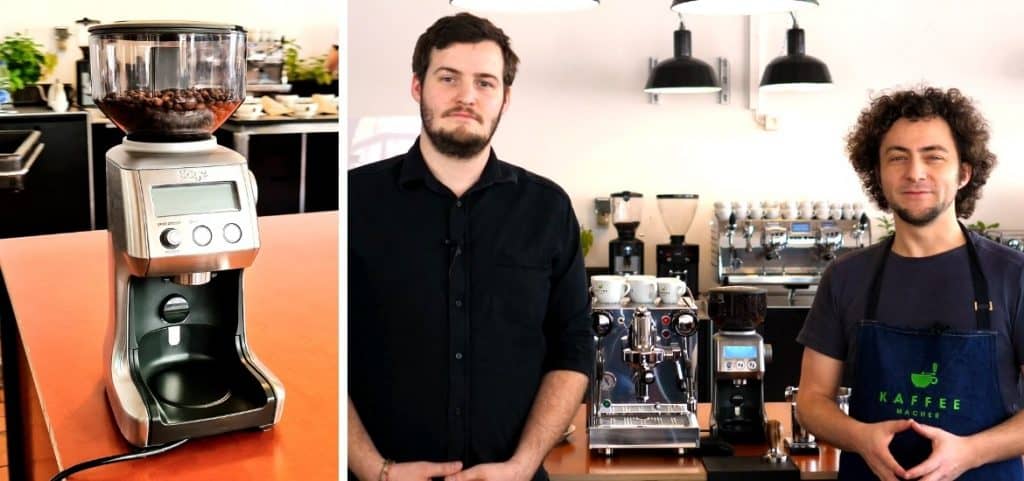
Which espresso grinder is best suited for beginners? There are good reasons to believe that the Sage Smart Grinder Pro has earned itself exactly this title.
We've been grappling with the question of which excellent beginner grinders are available for a while now, especially since we receive emails and comments with this exact question on a daily basis. That's why we've deliberately tested beginner grinders in this price range over recent years. The Sage Smart Grinder Pro has now been through two tests with us: In April 2020, I was able to examine the grinder with vice-barista champion Felix Hohlmann, and in 2022 it was part of our large espresso grinder comparison of 24 coffee grinders for home use.
The Sage Smart Grinder Pro impressed us in both test runs. For us, it was one of the most interesting espresso grinders for getting started in the world of coffee.
If you'd like to support us in purchasing additional test equipment, you can do so by ordering the Sage Smart Grinder Pro via this affiliate link.
Affiliate link: It doesn't cost you any more, but we'd appreciate it.
What criteria are important for assessing the quality of an espresso grinder?
- Does the grinder produce espresso-fine grounds? Can the grind setting be adjusted so finely that sufficient resistance builds up in the portafilter, preventing the espresso from running through too quickly? (Guide: how to set espresso.)
- Is the ground coffee homogeneous? The majority of the ground coffee should match the target size without clumping. Many smaller or larger particles lead to increased acidity or bitterness in the taste.
- Is it easy to use? Can the grind setting be adjusted in steps or continuously, and is it easy to readjust the internal grinding mechanism?
- How consistently does the grinder work? Does it consistently deliver the desired amount of coffee across multiple shots, or does it fluctuate from shot to shot?
- Retention: How much coffee remains in the grinding mechanism after a grind cycle and thus becomes "old" coffee in the next grind?
- Heat generation from regular use: Do the grinding discs and thus the coffee warm up significantly during use? This can lead to flavor changes.
These criteria also form the basis of our test protocol for espresso grinders.
Espresso-fine!
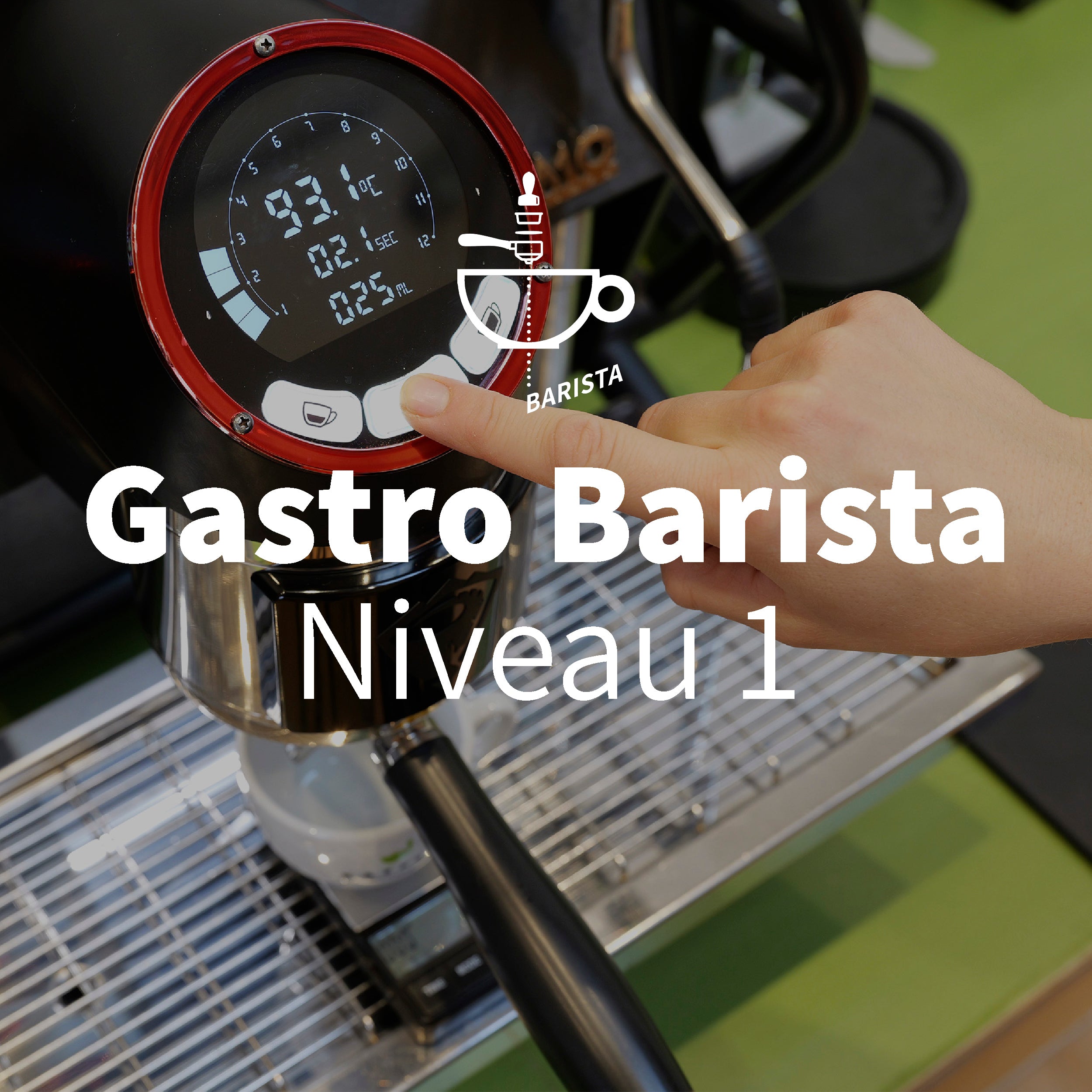
The grind setting can easily be adjusted so finely that a good espresso can be brewed in 25 or 30 seconds. The grind adjustment is done via the wheel on the right side of the grinder. The digital display shows what grind setting is currently selected. This helps with orientation.
 Digital display of the Sage Smart Grinder Pro
What's somewhat confusing is that when turning the grind adjustment wheel, you feel step-by-step adjustments of a gear that don't always correspond with the digital display. For example, if you adjust three gear steps, the digital display might only jump two steps forward. As a consequence, you shouldn't rely entirely on the grind display, which in our view isn't really possible anyway. Coffee is a natural product that changes due to external influences. If, for example, the humidity in the room increases, the coffee powder clumps more, and the grinder should be adjusted slightly.
Working with an espresso grinder in this sense is never a finished process. Minor adjustments are simply made from shot to shot.
The matter of consistency with the espresso grinder
We performed 40 espresso shots in succession. The grinder's consistency was remarkable. We had set the grinder to a target amount of 18 grams. With the Sage Smart Grinder Pro, this setting is made via grind time. On a programmable button, we set a grind time of 16 seconds, determined through trial and weighing. 16 seconds is relatively long compared to professional grinders, but comparable to other grinders up to 500 euros. Commercial grinders grind an amount of about 18 grams in 3 to 6 seconds.
Across 40 shots, the result varied by a maximum of 0.4 grams. This value is very good and actually comparable to professional espresso grinders. In this case, that speaks in favor of the household grinder, as we've long wondered why commercial grinders aren't more precise.
The large fluctuations with some grinders are one of the reasons why barista competitors weigh each individual shot with a scale.
How does the espresso taste, and how consistently did it run?
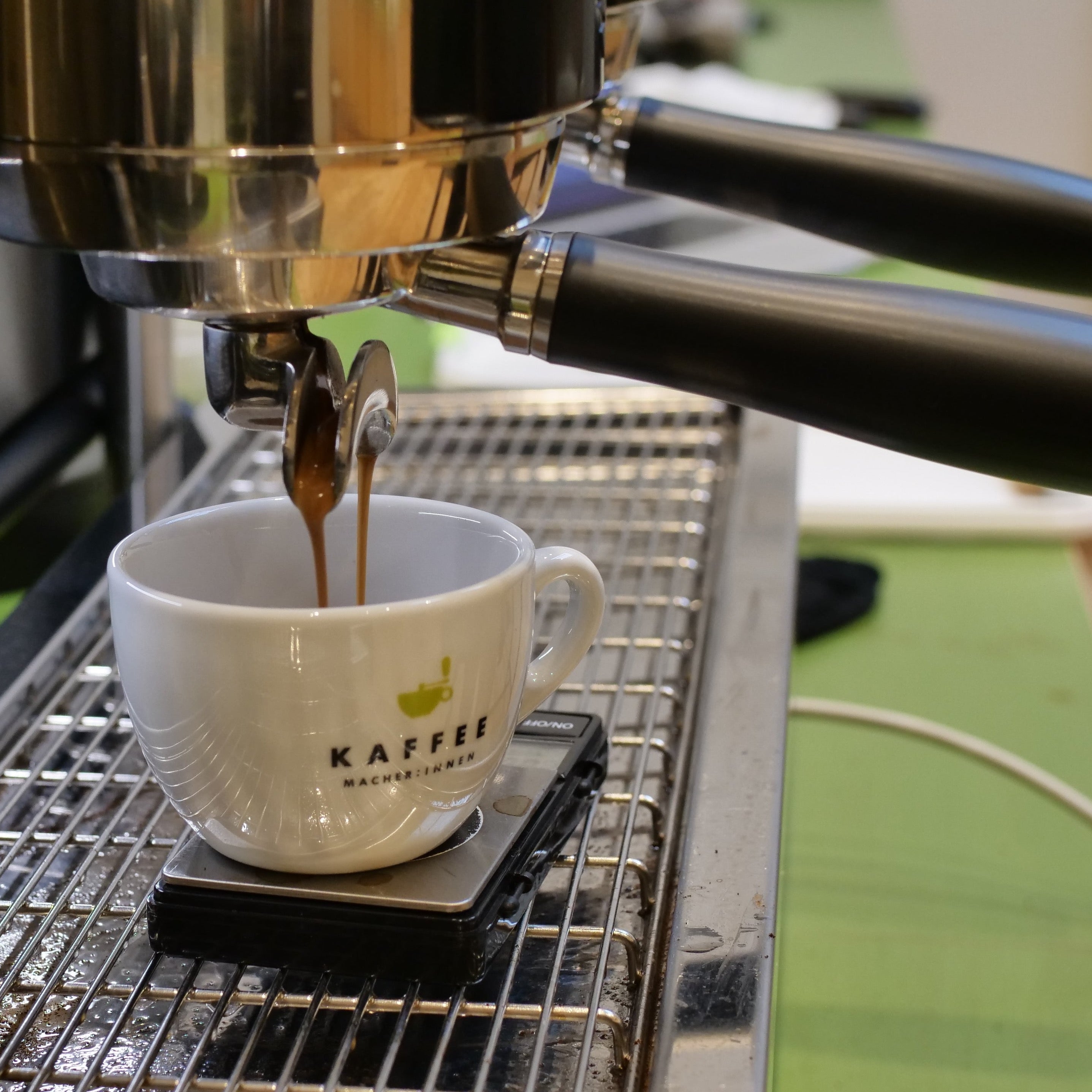
By adjusting the grind setting, we quickly arrived at a good espresso. It was balanced and met all the expectations we have for our Dreispitz Espresso. What stood out was that after several consecutive shots, the extraction time became progressively shorter. With the first shots, we had extraction times of 29 seconds, while the tenth espresso ran only 22 seconds. The repeated shots also led to a noticeable warming of the ground coffee.
It should be noted as a limitation that the grinder isn't designed for such continuous use. This needs to be kept in mind when using it. By slightly adjusting the grind setting, you can keep the grind and thus the extraction consistent. However, grinding too frequently in a short time should be avoided: coffee that has overheated tastes noticeably different, and the grinder's longevity would suffer as well.
 Comparison of particle distribution: The Sage Smart Grinder Pro falls between the Sette 270 Wi and the Graef on one side and the grinders with flat burrs on the other. All grinders were set so that the espresso runs out in the same time. More on this in the test report for the Graef CM800 and the Niche Zero.
Our data collected in 2021/22 also shows that the Sage Smart Grinder Pro, like its smaller sibling, the Sage Dose Control, has a good, narrow main peak. The more particles that fall within this range, the more accurately the desired grind setting has been hit: The Sage Smart Grinder Pro was among the better grinders in the field of 24 tested espresso grinders. For understanding x50, fine fraction, and peak width, we have our own knowledge article on particle distribution.
The fine peak was on the higher side with the Sage Smart Grinder Pro. In terms of taste, this expressed itself in the texture and a certain bitterness, which didn't dominate the coffee in our tastings, however.
Operating the Sage Smart Grinder Pro
Operating the grinder is straightforward. The side wheel turns smoothly, and the digital display gives you an idea of what grind setting you're at. The programmable grind time is consistent, with eight programmable slots available. That's more than most people need, but it's not a problem.
For comparison, we also have the Sage Dose Control in our lineup. It looks identical in construction but forgoes the digital display. Our impression: Especially for beginners, the display is a handy tool.
Like the Sage Barista Pro and Sage Express espresso machines, the grind setting can be fine-tuned if the basic setting is too fine or too coarse. Because we receive many questions about these two machines, we've put together a dedicated FAQ page.
All grinders have a basic grind adjustment. This works for most coffees, but light or dark roasted coffees can fall outside the range. In that case, the basic grind adjustment of the grinding mechanism can be changed as shown in the following video.
Retention: ground coffee residue in the grinder
After every grind cycle, almost every grinder retains some coffee powder in small crevices, screw openings, between the grinding discs. The more coffee powder that remains in such cavities, the more it affects the next espresso extraction. The more regularly a grinder is used, the less of a problem this is, and the longer ground coffee sits in the grinder, the more it influences the taste and extraction of the next shot.
With the Sage Smart Grinder Pro, we weighed approximately 2.7 grams of coffee in the retention area. To do this, we disassembled the grinding mechanism and swept everything together. Compared to the Niche Zero, which has only 0.47 grams of retention, that's a lot. Compared to the Graef CM800 and its measured 8 grams of retention, however, it's a manageable value. The Graef is the real price competitor to the Sage Smart Grinder Pro, and the Sage wins this comparison.
We would still always recommend: Once the grinder sits idle for longer than 15 minutes, simply grind out a few grams. This ensures that the next espresso isn't brewed with old coffee.

Build quality
A correction to our video: In it, we mention that there's no portafilter holder on the grinder. That's not correct. There are actually two, so the portafilter can rest while the grinder dispenses into it. This works with portafilters of 50 to 58 millimeters in diameter.
The grinder is very compact with a width of 22 cm, a height of 38 cm, and a depth of 15 cm. The housing is made of stainless steel and plastic.
Conclusion
We had a very good impression of the Sage Smart Grinder Pro. Across both test runs, it was the espresso grinder that delivered the most for this price, and it was our top beginner recommendation among espresso grinders during that time.
Since then, there's been significant development in the beginner segment. If you want to work without a hopper today or are willing to invest a bit more, there are now also interesting options among single-dosing grinders like the Varia VS3, the DF54, or the Eureka Manuale. We're currently preparing a dedicated comparison test for those.
Test results: Sage Smart Grinder Pro
Our test protocol has evolved significantly since this test: volume level, speed per 10 seconds, temperature, the division into temporary and permanent retention, and a dedicated single-dosing measurement were not collected in their current form in 2020/22, so these lines are missing. Consistency, usability, grind repeatability, and espresso potential are derived from the original test's running text, not newly measured. Assessment based on the KM test protocol for espresso grinders. Particle distribution is intentionally not reflected in the color rating because it's roast-dependent.
We purchased our test equipment ourselves. Sage did not pay us for this and had no input on this article. When you purchase the Sage Smart Grinder Pro via our affiliate link above, you support our work at no additional cost to you.