






As a community, you've repeatedly pointed us to the Lelit Mara X. We bought it, tested it, and then worked with numerous additional units in our Home Barista courses for years. The result in one sentence: it's almost cheeky what Lelit delivers in terms of value for money, but you need to understand the temperature control, otherwise the machine will frustrate you.
This article bundles both the test of the Mara X and all the temperature tips we've collected over the years.
Which Mara X do you have? V1, V2 and X3 at a glance
Before we get to temperature, you need to know which machine you have. With the Mara X, this isn't a minor detail—it determines how you operate it.
| Version | Identification feature | What's different |
|---|---|---|
| Mara X V1 | red logo | first generation with the second temperature sensor in the heat exchanger |
| Mara X V2 | no red logo | technically nearly identical, changed control logic |
| Mara X3 (PL62X3) | Pagaia lever on the side | Pagaia flow control, 1,699 euros, different temperature management |
The X3 is its own machine and not a transitional step. It controls flow electronically through Pagaia instead of pressure and costs around 500 euros more than its predecessor. In our temperature measurements, it behaves similarly to the V2, except that flow control introduces another layer that can additionally influence temperature. Everything about that in the Lelit Mara X3 test and in the technical article on Lelit Pagaia.
You'll find all Lelit machines we've measured compiled on our overview page Lelit at a glance.
Plenty of features for relatively little money
The performance package is astounding. No other dual-boiler espresso machine we know delivers so much functionality for so little money: dual manometer, PID control, cool-touch tubes, and it's also very quiet.
The list price in Switzerland was 1,490 francs; in the EU we found numerous offers under 1,000 euros. These are figures from our test period—Lelit prices fluctuate significantly, so comparison shopping pays off.
We tested the Mara X as part of our comparison of 12 dual-boiler espresso machines. How we measure is described in our espresso machine test protocol.
Compact, small, and purrs like a kitten
"Are you already brewing?" I asked Michel Indelicato in our test. "Yes, it's just so quiet!" replied the Swiss vice-barista champion.
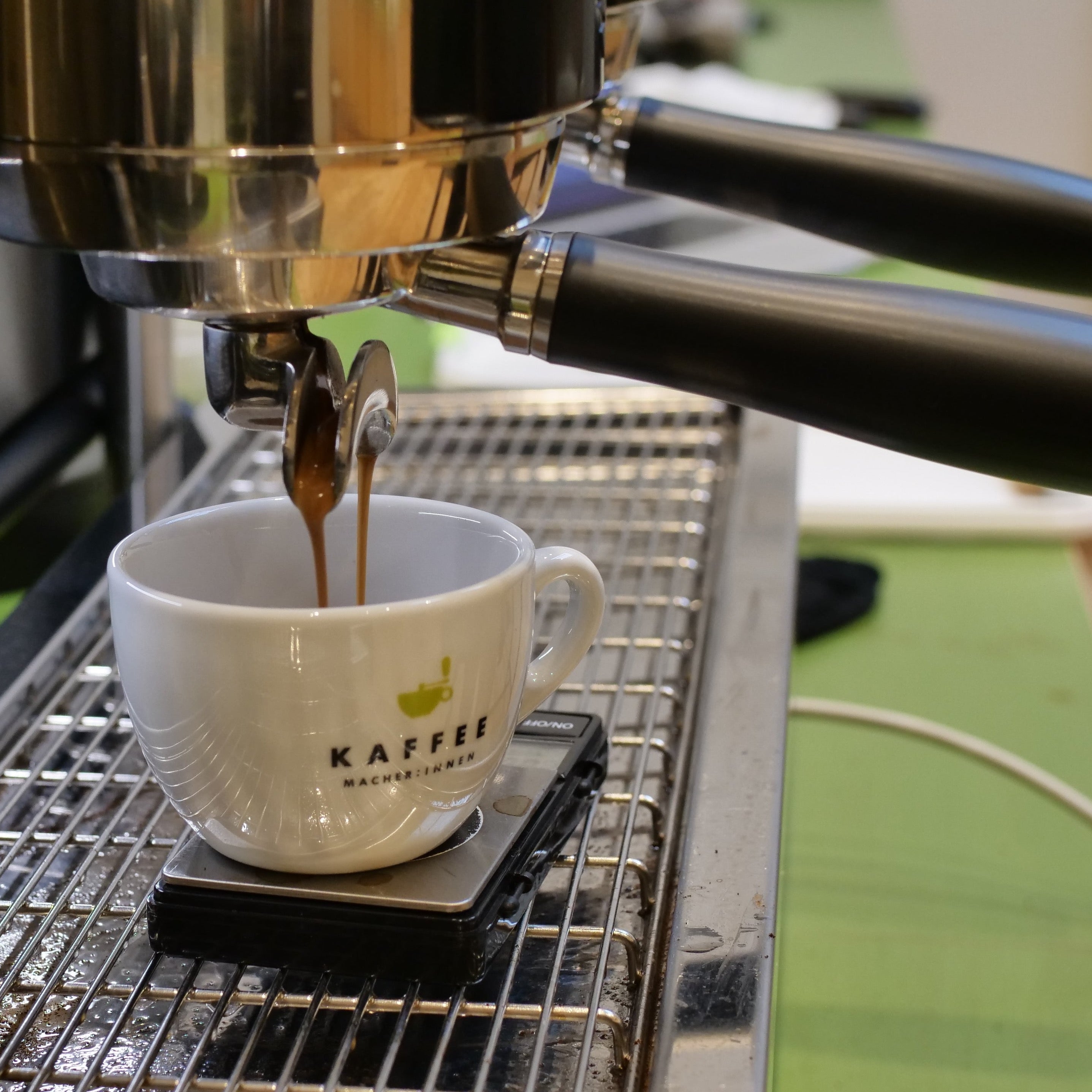
To compare, we ran two other dual-boilers in parallel. The Lelit was up to 10 decibels quieter. This is due to the type of vibration pump used and the fact that Lelit has installed rubber at typical rattling points. The drip tray doesn't rest directly on metal but on small rubber tabs, and the same goes for the surface where espresso cups sit.

Less rattling thanks to rubber mounting.
A tip from everyday use: make sure the cups on the machine don't touch each other. Otherwise, you've created a new rattling surface.
The Mara X is just 22 centimeters wide—about 5 centimeters less than a Rocket Appartamento. Against this are 41 centimeters depth and 35 centimeters height. At 18 kilograms, it stands firm, and the rubber feet prevent it from rotating when you engage the portafilter.
The drip tray is noticeably large and deep, holding more than a liter. Don't wait until the last moment to empty it. Full drip trays can't be carried without making a mess.
Two temperature sensors: what makes the Mara X different
The temperature control of the Mara X differs from all other dual-boilers. If you operate it like a classic dual-boiler, you'll have difficulty getting the temperature under control.
A classic dual-boiler with an E61 thermosyphon has a probe in the steam boiler. The boiler transfers its heat to the brew water through the heat exchanger, which flows through a separate pipe. The control is correspondingly imprecise. It varies when lots of water rushes through the heat exchanger, and the thermosyphon tends to overheat after longer periods of standby. That's why you need to flush adequately before brewing with such machines.
Lelit has installed a second temperature sensor directly in the heat exchanger. It monitors the incoming temperature and heats up as needed. What makes this brew group special in general is covered in our article on the Faema E61 brew group.

Switching brew priority and steam priority correctly
The Mara X has two operating modes, controlled by two different switches. This is the most common confusion.
With older machines and in some instruction manuals, the switch position assignments are described differently; some Mara X units were even shipped with instructions for the previous version. So don't rely on the label, but on the manometer. In steam priority, the machine regulates to a boiler pressure of 1 bar, 1.2 bar, or 1.5 bar depending on the position. In brew priority, it instead regulates to the brew temperature, and the boiler pressure is the result—it doesn't aim for one of these three values.
Allow at least 15 minutes when switching modes for the machine to stabilize in the new mode.

The temperature levels of the Lelit Mara X.
Which temperature does each level deliver?
This is where it gets interesting, because we have two measurement series with different results. This isn't a contradiction but explains why such different values circulate online.
| Level | First measurement series (flush before extraction) | Second measurement series (flush after extraction) |
|---|---|---|
| Level 0 | 93 to 94 °C | 90 to 91 °C |
| Level 1 | 96 °C | 91 to 92 °C |
| Level 2 | 98 °C | 93 to 95 °C |
The difference comes solely from the flushing routine. In the first measurement series, we flushed between extractions as you would with a classic dual-boiler. This drove the temperature above the setpoint because the sensor in the heat exchanger responds to the flowing water and heats up further. The result was extractions that were too hot and, in our dual-boiler comparison video, quite a temperature crash.
We then contacted Lelit. Their answer was brief: flush briefly after the extraction, not before. And really brief. This routine produced the values in the second measurement series, and these are the reliable ones.

The interval between extractions was shortened. This reduced the brew temperature.
The intelligent solution of the Mara X compensates for some typical problems of dual-boilers with thermosyphon. It's worth adapting your rhythm to the machine rather than the other way around.
Updated temperature measurements
We recorded the following measurements with two additional Mara X units. We've had the same experience in our Home Barista courses with numerous other machines.


Control temperature at home yourself
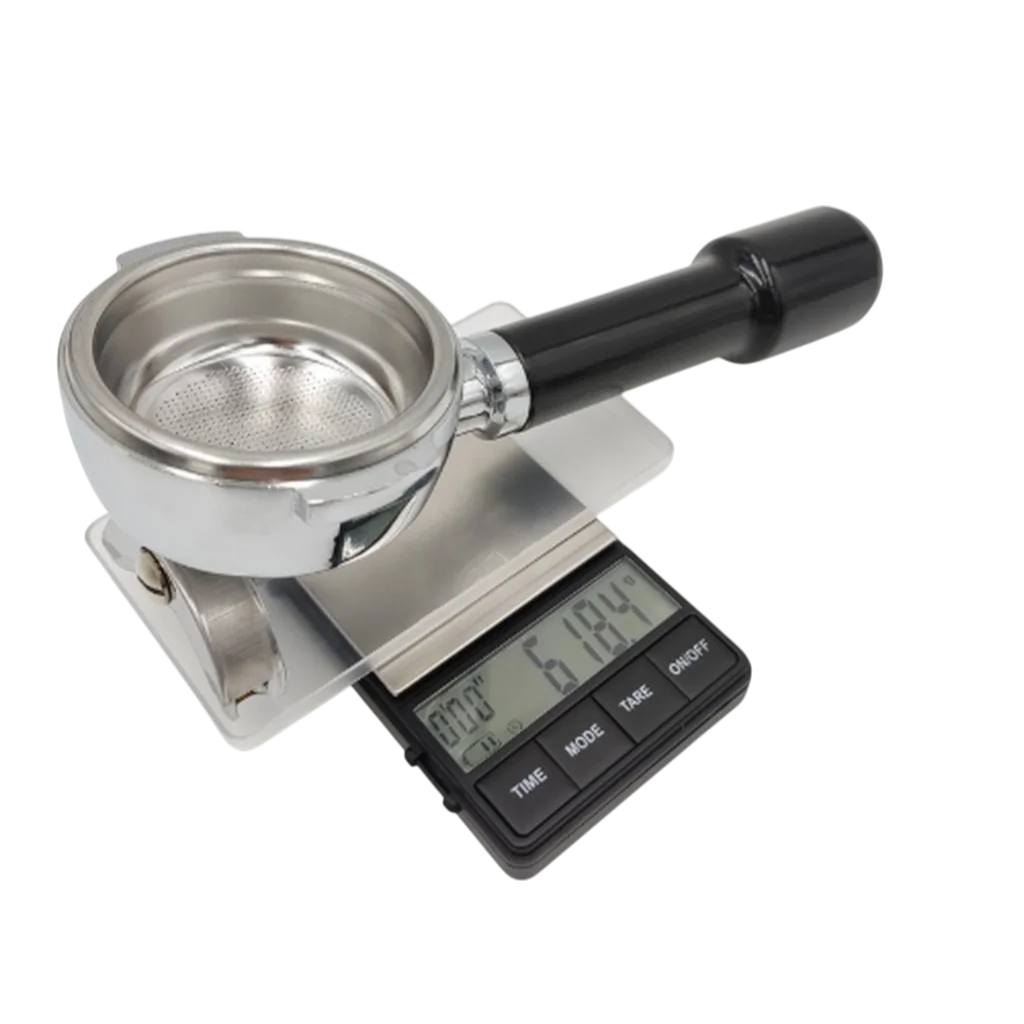
We compared the temperature in the thermosyphon against our measuring portafilter and screwed a small thermometer from Coffee Sensor into the brew group for this. The result is clear and reproducible multiple times: the Coffee Sensor shows 1 to 2 degrees more than what reaches the basket. At the start of an extraction it's about 2 degrees difference, then it settles to about 1.5 degrees.
Subtract 1 to 2 degrees from the displayed value, and you'll have the temperature that actually reaches the coffee. If the sensor shows 95 degrees, you're brewing at about 93 to 94 degrees. This sounds minor, but it determines whether you're in the target window or 2 degrees above it.
Such a sensor makes more sense on the Mara X than on most other machines. Because the temperature rises during extraction and falls at short intervals between extractions, the sensor shows you immediately whether the machine is running in the desired range or has climbed too high. For the price of a thermometer, it's the most sensible addition you can make to this machine.
Steaming milk and making cappuccino
The Mara X impressed with steaming, even in brew priority mode. We were impressed by its power. The rolling phase is so forceful that small and larger bubbles are broken down, creating a smooth microfoam.
Interestingly, the milk doesn't heat up quickly. This gives you extra time for steaming and makes the machine attractive for beginners in milk steaming.
Because steaming in brew priority mode works almost as well as in steam mode, we see no reason to switch. The only reason would be if you want to deliberately operate the machine classically like other dual-boilers on the market.
Cool-touch and other good ideas
The steam wand and hot water outlet have cool-touch tubes and don't get hot on the outside. The E61 brew group is heated throughout, so there's a burn hazard there. Rubber sleeves or plastic grips on the wand are typical at this price point. The fact that Lelit installs these more expensive tubes here is a genuine plus and shows customer consideration.
The steam boiler holds 1.8 liters and provides temperature stability. It transfers heat to the brew water through the heat exchanger.

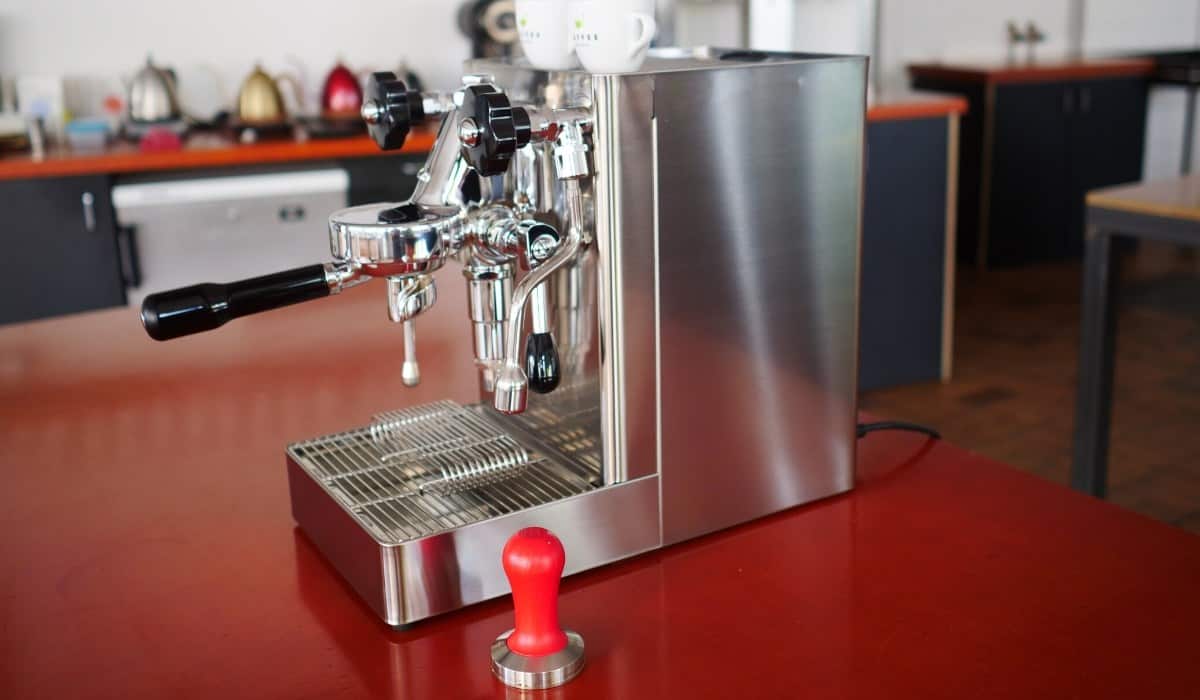
Side view of the Lelit Mara X.
The dual manometer shows the pressure in the boiler and the brew pressure—it's sleek and practical. The water tank can be removed and filled directly at the tap. Use soft water for this. The package includes a wooden tamper in 58 millimeter size and a raised platform for the espresso extraction. An automatic standby function is integrated, as with all new espresso machines with EU approval.

Dual manometer of the Lelit Mara X.
The build quality is high, and stainless steel reduces rust risk. With unbroken metal edges, the Mara X performs about average.
Where you can buy the Lelit Mara X
We don't sell espresso machines ourselves. Not for three years now, so we can write about machines without our own sales influencing the outcome.
What we do: we search for specialist partners for you whom we know provide good work and service, and we stay in close contact with these retailers. With the Mara X, that's Stoll Espresso, who run a very competent workshop and remain a good contact even after the purchase.
This is a commission link. If you order through it, it doesn't cost you more, but we receive a small commission that we invest in new test equipment.
Conclusion on the Lelit Mara X
It's almost cheekily good value for money. PID temperature control, two temperature sensors, a dual manometer, and cool-touch tubes in a machine sold as an entry-level device. And it's very, very quiet. As a result, the rest of the house isn't woken by the pump but by the grinder.
The espresso and milk steaming quality is good to excellent. Lelit has thought of many details and implemented community ideas. The machine is compact anyway—at 22 centimeters wide, it fits in kitchens where other E61 machines won't fit.
The price is that you have to embrace its logic. Flush after extraction instead of before, two minutes between extractions, and patience after a long session. Do that, and you get a very precise and reliable espresso machine. Operate it like a classic dual-boiler, and you'll get frustrated with the temperature.
It's not the right choice if you regularly brew for multiple people in succession—a dual-boiler like the Lelit Elizabeth is more suitable. If you want flow profiling, look at the Bianca V3 before you go for the Mara X3.
Brilliant, this is a pleasure.
As always, we bought this espresso machine ourselves. This test was not commissioned by Lelit.