




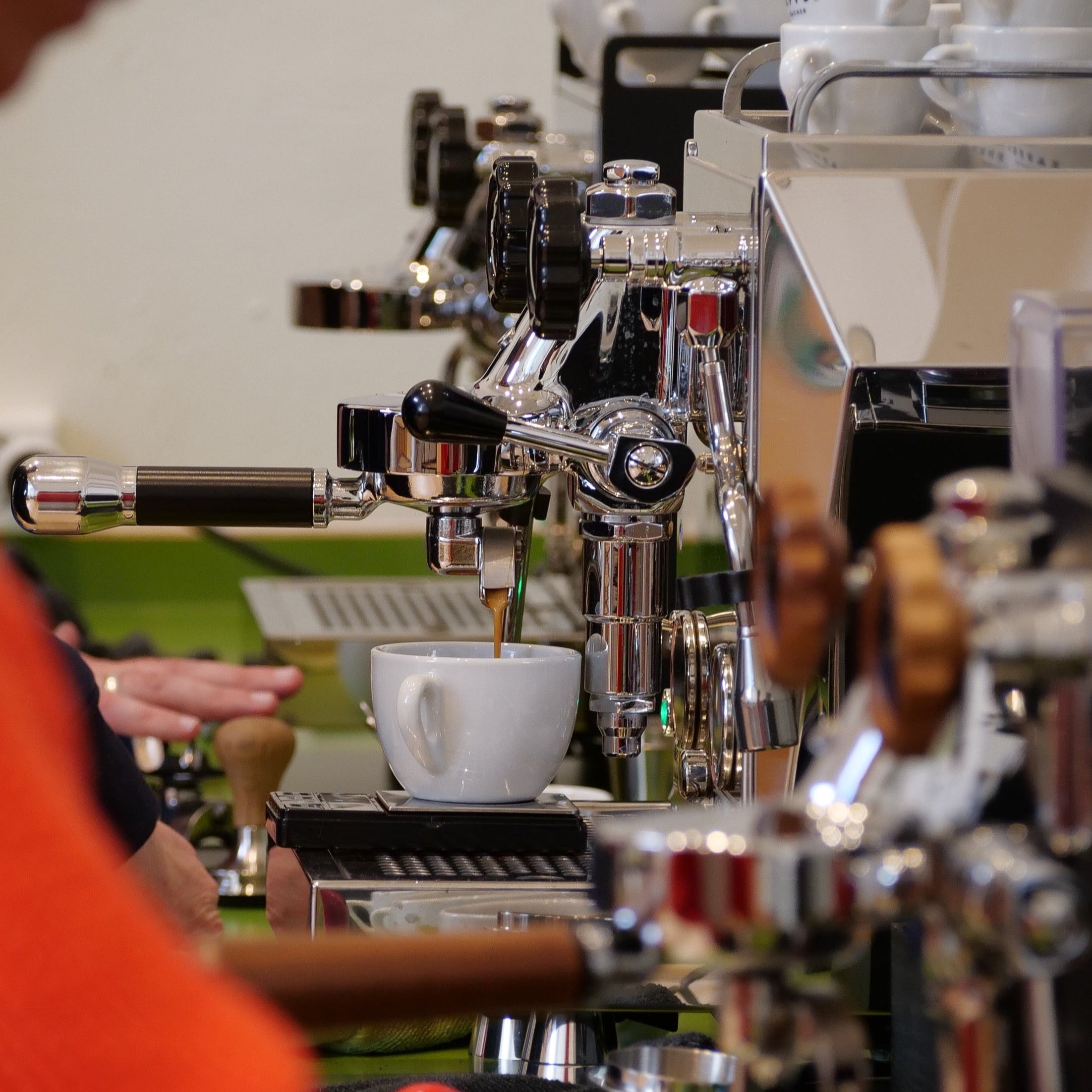
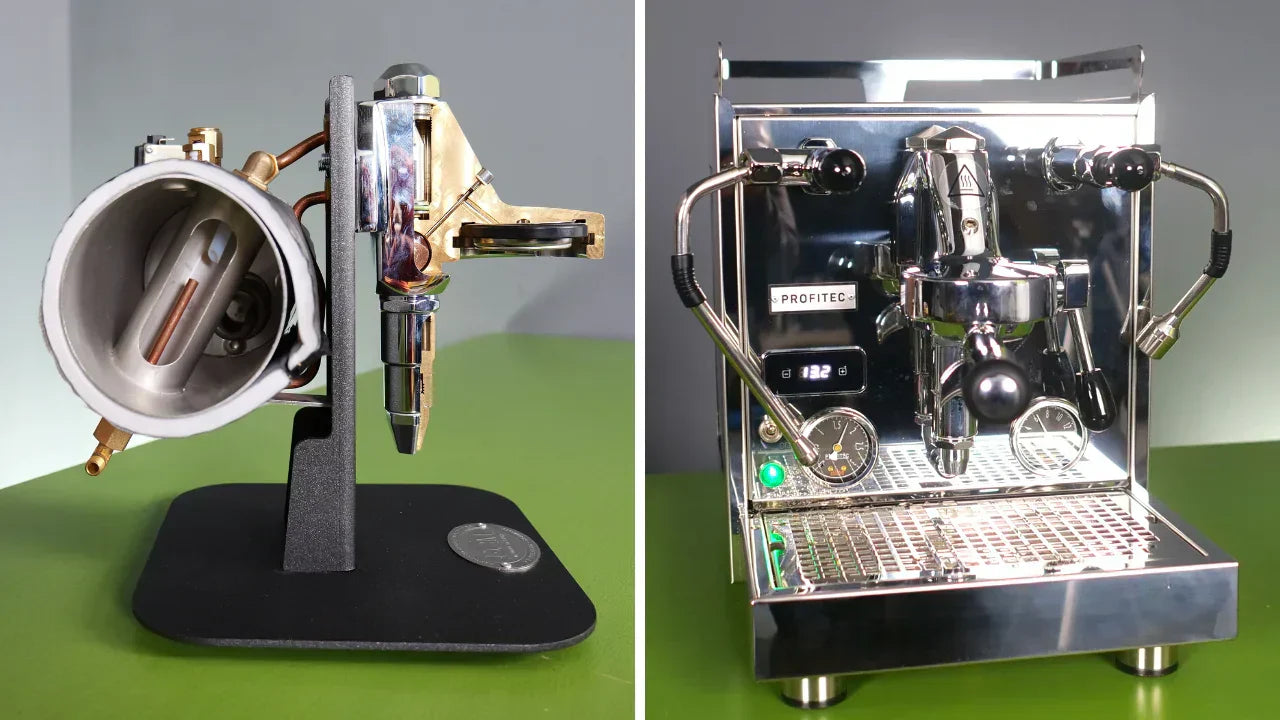

The E61 brew group is built into more espresso machines than any other technology. ECM, Rocket, Lelit, Profitec, Quick Mill, Bezzera—they all rely on a design that Ernesto Valente invented in 1961. More than 60 years old, still the first choice for hundreds of manufacturers worldwide. We explain how the thermosiphon principle works, why mechanical pre-infusion still beats every electronic system to this day, and what you need to know about maintenance and care so your E61 machine runs flawlessly in twenty years.
1961: Ernesto Valente and the Total Solar Eclipse
Before the E61, espresso was a physical affair. The hand lever method by Achille Gaggia, introduced in 1947, generated the necessary 9 bar pressure using a powerful spring that the barista had to pull by hand. This was tiring, the pressure curve was fixed by the spring characteristics, and the temperature often remained inconsistent. For the mass market, this technology was too demanding.
Ernesto Valente, founder of FAEMA (Fabbrica Apparecchiature Elettromeccaniche e Affini), thought bigger. He wanted to automate and standardize espresso: not as a niche product for specialized operators, but as a reproducible result regardless of the force applied to the lever. In 1960, Valente filed a patent for a system of "alternately closing valves." A year later, the machine was ready for market.
Valente chose the name E61 to honor the total solar eclipse ("Eclisse" in Italian) that was visible in Italy in 1961. A romantic name for a very sober engineering achievement: constant pump pressure of 9 bar, a passive retention system, and mechanical pre-infusion. Three innovations in one machine that permanently changed the espresso world.
The Thermosiphon Principle: Ingeniously Simple, Physically Elegant
The heart of every E61 machine is the thermosiphon. It's so simple that at first you don't even understand it. No additional pump, no extra heating element in the group, no electronics. Just two copper tubes and the physics of heat transfer.
Here's how it works: The brew head is connected to the heat exchanger or boiler via an upper and lower tube. Hot water has lower density than cold water, so it rises upward. The hot water from the boiler flows through the upper tube into the chambers of the massive brew head, transfers its heat to the brass there, cools slightly in the process, and sinks back down through the lower tube into the boiler. This cycle runs constantly as long as the machine is heated, even when no espresso is being pulled.
The result is a brew group that is always at temperature. No active heating needed, no separate sensor, no control system.
The brew head of an E61 machine is made of chromed brass and typically weighs over four kilograms. This enormous mass must be completely brought to operating temperature by the circulating water, which takes 20 to 30 minutes. If you turn on the machine early and pull an espresso immediately, you'll encounter a brew head that isn't fully heated yet. The extraction will be too cold, the espresso too sour. Buy a timer, let the machine preheat.
The downside of thermal mass: During longer operating standby periods, the water in the thermosiphon overheats. If you want to pull an espresso after a half-hour break, you should flush for two to three seconds first. The overheated water must come out before the portafilter is inserted. The water coming out should no longer be steaming or spraying. With single boiler machines, the overheating problem is more pronounced than with dual boilers.

Mechanical Pre-Infusion: Three Positions That Change Everything
The second great invention of Valente is the integrated, mechanical pre-infusion. And in our view, it's the most ingenious part of the entire construction, because it works without electronics and yet functions every single time.
The side lever of the E61 has three functional positions:
Rest position: The inlet valve is closed. The relief valve is open so residual pressure can escape from the group. The coffee puck stays dry, and the portafilter is easy to remove after extraction.
Pre-infusion (middle position): The inlet valve opens slightly, the relief valve closes. On machines with water line connection, water now flows onto the coffee only at line pressure. The puck begins to swell slowly and saturate evenly, still without full extraction pressure.
Extraction (upper position): The cam opens the inlet valve fully and simultaneously actuates a microswitch that starts the pump. But even now, the pressure doesn't immediately jump to 9 bar. A small expansion chamber in the brew head (roughly 8 to 10 milliliters of volume) fills first and delays pressure buildup. Only when this chamber is full does water hit the puck with full pressure.
The result is a gentle, natural pressure curve. The coffee has time to settle and saturate evenly before full extraction pressure kicks in. Channeling is reduced, extraction becomes more uniform. Without a single line of code.
Modern machines can control the pump electronically and thus run any pressure profile. The E61 pre-infusion is fixed, but more robust: no software bug, no calibration required. If you simply want good espresso without worrying about profiles, the mechanical E61 solution serves you very well. If you want to experiment and adjust profiles, you need more. More on that below.
Flow Control: The E61 in the 21st Century
The E61 is 60 years old, but it hasn't stood still. The latest innovation brings proven mechanics directly to the forefront of espresso preparation: Flow Control.
The principle is simple. Instead of a fixed nozzle built in (a small jet that limits maximum water flow), a needle valve is installed. This allows the barista to manually change the cross-section of the water supply during extraction. A long, low-pressure pre-infusion? Possible. A declining pressure at the end of the shot? That works too.
This is particularly interesting for light roasts. Light roasts often need longer extraction times and specific pressure curves to develop their complex acid structure without excessive bitterness. Machines like the Lelit Bianca V3 or the ECM Synchronika II offer this feature as standard. A mechanical design over 60 years old serving as a platform for cutting-edge extraction technology. That's actually cheeky.
Brew Group Types Compared
The E61 is one of three fundamental brew group types, distinguished by how much water contact the group has when at rest. This determines almost everything: warm-up time, thermal stability, price, and maintenance effort.
| Feature | Unsaturated Group | E61 Thermosiphon Group | Saturated Group |
|---|---|---|---|
| Water contact at rest | None | Circulating, passive | Permanent, directly on boiler |
| Heating principle | Only flows through during shots | Passive thermosiphon cycle | Group welded directly to boiler |
| Thermal mass | Low | High (4+ kg brass) | Very high (group plus boiler water) |
| Warm-up time | 1–5 minutes | 20–30 minutes | 15–25 minutes |
| Thermal stability | Low, first shot often cold | Very high after full warm-up | Very high, stabilized by boiler water |
| Mechanical pre-infusion | No | Yes, integrated via lever | Usually electronically controlled |
| Additional heating element possible | Rarely | Yes, on some models | Yes, on some models |
| Maintainability | Simple, few parts | Excellent, world standard | Good, manufacturer-dependent |
| Typical machines | Dedica, Bambino, many entry-level | ECM, Rocket, Lelit, Profitec | La Marzocco, Synesso, Faema E71 |
| Typical use | Entry-level, occasional use | Home and semi-professional | Semi-professional and professional |
All information represents general guidelines; actual values vary depending on model and configuration.
The unsaturated group is found in budget entry-level portafilter machines. It isn't actively kept warm during rest, which makes the machine affordable and quick to start. The price is thermal instability: the first shot often comes out too cold because the cold group draws heat from the water. Many users therefore pull a blank shot before inserting the portafilter.
The E61 solves exactly this problem via the thermosiphon. The group is at temperature permanently after warm-up because hot water circulates through it passively. No blank shot needed, no cold first pull. The downside is the long warm-up time and high energy consumption.
The saturated group takes it a step further: the group is directly connected to the boiler water and permanently filled. This provides the highest thermal stability possible, but only becomes relevant at very high throughput, as occurs in professional settings. For ten espressos a day at home, the difference from the E61 is barely noticeable.
The additional heating element in the group isn't its own type, but a feature that can be retrofitted to thermosiphon and saturated groups. It allows faster temperature adjustment and compensates for heat loss at low throughput.
Maintenance and Care: What You Really Need to Do
The E61 is legendarily robust. But it won't forgive neglect indefinitely. The good news: if you follow a few simple routines, you'll enjoy your machine for decades.
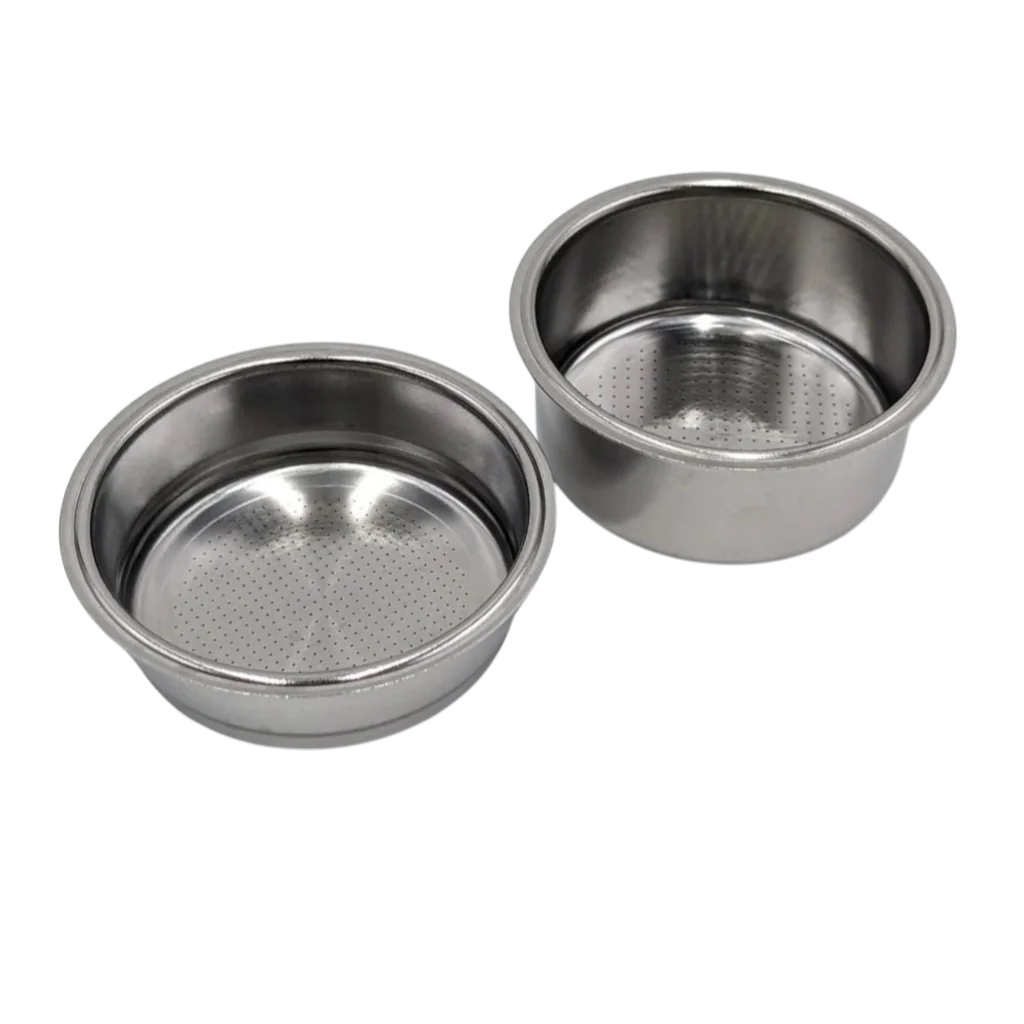
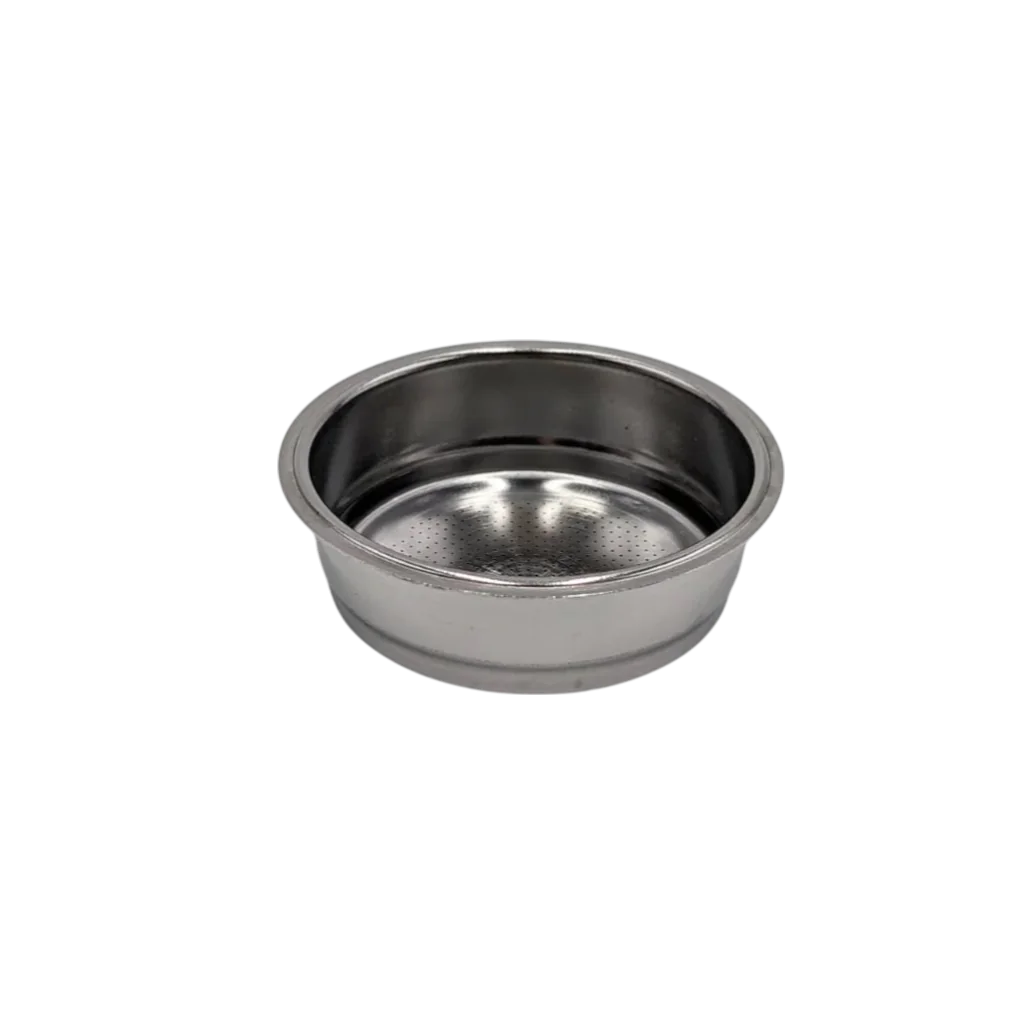
Backflushing, weekly: Insert a blind basket with cleaning powder, start a shot and build pressure 5 to 10 times for two to three seconds each. This dissolves coffee oils and residue from the group and portafilter. Remove and brush the shower screen regularly. Stubborn residue accumulates underneath.
Flush before pulling: After longer standby periods, flush for two to three seconds until water no longer steams or sprays. The overheated water from the thermosiphon must come out before you grind your coffee.
Group seal, every 12 to 18 months: The rubber seal in the brew head wears over time and begins to leak. Replacement is simple and inexpensive. If you delay too long, you risk the seal baking on permanently. Then it becomes more involved.
Cam lubrication, annually: The cam shaft, which controls the valves when you move the lever, needs food-grade high-temperature silicone grease. A common sign that lubrication is missing: the lever squeaks when operated. The cause is often intense backflushing with cleaning agents that wash out the grease.
Nozzle descaling, as needed: The small jet in the mushroom valve of the brew head is prone to limescale deposits. If you work with hard water, you should check this component regularly. We've explained more on cleaning portafilter machines in detail here.
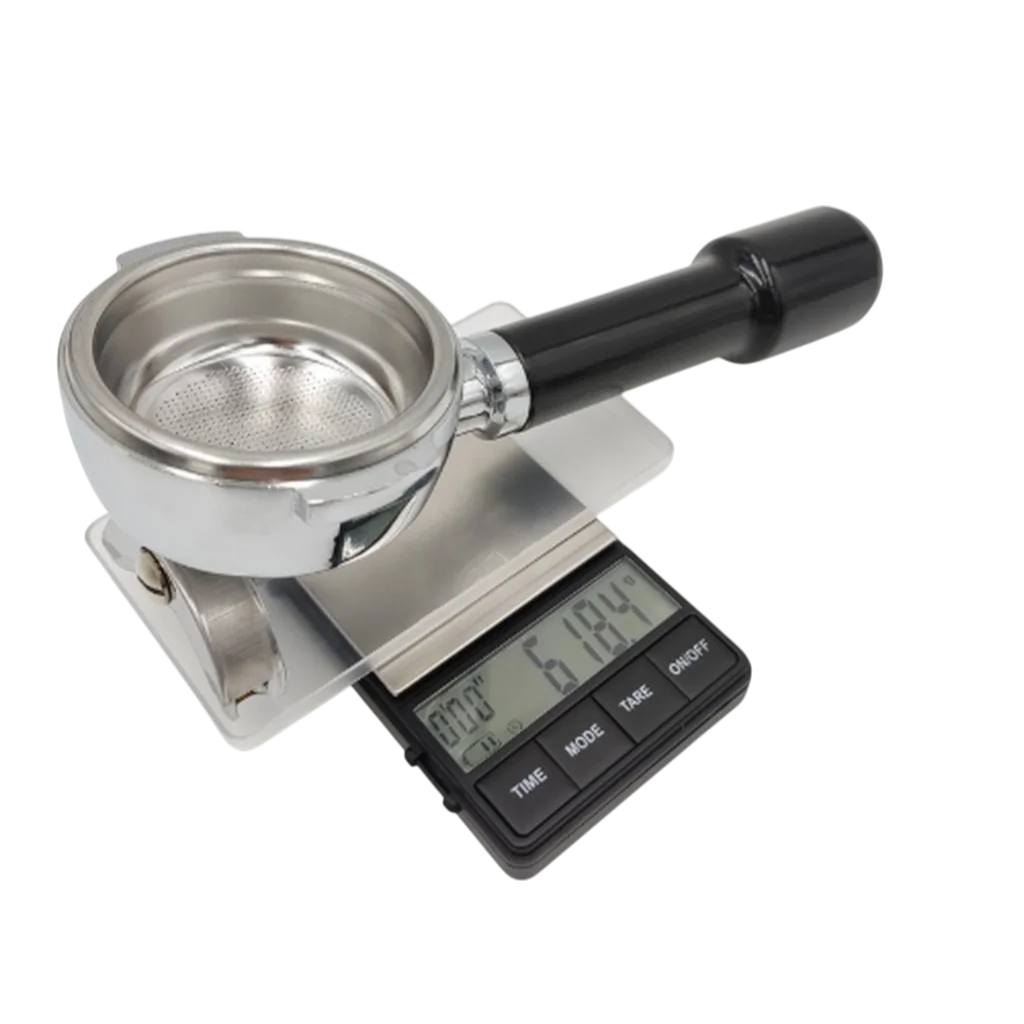
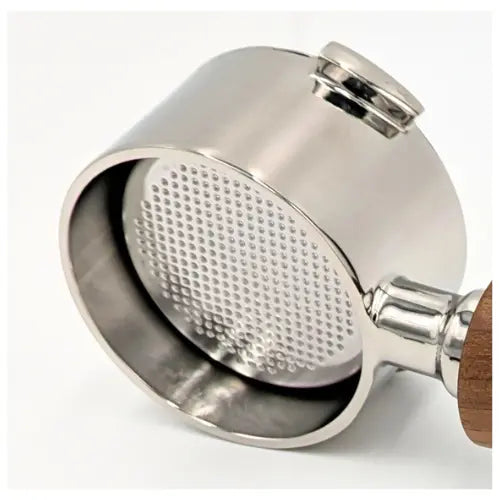
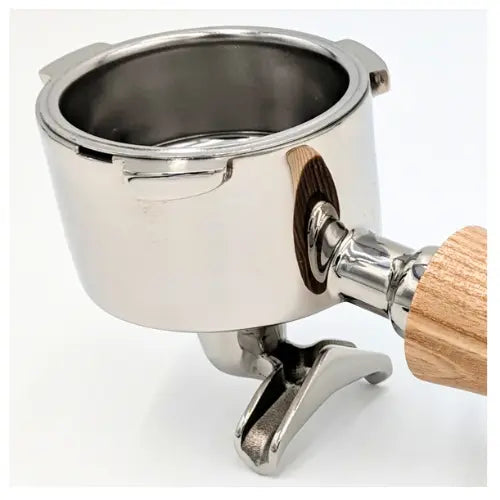
One of the most important side effects of E61 dominance: the 58mm portafilter diameter has become the world standard. Tampers, baskets, bottomless portafilters, distribution tools—everything in 58mm is widely and cheaply available. Those who choose an E61 machine benefit from a huge accessory ecosystem. For example, our bottomless portafilter for E61 groups.
Which Espresso Machines Have an E61 Brew Group?
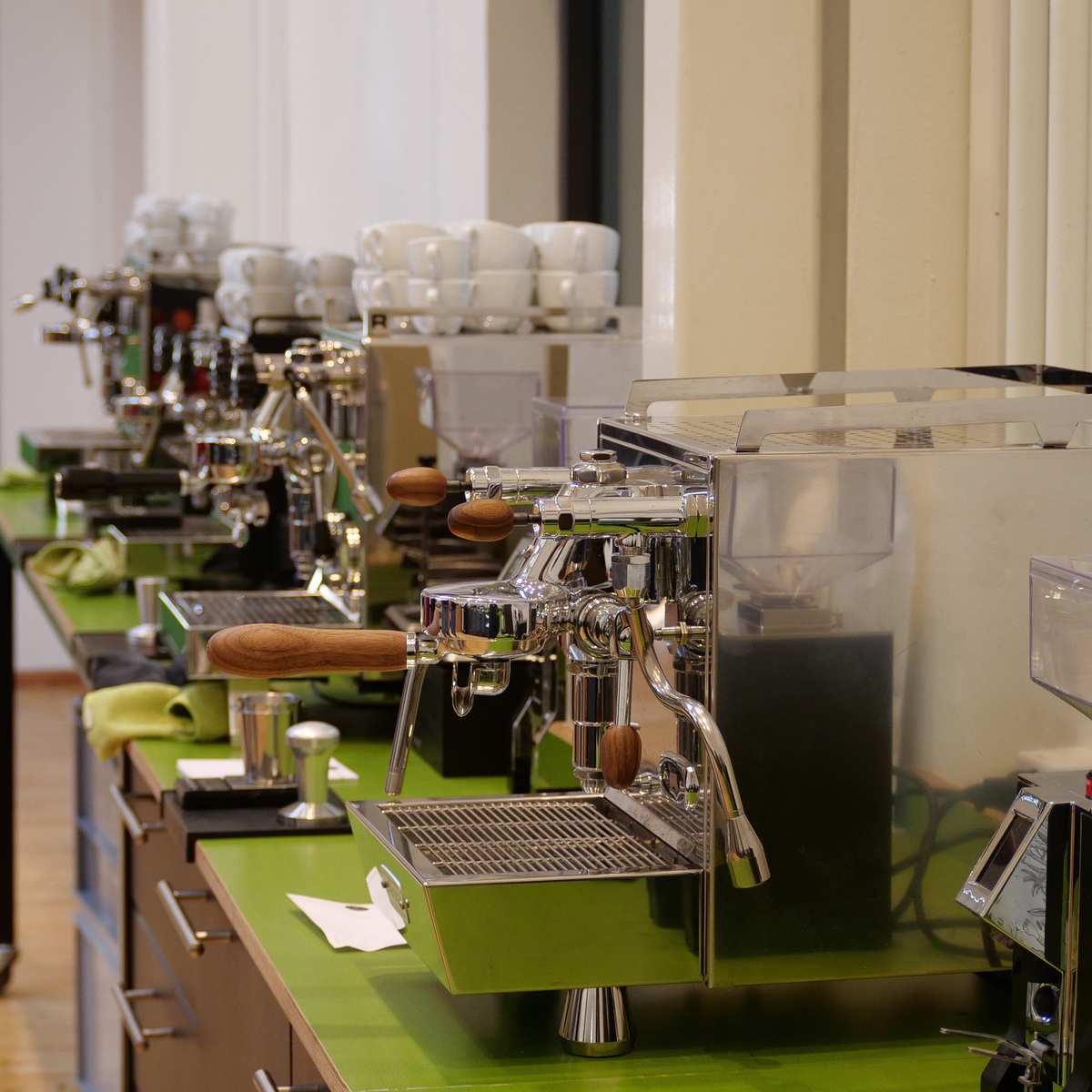
The list is long. Here's a selection of machines we've tested ourselves that have a genuine Faema E61 brew group installed:
- ECM Synchronika I and II, dual boiler, German build quality, with Flow Control in the Synchronika II
- Profitec Pro 600, dual boiler, very good build quality
- Lelit Bianca V3, dual boiler with Flow Control, outstanding value for money
- Lelit Mara X, single boiler with intelligent dual-use system
- Rocket Appartamento, single boiler, compact housing, classic design
- Bezzera BZ10, solid single boiler with good value for money
- Ascaso Steel Duo PID, single boiler with PID, good entry into the E61 segment
- Quick Mill Rubino, affordable entry into the E61 world
A complete overview of all espresso machines we've tested can be found on our espresso machine test page. There all machines are sorted by type: dual boilers, single boilers, and heat exchanger machines.
Conclusion
The E61 brew group is one of the few technical designs that can still be called state-of-the-art after over 60 years (at least for what it does). It isn't perfect. The long warm-up times and high energy consumption are real weaknesses that modern thermoblock machines and fast heating systems solve significantly better. If you want an espresso in three minutes in the morning, an E61 machine isn't the right choice.
But if you're looking for a machine that works stably, forgivingly, and consistently after full warm-up, and that you can maintain and repair for 20 years because spare parts are available worldwide, then the E61 brew group is the right choice for you. For people who pursue espresso with genuine interest and see the warm-up time as part of the ritual, it's a natural choice.
Ernesto Valente's decision in 1961 to rely on heavy brass and a passive heat cycle echoes to this day in every espresso bar where the characteristic click of the E61 lever announces the beginning of an extraction.