



Caffee looks pretty much like coffee. But is Caffee a valid variant of the word coffee? And which other spelling is not a spelling mistake or typo?
We can establish: Coffee is coffee. And only in this spelling is coffee really also coffee, the umbrella term for the appreciated beverage. Perhaps it's due to too little coffee or caffeine that typos regularly sneak into the word coffee. Although caffeine is really only written with one "e" and coffee is always written with two.
Kaffe, Caffee, Cafee or Kafi? A near miss is usually a complete miss. We probably owe the most beautiful variants to other languages. So let's take a closer look at the term and consult the dictionary and reference books.
Spelling mistake or not entirely wrong?
Coffee in the German language stands for both the beverage and coffee in bean form. The dictionary summarizes it this way. In addition to bean coffee, it also names some coffee beverages such as espresso or mocha as synonyms. However, this is not particularly useful because, strictly speaking, these are subcategories and cannot be used synonymously. Roasted coffee can also be used synonymously in the German-speaking region.
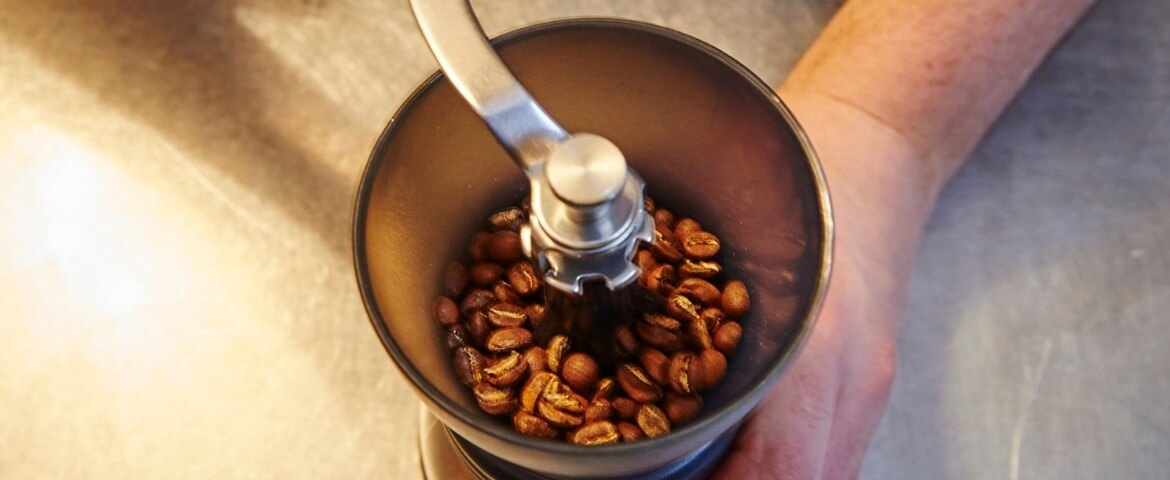
Coffee is the kernel of the fruit of the coffee plant, which is processed and dried in the country of cultivation and roasted and brewed before consumption. The scientific and Latin name is Coffea, which gives us one source for the frequent use of "C" in coffee in other languages.
Coffea arabica and Coffea canephora are species. Coffea canephora var. robusta describes the variety Robusta. Species and variety are written in lowercase, only the genus receives a capital letter.

Caffè, Café and Coffeeshop
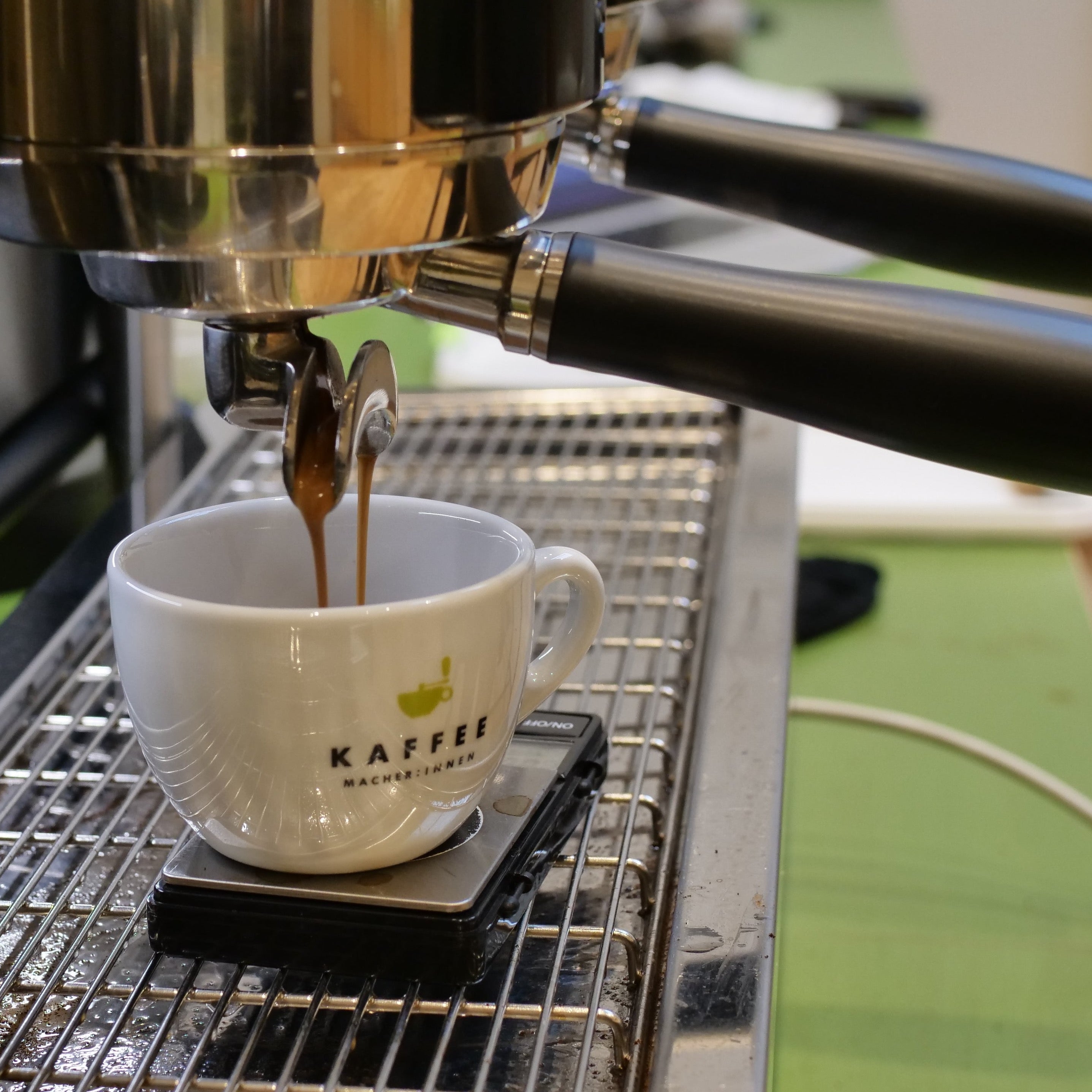
Caffè is the Italian word for coffee. Since in Italy coffee is the epitome of culture and everyday life, as an integral part of meeting, break and chat, many an Italian has the feeling that he invented coffee. Incidentally, caffè in Italy is synonymous with what we call espresso in Switzerland, Germany and Austria. If you order a caffè in Italy, you shouldn't expect a "long" and large drink here, but rather the small cup with thick espresso under a layer of crema.
Café, on the other hand, is the French variant of the word, which has become established over time as a synonym for the coffee house or coffee room or coffee tavern in the German-speaking area. We like the "Café" variant for coffee house, as it was a meeting place for poets and thinkers in France and a breeding ground for the French Revolution.
Coffee, on the other hand, is the English variant. Although you don't get coffee in every country in a coffeeshop. In the Netherlands, you could stumble into a legal sales outlet for soft drugs when entering a coffeeshop. Some might argue at this point that coffee, thanks to the alkaloid caffeine, is nothing else.
Colloquial language, dialect and real mistakes
As we know, you can speak however you want. Especially since dialects and local languages have their own rules. That's why "Kafi" or "Kaffi" in Switzerland is absolutely correct, and the North German doesn't do anything wrong with "Kafe" either. By the way, that's not far from the Turkish kahve, which was etymologically a pioneer in the development of the term. The Ottoman Empire once distributed coffee to the world via its trade routes.
Real mistakes remain mistakes nonetheless: Kaffe, Caffee and Cafee are not found in any dictionary. They are what they look like, namely typos on the way to coffee.
The starting point for coffee's journey was the region "Kaffa" in southwest Ethiopia, home to wild Arabica. Coffea canephora, on the other hand, comes from West and Central Africa, so "all coffee plants" do not come from Kaffa. Linguistically, the circle with Kaffa would be nicely closed, but the derivation is not entirely clean: The dictionary traces coffee back through the French café and the Italian caffè to the Turkish kahve and further to the Arabic qahwa. The similarity to Kaffa is therefore rather a happy coincidence than the root of the word.