






The Smeg Espresso Machine ECF 01 is positioned at around 300 euros and 330 francs retail price in the upper affordable entry segment of espresso machines. But can the machine convince in comparison to other machines in the thermoblock class and is the design premium worth it, compared to the similarly designed Delonghi Dedica EC 685?
In this article and our two test videos, we address these questions precisely. And overarching it all is of course the cardinal question: does the Smeg make a nice espresso? (We couldn't resist. 😉)
Short answer upfront: yes, with two crucial tips you can tune the Smeg ECF 01 to make good espresso.
In addition to the short video version, we've also made a half-hour test that you can see here.
Smeg Espresso Machine ECF 01 the better Delonghi Dedica EC685?
When we look at espresso machines, we usually focus on one model and try to evaluate it on its own, without immediately bringing the competition into context. With the Smeg espresso machine, this is hardly possible. The colorful design machine is far too similar to the affordable entry-level model from Delonghi. The controls are the same, the drip tray is similar, the water tank is identical. And even looking inside, it's clear – these machines have a high degree of kinship. The Smeg takes a different design direction, but what's in there in terms of motor and other assembly – at most comes from Delonghi's neighboring factory. From the portafilter holder to the input power (1350 kw) to the annual power consumption according to manufacturer specifications (54 kWh), only the appearance differs.
Design is a matter of taste. And it's up to you to decide whether the design of the machine for you, your kitchen or living room justifies almost double the price compared to the Delonghi Dedica EC685*.
The Smeg ECF01 (right) next to the Delonghi Dedica EC685.

Exterior and Scope of Delivery of the Smeg Espresso Machine
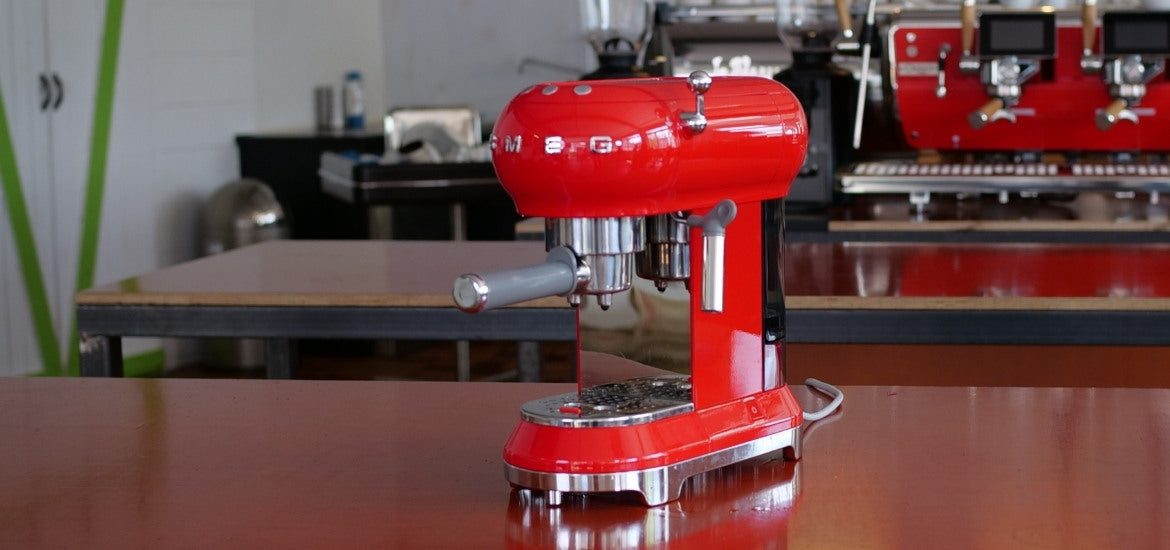
The Smeg Espresso Machine ECF 01 presents itself in "50s Retro Style" according to its own description. This means a curved-round mix of plastic and metal that comes in numerous color formats. The machine is around 15 cm wide, 33 cm high and 33 cm deep, weighs just under 5 kg and the water tank holds one liter.
A plastic tamper for pressing coffee in the portafilter and three double-walled baskets are included. The tamper is, to put it mildly, good for nothing, except perhaps winding up headphone cables. The pressing surface is slightly warped, doesn't fit cleanly into the portafilter and force can't be applied to the stick. The dosing spoon side is also the opposite of ergonomic – and by the way, not suitable for dosing either (we'll cover that when making espresso). The drip tray is small but shows the water level well with a small float.
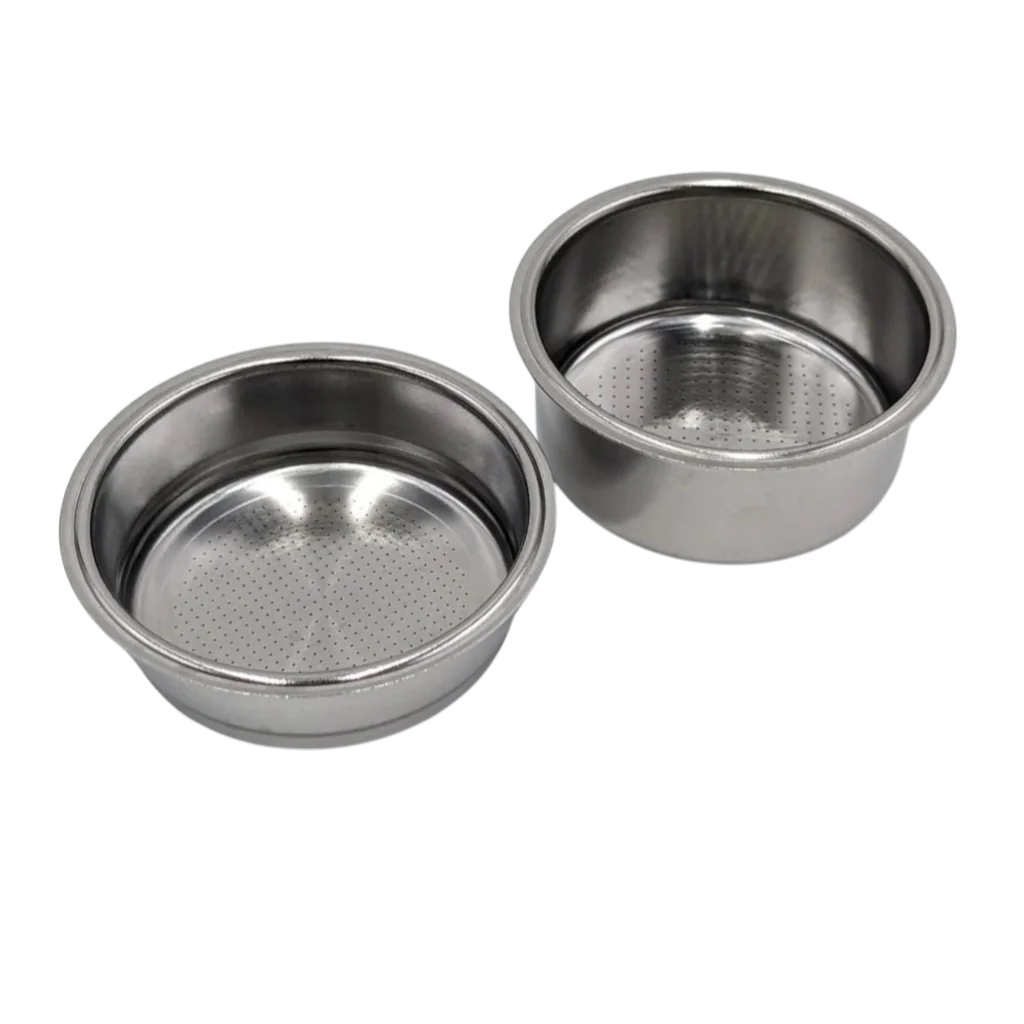
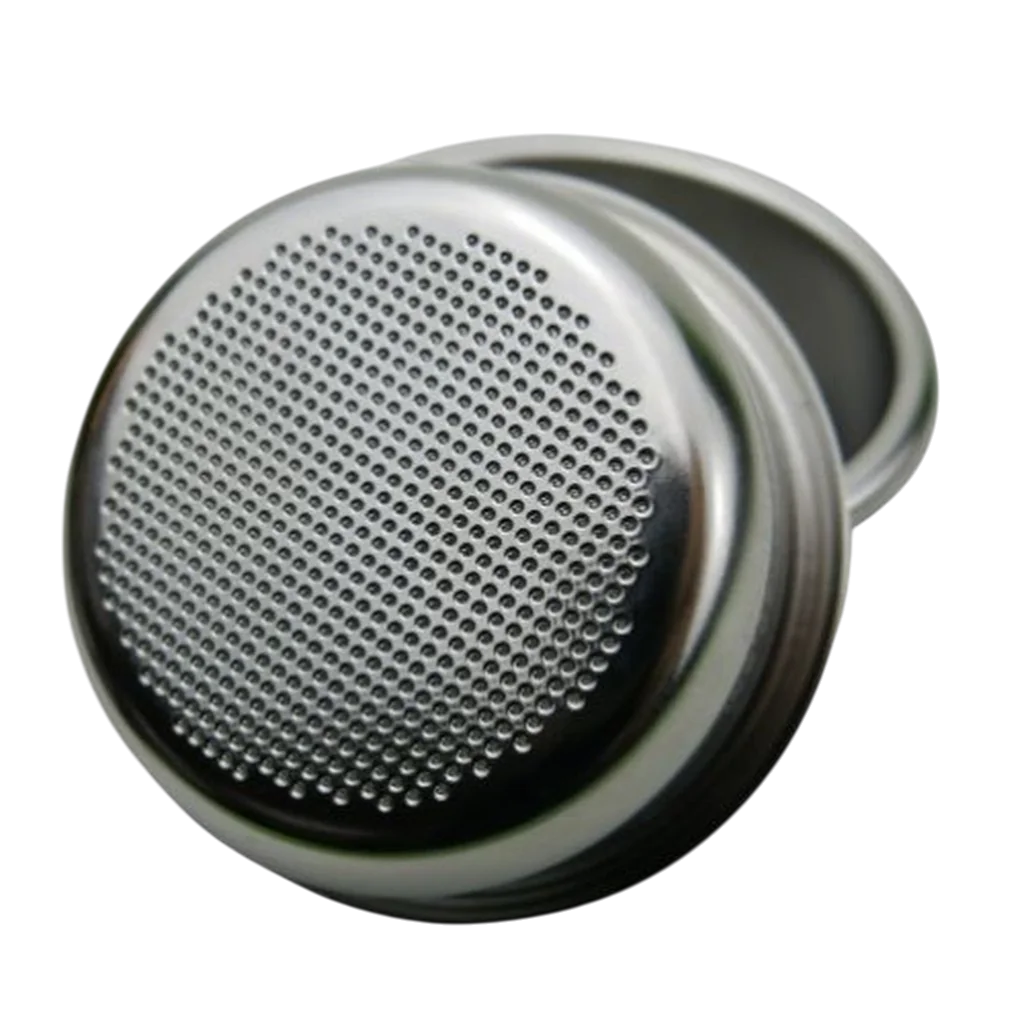
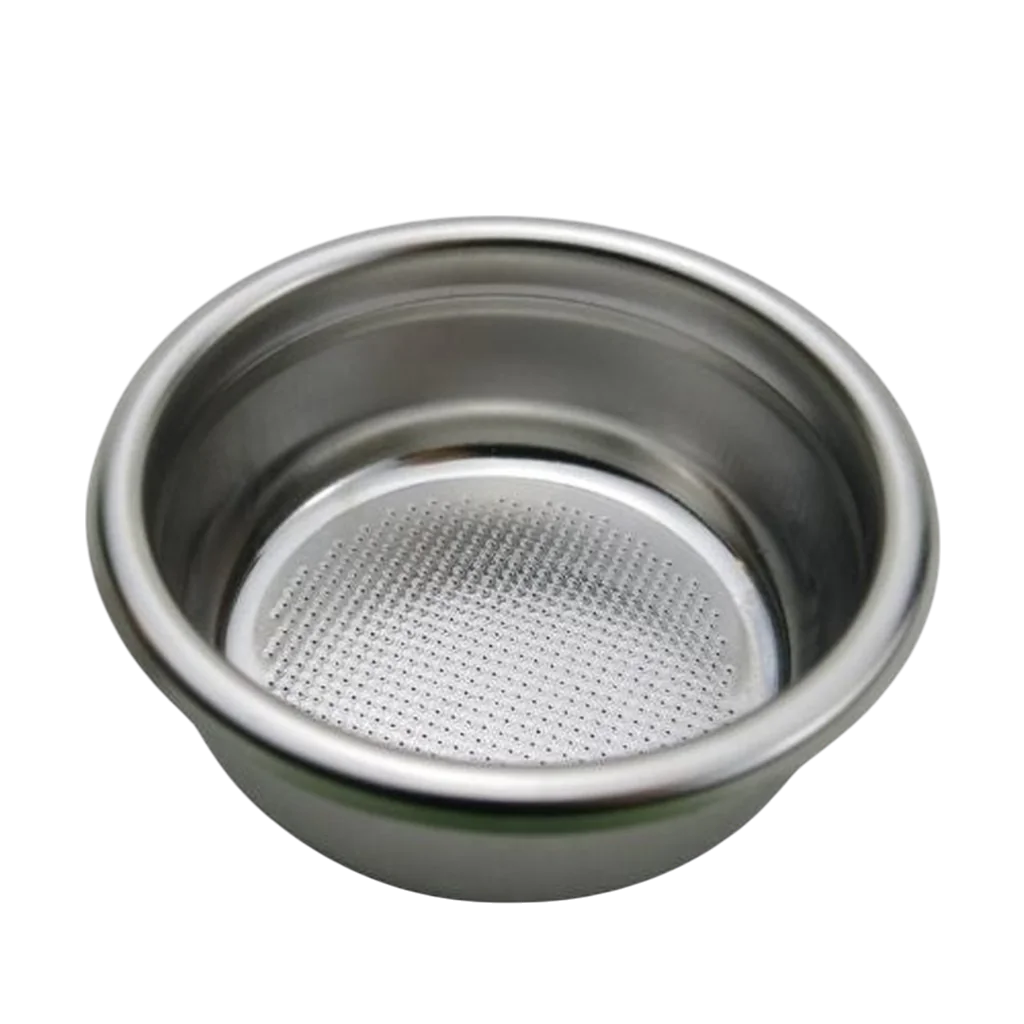
The included double-walled baskets, also called pressure baskets, crema baskets, compromise baskets or affectionately fake baskets, prevent really good espresso extraction and deserve their own section below.
Here Smeg would have had an opportunity to justify the machine's premium over the sister model with little effort. Good baskets and a tamper, that would have been it. Opportunity missed…

On the left the double-walled baskets of the Smeg espresso machine and on the right the plastic tamper.
Proper Baskets versus Double-Walled Compromise Baskets
I would be very keen at this point to start an extensive fundamental discussion about the pros and cons of double-walled baskets, but I'm postponing that to a separate post. Instead, let's look at the functional principle of double-walled baskets and briefly contextualize the advantages and disadvantages.
The functional principle of the basket is hinted at in all its names: crema basket, double-walled basket or pressure basket. A double bottom structure first lets the coffee flow through a bottom surface with many holes, then has to flow through a second bottom surface, the actual outlet surface with only one hole.
A large amount of espresso is pressed here under maximum pressure through a tiny hole. As soon as the coffee emulsion exits this space under maximum pressure and enters a space with lower pressure, the CO2 trapped in it expands and turns to foam. The higher the pressure difference, the more foam.
At the same time, the fine hole reduces the flow rate of the coffee regardless of grind size. This suggests that the coffee flows out slowly like espresso.

A double-walled basket cut in cross-section, also known as a pressurised basket.
Advantages:
- Old coffee can be used and crema still forms.
- Pre-ground coffee can be used since the flow rate is controlled not by grind size but by the outlet hole.
- An espresso-like beverage can be brewed.
- No grinder is needed.
- Even the worst coffee looks nice.
Disadvantages:
- Making good espresso is unlikely.
- Baskets suggest good flow time, but the coffee still doesn't taste good.
- Crema forms, which also signals that extraction was okay. But it isn't or often isn't. This means crema is no longer suitable as an indicator of fresh, good coffee.
Double-walled baskets simulate good desirable espresso flow time and feign crema that forms from high pressure but not from fresh coffee. Crema is a positive indicator when it forms from the use of fresh coffee.
When using double-walled baskets, there is largely under-extraction because coarser coffee is used. This leads to a relatively sour cup. At the same time, individual particles are heavily extracted under the high outlet pressure, which simultaneously promotes bitterness in the coffee. The result is unbalanced and lacks sweetness, which could balance the espresso.
Classification of Double-Walled Baskets
Double-walled baskets allow an espresso-like beverage to be brewed with inexpensive espresso machines without having to buy a grinder. We advise against it and instead recommend a good automatic coffee machine. The espresso result is arguably better because the coffee is freshly ground. Espresso machines with double-walled baskets are a compromise that creates no added value.
The upgrades we made to the Delonghi Dedica EC685 can partly also be done on the Smeg espresso machine
Upgrade with Good Baskets on the Smeg Espresso Machine
Of course, the Smeg espresso machine's baskets can be replaced with classic espresso baskets. This simple upgrade, combined with a decent tamper, completely changes espresso performance.
What an espresso machine must deliver is consistent pressure and good temperature stability around 93 degrees Celsius. And the Smeg espresso machine has this potential if you work with our rinsing and preheating protocol. Then the machine initially performs at the upper limit with around 95 to 96 degrees Celsius, then drops within 25 to 30 seconds of extraction time to just under 90 degrees, then stabilizes again. This is a good progression for a machine in this price segment and above all a progression that works consistently. So that the temperature of the brewing water spurts out of the machine in this range, we've developed a short rinsing water protocol for you.

Tip: Good Espresso through Rinsing Water Protocol
First, the portafilter of the Smeg espresso machine ECF01 should be warmed up. When the espresso machine starts, it doesn't bring the portafilter sufficiently up to temperature and in its cold state pulls the temperature down during brewing. To preheat the portafilter, run the water from one to two espresso extractions through the empty portafilter. Caution, the drip tray is very small! It's best to run the water directly into a container.
Then follow this temperature surfing protocol when preparing an espresso:
- Remove the preheated portafilter, grind coffee, dose into the portafilter and tamp carefully.
- Start water dispensing without the portafilter inserted. First a pre-brew process begins, dispensing only a small amount of water. After a short pause, the main water dispensing starts. After one second, stop this main water dispensing.
- Then immediately insert the portafilter and start the extraction.
If you use a single-walled basket and get the brewing temperature under control with our temperature protocol, good espressos can be extracted with the Smeg espresso machine ECF01.
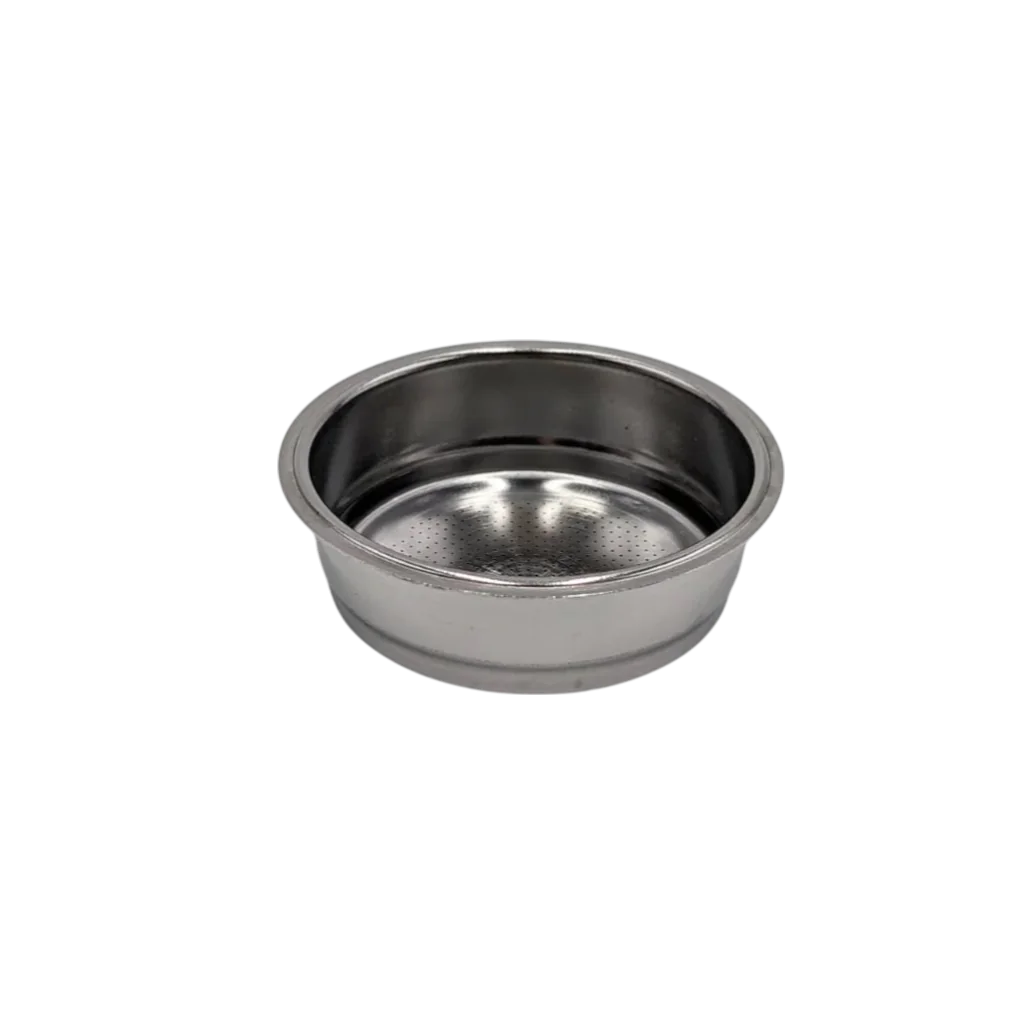
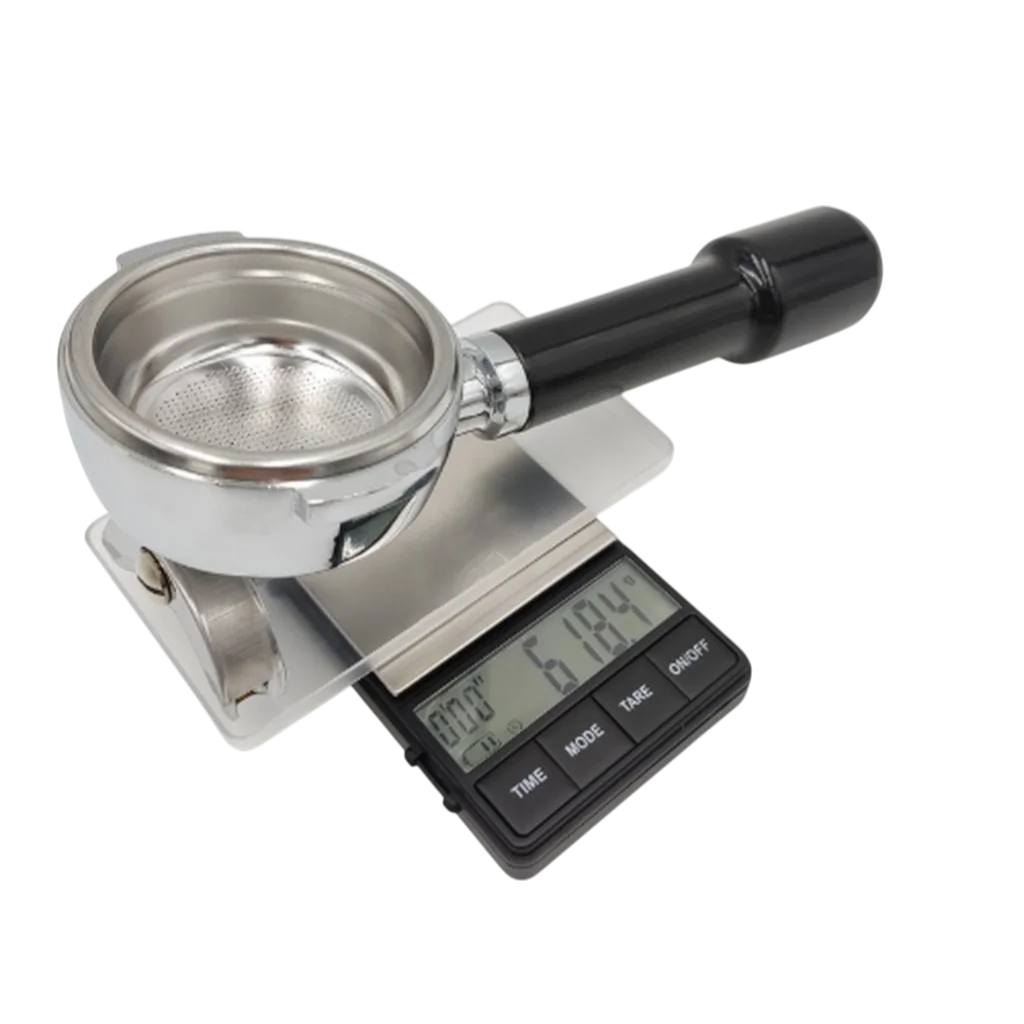
Suitable baskets are available, for example, from Graef*. Meanwhile, some manufacturers have also brought complete bottomless portafilters with matching basket to market very cheaply, like seen here*. This combination is cheaper than the conversion we show in our upgrade video.

We remove the plastic insert to install a single-walled basket.
Converting the Basket to a Single-Walled Basket
Converting the basket to a single-walled basket isn't complicated and can be done by an untrained hand. First, the inserted basket is pried out. Our barista trainer shows this in the test video at minute 18.50. Then the screw on the back is loosened and the plastic insert is removed. This prevents installation of a different basket.
The tension spring is reinserted and the new basket is pressed in. Somewhat inelegant is the middle hole that now remains open. If you extract espresso doppio as double shots, the hole won't be a problem – even if the coffee doesn't flow out nicely.
More elegant is a sawed-off portafilter, which makes it bottomless. A well-prepared extraction without channeling is something very fine – but requires a lot of practice.
Which Coffee for the Smeg Espresso Machine?
Since the temperature of the Smeg espresso machine also drops below 90 degrees temporarily even with our proposed surf profile, we recommend rather medium to medium-dark espresso roasts. These inherently have less acidity, which is further emphasized by lower brewing temperatures.
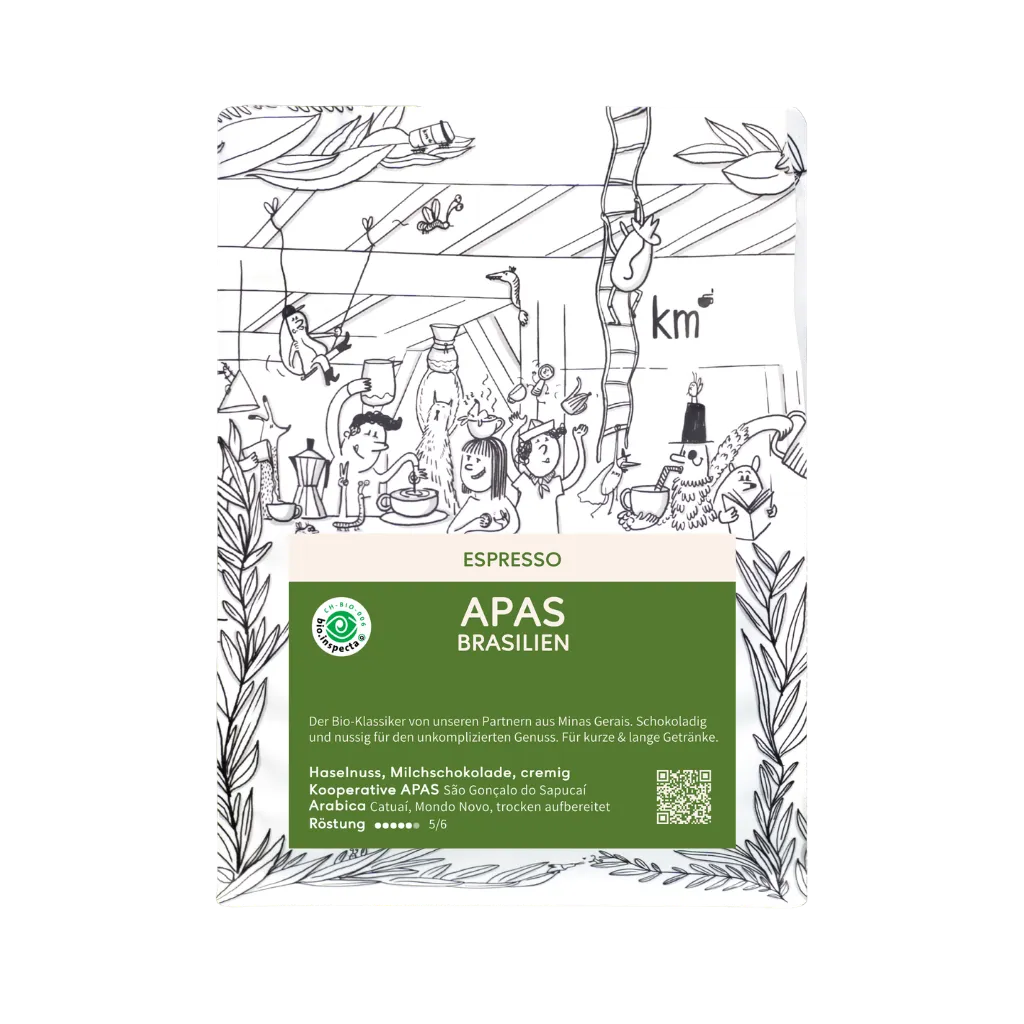
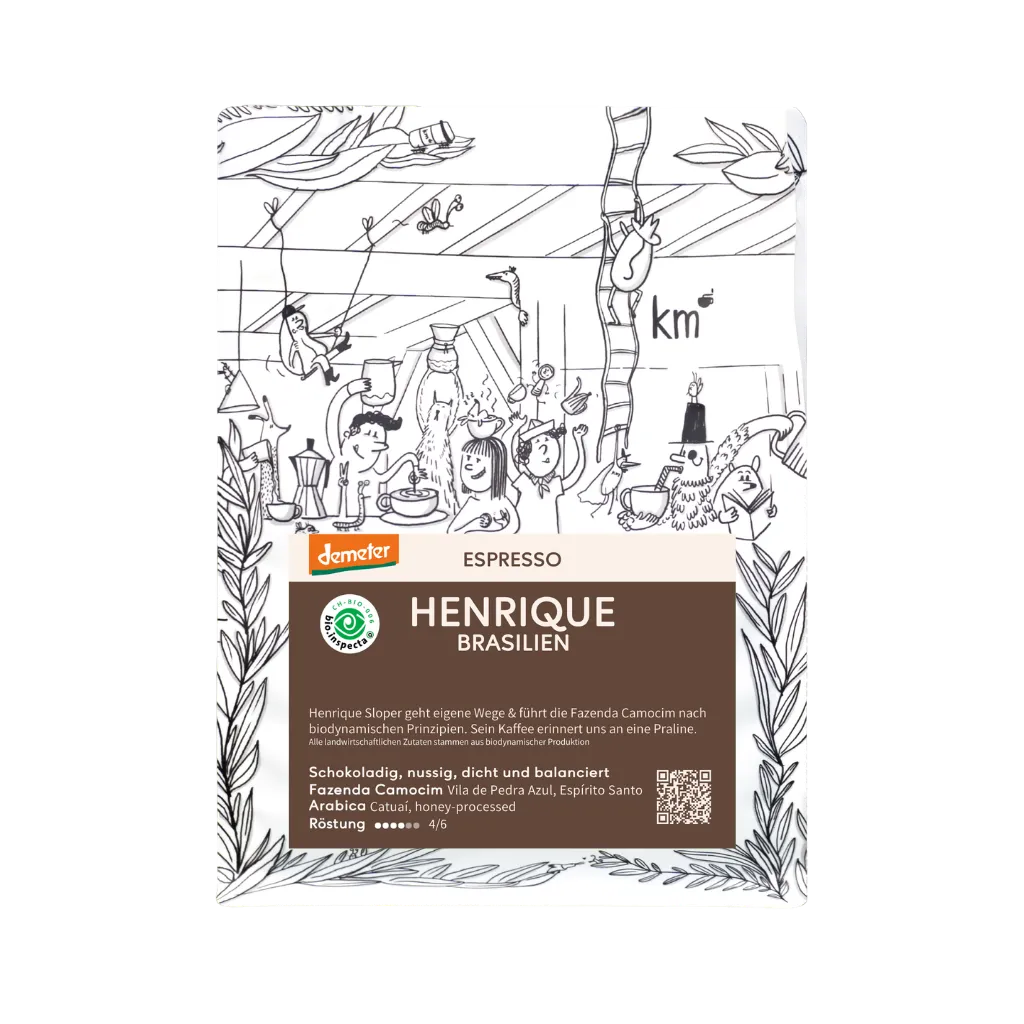
From our range, coffees like the Apas or Henrique are best suited.

Setting the Grinder for Espresso Preparation
If you opt for a single-walled basket, you can't avoid adjusting the espresso grinder. The grind size forms the resistance in the portafilter that determines the espresso flow time. Since the Smeg espresso machine first goes through a wetting phase (pre-brew), we recommend brew times between 25 and 35 seconds depending on the espresso.
We've explained in detail here how to set up a grinder and espresso precisely. What's decisive is that the grinder provides you with the basic requirements for preparing espresso. It should be able to grind fine enough, adjust consistently and not accumulate too much retention.
When purchasing a grinder and espresso machine, the importance of the grinder is often neglected. However, the better it is, the better the prerequisites for good espresso. Especially in the range up to 500 euros, the grinder should cost more than the espresso machine. The cheapest decent electric espresso grinder we've tested so far is the Sage Smart Grinder Pro. We've also found three hand grinders in the price range under 100 euros that grind espresso-fine.
Steaming Milk with the Smeg ECF01
The Smeg espresso machine is suitable for steaming thick-textured milk foam that is also capable of latte art. However, it's not as easy to control the air volume added during steaming well. The large opening of the steam wand makes careful control and guidance of the steaming phases difficult.
With some practice, milk foam can still be produced. Compared to the best milk steaming espresso machine in a similar price range, the Sage Bambino Plus, the Smeg espresso machine looks dated.

Conclusion on the Smeg ECF 01
The Smeg espresso machine ECF01 scores as an espresso machine with the potential to brew good espresso. It performs like the Delonghi Dedica EC685 and here is already the challenge when considering the Smeg. What justifies the almost double price compared to the Dedica? The included equipment doesn't score well, there are no strong pro arguments except the appearance. And here the verdict lies in the eye of the beholder.
We can only advise one thing: make the upgrades, whether on the Smeg ECF01 or Delonghi Dedica EC685.
*We bought the test device. This is a principle for us in all tests. Because we want to evaluate all devices neutrally and without outside influence. The link is an affiliate link to Amazon. If you order something through the link, it doesn't cost you more – but our machine test fund reduces its deficit. However, if the machine is available at your local dealer, we recommend buying it there.