











Lupin coffee by Helen. Our local coffee alternative
Coffee alternatives have existed for centuries. Today, lupine coffee in particular is becoming increasingly common in stores. Anyone looking for a caffeine-free, coffee-like beverage should find what they're looking for in lupines. In the future, coffee alternatives will become increasingly important because coffee is threatened by climate change. We visited the farm of sweet lupine producer Helen Wegmüller and launched our own lupine coffee with her.
Lupine coffee is a brewed beverage made from roasted, ground lupines infused with hot water. In addition to the now widely available lupine coffee, there are other coffee substitute products made from chicory, grains, and acorns.
But isn't the term "coffee" misleading? And might it create expectations that the beverage cannot meet? At least, lupine coffee won't achieve 80 points on a scoresheet. But perhaps it doesn't have to: perhaps it's simply enough to be a caffeine-free alternative.
Helen - our lupine coffee

We named our interpretation of a lupine coffee after the producer, Helen. We roast the coffee in a Rational commercial oven for six minutes at an air temperature of 250°.
Helen's lupines of the Jowisz variety produce a very sweet beverage with our light and short roast. We taste notes of licorice and fresh, dark bread. We produce the lupine coffee in small quantities in our kitchen and grind it on a mill dedicated solely to lupines.

A brief history of coffee-like beverages
Whenever something was difficult or expensive to obtain, alternatives were sought. First during the Napoleonic Continental System between 1806 and 1812, but also in the post-war period, real coffee was a scarce commodity.
A pound of coffee cost as much as 50 kg of potatoes.
But the desire for a coffee-like taste didn't diminish: alternatives were sought and various substitute products made from grains and roots were roasted and ground to create a coffee-like beverage that could be infused and drunk like coffee.
Since when coffee has been made from sweet lupines is unclear. The first mention dates back to 1897, when a lupine beverage was named "Altreier Kaffee" after a location in Tyrol. Today, lupine coffee is becoming increasingly common, as are other lupine products such as lupine flour or pasta made from lupines.
It is clear that climate change will have an impact on coffee. What specific local effects are to be expected is unpredictable, but weather patterns will shift and predictability will decrease. But it's not just the coffee plant itself that is vulnerable, but also the complex value chain behind it.
Helen Wegmüller explains why she grows lupines and how it works.
As a rule, coffee passes through many hands and travels thousands of kilometers before it can be roasted with us. Coffee alternatives score points here with their robustness and the simpler, much shorter value chain.
A brief history of lupines
Lupines are allergens and must be declared on menus. Nevertheless, lupines are increasingly appearing on menus and in the product range of roasteries.

But what are lupines?
The lupine belongs to the legume family, along with soybeans, chickpeas, beans, and peas. Thus it serves as a plant-based protein provider and can be used in many ways. The product list ranges from lupine flour to humus, from lupine bratwurst to seasoning sauce to yogurt.
The sweet lupine is not only culinarily versatile, it is also good for soil health:
it can fix up to 100 kg of nitrogen, which makes it an ideal plant for crop rotation with grains and corn.
In addition to all the benefits, there is one risk. Lupines produce increased alkaloids when stressed by drought, heat, moisture, or pests. These cause increased bitterness and can be harmful to humans in too high concentrations. Therefore, limit values must be observed in Germany (not yet in Switzerland).
This risk is problematic for farmers; the market price for food is far higher than for feed (for which lupines are also suitable). However, if the limit values are not met, farmers may be left sitting on their product. Therefore, there is a decline in the market (Luve as a known brand is insolvent) and many farmers are looking for alternatives.
As with coffee, there are different varieties of lupines. Some have higher yields, others have fewer bitter compounds. In particular, the white lupine variety "Frieda" was heavily promoted by DSV-Saaten, according to the lupine pioneer Linda from the Kelly organic farm.
Is lupine coffee a sustainable option as a coffee substitute?
Although we don't yet have exact data for Helen's cultivation, we can make an initial estimate of emissions using a dataset from Carbon Cloud. Swiss lupines are listed there with a carbon footprint of 0.79 kg CO2e per kg of lupines. We add the roasting loss of approximately 15% and the emissions generated by our roastery and transportation.

The lupines that Helen provided to us were delivered to us during her other errands. The distance from farm to roastery is 73 km; we allocate 50% of the resulting emissions to the lupines.
According to this simplified calculation, lupine coffee produces 1.46 kg CO2e/kg. Thus, the emissions are significantly lower than those of our Santa Rita coffees at 2.96 kg CO2e/kg. It becomes even more clear when we also include the average value of a roasted, conventionally produced roast coffee from Brazil.

Preparation of lupine coffee
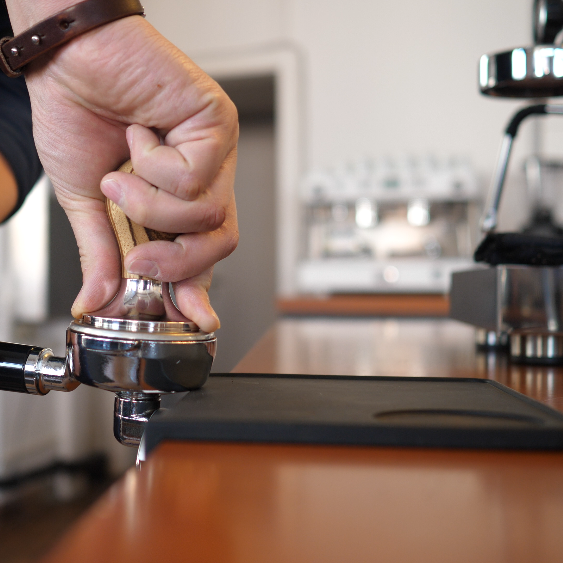
When we approached creating the recipes, we first had to forget everything we had learned about coffee. Tamping, for example, the compacting of coffee grounds in the portafilter, becomes unnecessary. We noticed in various extractions that tamping, if anything, had marginal influence on flow times.
The reason is that lupine coffee swells significantly and expands in the portafilter. This creates a high resistance in the "lupine cake" through which the water now finds its way.
This brings us to extraction times that—for a classic espresso extraction—are outside the norm. However, the first extractions at 60 seconds were not only drinkable but very balanced. We noticed: the longer the brewing, the sweeter the beverage. We would have expected it to become increasingly bitter, but: that would be the coffee way of thinking.
In the lupine coffee way of thinking, we see that longer extractions with lightly roasted sweet lupines can emphasize sweetness.
We tried various recipes. These are our three favorites:
Filter coffee with lupines / French press
- we recommend the French press, or plunger pot
- we recommend 10g sweet lupine coffee per 100ml water
- the water should be used shortly after boiling, so that we achieve a high extraction
- we pour approximately 50ml water onto the lupines, stir so that the entire coffee is well wetted, and fill to the desired amount of water
- after three minutes we stir vigorously again and press the plunger down at 3:30 minutes
Espresso with lupines
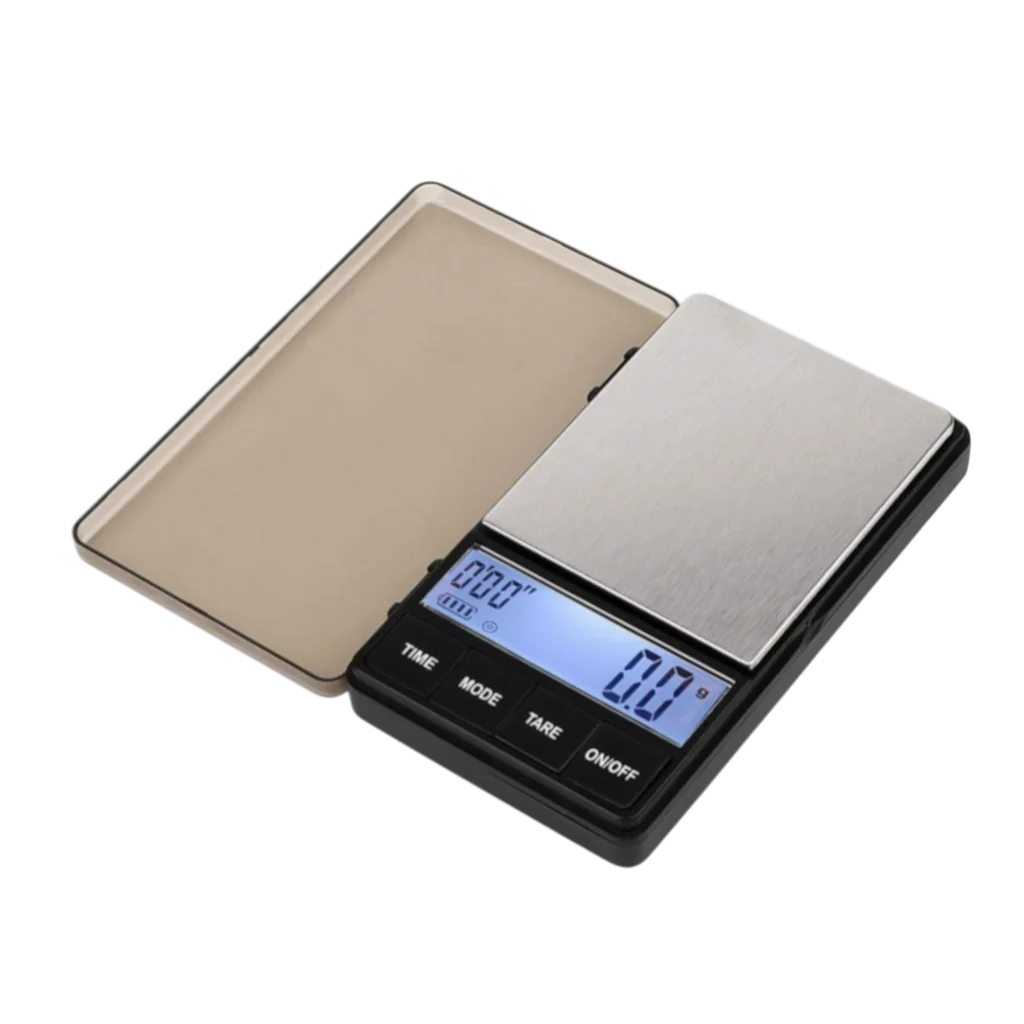
- we like the 1:2.6 beverage ratio best - the time is negligible
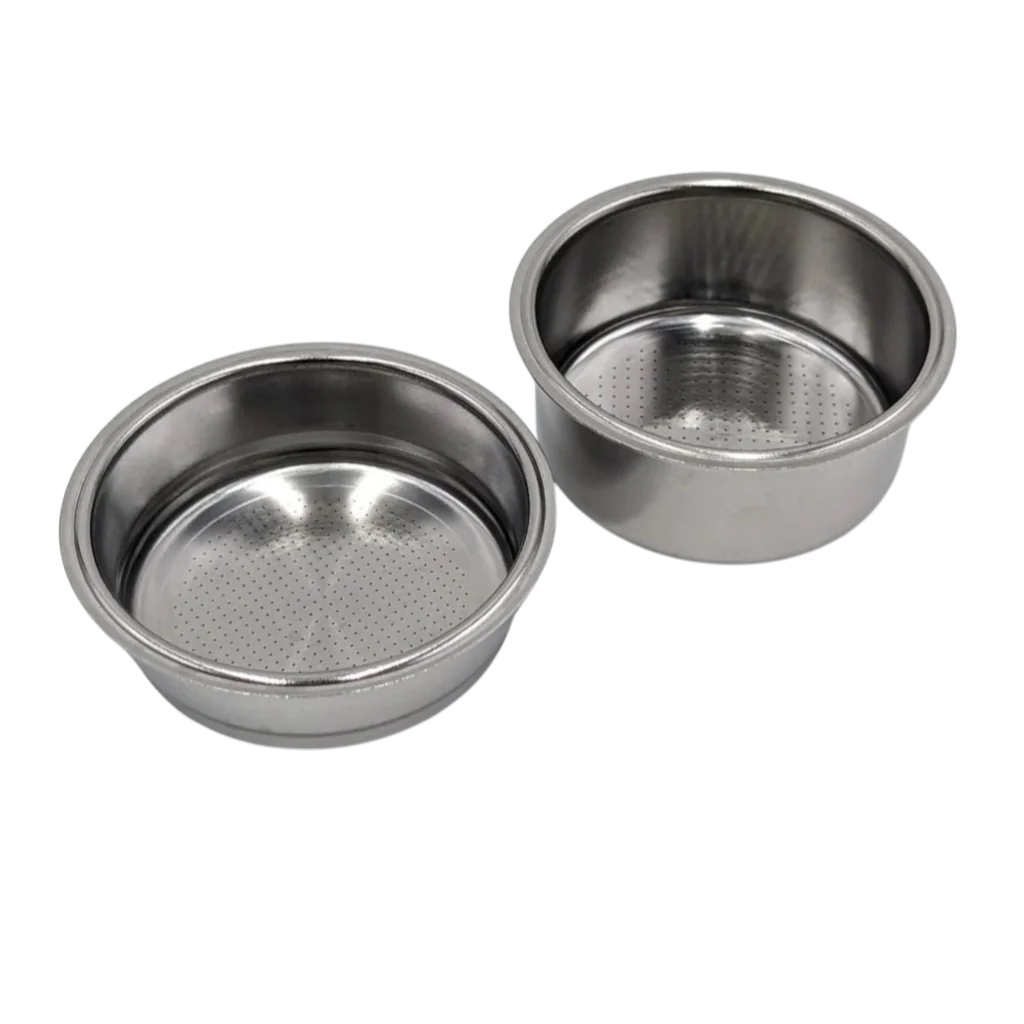
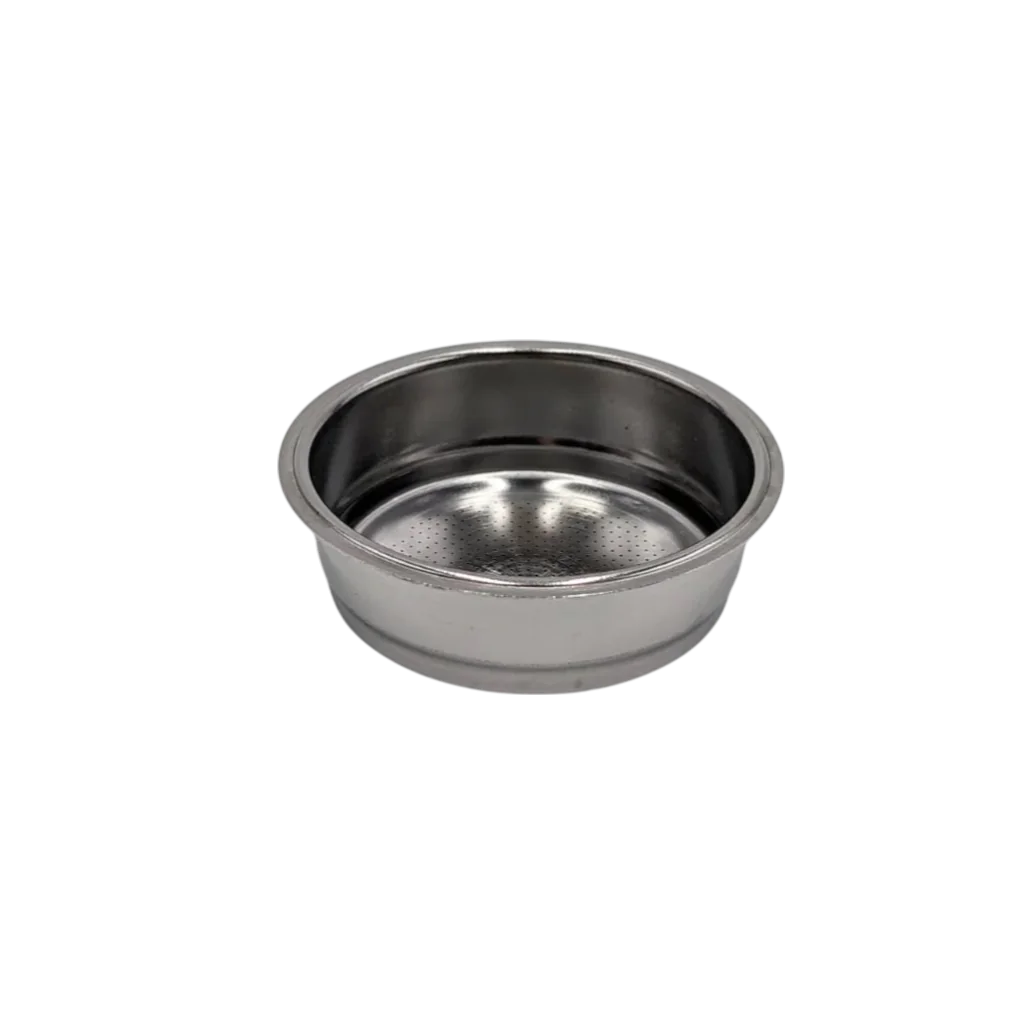
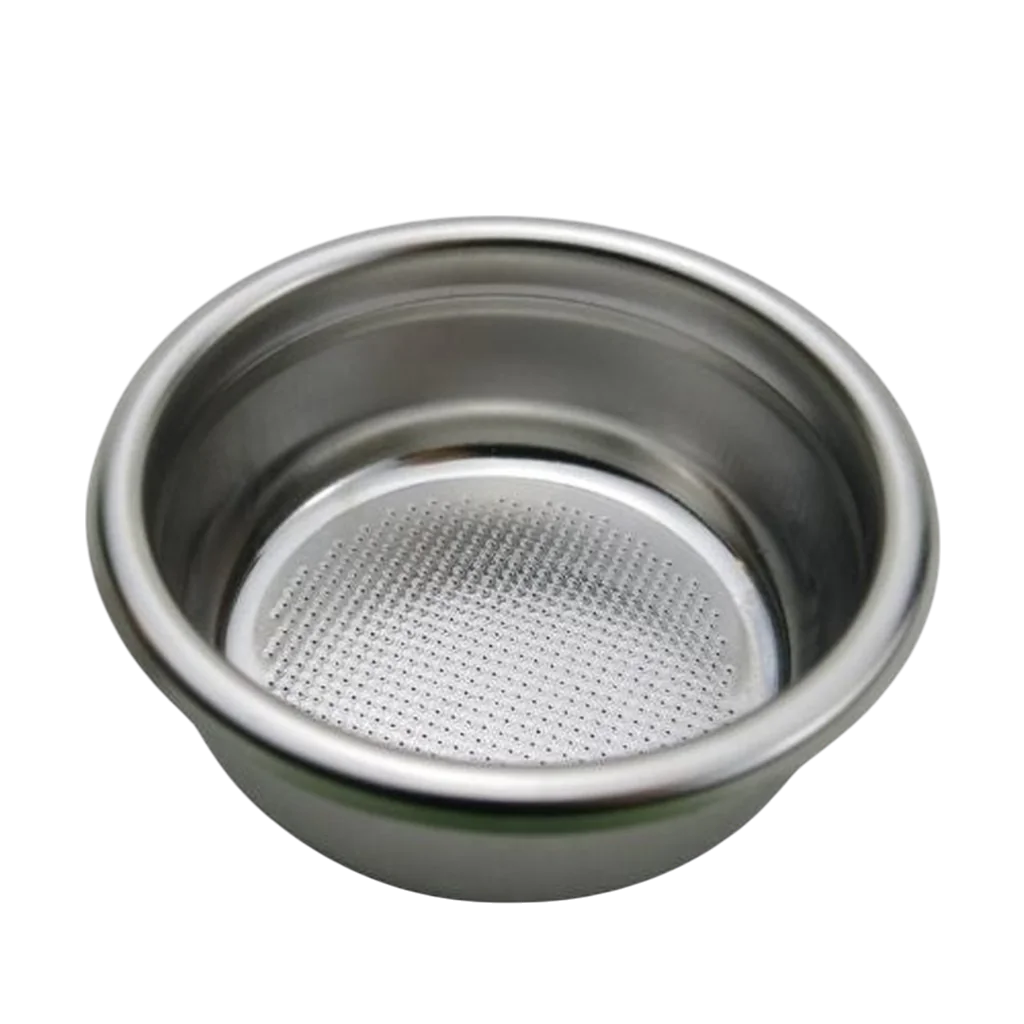
- we fill 15g lupine coffee into a double portafilter
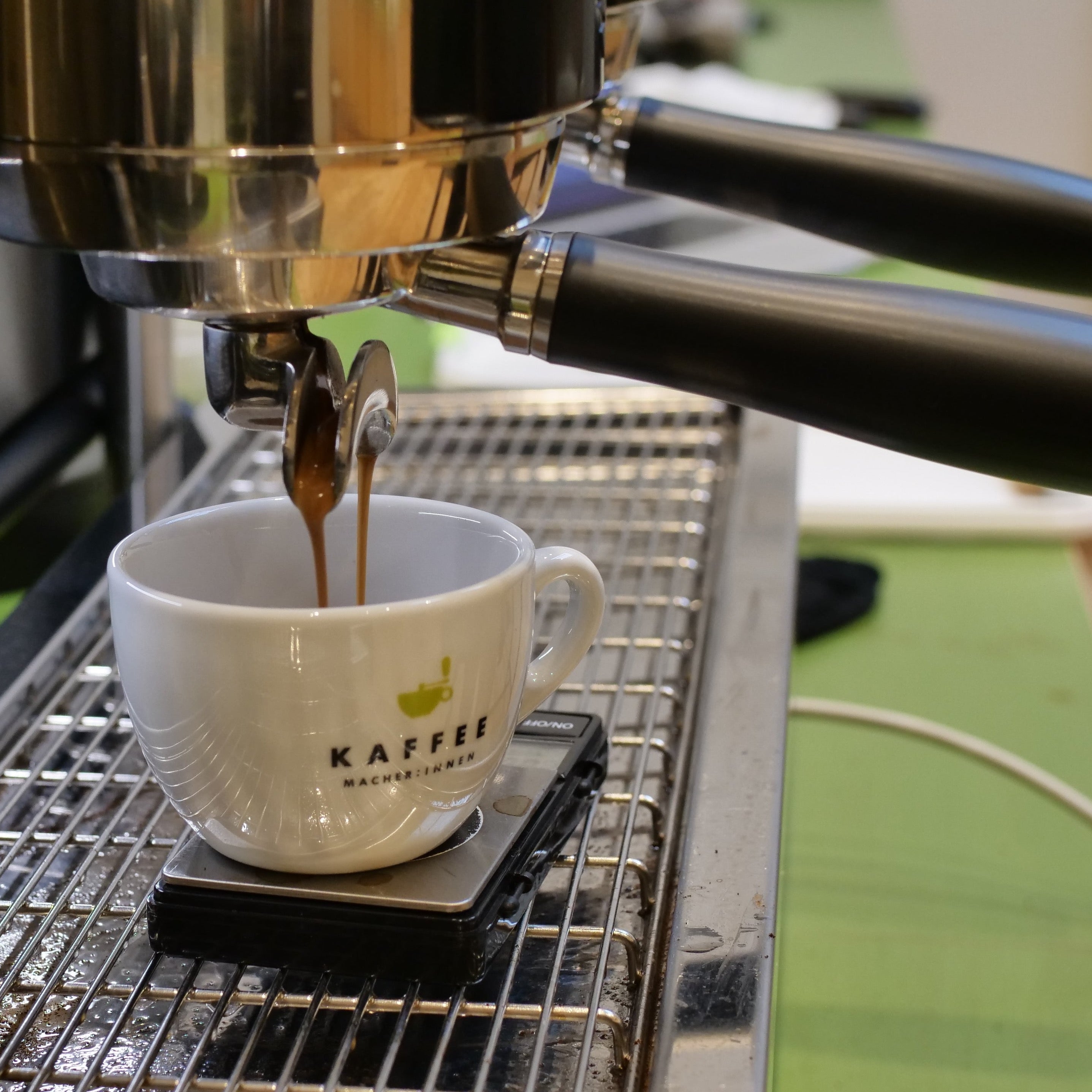
- we extract 40g beverage amount into the cup as a double espresso, or 20g per cup if you're having two cups
- depending on the pump pressure of your machine, you'll achieve this in shorter or longer time, approximately 30 seconds could be a reference
- longer extraction times have no negative impact on taste when combined with the light roast
Long coffee with lupines
- we like the 1:7 or 1:8 beverage ratio best
- we use 12g lupine coffee in a double portafilter
- we extract 90g total amount into a cup