



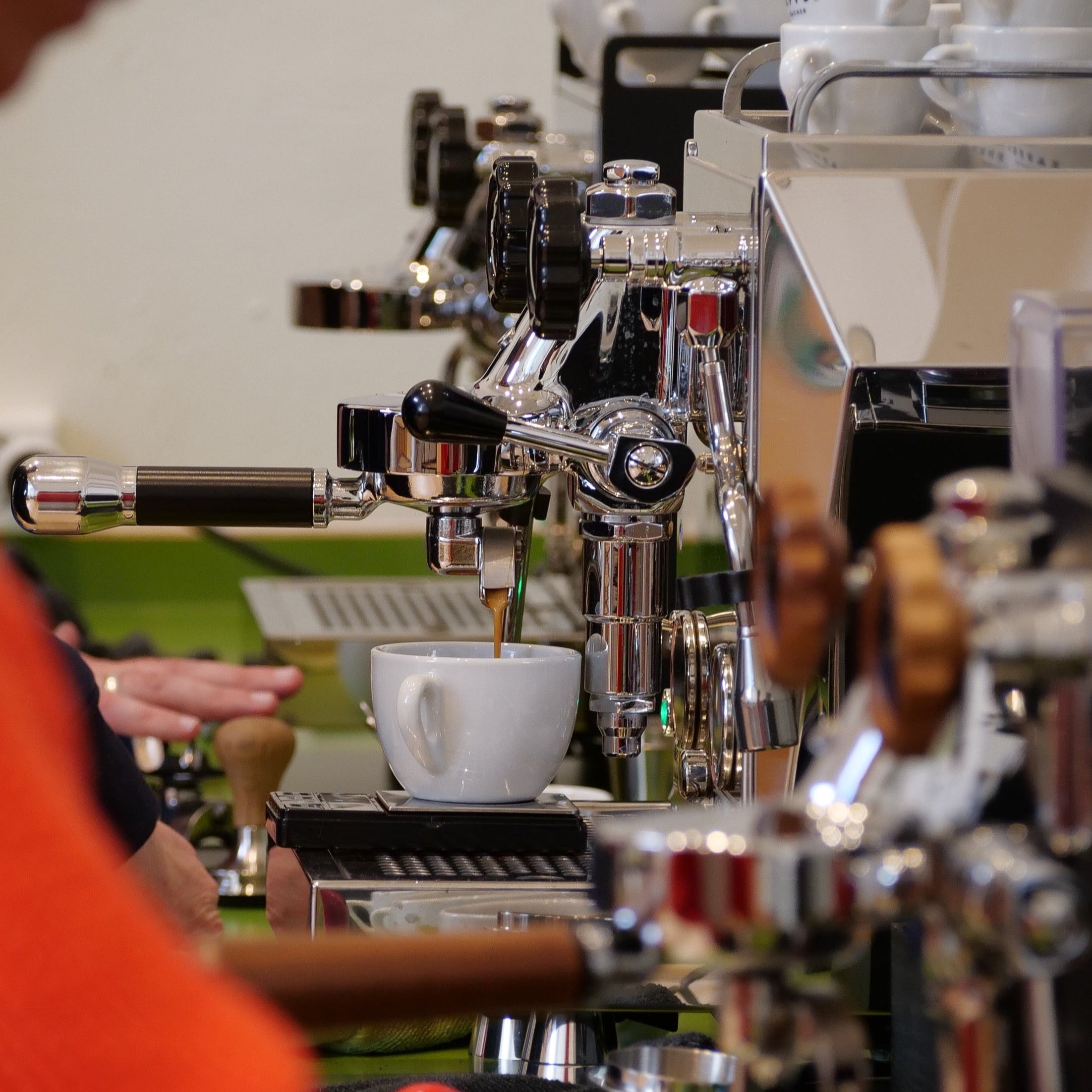
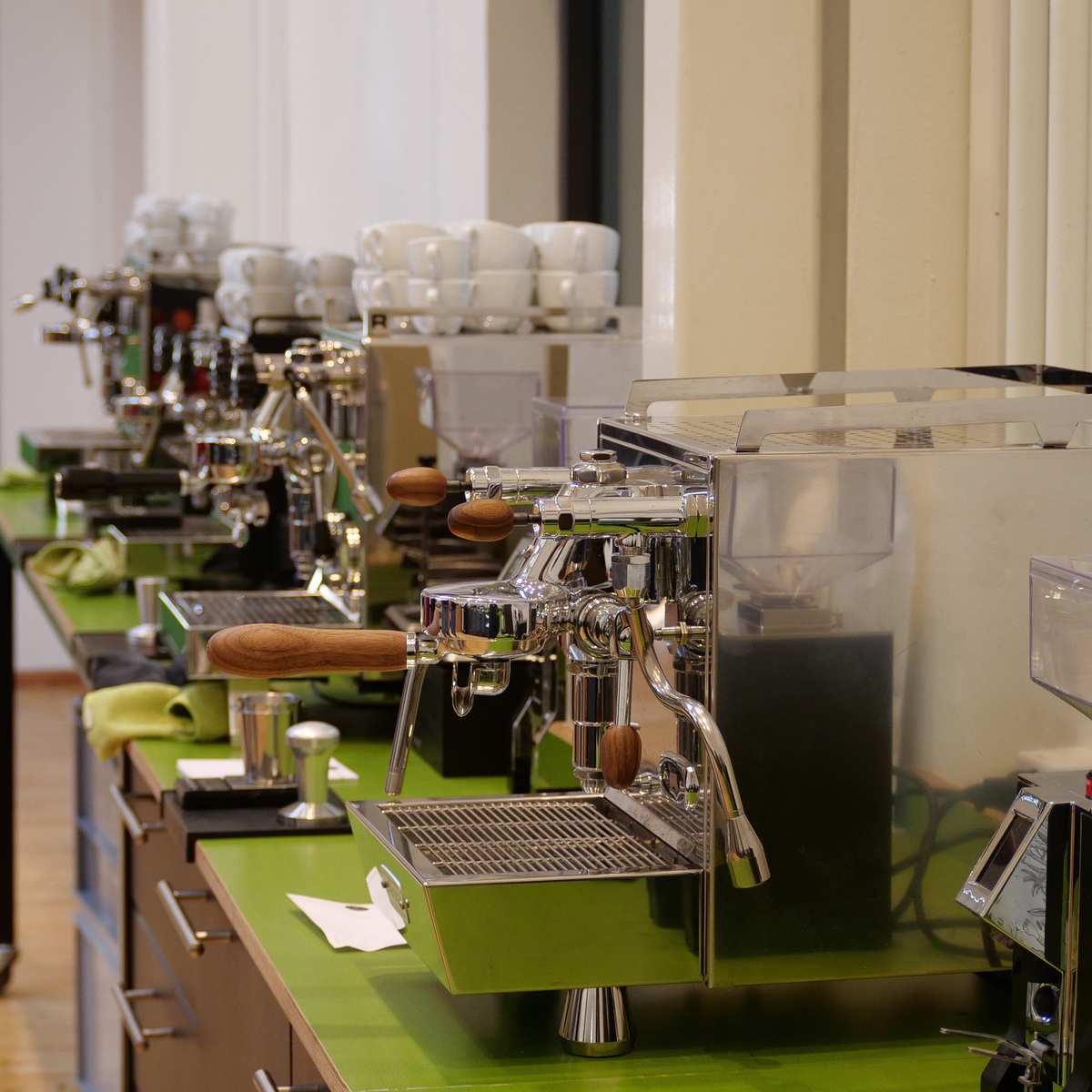
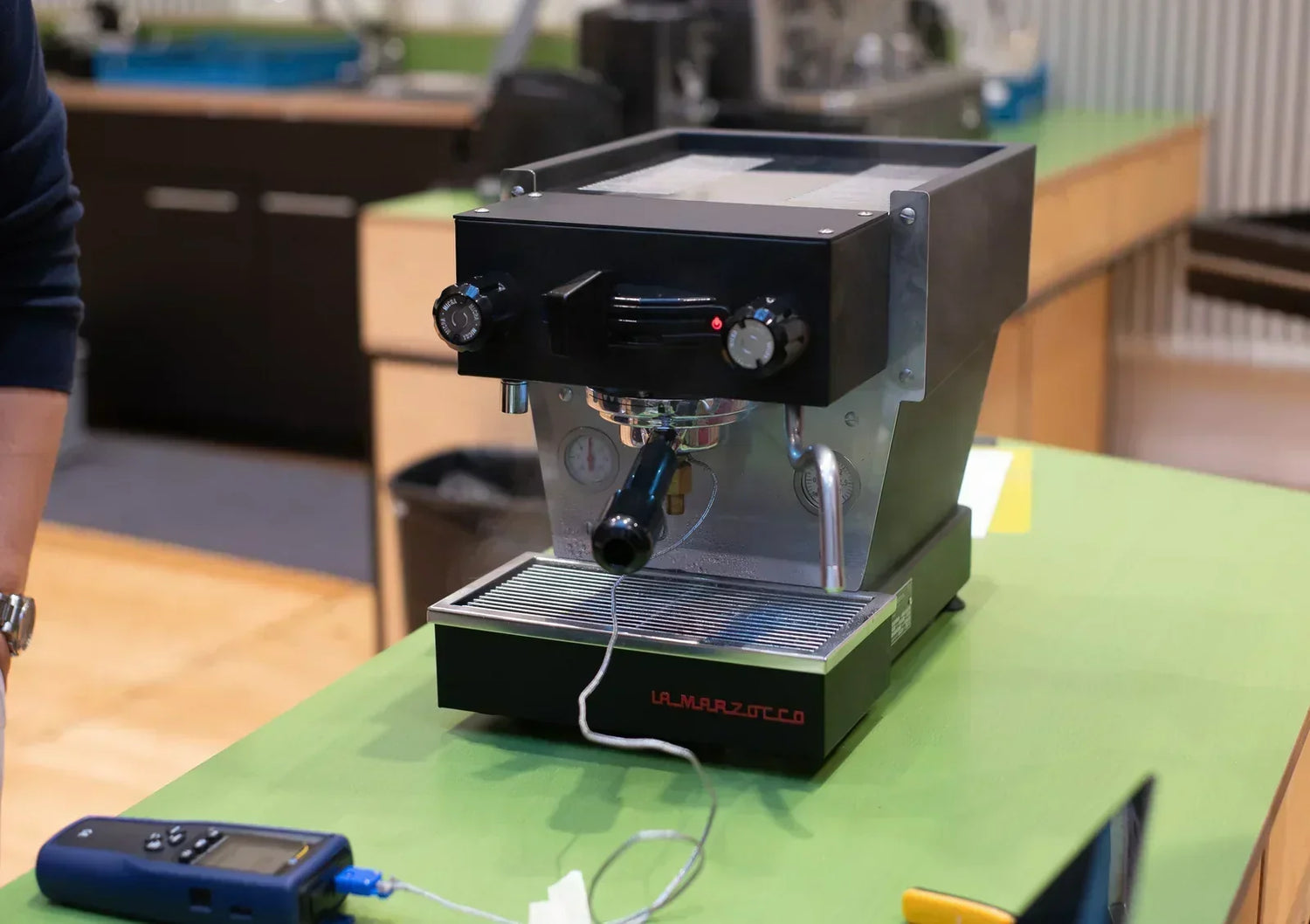

The La Marzocco Linea Micra is the third single-group dual boiler espresso machine from La Marzocco. With the Linea Micra, La Marzocco is directly targeting the home espresso bar (home barista), whereas the GS3 and Linea Mini are powerful enough to easily find their place in a commercial or hospitality setting. This distinction is also reflected in the price: at around €3,330 for the stainless steel version, the Linea Micra is nearly €2,000 more affordable than the Linea Mini (€5,271 in stainless) and over €4,000 cheaper than the La Marzocco GS3 (€7,675).
But the Micra isn't just designed to be more budget-friendly; it aims to introduce features that make absolute sense for domestic use. Low power consumption is just as high on the wishlist as ultra-fast heat-up times and compact dimensions.
In this review, we take a close look at the Linea Micra and outline the strengths and weaknesses of this recently launched machine. As always, there is a detailed video review available, along with a written summary of our findings.
Also potentially interesting: in the meantime, we have published our review of the new La Marzocco Linea Mini-R.
A Milestone for Boiler Espresso Machines
To be perfectly honest, we had almost written off traditional boiler espresso machines. When it comes to heat-up speed and energy consumption, there has been hardly any progress over recent years, while thermoblocks and thick-film heaters were setting entirely new benchmarks. Heat-up times of 5 minutes and power consumption slashed by a factor of five were a serious wake-up call. We were already singing the swan song for boiler machines.
With the Micra, La Marzocco completely dismantles our assessment and proves once again that in Florence, they don’t just assemble espresso machines using the same old standard components, but actively drive innovation forward.
The La Marzocco Linea Micra promises a heat-up time of just 5 minutes. In other words: by the sixth minute after flipping the switch, the machine should be fully ready for extraction. And what can we say?! Yes, our bench tests with the Micra confirm exactly that.
And that’s not all. The Linea Micra also takes pole position regarding energy consumption. After heating up and pulling five double espressos (shots), the La Marzocco Linea Micra—with the steam boiler switched off—showed a power consumption of only 0.07 kWh. That is the lowest figure we have ever measured on a prosumer espresso machine!

In our new chart format, we display the energy consumption of the La Marzocco Linea Micra in even greater detail. The consumption for a single espresso with the steam boiler turned off is 0.038 kWh. Making a cappuccino raises that to 0.206 kWh. Switching on the steam boiler significantly increases the energy drain.

Cooperating Boilers and Thermal Stability
A crucial role is played by the interconnected boilers, which can nevertheless operate independently of each other. The Linea Micra is equipped with a 1.6-liter steam boiler responsible for the machine's steaming power, which also helps maintain thermal stability during extended use. Alongside this, a 0.23-liter coffee boiler paired with a saturated brew group manages the brew water temperature.
The secret to its low energy consumption is that the machine can operate without the steam boiler entirely. While some manufacturers allow you to turn off the steam boiler, they ignore the fact that it (via a heat exchanger) usually does the heavy lifting to pre-heat the brew water. If the PID controller doesn't pump enough power directly into the coffee boiler to compensate, the math simply doesn't add up.

With the Linea Micra, this synergy works flawlessly. The coffee boiler and saturated group achieve the necessary heat to bring the brew water to target temperature all on their own. Technically, the steam boiler isn't needed for extraction, but at higher frequencies, it contributes massively to the machine's thermal stability. Therefore, if you plan on pulling back-to-back shots, you are well-advised to turn the steam boiler on, even if you don't intend to froth milk.
A heat exchanger (HX) is still the method of choice here. However, the incoming cold water isn't routed *through* the steam boiler; instead, it circulates in a spiral *around* the insulated stainless steel boiler.

Limits of Brew Temperature
The limits of brew temperature stability without the steam boiler become apparent around the 4th consecutive shot. At that point, the machine itself signals via a flashing LED that it needs to rebound and reheat. A corresponding notification is also pushed through the app.
With the steam boiler engaged, we maintain peak performance much longer. To test this, we subjected the La Marzocco Linea Micra to the WBC (World Barista Championship) temperature protocol, which was developed to evaluate commercial espresso machines approved for the world championships. These are obviously machines designed for high-volume hospitality use, but it's always fascinating to investigate exactly where and when a domestic machine starts to struggle.

With the Linea Micra, we noticed its breaking point when transitioning to a 30-second idle interval. At this stage, the espresso machine could no longer hold the target temperature.
A Portafilter with a Clever Concept
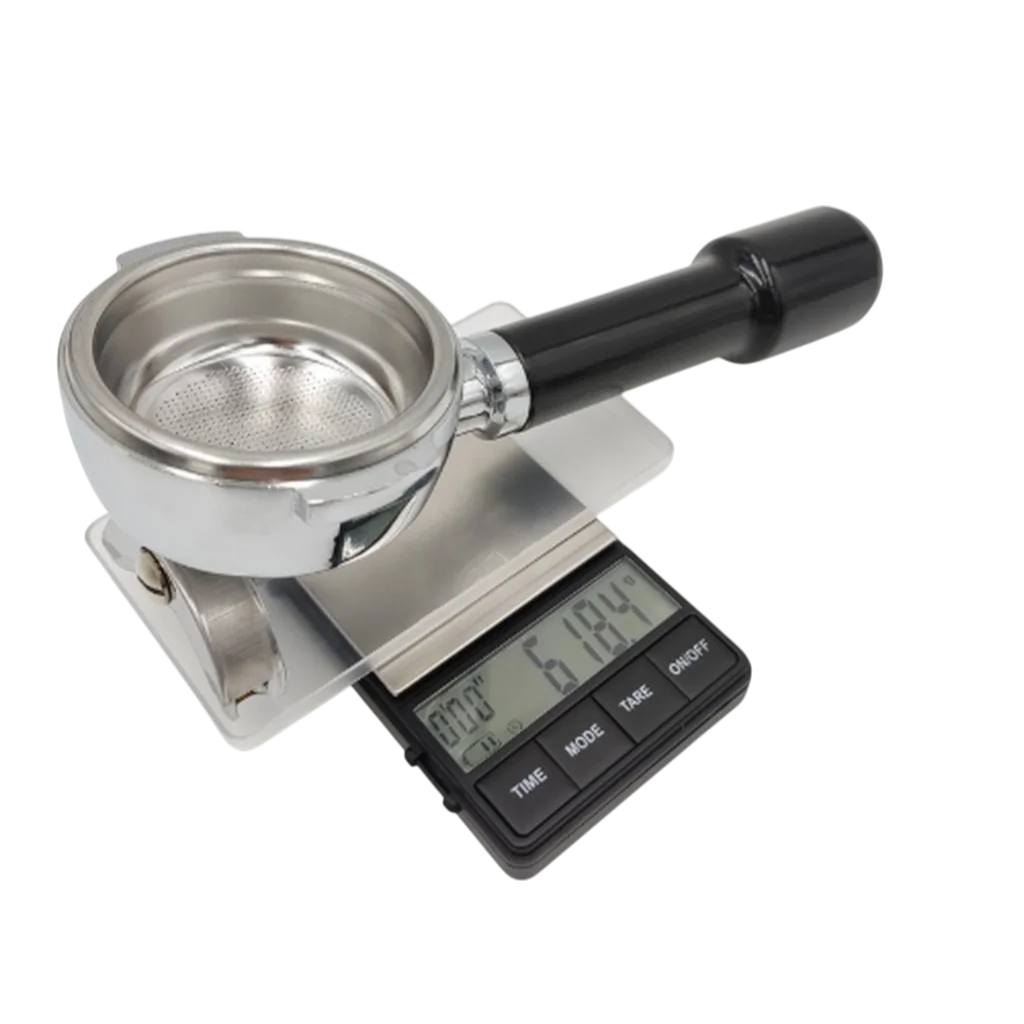
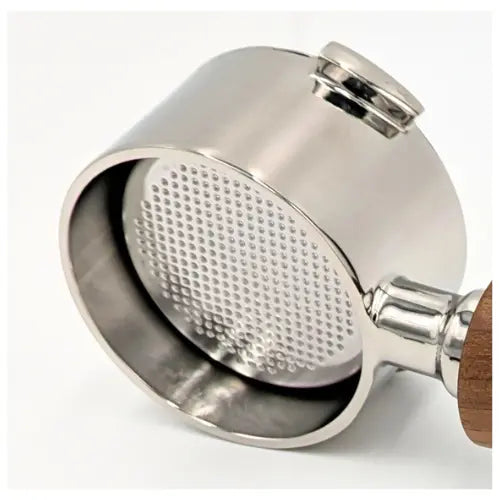
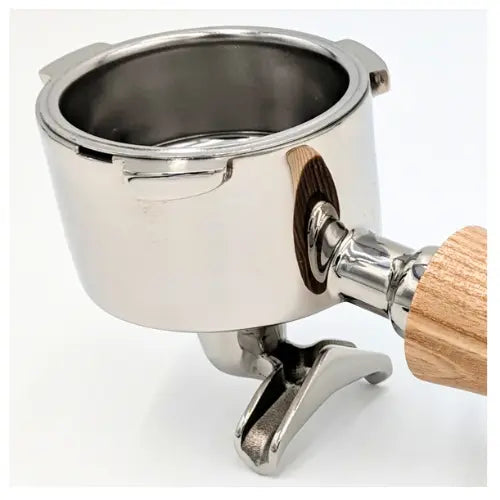
The portafilter on the La Marzocco Linea Micra can be flexibly transformed from a bottomless (naked) portafilter into a single or double-spouted setup. To achieve this, a portafilter body was designed to accommodate two snap-on polymer spouts. This high-tech plastic serves one primary purpose: it doesn't absorb heat and therefore doesn't draw temperature away from your espresso during extraction. As a result, it doesn't need to be locked into the group head to pre-heat during the machine's warm-up phase.

Truth be told, heavy brass or steel portafilters are often the slowest components to heat up, since they sit furthest from the heat source. With this modular solution, La Marzocco bypasses the issue in an innovative way—even though it has sparked quite a few debates from metal-purists in the espresso community.
In the cup, we recorded temperatures roughly 5 degrees Celsius higher when extracting with the Linea Micra portafilter compared to a classic, heavy La Marzocco portafilter.
Conceptually, this portafilter is the logical next step for a fast-heating espresso machine. If you are waiting 25 minutes for a traditional machine to heat up anyway, you have plenty of time to pre-heat a massive chunk of stainless steel along with it. But for a machine ready in 5 minutes, this design is brilliant.
Compact, Lighter, and Accessories
The new La Marzocco Linea Micra weighs 18 kg, which is 14 kg less than the La Marzocco Linea Mini. A width of 28.8 cm, a depth of 46.5 cm, and a height of 33.5 cm make the Micra noticeably narrower and lower than the Linea Mini (35.7 cm wide, 37.7 cm high).
Its smaller footprint and, crucially, lower weight mean the machine can be shipped via standard parcel services like UPS, rather than requiring freight shipping on a pallet. This is an important factor considering the direct-to-consumer sales strategy La Marzocco chose for the Micra.
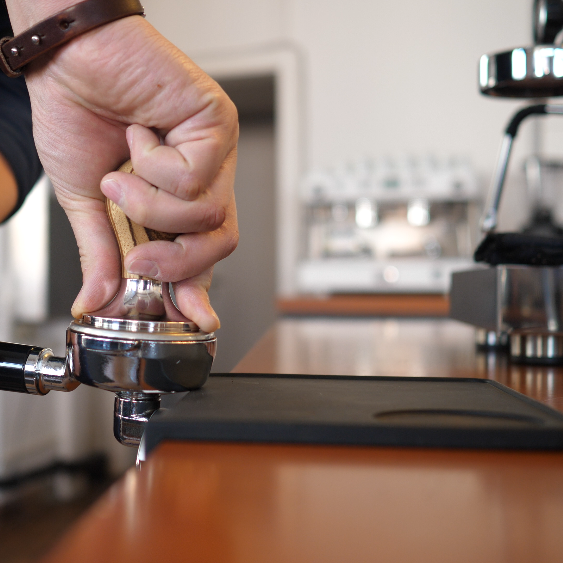
Included in the box are a 14g and a 17g basket, a tamper, cleaning powder (puly caff), a 0.35L milk pitcher, and a blind basket for backflushing. Essentially, it comes with everything you need to start brewing right away.
However, La Marzocco doesn't win any awards for the included tamper and baskets. The tamper is slightly undersized for a snug fit in the baskets, and most importantly, it lacks a modern 17-19 gram precision basket. We immediately optimized the machine by swapping it out for a competition basket from IMS.

Espresso Quality in the Cup
The La Marzocco Linea Micra has everything required to pull an outstanding shot of espresso. A commercial rotary pump that delivers immediate and constant pressure. Flawless thermal stability across various scenarios, all just a few minutes after turning the machine on.
We pulled plenty of excellent espressos, ranging from light roast specialty coffees to punchier, dark-roasted espresso blends containing Robusta.
Important to note: the paddle on the front of the group head might give the impression that the Linea Micra is capable of pressure profiling. This is not the case. The paddle is simply a mechanical on/off switch for the pump. There is no room for flow control gimmickry, meaning you can't play around with pressure or flow rates to tame highly complex coffees. The Linea Micra is not built for that.
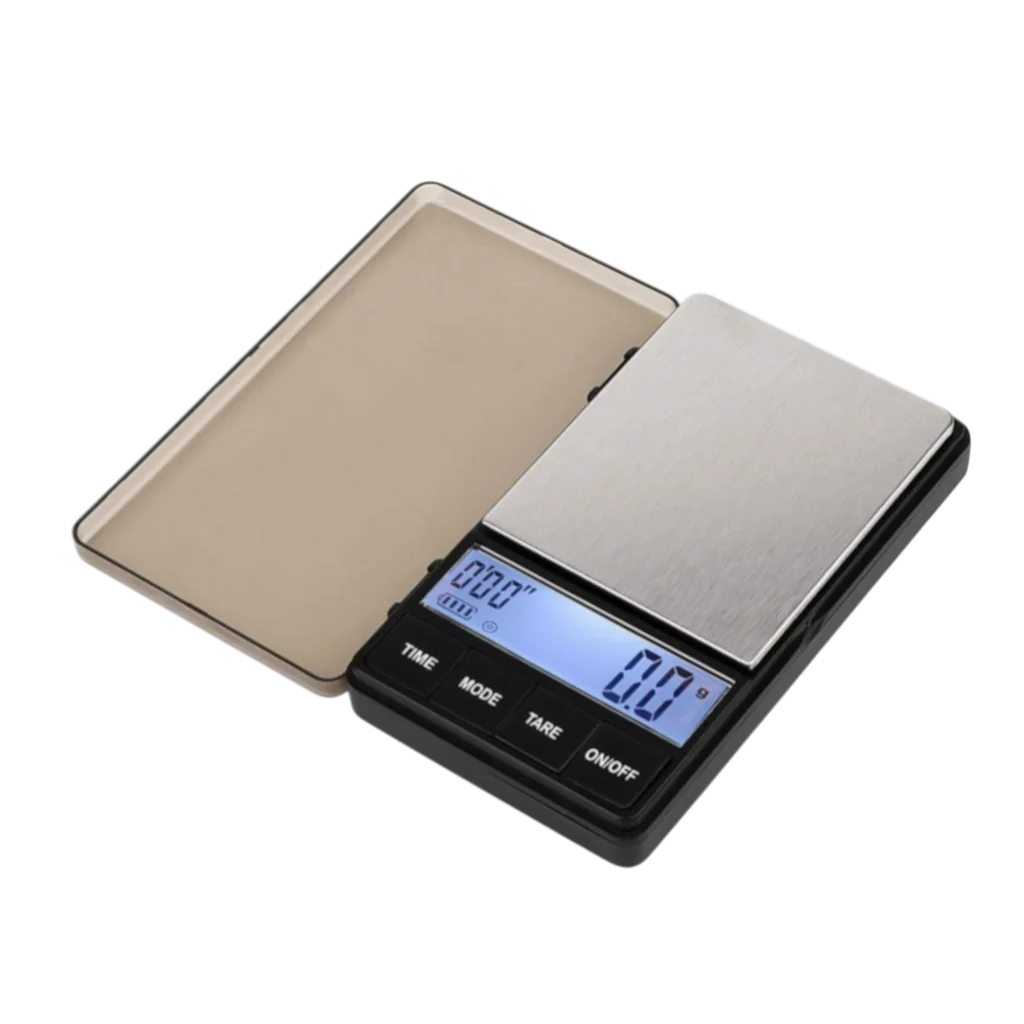
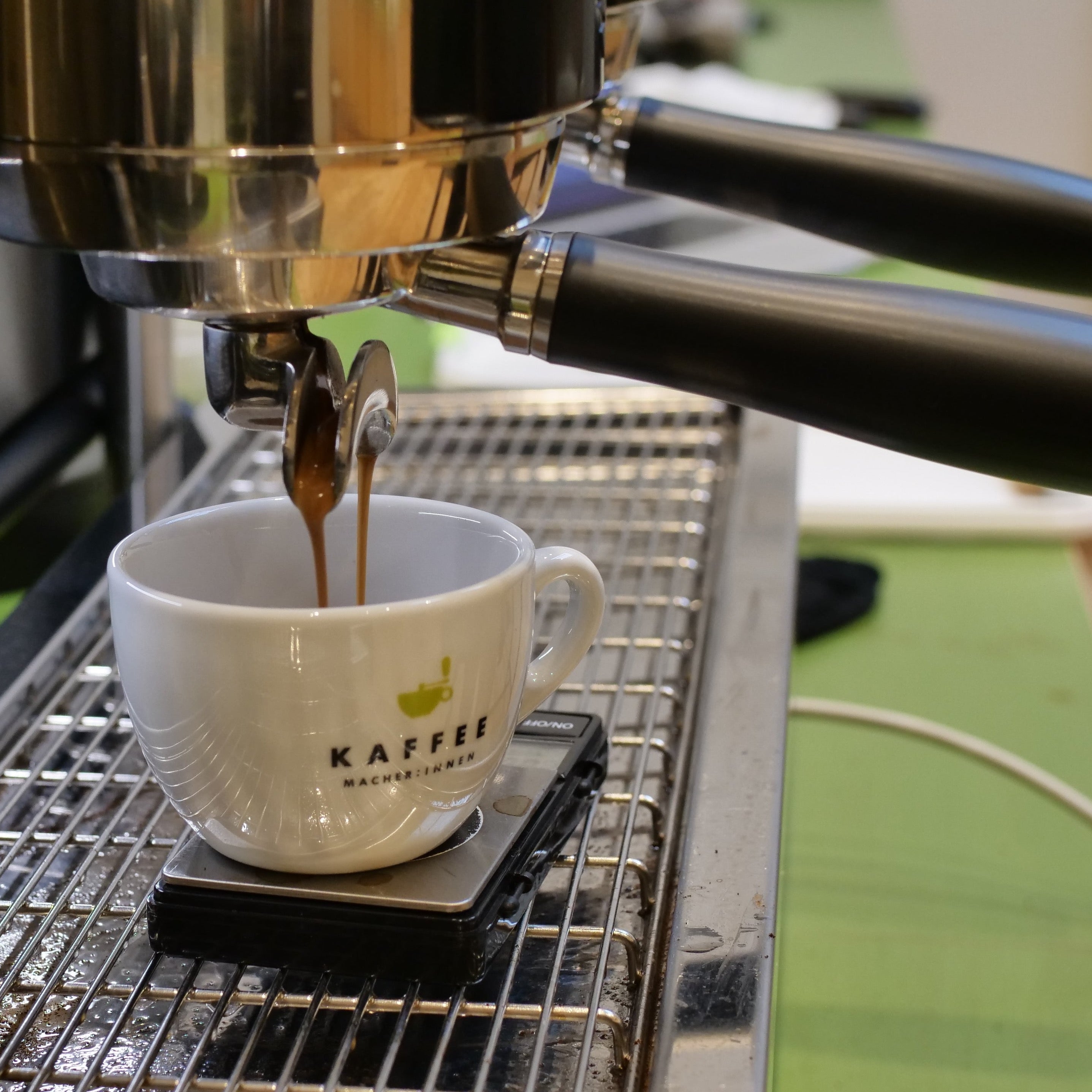
A real downside is that the Linea Micra, much like the Mini, lacks volumetric dosing and water volume programming. The espresso yield in the cup must be stopped manually, making a good coffee scale absolutely essential. A shot timer is available in the app, but there is no display on the machine itself.

Milk Frothing and Microfoam
The 1.6-liter steam boiler does a solid job. The steam gauge indeed shows values of up to 2 bar pressure, though subjectively it froths with slightly less punch than its bigger siblings, the GS3 and the Linea Mini. Still, the power is more than sufficient to create a beautiful vortex and texture milk, even in a 0.6L pitcher. The only drawback is that the steam wand is somewhat stubby, requiring a fairly high milk level in the pitcher to submerge the tip properly.
Comparison: Linea Mini vs. Linea Micra
Compared to the Linea Mini, besides the reduced size, visual details stand out the most. The drip tray on the Micra is still quite large relative to many other domestic espresso machines. A nice quality-of-life upgrade is that the 1.6-liter water reservoir can be easily refilled from behind the drip tray without having to pull it completely out. This is possible because a protruding lip of the reservoir is integrated into the drip tray space.
The Linea Micra is the first La Marzocco machine to feature a float in the drip tray to warn you before it overflows. Inside the machine, there are a few differences too: the Mini's steam boiler, at 3.5 liters, is almost double the capacity of the Micra's. Furthermore, the Mini's heat exchanger runs *through* the interior of the boiler rather than wrapping around it.
The brew temperature for the Linea Micra is set via the La Marzocco Home App.

The Mandatory App
Anyone wishing to use the app must register an account first. Why I need to hand over my email address to the manufacturer just to use my espresso machine is a little beyond me. But hey, at least it ensures that *I* am the one communicating with the machine and not my neighbor.
The app itself works very smoothly and connects via Bluetooth without any issues. The machine is then connected to your home Wi-Fi, receiving OTA firmware updates, tutorial videos, and FAQs.
Additionally, the app allows you to adjust the brew temperature, set up a pre-brew (pre-infusion), and tweak various other parameters. As with other IoT-enabled La Marzocco machines, you can program an automatic on/off schedule so the machine is hot and ready in the morning.
The steam boiler can also be toggled on and off from the app. You can even trigger an automated cleaning cycle (backflush) via the app—a very nice touch.
Sales Strategy and Availability
Initially, the Linea Micra is only sold via direct-to-consumer sales by La Marzocco and its subsidiaries. The machine can be viewed in their dedicated showrooms. In Germany, there are three of these (Berlin, Munich, and Stuttgart). In Austria, it can be viewed in Vienna. In Switzerland, this option doesn't exist yet, and according to the La Marzocco website, direct online purchasing is also currently unavailable for Switzerland.
A direct-to-consumer model obviously has advantages regarding the retail price, as no reseller margin needs to be factored in. Nevertheless, restricting sales to an online portal and a handful of showrooms contradicts the advice we usually give to espresso machine buyers. In regions where local dealers do an excellent job and have helped cement the La Marzocco brand presence, sales should always be supported locally.
We view buying an espresso machine as the beginning of a relationship with a local dealer, who remains the go-to point of contact for servicing, maintenance, and troubleshooting. A local expert can also help calibrate the machine's temperature offset and might be the perfect place to take a home barista course.
When buying online, people often forget that an espresso machine only produces great coffee if the barista, the machine, and the grinder function as a well-coordinated team. A local dealer can be an invaluable mediator in achieving this harmony.
La Marzocco is relying on sales through its own corporate structure partly because it allows them to gather direct, unfiltered feedback on a brand-new machine straight to headquarters. After six months of exclusivity, it is planned that the machine will also become available through the standard dealer network in certain markets. Let's hope this applies to Switzerland as well.