




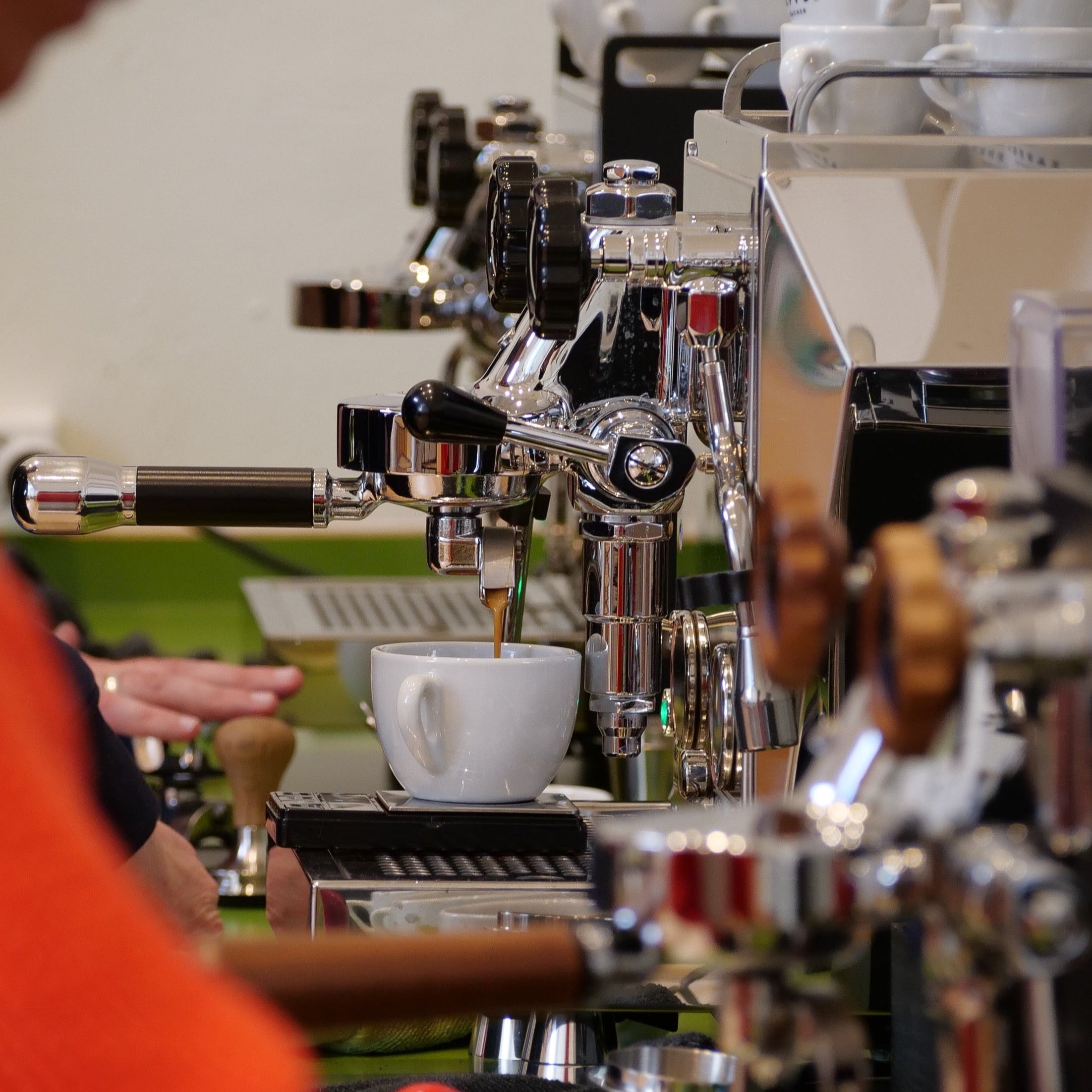
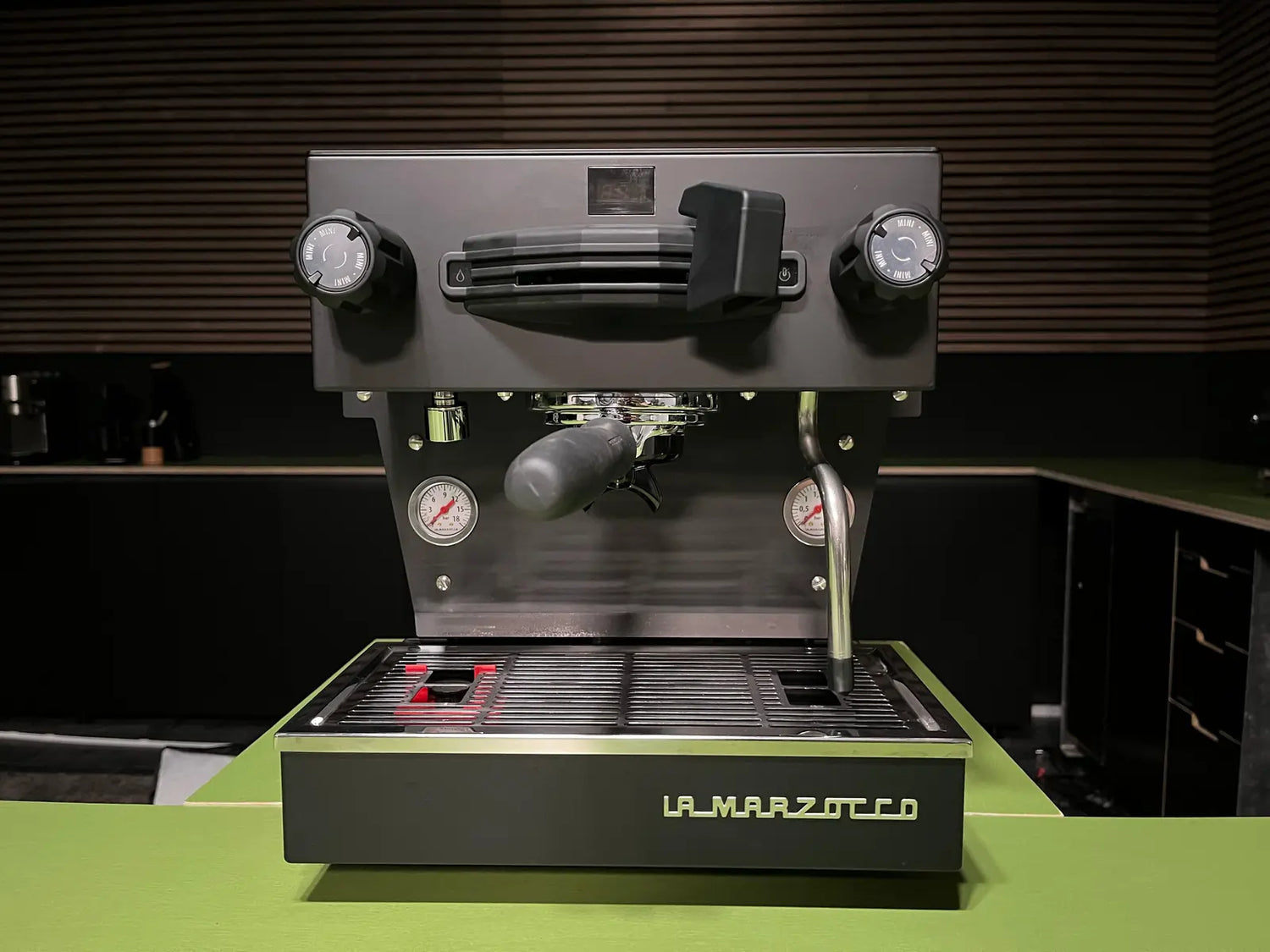

Not new, but with many revisions, the new La Marzocco Linea Mini-R presents itself. It's not just an update of the previous Linea Mini, but rather its successor. We had the opportunity to test the Linea Mini-R before its international market launch. As always, we purchased this machine ourselves and don't hold back our opinion.
La Marzocco knows this and still goes ahead without any influence on the outcome of our test. Sometimes the feedback is positive, such as with the Linea Micra. Sometimes mixed or rather negative, as with the La Marzocco Pico.
We appreciate that La Marzocco informs us about testing a machine before its market launch. This way, you know from the start what we think about the machine. And for us, it's an honor to be among the first worldwide to test a machine.
What has changed with the La Marzocco Mini R?
La Marzocco stays true to itself with the Linea Mini-R. The machine builds on the strengths of the old machine and revises some features and, above all, the design.
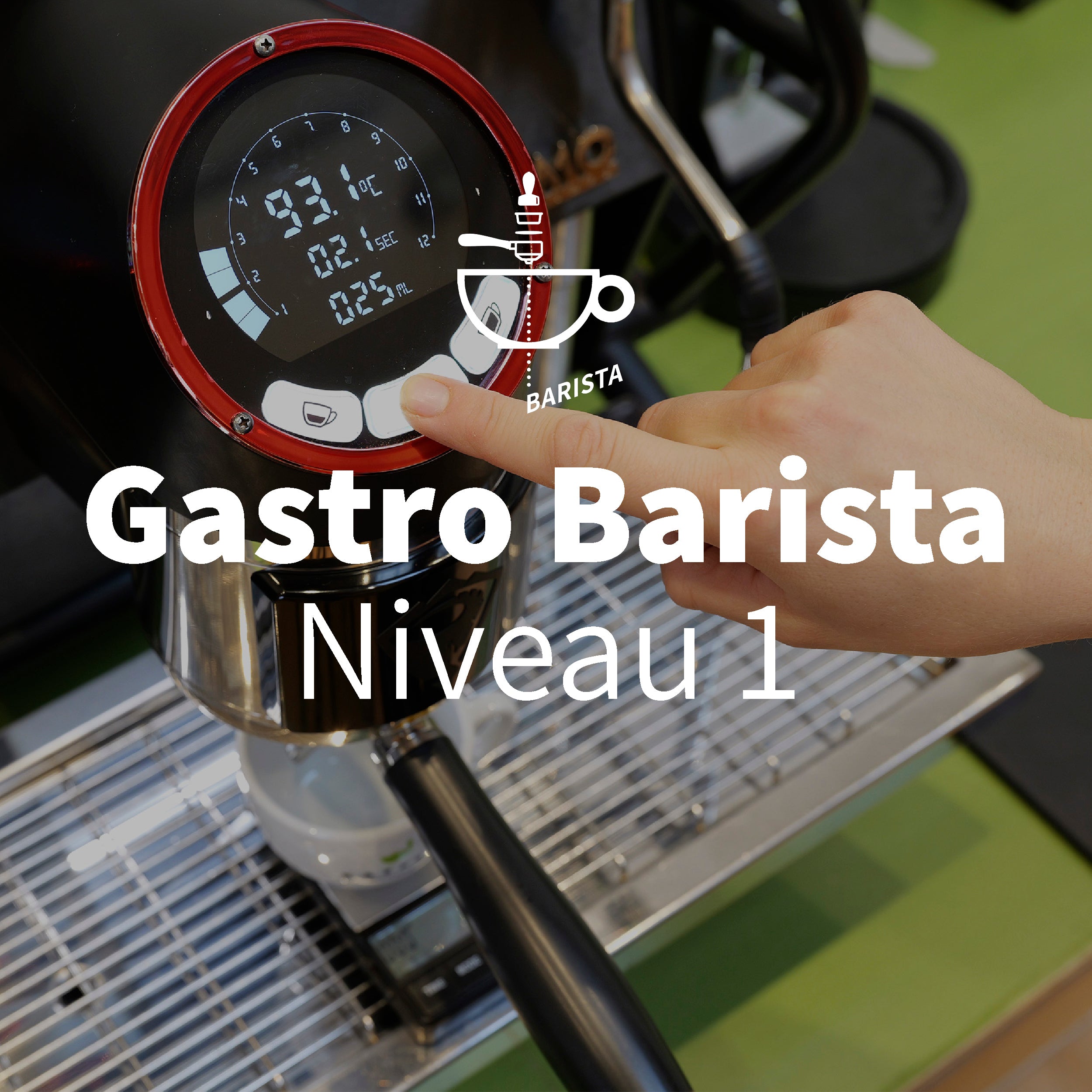
- Shot timer: The machine now has a display of the extraction length, which is located at the front above the paddle.
- The feel and design of the paddle and rotary knobs have been revised. These are now matte black, which looks more high-quality and feels better too.
- The metal plate behind the group head at the front is now in the color of the entire machine. This looks much more cohesive, matches the unity of the machine, and previously had to be purchased as customized work from other suppliers.
- The machine is prepared to be connected to the La Marzocco Acaia scale and to offer brew-by-weight through it.
- The pressure of the rotary pump can now be adjusted from the top with a screwdriver. The adjustment is integrated into the drip tray.
- Completely revised pre-infusion function, even without a fixed water connection. Described in more detail later in the article.
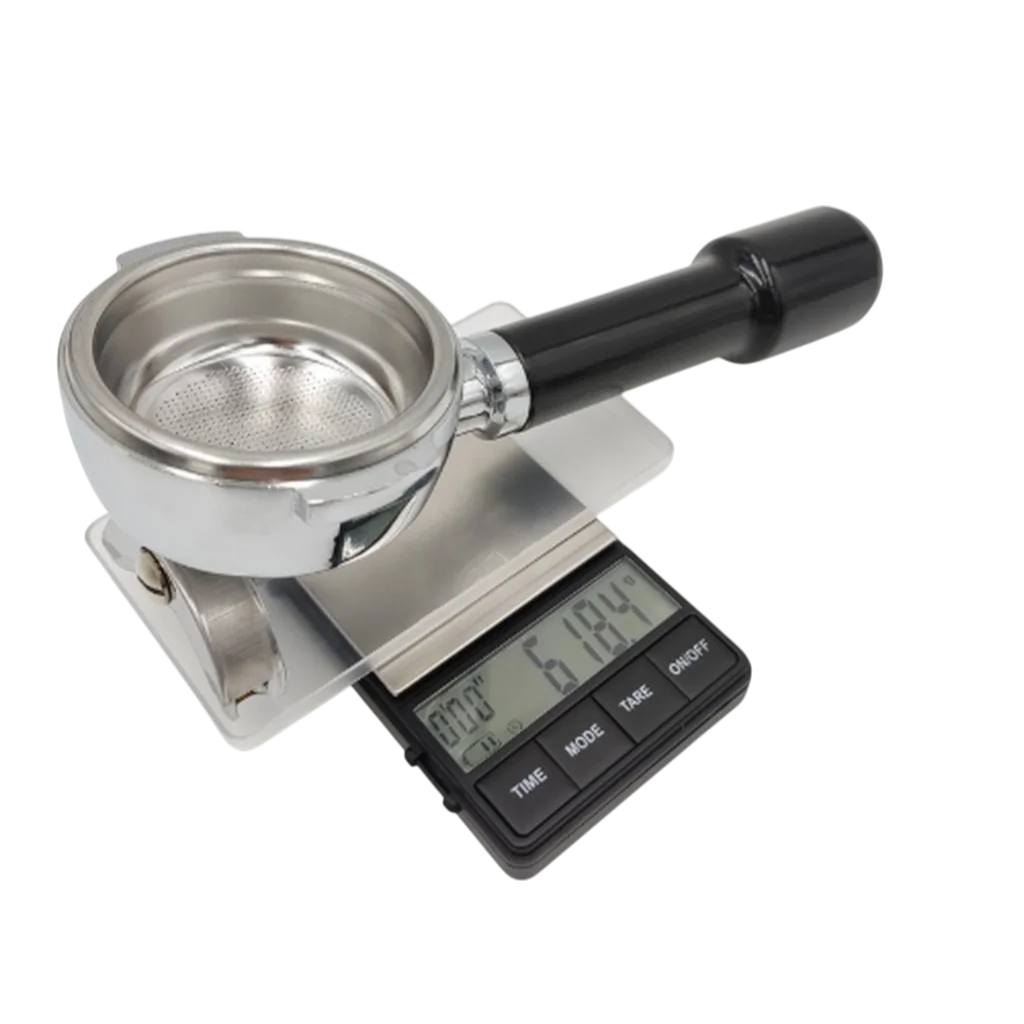
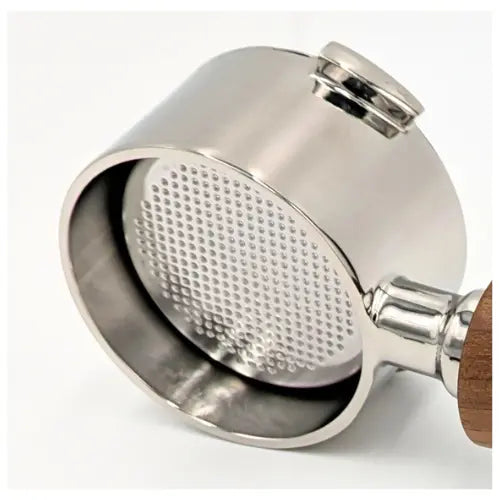
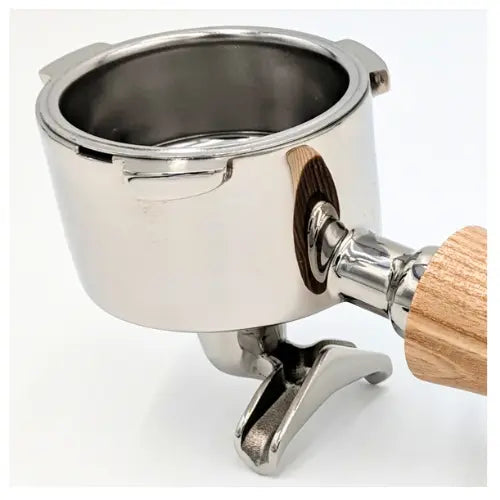
- Modifiable portafilter with plastic spouts, as seen and discussed with the Micra.
- Revised app and functionality without internet or WiFi connection, once calibrated with the app.
- The temperature dial on the side has disappeared.
And otherwise? The Linea Mini remains the Linea Mini. The main changes internally are the pre-infusion, some changes in the pump area, and associated noise reduction. The removal of the drip tray and water tank has also been revised, following the design of the Micra, and is now easier to handle.
Buy La Marzocco Linea Mini-R
The following specialty retailers sell the La Marzocco Linea Mini-R, and we recommend purchasing from these businesses. All offer the possibility to adjust the machine's offset.
Germany:
We search for specialty partners who we know provide good work and good service, and we are in close contact with the retailers mentioned. The links are so-called affiliate links. If you order through one of these links, you won't pay a cent more – we receive a small commission, which we invest directly in new test equipment.
We continue to search for competent partners in the DACH region on your behalf.
Who is the Mini R suitable for?
The Linea Micra has shifted the logic of the single-group machine lineup. While the Linea Mini used to be the entry-level espresso machine from La Marzocco, the Micra now presented a true La Marzocco for significantly less money yet with a good price-performance package.
The Micra heats up quickly, has relatively low energy consumption, and everything needed to deliver good espresso and milk foam. Besides the lower price of under €3,500, it differs from the Linea Mini in that it has significantly less power under the hood.
For the quality-conscious home barista, the Micra is a welcome entry point into the world of La Marzocco espresso machines. The Linea Mini, at a price over €5,000, suddenly found itself in an argumentative vacuum. Who is this machine really the right choice for?
Because those who truly wanted performance and power on a single-group espresso machine often dug deeper into their pockets and invested another €1,500 to own a La Marzocco GS3. By this point, the home barista has definitely arrived in the realm of professional-grade quality at home.
The introduction of the Acaia scale integration opened up a clear differentiation for the Linea Mini from the Micra (which therefore will never officially be retrofit-compatible with the scale). With the scale connection, the Linea Mini brews via weight detection. This function was presented last year and was already available as an upgrade for the previous Mini. With the Mini-R, the connection is not only native but improved.
And how does the positioning on the market look now?
The Linea Mini-R wants to be not only the espresso machine for the home barista today but, with the integrated scale, also perform as a single-group espresso machine in gastronomy. In many smaller specialty coffee shops, especially in the Asian region, this is a common use case for the Mini.
In our test, we therefore extensively tested whether the Mini-R can fulfill this claim.
- Is it also, especially with the revised pre-infusion, the perfect espresso machine to brew demanding light-roasted specialty espresso?
- And last but not least: has La Marzocco also arrived at a time with the Mini-R where lower energy consumption plays an increasingly important role for many home baristas?

Espresso Performance and Temperature Stability
The quality of espresso is what every espresso machine must be judged by. The most important criteria for this are temperature stability, even across multiple shots, a well-implemented pressure performance, as well as the ease of adjusting the pressure. Other criteria include the supplied baskets as well as an even distribution of brewing water.
Temperature and Heat-Up Time with Steam Boiler
Let's start with temperature stability and readiness. What's impressive is how quickly the La Marzocco Linea Mini-R reaches temperature. Our test for temperature readiness lasts several days each time, as we let the machine cool down completely between each measurement cycle and only check the next day whether faster heat-up is possible. With the Linea Mini-R, we determined a heat-up time of 10 minutes. We recommend flushing the portafilter for 20 seconds after 10 minutes to warm it up properly as well. The brew boiler signals readiness after 8 minutes. However, waiting an additional two minutes is recommended.
After 10 minutes, the KM temperature protocol and subsequently the WBC protocol were measured. In the KM temperature protocol, five extractions are made at one-minute intervals immediately after heating up. In the WBC protocol, after one hour of standby time with the machine running, 14 extractions are measured according to the World Barista Championship protocol. The "idle" time, i.e., the time between extractions, is continuously reduced. Despite the small boiler, the LM Mini-R showed, with a standard deviation of 0.74 and 0.76 degrees respectively in the KM protocol, a very good result with the steam boiler activated.
The WBC protocol has a frequency that simulates the highest possible espresso performance in a café. You can't work faster with a single-group machine. In terms of temperature stability, the La Marzocco Mini-R is therefore suitable for any high-volume scenario.

Pressure and Espresso Quality
The same can be said for pressure stability. The machine showed no notable issues across all extractions. This showed itself in our test in very good espresso extractions that left nothing to be desired. We brewed different espressos, tested various recipes, and were able to achieve very good espresso results through the use of a good espresso grinder and careful puck preparation.
Thanks to the relatively small brew boiler, which sits directly above the group head, quick adjustment of the brew temperature is also possible. For this, the temperature is adjusted via the app. Around 20 seconds of water should be dispensed to stabilize the temperature before proceeding with the changed temperature.
Steam Boiler Off Causes Problems
To be very clear. The function of deactivating the steam boiler proved to be unusable in our tests. We point this out so clearly because the option exists in the app. Yes, the Linea Mini-R can in principle be operated with only the brew boiler. However, we did not reach the target temperature after 10 or even 20 minutes. In fact, we had to set the temperature 3 degrees higher to even reach brew temperature. This, however, was by no means as consistently stable as the brewing water temperature with the steam boiler activated. At both 93 and 96 degrees, the temperature dropped significantly during extraction.

See also the graph of espresso extraction with steam boiler off at 96 degrees at the end of the article.
Steaming Until the Doctor Comes
While the brew boiler, with only 200 ml, delivers surprisingly stable brew temperature and shows that La Marzocco can be smart, the steam boiler is more of a display of force and anachronistic attitude.
Yes, the machine delivers 1.9 Bar and the steam just blasts out of the wand. We're usually big fans of lots of pressure and set steam boilers to the highest possible level. At the La Marzocco Mini-R, level 3 is almost too powerful even for professional barista Michel Indelicato. A few seconds are enough to heat and rotate the steam.
In Basel, we measure steam power performance by whether a machine can withstand the "hot schocki" demands at Carnival. And what can I say? Give me a Mini-R and drop me in the middle of the Cortège. I'll deliver.
Why anachronistic?
We've seen good steam performance even on machines with significantly smaller boilers and especially with less energy consumption. The La Marzocco Linea Mini-R ranks among the power-hungry machines. With energy consumption of 0.38 kWh for 5 double extractions including heat-up, it ranks among the poorer espresso machines in terms of energy consumption. It improves significantly only if we omit the steam boiler. 0.13 kWh is what's recorded here for the extractions including heat-up. Due to the performance difficulties mentioned above, however, this good value can hardly be considered a valid measure. The machine simply lacks the crucial three degrees of temperature to meet our standard for heated machines.

Design and Quality
"Finally," one might say. With the lower front panel, the entire machine is now styled in the color variant. What Specht Design or Deon previously had to retrofit is now part of the machine. And the revised paddle, the rotary handles of the steam wand and water dispenser are not only visually coherent but convey quality.
I've always been bothered by the glossy look of the controls on previous La Marzocco Linea Minis. These felt somewhat cheap and cold. The matte finish and slightly rough feel convey a pleasant touch.
The water tank and drip tray can now be easily removed while maintaining their large capacity. The drip tray has a float on the plate, which the Micra introduced and which we know from many more affordable espresso machines. This makes it easy to see when it's time to empty the drip tray. However, the drip tray of the LM Mini-R is so large that hardly anyone will wait long enough for this large tray to fill up. Before the drip tray is full, its enormous capacity will more likely become a biotope and mosquito nest.
The stainless steel flow restrictors now used in the pre-brew area of the machine are a welcome upgrade and promise less scaling inside the machine.
And then there's the shot timer, which now displays the duration of the espresso extraction on the machine. La Marzocco has – finally – responded to the community and created a nice display of espresso extraction time. The design is similar to the digit display of the La Marzocco Pico. It's simple, reduced to the essentials, and fits well into the overall picture of the machine with its restrained display.

Modular Portafilter
But let's get to the elephant in the room: the portafilter. What, with the La Marzocco Micra, with its extremely quick heat-up time and good energy performance, was certainly a fitting addition to the concept, seems more like a foreign body on the Linea Mini-R. This is also because the plastic of the 1-shot and 2-shot spouts visually resembles the plastic of the previous controls. It's glossy. But the machine has now completely switched to matte as a design and color element.
For those unfamiliar with the portafilter then and now: La Marzocco previously supplied two high-quality stainless steel portafilters with the Linea Mini. One was intended for single shots and the other for double shots. Instead, there's now the Micra portafilter, which saves on material, comes with two plastic rotary attachments, and can also be used without an attachment as a bottomless portafilter. The latter is smart, and it's also smart in principle that the portafilter doesn't need to heat up as long because less material is used and the plastic conducts heat poorly. So little temperature is lost to the plastic spout.
The Linea Mini-R, however, with its claim to also play a role in gastronomic setups, seems to be equipped wrong with the modular portafilter. The good and also included 14g, 17g, and 21g baskets as well as single-shot baskets don't change this. If I really have to pull lots of shots, I don't want to tamp on the plastic attachment; I want a powerful and durable stainless steel portafilter like before.
For home use, the modular portafilter is also a nice thing on the Mini-R. Of course, the stainless steel portafilter can be purchased and added separately. Which brings us to accessories in this article.
An Acaia Scale Changes the Mini
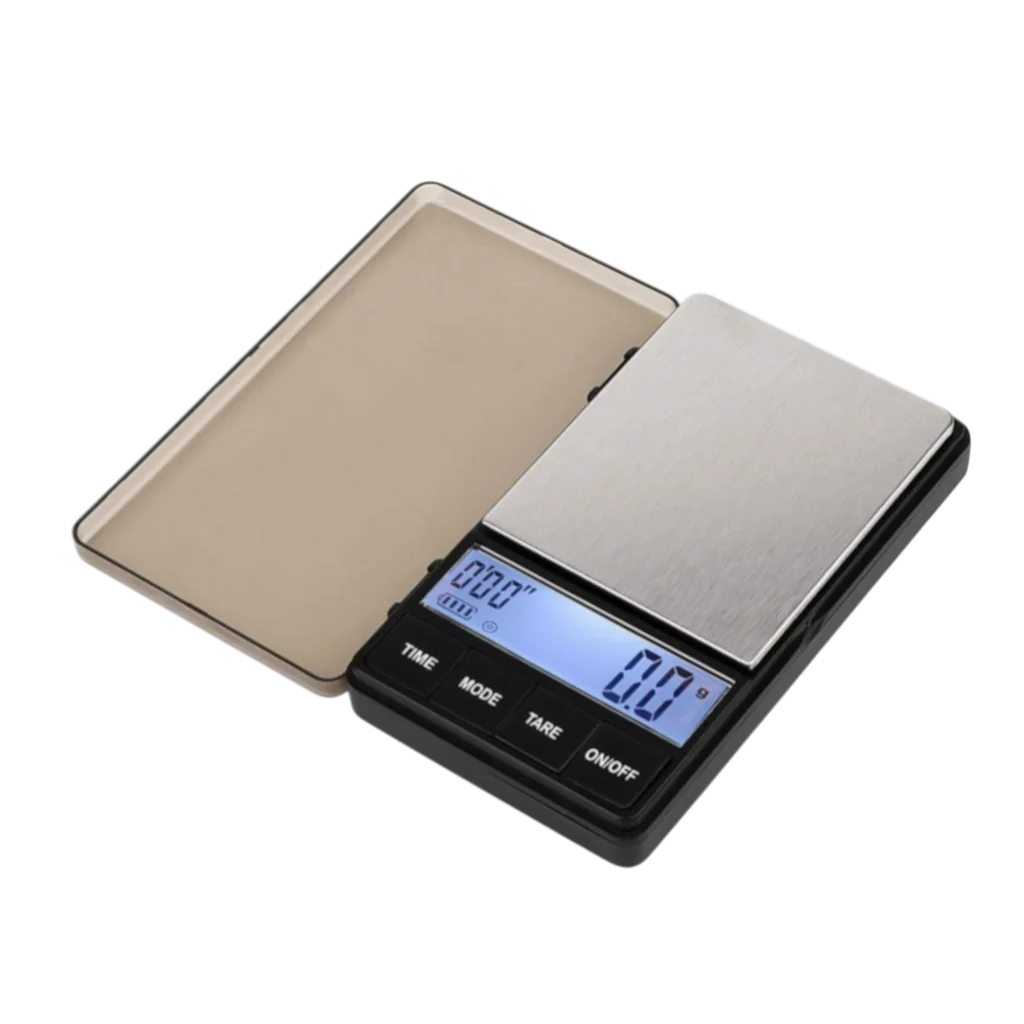
The most important and best upgrade for the Mini is the Bluetooth scale adapted by Acaia for the Mini. The scale is such a central addition to the La Marzocco Mini that it should really be a fixed part of the package. Because even if you already have an Acaia scale today, you'll need a new one to use the full functionality of the Mini-R. (Unfortunately, that's the case because only the LM Acaia scale can be integrated into the app and Linea Mini.)
The scale is connected to the app via Bluetooth and thereby to the espresso machine. Connecting actually works without problems if there are no problems. For us, it worked reliably on the first day, the app acted up on the second day and kept crashing when connecting, and on the third day the performance was good.
When the scale is connected, you can enter the dispensed amount as a weight value via the app. It's very good that the scale communicates with the machine even when the app is not active. The last entered weight choice is retrieved by the machine when the paddle is used again.
When a new scale is newly connected to a machine or when switching from one espresso to a very different one, the accuracy of scale control has greater fluctuations. However, after a few extractions, the scale settles in well and then delivers the amount in the cup with an accuracy of approximately 0.5 grams deviation. That's good precision.
However, a good flowmeter is also capable of achieving such precision. The scale should in principle have strengths when working with pressure profiles or different flow rates. However, these functions are not provided for on the La Marzocco Mini-R.
Criticism of Scale Integration
The integration of a scale into the Linea Mini workflow is therefore only half convincing to me. I like the idea in principle. However, compared to good volumetrics, it doesn't convince me on the Linea Mini-R.
- The gram choice can only be changed via the app, not directly on the machine. On the GS3, I simply press the 1-shot or 2-shot button to select a different volumetric.
- The accuracy of the scale is not superior to the volumetrics, at least not with our pre-release firmware and software.
- The workflow with the scale is a workflow with the scale. While the scale tares well and precisely shortly after the cups are placed and the extraction starts, the scale must first be positioned and the cups must be placed.
And now we come to the drip tray that was provided to us by the manufacturer. (We purchased the machine and scale.)
The Drip Tray and Flushing Workflow
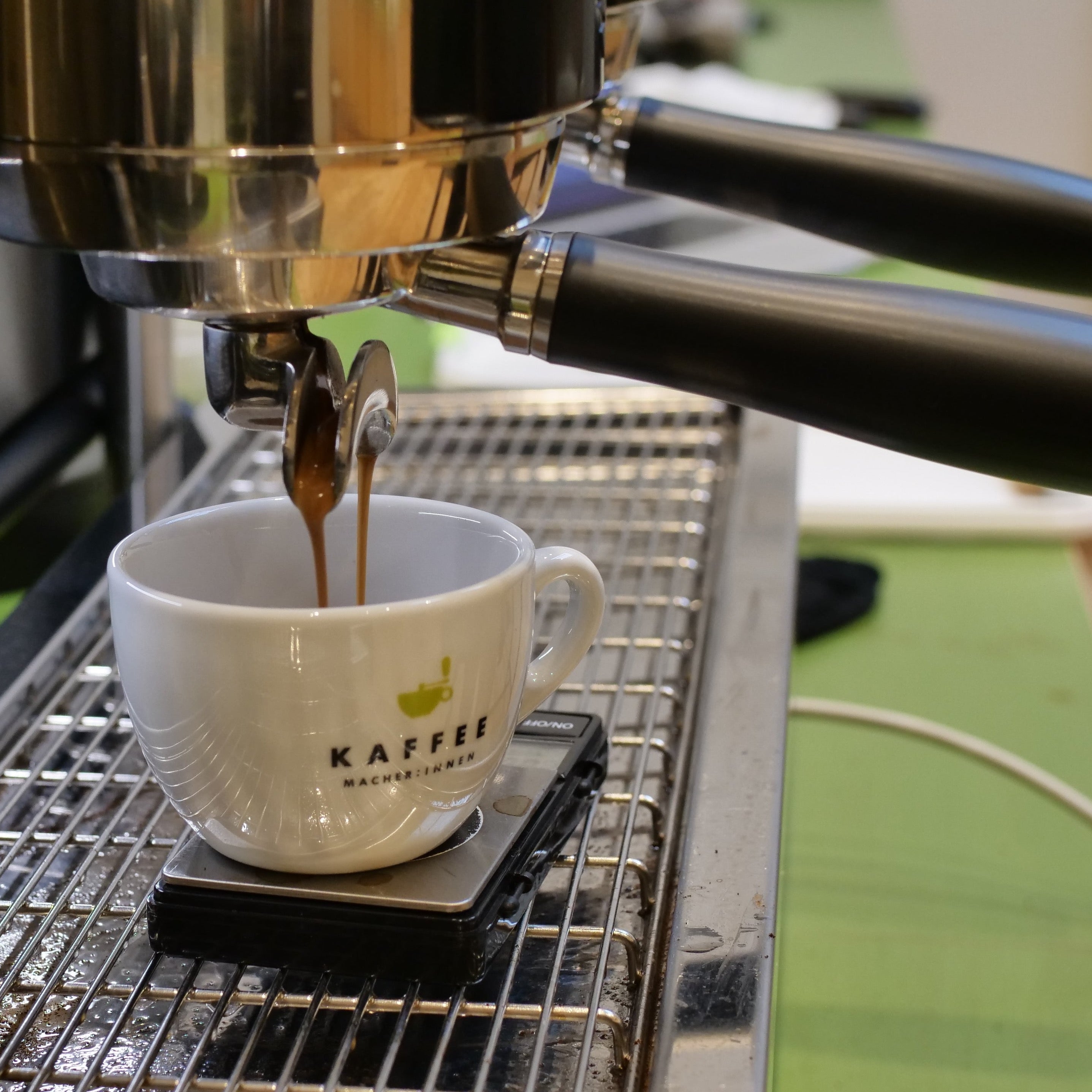
The scale drip tray has a recessed depression for the scale. And to be honest: we would never buy it! While the workflow with the scale on the normal drip tray, through working with other espresso machines without volumetrics, has become almost a habit, pulling the scale out of the depression feels like finger acrobatics. On the normal drip tray, we push with or without cups to the left or right. Done.
Yes, both La Marzocco and Acaia confirm that the scale should withstand the temperature during flushing. But at least we can't bring ourselves to pour 90-degree hot water over a €400 scale. It just feels wrong!
And that's where I get hung up on the whole scale and "Brew-by-Weight" topic. For me, La Marzocco misses a great opportunity with the Mini-R to integrate the scale into the drip tray bracket. The way we know it from grind-by-weight grinders or espresso machines with integrated scales.
The scale drip tray and the scale connectable via Bluetooth via the app feel somewhat hastily retrofitted on the Mini-R as well, just as it was already the case with the La Marzocco Mini without R.
The Gastro Workflow with the Scale
Good volumetrics or brew volume programming is, for me, a prerequisite for an espresso machine to make sense in gastronomy. For this reason, I previously recommended the GS3 from La Marzocco when it came to a single-group espresso machine.
The integration of the scale usefully complements the machine, so it's in principle well usable in a café environment. Of course, you can also work in a café without volumetrics and with manual stopping. However, I've experienced too many times myself that, especially when I worked alone in a café, guests or other work prevented me from standing in front of the espresso for 25 seconds before it ran out. Accordingly, I may have also missed the moment when I should have manually stopped the espresso.
The scale now helps me do exactly that very precisely. In the 15 years I've been building and running cafés and coffee houses, however, another criterion for an espresso machine has emerged. I want espresso machines for my cafés that, especially under the highest frequency, simply work without additional steps. Only at high frequency do cafés really make money. That's especially when it matters. Then we cover the high costs that arise from the hours of cleaning, getting the café ready in the morning, and closing in the evening. For this reason, I choose espresso machines that perform precisely in this moment. And for this reason, I would still unhesitatingly prefer the GS3 to the Linea Mini-R in a gastronomic context. Because the workflow with the scale, balancing the espresso cups on it and then pushing it aside to flush, are simply too many micro-steps for a quick and reliable workflow under stress.
If the scale were below the drip tray (like the Decent stand) or integrated into the bracket, the Linea Mini-R would be an interesting alternative.
The Paddle - Style or Heavy Legacy
Yes, I like the paddle too. In fact, I think the new paddle is really elegant and the changing angle of the paddle also makes an impression. And yet I'm also uncertain about the paddle, whether it really makes conceptual sense in the new Brew-by-Weight espresso machine. Because: it doesn't return. While the extraction stops cleanly via scale control. The paddle, however, remains in the left position. Because we didn't stop the extraction with the paddle.
Let me put it this way: if La Marzocco had truly designed a brand-new espresso machine, thought about new features, and designed everything from scratch, then I doubt the La Marzocco Linea Mini-R would look the way it does today. If there's a paddle, then it would automatically return the moment the machine stops. Or the different weight amounts would be equipped with buttons like the GS3.
Or would the La Marzocco Linea Mini-R then shoot down the market position for the GS3 the way the Micra did for the Mini? That may be. Because what could the GS3 do better than the Linea Mini-R, let's remind ourselves how good the temperature stability under frequency and also the steam performance of the Mini-R were.
Let's take the thought further: The Linea Mini-R would have an integrated scale below the drip tray or the scale meaningfully integrated. It would thus put significant pressure on the GS3. So the question then is what would distinguish the GS3 in the future? What about advanced flow rate control, saveable pressure profiles, or adaptive control, for example? We'd think of quite a bit for the La Marzocco GS3 there.
App Control and Integration
The La Marzocco app ranks as one of the better espresso machine apps alongside numerous rather poor ones. The LM app doesn't make great leaps either, but what it delivers depending on the machine is solid. With the Linea Mini-R, it's the temperature setting in 0.1-degree increments, 3 steam boiler pressure levels, pre-infusion and preinfusion (both described in the next chapter).
You can also set the start time of the espresso machine. Maybe on Monday the machine should start earlier and Tuesday not until 10:00 AM. However, this function is probably more interesting for models like the GS3. The Linea Mini-R, with its short heat-up time, gets up to speed quickly anyway.
When the scale is connected to the app and machine via Bluetooth, you can also save the volume of the scale in 0.1-gram increments to two programmable virtual buttons via the app interface. Once the scale, machine, and app have grooved together, the interaction between scale and machine also works without the app. It then reproduces the last set dispensing amount.
You can also set the flushing function of the Linea Mini-R. If the paddle is briefly activated, the espresso machine flushes for a defined time. A nice function for flushing with some time reduction.
The app has rather sluggish transmission to the machine. It takes about half a second for settings such as temperature change or volume adjustment to be transferred. This feels nostalgic in times of instant program response, like commanding in Windows XP, but it's manageable. The login and account requirement is more annoying. Yes, you read that right.
To operate the app and thus the espresso machine, you first need a La Marzocco user account. This is created either via an email address or a Google account. What has been hugely annoying in the past is still annoying today. At least the machine now works without WiFi once it's configured. That's definitely a good development step for the app!
Pre-Infusion and Preinfusion
When the Linea Mini-R is connected to the fixed water supply, which is possible just like mounting the waste water pipe, the option of preinfusion is unlocked. With preinfusion activated, the coffee is pre-wetted with the water line pressure, which in many households is around 3 bar. So the pump is not activated and thus the full brewing pressure is not applied to the puck. The pre-infusion time can be chosen by the user. In this way, even with poor puck preparation or grinders with pronounced clumping, more even extraction is supported.
Pre-infusion is a variant of pre-wetting and is solved somewhat differently on the La Marzocco Linea Mini-R than on other espresso machines. Pre-infusion essentially consists of activating the pump for a definable time. So full pressure is built up and delivered to the coffee puck. Subsequently, a pause time can be set. For example, we can deliver 3 seconds of water, then switch to a 6-second pause, and then deliver brewing water again with pump pressure.
What's special about the construction of the Linea Mini-R is that, through the integration of a second solenoid valve, the pre-infusion water is not relieved. We will investigate the exact taste implications in a separate test series. So far, the espressos we extracted with pre-infusion and without were excellent.

Conclusion La Marzocco Linea Mini-R
La Marzocco has made an effort with the Linea Mini-R to find a good middle ground in the machine lineup between the Micra and GS3. And the Linea Mini-R has become a really good espresso machine. I would prefer it to many other espresso machines on the market because it performs so well, is powerful, and looks good too. And not just because La Marzocco is on the front (see also article on the acquisition of La Marzocco by Delonghi).
Taken on its own, there's a lot that's really very good about the Linea Mini-R.
- Very good steam performance
- Very good temperature stability
- Good volume consistency after calibration when using the scale
- Improvements such as integration of a shot timer, operation without WiFi (once connected), etc.
And yet the missed opportunities are significant. While old baggage like the temperature dial has now been resolved, others prevent a complete redesign of the machine. While that wasn't the goal, the superficial integration of the scale or the function of turning on the steam boiler feels subsequently added without going deep into the design. The workflow with the scale could be so much better if it were cleanly integrated below the drip tray. The steam boiler can be switched off, and thus save power, but suddenly the temperature performance of the La Marzocco Linea Mini-R is second-rate. If an elite manufacturer, however, suggests to me with the "turn off steam boiler" function that this function is possible, then we also expect performance there. We already criticized this sharply on the first version of the Baby T Plus and it needs to be stated just as clearly here. Ascaso reacted back then and revised the coupling of steam boiler and thermoblock. Let's see where the journey goes with La Marzocco and the Linea Mini-R.
In any case, we'll play around a bit more with the pre-infusion and supplement this article at some point.