






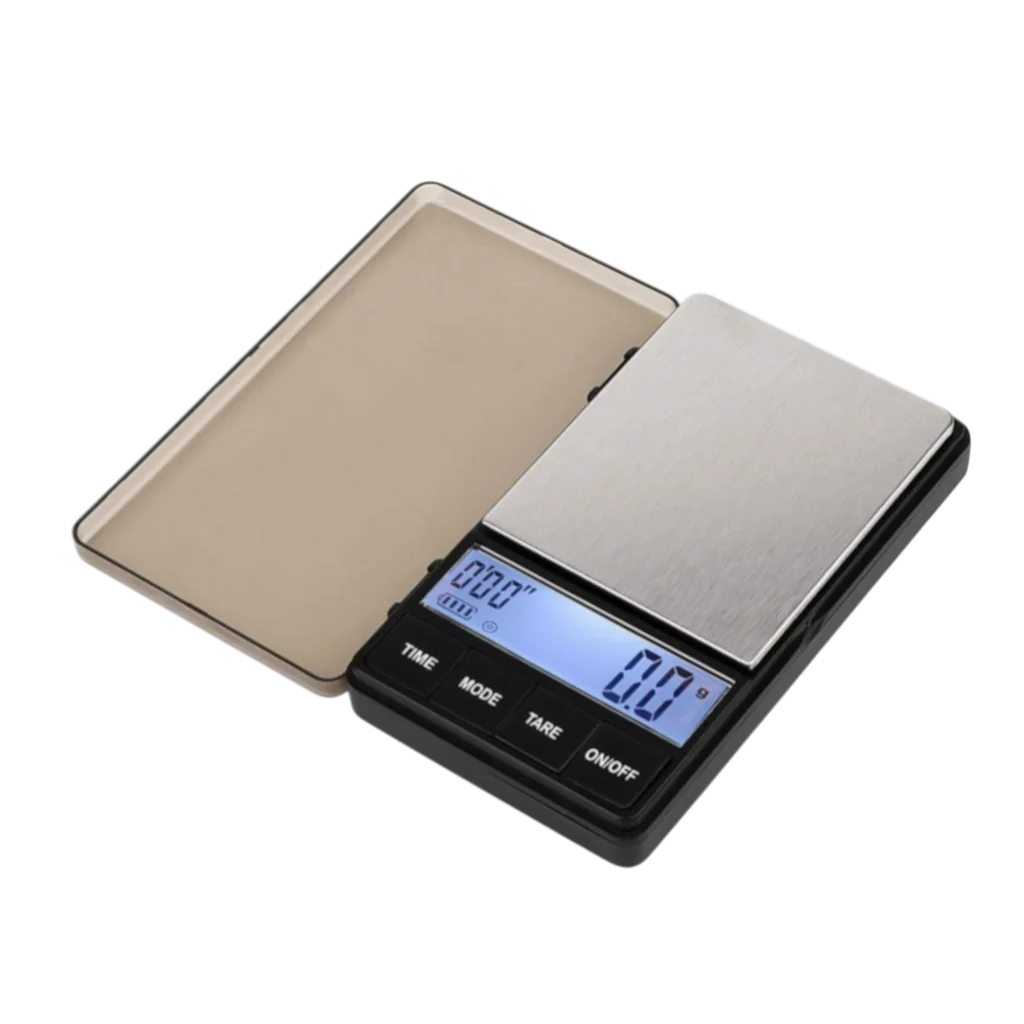
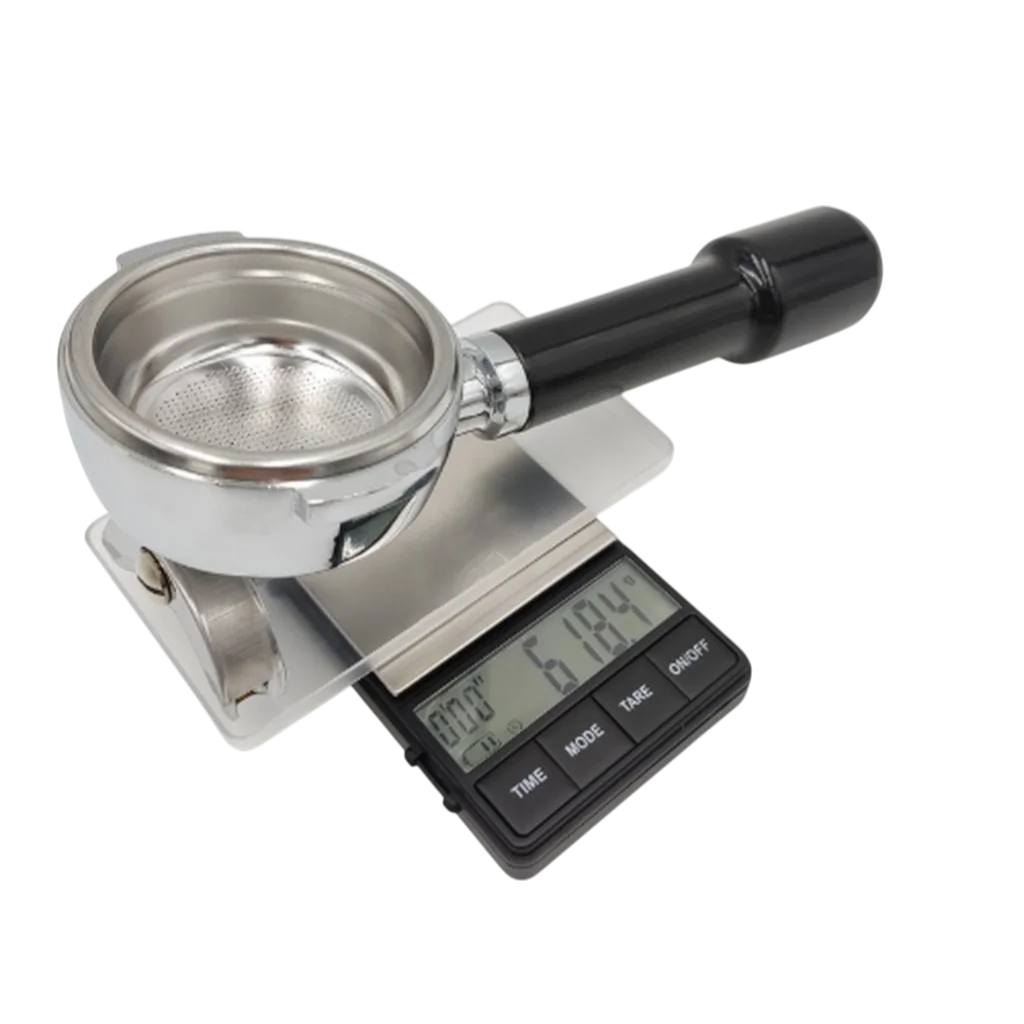

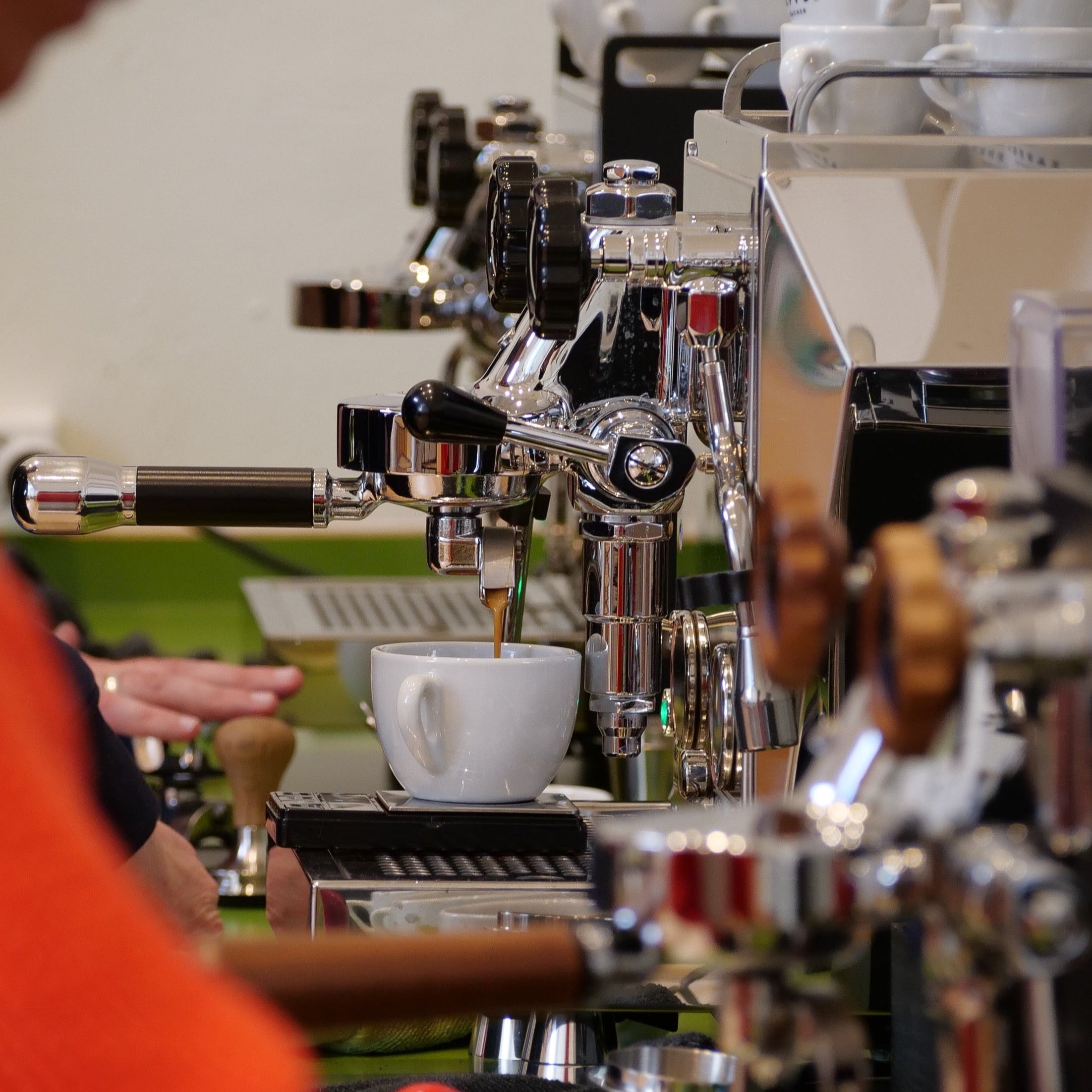
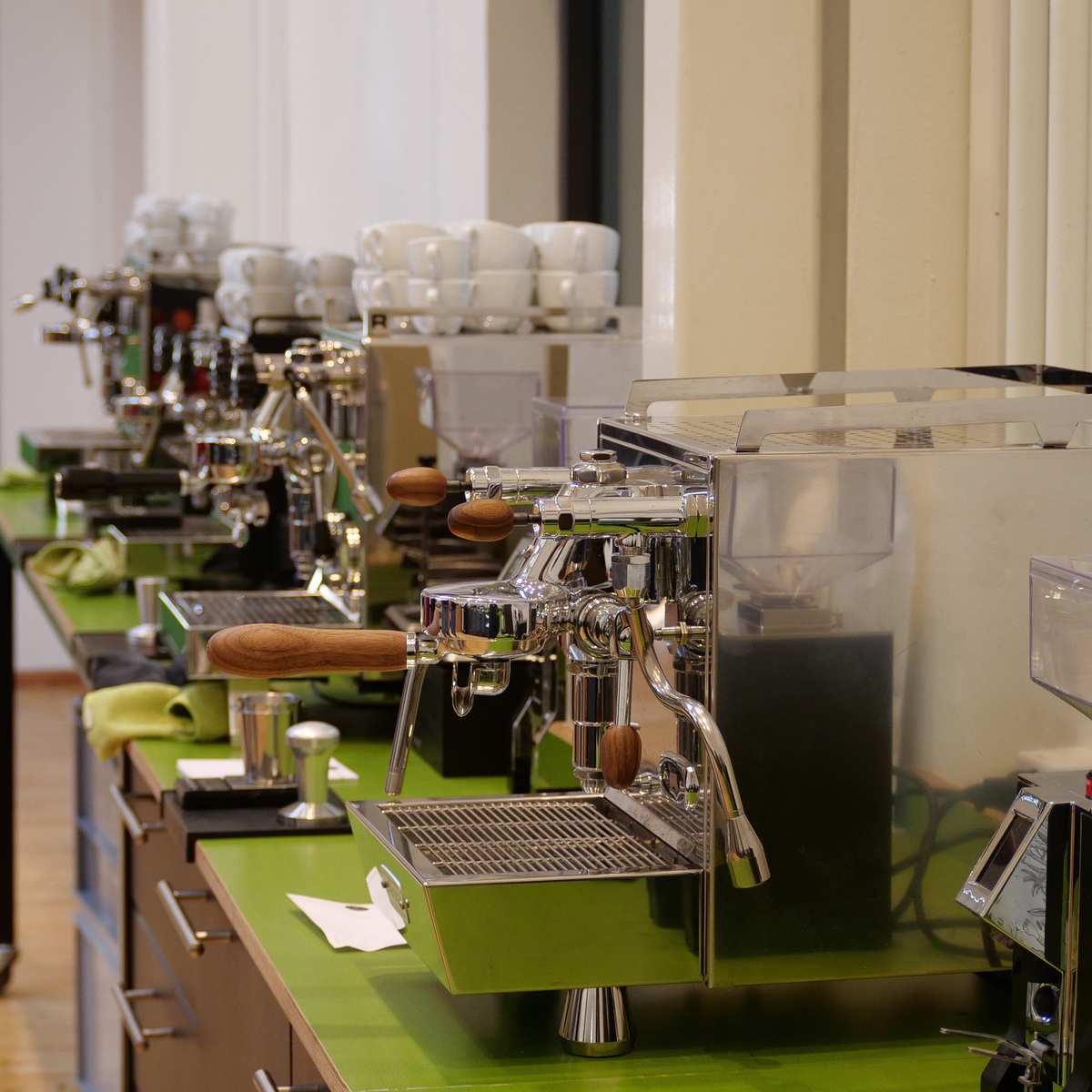
We have revised our power measurement protocol to ensure greater comparability and create transparency. To do this, we took a closer look at how energy labels are measured and critically questioned our own measurements.
It was important to us to develop values that represent everyday use and can make it more efficient.
The article explains how we measure, how the results come about, and introduces our equipment. We now measure espresso machines with all technologies. If a machine does not have a steam function, the corresponding measurement is omitted. If a dual boiler has no option to shut off the steam boiler, we continue without this measurement in the protocol.
Otherwise, we perform the measurement once with and once without the steam function.
Measuring Devices
Power Measurement
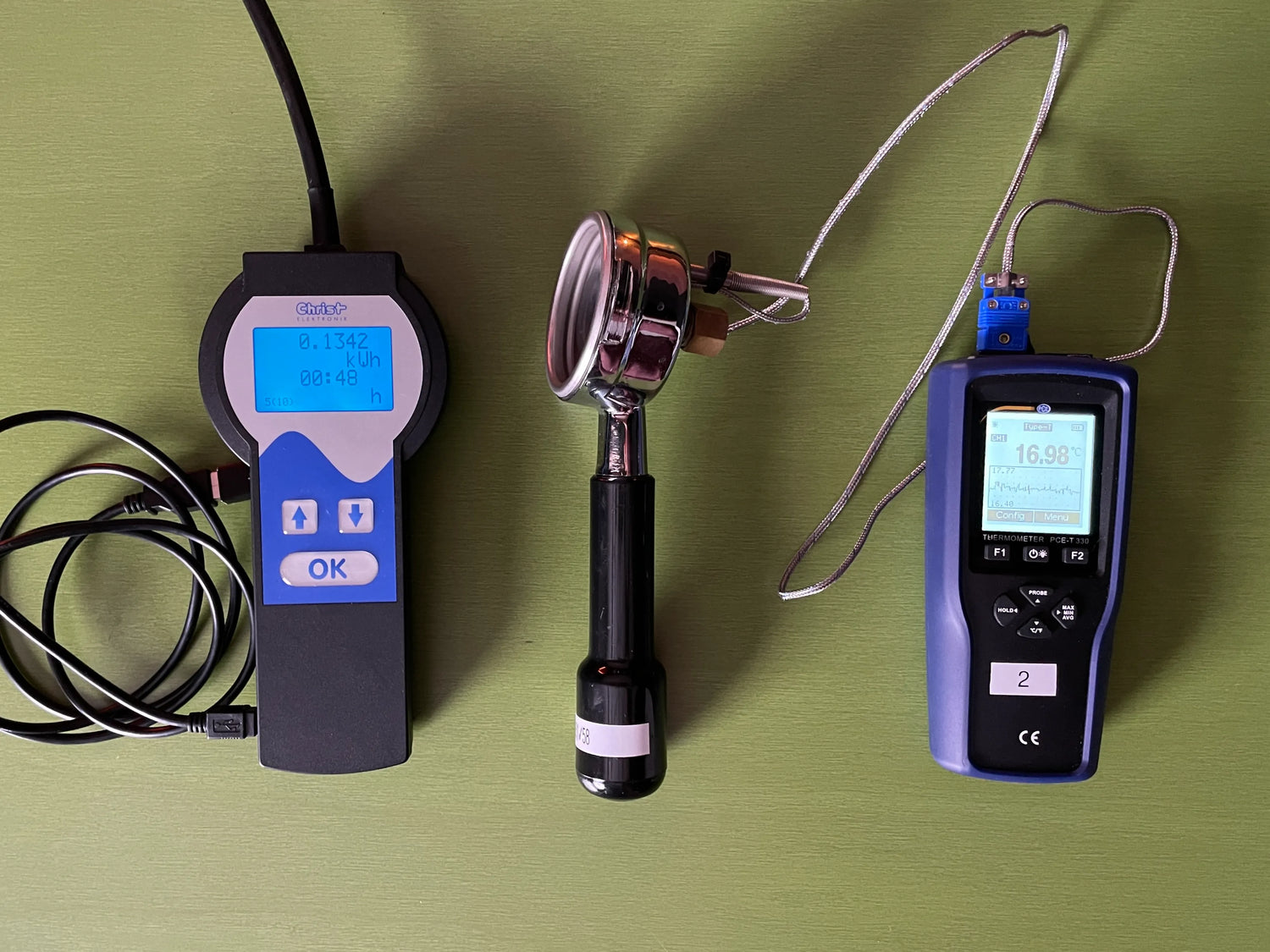
In order to achieve precise and reliable values, appropriate measuring devices are a prerequisite. That is why we have acquired three Christ CLM1000 Professional (Plus) units. The Christ CLM1000 Professional (Plus) provides second-by-second measured values for power consumption and energy consumption with a resolution of one tenth of a watt-hour. This corresponds to 0.0 Wh or 0.0000 kWh.
The measuring device transmits the measured values via USB and we can save and evaluate them as CSV.
Measurement Setup
Preparation
In our first power comparison protocol, we set a heating time in order to achieve high comparability. However, this does not correspond to actual use and penalizes machines that heat up faster and are ready to brew. Why should you wait 25 minutes at home when the machine is ready after 10 minutes?
Therefore, we try to determine empirically and in consultation with the manufacturers when the machine is actually at brewing temperature. The exchange with the manufacturer gives us a target value that we verify with our measurements (see temperature measurement protocol).
When is an espresso machine considered temperature-ready?
A machine is considered ready when the target temperature of 92 °C in the portafilter is reached with the first shot (pull shot). A previous 5-second flush with the portafilter inserted is performed to accelerate the warming of the portafilter (flush shot).
Depending on the machine and function, we determine the starting temperature with and without a steam boiler.
The heating time is taken into account for the power measurement. After heating, the pull power measurement begins.
Performing the Power Measurement

We perform the power measurement in parallel with a temperature measurement. For both measurements, the test machine must be "cold". For this, a rest time of at least 6 hours after last use is defined. The water tank is filled with water at room temperature (20 - 24 °C) to the maximum volume. The machine is unplugged and, when the measuring devices are ready, is plugged in and switched on.
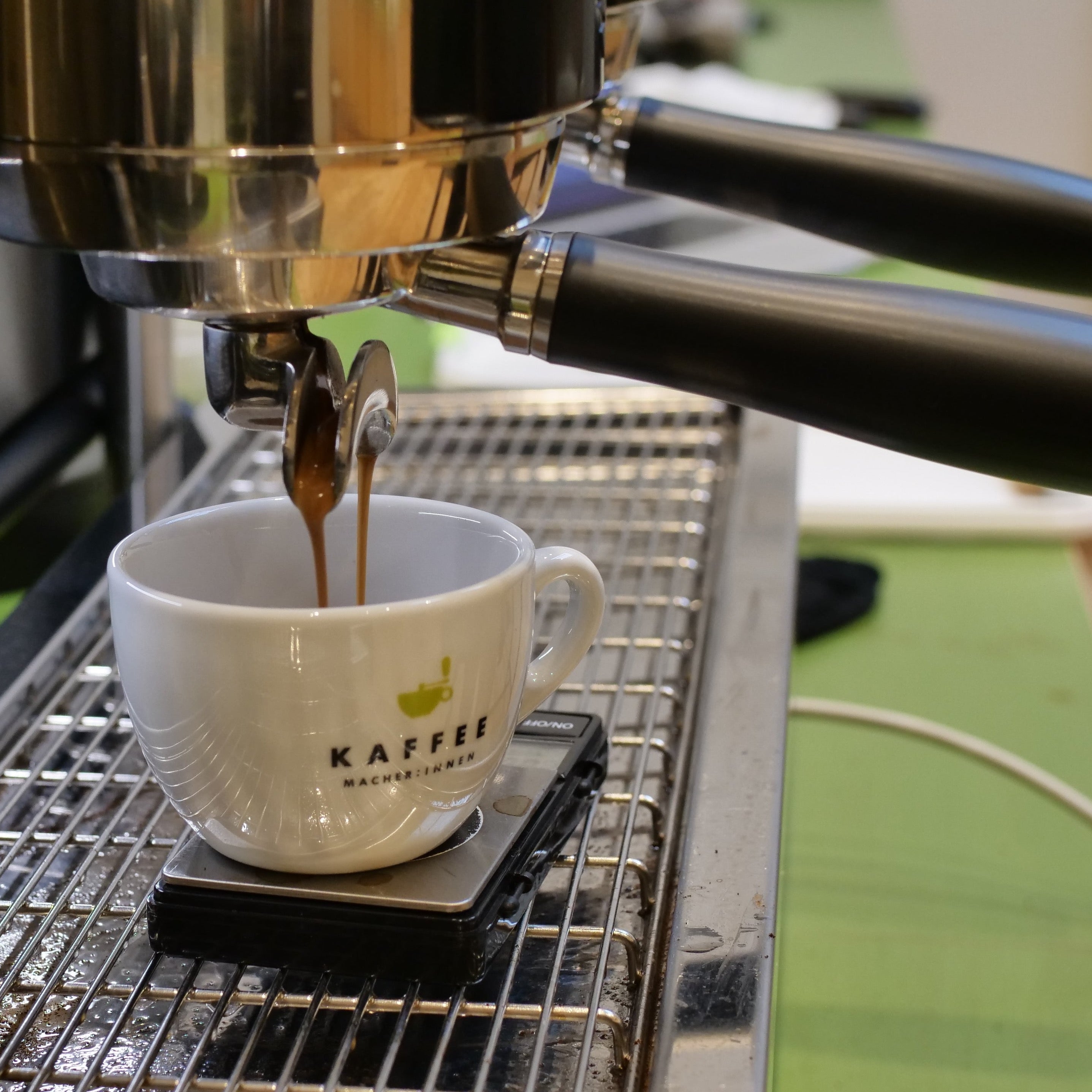
When the machine is ready after the predetermined time, 5 shots of 26 s ± 1 s are made (procedure for temperature measurement is covered in the temperature measurement section). Before the first shot, a 5 s flush with the portafilter inserted is performed once (part of the heating phase) and one minute is waited between shots. Subsequently, a 2 s flush is performed before each shot and then the shot is pulled. The two-second flush is also called "flushing" and simulates cleaning of the shower screen.
Then we dispense 5 x 70 g ±5 g of hot water from the hot water dispenser to simulate an Americano. Here we also wait one minute after each dispensing. If the machine has the option to adjust steam output, the steam dispensing is always measured at maximum output.
In a final phase, the energy consumption in "idle" mode is measured. For this purpose, we leave the machine on for at least 20 minutes.
One test machine, one test series
The data collection is performed on one test machine and in one test series. There may be slight control-related variations from machine to machine.
Evaluation of Power Measurement
For evaluation, we always take the timestamp and energy value from the CSV file and enter them in the measurement table.
Generally, the data is to be read as follows:
- End heating = espresso shot start,
- Espresso shot end = Americano start,
- Americano end = milk steaming start
- Milk steaming end = retention start
However, if there were pauses during the measurement, these are taken into account in the evaluation. Data points always consist of two values: timestamp t and consumption E at that time. tAA = 11:12:12 = start of heating time and EAA = 0 = start of heating
Heating
We take the first data point from the measurement and the data point that can be taken after the previously set time. Here a check is made to see if the first shot then starts.
Calculation: EA = EAE - EAA
Example: 0.1000 kWh = 0.1000 kWh - 0
Consumption Espresso Shots
Calculation: EE5 = EEE - EEA
Example: 0.0077 kWh = 0.1200 kWh - 0.1023 kWh
Calculation: EE1 = EE5 / 5
Example: 0.00154 kWh = 0.0077 kWh / 5

Consumption Hot Water
Calculation: EA1 = EHE - EHA
Example: 0.0050 kWh = 0.1250 kWh - 0.1200 kWh

Consumption Steam / Milk Steaming
Here we also note the value we set for the steam dispensing. For example: tD = 25 s
Calculation: ED5 = EDE - EDA
Example: 0.0100 kWh = 0.1250 kWh - 0.1200 kWh
Calculation: ED1 = ED5 / 5
Example: 0.0020 kWh = 0.0100 kWh / 5

Consumption Retention
By retention, we mean "immediately ready for use", i.e. neither standby nor energy-saving mode.
Calculation: EW = EWE - EWA
Example: 0.0150 kWh = 0.1450 kWh - 0.1250 kWh
Calculation: EW60 = EW / (tWE - tWA) * 3600 s
Example: 0.1800 kWh = 0.0150 kWh / (14:10:00 - 14:05:00) * 3600 s
Consumption Espresso, Americano and Cappuccino
For the calculation of an espresso as well as for the calculation of a cappuccino, we have included the heating time. We conducted a survey in our community in which 2700 people participated. This examined typical usage behavior. One finding related to regular heating and pulling of coffee: in most cases the machine is heated in order to then make one or two shots.
Therefore, we include the heating time in the consumption calculation for a shot.
Calculation Espresso: EE = EA + EE1
Calculation Cappuccino: EC = EA + EE1 + ED1
Consumption Coffee Maker Protocol (EKM)
In the older videos, our consumption information always refers to a heating time of 25 minutes and 5 shots with 1 minute pause between shots. So that we also have comparability to the old videos, we still provide this value as EKM.
Please note here that the older values may be comparatively too high for machines with faster heating times.
Calculation Coffee Maker Protocol: EKM = EA + EE5

Feedback and Measurement Standard
This measurement protocol has been tested in practice several times and has evolved through feedback from espresso machine manufacturers. Thanks for the thoughtful feedback to Holger Dreißig from Xenia Espresso as well as Julian Thomas and Patrick Lieser from Profitec.
Xenia uses the power measurement protocol to optimize and develop comparable values with other espresso machines. Profitec and ECM also use the measurement protocol in development and for collecting comparable values.
Do you have questions about our measurements? Have you already measured your own machines? We look forward to your feedback and comments.
If you want to learn more about energy optimization or other sustainability articles in the coffee industry, sign up here for our corresponding newsletter.
The Latest Publications with the New Power Measurement
An Overview of All Previous Power Measurements (As of 07.11.24)