




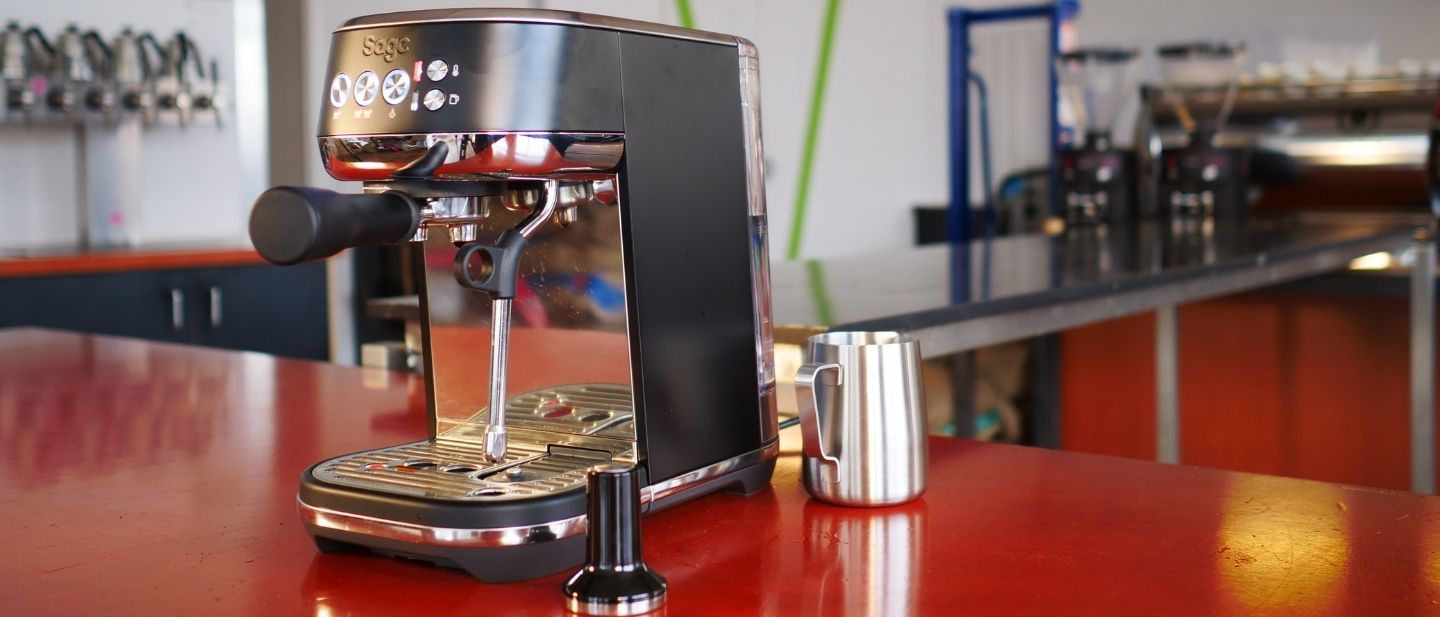

The Sage The Bambino Plus is the smallest espresso machine from Sage. Sage? Yes, the brand known in other parts of the world as Breville, releasing identical machines. The Sage Bambino Plus belongs to the class of thermoblock espresso machines. True to form, the Bambino Plus is ready to brew in about 3 minutes. Priced at around 330 Euros and Swiss Francs, the Sage Bambino Plus sits in the affordable tier of thermoblock espresso machines in our test series.
As with all thermoblocks, several questions arise regarding the Sage Bambino Plus:
Energy Consumption
If you want to buy an espresso machine based on energy efficiency, the Sage Bambino Plus is a great choice. Our testing procedure for power consumption is always identical: we use a smart adapter from MyStrom.ch. After a 5-minute warm-up phase, we pulled 5 double espressos. Following a two-hour standby period, we extracted another double espresso. Total energy consumption at that point was 0.08 kWh. For context: the Ascaso Steel Duo PID, also a thermoblock machine with an Eco mode, consumed 0.28 kWh in the same period.
Compared to dual-circuit (heat exchanger) machines, this footprint is remarkably low. The most efficient heat exchangers in our testing were the Xenia Espresso and Bezzera BZ10 at 0.48 kWh each, with the Bezzera Magica S trailing at 0.72 kWh.
Small, Compact, Lightweight, and Plenty of Plastic
The Sage Bambino Plus is small and compact, weighing in at just 7 kg. Being lightweight isn't necessarily a downside if a machine features suction cups or rubber grips at the base. Unfortunately, the Sage Bambino Plus lacks these features. When locking or unlocking the portafilter into the group head, you must hold down the machine body with your free arm. This is quite impractical, especially since you cannot place cups on top as a warming tray, given that you need that space to hold the machine down while locking in the portafilter.
Measuring 31 cm in height, 32 cm in depth, and 19.5 cm in width, it fits into almost any kitchen nook. However, take note: you will need a separate espresso grinder to prepare proper coffee. Make sure to account for grinder space in your setup plans.
The drip tray is equally tiny. We strongly recommend purging water through the group head after every extraction to keep the shower screen clean. After two to three espressos, the tray will be full. Although a small red float indicates the water level, it is of little help if it stays floating continuously at the max mark.
The black housing components of the Sage Bambino Plus are made of plastic. While it feels relatively high-grade for plastic, it remains plastic nonetheless. The upside: unlike steel-heavy dual-boiler or heat exchanger machines, there are no sharp metal edges.
Top-Tier Milk Frothing Performance
The Sage Bambino Plus has one standout strength: its milk steaming performance is virtually unmatched in this price bracket. With impressive steam power, this small machine easily steams milk in a large 0.6-liter pitcher—a task where several heat exchanger machines fell short!
For home baristas and beginners, the slow heating rate of the milk is a real advantage. It leaves ample time to create a microfoam vortex (rolling phase) and texture the milk into smooth latte art foam while eliminating larger bubbles.
Another highlight is the Auto-Steam functionality. A temperature sensor embedded in the drip tray reads milk temperature and dynamically controls the automatic steam wand. End temperature and milk foam density can be pre-set. We recommend selecting the medium setting for both. The microfoam quality produced at this setting is genuinely impressive.
Sage demonstrates what thermoblock technology can achieve in terms of steam power. If only the same engineering detail had gone into extraction temperature stability...

Espresso Disaster – Inconsistent Brew Temperature
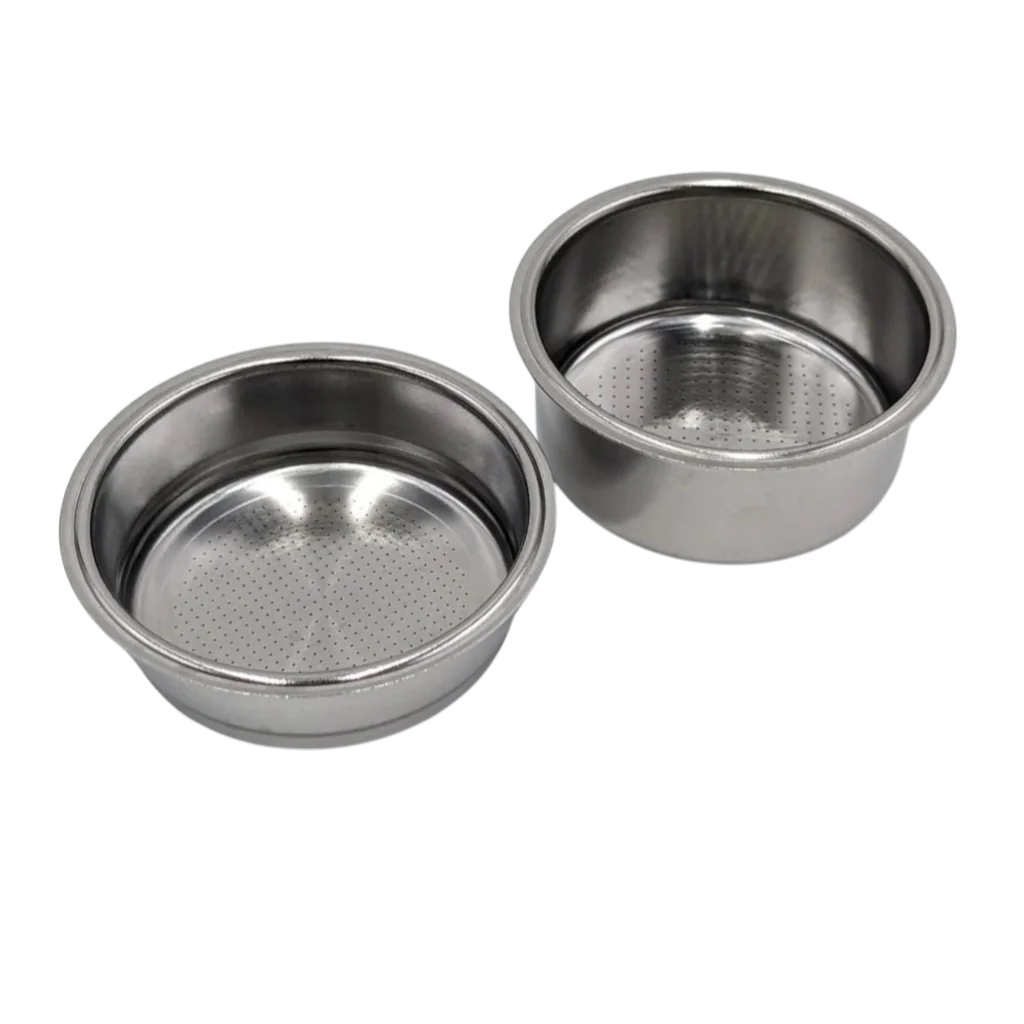
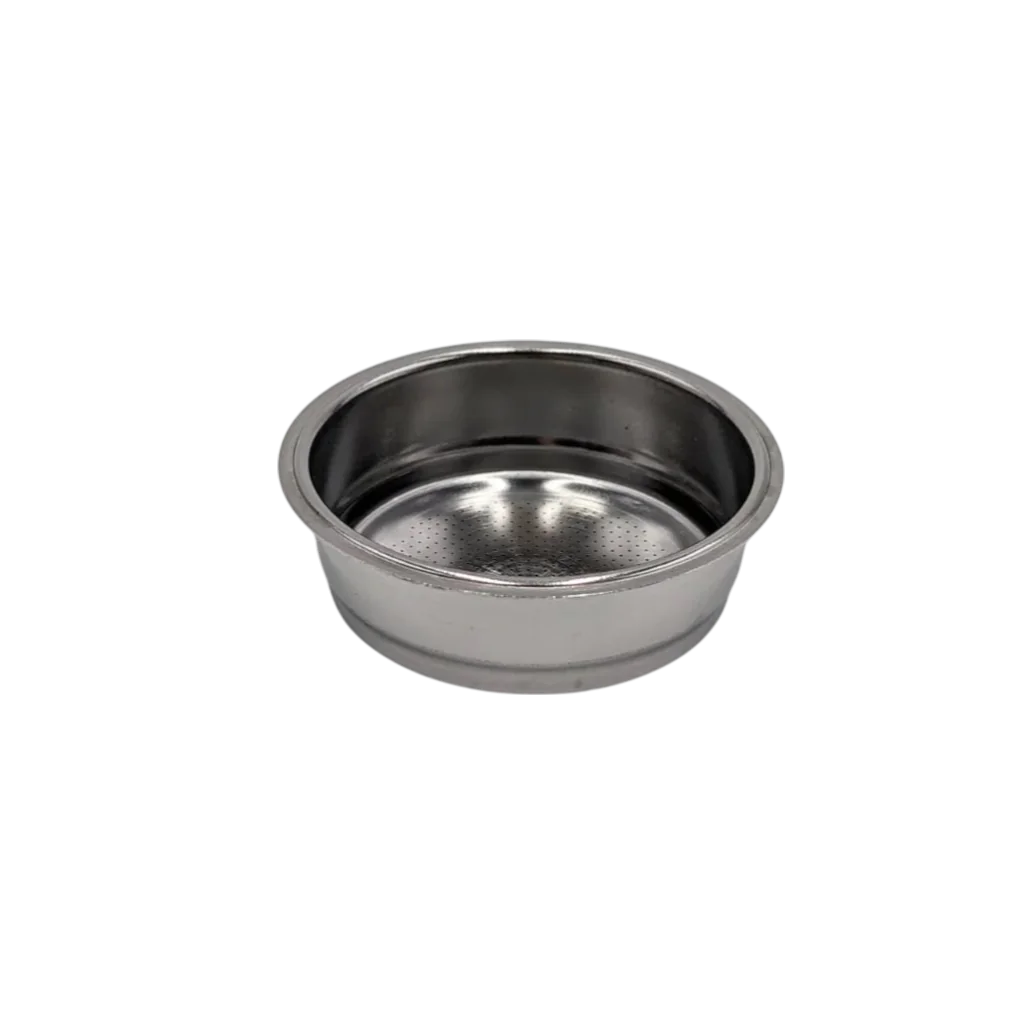
It is disappointing to see what passes for espresso coming out of the Sage Bambino Plus. Sadly, the cup quality is poor. Firstly, the included pressurized (dual-wall) filter basket prevents precise grinder calibration. Pressurized baskets are engineered for pre-ground, stale coffee rather than freshly ground specialty coffee beans. From the inside, it looks like a standard basket, but the coffee flows into an inner chamber with a single pinhole opening (~0.3 mm). The espresso is forced through this hole, creating artificial crema via pressure agitation (see our article on espresso crema). Fine-tuning your grinder setting or achieving a uniform extraction with a basket like this is practically impossible.
Since we have non-pressurized (single-wall) filter baskets at the Coffee Academy, we tested the machine's extraction profile with standard baskets. Unfortunately, this did not improve the flavor profile significantly. The primary culprit is extreme temperature instability.
An ideal average brew temperature for espresso is around 93°C (199°F). Quality espresso machines maintain this set point consistently throughout the shot duration. The Sage Bambino Plus fails here.

At the start of extraction, brewing temperature spikes to at least 98°C, reaching up to 102°C in some test runs. It then rapidly drops below 85°C. This level of thermal fluctuation is severe and rarely seen. In terms of sensory evaluation, this creates two unpleasant extremes: high initial temperatures cause harsh bitterness and an astringent, dry mouthfeel, while the sudden temperature drop yields sour, under-extracted notes. Overall, achieving a balanced extraction is impossible.
It is a real shame, but we cannot recommend this machine for brewing proper espresso.
Verdict on the Sage Bambino Plus
The Sage Bambino Plus is a great milk steaming device, but it falls short as an espresso maker. It is hard to understand Sage's design priorities here. Perhaps focusing on outstanding auto-frothing performance was intentional: milk masks astringency, bitterness, and sharp acidity effectively, adding natural sweetness to the cup.
Our dream thermoblock? Combining the milk steaming performance of the Bambino Plus with the thermal precision and extraction quality of the Ascaso Steel Duo PID.