











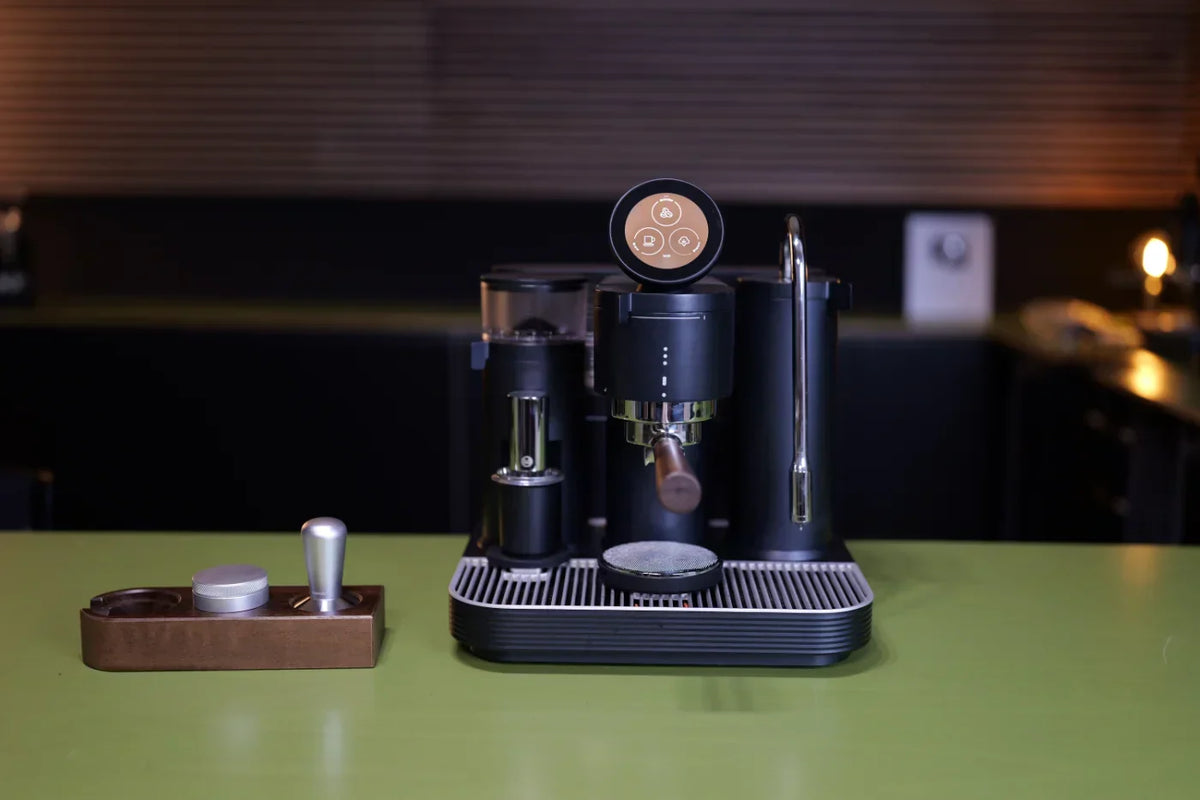

The Meraki espresso machine boasts impressive superlatives: a dual-boiler espresso machine with an integrated grinder, scale, and IoT features for under €2,000—it sounds almost too good to be true. And indeed, a closer look reveals that the machine might be failing precisely because it tries to do so much all at once. In the process, the Meraki loses sight of fundamental requirements necessary for a good espresso machine and a truly great coffee.
We tested the Meraki extensively using our expanded Kaffeemacher test protocol. In this review, we share our findings from a home barista perspective: from build quality, usability, thermal stability, and shot quality to accessories, noise levels, energy efficiency, steam performance, value for money, and of course, the integrated grinder. The result is an honest, critical review highlighting both the highlights and flaws of this supposed miracle machine—and warning prospective buyers not to be blinded by a long spec sheet.

Build Quality and Repairability – Light and (Lots of) Shadow
At first glance, the Meraki makes an impression. It features a modern industrial design with three distinct towers (grinder, group head, steam boiler) on a square footprint of approximately 37×37 cm. However, the housing is mostly made of plastic—no polished stainless steel surfaces, but on the upside, no fingerprints either. Unfortunately, several components feel flimsy, particularly when operating the brew lever or adjusting the display mount.
The drip tray itself is plastic with a capacity of roughly 650 ml. The aluminum cover plate must under no circumstances be washed in the dishwasher—which poses a problem, as cleaning the narrow slots between the grates by hand is cumbersome.
Overall, the tactile quality of the materials fails to convey a premium feel, further undermined by minor flaws on our test unit.
A frustrating quality issue was evident right out of the box: a chip of coating was already flaked off on the front panel. Using different materials also results in color inconsistencies—the upper section of the machine appears darker than the lower portion. Such flaws undermine its premium claims. Meraki should have either committed entirely to plastic or applied a significantly more durable finish.
When locking in the portafilter, we encountered another unpleasant surprise. Not only is the bayonet action stiff, but it produces a metallic, grinding noise reminiscent of sandpaper. You might expect this to smooth out after a few shots, but it doesn't. Every single insertion continues to set our teeth on edge.
When it came to repairability, our initial curiosity turned into outright frustration. The built-in grinder was unable to grind coarsely enough for our needs. To adjust the grinder's internal calibration, the entire unit must be disassembled.

A total of 13 screws had to be removed from the bottom, many of them hidden beneath adhesive pads and featuring different thread types. We even had to tear off rubber feet just to reach certain screws. The Meraki is clearly not built to be disassembled or repaired by the end user—quite the opposite. We were stunned by the immense effort required simply to access the internal components.
A nice concept on paper, but poorly executed regarding maintenance and long-term durability. If something breaks down the line (which is likely given the complex electronics), the machine risks becoming disposable. The manufacturer urgently needs to revise the design to make it service-friendly—currently, we wouldn't recommend any owner attempt self-repairs in the event of a defect.
Usability and Smart Features in Daily Testing
The Meraki aims to set new benchmarks. Operation centers around a main touch display, flanked by tactile levers and buttons (such as the brew lever). The interface offers extensive customization: dose weight, target liquid yield (espresso weight), brew temperature, pre-infusion, and even automated milk programs. Despite the abundance of features, navigation proved relatively intuitive—anyone with prior portafilter experience will find their way around quickly. Beginners will face a slight learning curve, but Meraki explicitly targets them: numerous automated features are designed to simplify the workflow and ensure consistent results.
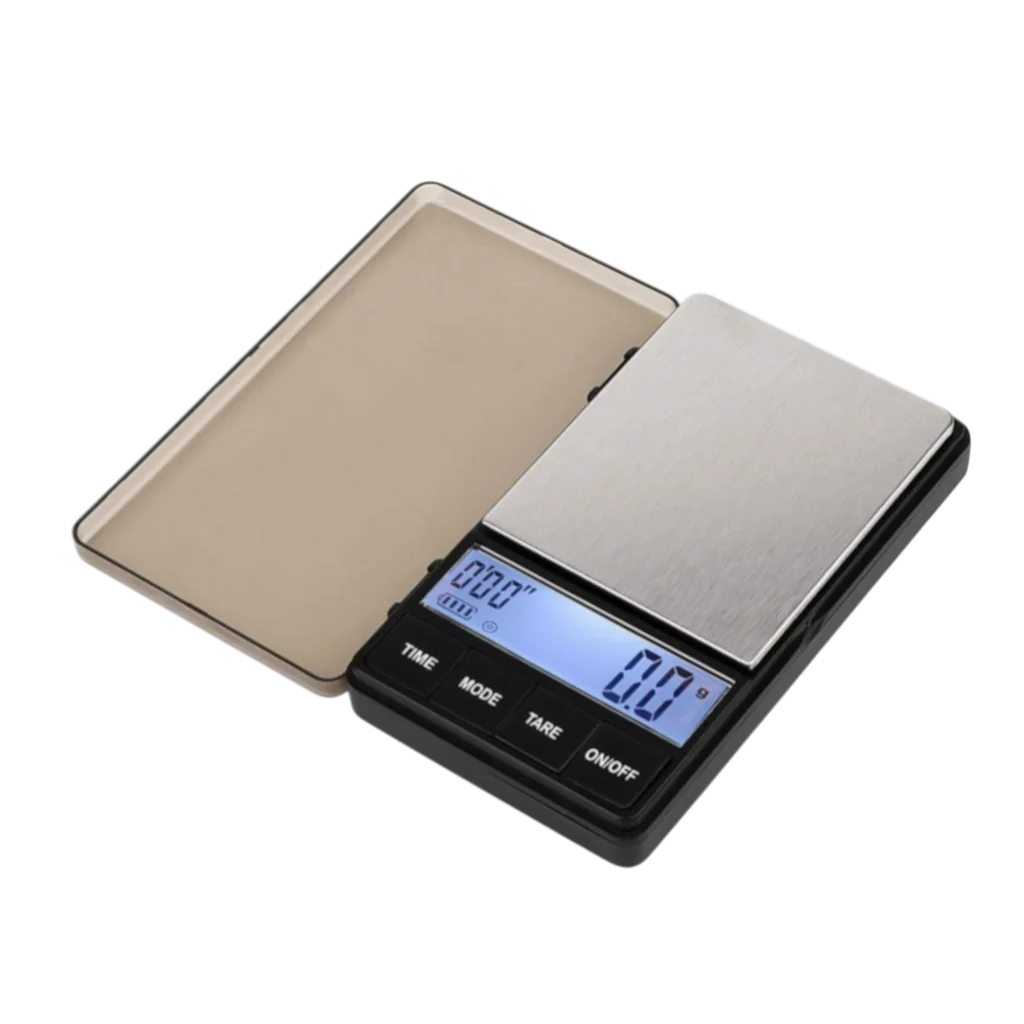
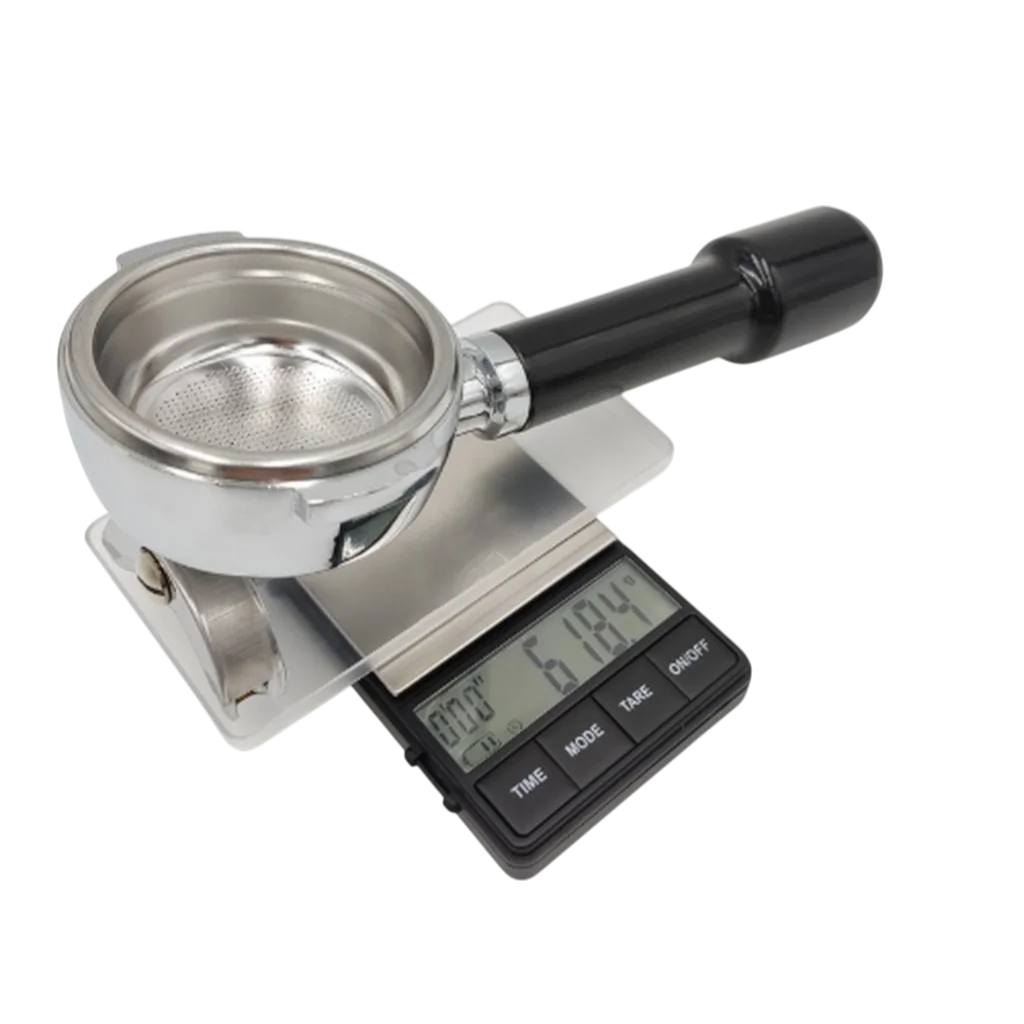
A standout highlight is the fully integrated scale technology. Scales are built in directly beneath both the grinder chute and the drip tray. This enables true Grind-by-Weight and Brew-by-Weight: you can preselect an 18.5 g dose, and the grinder stops automatically once that weight is reached. In testing, this worked remarkably well—variations generally stayed within ±0.2 g. While grinding by weight is neither exceptionally fast nor whisper-quiet, it eliminates workflow steps and proved very reliable.
Even more impressive was the Brew-by-Weight performance: we could program a target liquid yield of 40 g, and the machine stopped the extraction precisely as the shot hit 40 g in the cup. This gravimetric shutoff executed sensationally well during testing.
We have tested numerous espresso machines with integrated scales, including commercial setups. The Brew-by-Weight performance of the Meraki holds its ground against any machine on the market—especially in the home category, and even more so under the €2,000 price mark. There is simply no competition in this tier!
Variations of no more than ~1 g are an excellent result that future machines will have to measure up against. In practice, this delivers far more consistent results without requiring manual stopping—a major benefit, particularly for beginners, ensuring correct brew ratios every time. This is complemented by a pre-infusion phase that brews for a user-defined duration at 3 or 4 bar pressure.
Is the Workflow Good? Brew-by-Weight Certainly Is!
Before returning to the grinder, we must praise the Brew-by-Weight technology unequivocally: it is superb and sets a benchmark for integrated development. No clunky Bluetooth connections to external scales like competitor setups—just a seamlessly integrated scale that stops extraction right on target. Fantastic!
Why a machine equipped with a bean hopper forces users to grind into a dosing cup first remains baffling. The designers seem to have borrowed this from single-dosing workflows, where it makes little sense for a hopper-fed machine.
Beyond scale logic and display gimmicks, the Meraki includes true IoT capabilities. Prominently featured is its CoffeeSense™ technology with NFC: specific coffee bags come equipped with an NFC tag. Tapping the tag against the machine's sensor allows the Meraki to identify the bean and load a pre-set recipe—configuring grind size, dose, temperature, and shot parameters automatically. In theory, it sounds brilliant: no more guessing when dialing in a new bean, just "curated barista recipes" pulled from a cloud database.
In practice, however, the feature falls flat. Scanning a tag changed very little on the machine during testing. While dose and brew recommendations were displayed, experience tells us that standard parameters are merely rough baselines. And given our disappointment with the grinder (more on that below), we wouldn't trust automated grind recommendations blindly. In short: a neat gadget with limited practical value.
Similarly, app connectivity allows the Meraki to join your Wi-Fi network for firmware updates and remote control. We tested the app to save recipes and tweak settings. It functioned fine, but added little value since the touch display handles all key operations directly.
The programmable warm-up timer, however, is genuinely useful: scheduling a start time ensures the machine preheats automatically in the morning. Given the ~10-minute warm-up requirement, this is a welcome feature. Software routines like automated backflushing programs also work well.
Espresso Quality and the Flaws of the Built-In Grinder
The Meraki arrives with grand promises—yet ultimately, any espresso setup is only as good as its grinder. This is where the Meraki fails to deliver. On paper, it sounds promising: a conical burr grinder developed in collaboration with Timemore, stepless adjustment, marketed as "professional grade." We had hoped to find the quality proven in the Timemore Sculptor series (flat burrs, excellent particle distribution) inside the Meraki. The reality is disappointing.
Instead, it uses a basic conical burr set—not inherently bad, but certainly not the high-end mechanism we hoped for. Issues emerged immediately during grinding: the usable adjustment range is narrow and coarse, lacking fine-tuning precision. Despite a "stepless" dial scale (0–30), we frequently had to aim for imaginary points between markings just to achieve acceptable shot times.
We managed acceptable shots with dark roasts, but with medium to light roasts, the Meraki grinder fails to produce uniform grounds. Particle distribution is highly inconsistent: an excess of fines combined with coarse boulders leads to uneven extraction.
Particle Distribution of the Meraki Grinder:
With its broad primary peak and high fines ratio, the particle distribution metrics of the Meraki grinder rank among the worst we have measured—across more than 70 tested espresso grinders.

Cup quality suffered accordingly: while dark roasts were palatable, lighter coffees tasted sour and thin or astringent and over-extracted—classic signs of channeling caused by inconsistent grounds. In short: the built-in grinder severely handicaps overall espresso quality.
What makes this so frustrating is that the machine itself—group head, pump, boilers—has the foundation to pull excellent espresso if fed with a uniform grind. Temperature and pressure control perform well, and cross-testing with a quality standalone grinder yielded dramatically better results in the cup. Unfortunately, beginners relying on the built-in grinder will end up disappointed with their espresso through no fault of their own.
You could, of course, pair the Meraki with a separate high-end grinder. But realistically: who pays ~€1,800 for an all-in-one setup only to place a second grinder next to it? That defeats the entire purpose. The core appeal of the Meraki is unifying everything in a single footprint. Here, the concept trips over its own ambition. It feels almost tragic: Meraki clearly worked hard to design a feature-rich machine with great ideas—only to cap it off with an subpar grinder that bottlenecks the entire system.
Thermal Stability, Dual-Boiler Power, and Heat-Up Time
Prospective buyers will be pleased to learn that brew temperature control and steam power are genuine strengths of the Meraki. Inside, two separate boilers (350 ml for espresso, 550 ml for steam) are managed by PID controllers. During testing, thermal stability during extraction proved solid: the Meraki maintains set brew temperatures with minimal fluctuation—not quite commercial grade, but easily stable enough for consistent home extraction.

Only under extreme stress testing (consecutive shots under the WBC protocol) did shot temperatures drift slightly as heat saturated the housing. This lies far beyond typical home usage, however. The rotary pump also contributes to stability by maintaining a smooth, consistent ~9 bar pressure—quietly and reliably.
However, claims regarding heat-up time require clarification. The manufacturer advertises "3–4 minutes" to readiness—which is only true in that the steam boiler builds pressure after ~4 minutes. For the heavy group head and portafilter to reach true thermal equilibrium, significantly more time is needed. With group head heating set to maximum (70 °C Brewhead Temp.), it took approximately 8–10 minutes in our tests before the Meraki was fully preheated and thermally stable.
Steam performance pleasantly surprised us. The dedicated steam boiler produces powerful steam across three selectable intensity levels. On max power, this compact machine packs serious punch: a 600 ml pitcher of cold milk reached ideal temperature (~60 °C) in roughly 40 seconds. The resulting microfoam was silky, glossy, and fine-pored—easily cafe quality.
The automated milk frothing also proved impressive after minor adjustments: the steam wand features an integrated temperature sensor that halts steam delivery automatically once target milk temperature is reached. In practice, proper pitcher placement is key; once positioned correctly, auto-shutoff executed reliably without overheating. This feature is particularly helpful for latte art beginners. Overall steam power earns high marks.
Minor criticism targets the four-hole stainless steel steam tip: milk residue baked onto the tip easily, requiring scrubbing despite claims of an easy-clean coating.
Noise Levels and Energy Efficiency
In a home kitchen, noise emissions matter. Here, the Meraki delivers a major strength: thanks to its rotary pump, extraction is whisper-quiet. We recorded ~57 dB during brewing—the sound of espresso dripping into the cup was louder than the pump itself! Both objectively and subjectively, the Meraki ranks among the quietest espresso machines we have ever tested. Only when grinding coffee beans does the internal grinder make itself heard with a high-pitched, loud whine.
Energy efficiency is a mixed bag. The smaller boiler capacities (0.35 L and 0.55 L) keep baseline energy draw modest. However, because both boilers remain active simultaneously, the machine draws noticeable power. Unlike some dual-boiler setups, the steam boiler cannot be disabled independently. In idle standby, our measurements recorded a continuous draw of roughly 70 W (~0.07 kWh per hour).
Included Accessories

The Meraki scores major points here: the included accessory package is remarkably generous and high quality. It includes:
- A heavy, precision-fit 58.5 mm tamper
- A precision 18 g stainless steel basket
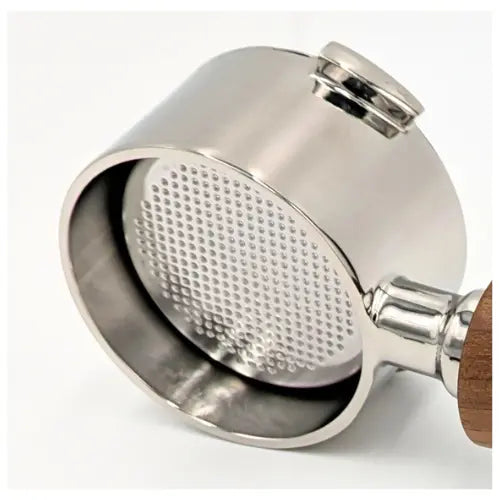
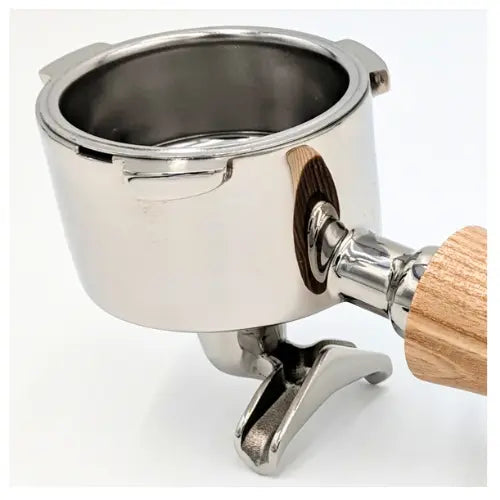
- A bottomless portafilter with an interchangeable double-spout plate
- A magnetic dosing cup & wooden tamping station
- A distribution tool / leveler disk
- A blind filter, cleaning brush, water filter & hardness test strips
The quality of these accessories is impressive. We offer unreserved praise here: few machines arrive better equipped out of the box.
Test Results: Meraki Espresso Machine
Price-to-Performance and Verdict: Over-Promised and Under-Delivered?
The Meraki espresso machine is an ambitious project. It promises everything: a feature-packed dual boiler, smart scale logic, IoT connectivity, automated convenience—all at a disruptive price point of roughly €1,800. On paper, it sounds unbeatable. But real-world testing reveals a harsher truth: many features that sound impressive fail to deliver top-tier performance or introduce new headaches.
Certain aspects of the Meraki are fantastic—such as gravimetric Brew-by-Weight execution, the whisper-quiet rotary pump, and powerful steam performance. But ultimately, espresso quality in the cup is what matters most, and here the complete package falters due to its weak grinder. Add poor repairability and build quality flaws, and the Meraki feels like a flashy compromise that dazzles on paper but falls short in daily execution.
In every review we ask ourselves: "Would we recommend this machine to a close friend?" With the Meraki, we must answer no. While we applaud the spirit of innovation, the compromises (grind quality, repair difficulty, plastic feel) are simply too severe.
Imagine the Meraki without an integrated grinder, built with higher material quality, priced around ~€1,400—that would be an extraordinarily compelling product! Paired with a standalone single-dosing grinder (~€500–€700), you would have a phenomenal setup for around €2,000.
Verdict
The Meraki espresso machine is full of ambition but trips over its own scope. It attempts an all-in-one balance it cannot fully maintain. Buyers seduced by the spec sheet may end up disappointed. Rather than a price-to-performance killer, it delivers an uneven mix of brilliance and unfinished execution.
The core ideas behind the Meraki deserve praise (especially Brew-by-Weight), but it falls short of an unreserved recommendation. If you're curious, test it firsthand or pair it with an external grinder. For everyone else, more reliable options exist for hassle-free home espresso enjoyment.
TL;DR: The Meraki features impressive highlights (integrated scale, quiet rotary pump, great steam), but is held back by a poor built-in grinder and terrible repairability. Don't be blinded by feature lists—focus on what ends up in your cup!