



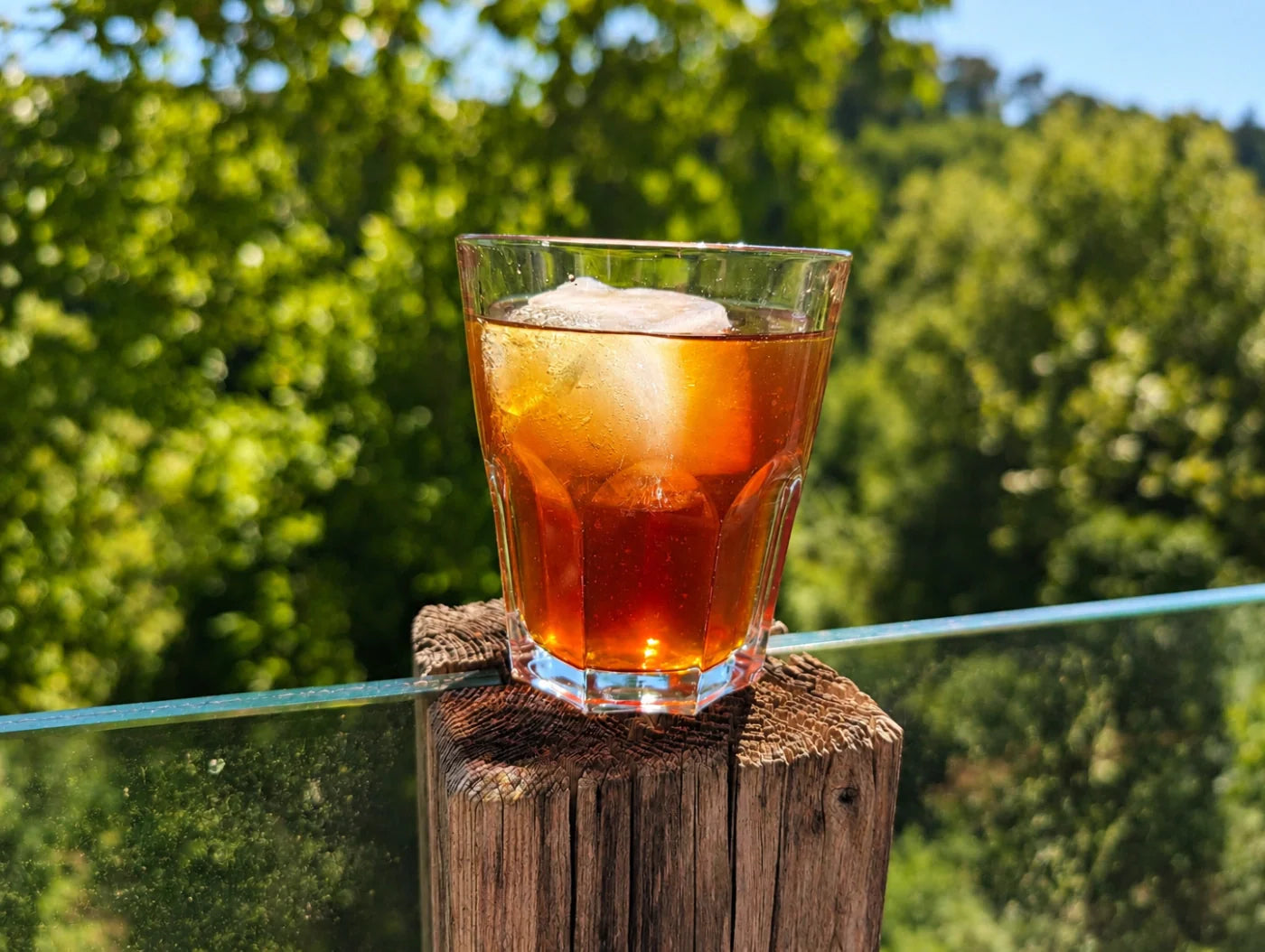

As soon as temperatures rise, the same question pops up again: How do you actually make really good cold coffee? Cold brew is the answer that has been making the rounds through every café and living room for years. Brewed cold, steeped for hours, supposedly easier on the stomach and stronger than anything else. Much of that is true. Some of it is marketing that doesn't hold up to scrutiny.
We show you how cold brew works, what science actually says about acidity and caffeine, and how to get results with simple equipment that clearly beats store-bought bottles. At the end, twelve recipes from coffee professionals across the German-speaking region await.
What is cold brew?
Cold brew is coffee extracted with cold water over many hours. It's not brewed with hot water and there's little agitation. The coffee grounds simply sit in cold water for 12 to 24 hours and slowly release their soluble components. It's a pure immersion method, similar to a French press, just cold and much slower.
You need to distinguish two things that are often confused:
Cold drip is not the same. Here cold water drips slowly through a bed of coffee instead of the coffee sitting in water. This produces a different, often clearer profile and more concentrated result, but requires special equipment.
Flash brew (also called Japanese iced coffee) is not cold brew at all. Hot water is brewed over ice, so the coffee is extracted normally with hot water and cooled down immediately. This is an important distinction we'll come back to, because it makes a big difference to the cup's flavor.

Does cold water really make coffee less acidic?
That's the most persistent promise around cold brew. And it's more complicated than you might think. A widely noted study from Thomas Jefferson University directly compared hot and cold brewing of the same coffee. The result: the measured pH value was practically the same for both methods, in the range of about 4.85 to 5.13. So cold brew is not fundamentally low in acid, at least not in terms of pH.
What researchers did find: hot-brewed coffee contains more titratable acids. So there are more acid molecules at play that your tongue perceives, even if the pH is similar. That's exactly where the honest explanation lies. For many people, cold brew tastes softer and rounder because certain acids and bitter compounds are extracted less well at lower temperatures. It's a question of perceived acidity, not dramatically lower pH.
Does cold brew have more caffeine?
You hear that all the time too: cold brew is a caffeine bomb, two to three times as strong. A 2017 study looked at the factors of time, roast level, and grind size. The short answer: it depends, and the blanket multiple isn't accurate.
Caffeine content depends heavily on roast level and grind size, and most importantly on the ratio in which you brew. Cold brew is often made as a concentrate, with lots of coffee on little water. If you drink this concentrate straight, you get plenty of caffeine. If you dilute it before drinking, which is the norm, it quickly evens out. So the high strength usually comes from the brewing ratio, not from a magical property of cold water.
Antioxidants, the second health aspect often mentioned, behave similarly straightforwardly: at light roasts the content is about the same in hot and cold brewing, at dark roasts the hot method actually extracts more.
Cold brew basic recipe step by step
The nice thing about cold brew: you don't need special equipment. A French press works perfectly because it's an immersion vessel and filter in one. Alternatively, a large glass or pitcher and a hand filter to strain it.
The parameters in detail
Cold brew forgives a lot, but if you want really good results, you adjust four variables. The most important is grind size: over the long contact time, it's the biggest lever for strength and clarity. Then come ratio, brewing time, and water.
| Parameter | Practice value | Effect |
|---|---|---|
| Grind size | coarse (like French press) | Biggest lever for clarity and strength, prevents bitterness |
| Ratio | 1:10 to 1:13 ready to drink, 1:8 and coarser as concentrate | Determines strength; concentrate is diluted before drinking |
| Brewing time | 12–16 h, maximum 24 h | Longer brings barely more extraction, but more bitterness |
| Water | cold, soft | Soft water keeps the coffee clear and balanced |
How strong the final drink really is can be gauged by dissolved solids. Cold brew often ranks higher here than filter coffee, especially as a concentrate. That's exactly why it's usually diluted before drinking.
Since grind size is the central variable, a reference helps. Green marks the right preparations; the bars below show the setting values for our hand grinders. Cold brew is all the way on the right in the coarse range.

From extra fine to extra coarse – in micrometers (µm), with the matching brewing methods and the setting values of our hand grinders from the zero point. Cold brew is far right in the coarse range.
© Coffee makers · kaffeemacher.ch · kaffeemacher.de. Grinder values from our own measurements (Comandante) or kaffeemacher.ch (C5); Slim 3 & Kinu approx. Micron ranges for guidance.
Cold brew or flash iced coffee instead?
This is where it gets interesting, and this is where most guides don't dare to go. Cold brew is not automatically the best way to make cold coffee. Cold extraction does extract fewer bitter compounds, but also fewer of the fine, fruity and floral aromas that make a good specialty coffee worth buying. If you have a light, complex coffee, cold brew often means you're missing out on exactly what you paid for.
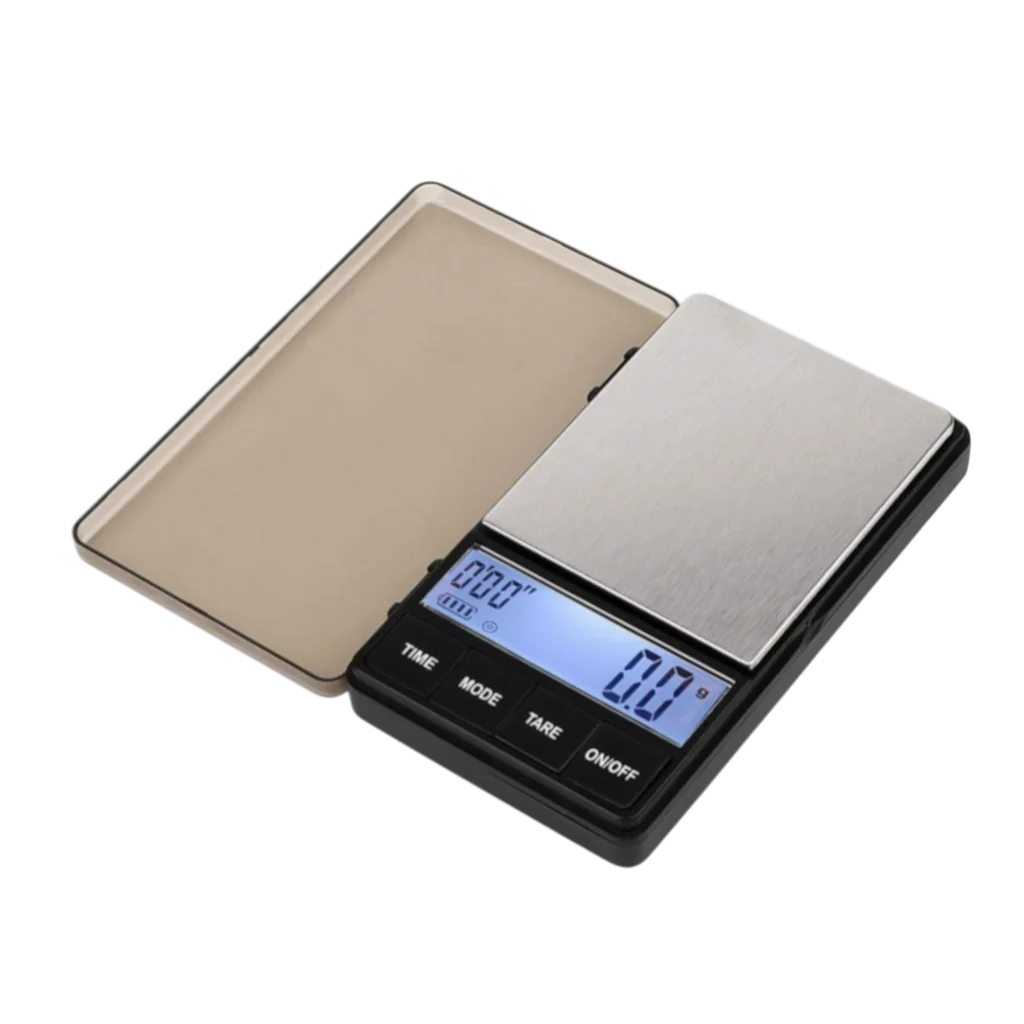
The alternative is called flash brew or Japanese iced coffee: brewed hot over ice. Hot extraction brings the full range of flavors, and the ice locks them in immediately. The result is clearer, livelier and fruitier, but also less stable. With flash brew, you simply weigh your ice cubes and adjust the brewing amount: for example, pour 150 g of ice cubes directly into the dripper, then brew 150 g of water over 30 g of coffee using a V60. It's important to brew slowly, but with plenty of turbulence, so you can achieve high retention even with the small amount of water.
"An interesting middle ground: add one-third of the brewing water hot. Then add the remaining two-thirds cold and subsequently refrigerate for eight hours. This way we unite the different worlds. We first extract the components that only dissolve with hot water. Then we intentionally tap into the power of slow extraction. The result is a more complex coffee that combines acidity, liveliness and the typical deeper, darker notes."
Clarity, filtering and shelf life
How clear your cold brew becomes depends on filtration. The metal sieve of the French press lets fine particles through, which gives more body but also slight cloudiness and dustiness. If you prefer it clearer, additionally pour through a paper filter.
About shelf life: cold brew belongs in the refrigerator. Once ready to drink, it usually keeps well for two to three days if prepared cleanly. A concentrate can keep five to seven days depending on the method. In the end, trust your nose and eyes, not wishful thinking.

Which coffee works with cold brew?
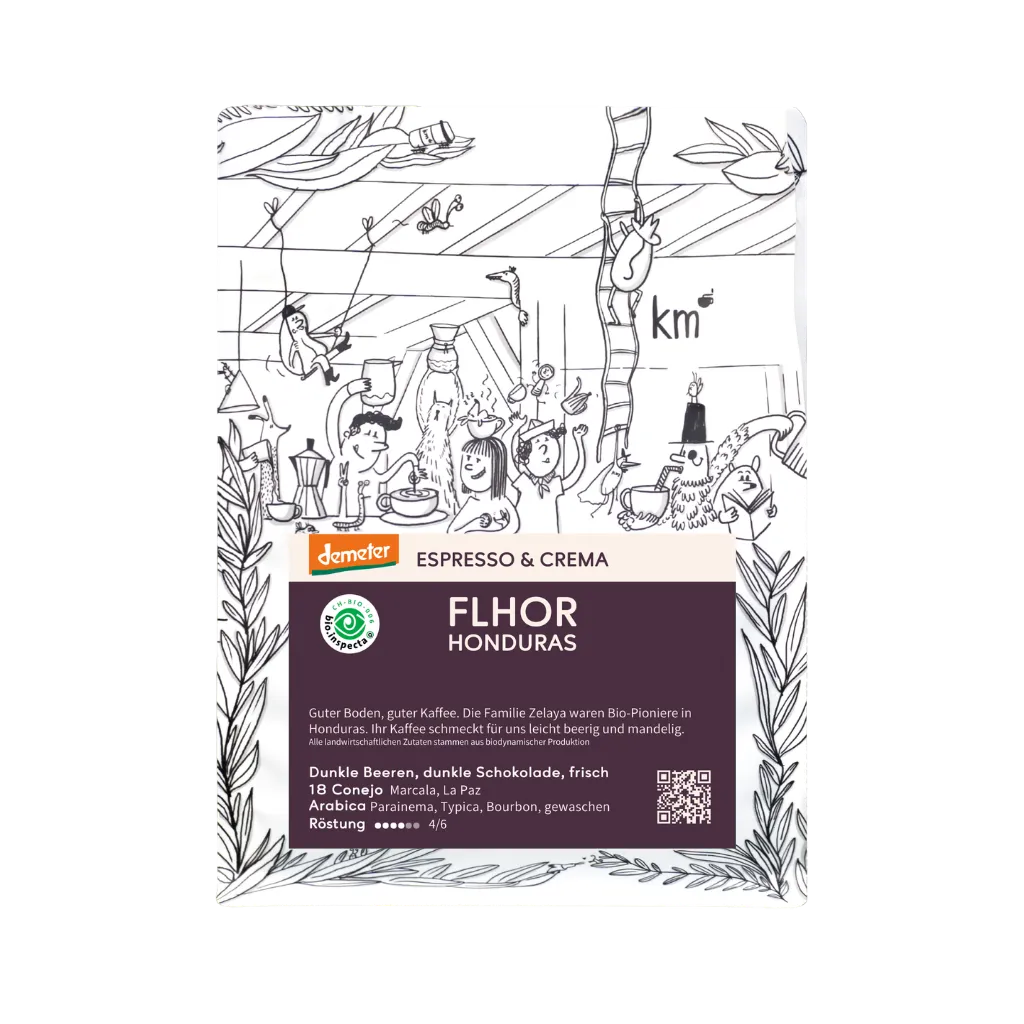
Basically cold brew works with almost any coffee, but not every coffee shows its best side. Medium roasts with notes of chocolate, nuts and caramel come out very round when cold. Very light, fruity filter coffees often develop their potential better in flash brew. A good, straightforward introduction is our Amigo filter coffee, which tastes soft and balanced.
Chocolate and caramel, plus a pleasant fresh acidity that balances very well with the coffee's sweetness. Medium to high body with a long-lasting caramel aftertaste.
Common mistakes
Ground too fine. The most common mistake. Over hours, fine powder overextracts, the cold brew becomes bitter and cloudy and is hard to filter out. So grind coarsely.
Too little coffee. Because immersion extraction is inefficient, cold brew made too weak tastes watery. Better to use a bit more coffee and dilute at the end.
Steeped too long. More than 24 hours brings hardly any gain, just more bitterness. Stay within the stated window.
Wrong coffee for the purpose. Cold extracting your expensive, light favorite coffee can be wasteful. For complex coffees, flash brew is worth looking into.
Twelve cold brew recipes from coffee professionals
A good cold brew base tastes great on its own. But it's also the perfect base for summer drinks and cocktails. We asked twelve professionals from the German-speaking region for their favorite recipes: barista champions, Brewers Cup champions, and cupping masters. A highlight to taste comes from world champion Emi Fukahori.
Emi brews on a large scale: 500 g of coarsely ground coffee to 5 L of cold water with a hardness of about 80 ppm. Put everything in a tank or bucket and let it rest in the refrigerator for 20 hours. Then pour through a coarser pre-filter and then through V60 filter paper until all solid particles are really removed. Serve over ice, optionally a chocolatey pulp natural from Brazil, a fruity natural, or a floral washed coffee. Emi Fukahori is Brewers Cup world champion and founder of Mame café in Zurich.
From negroni to tonic to mojito: the complete collection with twelve pro recipes from barista champions and competition winners can be found in our article Cold Brew recipes: 12 cocktails & drinks from pros. All build on the base you've brewed above.
Conclusion
Cold brew is simpler than marketing would have you believe, and more honest when you set the myths aside. Less acidic is mainly a matter of perception, more caffeine a matter of ratio. What counts are four parameters: grind coarsely, set up cleanly, stay within the time window, and choose the right coffee. If you have a light, complex specialty coffee, you should try flash brew. For everything chocolate-and-round, cold brew is a summer no-brainer. Find the right coffee in our filter coffee assortment, and once the basics are down, move on to the twelve recipes.