




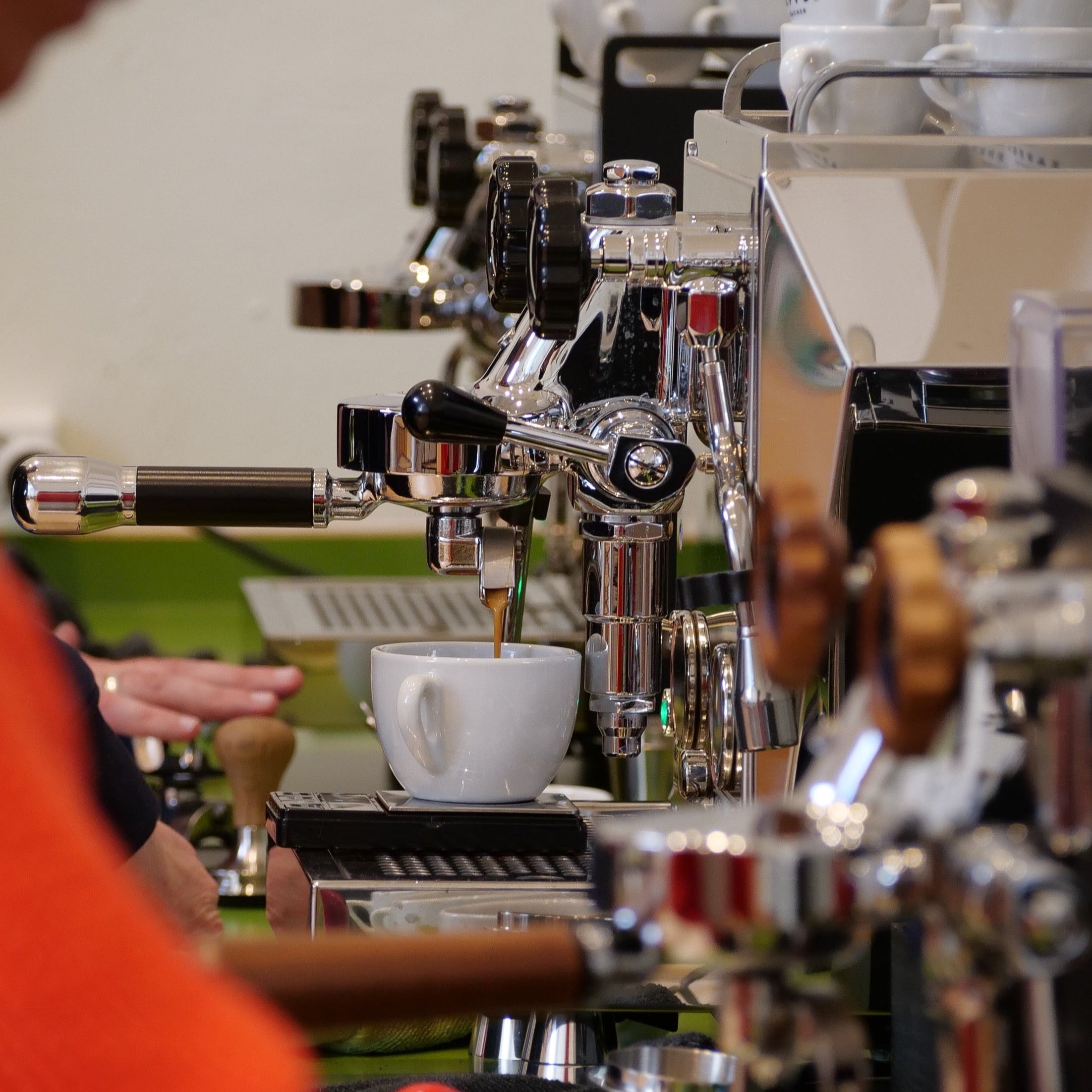
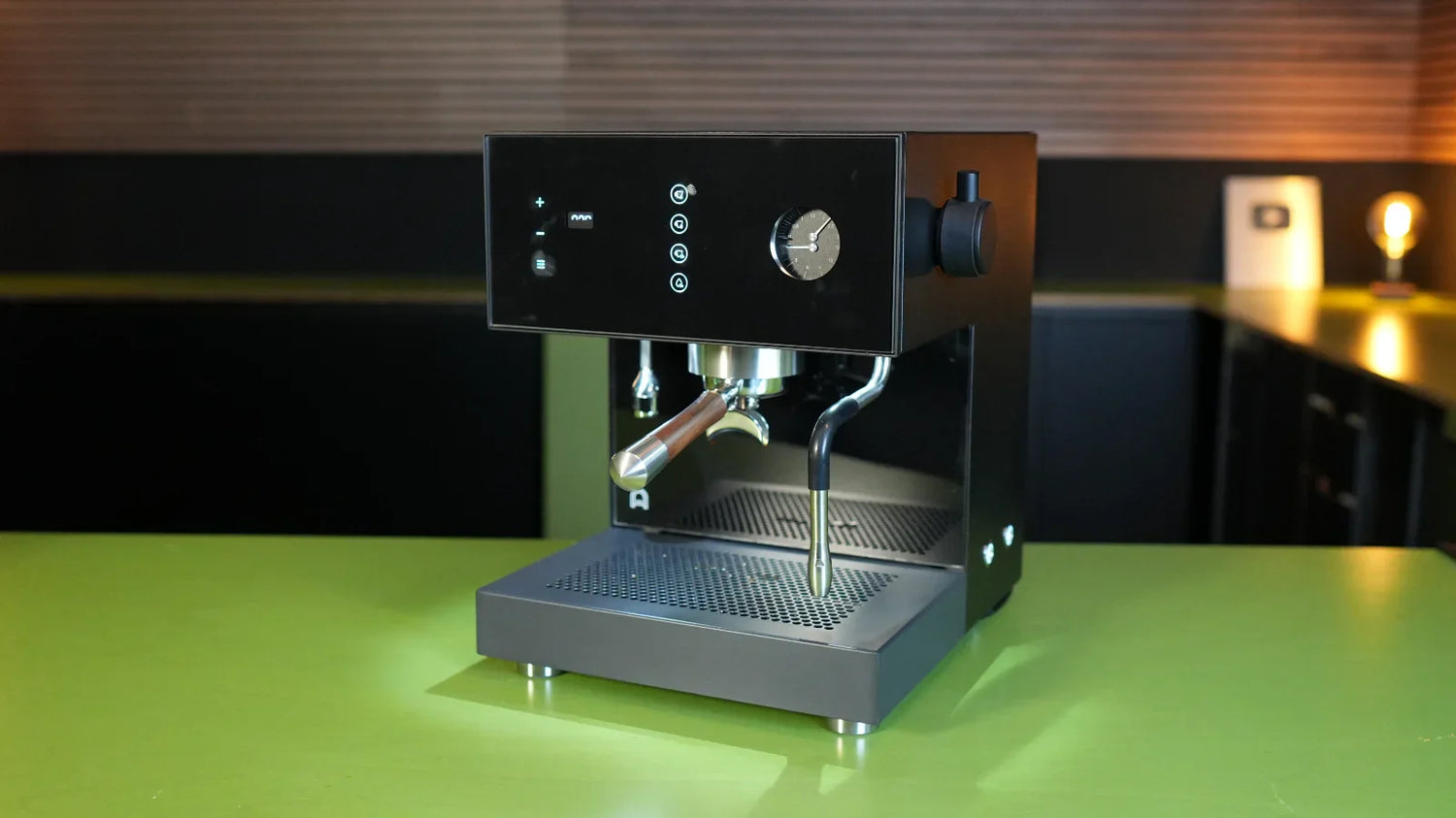

There are moments when a new player enters the field and should make established market leaders nervous. The Arkel Coast is exactly such a candidate. We're dealing with a dual boiler espresso machine that doesn't come from the classic Italian forges in Milan or Florence, but is manufactured entirely in Portugal.
With a price of around 2,300 euros, it positions itself in an extremely exciting segment. It's more expensive than classic entry-level machines, but significantly cheaper than cult objects from La Marzocco, which often cost double. But how much machine do you really get for this money?
We tested the Arkel Coast over several months, looked at various iterations, and can now say: the model before us impresses and has nothing to hide compared to the manufacturers mentioned above.
Design & Dimensions: Architecture for the Kitchen
When the Arkel Coast stands in front of you, with its compact rectangular shape, it looks like a constructed object. It consistently avoids roundings or retro references. With a height of 40 cm and a width and depth of around 37 cm, it's an almost square monolith that stands calmly and composed in the room.
The front appears like a façade – a smooth, dark glass surface that also represents the control panel. The material underscores this massive claim: the machine tips the scales at a proud 23 kilograms. Dark metal dominates, everything appears strict and disciplined. In our tactile check, we found no sharp edges, and the finish feels very high-quality.
In detail, the Arkel Coast shows functional design with small quirks:
- The drip tray: It's huge and a real work highlight. We measured a capacity of 1.2 liters. Coming from a small machine, you'll enjoy not having to empty the tray after every shot.
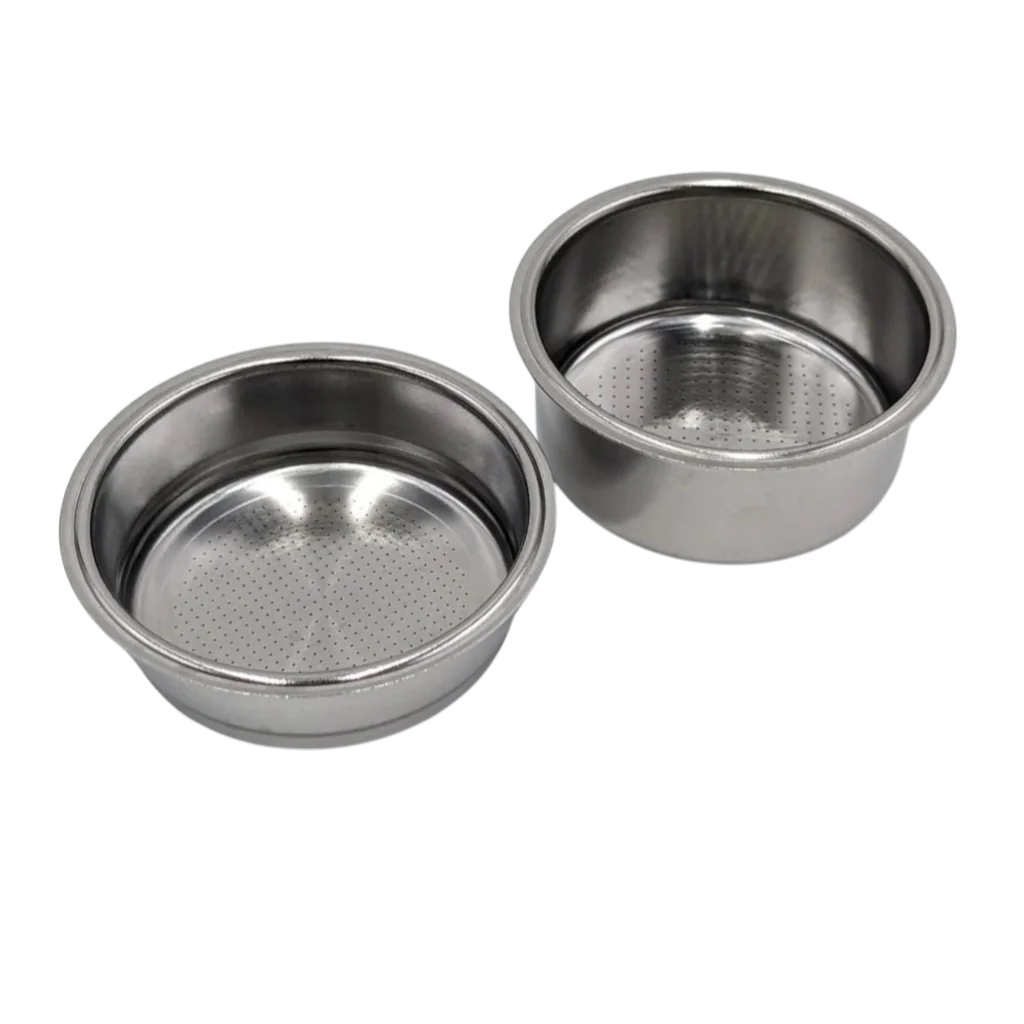
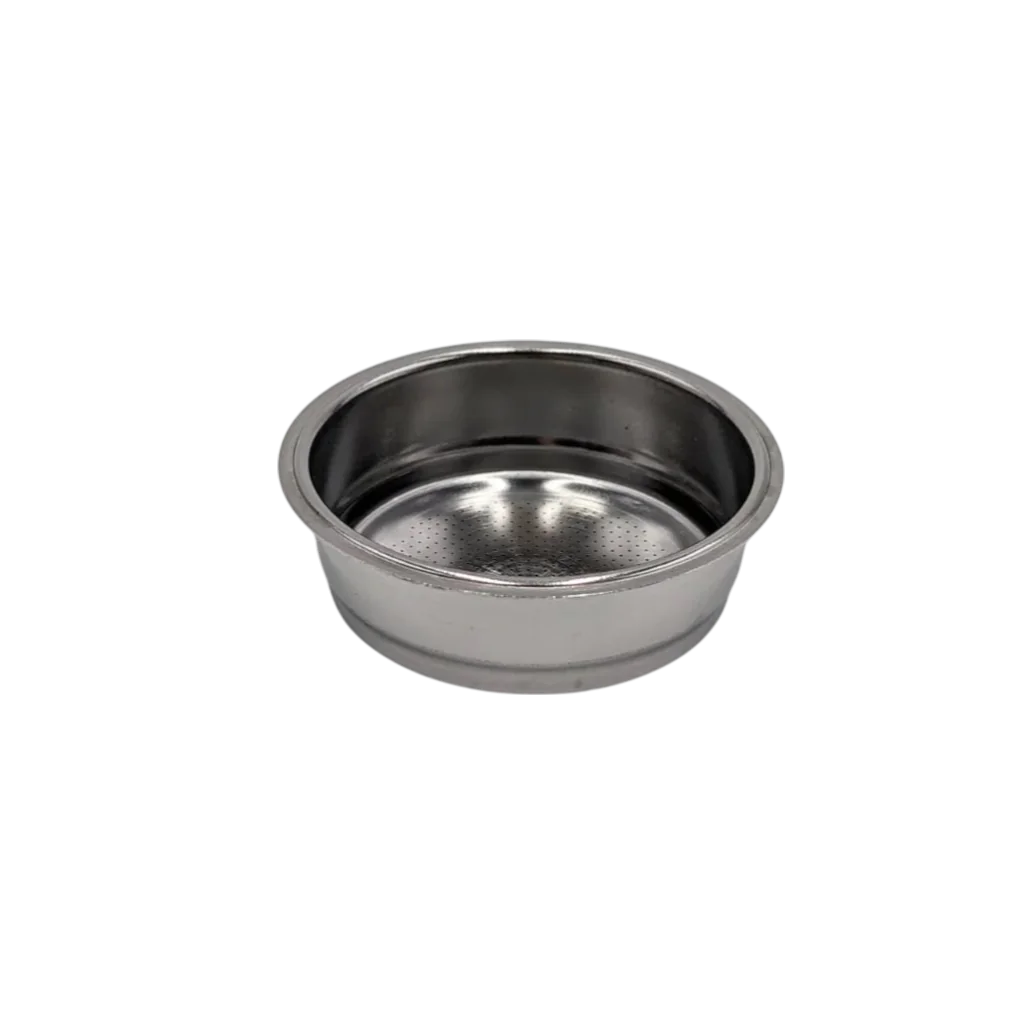
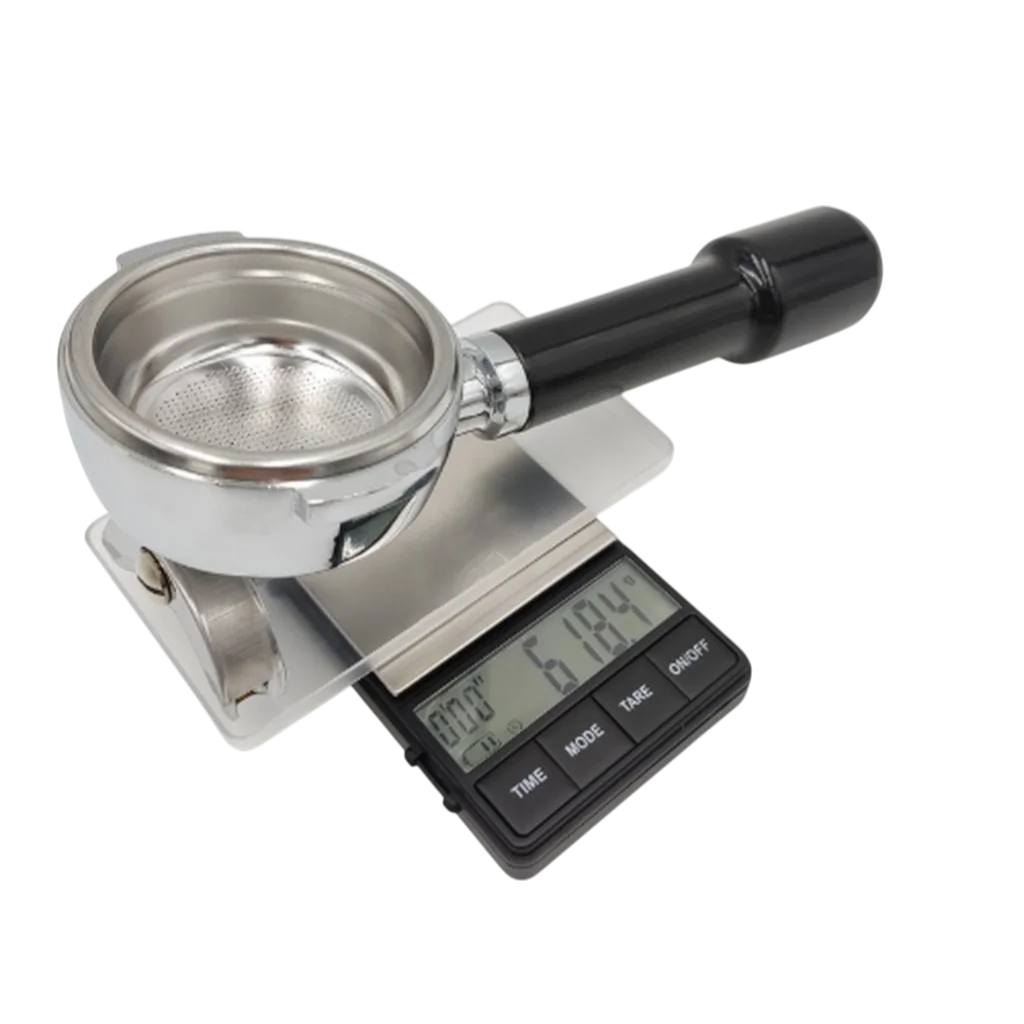
- The portafilter: The handle is very thin. It looks elegant but may not feel solid in everyone's hand. On the other hand, the fit is technical perfectionism: between the included tamper and the basket, there's minimal play of only 0.65 millimeters – a top value.
- The workflow drawback: The strict architecture demands a small price in operation. Because the group is so deeply and discreetly integrated, you initially have to bend over almost completely to lock in the portafilter. You can't see the receptacle directly; locking it in requires some practice and muscle memory.
We rate the quality of the Arkel Coast at 7.5/10 points and the accessories with high-quality tamper, portafilter, and basket at 8/10 points.
Technology & Heat-Up Time: A Sprint for a Dual Boiler
Anyone familiar with classic E61 dual boilers knows the waiting game: often 25 to 30 minutes pass before these chrome beasts are fully heated. The Arkel Coast breaks with this unwritten rule. In our test protocol, we were pleasantly surprised: After just 12 minutes, the machine is ready to go.
How does it manage this? The engineers rely on a 0.7-liter coffee boiler that is integrated directly as a saturated group into the brew head. This is supported by an auxiliary heater designed to ensure temperature stability from the start. The 1-liter steam boiler at the back operates completely independently and can be switched separately. This means: if you only want an espresso in the morning, you can leave the steam boiler off and save time and energy.
These 12 minutes are a real practical advantage. Want a spontaneous espresso in the morning? No problem with the Arkel Coast. It poaches in the territory of fast thermoblock machines, but offers the thermal mass of a real boiler. But to be fair: while it outperforms many boiler colleagues, there are now machines with thick-film heaters that are ready after just five minutes. So the Arkel is very fast for its design, but not the absolute record holder on the market.

Energy Measurements in Lab Check
Testing every espresso machine includes an impartial look at the electricity meter in our protocol. Here the Arkel Coast clearly benefits from the fast heat-up time, but shows two faces – depending on how you use it.
- Without steam: If we keep the steam boiler off – i.e., in pure espresso operation – we measured extremely low consumption: only 0.14 kWh for heating and the first shots. This is an excellent value, almost at the level of small single boilers. On our efficiency scale, it would score a strong 8 out of 10 points in this scenario.
- With steam: If you add the steam boiler, thermal mass takes its toll. Total energy consumption for the same scenario (heating plus five shots) increases to around 0.25 kWh to 0.29 kWh. This places it in the lower middle range – 4 out of 10 points on our scale.
The efficiency of the Arkel Coast is literally in your hands: use the steam boiler toggle switch consciously, and you have one of the most economical machines in its class in your kitchen.
Taste & Espresso Quality: When Physics Meets Craftsmanship
Let's talk about what matters most: what ends up in the cup at the end? How does the espresso taste when we brew with the Arkel Coast? Of course, this depends on bean selection and execution. But the Arkel Coast provides the foundation.
The Temperature Profile: A Character with "Rise"
A stable temperature is the basic requirement for good taste. In our detailed lab analysis, the Arkel Coast shows very specific behavior here. Once warmed up, it hits the target temperature of 93 degrees almost perfectly – we measure an average of 92.87 degrees in steady state. This gives full marks in the "target achievement" cluster. But be careful with the first espresso in the morning: the "first shot" averages about 1.5 degrees below the target temperature. A blank shot with hot water through the portafilter makes sense so the temperature is right on point from the start.
It gets interesting during the shot. We observe a thermal "rise". Unlike many machines whose temperature drops slightly toward the end, the Arkel's temperature rises during extraction by almost 2 degrees (Intra-Shot Rise). This is technically not a defect, but has sensory consequences: heat at the end of extraction emphasizes bitter compounds. The profile thus seems somewhat "more aggressive".
You also need to know the offset: we found that the display reading doesn't exactly match the temperature at the portafilter. At a set 92 degrees, about 93.5 degrees reach the puck. This is physics, not a problem. Since this offset is constant, you can simply adjust your thinking: set the display one to two degrees lower to reach your desired temperature.


Lab Detail Analysis (Excerpt from Protocol)
In our protocol, the Arkel Coast receives 6 out of 10 possible points for temperature protocol. This is solid in our quite demanding test, especially since the machine loses most points in the WBC protocol.
1. Cluster A: Everyday Practicality (4.0 / 5.3 pts)
Part 1: Cold Start / First Shot (2.0 / 3.3 pts):
Average Shot 1: 91.40 °C vs. Average Shot 3–5 (Steady State): 92.87 °C. Difference: 1.47 °C.
The first shot is just under 1.5 degrees cooler than steady state. This is just within the range for 2.0 points but on the edge. A blank shot eliminates this delta.
Part 2: Target Achievement / Calibration (2.0 / 2.0 pts):
The machine hits the target temperature perfectly in warm state. Full marks.
2. Cluster B: Intra-Shot Stability (1.3 / 2.7 pts)
Analysis Shot 5 (Sec 8–25): Starting at 92.13 °C, ending at 94.03 °C.
Temperature rises almost 2 degrees during extraction. According to rule V2.1, a "slight rise" is rated more harshly than a drop due to sensory disadvantages (bitterness).
3. Cluster C: WBC-Performance (0.7 / 2.0 pts)
The Arkel safely stays within the 3-degree window for household machines but shows a drifting character upward, rather than staying on a constant line like professional machines.
Flow Control as Taste Tuner
The Arkel has a powerful tool on its right side with a flow controller for taste improvement or quality assurance. The technology behind it is not a simple needle valve that just throttles inflow. Arkel uses a bypass system in the latest version. When you move the paddle, you open a bypass and deliberately divert excess pressure. The pressure gauge always shows you the effective pressure on the coffee puck.
This opens three scenarios for taste:
- Gentle Pre-infusion: With the vibration pump, pressure naturally builds up a bit more slowly. With the paddle, you can enhance this effect and gently pre-wet the coffee at low pressure, which especially helps light roasts tame acidity and avoid channeling.
- Braking bitterness: Here's where we circle back to temperature. If you notice the espresso might get too bitter toward the end due to rising temperature, simply use the paddle to reduce pressure – down to 6 or 4 bar. This reduces the extraction rate at the end and makes the espresso rounder and sweeter.
- Shot Repair ("The Savior"): My personal workflow highlight. You've set the grinder wrong and the espresso shoots through way too fast? Instead of dumping it, spontaneously regulate the pressure down to 6 or 7 bar. This artificially extends contact time and saves the shot. The espresso may not be perfect, but is often still surprisingly good and absolutely drinkable.
Solid temperature performance and additional flow control are powerful tools for pulling very good espressos shot after shot. The Arkel Coast achieves 7 out of 10 possible points in the espresso potential category.
Brief Note on Volumetrics
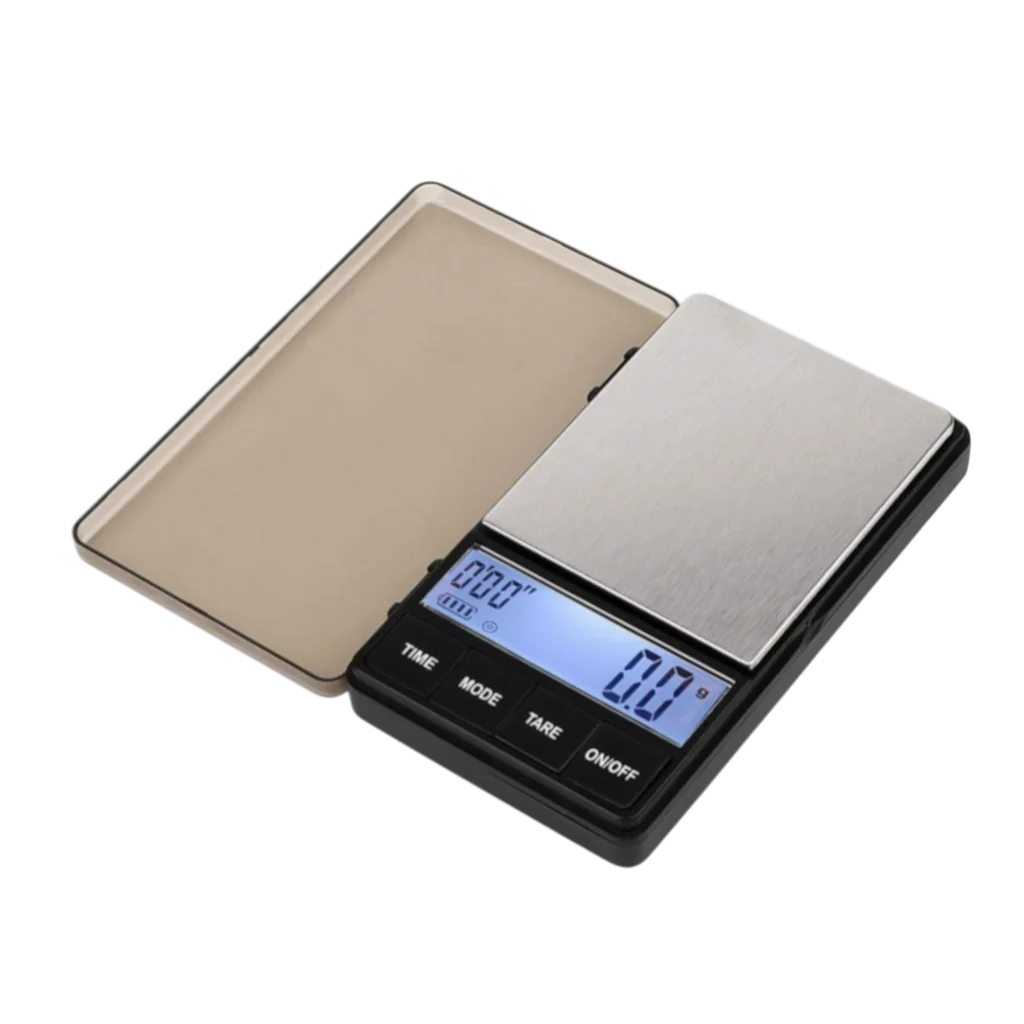
Please don't rely on the time-based automation for taste. Since the machine only measures time (e.g., 25 seconds) and not volume, results in the cup vary enormously once you change the grind or use the paddle. For reproducible taste, there's no way around using a scale. Time-based dosing is better than no dosing. And once the grind is properly set and you work consistently
Steam Power: The Fog Machine
If you like cappuccinos, you'll love this machine. The steam boiler has serious power. In our test, it took only 23 seconds to heat a large portion of milk to 60 degrees. Michel aptly called the system a "fog machine". The foam is fine-pored and the steaming process hardly falters even after many consecutive 0.6-liter pitchers.
This is excellent steaming performance that the Arkel delivers: 8 out of 10 points in our test protocol.
Cleaning and Maintenance
One point often forgotten is maintenance. The Portuguese thought of this. There's a special drain valve at the bottom of the machine with which you can completely empty the boilers if you want to descale them yourself. You read that right! Basically, we advise you NOT to descale espresso machines with boilers yourself at home. Descaling is necessary from time to time even with very soft, constantly filtered water. But for residue-free descaling, most espresso machines must be extensively disassembled and the boiler opened, otherwise the descaling liquid remains in the machine.
Not so with the Arkel: the drain system lets you completely empty the boiler. And with that, you can easily do the descaling yourself. That's worth real money. A descaling service every two to three years quickly costs 200 to 300 euros! When comparing prices with other classic machines on the market, you can deduct quite a bit from the Arkel's ongoing costs over a five-year period and put it directly into the machine instead.

Catering Potential: Ready for the Club Event?
We're often asked whether you can use such machines for events, weddings, or the proverbial club gathering. The Arkel Coast sends mixed signals here but is fundamentally an exciting candidate for mobile use.
On the plus side are the brute steam power and the huge drip tray. If you have to pump out cappuccinos in rapid succession, you'll love not having to empty the tray every five minutes. The temperature stability with many consecutive shots also makes it robust. At 23 kg, it's also still transportable without needing a shipping company right away.
However, there's a catch for professional continuous operation: The Arkel Coast has no fixed water connection and the drip tray can't be connected to the drain – though it is very large. You're dependent on the 2.5-liter water tank. With high throughput, you need to constantly monitor the fill level and refill. For your private garden party or small catering, it's top-notch – for high-frequency business, it lacks the water tap. But if you can live with that, you get a real workhorse by your side. In a small café, however, the machine would be in the wrong place.
Conclusion
The Arkel Coast is a challenge. A high-quality dual boiler espresso machine manufactured with components from Portugal and Europe, and thanks to flow control, it cuts the mustard against machines like the Micra, Zuriga, or Mozzafiato.
Good everyday temperature stability and contact persons in the DACH region make it an attractive espresso machine, and the steaming performance is second to none. We're very impressed with this espresso machine debut from Portugal and are already looking forward to the next announced model called "Tide".