




We coffee people often use the phrase "It's just like wine!" when we want to explain something about coffee. But does the comparison between these two luxury goods really hold up? Are there really so many similarities?
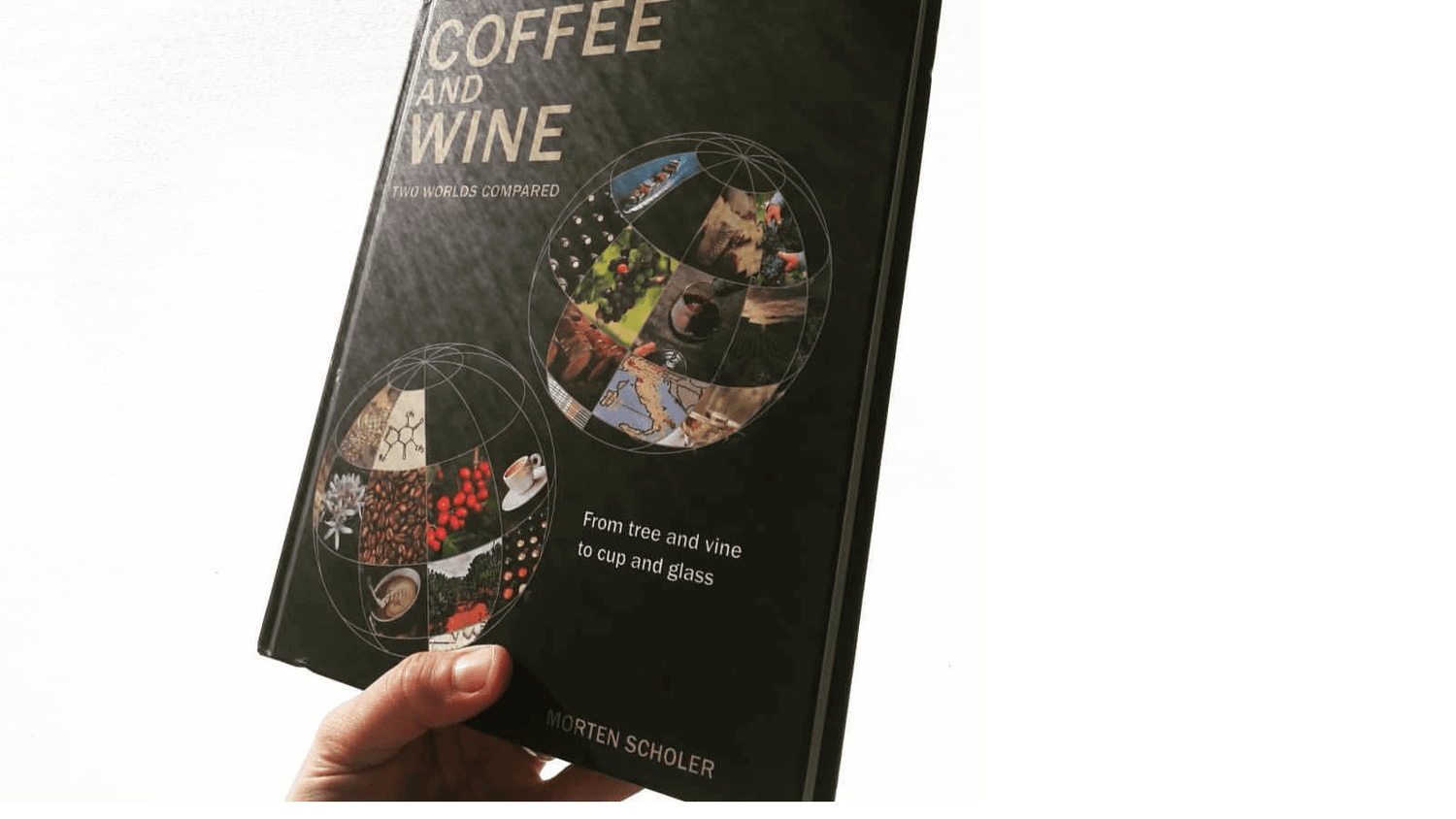
In September 2018, I bought the book pictured above, "Coffee and Wine" by Morten Scholer. The author compares the two luxury goods as precisely as no one has done before him. Using hundreds of examples, he shows that the two products are only superficially very similar, but when we dig deeper, we find far more differences than similarities.
This may hurt some of us coffee people a bit. But does it hurt the wine people too? I don't think (yet). The urge to often compare coffee with wine probably comes strongly from the coffee corner.
Recently, I held a coffee tasting for laypeople, which is always highly exciting. I tried to mix extremely unusual coffees with the familiar ones. We had coffees from Brazil, Kenya, Ethiopia, and Central America, different processing methods, and different ages and roast levels. To show how different the coffees are, I said: "If we were drinking wine here, these would probably be a Riesling, a grape juice, an Amarone, a Chardonnay, and a Pinot Noir." Everyone smiled—the reference to wine terminology was understood.
Would wine people now say: "This wine tasting is like coffee? We compare..." – probably not.
There are simple reasons: most connoisseurs have probably attended a wine tasting, but few have attended a coffee tasting. With wine, many people feel more confident than with coffee. And when a coffee tasting has been held, it's rarely in a form that's even remotely equal to a wine tasting: as a cupping (because it's the most honest way to analyze coffee), structured and objective.
When I see espresso tastings being used as a comparison, we face some insurmountable challenges: espresso must first be properly extracted. And then you have to be willing and able to knock back and analyze several espressos in a row—and who does that with pleasure? Before that, it coats your tongue like a young Barolo and every next drink tastes only half as good.
Adventurous with wine, conservative with coffee
At the same time, and this is my personal feeling, people are somewhat more adventurous with wine than with coffee. Coffee is the intimate ritual, the personal five minutes in the morning that you can't take away from anyone, let alone dispute. Every coffee drinker knows exactly what he wants and needs. No discussion.
The situation is completely different in the evening, in a restaurant, as a reward for the day's work—there you like to rely on the sommelier's knowledge, or enjoy studying the wine list. I often catch myself quickly choosing from the menu, then spending the last two-thirds of the time before ordering immersed in the wine list. Because it's simply fun and educational.
Coffee cards and wine lists
And the coffee card? Then it might say something like "our coffee specialties," but this should never be confused with "our specialty coffee." These are two different things, but both sound good. Unfortunately, there are still far too few extensive coffee menus. It's also technically difficult to implement if you stand for freshness—to keep 20 wines fresh, I simply don't open them yet. Aging a few days longer won't hurt them. But aging coffee a few days longer can harm it.
Coffee and wine are different. As coffee people, we can use wine to compare sensations, sensory impressions, and interpretations. Similarly, wine vocabulary also serves us in coffee; we can integrate it well into coffee language.
But once we get to cultivation, the similarities end. An example? Vines that grow on dry, barren, and steep soil have the chance to produce very fine wines. Coffee trees that grow on dry, barren, and steep soil die off.
Where is the journey heading?
The more cafés in the future opt for bolder coffee menus—featuring more specialty coffee and fewer coffee specialties—the greater the potential.
The potential for exchange between two products that at first glance are so similar, yet so different. Sensory experience is the first point of contact; everything after that requires deeper explanations. And suddenly we're in a discussion. So—share knowledge, create bold beverage menus, and get going.
A great podcast on this topic comes from Lucia Solis - "a former winemaker turned coffee specialist." Highly recommended!