




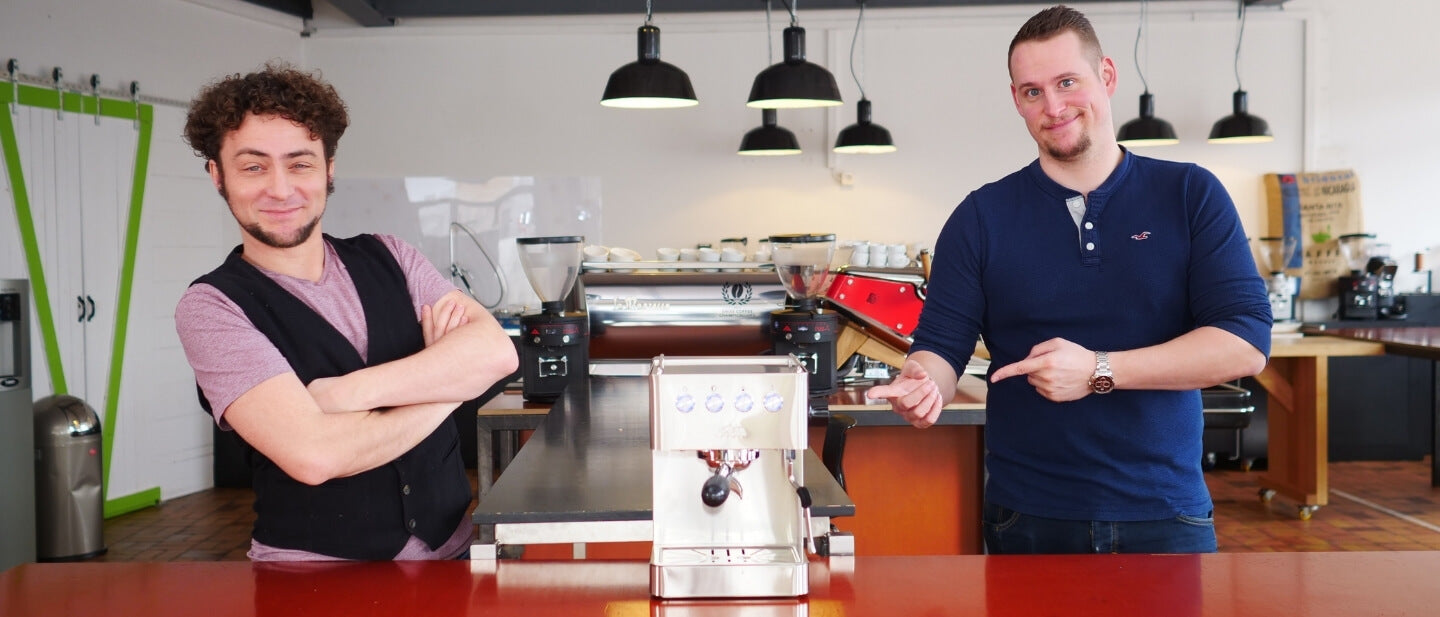

In the range of entry-level espresso machines, a review of the Solis Barista Gran Gusto is a must. The Solis Barista Gran Gusto belongs to the group of thermoblock espresso machines. At around 320 Swiss francs and 350 euros purchase price, it combines decent performance at a very competitive price.
Thermoblocks and the most important test questions
All thermoblock espresso machines have two things in common. They are ready to use within a very short time and they are very energy efficient. Unlike boiler espresso machines, you don't have to heat a large and sluggish boiler with water, but rather an aluminum block. This usually takes about three minutes. From this point on, the espresso machine can in principle dispense water at brewing temperature.
However, the big questions are:
- How consistently does the Solis Gran Gusto deliver the desired water temperature of approximately 93 degrees?
- How hot is the portafilter and how do the machine's heating intervals run?
- What is the milk frothing behavior of the Solis Barista Gran Gusto? Is it possible to create fine-pored milk foam for latte art?
Espresso preparation with the Solis Barista Gran Gusto
The most important thing about an espresso machine is the taste of the espresso. This also forms the basis for all milk-based drinks like cappuccino, latte macchiato, and flat white.
With standard extraction of 10 espressos, the Solis Barista Gran Gusto produced two good, three decent, and five poor espressos. With adjusted brewing rhythm, the balance improved to three good, five decent, and two poor extractions.
As is often the case with thermoblock espresso machines, you need to get the brewing temperature under control. We've developed some tips for this.

Getting the brewing temperature of the Solis Barista Gran Gusto under control
The Solis Barista Gran Gusto has no heat transfer to the portafilter. It remains cold while the thermoblock is heating up. If you use it without first warming the portafilter, the brewing water loses its temperature to the portafilter. So the first important step when using the Solis Gran Gusta is:
Leave the portafilter locked in place and dispense water without coffee. This allows the portafilter to warm up.
The first double espresso now extracted tasted best to us with darker coffees. The temperature briefly reaches 95 degrees but then drops to below 90.
 Temperature Solis Barista Gran Gusto.
If a second double espresso is to be extracted immediately afterwards, we recommend flushing immediately before extraction. So first clean the portafilter, then put the ground coffee in the portafilter and tamp. We have also described the exact procedure in our article on espresso preparation.
The next extraction now goes higher in temperature and then falls again, but not as low as the first extraction. The following extractions get increasingly hotter. The temperature graph snippet shows on the 6th extraction the temperature spike if flushing of at least 4 seconds is not done before extraction.
Build quality and external dimensions of the Solis Barista Gran Gusto
From the outside, the Solis Barista Gran Gusto makes a good impression. The body is made of stainless steel, the railing is robust. Few sharp edges disturb the exterior. The drip tray is a bit small and the unfortunately only placed base surface slips easily during cleaning. But all of this needs to be put in perspective with the really very affordable price.
Much of what we find in a similar price range looks cheap and is plastic-dominated. Not so the Solis Barista Gran Gusto. This also applies to the accessories. Particularly noteworthy are the tamper and portafilter.
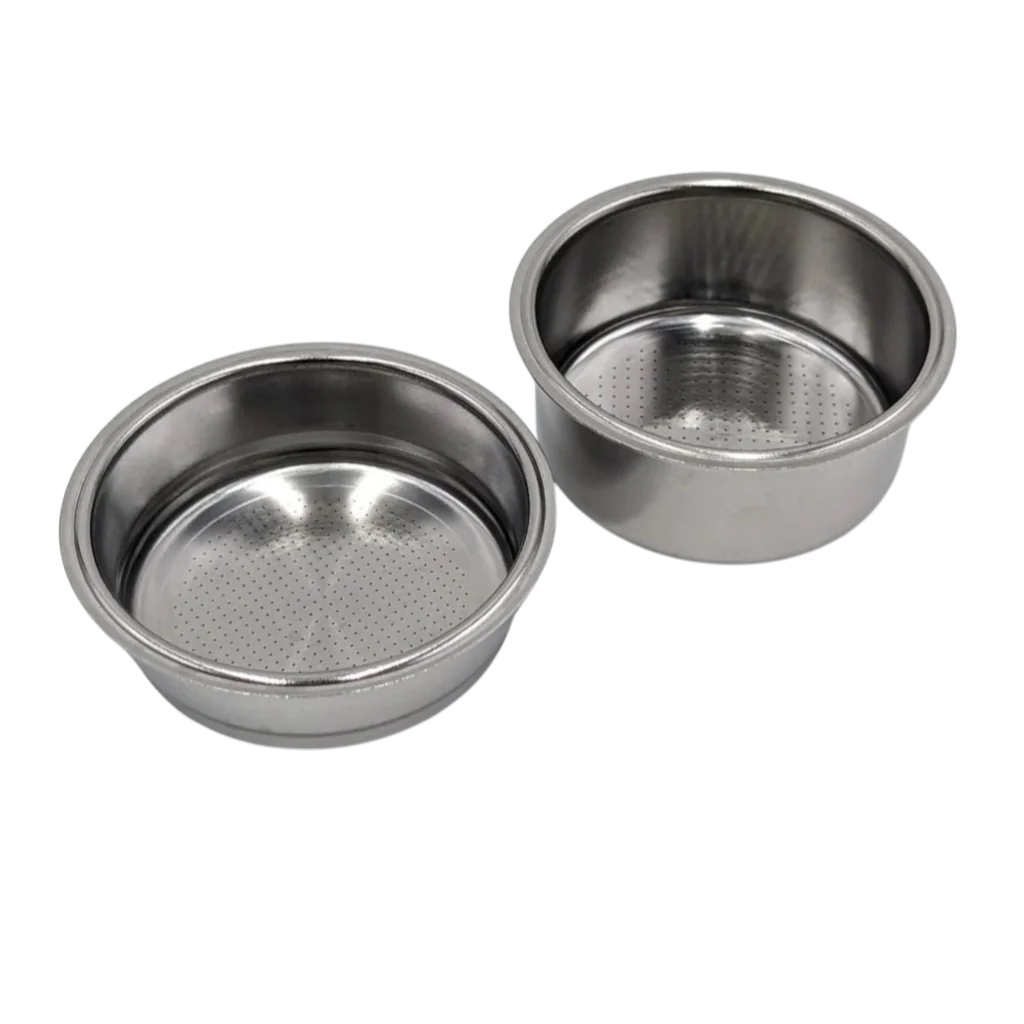
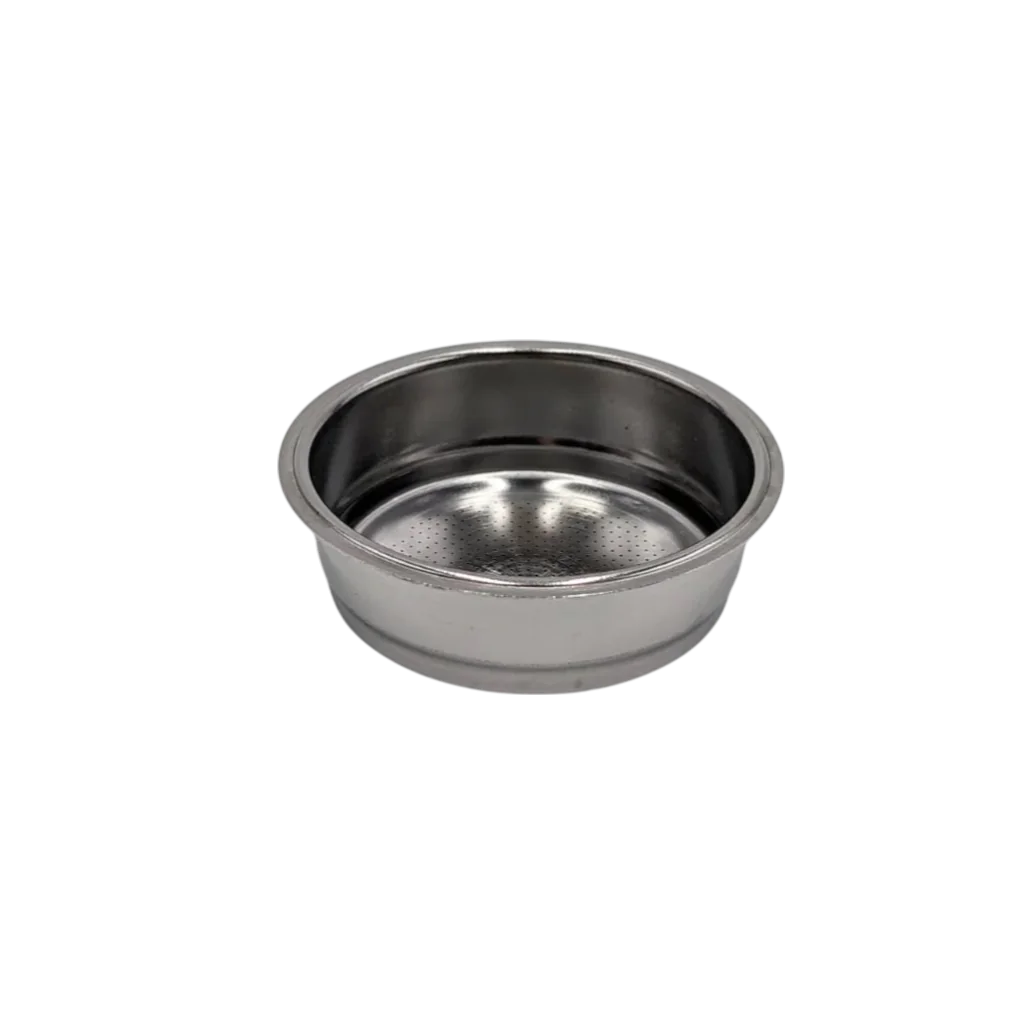
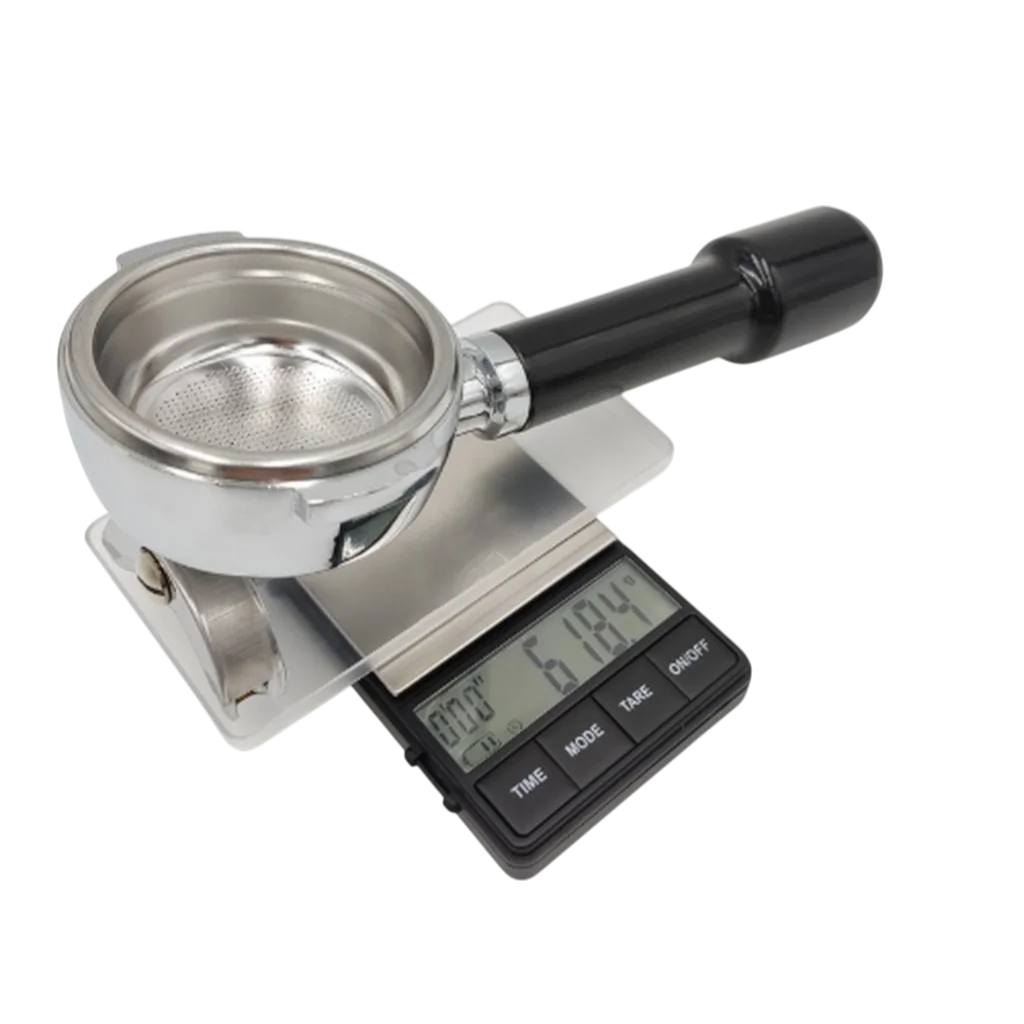
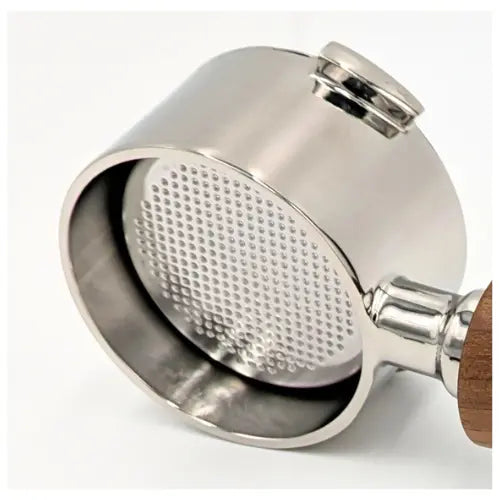
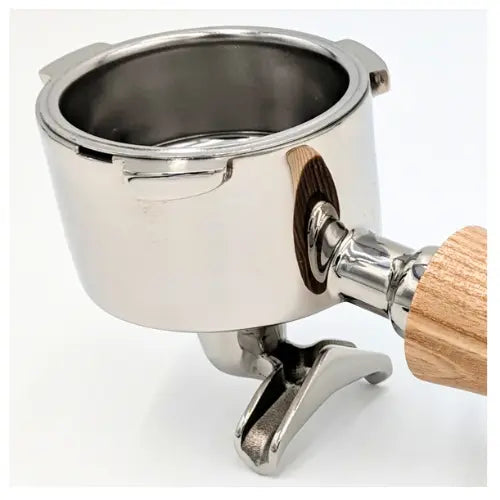
The Solis Barista Gran Gusto has a 58mm group head that accepts Faema E61 compatible portafilters. The portafilter itself is high-quality and stable. The included basket holds 19 grams of coffee. That's quite a statement! Those wanting further upgrades will be well served with the more precise IMS Competition baskets or VST baskets. It's great that these fit.

The included tamper also lives up to its name. 700 grams of weight feels substantial when tamping with it. There remains a small gap next to the tamper. If it fit even more precisely in the basket, the channeling risk would be reduced. However, the gap is not so large that automatic channeling occurs.
Also included and absolutely suitable: a 0.35 l milk pitcher for frothing milk. Let's put it this way: if the milk doesn't froth well, it's not the pitcher's fault. The milk pitcher is even very well suited for latte art.
The quality of the milk foam masks the poor frothing performance here.
Milk behavior in the review
In addition to temperature consistency, the milk frothing behavior of the Solis Barista Gran Gusto is challenging. The Solis Barista Gran Gusto delivers very little steam power into the pitcher. This makes it very difficult to create a rotation, which is necessary for frothing the milk.
In our test, Michel has to hold the pitcher extremely tilted just to get any rotation at all. The rotation is part of the draw phase of frothing and thus the second step of a frothing process. In the first step, in the so-called draw phase, air is pushed under the milk and volume is created. Even that is difficult, but possible.
We conclude: frothing milk with the Solis Barista Gran Gusto is not easy, especially for beginners. With practice it should work. However, if milk-based drinks like cappuccino or flat white play a large role in your daily beverage consumption, we would rather recommend the Sage Bambino Plus.
Descaling the Solis Barista Gran Gusto
Thermoblock machines are inherently less prone to scale buildup. This is partly because the thermoblock is emptied after each brew cycle. If you compare the scaling risk with single boiler, dual boiler, or multi-boiler machines, the thermoblock espresso machine is the least at-risk machine.
Nevertheless, thermoblock espresso machines can also scale up. You'll notice this in everyday use when the power of the steam decreases more and more.
A good choice for a descaler is one based on lactic acid. The Solis brand product called Solipol* works great and is made from lactic acid. The stuff is food-safe and yet penetrating enough to dissolve limescale. No-name providers work too.
Descaling the Solis Barista Gran Gusto in five steps:
- Add the product according to the manufacturer's mixing instructions to the water tank of the espresso machine and fill to the maximum.
- Place a large container like a pot under the outlet and in coffee mode manually extract approximately 150 ml of water.
- Switch to steam mode and wait until the button light changes to permanent illumination. Now turn the steam fully up and blow steam at full power into the pot still in place for about two minutes.
- Next, let the machine rest for 15 minutes and let the descaler soak in. Then repeat the process several times until the liquid in the tank is largely used up.
- Now thoroughly rinse the water tank and fill to the brim with water as soft as possible (Ideal: 2 – 5 German degrees total hardness). Now repeat steps 2 and 3 until the water in the tank is used up again.
Done. The machine is descaled and ready to use again after refilling the tank.
Conclusion on the Solis Barista Gran Gusto
There are as many different espresso and coffee habits as there are people. This makes it difficult for us to give an absolute recommendation for espresso machines. Unfortunately, one reason is that especially in the more affordable segment, espresso machines have strengths and weaknesses.
The strengths of the Solis Barista Gran Gusto include:
- With our tips, you can brew a good espresso relatively reliably.
- The machine, like almost all thermoblocks, has low power consumption of only 0.10 kW per hour.
- It heats up quickly and is therefore ready to use.
- The external build quality is good and the included equipment is practical and excellent.
- The compatibility of the portafilter with classic 58mm portafilters is appealing and makes purchasing additional tampers and baskets easy.
Unfortunately, there are also some weaknesses:
- The machine's frothing performance is not very enjoyable.
- The drip tray is difficult to clean because the plate is only placed on top.
- The temperature quickly shoots up to over 100 degrees without manipulation. This leads to extremely bitter taste.
- The steam wand of the Solis Barista Gran Gusto drips.
Are you more of a milk foam drinker? Then definitely take a look at the Sage Bambino Plus. For espresso and co., you should compare the Solis Barista Gran Gusto with the Quick Mill Orione 3000 and the New Gaggia Classic.
If you want to learn how to dial in the perfect espresso, visit our Home Barista course. It's available as an online course on the web as well as in person in Basel. That's worth the trip!
We also recommend the following articles and videos:
Making espresso and Cleaning your espresso machine.
The link marked with * is an affiliate link. If you buy something through it, you support us in creating further content. Thank you very much.