




The Quick Mill Carola is an espresso machine with single boiler system and PID control. Find out in our test report why it makes excellent espresso but no milk foam.
First the best part: for 1000 euros/1200 francs, the Quick Mill Carola combines some good components in a housing that is only 20 cm wide and 45 cm deep. A Faema E61 group head combined with PID control makes you happy and above all makes good espresso. The single boiler espresso machine is consistent. This is also because the boiler doesn't have to steam milk and make espresso. The Quick Mill Carola completely dispenses with the steam wand function. But it makes no compromises when it comes to espresso. But let's take it step by step.
Workmanship and Material
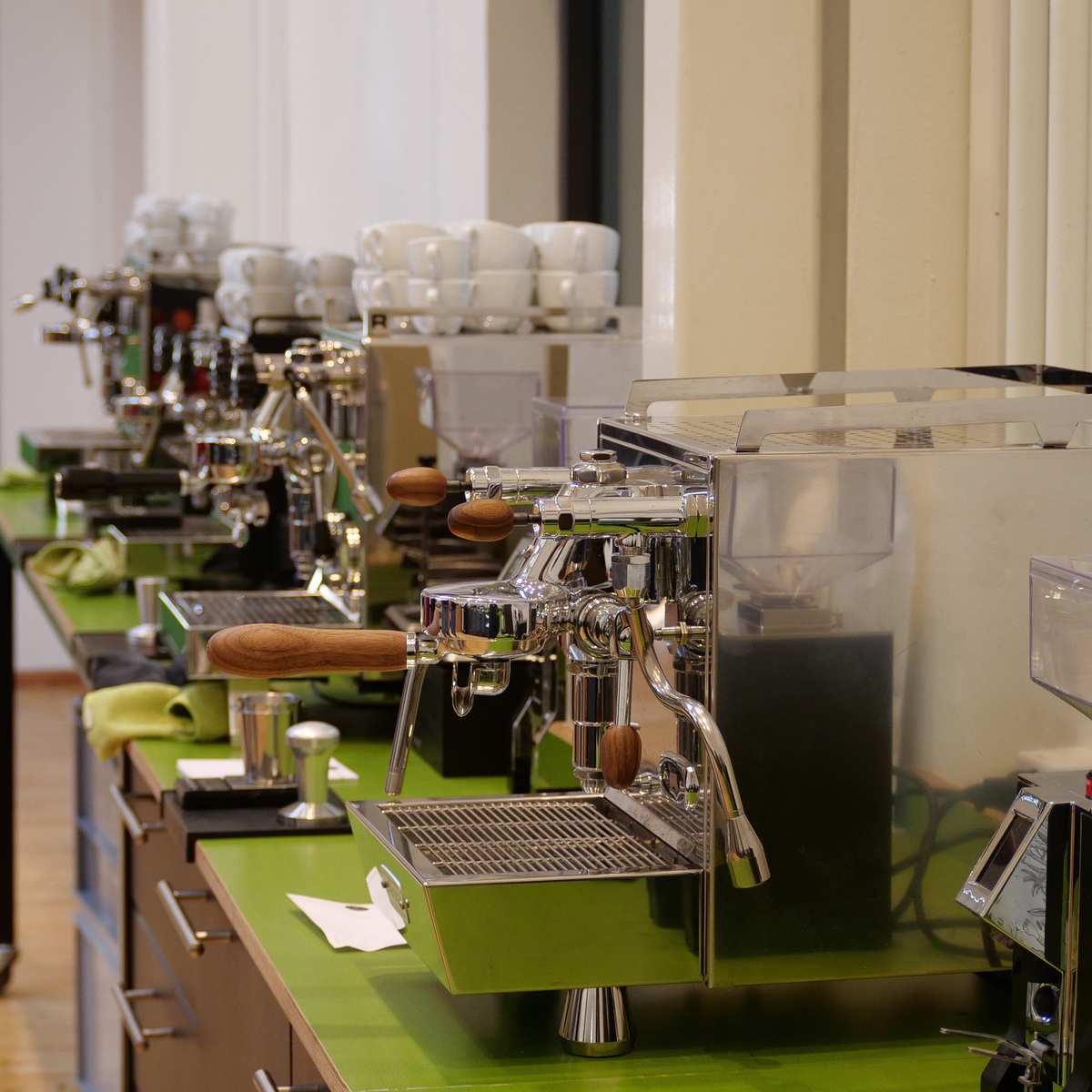
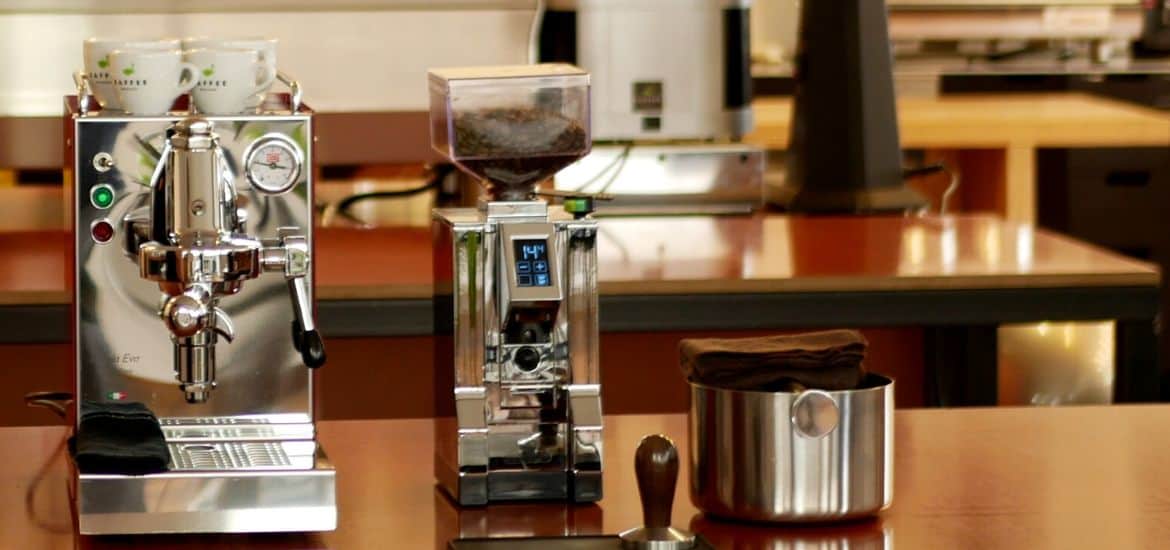
From the start, the Quick Mill Carola makes a good impression with its chrome-plated housing and cleanly finished exterior edges. The compact portafilter weighs around 15 kilograms and distributes that over just 20 cm width, 45 cm depth and 37 cm height. If you're looking for a small but good espresso machine, Quick Mill Carola is your answer. With this size, it fits into any kitchen nook.

A pressure gauge shows the brewing pressure and the insulated brass boiler holds around 0.75 liters. The machine's water tank holds 1.6 liters. Conveniently, the top lid can be lifted like a tray along with cups to access the water tank. What was done well with the lid, however, is missing with the water tank. Due to the lack of a handle or grip hole, removing the water tank is a hassle. But it can be managed. Alternatively, you can simply pour water from the top.
The Quick Mill Carola comes optionally with red, black or stainless steel side panels. We also appreciate the cup guard on the machine. With many machines in higher price ranges, this is made of plastic and has to be purchased separately in metal. The Quick Mill Carola doesn't skimp here and already has it installed.
Space in the Drip Tray
The drip tray of an espresso machine doesn't determine the quality of espresso preparation. For me, it's still really important. The smaller the drip tray, the greater the risk of making a mess when emptying it in the sink.
High-end espresso machines usually have the option of connecting the drip tray to a water drain. If that's not possible, you're happy to have as large a tray as possible. The Quick Mill Carola has such a tray. Even if you make a few espresso shots and rinse in between, the tray won't overflow.

Really Good Espresso with Single Boiler and PID Control
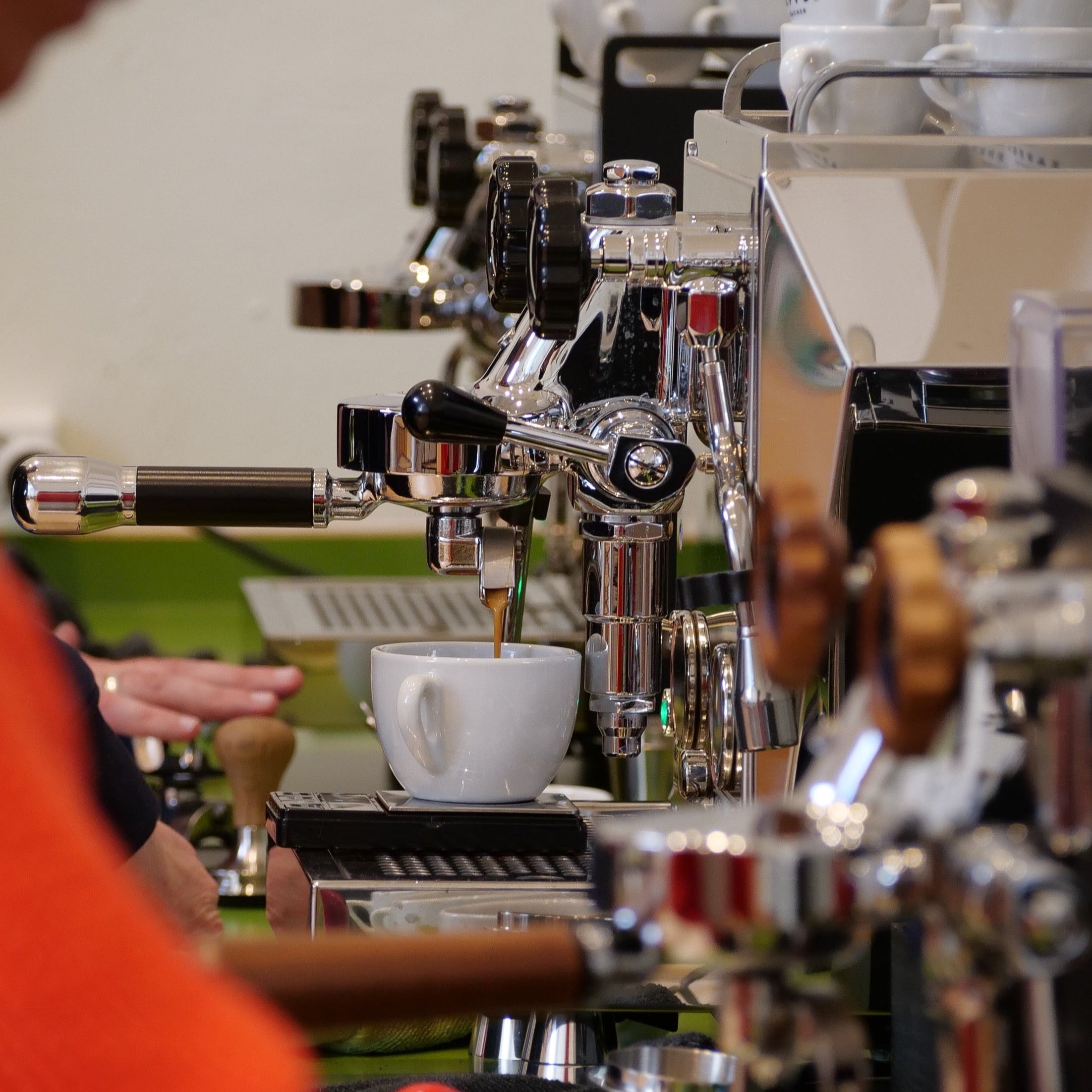
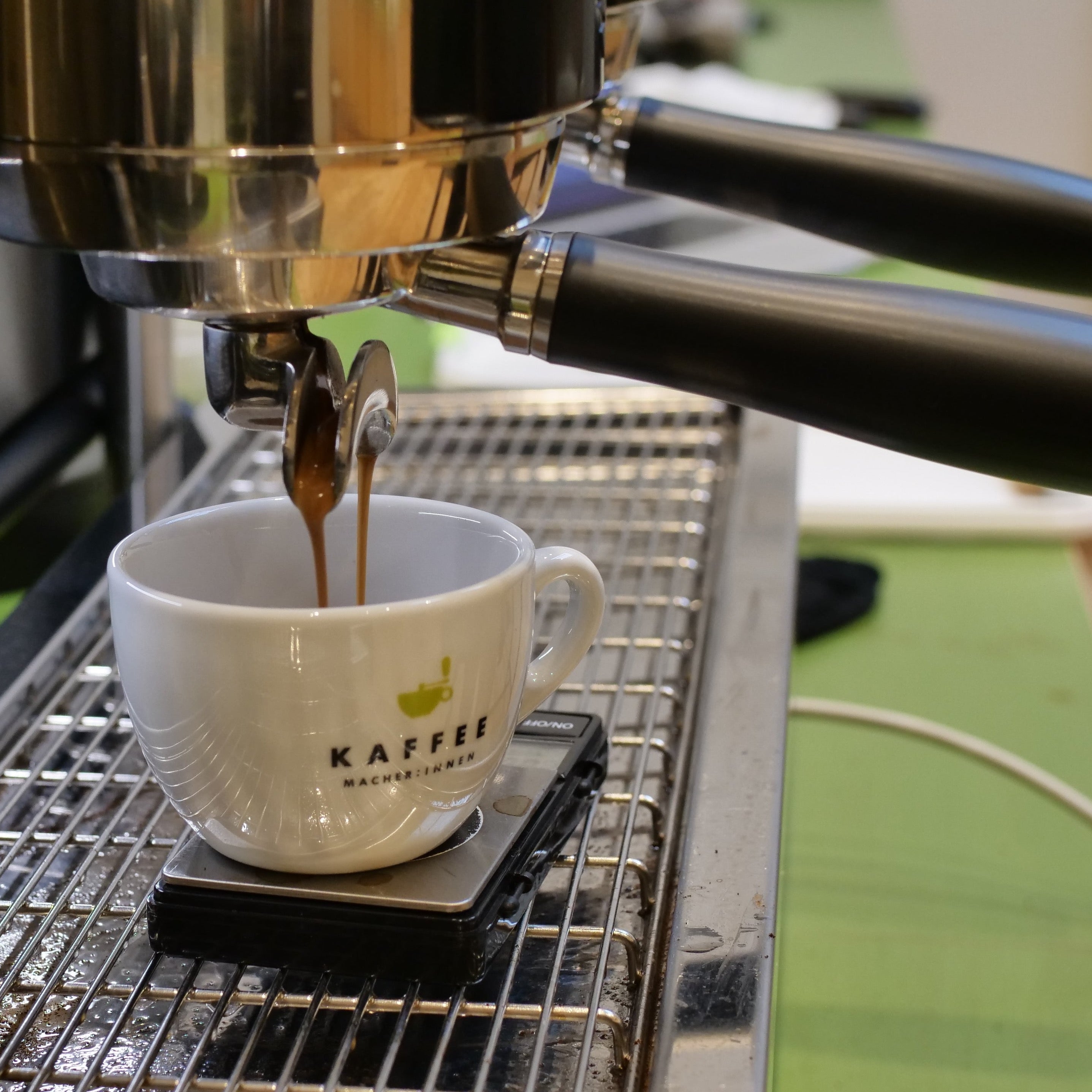
In about 10 to 15 minutes, the machine reaches operating temperature and stops heating. So that the E61 group also heats up well, a blank shot or two is recommended. Already the first shot makes it clear: this machine can make espresso and the E61 group head knows what it's doing. The massive brass structure of the thermosiphon delivers in proven E61 fashion.
The combination here lies in the connection of single boiler system and PID control. As a reminder: with a single boiler espresso machine, the water for brewing coffee is drawn from the same tank that also produces steam to foam milk. The ideal brewing temperature for espresso is 92 to 94 degrees Celsius. To foam milk, the boiler must heat up to around 120 degrees to produce sufficient steam. No single boiler really manages this switch between these two tasks well and thus has to make compromises in quality. In our test of the Rancilio Silvia, we discuss this topic in detail.
The Quick Mill Carola completely dispenses with the steaming function. Yes, you heard right. No cappuccino! But the machine makes no compromises in espresso quality. Thanks to the PID control, the boiler temperature can be adjusted precisely. The temperature is maintained and remains constant.
The PID Control of the Quick Mill Carola
PID control in this price range is an absolute rarity. Basically, we just have to praise this. Operation is a bit fiddly, but not difficult to master. The manufacturer could have invested in a small digital display here. But: the control does what it's supposed to do.
On the back of the Carola are two screws to loosen. Behind it is the control unit. The user manual describes how to set the temperature. 6 small switches can be switched to "on" or "off" to adjust. The user manual states, for example, that the temperature 123 is set with On, On, Off, On, Off, On.

The problem with the whole thing, however, is that the machine is delivered with a pretty large offset. Offset means that the measured temperature does not match the specified temperature. Our test machine was initially set to the positions for temperature 110. Already in the tasting, we found the espresso too bitter, so we measured the temperature. What actually came out of the group was 99 degrees.
After some testing, we ended up with the PID temperature at 106, which gave us an effective brewing temperature of 93 degrees. And it stayed very constant. Of course, with the Carola too, you need to rinse before pulling an espresso shot, so let water run for about two seconds. However, this is the case with every E61 group head.
Configure the PID Control
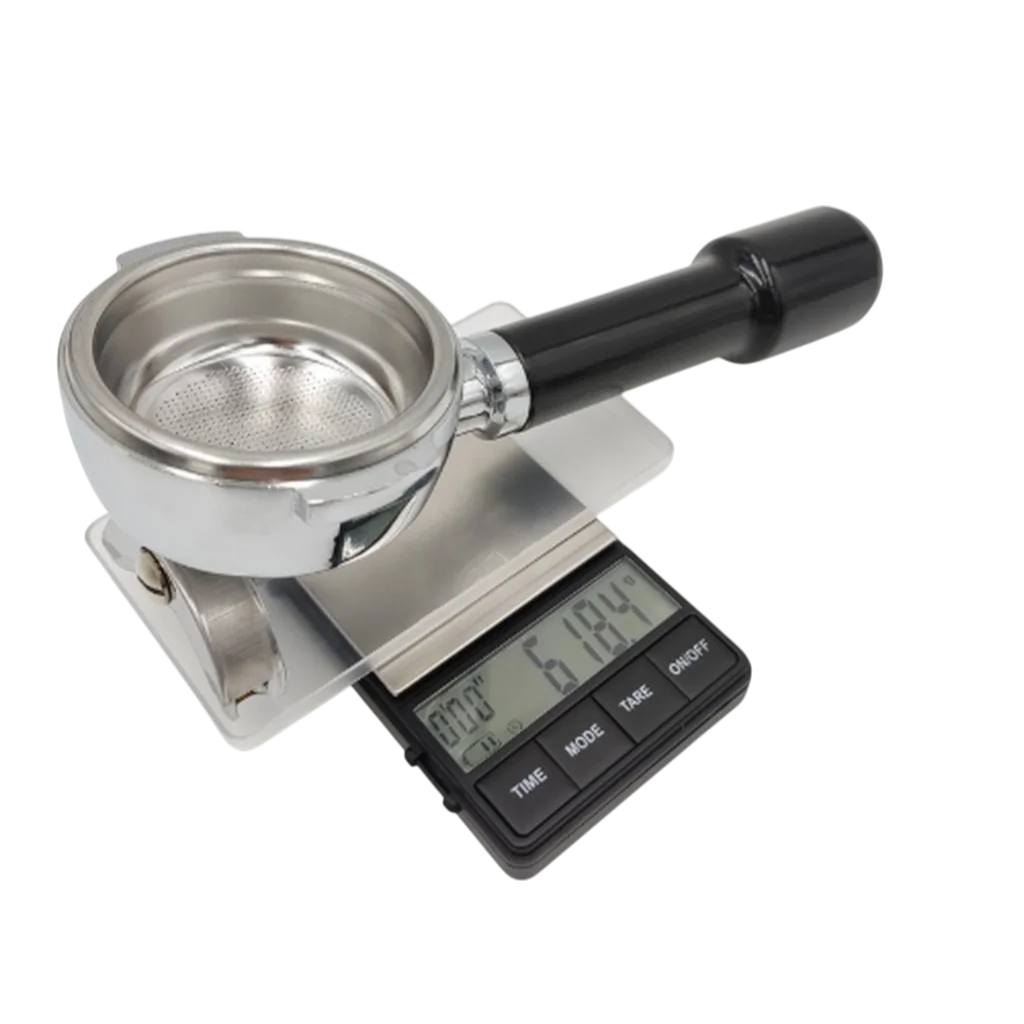
It's basically not complicated to set the group temperature well. But you need a measuring device. Coffee machine technicians use a portafilter with a built-in measuring device for this. This brings me back to my argument for why you should buy espresso machines locally and not through online shops. With the local contact, you can adjust the temperature in consultation. Good dealers also set the temperature before they sell the machine. Amazon and Co. usually don't do that.
Of course, you can measure the temperature approximately with any thermometer with a temperature range between 90 and 100 degrees. And you can also taste whether the temperature is correct. If the espresso tastes good, everything is running perfectly. If your coffee tastes rather bitter, turn down the temperature. If the coffee is rather sour and not balanced, turn up the temperature. And important: rinse vigorously in between so the temperature in the boiler adjusts. When you turn up the temperature, you have to wait until the boiler reheats.
Who is the Quick Mill Carola Suitable for?
The Quick Mill Carola is a really good espresso machine in the true sense of the word: it makes good espresso. It's consistent and maintains temperature. The PID control is a nice thing once the temperature is set. The switch mechanism doesn't invite flexible adjustment. But since almost all espresso roasts experience their peak with a properly set temperature of around 93 degrees Celsius, the adjustability of temperature is more for fanatics.
Steaming milk is not possible with the Carola. There is no steam wand. Hot water for tea, however, can be drawn. So if you like to drink cappuccino or latte macchiato, you won't be happy with the machine alone. A separate milk frother can help here.
The espresso on the Quick Mill Carola was so good that I prefer the version with a separate milk frother to the quality compromise of a switchable single boiler (see also the article on the Silvia.)
Pros and Cons
Pros in favor of the Quick Mill Carola:
- The espresso quality is an absolute pro argument. The Quick Mill Carola doesn't make any compromises here.
- PID control in this price range is appreciated.
- The workmanship of the machine is top notch and the classic E61 group head delivers what it should.
- The compact format makes the machine interesting for tight spaces.
- The drip tray is not kept too small.
Cons against the Quick Mill Carola:
- Milk cannot be steamed with this machine.
- The water tank is difficult to remove due to the lack of a handle.
- The PID control is a bit fiddly and the temperature has a fairly large offset to the actual brewing temperature
Did we forget something? What are your experiences with the Quick Mill Carola? Please supplement the post so others can benefit from your experiences and tips.
- Quick Mill Carola user manual.
- Quick Mill Carola in our shop.