




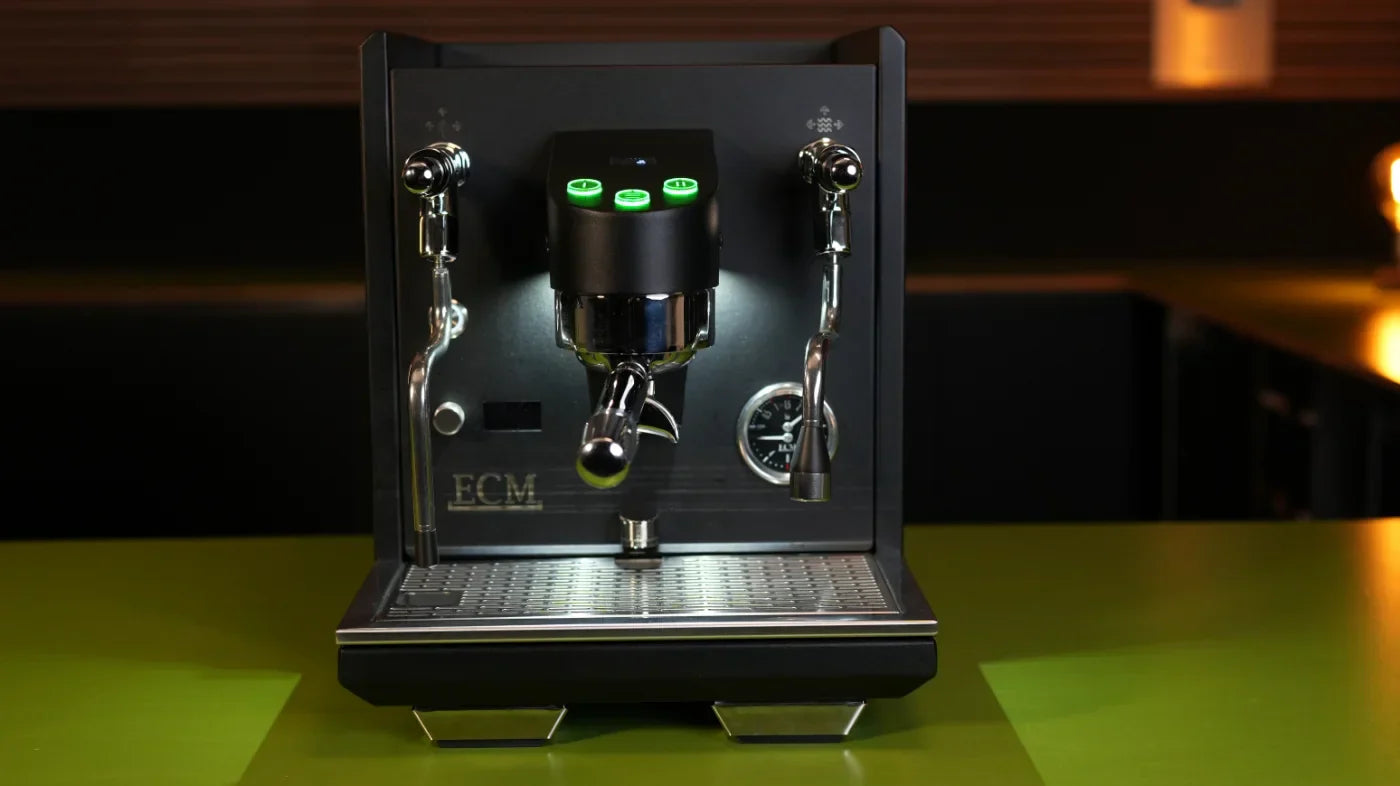

ECM makes a bold statement with the Estetika and delivers a new dual boiler of the highest caliber. The espresso machine from the German manufacturer is meant to be a powerful premium dual boiler for the home and simultaneously meet all the requirements to impress as a small, single-group gastro machine with retention.
We put the ECM Estetika through rigorous testing over several months and ran it through our test protocol 2.3. But we didn't stop there — we also put it through its paces in a catering setting under load for several days. The conclusion is clear: the ECM Estetika is an outstanding espresso machine and earns the rating "very good" with 77 points and numerous strengths. There is little room for improvement for this voluminous machine, which costs 4,300 francs.
In this article, we go through all test attributes step by step. If you prefer to watch and listen, you'll find everything you need to know about the ECM Estetika in our long video as well as in short-form format.
Important: As with the Estetika, we purchased the espresso machine and tested it independently according to our test protocol. Andrea, Alexandra, Michel, and Benjamin (that's me) were involved in the testing.
Recommended specialty retailers for the ECM Estetika:
We search for specialist partners for you who we know provide good work and good service. We maintain close contact with these retailers. These are commission links. If you order through this link, it doesn't cost you anything extra, but we receive a small commission that we invest in new test equipment.
Who is the ECM Estetika for?
We need to talk briefly about the price, as 4,300 francs is a statement. However, you're buying yourself a machine for life and getting two devices in one for the money. At home, a premium-class dual boiler sits on the counter, and yet the Estetika, with its retention, permanent water connection, and steam power, easily has enough capacity to serve a small ice cream parlor, a startup café, or catering for fifty people.
This puts it in a niche where there has been little activity so far. The ECM Synchronika or the La Marzocco Linea Micra and Linea Mini cost roughly the same but forgo retention. ECM delivers exactly that at the same price, and one that actually works in everyday use. We think it's bold for a manufacturer to venture into this territory. On the other hand, the Estetika speaks for itself, because in terms of performance, the math works out.

Construction, Design, and Quality
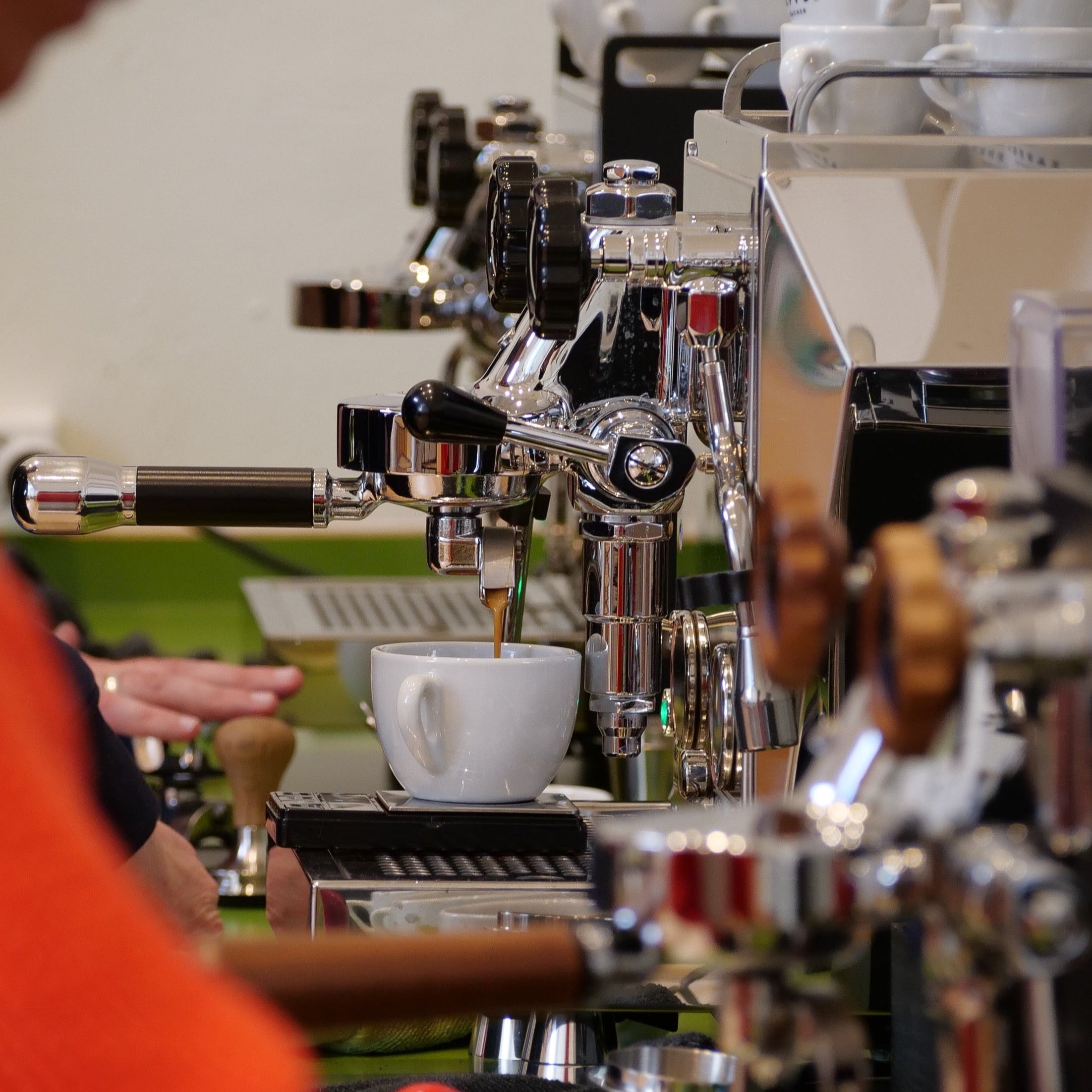
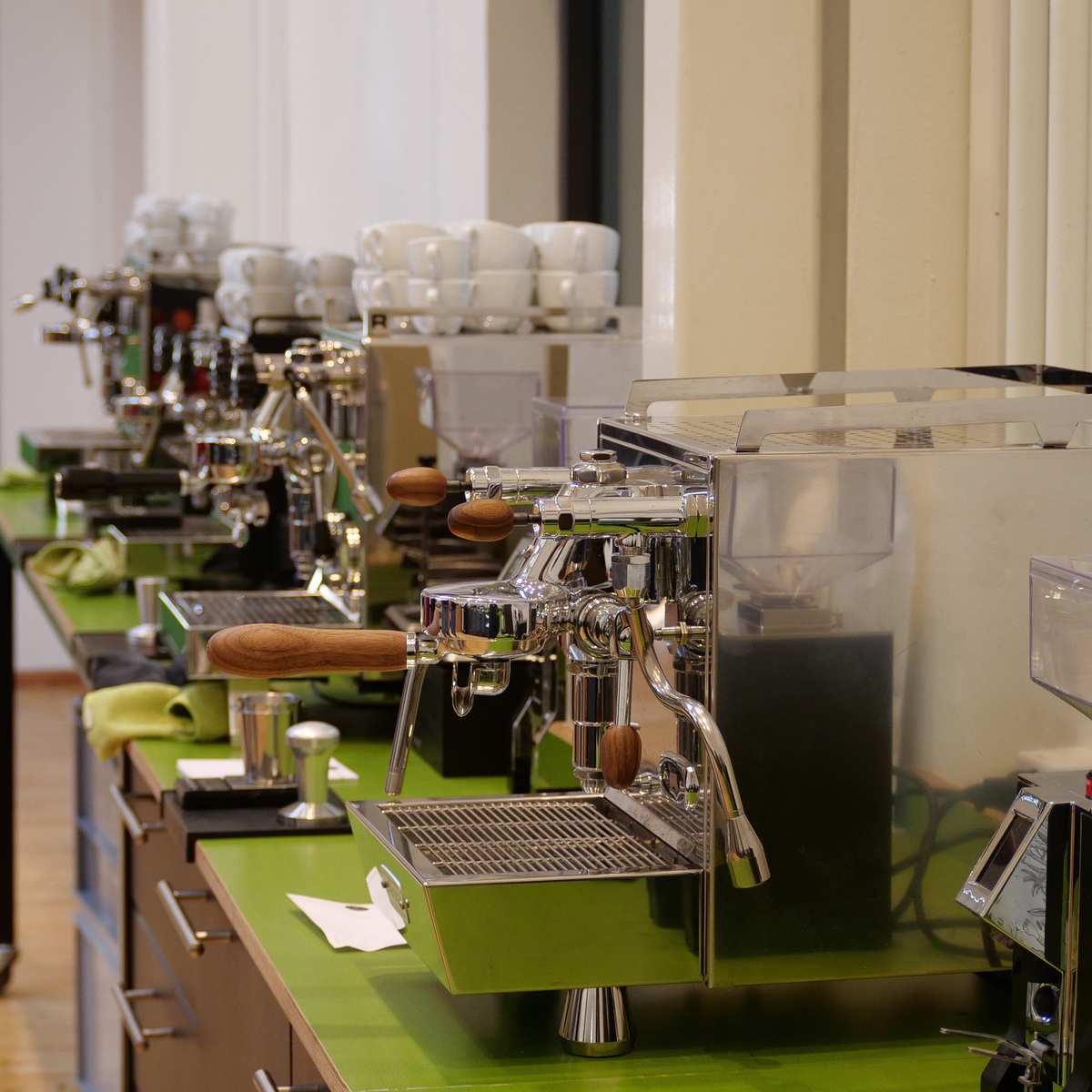
You can tell immediately when an ECM is in front of you. The design language is similar to the Synchronika but goes its own way, with high-quality feet and brushed stainless steel on top that gives the machine something elegant. The architecture is interesting because ECM has chosen a slightly forward-leaning structure but leaves space on both sides. This sounds like a minor detail, but it makes a real difference in daily use because you can see where you insert the portafilter and how to position the cup.
Overall, the Estetika looks architectural and almost monolithic: a clear, nearly cubic main body with flat surfaces, strong side panels, and a symmetrical front. The matte black surface gives it a calm, high-quality presence, while the polished stainless steel components provide the accents. This contrast runs throughout the machine: dark, solid housing on one side, precisely engineered chrome and stainless steel components, the analog manometer, and classic valve handles on the other, plus the subtly integrated digital display. The lever valves and openly visible brew group echo traditional Italian espresso machine design, while the reduced line design and black finish give the machine a contemporary, almost industrial character.
The machine is crafted to a very high level, which is reflected in 9.5 out of 10 points for quality. The housing is solid metal, the construction is rock-solid, and the interior is cleanly laid out. The only thing we noticed were two or three slightly sharp edges, including on one of the feet. At home this doesn't matter. Anyone who regularly hauls these thirty kilos to catering events will notice them more.
A word about the control buttons, which we really like. They provide clear feedback when pressed and always respond. Especially when things get hectic and you need to press quickly, this tactile feedback is valuable.
| Specifications | Value |
|---|---|
| Boiler | Dual boiler: 0.5 L brew, 2.0 L steam |
| Pump | Rotary pump |
| Water tank | 2.8 L, permanent water connection possible |
| Dimensions (H × D × W) | 41.5 × 49 × 33.5 cm |
| Weight | 29.4 kg |
| Drip tray | 1.1 liter |
| Power | 2,300 watts |
| Control | PID, offset, retention, two displays |
| Price | 4,300 CHF |
The detailed measurements that almost nobody else provides
Because we measure every machine using the same protocol, we end up with values that you rarely find in any other test. Especially the dimensions around the workspace determine in everyday life whether a machine is right for you. The distance between the portafilter outlet and the drip tray is 9.5 centimeters, so a large cappuccino cup fits easily on the scale underneath. It's not quite enough for a paper cup.
| Detailed measurement | Value |
|---|---|
| Distance from portafilter to drip tray | 9.5 cm |
| Portafilter diameter | 58 mm |
| Depth including portafilter | 59 cm |
| Maximum flow rate | 14 ml/s |
| Time to steam milk (300 ml, 8 → 60 °C) | 24 s |
| Water addition during steaming | 31 ml |
| Condensation before first steaming | 7 ml |
| Noise level | 57.7 dB(A), with cups 60.3 dB(A) |
| Standard deviation 5 shots (from sec. 4) | 0.69 at 8 min / 0.43 at 10.5 min warm-up time |
Technology and warm-up time: too hot after six minutes
The heart of the Estetika is its completely proprietary brew group. ECM has moved away from the classic E61 design here and instead focused on efficiency, fast heat-up, and its own design, while maintaining the connection to the brand. And it pays off, because for a true boiler machine with heated brew group, the warm-up time is sensational.
In our test protocol, the machine achieves 7 out of 10 points in warm-up speed. After six minutes, the machine is not too cold like other machines, but already too hot. This is exactly what ECM and Profitec are aiming for, because the machine briefly overheats and then settles back in. In practice, this means that after eight to ten minutes you're safely in the green zone. We recommend an 8-minute warm-up time for the machine. However, if you wait 10 minutes or longer, the Estetika becomes increasingly consistent in temperature. The standard deviation between five shots drops from 0.69 to 0.43. An outstandingly good value that shows how temperature-stable the ECM Estetika is.


Temperature stability: among the best we've measured
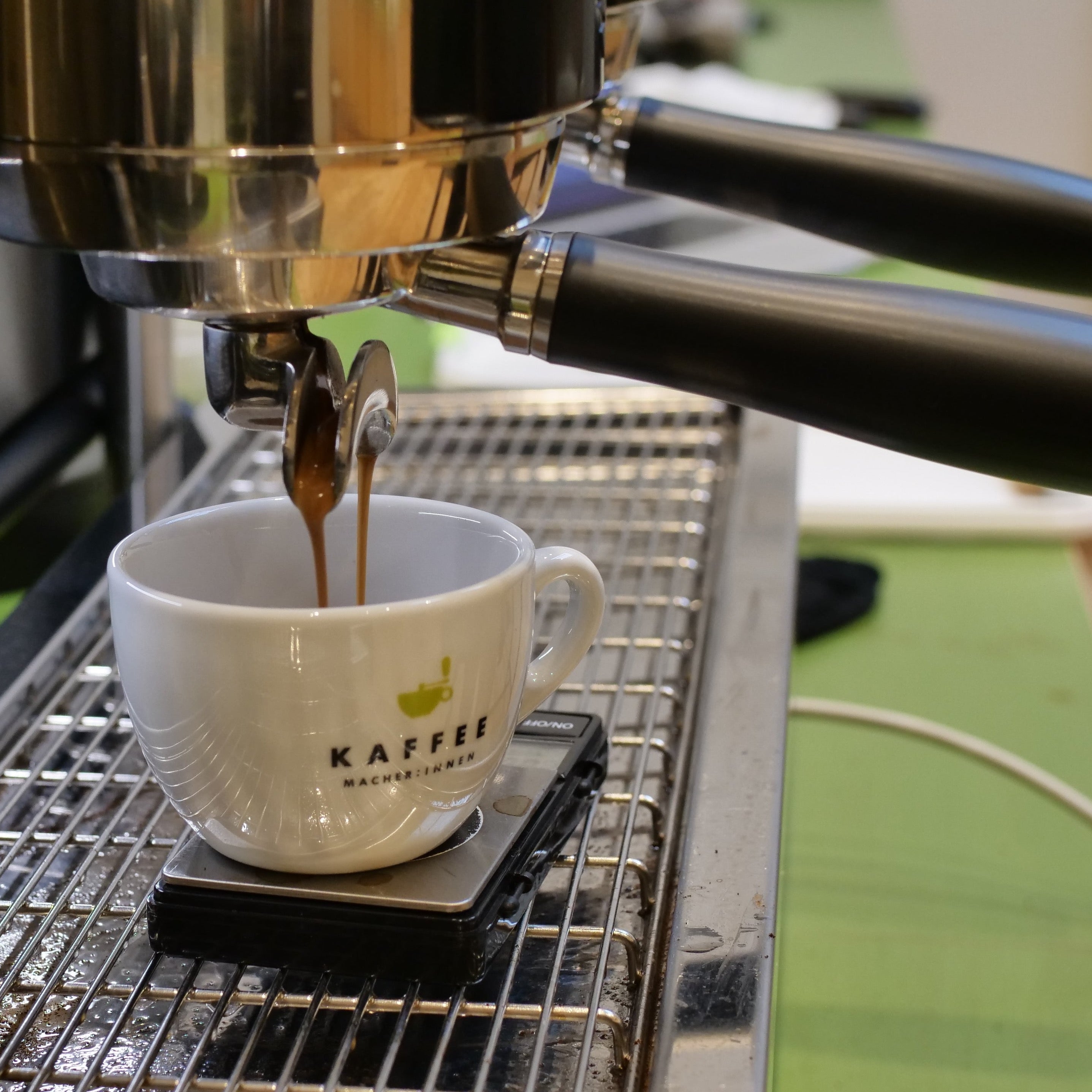
Now we come to the point where things get really good. When it comes to temperature consistency, the Estetika ranks among the best machines we've ever measured. In our KM protocol, where we pull five 27-second shots at one-minute intervals, the average values ranged between 92.3 and 93.6 degrees. Across all five shots, the range was just 1.29 degrees, averaging 92.9 degrees. And within each individual shot, the temperature stayed flat as a board from the first to the last second.
Even under load, the machine doesn't lose its nerve. In the WBC protocol, where we pull fourteen shots in rapid succession and steam milk in parallel, the brew temperature ranged between 92.8 and 95.0 degrees. A window of 2.2 degrees under this sustained load is a really good value. Overall, we give 8 out of 10 points for temperature management.
What this means in the cup, we tested with a double espresso. While we normally use Apas Espresso in testing, in the video we brew our Mexican project coffee Toca. It came out round and creamy, and the complexity of the coffee shows from the first to the last sip. This isn't because the machine works magic, but simply because it reliably delivers the right temperature, works cleanly, and does everything it can to ensure that from the interplay of grinder, grind size, and barista, a great espresso results.
Espresso and retention
The retention runs via a flow meter, and you can rely on it in everyday use. While many cheaper espresso machines have time control and others forego any kind of water dosing, the ECM Estetika delivers the precise right amount of water. Our five-stage stress test also demonstrated this. It starts with the Scace measurement portafilter, which always provides the same resistance, and here the same amount reliably ends up in the cup. Also with real espresso, precisely 18 grams from the grinder and always the same single-origin, the variations remained tiny.
It only got tricky in the actual stress test. When we ground finer and the brew time thus increased significantly, the amount in the cup remained constant. When we went coarse, however, one shot came out with about two and a half grams too much and threw off the average a bit. But that's criticism at a very high level and doesn't prevent the very good result of 7 out of 10 possible points.
The ECM Estetika has a retention function you can always rely on. It's an espresso machine where the scale is only needed once, to set the water amount. After that, the machine takes care of it itself.
A word about pre-infusion, which can be turned on and off. With a classic rotary pump without additional control, pre-infusion usually works so that water first comes onto the puck, then a pause follows, and then water flows again. This is not conducive to extraction and makes the brew more irregular. For most coffees, we would therefore recommend leaving it off. If you connect the machine to permanent water, you can use pre-infusion via the flow pressure, which we think makes sense.
However, what the Estetika lacks is a true flow profile, where you can reduce the flow to a fixed amount for a certain time, the way the Lelit Bianca, Mara, or Roxy can do. That's why the Estetika misses the last points in espresso potential. But that's the advanced technique. Everything that a classic espresso machine with rotary pump and constant pressure can deliver, the Estetika delivers into the cup.

Milk foam and steam: almost too much power
The steam power for a machine of this design is simply absurdly strong. It heats three hundred milliliters of milk from 8 to 60 degrees in 24 seconds, and that's a value you only otherwise know from gastronomy. You don't need to angle the pitcher to enter the rolling phase, because even held straight, enough steam blasts out of the wand. The wand itself sits in a 360-degree ball joint, has a no-burn grip, and is even made from a different material at the bottom that feels good in the hand and is easy to clean.
When steaming, about seven milliliters of condensation accumulates. That's a normal value, as we know from good coffee machines, and a brief purge is sufficient. In the steaming category, we arrive at 8.5 out of 10 points. We do have one practical tip, however: at home it's worth turning down the steam pressure a bit and placing the steam boiler in the range between 123 and 128 degrees. If you're not used to the full power, you'll quickly over-steam, especially with small amounts or oat milk.
Operation, workflow, and accessories
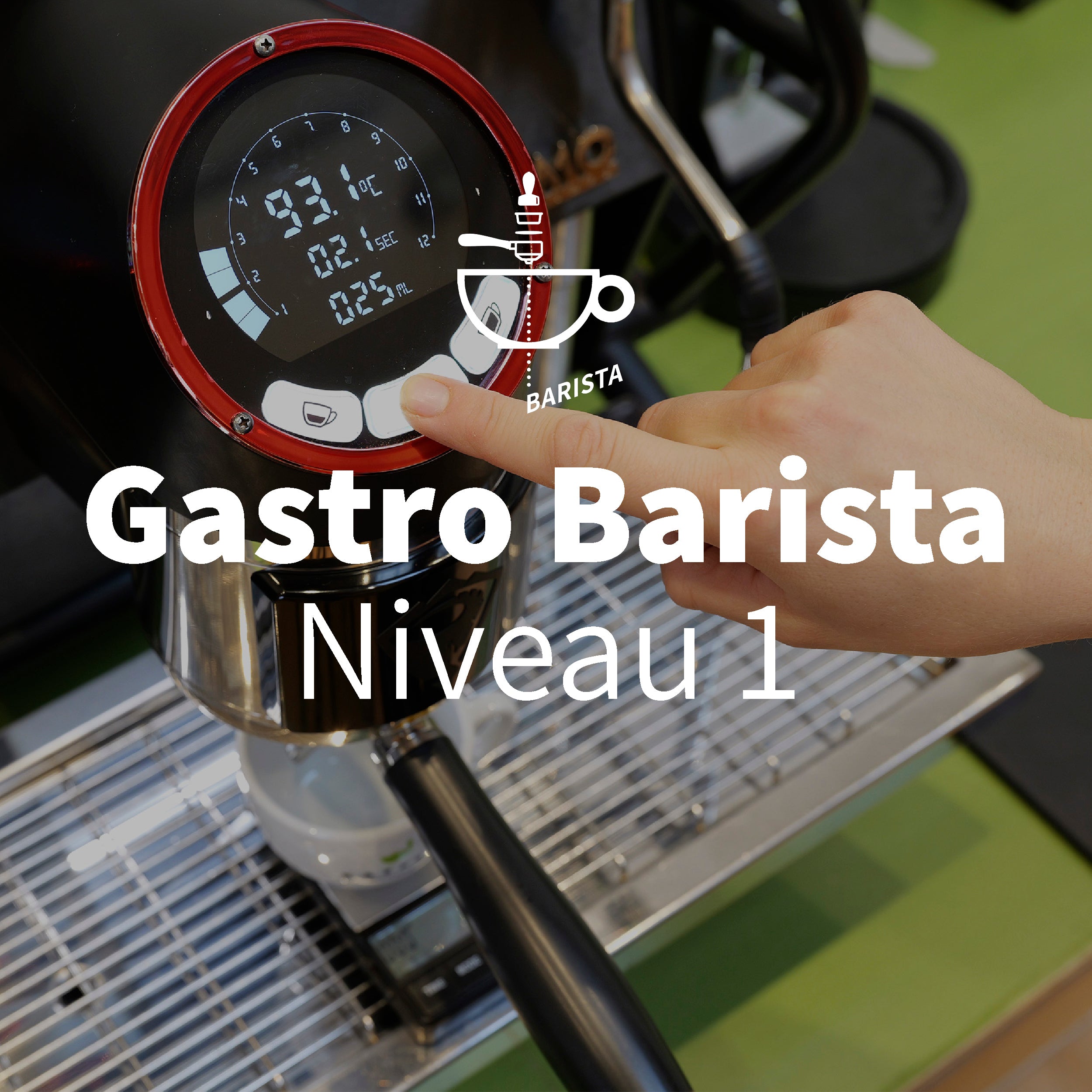
The Estetika works with two displays. The top one shows the brew temperature as well as the brew time and flow rate of the current or last shot. Via the bottom display and a rotary knob, you control the entire menu. You program the retention, set pre-infusion and pause times, adjust temperature and offset, enter on and off times, and start the cleaning cycle. Everything you need is there, and operation is intuitive, which is why we give 9 out of 10 points.
Two wishes remain. A slightly larger display would be nice, and Michel in particular would appreciate app connectivity. The on and off times can be set conveniently through the menu, but anyone who wants to turn the machine on in the morning from bed would be quicker with an app.
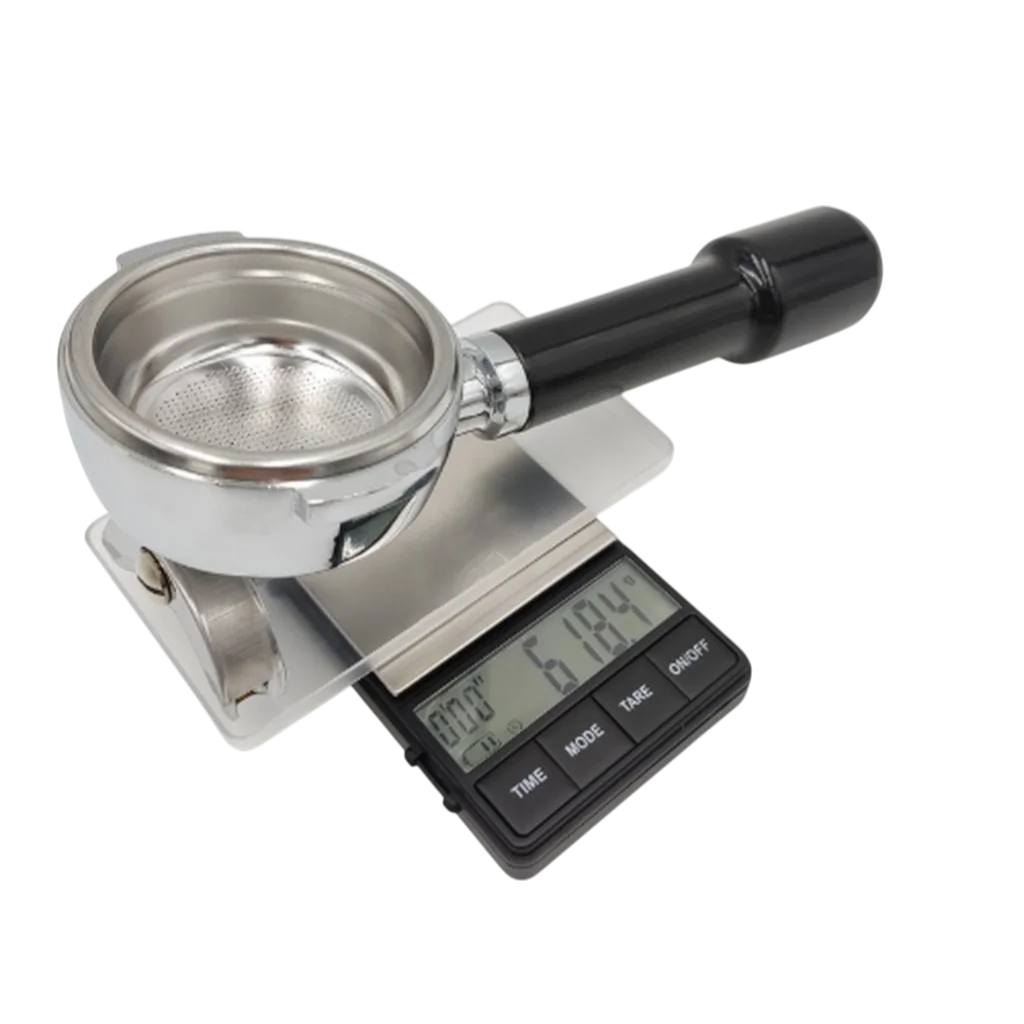
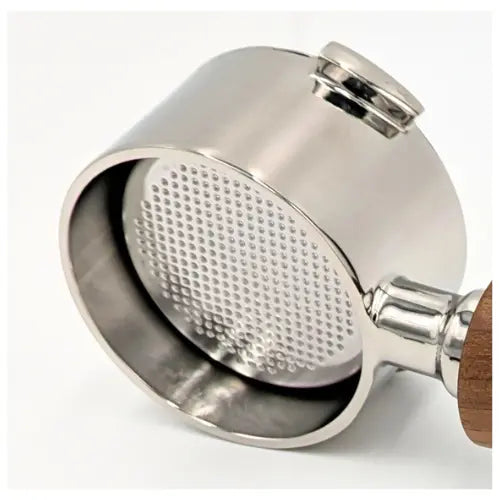
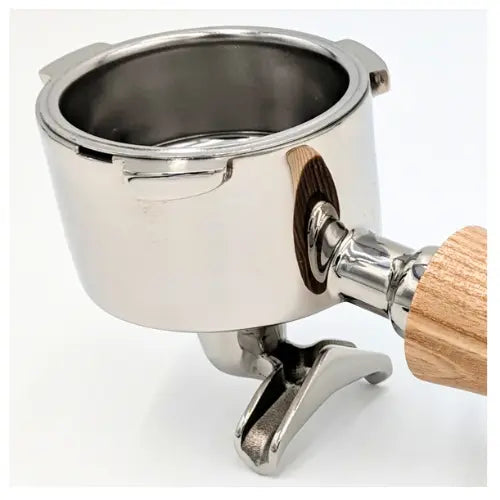
ECM has also stepped up with accessories, which earns 9 out of 10 points in the evaluation. Included is the modular portafilter, which can be converted to single and double baskets and, once you remove the silicone completely, also functions as a bottomless portafilter. Also included are two high-quality baskets and a blind basket. The large 26-basket works more in the range of 19 to 20.5 grams, the flat 17-basket at around 14 to 15 grams. The included tamper fits snugly on the baskets. And if the silicone portafilter system doesn't appeal to you, you can simply buy a regular ECM double portafilter.

Power consumption: the clear weakness
When it comes to power consumption, the Estetika pays tribute to its size. For heating plus one espresso, we measure 0.2649 kilowatt-hours, which results in 4 out of 10 points in the evaluation. A thick-film heater or an efficient thermoblock comes in at around 0.06 to 0.10 kilowatt-hours for this scenario. The reason is obvious, because we're heating two boilers and approximately 2.5 liters of water. If you compare the machine to a large La Marzocco GS3, which is the league it actually plays in, the value is completely reasonable. For the cappuccino scenario with additional steam, power consumption climbs to 0.291 kilowatt-hours, and keeping it warm costs about 0.12 kilowatt-hours per hour. If you want to save power, you can turn off the steam boiler, which is easily possible.
Volume and catering: the counterpart to the GS3
When it comes to small businesses, caterers, or roasters, the La Marzocco GS3 with programmable retention has been the standard for years. It's temperature-stable, functional, and has become a reliable presence over the years. We ourselves have two in catering use and are completely satisfied.
But then comes the caveat. The Estetika brings the steam power, the retention, the temperature consistency across many shots, and the necessary capacity for continuous operation. In our volume potential test, it therefore scores 9 out of 10 points. Over fourteen shots, there was no temperature drop, with five-fold steaming at 90-second intervals there was no loss of performance, plus there's the permanent water connection and a drip tray with drain. It's not quite as heavy as the GS3, but heavy enough, and the space it takes up also gives you room to stack cups. It's too low for a paper cup, but high enough for everything else.
We didn't just measure this in the lab, we experienced it. A week after my own catering use, a colleague deliberately packed the Estetika instead of the GS3, simply because she'd heard how well it went for me. If 7,000 francs for a GS3 is too much for you, here you get a counterpart where in our opinion you make no compromises on quality.
"For me, it's clear: the Estetika has replaced the GS3 as my go-to espresso machine for smaller events. Simply because I can leave 30 minutes later because the warm-up time is so much faster."
All ratings at a glance
Measured in the KM espresso machine test protocol V2.3.2, the ECM Estetika achieves 77 out of 100 points and thus the "very good" rating. The result is supported by quality, usability, accessories, and catering potential, held back only by power consumption. Each individual rating is on a scale of 0 to 10; the weighting shows how strongly a category contributes to the overall score.
0 – 100
Measured in the KM espresso machine test protocol V2.3.2. Noise: 57.7 dB(A) in controlled studio, 20 cm distance.
As always, we purchased this espresso machine ourselves. This test was not requested by ECM.