






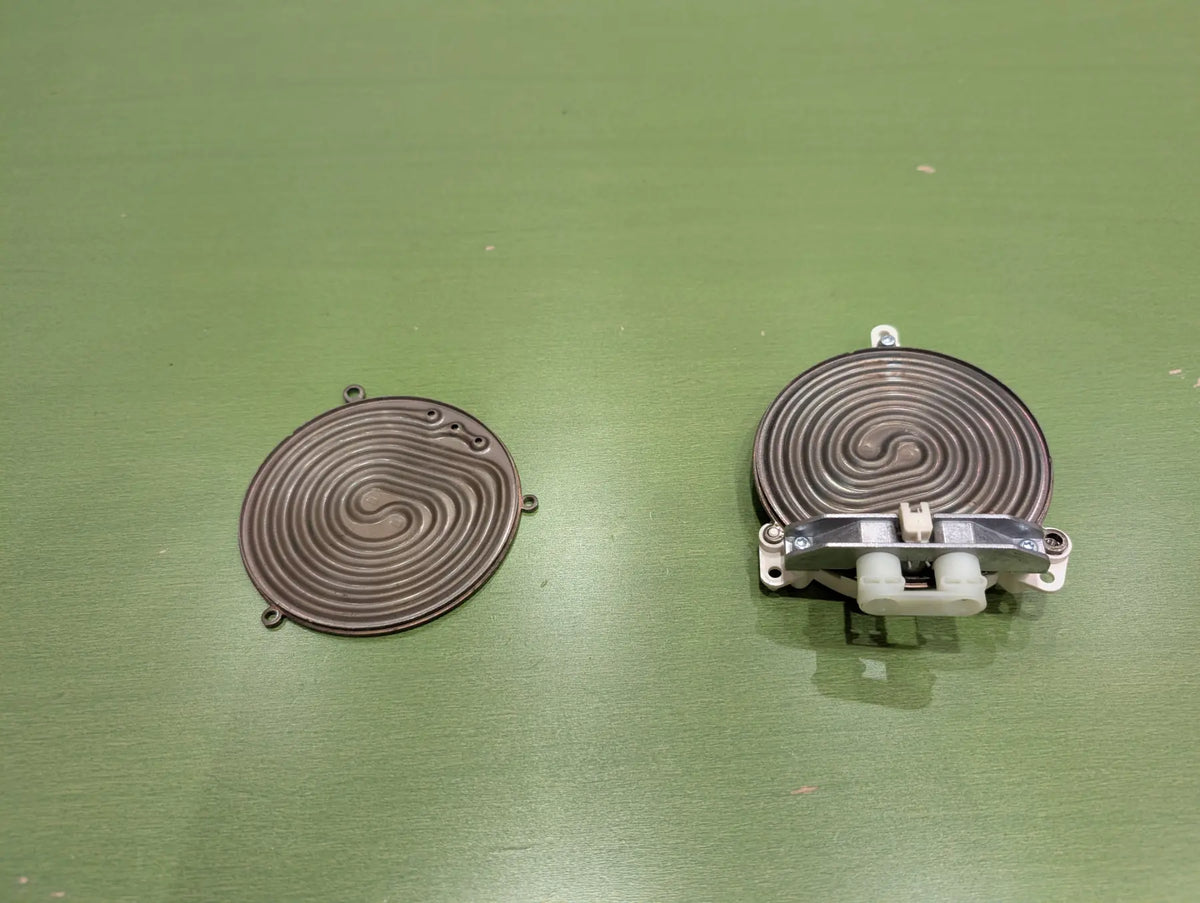

Back in 2018, we first encountered espresso machines equipped with thick-film heating technology. Today, thick-film heaters—known in the market as Flow Through Heaters (FTH), Fast Through Heaters, or ThermoJets—have firmly established themselves across the coffee machine industry. Thick-film heaters have not only overtaken traditional thermoblocks in terms of performance and agility, but they are also putting increasing pressure on manufacturers of traditional boiler-based espresso machines.
In 2018, we tested the Sage Bambino from Australian manufacturer Breville, which operates in Europe under the brand name Sage Appliances. The machine was impressively fast at getting up to temperature, though its thermal stability left something to be desired. Shortly thereafter, the Sage Barista Pro arrived on our test bench, making it unmistakably clear: the potential of thick-film heaters is immense.
Both machines were equipped with a thick-film heater developed by the Dutch company Ferro Techniek. While Sage introduced its thick-film heating element under the trendy marketing name "ThermoJet," the manufacturer itself refers to the technology as a Flow Through Heater. How the Flow Through Heater works, which machines currently use it, and what this shift means for the market are the key topics of this article.
Maro, Zuriga, Sage and Co.
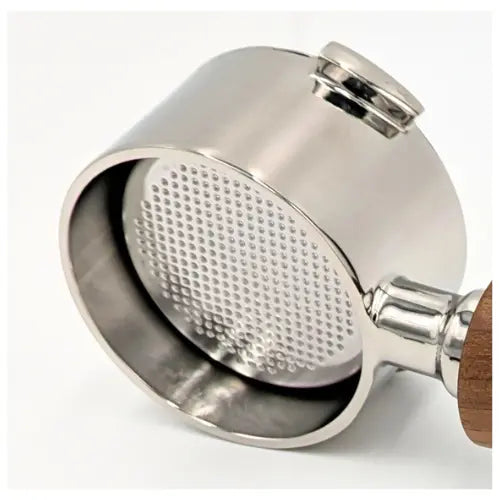
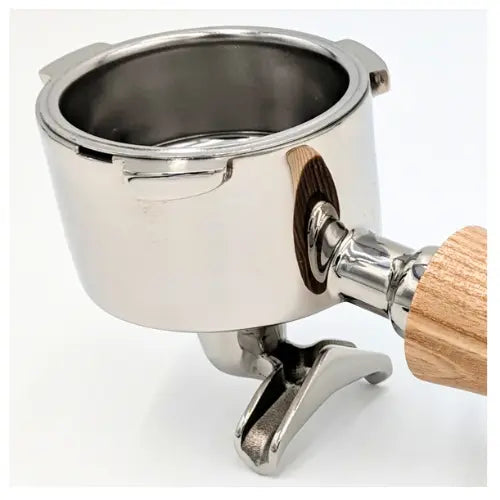
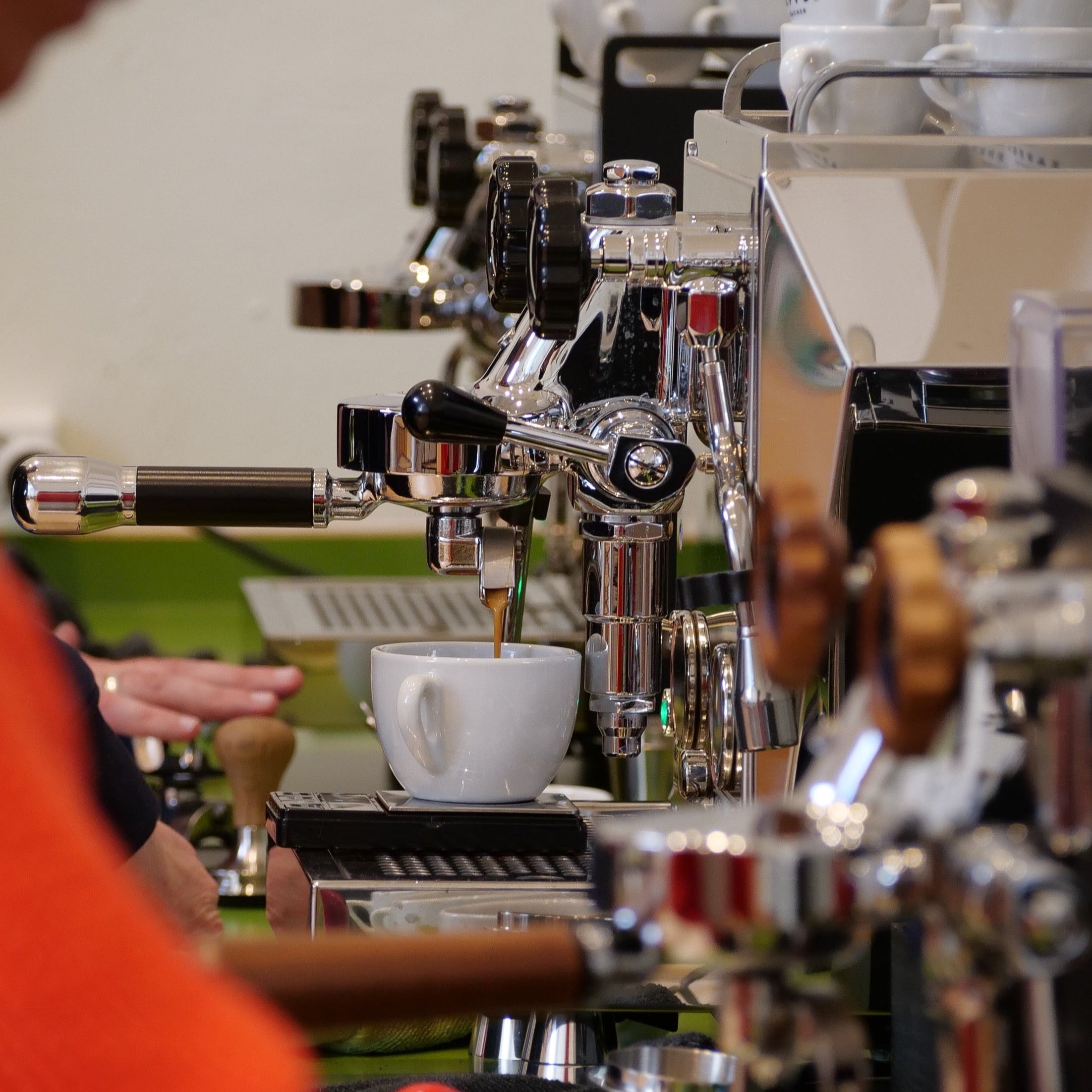
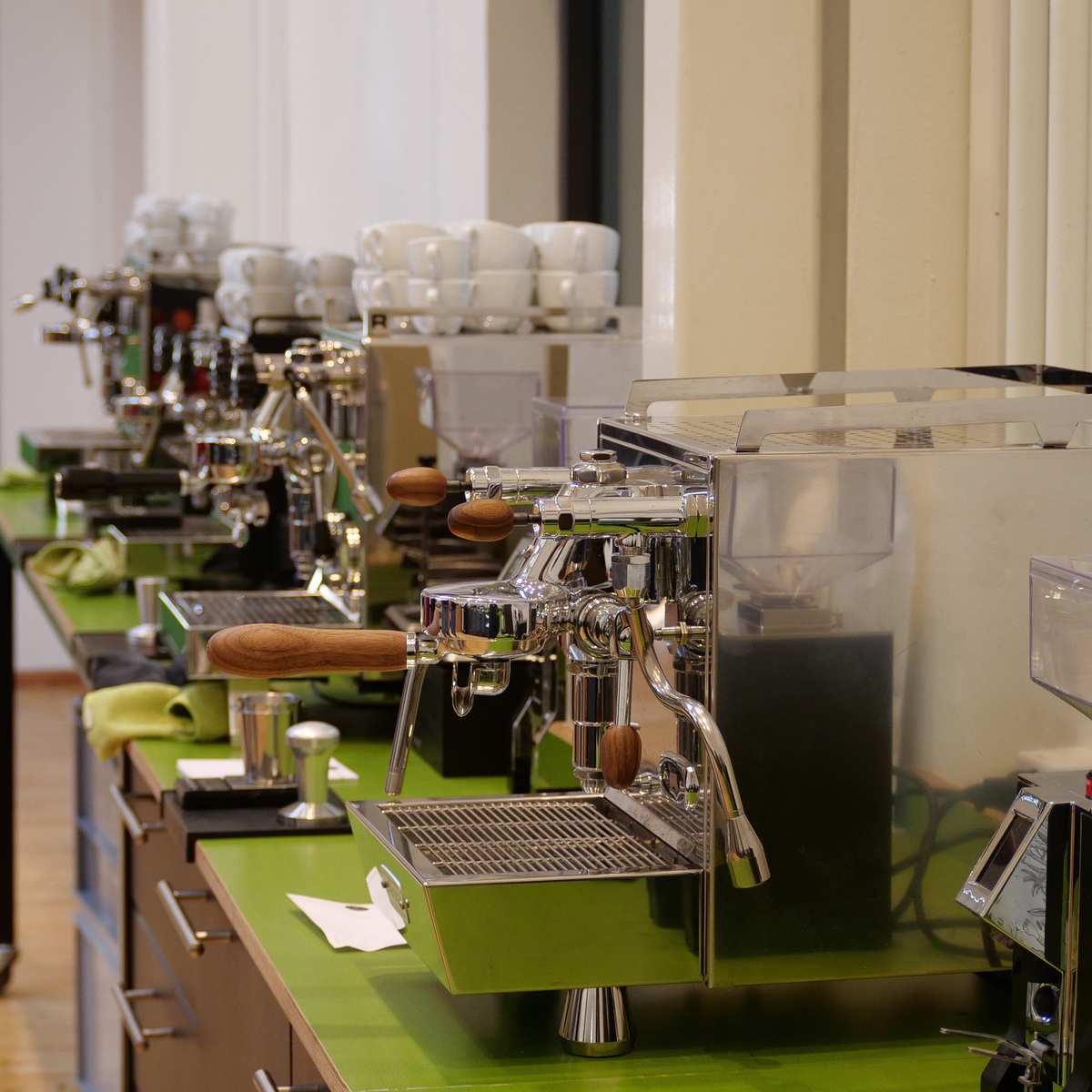
What do the Maro Model 1, Zuriga Generation 2, and Unica have in common with the Sage Bambino and Sage Barista Pro? They all share the same heating technology: the thick-film heater. And they are in excellent company. The Tone filter coffee machine, the Aiden Precision Coffee Maker, and the ETNA milk system also rely on thick-film heating. The lineup of manufacturers utilizing Ferro thick-film technology will soon be joined by two more innovative espresso machines: Roxy Espresso and nunc.
What an extraordinary success story for the Dutch company based in Gaanderen, Gelderland. Specializing in thick-film heating elements printed directly onto metal substrates, Ferro delivers custom solutions across various industries. Ferro is part of the Otter Control Group and operates manufacturing facilities in the Netherlands, Hungary, the UK, and China. Around 50 employees work at the headquarters in Gaanderen, with an additional 80 at Ferro Electronics in Budapest. The Otter Group employs approximately 1,500 people worldwide.
The story of Ferro’s Flow Through Heater gained real momentum in 2013. The manufacturer created a "Developer Kit" containing everything needed to build prototype applications. Alongside the FTH MK2, the kit included a pump, a flowmeter, and a control board. Approximately 100 companies ordered this kit.
Interestingly, Ferro had developed an earlier version of the FTH—the "FTH MK1"—as far back as 2007. However, it could handle a maximum pressure of only 2.5 bar, limiting its application to pod and pad machines. Brewing proper espresso requires pressure capacity of up to 15 bar, depending on the pump architecture.
The "FTH MK2," which is built for espresso pressures and capable of generating steam for milk frothing, reached proof-of-principle status in 2010. Production scaled up significantly in 2015, with Sage/Breville acting as a pivotal first mover in the thick-film heater's commercial success story.

What Are the Key Advantages of Thick-Film Heaters?
Thick-film heaters offer significant advantages over traditional boiler and thermoblock systems:

How Do Thick-Film Heaters Work?
Water flows through a flat, narrow channel integrated directly onto the thick-film heater's substrate. This channel is engineered to optimize water flow dynamics and maximize heat transfer efficiency.
| Component | Design Detail |
|---|---|
| Material | The fluid channel is typically made from the same material as the substrate (usually stainless steel). |
| Geometry | Tubular or serpentine channels designed to create controlled turbulence for optimal heat absorption. |
| Manufacturing | Deep-drawing and specialized bonding techniques for seamless integration into the heating element. |
| Pressure Rating | Engineered for espresso pressure levels up to 15 bar (MK2 generation). |
By integrating the fluid channel directly onto the FTH substrate, water receives immediate, highly efficient thermal transfer directly from the printed electrical resistance elements.

Temperature Sensor Integration and Control Systems
The low thermal mass and rapid response time of thick-film heaters demand high-precision sensors and control loops. Because there is virtually no thermal mass acting as a buffer, the control system must make real-time adjustments in milliseconds:
Modern FTH architectures use microcontrollers that process readings continuously:
Different Machines, Customized FTH Variants
Depending on the application, Ferro manufactures different FTH models tailored to specific machine requirements:
| Machine Model | FTH Specification | Application Focus |
|---|---|---|
| Maro Model 1 | FTH II 2300 W | Maximum power output for high flow rates & powerful steam |
| Sage Bambino | FTH II 1500 W / 2300 W | Compact domestic ThermoJet unit |
| Zuriga E2 Gen 2 | FTH II 1400 W + 600 W Group Heating | Dedicated dual-heating for water/steam & active group head |

Engineering Challenges and Future Outlook
Precision control remains one of the primary engineering challenges when implementing FTH technology. Without a thermal buffer, imprecise control algorithms cause immediate temperature fluctuations. This challenge was evident in earlier generations of Sage/Breville machinery. While early iterations exhibited noticeable temperature swings, ongoing refinements have demonstrated the massive potential of the technology.
Manufacturers like Zuriga and Maro clearly demonstrate what this technology can achieve when executed with precision. The thick-film heater flexibly covers all tasks: heating brew water, generating steam, and actively heating group components and portafilters.
The arrival of the thick-film heater marks the beginning of a new era in espresso machine engineering. Especially in the home segment, FTH technology offers compelling advantages over classic boiler systems: it reaches temperature in minutes, uses significantly less energy, and enables pin-point temperature profiling.
Commercial applications are also on the horizon. Brands like Tone are pioneering commercial FTH equipment, and rigorous endurance testing on the Maro proves that thick-film heaters maintain remarkable temperature stability even under high-volume shot frequencies.
Overview: Espresso Machines Featuring Thick-Film Heaters
| Release Year | Machine / Model | Features / Heating Element |
|---|---|---|
| 2018 | Sage / Breville Bambino Plus | FTH II 2300W ("ThermoJet") |
| 2019 | Sage / Breville Bambino | FTH II 2300W |
| 2020 | Sage / Breville Barista Pro | FTH ThermoJet System |
| 2021 | Sage / Breville Barista Touch | FTH ThermoJet System |
| 2022 | Unica Pro | FTH II 1800W |
| 2022 / 2023 | Tone Filter Coffee Machine | Commercial FTH Flow Through Heater |
| 2024 | Maro Model 1 | FTH II 2300W – High Precision Control |
| 2024 | Zuriga Generation 2 (E2) | FTH II 1400W + 600W Active Group Heating |
| 2024 | Sage / Breville Oracle Jet | ThermoJet Dual System |
| 2024 | Aiden Precision Coffee Maker | Precision Filter Coffee Maker |
| In Development | Roxy Espresso | Compact portafilter machine with FTH |
| In Development | nunc. coffee | Smart espresso system |
| In Development | datum.coffee | Innovative espresso startup project |
| Other Applications | ETNA Milk System | FTH for milk heating |