



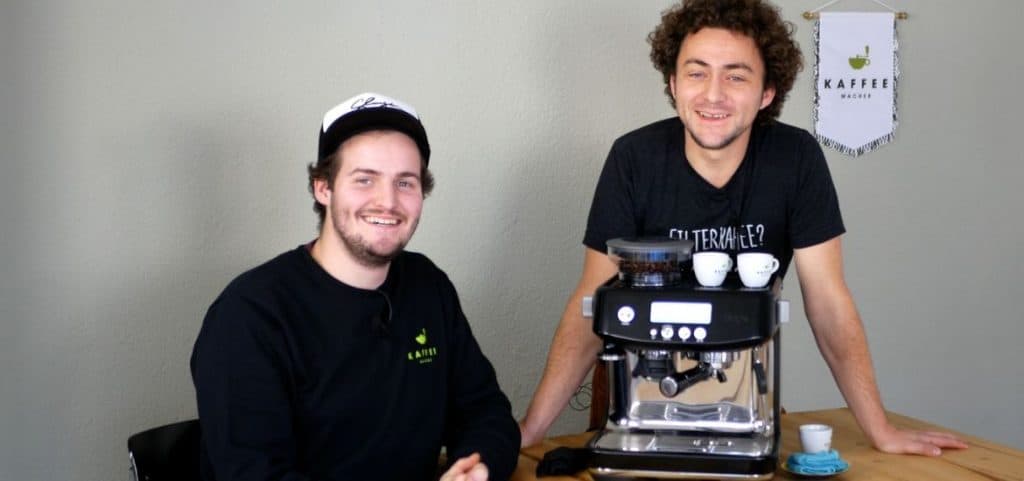

The Sage SES 878 Barista Pro promises quality espresso at a reasonable price. An espresso machine with integrated grinder for €600 or 500 francs (as of August 2026). That's quite something, and if the espresso tastes good, this combo is truly interesting.
Be sure to check out the test of the Sage Barista Touch as well.
As coffee makers, it's important to us that you can make good coffee with simple means, which also means without spending many thousands of francs. That's why we also take a close look at affordable espresso machines. It's about good coffee with all means, as accessible as possible. That's why we've already tested the Delonghi Dedica EC 685 and taken a close look at the Rancilio Silvia. You can find an overview of common espresso machine types here.
More tips and frequently asked questions about the Barista Pro, Express and Co. can be found in a separate article.
Name chaos – who can explain it?
Before we dive into the machine itself, we need to first clarify the type and name. And in this regard, the machine was more complicated than its operation. In Switzerland, the Barista Pro is now registered under the company name of the Australian manufacturer Sage. Not long before that, the Sage models were available as Solis devices. In the German-speaking region, they were also known as Gastroback, while the English-speaking world refers to them as Breville. Under new management in Europe, a standardization process was begun a few years ago, which has now been largely completed.
The chaos was clearly visible on YouTube back then when searching for test reports on the machine: Depending on which name you entered, you'd find information, but was this exactly your machine? This created a lot of uncertainty for customers.
Compact, but packed with features
One of the biggest pros of this coffee machine is certainly that everything is under one roof. And that at just 39.5 cm wide, 39.2 cm deep and 42.2 cm high. An espresso grinder with conical burrs is built in, as is the entire brewing apparatus. Even the included tamper can be conveniently stored in the coffee machine. The water tank holds 2 liters. The bean hopper fits 250 grams. From our perspective, that's the perfect amount for a coffee bag, at least for home use. 1 kg bags are often left open during consumption, draw in air, and tend to make the coffee go rancid.
The LCD display on the front provides the important information, and the grinder is easy to adjust using the wheel. You can place the included milk pitcher on top of the machine. On roughly 40 cm square, the complete setup is ready to go. That's what we call compact, super compact actually.

Anyone who buys this espresso machine can get started right away. You only lack a knock box for old coffee grounds, otherwise you have everything.
The conical espresso grinder
We regularly preach: a good grinder is the prerequisite for good espresso. We initially found it bold and good that Sage also built in a grinder. Bold, because even renowned grinder manufacturers struggle with good grinders. Besides, having a grinder in an espresso machine carries the risk of overheating. The heat from the espresso machine could cause the grinder burrs to warm up and potentially even become moist.
When it comes to heat, one weakness of the Sage Barista Pro is an advantage. Because of its own Thermo-Jet heating principle, the heat is not distributed throughout the entire body of the espresso machine. The cups on the espresso machine, for example, are also not warmed up. This is a disadvantage for the cups, but an advantage for the grinder.
With 10 to 15 consecutive espresso pulls, we detected a slight warming of the dispensed coffee powder to around 30 degrees. That's absolutely acceptable. The more coffee that's ground, the more the machine clumped. Clean leveling and tamping are then necessary to avoid the risk of channeling (channeling).
Mastering coffee powder quantity
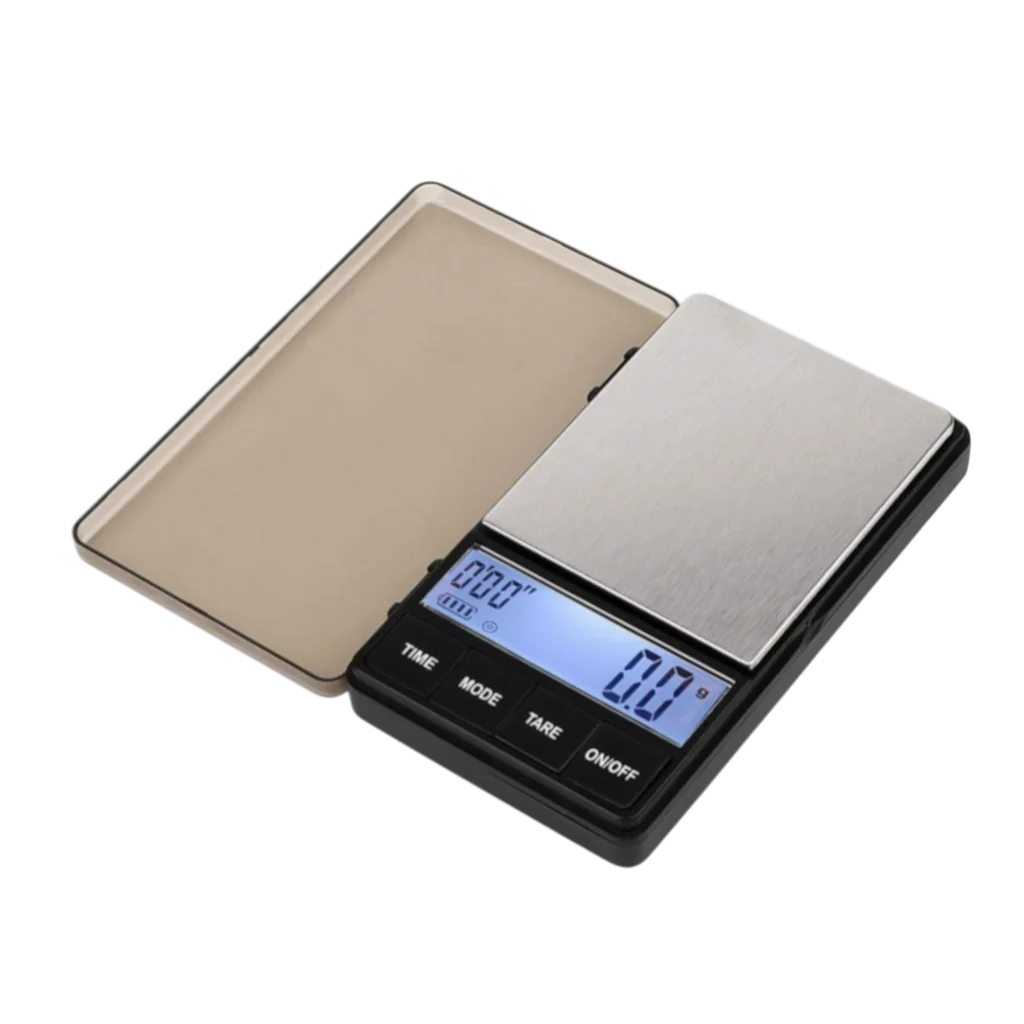
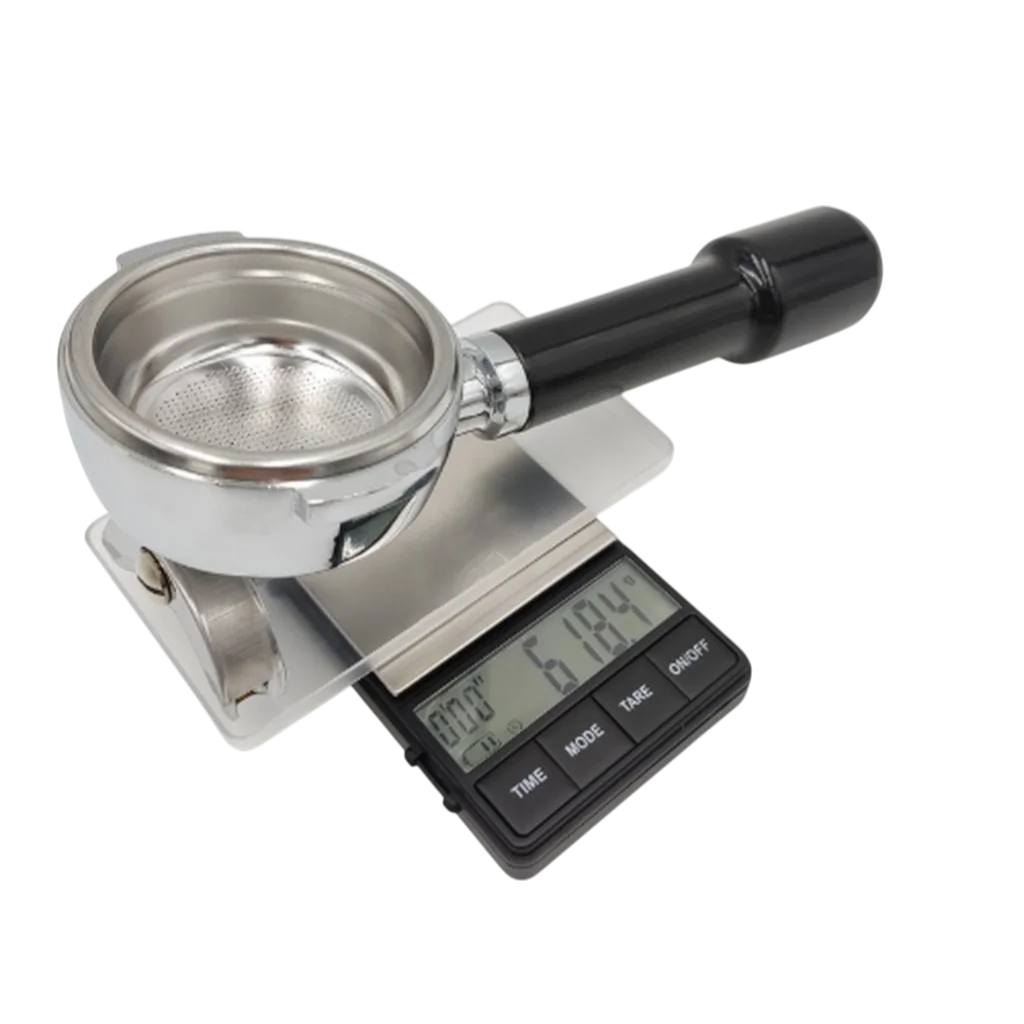
The grind amount fluctuated within an average range over 10 grinds, compared to grinders in the sub-€800/1000 franc range. For our test, we weighed 18.2 / 18 / 18.4 / 18.1 / 18.6 / 18.5 / 18.3 / 18.4 / 18.5 / 18.4 grams.
The grind setting itself can be adjusted on a wheel to the left of the machine in 30 stages. The current grind setting is displayed above the display, as is the current grinding time, which can be set in increments of 0.5 seconds. Our target amount was 18 grams. With a grinding time of 13.5 seconds, we made the measurements described above. With a grinding time of 13 seconds, coffee powder weighing an average of 17.7 grams was dispensed.

The fact that more precise adjustment is not possible can be well compensated for by adjusting the water amount. However, the machine could be improved without much effort by allowing more precise selection of grinding time. We'd like to see this from Sage in the next revision.
Espresso baskets and fake baskets
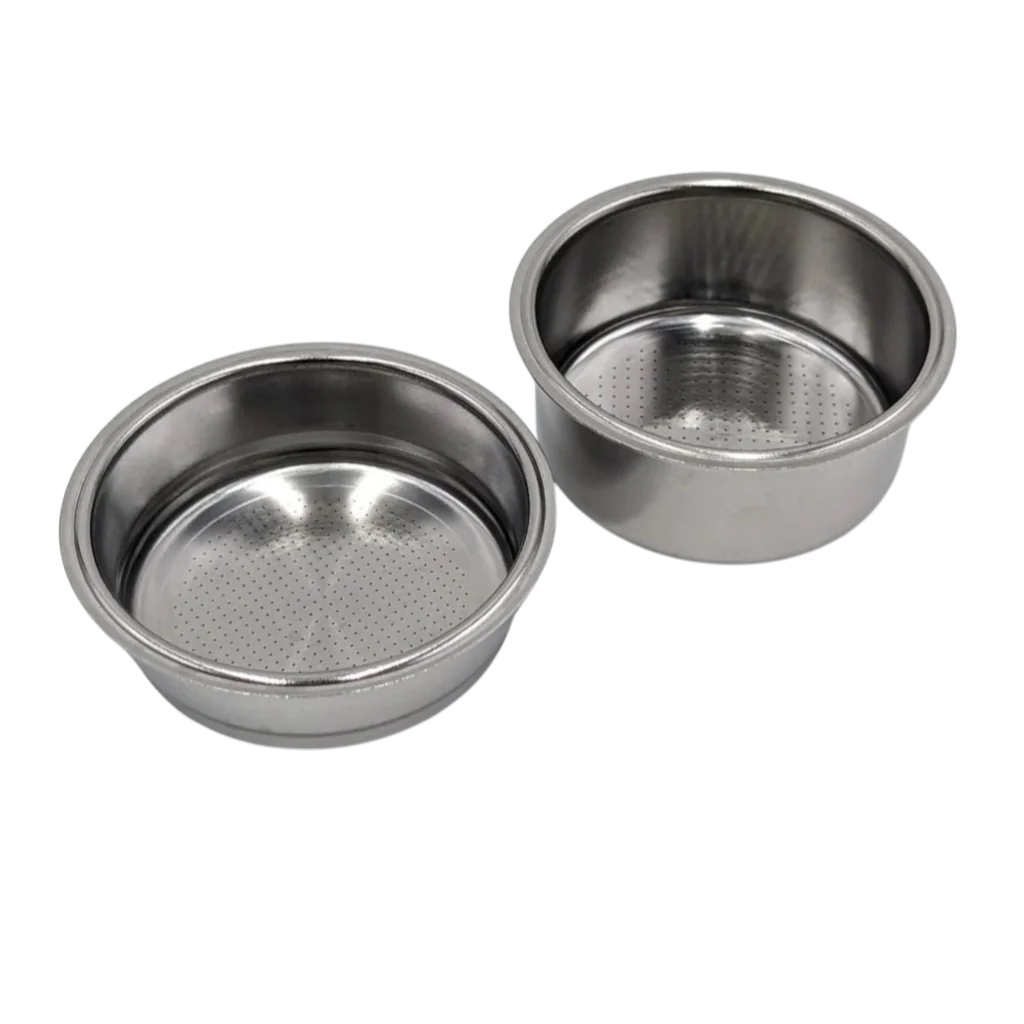
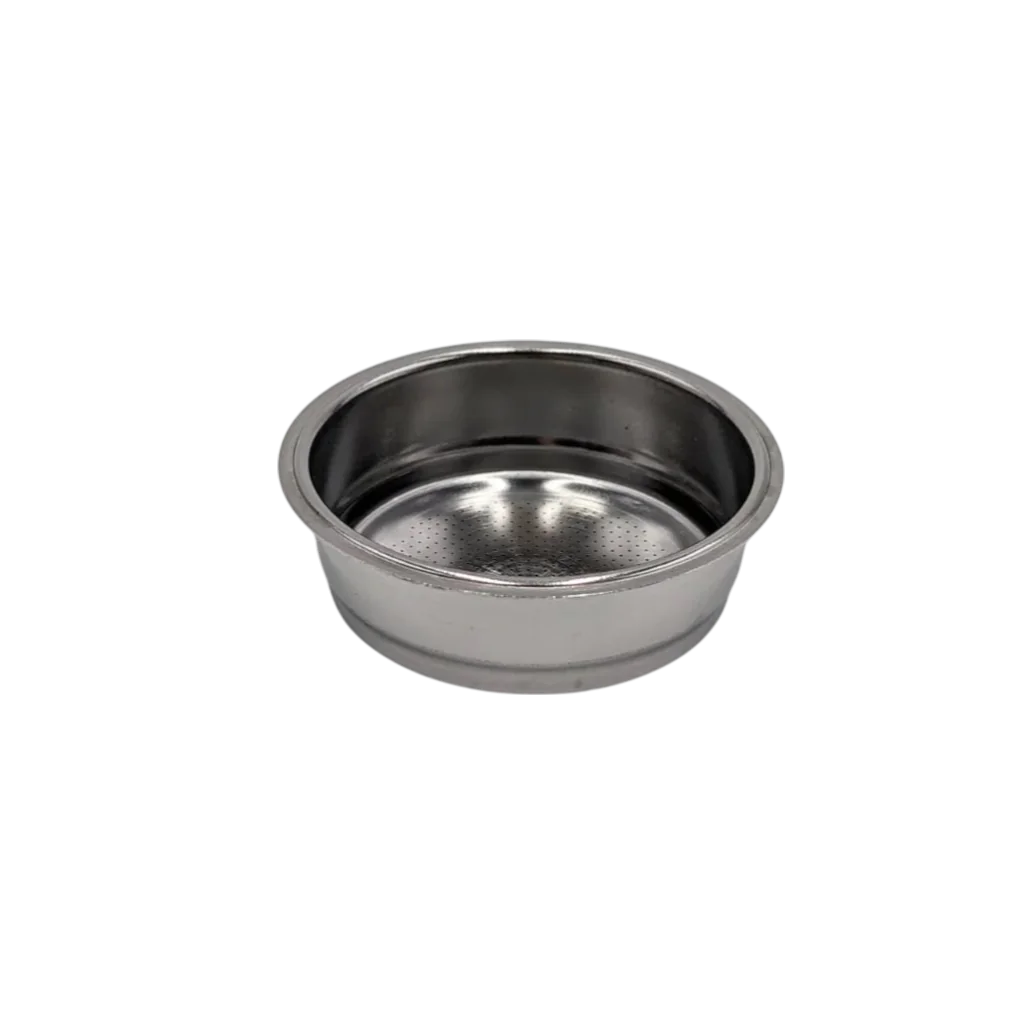
Four baskets come with the Sage. For serious coffee makers, only the two baskets with actual openings are of interest. Two of the included baskets pretend to have multiple openings, but in reality only have a tiny opening. They're designed for pre-ground coffee. The brewed coffee is pressed through a double-wall bottom and then through a tiny hole. This creates crema even with old, pre-ground coffee. This tricks the eye into thinking the coffee is good. However, crema alone is not a quality indicator for coffee, especially because of baskets like these. Anyone using pre-ground coffee on this espresso machine is doing something wrong. After all, the machine has its own grinder built in.

However, a normal 1-cup basket and 2-cup basket are also included. We recommend the 2-cup basket. Get used to working with it. When in doubt, you drink more coffee or always have an extra shot for your neighbor or coworker at the office. The espresso quality and reproducibility of the 2-cup basket is significantly better.
Mastering dosage
Sage specifies the dosage for the 2-cup basket as 19 to 22 grams. We didn't put more than 18 grams of coffee in there and advise you against trying. You won't get any benefit by cramming more coffee in and having the espresso machine's shower head already pressing on the coffee powder. Once the coffee powder comes into contact with water, it expands again. The risk of channeling is extremely high if you overfill the basket like that.
So work with a maximum of 18 grams or preferably with 17.5 grams. Then the problem of filling the basket becomes smaller too. A push of the basket against the grinder's trigger mechanism starts grinding. If you don't interrupt it, it will grind through the selected 13 seconds. The basket itself has a diameter of 53 mm. Sage lists 54 here, but our 54 is closer to 53. With such a narrow basket, the powder has less room to fall and distribute. As a result, it forms a mound in the basket and partially spills over. This is clearly visible in our video (see 11:49 minute mark in the video).
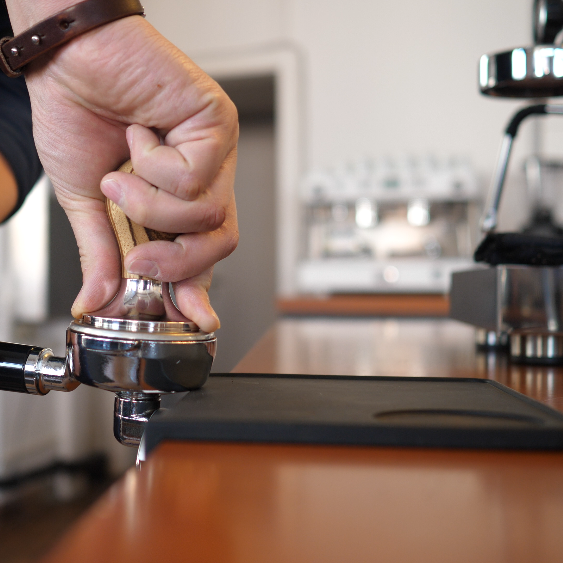
However, by pressing the grinder's trigger button again, you can interrupt grinding. By tapping the basket on the work surface, the powder collapses a bit and makes more room for the coffee powder. In the video, Felix does this process three or four times to get 18 grams of coffee into the basket.
Instead of interrupting the 13 seconds, we recommend programming the grinding time directly to, for example, three 4-second intervals. We got more accurate coffee quantities with this method than by interrupting the 13 seconds.
After leveling and tamping comes espresso extraction. Speaking of leveling: Sage includes a leveler, but we couldn't use it with the high fill heights suggested by Sage.
Brewing and coffee quality
The grinder does the most important part of the work. What follows is the brewing process, which involves continuously delivering the water amount at as constant a brewing temperature as possible. The Sage SES 878 Barista Pro works by default with pre-infusion: it delivers a smaller portion of the brewing water at the beginning without pressure on the coffee powder. Using such a technique is a matter of philosophy. We like to say: what matters is what ends up in the cup. You can make good coffee with or without pre-infusion.
Our coffees tasted inconsistent after we set the machine's temperature to the lowest value. While we still measured temperatures over 98 degrees at peak, they dropped fairly quickly and settled at just under 96 degrees before continuing to fall. The machine delivered a consistent 9.5 bar pressure throughout the brewing process without complaint.
The pulled espressos were too bitter and unbalanced at high brewing temperatures. With adjusted brewing temperature, the taste was okay.
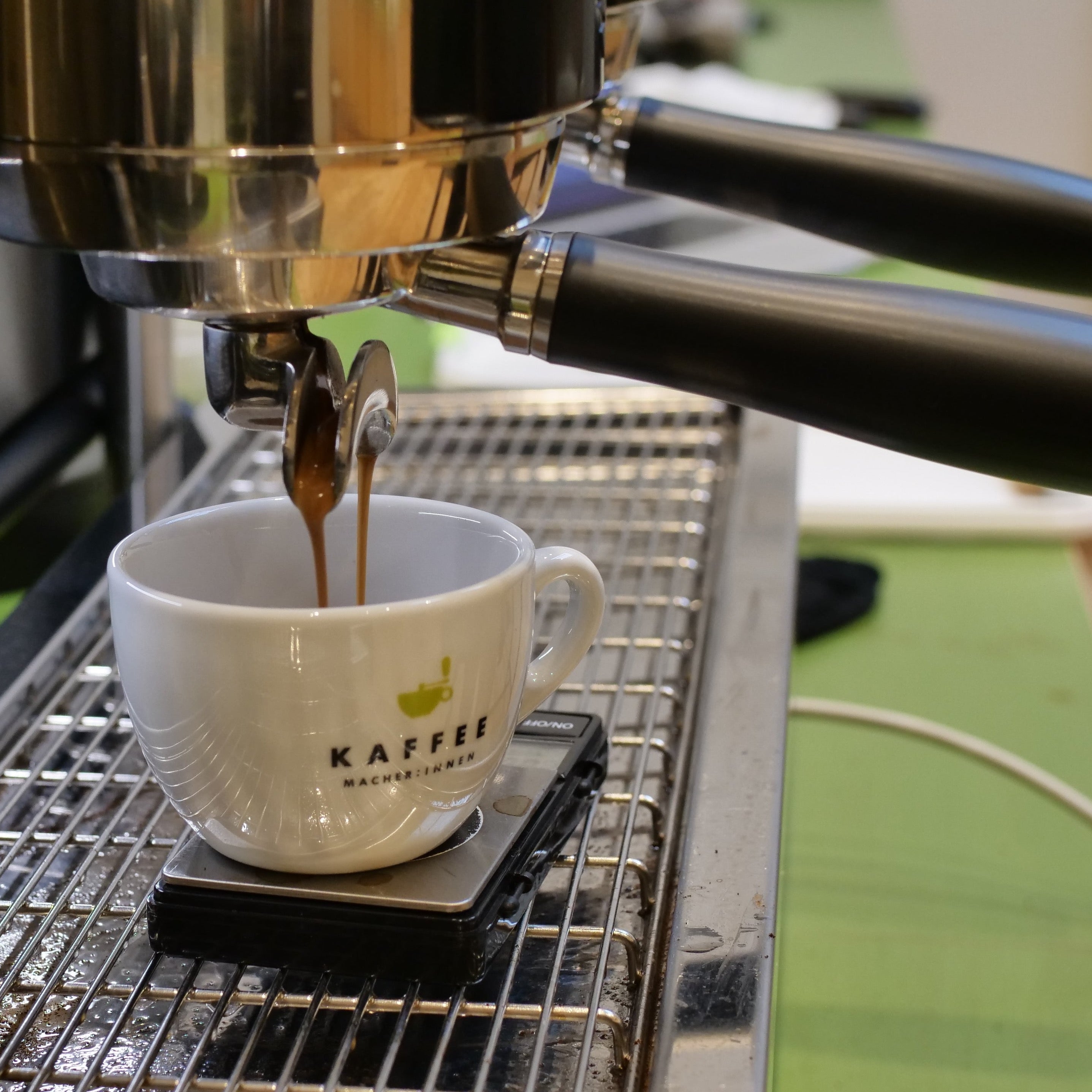
The water amount can be adjusted. This is important because it allows you to better respond to the reduced coffee amount. The brew ratio depends on the roast and the coffees. For our coffees, we like to recommend a ratio of 1:2.5, for example 17 grams of coffee for the double espresso at 42.5 grams output.
Hardly gets warm any faster
What's really impressive is how quickly the espresso machine reaches temperature. After switching on, it signals brewing readiness in around 3 seconds. This is a real plus for anyone who wants to quickly make a coffee. However, one thing to keep in mind: while the heating device called Thermo-Jet is then ready, the material of the basket and so on is not yet warmed up. If you start brewing now, you lose temperature to the basket and the group head. So definitely run at least one shot through with the basket locked in place but without coffee. This heats up the machine, and your espresso will taste good from the first shot.

Steaming milk and cappuccino
The Sage SES 878 Barista Pro also makes fairly decent milk foam if you know how to do it. This provides the basis for all espresso-milk mixed drinks like cappuccino and latte macchiato.
Here again, the machine's switching speed is impressive. One moment the espresso is being brewed, the next the machine is ready for milk. This is triggered by a dial wheel to the right of the machine. You should briefly release hot water first, then steaming can begin.
The machine has relatively low power. This slows down the steaming process, which initially is good for beginners: you have more time to find the right position and don't have to stress as much as with machines with more pressure. On the other hand, it's also more difficult to get all the milk in rotation and thus break down the milk bubbles again. But it's absolutely possible, and our video on latte art can help you with that.
The included milk pitcher is suitable for steaming. However, because the spout is not quite straight, clean and especially straight pouring is made difficult. An upgrade is worth it here.
Americano and other coffee drinks
Other drinks, such as tea or an Americano, can also be brewed with the Barista Pro. Directly next to the basket holder is a small water outlet that delivers about 180 ml of water in one pull.
This is convenient if you like to drink extended espresso, the so-called Americano. Sometimes you like to drink more coffee volume but don't want to make a milk drink. Then the Americano method makes sense. To do this, first add about 100 ml of water to the cup. With the Sage Barista Pro, you can simply place the cup under the basket holder and use the wheel to the right of the machine, the milk steaming wheel, to dispense water into the cup. Then you brew your espresso as usual.

With the Americano method, you avoid pressing the entire water amount through the coffee. While this also results in a full cup, it over-extracts the coffee. We call this over-extraction, and it's bitter and unpleasant. That's why the Americano method is the better choice. First water in the cup, then espresso on top. In this order, you even get crema.
Conclusion
It's remarkable what's possible in one machine in such a compact space. We thought Sage did good work there and put pressure on known competitors even in more expensive price segments. They had learned from the coffee community in many places and implemented things well.
With coffee dosing or basket size specifications, Sage wanted more than was necessary. High dosages are sometimes considered desirable, but not at any cost. And too much going in is far from ideal.
We would have preferred more grinding time adjustment options and more precision in temperature. The advertised 3 seconds to brew start were impressive, but 15 seconds would have been more honest. Because warming up the materials is necessary for good espresso. 3 seconds sounds better, but 15 seconds is still a good value.
The Sage SES 878 Barista Pro is still available for around €600 or 500 francs (as of August 2026). Overall, a decent espresso machine with integrated grinder.
Pros:
- The machine's baseline heat is relatively low, so the grinder doesn't heat up either. This is often a problem with integrated grinders.
- Heats up faster than you can count to five. A real advantage for anyone who wants coffee quickly, but don't forget to warm up the basket.
- Suitable for espresso, cappuccino, Americano and more.
- Decent coffee quality in minimal space thanks to fresh grinding and more.
- 2-liter water tank that's easy to remove and refill.
- Price-to-performance ratio very interesting at around €600/500 francs.
Cons:
- Cold cups, since the machine barely heats up as a whole.
- Basket size confusion, can't Sage measure?
- Narrow basket diameter, so overflow problems when grinding.
- Basket outlets close together, precise machine positioning is necessary.
- Temperature not constant throughout the brewing process and sometimes significantly too high.
We purchased the Sage Barista Pro. That's a principle for all our tests. Sage additionally provided us with the Barista Express on loan, which we returned after testing.
We found that to be a good compromise. We test independently, as you can see in this test. We've been asked very often to test this and other machines. Our principle of buying everything ourselves gets quite expensive.
If you're going to buy this machine from an online retailer like Amazon anyway, please feel free to use our affiliate link. It doesn't cost you any more, and we can put it toward further machine tests.