







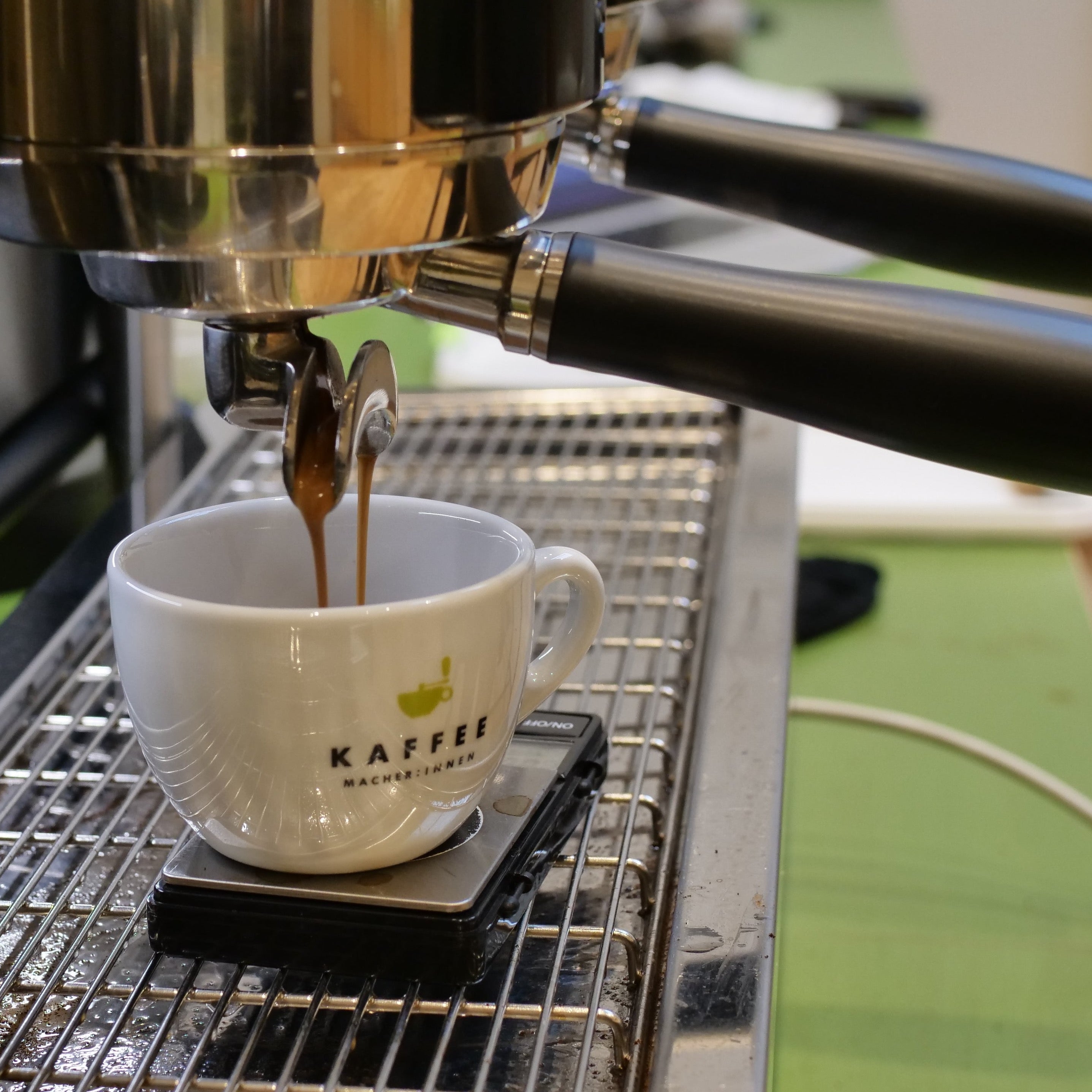


After almost ten years of roasting, we've ventured into the holy coffee grail. We've released our interpretation of an Italian espresso – the Compadre.
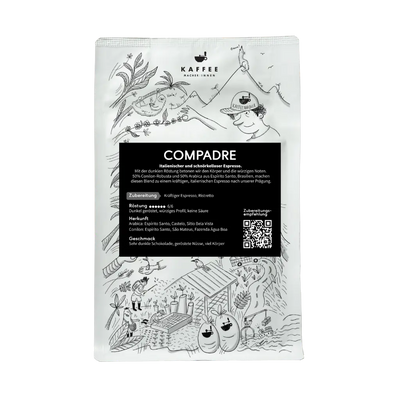
The Compadre is a 50/50 blend of Arabica and Conilon, Brazilian Robusta. Both coffees come from family-run coffee farms in Espírito Santo, Brazil. We roast the coffee very dark, emphasizing the robust notes of the Conilon and bringing out spicy, tobacco-like aromas. The Arabica gives the coffee texture as well as dark-chocolate and nuttier notes.

The Arabica portion comes from the Montanhas Capixabas, the mountain region of Espírito Santo
We developed the coffee together with our partners at Farmers Coffee. I visited in autumn 2023 and was impressed by the drive of the young entrepreneurs and sons of coffee farmers. They focus on high-quality Conilons and Arabicas from the mountains of Espírito Santo. We visited Arabica farms at 1200 meters and Conilon farms at 80 meters above sea level. The topography is impressive.

Visiting Farmers Coffee in Venda Nova do Imigrante, autumn 2023

The Conilon portion comes from the northern part of Espírito Santo and is grown at 80 meters above sea level
Espírito Santo has a history strongly shaped by immigration. Many Italian families immigrated at the end of the 19th century, worked in coffee production, and gradually took over coffee farms.
The two families who contributed their coffee for the Compadre also have Italian roots: The Romãos produce their pulped natural Arabica in the mountainous region around Castelo, while the Magieros produce their pulped natural Conilon in the plains of São Mateus in northern Espírito Santo.

The Romão family contributes the Arabica portion for the blend
In a way, a very large, historical circle closes: the coffee from both families with Italian roots now lands in an espresso modeled after the Italian tradition.
Farmers Coffee sorts the two coffees in their warehouse and mixes them in a 50/50 ratio in the coffee sack. This allows the moisture of both green coffees to equalize in the sack. The 30-kg sacks arrive at our roastery this way and are roasted as a complete, already-mixed coffee.

The Roast
We opted for a medium-length and hot roast. We roast the Henrique or Apas espresso slightly longer, but with the Compadre we reach the highest final temperature on our roaster. With this high final temperature, we emphasize the roastier, robust notes. We end the roast just before the second crack.
What is Italian espresso?
In autumn 2024, we published a video and a blog about the 20 best Italian espressos. Our community selected the coffees to be tasted, with over 2000 votes cast.
In this complex and lengthy tasting, one thing became clear to us: Italian espresso as such doesn't really exist. There's a tendency for more Arabica to be used in the north and more Robusta in the south. We also saw that roasteries in the north roast somewhat lighter, while roasteries in the south prefer dark roasting.
The image of the "classic Italian espresso" is often invoked, but consensus seems to come more from an outside perspective. We often hear that the coffee simply tastes so much better after the Gotthard Tunnel or after crossing the Brenner Pass.
It's possible that the anticipation, the vacation feeling, the sight of the machine and familiar coffee brands in that moment have their influence – so the espresso is perceived differently than when prepared at home.
But, we believe, it is above all the ratio of the amount of coffee grounds used to the extraction amount in the cup: the drink ratio. This differs significantly from what is customary north of the Alps. While we prefer drink ratios of 1:2.2 to 1:2.4 in our cafés, 1:2 in many Italian caffè bars is already almost a long espresso. 1:1.5 often serves as the reference, meaning 1 part coffee to 1.5 parts water – for example, 17 g of coffee grounds and 25.5 g of espresso in the cup.
That is short and strong. And often significantly cheaper – not because of the quantities served, but because of different wage and price structures.
Whoever north of the Alps serves an espresso in a 1:1.5 ratio and then charges double or triple what's typical in Italy, often gets a grim look. Yet the coffee might now be sensorically optimized. When a customer then wants "more for the money", the extraction is lengthened (more water flows through the coffee grounds), with the powder amount remaining the same. This creates watery espressos that are far from the imagined ideal.

Dério Brioschi, one of the founders of Farmers Coffee, we met in Geneva at the World of Coffee 2025.
How would we prepare it?
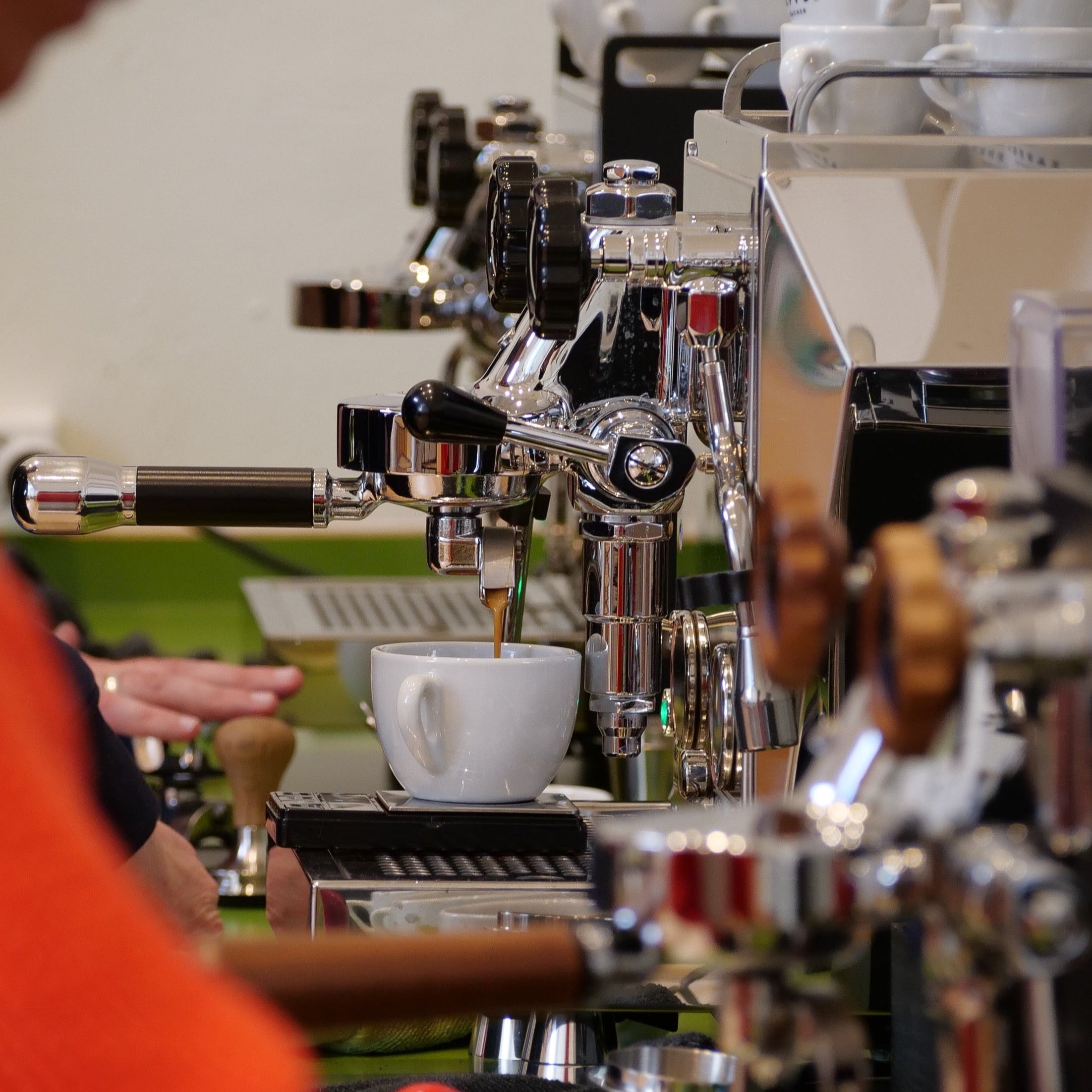
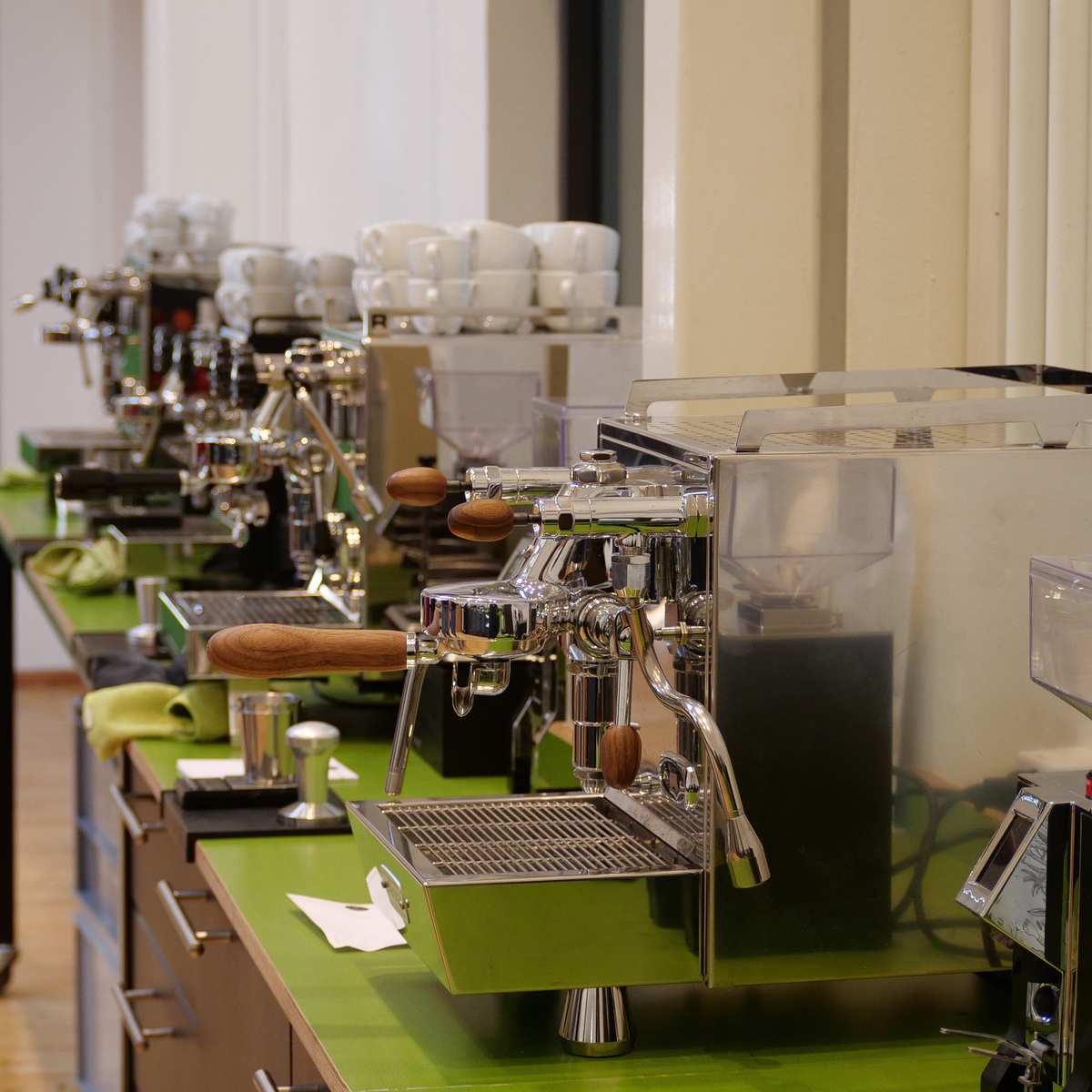
We're currently developing various recipes. Many fans of Italian espressos work with lever machines, which is why we want to develop a recipe for that as well.
For a classic 9-bar profile, we work with a brew ratio of 1:1.8 to 1:2 in at least 27 seconds. If you're aiming for high flavor intensity and a heavy body, extract the coffee shorter, so in the direction of 1:1.8. If you want to bring the coffee more into balance and highlight a few caramel-like notes, you can orient yourself toward 1:2.
We're excited to see your recipes – feel free to comment them here.





2 comments
amel
Der Test der Sage Oracle Jet zeigt gut, wie All-in-One-Lösungen im Alltag Komfort und Qualität verbinden können und den Umgang mit moderner Technik im Haushalt deutlich vereinfachen: Telkom University Jakarta.
Philipp Vögelin
Ein Rezeptvorschlag für Ristretto aus der Handhebel mit Feder, QuickMill Rapida: Kessel 118 °C ergibt Extraktion bei 96 fallend auf 90 °C gegen Ende. 18 Kaffee gemahlen auf der G-Iota DF83 ins IMS 16 g Sieb, Präinfusion bei Kesseldruck 0.9 bar für 10-15 s, mit sinkendem Druck der Feder folgen dann zusätzlich ca. 40 s Extraktion für ein Getränkeverhältnis von 1:1.5 mit 27 g in der Tasse. Fazit: Bitterkeit und Süsse in Balance, ein cremig dickes Mundgefühl mit den oben beschriebenen Aromen und trotz allem eine leichte weiche belebende Säure. Die Noten von gebranntem Zucker oder Rauch habe ich, vermutlich aufgrund des noch moderaten Röstgrades, nicht gefunden.
Leave a comment
This site is protected by hCaptcha and the hCaptcha Privacy Policy and Terms of Service apply.