



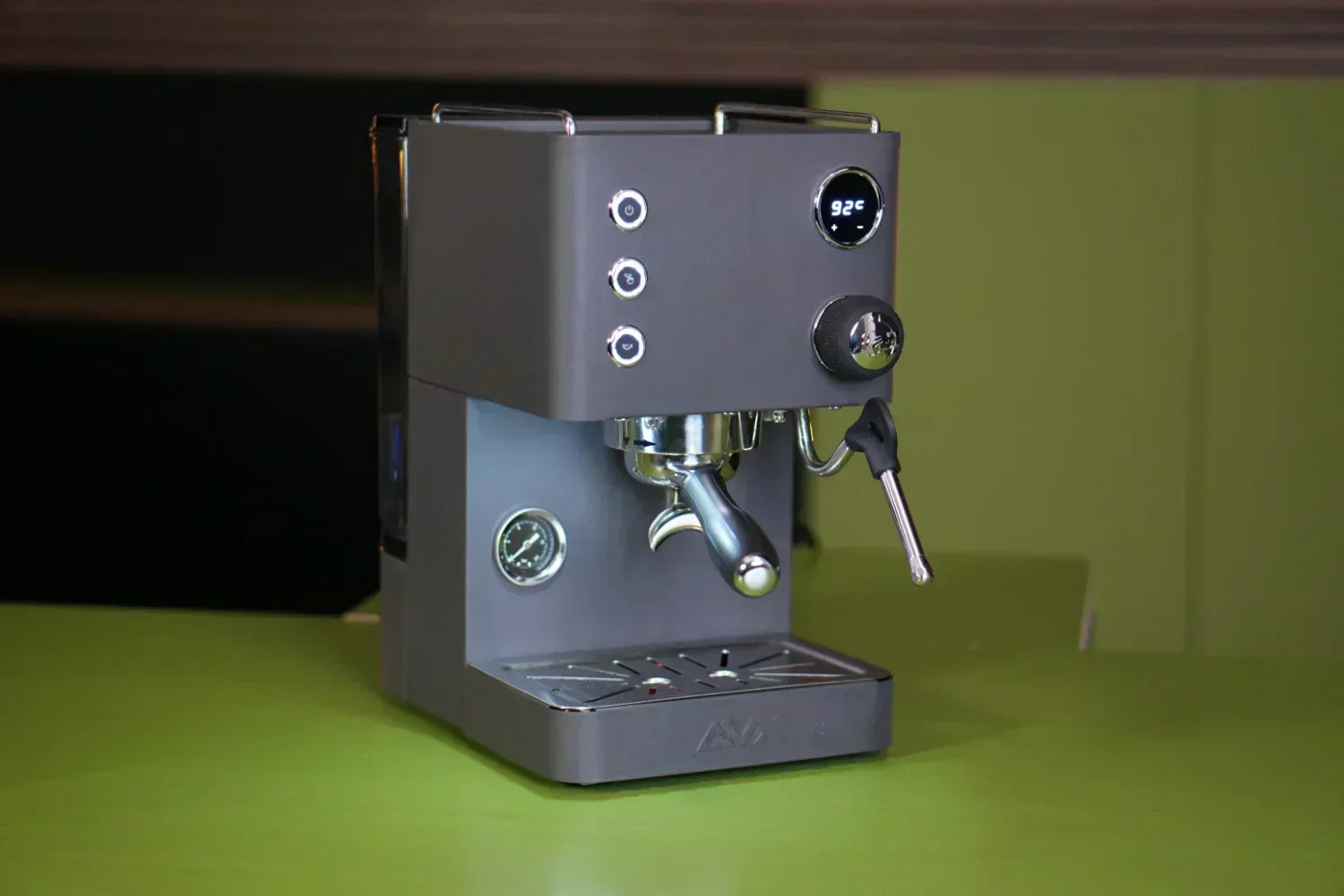

AVX? Yes, AVX! To be precise: "AVX-DB1 Hero X". But don't let the name fool you. That's what the espresso machine is called in Germany. In the USA, you know it as MiiCoffee Apex V2 or Turin Legato V2. In the UK as Gemilai CRM3007. Behind it is an OEM manufacturer from Asia (Gemilai) that supplies the same platform to various importers. The technology is identical. In Switzerland, the machine costs 467 francs and as always, we followed our principles and bought the machine ourselves.
The central question: Can a machine for 467 francs with a hybrid system really deliver consistent temperatures? The short answer: Yes, but. The long answer follows now.
Design & Finish: Surprisingly solid
Quality score: 4.5/10
The AVX weighs 10.5 kilos and sits stably on the counter. For 467 francs, other manufacturers often deliver significantly less quality. The housing consists of stainless steel and plastic elements, but doesn't look cheap. When we compare it to other machines in this price range – such as early Dedica generations or no-name devices – the AVX stands out positively.
Materials & Feel
The boiler sits directly above the brew group and is made of stainless steel (0.55 liters). The internal components look tidy. We completely disassembled the machine – which is a bit fiddly because you have to contort yourself to reach all the screws. But: Everything feels repairable. No exotic parts, no obvious planned obsolescence at first glance.
The buttons have a clear tactile response. The display (more on that in a moment) is a touchscreen, but it sometimes doesn't respond immediately. That's annoying when you want to adjust the temperature. But you don't use the display every day, so it's not a big deal.
The Catch: Bayonet Mount
A real criticism point: When inserting the portafilter, metal scrapes on metal. It feels like sandpaper on sandpaper. Not dramatic, but unpleasant. Will it get better after half a year? Possible. Will it bother you? Definitely.
The Hybrid System: No Two-Group, No Dual Boiler
This is where it gets interesting. The machine is often advertised as a "two-group" or "dual boiler". Both are wrong.
It's a hybrid system:
- 0.55-liter stainless steel boiler for brew water (with PID control)
- Thermoblock for steam (separate heating element)
Important: Both heating elements are operated with cold water. There is no heat exchanger like in classic two-group machines. That's why: Hybrid. Nothing more, nothing less.
What does that mean in practice?
You can't brew and steam simultaneously because only one pump is installed. First espresso, then steam. But: You don't have to wait 10 minutes for the boiler to heat up, like with some single-group machines. The thermoblock is ready after the espresso shot in just a few seconds.

Heat-Up Time & Energy: Solid, but not blazingly fast
Heat-up time score: 5.0/10
Power consumption score: 6.0/10
AVX promises "5 minutes heat-up time". In practice, it's 15 minutes until the machine is really fully heated and even then you need to help it along. You can start after 8-10 minutes, but your first shot will disappoint you (more on that in a moment).

Power consumption: 0.1408 kWh for heating up plus one espresso. That's solid mid-range. Not as economical as a thermoblock device (0.08 kWh), but not a power hog like large dual-boiler machines (0.25+ kWh).
PID & Temperature Offset
The machine has PID control with which you can adjust the temperature. Good! However: Our machine had an offset of +1.5°C. That means if you set it to 92°C, it delivers ~94°C. That's not a disaster – many machines have an offset – but you need to know about it. We set it to 92°C and were satisfied.

This log shows the temperature of the first shot, after flushing once through the portafilter.
Espresso Quality: The Temperature Drama and Its Solution
Espresso potential score: 3.5/10 (out of the box) → 2.5/10 with workaround
Now things get serious. The AVX has a massive problem: The first espresso after heating is undrinkable.
The Problem: Catastrophic Cold Start
We measure with our Scace 2 directly in the portafilter. After 15 minutes heat-up time:
- Flush to warm up through the portafilter
- Shot 1: 87.65°C (far too cold!)
- Shot 2: 93.09°C (already much better)
- Shots 3-5: 94.45°C / 94.50°C / 94.50°C (excellently consistent)
The first shot is 6.5°C below steady state. That's catastrophic. Coffee tastes sour, under-extracted, flat. The machine is on, but the portafilter and brew group are still cold.

The Solution: Flush 2x (Temperature Surfing)
Here comes the workaround you must apply:
- Let the machine heat for 15 minutes
- Flush for 25 seconds through the portafilter (let water run through)
- Wait briefly (10-15 seconds)
- Flush again for 5-10 seconds
- Now you can pull your first espresso
With this trick:
- Shot 1: 93.07°C (only 1.4°C difference)
- Shots 3-5: Consistent at ~94.5°C (delta < 0.1°C!)
The Impressive Strength: Consistency After Warm-Up
Once the machine is warm, it delivers dual-boiler level consistency. Shots 3, 4, and 5 differ by less than 0.1°C. That's phenomenal for a machine in this price range.
Temperature curve during extraction:
Slight "drop" (decline of about 1.1°C during extraction). Completely acceptable sensorially.

WBC Stress Test: It struggles here
In the continuous load test (14 shots back-to-back), its limits show: The temperature drifts from ~88°C (start) to over 93°C (end). Range > 4.5°C. The machine is not suitable for commercial or catering use. But that's not what it's supposed to be anyway. We measure it nonetheless for completeness, as it's part of our test protocol.
Temperature Conclusion
If you're willing to flush 2x before your first espresso, you get an impressively consistent machine. If you're not willing: then the machine tends to disappoint you with sour espresso on your first shots. Think about it.

OPV & Pressure: Finally simple!
A real plus point: The OPV (Over Pressure Valve) sits at the front of the machine and is tool-free adjustable. A dial, no screwdriver needed. You can insert a blind basket, observe the pressure, and set it to 8-9 bar. Done.
Our machine came with too high pressure (>10 bar). After 30 seconds the problem was solved. That's how it should be.
Volumetrics & Programming: Time-Based, Not Precise
Volumetrics score: 3.0/10
The machine has no true volumetrics (no flow meter). It stops after a preset time. That's better than nothing, but not precise.
What does that mean?
If your grind is too fine, the machine stops after 25 seconds – regardless of whether only 20 grams of espresso are in the cup. If the grind is too coarse, water runs through, and you have 60 grams in the cup.
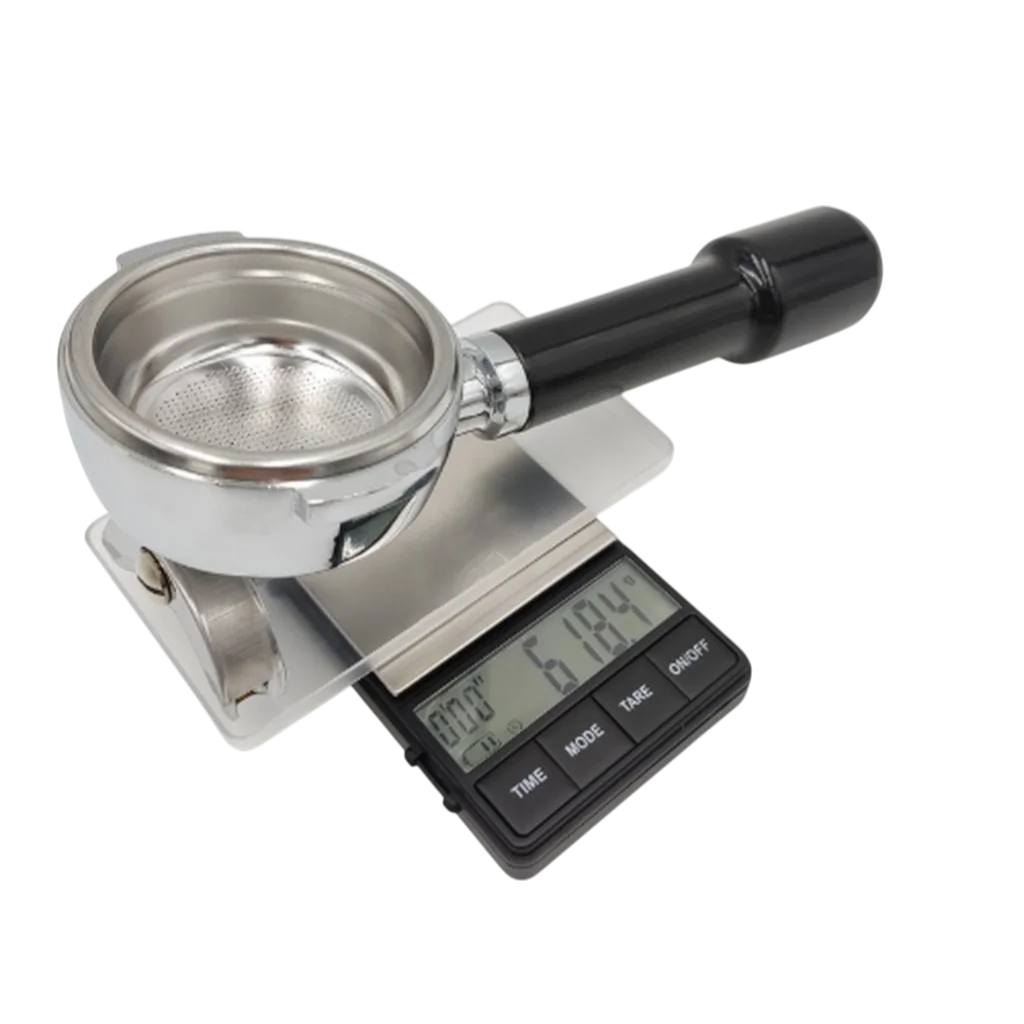
Our recommendation: Use the manual button and dial in with a scale. That's the only way to consistently make good espresso. You can then use the programmable button for your first rinse shot (25 seconds).
Pre-Infusion: Please don't use!
The machine has a pre-infusion function. Sounds good. Isn't though.
The problem: In the pause between pre-infusion and main extraction, the machine completely releases the pressure. The water – which has already worked with the coffee and is already dissolved coffee – flows through a valve into the drip tray. You're essentially throwing away the heart of your espresso.
Please turn off pre-infusion. The machine has a vibration pump that ramps up slowly anyway (~7-8 seconds to full pressure). That's plenty for pre-wetting.

Milk Foam & Steam: Works, but with limitations
Foaming quality score: 4.8/10
The thermoblock provides steam. We set it to the highest level (147°C). Michel (our professional barista) says: "It works, but it's not easy."
The process
- After the espresso: Blow out the steam wand (about 10 seconds until consistent steam)
- Froth milk
Speed: 300ml milk from 6°C to 60°C takes ~60 seconds. That's not fast, but also not unbearably slow.
Texture: Fine-pored, creamy – if you hold the pitcher very angled. The steam doesn't have the power to make the milk rotate in a vertical position. You have to tilt the pitcher to create the necessary angle. That works, but is less comfortable than machines with a rotary pump.
Steam Wand
The wand has a knurled wheel as a valve. Visually unusual, functionally okay. Important: Don't turn it like a faucet! Close it gently, otherwise the valve will come loose eventually.
Workflow & Operation: Highs and Lows
Usability score: 4.3/10
The Display
Touchscreen, shows brew time and temperature. That's practical – you don't have to start the timer on your scale. But: The display responds sluggishly sometimes. You tap, nothing happens. You tap again, suddenly it jumps. Not dramatic, but annoying when adjusting temperature.
Portafilter & Basket
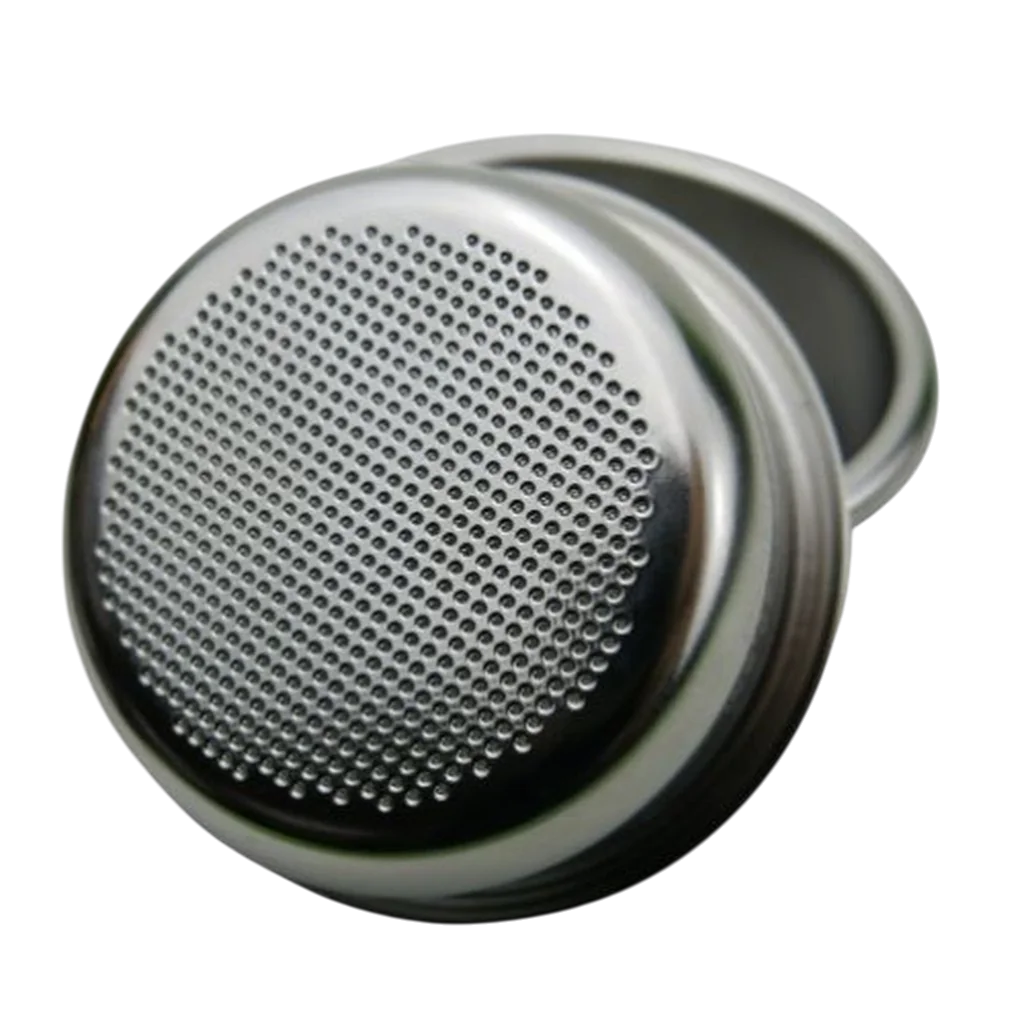
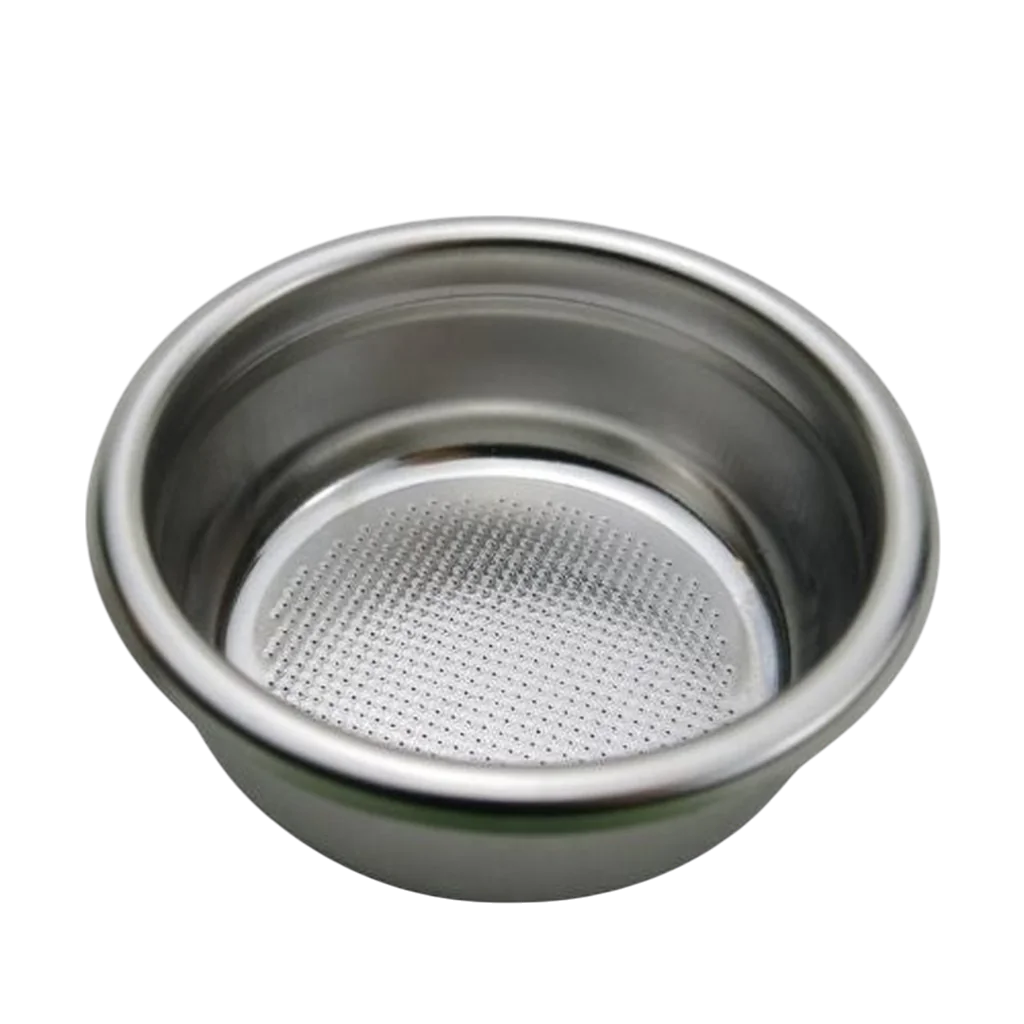
The portafilter is stainless steel with a plastic handle. Solid. The included basket is huge: 22-23 grams of coffee grounds fit in. That's a lot. Too much for most people. We prefer working with 18-19 grams. The basket has a wide rim and the holes could be a bit farther out, but it works.
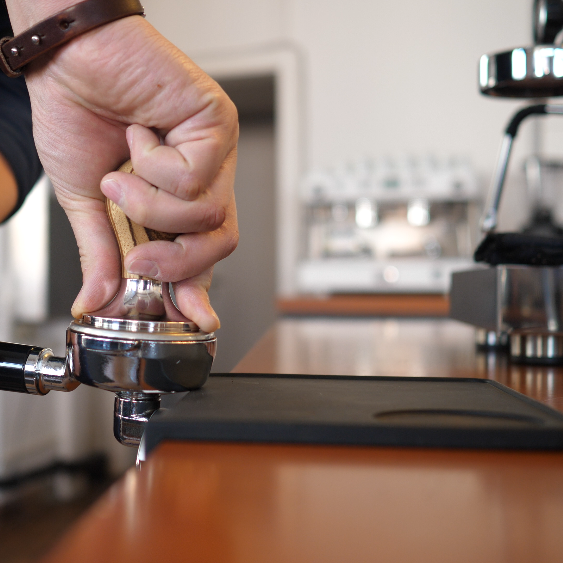
Tamper: Plastic body, metal base. The gap to the basket rim is too large (~2mm play). An upgrade to a better-fitting tamper makes sense.
Water Tank & Drip Tray
- Water tank: 1.7 liters, removable from the top. Good.
- Drip tray: ~500ml volume. Adequate.
The Problem: Distance from Portafilter to Shelf
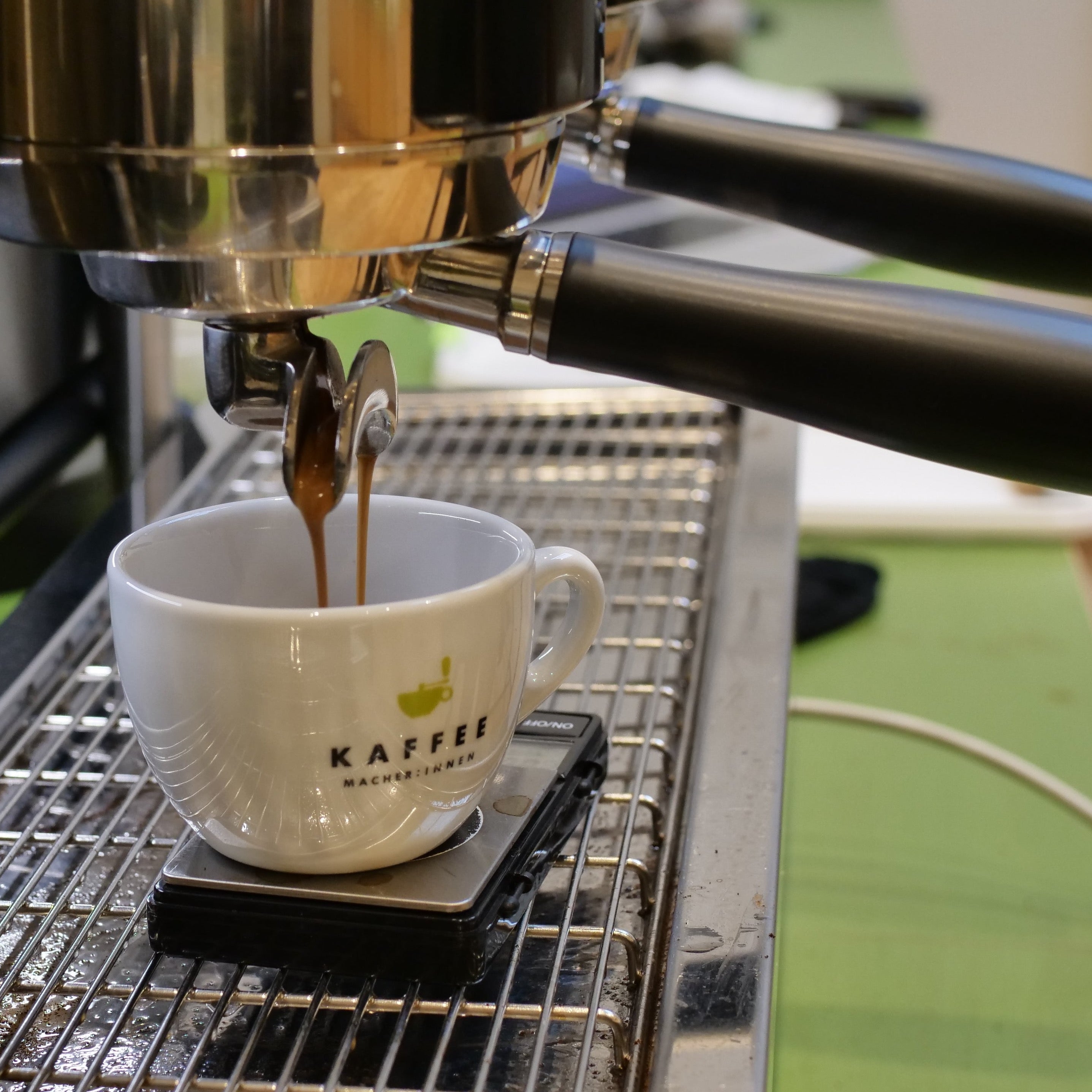
Only 7.5 cm. That's minimal. A normal espresso cup with a scale fits. A large cappuccino cup with a scale? It gets tight. If you use larger cups, weighing becomes difficult.
Noise Level: Average
Score: 3.0/10
We measure 64.8 dB(A) during operation. That's not quiet, but not a drill either. Typical for vibration pumps. The machine doesn't rattle, doesn't clatter. It just hums away.
Accessories: Basic Package
Score: 3.5/10
In the box:
- Portafilter (dual spout)
- Blind basket, single, double
- Tamper (plastic, too small)
- Milk pitcher
- Cleaning brush
That's okay for the price. Nothing more. The tamper should be replaced – it makes life easier and espresso better. And feels more premium.
The Name Chaos: One Machine, Many Faces
Since this topic is important (and Google brought you here), here's the overview again:
| Region | Brand Name | Model | Distributor |
|---|---|---|---|
| Germany/EU | AVX | DB1 Plus / Hero / Hero X | Coffee24, Frekko |
| USA | MiiCoffee | Apex (V1/V2) | MiiCoffee |
| USA | Turin | Legato (V1/V2) | Espresso Outlet |
| UK | Gemilai | CRM3007Z / Apex V2 | Sigma Coffee |
| Spain | Kafmasino | One / Kubo (modified!) | Kafmasino |
Attention: Check the version (V1 vs. V2) and whether an OPV is installed. That makes a difference. Our machine is the V2 with OPV (Hero X).
The Kafmasino version is a special case: It uses the same chassis but has its own electronics with Bluetooth and app control. So technically not identical.
Conclusion: Who is the AVX Hero X right for?
Overall score: 4.8/10 (Compromise)
Price-performance: 6.32/10
The AVX-DB1 Hero X is a machine for beginners who are willing to learn its quirks. If you just want to press a button in the morning and expect perfect espresso, then it's probably not your machine.
Strengths
- Temperature consistency after warm-up and flushing: Dual-boiler level in this price range. Impressive.
- OPV tool-free adjustable: Great!
- Solid build: Doesn't look cheap, is repairable.
- PID control: Temperature adjustable.
- Fast steam readiness: Hybrid system makes it possible.
- Price: 467 francs for this equipment is fair.
Weaknesses
- Catastrophic cold start: Without 2x flushing, the first shot is undrinkable.
- No flow meter: Time-based volumetrics are imprecise.
- Pre-infusion useless: Wastes coffee, please don't use.
- Steam performance: Works, but not comfortable.
- Distance from portafilter to shelf: Too little space for large cups with scale.
- Display feel: Touchscreen sometimes sluggish.
Who should get this machine?
Yes, if:
- You have a budget of 450 to 550 francs
- You're willing to flush 2x before your first espresso
- You want to work with a scale
- You occasionally make milk drinks but don't need to brew and steam simultaneously
- You don't make 10+ espressos every day
No, if:
- You don't have patience in the morning (then: thermoblock or thin-film heater)
- You need true volumetrics (then: machine with flow meter)
- You want commercial grade (then: dual boiler)
Price-Performance
With a price-performance score of 6.32/10, the AVX is fairly priced. You get more machine for less money than with classic single-group machines (e.g., Rancilio Silvia or ECM Casa, both significantly more expensive). But: You have to accept its quirks.
Our Experiment
We want to know how the machine looks after a year of use. So we've passed it on: It's now with a test person who uses it daily and gives us regular feedback. What wears out, what gets stuck, what still works cleanly after twelve months – we'll add that here. Then the machine comes back to Basel and we'll examine it again from the inside.
Technical Specs at a Glance
| Property | Value |
|---|---|
| Price | 467 francs (MSRP, as of January 2026) |
| System | Hybrid: 0.55L stainless steel boiler + thermoblock |
| Heat-up time | 15 minutes (measured) |
| Power consumption | 0.1408 kWh (heat-up + 1 espresso) |
| Brew temperature | 94.5°C (measured, with offset) |
| PID | Yes, adjustable (92-96°C) |
| Pump pressure | Adjustable via OPV (Ulka vibration pump) |
| Weight | 10.5 kg |
| Dimensions (H×D×W) | 38 × 31.5 × 23 cm |
| Water tank | 1.7 liters |
| Portafilter | 58mm stainless steel |
| Steam power | 60 sec. for 300ml milk (6→60°C) |
| Noise level | 64.8 dB(A) |
| Volumetrics | Time-based (no flow meter) |
AVX-DB1 Hero X
Test Report Summary, Protocol 2.3 (January 2026)Further Reading
- 📄 Our Test Protocol (Version 2.3) → Link
- 🎥 Short video from us about the machine → YouTube
- 🎥 To the long video → YouTube
Other helpful articles: