











What does coffee from Brazil taste like? Nicaragua? Costa Rica? There are unfortunately no simple answers here. In our roastery and academy, we constantly taste coffees from all over the world and are repeatedly surprised by individual flavor profiles. Yes, there are certain basic characteristics, and yes, exceptions prove the rule more and more.
Have you ever wondered what coffee from Peru tastes like? Or from Java? Or from Brazil? Certainly. If you're interested in coffee and drink single origins, for example, you can gradually build up a sensory repertoire of the individual coffee regions.
Pretty quickly you'll notice that coffees from certain regions are noticeably milder, fruitier, or nuttier. Some coffees are so distinctive that you can identify them blindly among many different ones. Dry-processed coffees from Ethiopia, washed coffees from Kenya, or coffees of the Geisha variety are so characteristic that they can hardly be confused.
Only these three coffees mentioned are pretty extreme when it comes to flavor profile. Few other coffees are so distinctive that we immediately recognize their origin. Or can you give a precise description of a washed Arabica from Zambia? Or a dry-processed Robusta from Uganda?
So if we want to talk about flavor profiles, we need to ask ourselves a few questions:
- Can we even speak of general flavor profiles?
- Are we talking about country, regional, or local profiles?
- Are these profiles stable? Do they always taste the same?
- Is microclimate and terroir responsible for taste?

Are there general flavor profiles in coffee?
Short answer
Yes. With certain qualities that are well sorted.
Long answer
Yes and no. "Brazil tastes nutty, Colombia mild and berry-like, Ethiopia floral." What may be true for many coffees is not true for all. Not every coffee from Brazil tastes nutty, not every Ethiopian coffee tastes floral.
Not every pizza comes from Italy and not every chocolate comes from Switzerland.
"A nutty Brazilian" would thus be something like the stereotype among coffees.
But, as so often, stereotypes stand for part of the truth. So let's assume we're comparing clean coffees, that is, those that have been cleaned at the origin from defects such as phenol, black beans, and heavy insect infestation. The volume of these coffees is quite large and covers the needs of large roasteries looking for a coffee with recognition value but without much complexity.
Within this category of coffee (approximately 30-50% worldwide, depending on origin), there are indeed stable profiles that taste very similar year after year.
Over the years, flavor profiles have become entrenched in the minds and on the tongues of coffee roasters. So today a coffee X often "must" taste like Y. Stable profiles can be mixed by exporters for coffee roasters so that expectations are met.
This mixing of different coffees from different regions and varieties leads to differences being smoothed out and we end up with a single large blend. This is comparable to a cuvée in wine, where different varieties come together to create one great whole.
These coffee profiles are then usually those that are balanced but somewhat one-dimensional. They usually convince through a characteristic feature, if at all. Otherwise they are solid, reliable, and taste like coffee that most people like.
Take Home Message 1/4
A "nutty Brazilian" is the stereotype among coffees

What flavor profiles are we talking about here? "Country profiles", "regional profiles", or even "local profiles"?
the short answer
"Country profiles" exist because we want them to. "Local profiles" are much more a desire for something unique (terroir), so more marketing, while "regional profiles" are well reproducible.
the long answer
If we as a roaster have a fixed idea of a "Brazilian profile", then our flavor expectations can be met through targeted blends of green coffees from the same origin.
In times of targeted, flavor-enhancing fermentation, new varieties, and new markets, established flavor profiles are also changing. Emi Fukahori became World Brewers Cup Champion in November 2018 with a coffee from – Brazil. Did this coffee taste "nutty"? No. Like everything else, but not "classic."
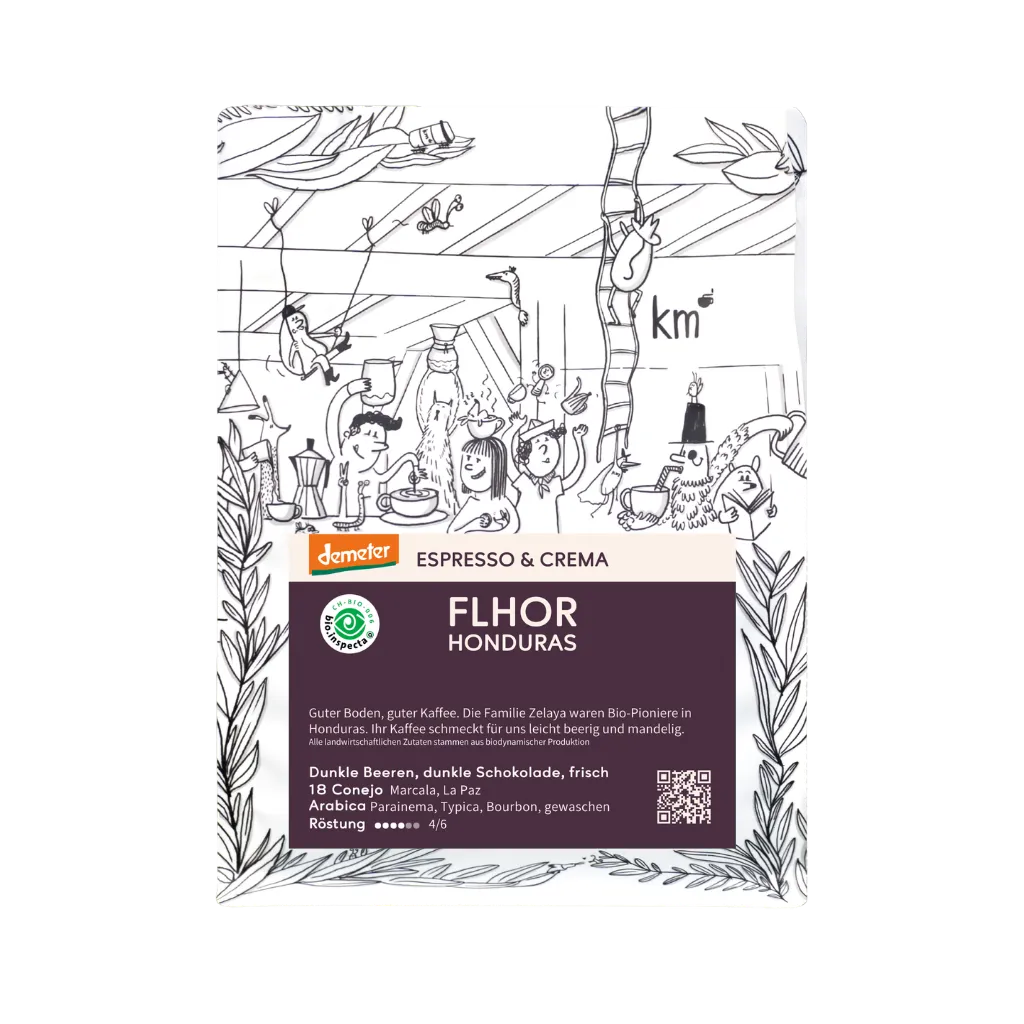
"Regional profiles" do exist – Honduran coffees from the Marcala region, for example, have their own distinctive acidity, while coffees from the Copán region generally have more body and texture.
"Local profiles" are then much more dependent on growing conditions and specific processing. The variety, altitude, and prevailing temperature play the most important roles here.
Take Home Message 2/4
"Country profiles" exist because we want them to. It's time to open up to new profiles.

Are these profiles stable? Do they always taste the same?
Short answer
If customers want it, the exporter creates it – usually.
Long answer
Coffee is a natural product. As such, it is subject to fluctuations that are climate-related, but increasingly demographic in nature.
Climate example:
A rainy period before harvest increases the risk of phenol, a defect, while extreme drought before harvest will reduce yield.
Demographic example:
A shortage of pickers can cause coffee to hang on the tree longer, become riper than usual, and taste much fruitier than in previous years. An isolated case? No. India, Colombia, Central America – the phenomena are widely known.
Finally, much also depends on how coffee growing and especially coffee processing advances locally. New, efficient sorting machines reliably separate ripe from unripe cherries. Pulping machines pulp coffee so cleanly that they leave hardly anything of the sugary mucilage.
Change is here – profiles change gradually.
Take Home Message 3/4
Stable profiles are created by human hands. The actual profile changes gradually.

Is it the microclimate or 'terroir' that makes coffee so unique?
Short answer
Just because avocado trees stand on a coffee plantation doesn't mean the coffee now tastes like avocado. The same goes for mandarins.
Long answer
With the Kaffeemacher:innen we defend the microbe-climate and less the micro-climate.
We find the terroir concept difficult and regard it more as marketing – if even wine connoisseurs disagree about its correctness, why should we apply such a contentious concept to a product that works completely differently than wine?
What is terroir?
The French term means, somewhat abbreviated, the natural and human factors that are supposed to influence the growth of the plant and ultimately its taste.
This can be the composition of minerals in the soil, it can be a specific climate in the region, or also the slope and the decisions of the vineyard workers – and that's the problem; often it means a little bit of everything. It's the opposite of precise.
What is often forgotten is the cultural practices that can also be part of a flavor profile.
Factors that can also influence a flavor profile:
- the time after picking the cherry until pulping
- The method of pulping
- Is there fermentation?
- If so, how exactly?
- If so, what is the composition of the microbes?
At the end of the day, it's people who work on a raw product through learned practices. What they do influences the taste more than the presence of avocado trees on the plantation, a bit more nitrogen in the soil, or the angle of the sun's rays – even if all that sounds quite nice.
Take Home Message 4/4
Clinging to terroir prevents acceptance of new flavor profiles.

And now?
At irregular intervals we start collecting our view of the taste profiles from all over the world. Subscribe to the newsletter and always stay informed.