






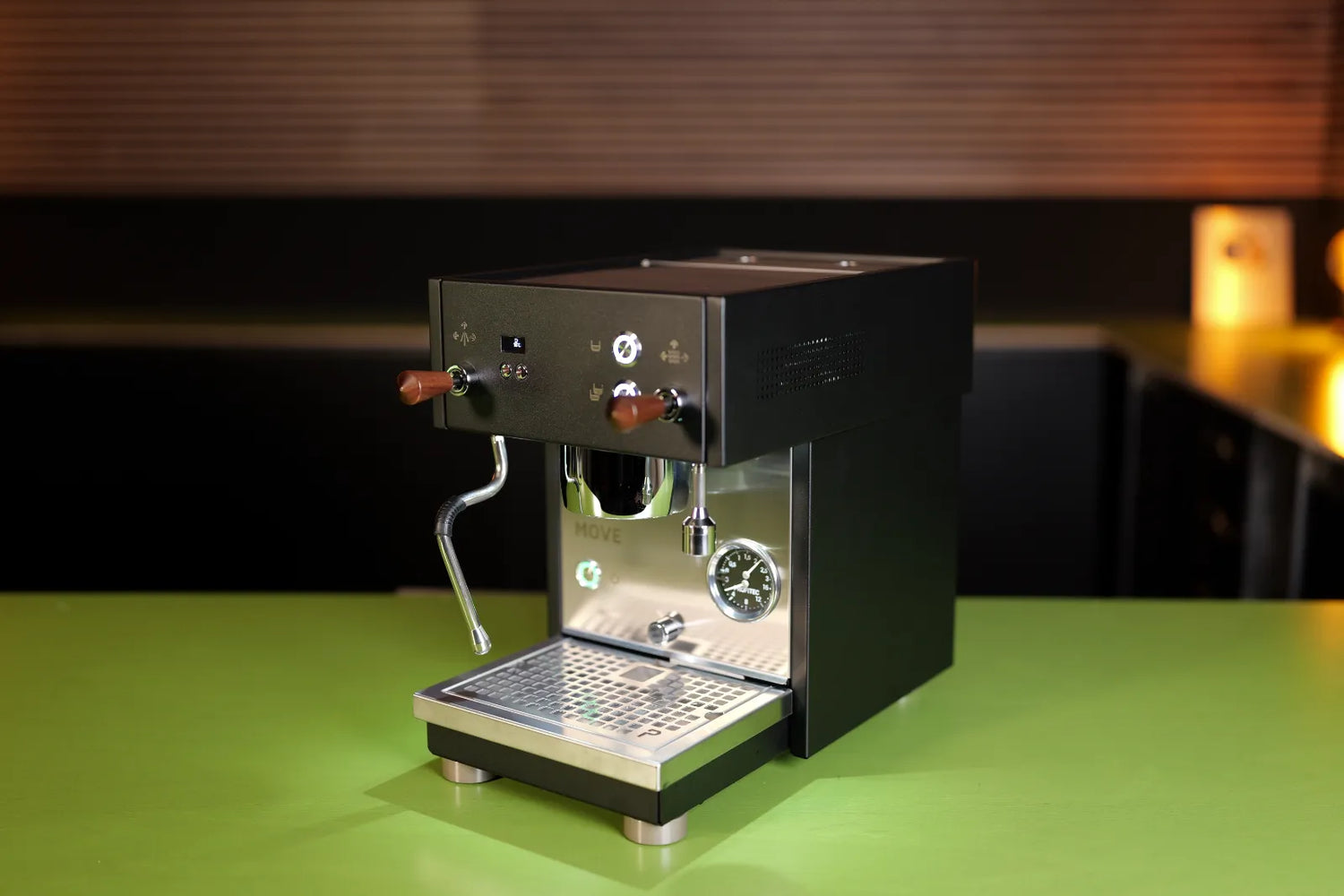

The Profitec Move is a revised Profitec Pro 300 dual boiler espresso machine. It has been redesigned externally, features a new OLED display, and includes some smart functions and operating elements. A fast heat-up procedure is intended to accelerate heat-up time and improve energy efficiency.
Quality and Build
The new Move feels very high-quality on the outside. Inside, we also find proven Profitec quality. We really like the new look of our model with its powder-coated black stainless steel and American walnut handles. It's a positive that the drip tray is now also black, which wasn't the case with the previous model.
The lever switches for activating steam and hot water are sleek and functional. The new OLED display and control buttons are elegantly integrated into the front panel. Together with the new time-volume buttons, they form a coherent operating interface. Design-wise and in terms of construction, the Move is a modern and elegant machine. The new pressure gauge fits well into this picture.
The edges of the machine are even more smoothly rounded, which we notice especially on the drip tray. Only the hole openings of the drip tray are still somewhat sharp.
When tapping on the machine, it's also apparent that the material hasn't been chosen too thin. The powder coating helps prevent fingerprints from being as visible as on high-gloss polished stainless steel machines. The slightly rough matte finish of the machine also gives it a pleasant grip.
The lever switches on our model are still somewhat stiff, but this should ease with use.
Only at the rear upper corners do the edges of the curved stainless steel body not close flush. But this is criticism at a high level.
The Move weighs 18 kilograms. It's 37.7 cm tall, 43 cm deep, and 26.7 cm wide. With the portafilter, it reaches a depth of 51 cm. The distance between the drip tray and the basket is 7.7 cm.
We give the Profitec Move 7 out of 10 points for workmanship and quality.
Heat-up Time and Temperature
The Profitec Move shines when it's warm. Both in the KM protocol and in the WBC protocol, we were able to measure high consistency of temperature during extraction and between extractions. Particularly in the WBC protocol and after a run-time of one hour, we achieve a low standard deviation of only 0.82°. Across all 14 extractions, we measure a maximum temperature deviation of 4.52° between the highest and lowest temperature points. At a set temperature of 93° Celsius, we achieve an average temperature across all extractions of 92.11°.

WBC Protocol at a target temperature of 93 degrees

KM Protocol Profitec Move after 17 minutes with steam boiler switched on
Heat-up Time Profitec Move
We disagree with Profitec regarding heat-up time. Profitec specifies a heat-up time of 10 minutes. At this point, however, we are far from reaching temperature. Even at a heat-up time of 17 minutes, the Scace measurement portafilter doesn't measure 92° in the first extraction. Since the Scace portafilter brings more mass than the new portafilter with silicon outlet, we assume a heat-up time of 17 minutes.

KM Protocol Profitec Move after 10 minutes with steam boiler switched on
It should also be noted that the Profitec Move, like its predecessor, the Profitec Pro 300, takes longer to heat up without the steam boiler. We measure 21 minutes to reach the brewing temperature.
Classification of Brewing Temperature
The slow heat-up time of the Profitec Move surprises us. With the ECM Synchronika II and the Profitec Go, the manufacturer has successfully demonstrated twice how fast heat-up can benefit a machine. With the Profitec Move, this doesn't work in our test series.
We are far from a heat-up time of 10 minutes and find such claims hard to understand, at least when we assume a brewing temperature of plus 92 degrees. In this context, the new portafilter with silicon outlet also seems beside the point. This could be a supporting element in temperature balance in a machine that realizes very fast heat-up times. Silicone is hardly conductive for temperature, therefore doesn't need to be heated, and will hardly draw temperature from the espresso.
Statement from Profitec
Profitec subsequently responded in a blog post to our temperature measurements, without directly referencing our measurements. We nonetheless read the measurement series published four days after our video as a response.
From our perspective, Profitec confirmed our results with their own measurement series and also clearly explained that there are essentially different views on what the heat-up time of an espresso machine is.
Definition of Heat-up Time for Profitec
"For the PROFITEC MOVE, we specify a heat-up time of approximately 9 minutes," Profitec writes in this blog post. At this point, the machine reaches a temperature of 88 degrees. With further extractions, the Profitec Move then reaches just under 92 degrees Celsius in the third extraction. For these extractions, Profitec uses a portafilter heated through with a second Profitec Move to equalize the greater mass of the measurement portafilter compared to the portafilter with silicon outlet. The temperature set by Profitec is 92 degrees. Profitec thus accepts a deviation of 4 degrees from the set temperature as sufficient heat-through.

Definition of Heat-up Time for Coffee Makers
In determining heat-up time, a typical scenario of home espresso preparation is decisive for us. The target temperature of every espresso machine is set to 93 degrees Celsius. What matters to us is the 1st extraction after a heat-through extraction of the portafilter. The first extraction with classic portafilter espresso machines must reach at least 92 degrees Celsius.
For the heat-through extraction, the portafilter is not locked in, but is held directly under the hot brewing water. The portafilter is not locked in because the measurement portafilter simulates the typical resistance of an espresso. However, this doesn't correspond to your portafilter at home, since it allows high flow without resistance. Therefore, the portafilter is held under the hot water (also in consultation with Profitec).
For us, it's not the third or fourth extraction that matters, but the first extraction. We find that a flush shot is reasonable. But it's not realistic that multiple extractions need to be made at home before the desired temperature is reached.
For portafilters like the Profitec Move portafilter that have less mass, we apply a larger tolerance window. Therefore, we specified a heat-up time of 17 minutes. Without this larger temperature tolerance, the Move wouldn't have reached the temperature window after 17 minutes, but rather at approximately 19 to 20 minutes.
We tested our protocol additionally with a pre-heated portafilter. We conclude that the low measured temperatures cannot be explained by the mass of the measurement portafilter, but rather by the too-low brewing temperatures of the Profitec Move.
Profitec and we apparently have different views on what is sufficiently hot. In other cases, such as the ECM Synchronika 2 or Profitec Go, we are well calibrated for this and can confirm the heat-up times with our measurements.
Energy Consumption and Power Measurement

Michel mentions in the video that we're at 0.095 kWh when preparing espresso. That's true for one espresso. However, we usually cite the comparison value with 5 double extractions. This is 0.122 kWh, which is still a good value.
Volumetrics: Time-Controlled
There is a time-controlled volumetric function. Two buttons can be programmed. The machine delivers brewing water at standard pressure and flow for a desired time. Depending on the resistance of the coffee puck, more or less water flows through the portafilter. With a fine grind, only a few drops flow through the basket; with a coarse grind, the brewing water flows quickly through the coffee. The result is different amounts of coffee in the cup. Such time-controlled volumetrics are better than no quantity setting at all. However, for precise espresso brewing, this isn't suitable.
When time-controlled volumetrics are integrated into a machine, we usually use them as a kind of "emergency shut-off." We program 35 to 40 seconds and manually stop after the desired output amount or time. Should we be distracted while brewing espresso, the machine nonetheless shuts off after the defined time.
Time-controlled volumetrics receive 3 out of 10 possible points from us as a standard.
Noise Level and Operation
The Profitec Move purrs on the quieter side. 57 decibels is a quiet value in the field of espresso machines. The machine achieves this thanks to its quiet vibration pump with clever suspension. A noise level of 57 decibels we rate as very good and 4 out of 5 points.
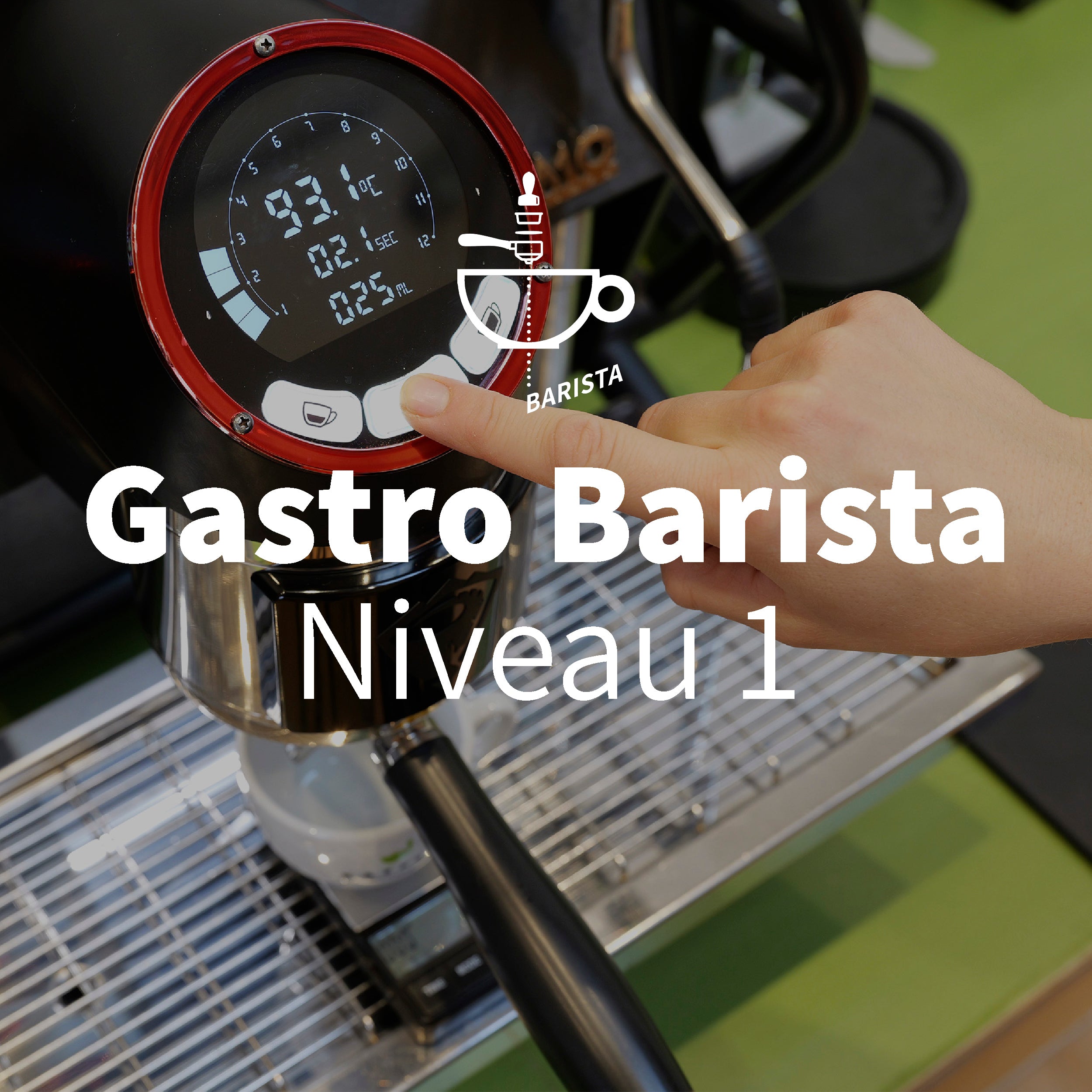
The new OLED display allows for some smart settings. The on and off-time is practical. You can program when the machine starts. An Eco mode can be switched on, as well as a pre-brew.
Pre-brew
You can define how long brewing water is applied to the coffee and how long a subsequent pause should last. The pressure in the line remains. The pump then ramps back up to full power. In combination with a vibration pump, we find this type of pre-brew significantly better than pre-brew with a rotary pump. The pressure build-up of the vibration pump is less abrupt than with a rotary pump. When the rotary pump ramps to full pressure in a short time, there's a risk that the coffee puck will be perforated.
Additional Functions
The temperature of the steam and brewing boiler can also be adjusted via the display. The steam boiler can be switched off as desired. The useful shortcuts are also very practical, which can activate the cleaning program or the pre-brew. The Profitec Move is furthermore equipped with Last Shot technology. This is a practical function that ensures that when the water tank is almost empty, the extraction doesn't suddenly stop but can still be completed.
We rate the ease of operation with a good 7 out of 10 points.
Accessories and Equipment
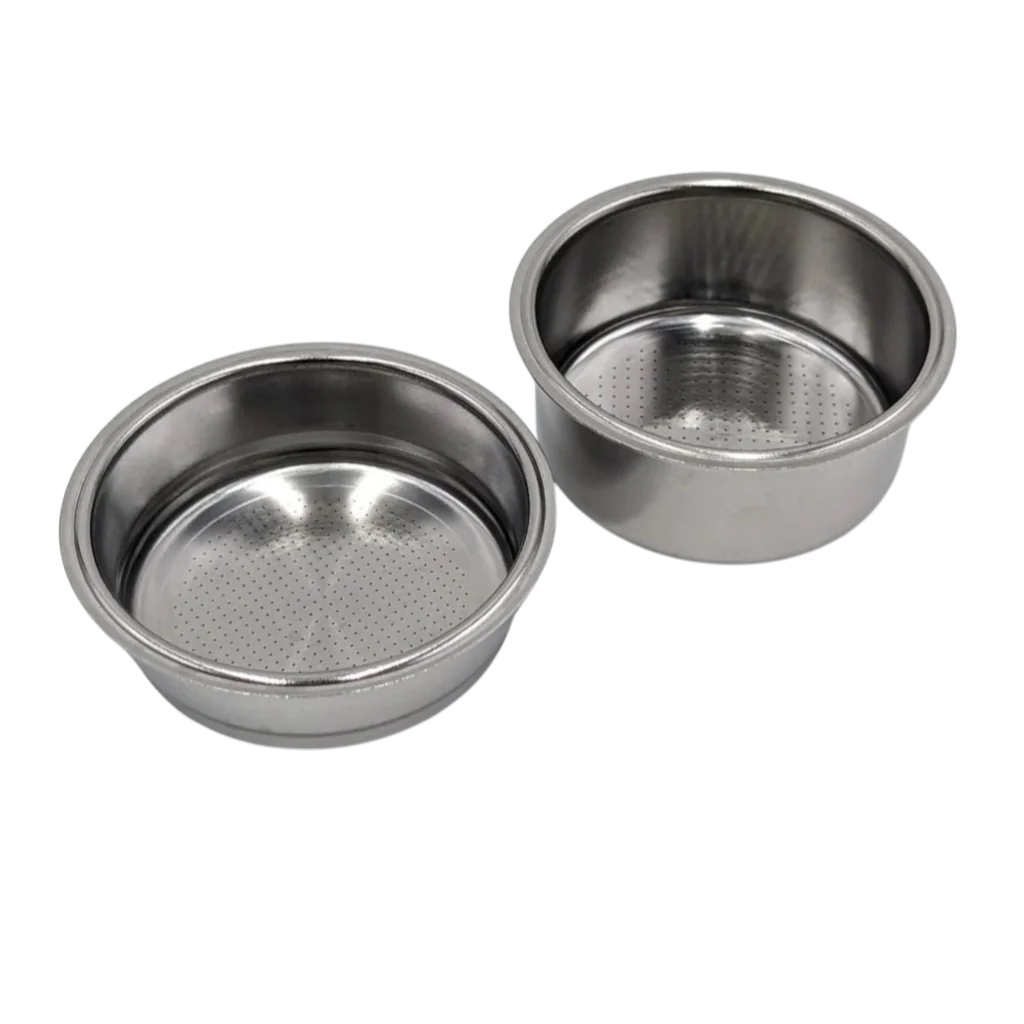
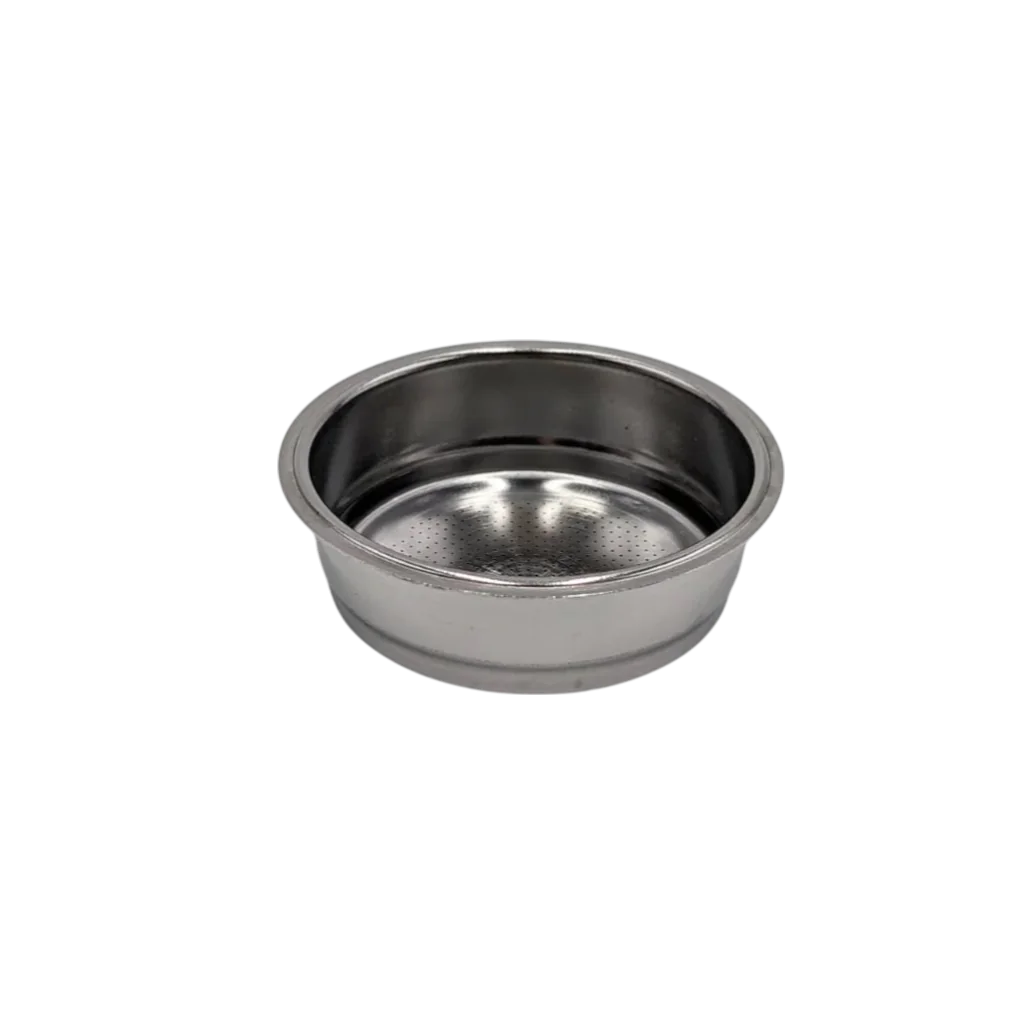
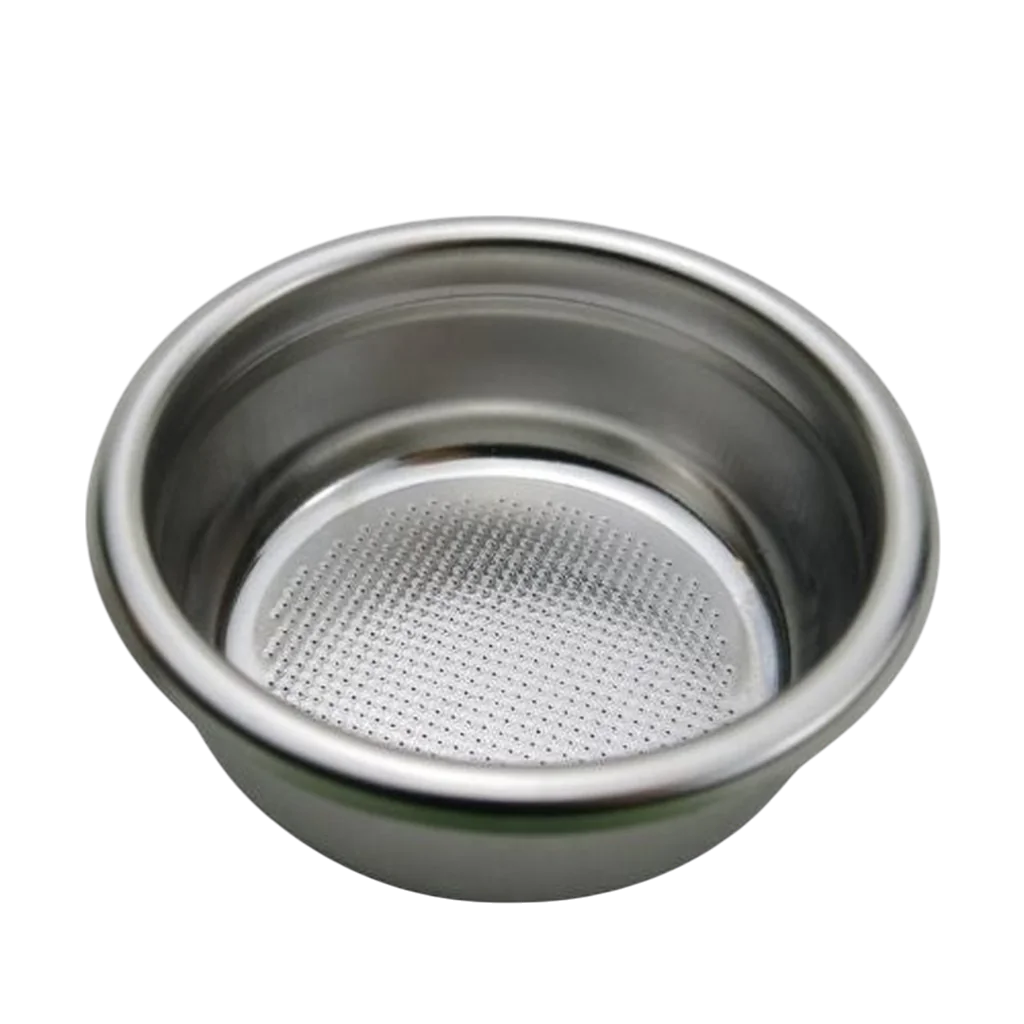
The Profitec Move comes with a good set of accessories. We really like the cylindrical 21-gram basket, even though it can only be used with the bottomless portafilter. The silicon attachments don't fit because the basket goes too deep into the portafilter.
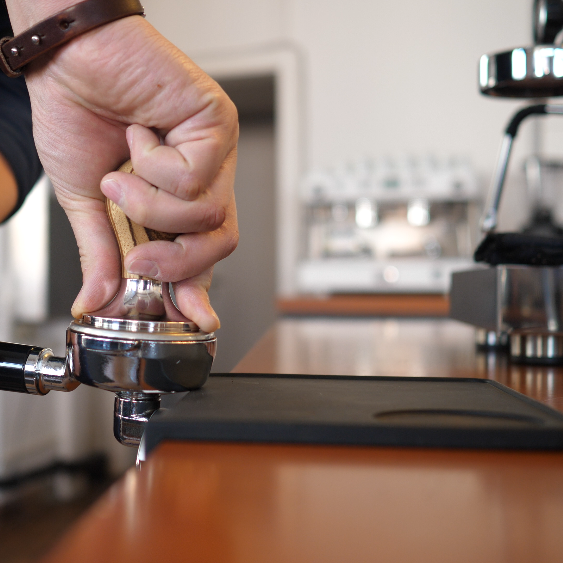
The 17 or 18-gram basket has a slight inner curve. Quality is okay, but not perfect. A single-shot basket and a blind basket are also included. The solid Profitec tamper is also in this set. It flushes with the side walls of the baskets and we like it. The thin base of the tamper is a matter of taste. Our tester Michel Indelicato prefers tampers that finish level with the rim of the basket when coffee is tamped. This makes it easier when tamping with the thumb and forefinger to touch the edge of the basket and transition to the tamper, thus tamping straight.
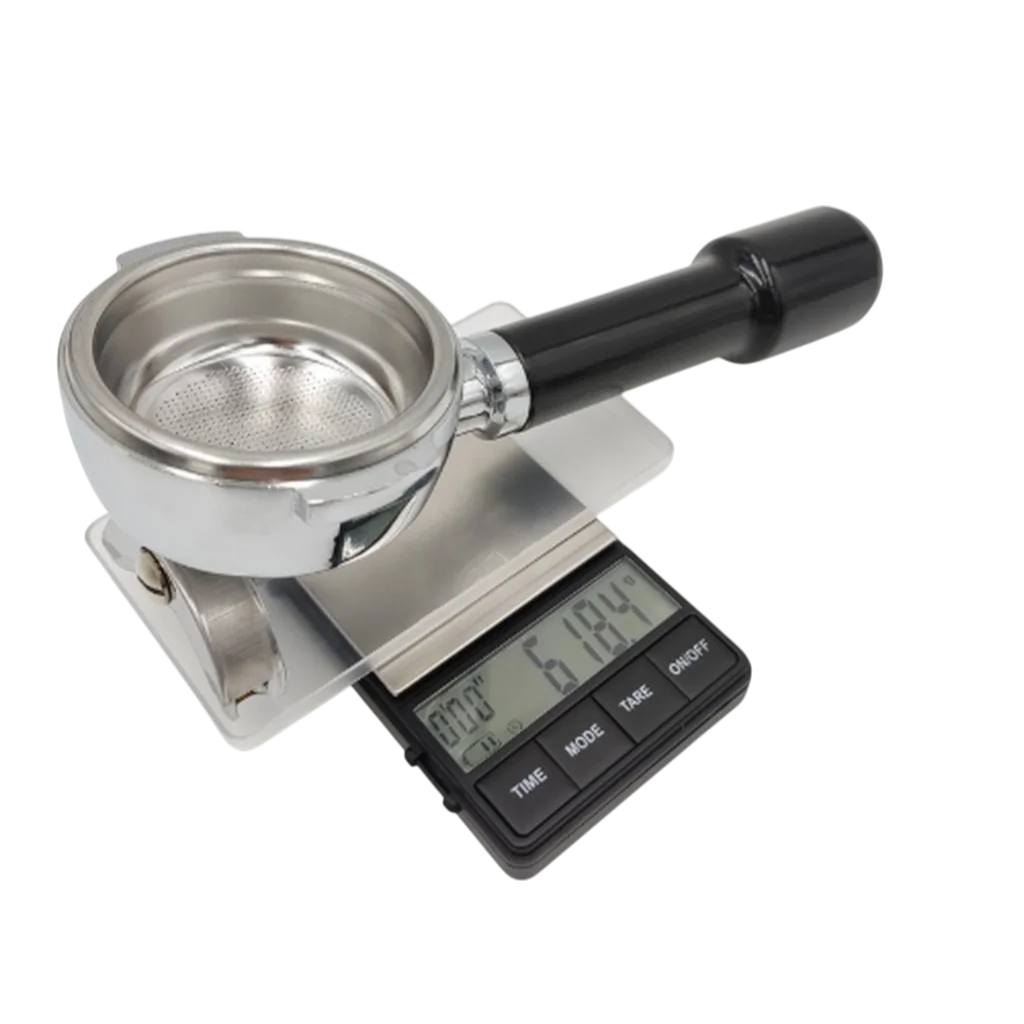
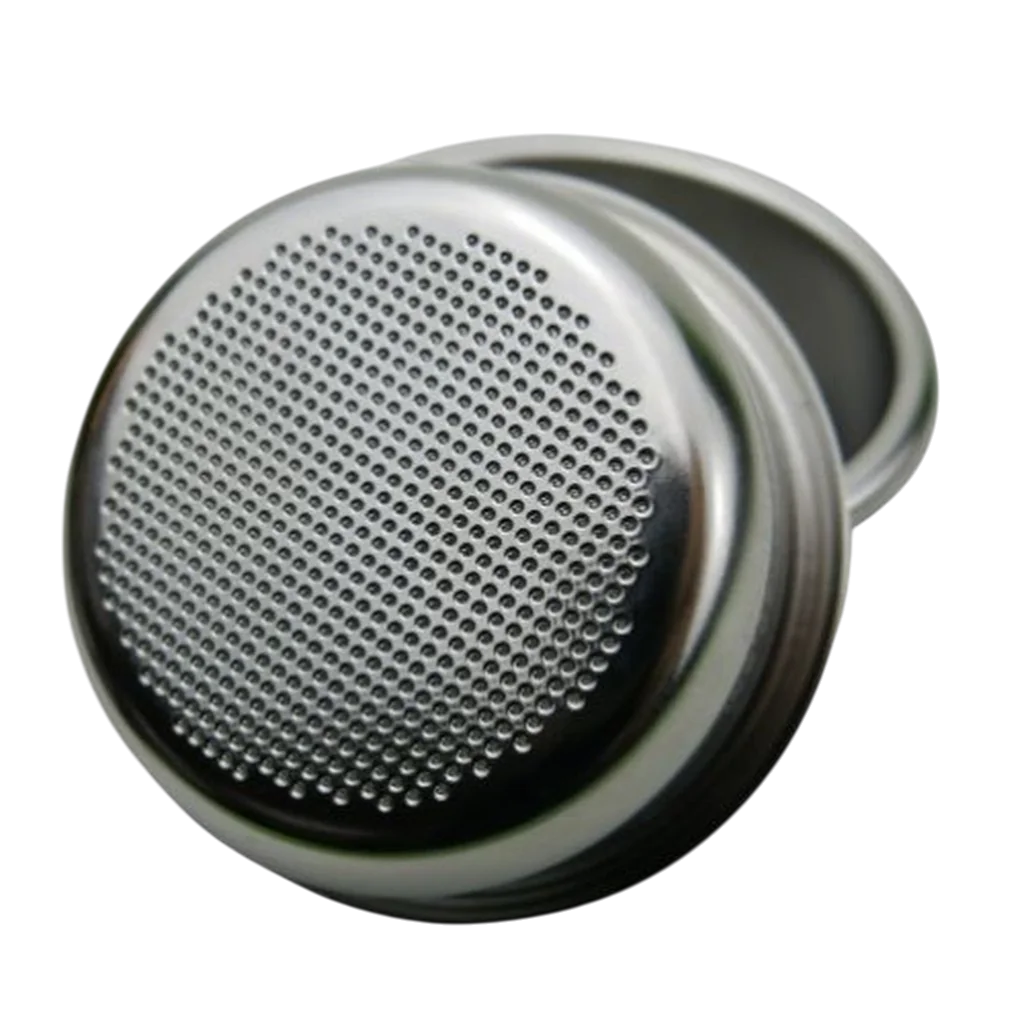
The Profitec portafilter is innovative and is supposed to accelerate the heat-up process with its lower mass. Beyond that, it's versatile. The silicon attachments allow the portafilter to be equipped with either a single or double outlet. Without the silicon outlets, the portafilter becomes a bottomless portafilter. Three portafilter options in one isn't just smart, it's also practical in everyday use. Once the portafilter is warm, you can still switch between options. Careful, the portafilter is then hot! Thanks to the silicone, there's also no risk of scratching the work surface when tamping. The portafilter is basically its own tamping mat. That's practical! The portafilter is in itself a good and innovative solution and will certainly find its place in further Profitec models. In our test, the lower mass of 430g doesn't convince as a significant accelerator of heat-up time. But that's not due to the portafilter; it's due to the sluggish heat-up of the brewing water.
Accessories and Equipment: 3.5 out of 5 points
Steaming Behavior and Pressure
The Profitec Move is anything but a steaming wonder. But it steams reliably. In our benchmark test, we measure 50 seconds to heat the milk without simultaneously drawing in air. However, the pressure is sufficient to keep all the milk in circulation. The Move takes time - which is actually pleasant for those who aren't yet confident handling a lot of pressure.
The machine is equipped with a cool touch steam wand. Also on the positive side is the switchable steam boiler. If you don't want to steam, you don't necessarily have to turn on the steam boiler. However, it should be noted that the machine without the steam boiler switched on takes approximately 2 to 4 minutes longer to reach operating temperature. We measure 21 minutes heat-up time without the steam boiler.
It's clear. Good latte art-capable foam can be steamed with the Profitec Move. We rate the steam and foaming performance at 5 out of 10 possible points, due to the slow heat-up despite the highest temperature setting.
Conclusion on the Profitec Move
The Profitec Move is a revised Profitec Pro 300. We were correspondingly excited about the new machine. The development steps that are evidently made in the display, operation, and aesthetics are only partially successfully implemented in other areas. Above all, the heat-up time disappoints us. Instead of the 9 minutes heat-up time announced by Profitec, we measure 17 minutes. This is mainly because we expect a brewing temperature of +/- 92 degrees in the first extraction after a heat-through extraction. Profitec themselves are satisfied with 88 degrees as the starting temperature on an espresso machine set to 92 degrees.
When the machine is really heated up, we observe very consistent brewing temperatures. And otherwise, the machine's performance is good once it's up to speed. Over the test weeks, we drink many good espressos from the Profitec Move, and the cappuccino doesn't have to hide either, despite mediocre steaming performance.
For many espressos and a crowd of people to be served coffee, the Profitec wouldn't be our first or second choice. Above all, the steaming performance is too weak for this, even if the temperature consistency is also good in the WBC protocol. (Volume and catering potential: 5/10)
We like the accessories, and in particular, the new portafilter is smart. As far as quality is concerned, we find proven Profitec craftsmanship. Anyone who has a Profitec Move at home will enjoy their solid machine over a long period if the weaknesses we mentioned don't play a big role.