



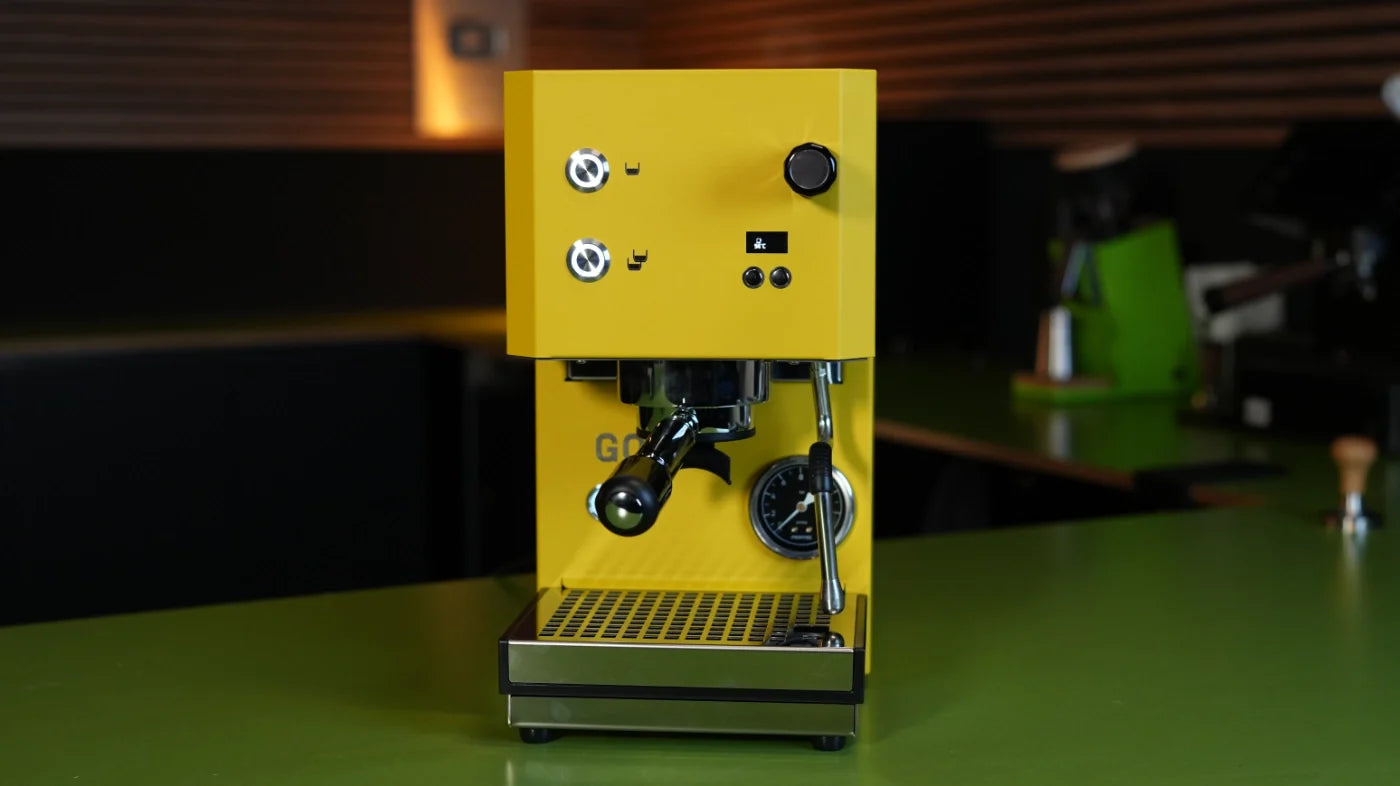

Just over three years ago, we tested the Profitec Go and rendered a clear verdict: the Profitec Go was already one of the best espresso machines under 1000 francs. Now Profitec has raised the bar. The version 2.0 comes with an OLED display, two new buttons, and software that is otherwise found only in the more expensive Profitec and ECM models.
The previous model was already strong. So the question is not whether the V2.0 is good. Rather, whether Profitec has actually improved things with this update.
Like all espresso machines, we purchased this one too. However, we were able to obtain our 2026 model directly from Profitec prior to market launch in June 2026. The manufacturer had no insight into the test results. We only had to agree to publish the test on the official release date.
This article is the comprehensive collection on the Profitec Go: both versions, all measurement data. In addition to the video test, we document here the complete test report including KM rating, temperature measurements, power consumption, and the proven Fast-Heat-Up procedure.
Video V1 (long test): youtu.be/YZ_bkI1kMUE
Video V1 (short, under 10 min.): youtu.be/Qq_e4Bkqk3k
Video for the new Profitec Go V2.0: youtu.be/a_oJZGfhfF4
What's new in the Profitec Go 2.0?
Profitec has left the machine's internals largely unchanged: same single boiler, same 400 ml brass boiler, and the same vibratory pump. The redesigns focus on what you use daily: display, buttons, and software.
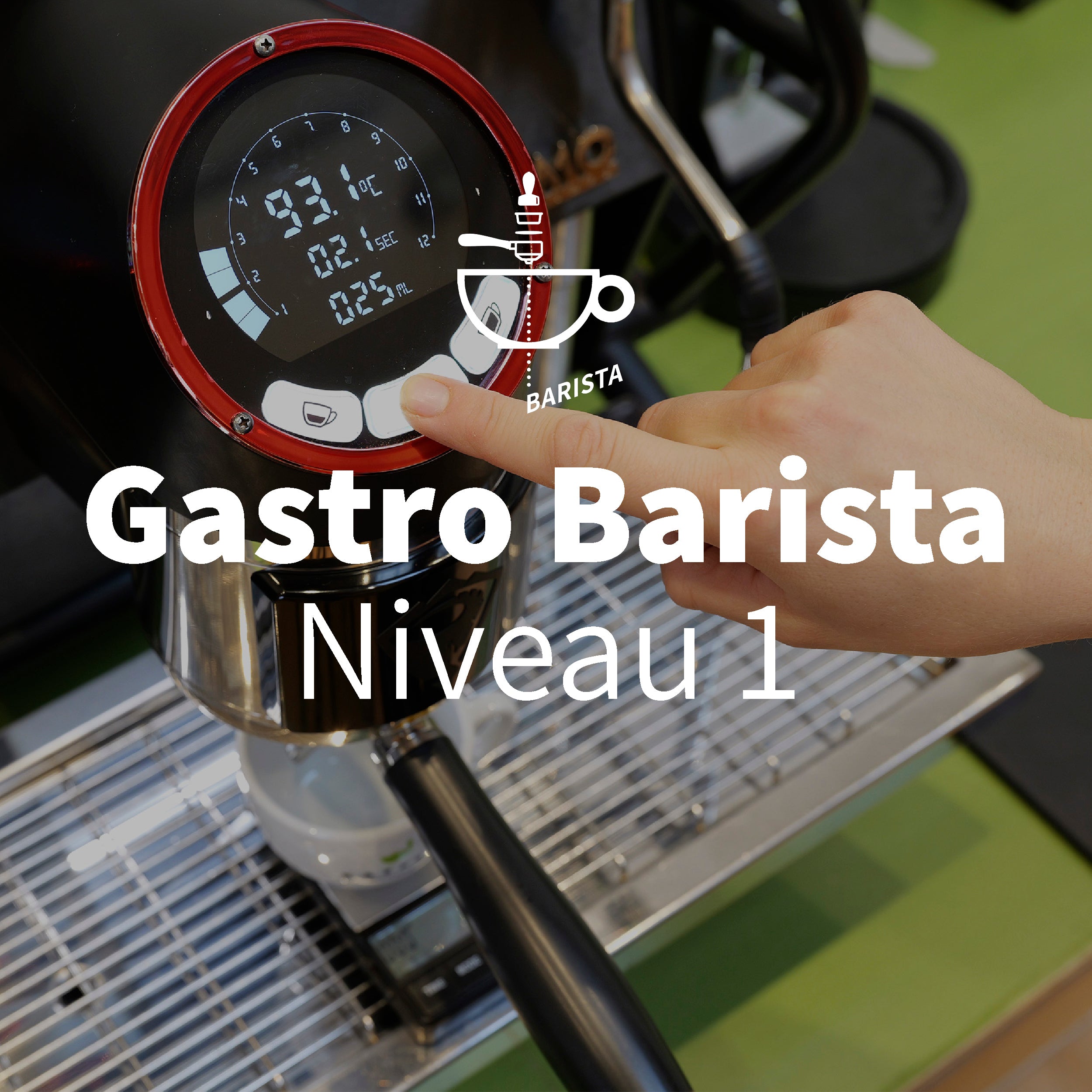
OLED display. The large LCD from the V1 is gone, replaced by the same OLED display that Profitec and ECM use in their more expensive models. It's smaller, more elegant, and much easier to read.
New buttons. The single push button on the V1 required you to press it about a centimeter deep and it got hot. We criticized that in the past. It's been replaced by two new programming buttons that feel premium and don't get warm.
Software from the bigger siblings. This is what's actually interesting. The new display brings the same software that was previously reserved for the more expensive Profitec models. Specifically, this means: automatic on/off timer, a "Last Shot" function that finishes the current extraction before the tank-empty alarm kicks in, automatic refilling of the boiler with cold water right after steaming, an integrated cleaning program via menu, and programmable pre-infusion.
New to the Profitec Go V2.0 is programmable time-based volumetrics. This is a nice step, but far from a flowmeter that delivers the same amount of water with each shot. Time-based volumetrics always dispenses water for x seconds and thus coffee: more with a coarser grind, less with a finer one. We recommend still controlling the shot volume with a scale. The function does have a practical benefit: if the extraction is running and you get distracted, the machine stops at sensible time intervals without the coffee overflowing.
Buy Profitec Go 2.0
The following specialty shops carry the Profitec Go and we can recommend purchasing from these retailers. All offer the possibility of adjusting the machine's offset.
Switzerland: deon
The links are affiliate links. If you order via one of these links, you don't pay a cent more, but we receive a small commission that we invest directly in new test equipment.
Technical specifications comparison
| Feature | Go V1 | Go 2.0 |
|---|---|---|
| Price (CHF) | approx. 900–950 | 995 |
| Boiler type | Single boiler, 400 ml brass | Single boiler, 400 ml brass |
| Display | LCD | OLED (ECM/Profitec standard) |
| Control buttons | 1 large push button | 2 programming buttons |
| Auto timer | No | Yes |
| Last Shot | No | Yes |
| Auto boiler cooling after steaming | No | Yes |
| Cleaning program | No | Yes |
| Pre-infusion | No | Programmable |
| Pump | Vibratory pump | Vibratory pump |
| Dimensions (H × D × W) | 38 × 36 × 21 cm | 38 × 36 × 21 cm |
| Water tank | 2.65 l | 2.65 l |
| Portafilter | 58 mm | 58 mm, incl. bottomless |
Espresso potential
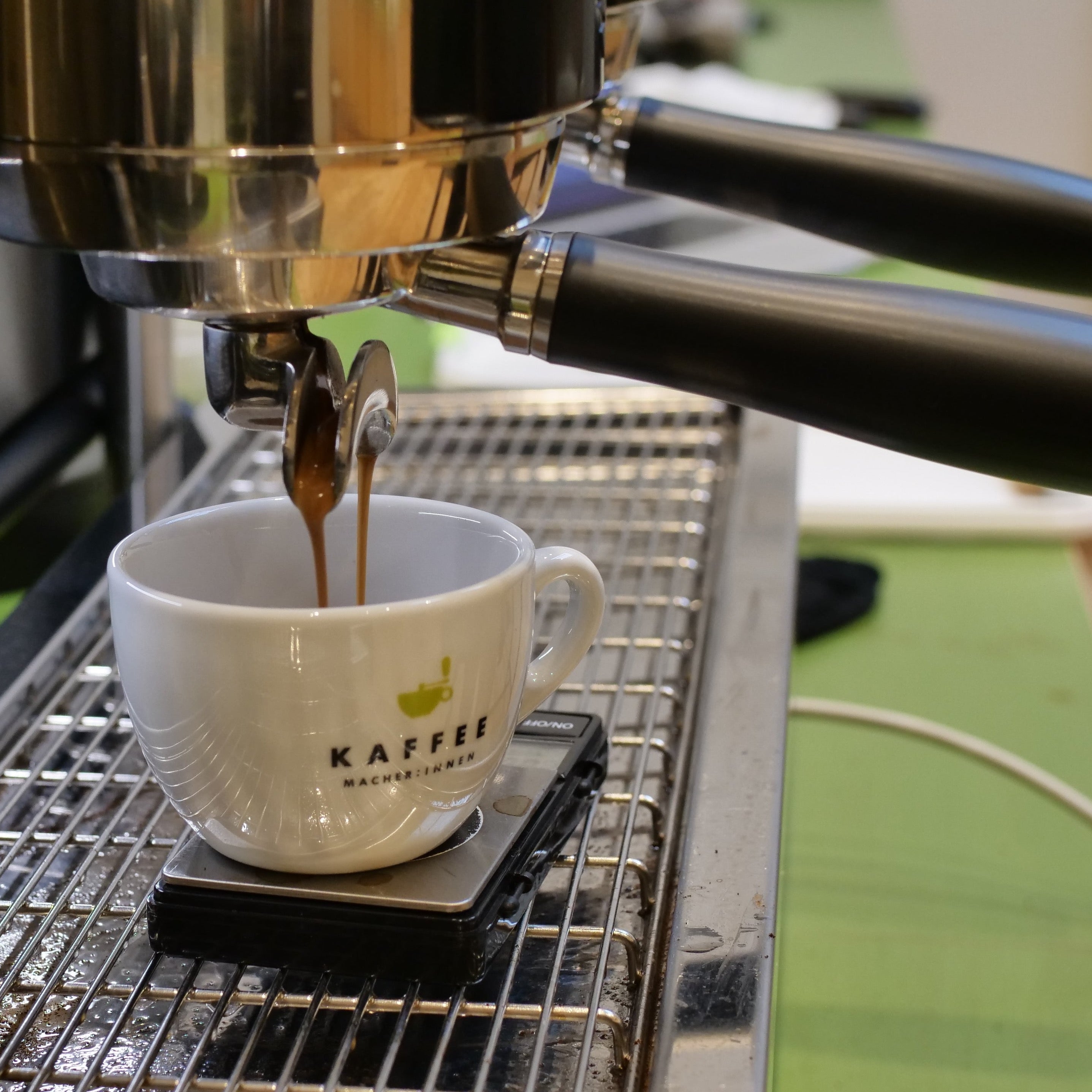
The machine delivers what it promises. In the test we pulled Apas shots and then in the video Compadre espresso: 18–19 g in the portafilter, 40–42 g in the cup, 24–27 seconds. The result was balanced, sweet, cocoa-like, and dense.
"Very approachable, very voluminous. Cocoa, chocolate."
The espresso potential receives 6.5 out of 10 points. The technology base is solid (precise temperature control, programmable pre-infusion), but the lack of a flowmeter and the single-boiler limitation cap the results.
Temperature measurement and consistency
We measure according to the KM protocol: 5 shots at 27 seconds extraction time each, 1 minute spacing. Offset for test: −2 °C.
| Shot | Mean (°C) | Deviation from target 93 °C |
|---|---|---|
| 1 | 92.91 | −0.09 °C |
| 2 | 94.21 | +1.21 °C |
| 3 | 94.77 | +1.77 °C |
| 4 | 94.98 | +1.98 °C |
| 5 | 94.65 | +1.65 °C |
The first shot hits the target at 92.91 °C almost exactly. That's strong. From the second shot onward, the machine stabilizes at around 94.5–95 °C and stays there consistently. The slight deviation on the first shot is due to the fast heat-up and flush and is typical of this concept. At the end we adjusted the offset down by 1 degree and then were consistently at 93 °C.
In the WBC stress test over 14 shots in rapid succession, the temperature range is 3.65 °C (91.04 to 94.69 °C). For a single boiler under 1000 francs, that's remarkable.
"I imagine it's sitting in a shared apartment. There's a birthday party, 20 people. You can make espresso shots for all 20 and they're all good. That's exceptional for a single boiler under 1000 francs."
Heat-up time: 8 minutes
The machine is ready for the first shot after 8 minutes. The principle is the same as the V1: the machine first heats up above the brew temperature into the steam range, then displays the flush request, and the flush through the portafilter brings the temperature to target. Stable steady-state is reached after about 10 minutes. This results in a rating of 7 out of 10.

Fast-Heat instructions for older Go versions (before software 1.06)
The new V2.0 software performs the fast heat-up protocol automatically. If you have a V1 with older software, you can achieve the same heat-up time manually:
Energy consumption
The Profitec Go 2.0 is one of the most economical machines in its price segment. We measure according to the "Espresso First" principle: cold start, heat-up, first shot.
This results in an 8 out of 10. The small boiler and short heat-up time pay off here directly. The machine can stay on without hurting your wallet.

Milk steaming with a single boiler
Steaming with a single boiler remains a two-step workflow: espresso first, then switch to steam, steam milk, then switch back to brewing. That's not a Profitec Go issue. That's the single-boiler principle.
What the V2.0 brings new: after steaming, the machine automatically refills cold water into the boiler. This actively lowers the temperature instead of letting it cool passively. In practice, the boiler gets back to brew temperature faster, but we still recommend a short flush before the next espresso.
| Parameter | Measured value | Assessment |
|---|---|---|
| Heat-up time brew to steam | approx. 30 sec. | Good for single boiler |
| Heat 300 ml to 60 °C | 60 sec. | Rather slow |
| Condensation water before steaming | 25 ml | Definitely blow out |
| Pitcher angle when steaming | approx. 30° | Slightly tilted, sufficient power |
| Complete cappuccino workflow | approx. 2–2.5 min. | Realistic for household use |
The amount before steaming is not to be underestimated. It's noticeable sensorially. If you steam it directly into the milk, you'll taste the difference. Always blow it out first.
"I would like a bit more power. It's okay, but a bit more would be pleasant. I can make excellent milk foam without issue."
That nails it. The machine is sufficient for daily cappuccinos. For cappuccino series with lots of guests, a single boiler is fundamentally not the right choice. Steaming rating in the protocol: 4.3 out of 10.
Usability and workflow
The new OLED display and two new buttons noticeably improve daily handling. The buttons don't get hot, the display is easy to read. We give it a 5.5 out of 10 — not because of the hardware, but because of the systemic single-boiler limitation. Switching between brewing and steaming costs time and attention, and the protocol penalizes single boilers for this consistently.
What's nice: the drip tray holds 940 ml, remarkable for a 21 cm wide machine. The Brita Intensa filter stick is integrated, the pump pressure is accessible from above. The cleaning program via menu is a real step forward — rare for a machine in this price class.
Build quality and accessories
The Profitec Go 2.0 is a Profitec. You notice it. The build quality is on another level than what other manufacturers offer for 995 francs. The internals are cleanly wired. The surface is solid, if kept simple. The construction wobbles slightly because it's lighter than the bigger siblings, but it's stable enough for daily use. Build quality: 7.25 out of 10.
Accessories get a 9 out of 10 — the highest score in our test. Included: 58 mm portafilter with 1-spout and 2-spout outlets, bottomless portafilter, tamper with good fit, blind basket, Brita water filter.
Exterior specifications
The compact Profitec Go has a height of 38 cm, a depth of 36 cm, and a width of 21 cm. The water tank holds 2.65 liters and is filled from below — no hose clutter, no insertion. The drip tray was enlarged to 940 ml in the V2.0. Four color options are available.
The 400 ml brass boiler delivers remarkable temperature consistency, as our measurements show. A vibratory pump provides the brew pressure. Accessible from outside the machine: a screw for pressure adjustment. During operation, the machine measures 60 dB — pleasant, not loud.
KM rating Profitec Go 2.0
We test all espresso machines according to our standardized KM protocol V2.3. It measures twelve categories with different weightings and delivers an overall score on a scale from 0 to 100.
0 – 100
Conclusion
The V2.0 is not a revolution. It's a well-thought-out redesign of an already strong machine. The hardware remains what it was. What has changed makes everyday life better. The display is more beautiful, the buttons are too, and the software features — automatic boiler cooling after steaming, Last Shot, cleaning program, pre-infusion — are real improvements that you take for granted on more expensive machines.
In the KM protocol, the V2.0 achieves 58.5 out of 100 points, class "Good / Standard". Strengths lie in accessories (9.0), power consumption (8.0), build quality (7.25), and heat-up time (7.0). The overall score is dragged down by systemic single-boiler weaknesses in volumetrics, steaming, and catering potential — but that's not the machine's fault, it's the concept's.
Who is it right for? Anyone who drinks espresso or Americano daily, makes cappuccino occasionally, and wants a high-quality, economical, and fast-heating machine. The Profitec Go 2.0 remains one of the best options in its class. If you make multiple milk drinks in succession daily, you should go for a dual boiler or heat exchanger.