














How much coffee does Nicaragua export? What are the preferred varieties and how does a typical cup of Nicaragua taste? What role does coffee play in society and in the economy, and what does its future look like? Exciting questions with interesting, thought-provoking answers. And then there's the DO Dipilto. A novelty in the Latin American country, possibly even something pioneering. Let's dive together into the exciting coffee world of Nicaragua.
Table of Contents
- Coffee in Nicaragua today
- Taste, volume, quality
- Challenges, facts & figures
- Coffee in Nicaragua yesterday
Coffee, an important economic sector?
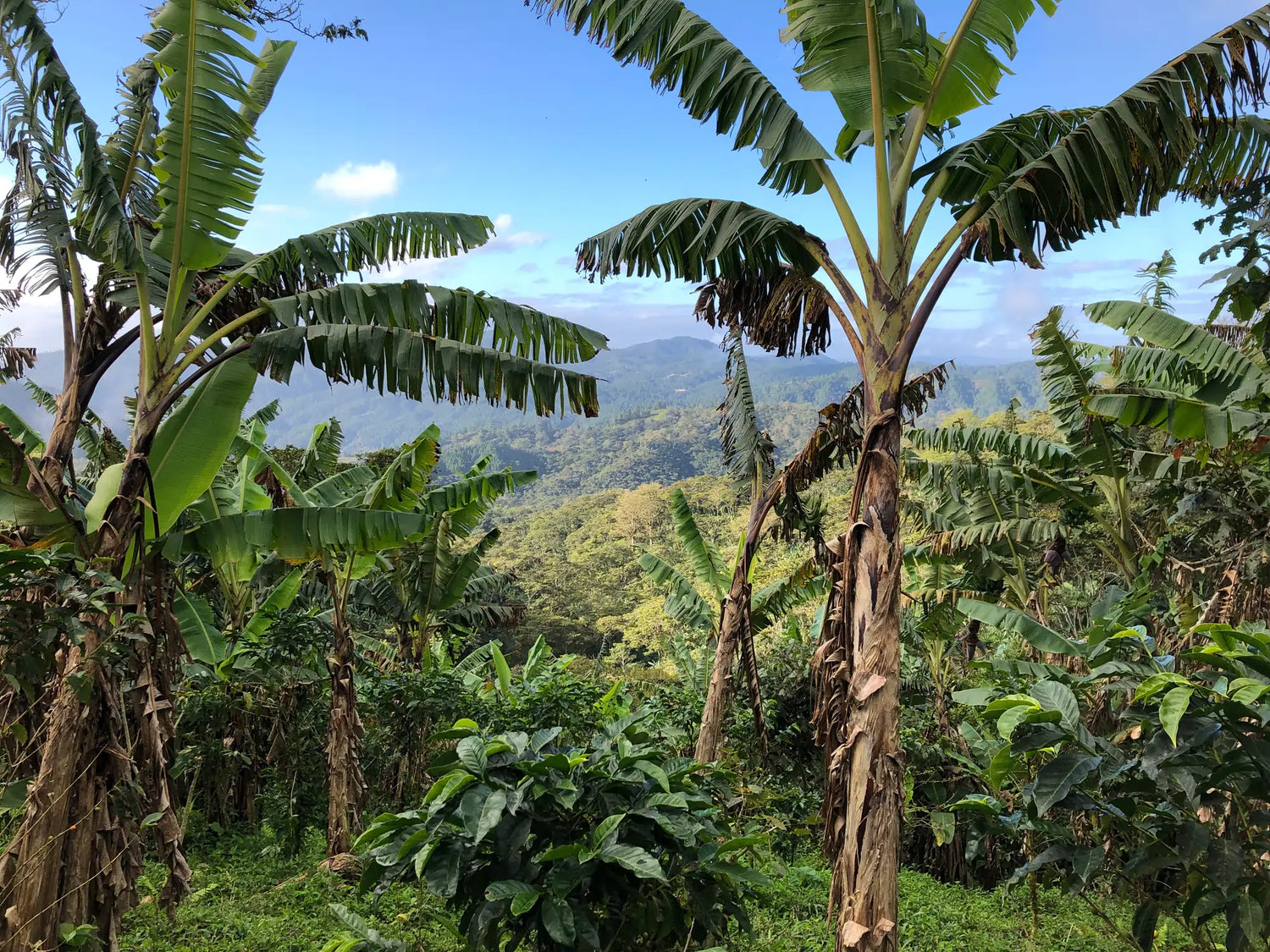
The Central American country with its capital Managua borders Costa Rica to the south and Honduras to the north. It is characterized by very diverse geography, from the Pacific and Caribbean seas, many different microclimates to a chain of active volcanoes.
Coffee cultivation is one of the most significant agronomic economic sectors and is a source of income and employment for many people. In Nicaragua, more than 330,000 people are employed in coffee and account for 15% of the labor market and 54% of the agricultural sector. Of these, 44,000 are coffee producers, of which 71% own an average farm size between 1-14 hectares.
The remoteness of many small farms, as well as the struggle with coffee rust, natural disasters like Hurricane Mitch, and the civil war and dismantling of large farms in the 1980s are factors why the potential as a major coffee nation is being tapped only slowly. And even in current times, politics repeatedly places coffee farmers directly or indirectly before new challenges. Political and economic unrest and uncertainties lead to the Latin American country struggling with enormous emigration. Among other things, this has the consequence that many farmers lack important workers for the harvest season. Further articles on this topic can be found, for example, here.
Many of the small farmers practice nature-based coffee cultivation, partly out of conviction, and partly because money for pesticides is often scarce. The share of organic-certified coffees is approximately 10%.
Where does coffee grow in Nicaragua?
Nicaragua has a variety of soils that differ depending on the region. The soils in the mountain regions are usually of volcanic origin and rich in organic matter. The very fertile soil is excellent for coffee cultivation. In the lowland regions, the soil is usually sandier and better suited for crops such as tobacco, sugarcane, and cotton—or also Robusta.
Robusta - legally regulated cultivation
What can be grown where is regulated by law. Although there have been some farms in the Autonoma de la Costa Caribe Sur region since 2006 that are officially permitted to grow Robusta, this was forbidden in other regions until recently. Economically speaking, this cultivation had no relevance yet. In 2016, the Association of Coffee Exporters (Excan) achieved a major success. The new legislative reform has since allowed the cultivation of Robusta in seven departments in the Pacific region as well as in the two autonomous regions of the Atlantic coast. The resolution stipulates that Robusta must not be grown higher than 400 meters above sea level and must maintain a minimum distance of 30 km from the nearest Arabica plantation. Just one year later, Robusta was even included in the Coffee Law. The reasons for this are again economic, because in addition to the fact that Canephora yields a higher yield per plant, it also grows in low-lying areas and is resistant to many diseases, such as the feared coffee rust.

The economically relevant cultivation regions for Arabica are Nueva Segovia, Matagalpa, Estelí, and Jinotega. Nicaragua's potential to further increase the quantity and quality of coffee cultivation is being tapped only slowly for various reasons. However, many forward-thinking, revolutionary, and pioneering coffee farmers ensure that Nicaragua increasingly gains a permanent place on the specialty map.

https://www.cafeimports.com/europe/nicaragua
What is the classification system?
Arabica green coffee is classified in Nicaragua with regard to elevation in meters. It is assumed that the higher the coffee is grown, the better its flavor profile. The focus is especially on acidity, which can develop better at higher farms. For Robusta, there is no specific green coffee classification.
· SHG (strictly high grown) for cultivation from 1200 meters elevation
· HG (high grown) for cultivation between 900-1200 meters elevation
· CS for cultivation between 500-900 meters elevation
This type of classification plays a larger role in the evaluation of conventionally traded coffees. In the area of specialty coffees, Nicaragua follows the grading system of the CQI and the Specialty Coffee Association.
Nicaragua has also had a tradition for many years as a participating country in the Cup of Excellence competition.
How does coffee from Nicaragua taste?
The dominant Arabica varieties in Nicaragua is Caturra with 72% of total Arabica cultivation area. Other common varieties are Bourbon, Catuai, Catimor, Paca, Maracaturra, Maragogype, Pacamara, which are classically processed washed. Especially in Nueva Segovia, where our farm Santa Rita is located, there are some experimentation-minded producers who play with other varieties and post-harvest processes. The characteristic flavor properties of these washed-processed varieties are notes of milk chocolate, caramel, honey, and nuts with medium acidity and medium body.
Through improved selection, Robusta has gained much potential. Some fine Robustas offer notes of chocolate, fruits, and spices as well as clean flavor notes with pleasant acidity and a round body. With Robusta too, coffee farmers are testing different post-harvest processes, such as honey.
Defining coffee farms for Nicaragua: a selection

Finca Santa Rita - our own coffee farm
Since 2017, we as Kaffeemacher GmbH have been the owner of the small coffee farm Santa Rita in Tablazon, Dipilto, about 30 km from Ocotal in the province of Nueva Segovia.
We became Santa Rita as co-owners at the invitation of our friend and partner, Roberto Castellanos, co-owner of Finca Santa Rita. The original impulse was the exchange, financial stabilization, and further development of a small model farm.
In the meantime, Roberto has taken over management of the family farm and asked us to take over Santa Rita completely and continue operating it. We continue to purchase coffee from Roberto and he is our neighbor with "Las Nubes" in Dipilto Viejo.
Our goal is to work as ecologically as possible and create a healthy cycle on the farm, with an intact flora and fauna system. A healthy cycle naturally also includes the employees, for whom we create safe jobs, appropriate wages, good sanitary conditions, access to education, and insurance.
We understand Santa Rita as a platform and laboratory at the same time. As a platform, Santa Rita serves to invite other producers to exchange with scientists and pass on what we've learned. As a lab farm, we conduct experiments with different varieties and post-harvest processes to, on the one hand, generate a stable harvest yield, and on the other hand, to develop which flavors we can create on a small farm with targeted fermentations. You can find the coffees in our shop, seasonal and fresh from harvest.
Finca El Árbol - model farm of our partners
Claudia Lovo and Saša Šestić together with other supporters purchased Finca El Árbol. The Australian is the founder of Ona Coffee and Project Origin and Australian Barista Master as well as Barista World Champion. Since 2019, Claudia's partner Tim Willem has dedicated himself to the continuous optimization of quality, with a focus on the post-harvest process. The farm is managed according to organic-regenerative principles and is home to 14 people who care for and nurture the created mini-ecosystem. Coffee, nature, and people should be able to live in harmony—this vision is what Claudia and Tim pass on to their employees and visitors. The two are our partners on-site, involved as representatives and trustees, and manage Santa Rita in coordination with us.
Claudia and Tim are also the ones who conduct the annual Coffee Farm Training on the partner farm El Árbol.
Bridazul - Born from challenges

Coffee drying at Bridazul
"We are not a drymill nor an export company. We are the link between people with the same mindset."
Tim Willem, Finca El Àrbol and Bridazul
In the 2018/2019 harvest season, Claudia and Tim began experimentally drying coffee on their own farm. In the same year, the country suffered major political instability with the catastrophic result for coffee farmers of a credit freeze by the banks. Several producers asked Claudia and Tim for help and hoped that through the two's good networking they could get a higher price for their green coffees—otherwise the farmers might have lost their farms. Tim and Claudia promptly called several friends and asked if they were interested in buying coffee from Nicaragua. As a result, they were able to sell almost an entire container. Today they are lessees of a dry mill and sell between five and six containers of green coffee from approximately 45 producers. With Bridazul too, they have created a place where nature, people, and animals are treated with respect.
Mierisch Family
"The Mierisch Family were the first to make things better and put Nicaragua on the specialty radar."
Tim Willem, Finca El Àrbol and Bridazul
The undisputed and highly respected star producer is the Mierisch family. German immigrant Bruno Mierisch Boettiger planted the first coffee plant on his farm "Las Lajas" in 1908, laying the foundation for the most successful and multiple award-winning Mierisch Fincas, which now comprises 14 farms, three of which are in Rio Bonito, Honduras. This makes them among the largest producers in the country, as a substantial 97% of all 45 thousand producers own less than 14 hectares or 20 manzanas of coffee cultivation area.
Valladárez Family
The story of Luis Emilio Valladárez Zelaya begins in the 1960s in Dipilto, Nueva Segovia, when he inherited a small plot of land from his grandmother and grew coffee on it. The circumstances were difficult at first, so the valuable cargo had to be transported by horse to the nearest mill or to the next village. He planted varieties such as Maracaturra, Maragogype, Java, Villa Sarchí, and Caturra and named his small farm "Buenos Aires"—a award-winning finca that was chosen as the winner of the Cup of Excellence in 2015. His Maracaturras are viewed by many as the best in the country. Meanwhile, the Valladárez family owns several farms, including the also award-winning Finca Miraflor, El Suyatal, Monte Libano, and La Laguna.
El Avion
The farm of Mario José González Rodríguez is located 1400-1800 meters above sea level and is the 2022 Cup of Excellence winner. With 90.74 points, the naturally processed Red Catuai impresses the jury with stone fruit, plum, vanilla, and a clear acidity and very present sweetness. The 100-manzana El Avion farm has been in the hands of the winner since 2012. He grows coffee on only 20 manzanas, specifically the two varieties Red Catuai and Catimor.
The Chianti of coffee: Designation of Origin DO Dipilto
With the Denominacion de Origen, we want to protect the value that our coffee gives us.
Don "Milo" Emilio Gutierrez, President of the Asociacion de Cafetaleros de Nueva Segovia

Don "Milo" Emilio Gutierrez on his Finca Los Cypresses de Loma Fria, Nicaragua
Bursting with pride, Don "Milo" Emilio Gutierrez, owner of Finca Los Cypresses de Loma Fria and President of the Asociacion de Cafetaleros de Nueva Segovia and above all passionate agronomist, tells of the introduction of DO Dipilto. This origin certification "Denominacion de Origen de Café Dipilto" is the first of its kind in Nicaragua. It encompasses the areas of Dipilto, Macuelizo, and Mozonte in northern Nicaragua. "Since the introduction of the Cup of Excellence in 2002, coffees from the Dipilto and Mozonte region have repeatedly landed in the top ranks," Don Milo knows. "That's when we decided to give back to our farmers and our region by protecting the value that our coffee gives us."

DO Dipilto area, Nicaragua
A DO protects a product of a specific location with regard to its quality, its origin, and its ingredients. Comparable origin or denomination designations in coffee are quality seals such as Café Marcala in Honduras, Genuino Antigua in Guatemala, Café de Tarrazu in Costa Rica.
For the approval of the DO Dipilto, 17 specification documents had to be created, including technical instructions for the post-harvest process, drying, and quality control. After four years of paperwork, in 2022 the farm Cafetos de Segovia was able to lay the milestone and sell the first certified DO Dipilto lot to England.
Coffee export from Nicaragua
A coffee year is handled similarly to a school year and runs in Nicaragua from October through September. The harvest year designation usually includes two years, for example 2021/2022.
The most important port for export is Corinto. Overall, in the 2021/2022 coffee year, over 4.5 million sacks were exported, or in other words, nearly 151 million kg of green coffee. Almost 9% of this was organic-certified. Together, the USA and Europe account for 50% of the main buyers.
What are the biggest challenges?
In recent years, the temperature here in Dipilto around Easter has risen by around 10 degrees. Where we had 25°C five years ago, we're now at 36°C or even 37°C.
Adan Mejía, Operations Manager Finca el Árbol and Finca Santa Rita, Nicaragua
The biggest problem, the seemingly insurmountable difficulty, is probably also climate in Nicaragua. Although the country still struggles with other ills, such as the enormous emigration of Nicas to the USA, which has a barely tangible impact on harvest workers. Many farms have far too few workers, which has a disastrous effect on their overall harvest and sometimes means a loss of up to 40%. According to a study by FUNIDES in 2016/2017, almost 74% of farms are affected by diseases, pests, and fungi that can destroy entire plots.
Colonialism and Nicaragua
Although the first coffee plants were planted in Nicaragua at the end of the 18th century, the newly discovered stimulant introduced by Europeans didn't really take hold until the middle of the 19th century, when global demand increased significantly. The first large coffee farm was established in Managua, from which the business spread to other regions. German and Italian immigrants were encouraged by the Nicaraguan government to buy land for coffee cultivation. And before you knew it, the coffee business was already firmly in the hands of white landowners, who had their workers work for minimal wages and under the most difficult conditions.
Since 1987, Nicaragua has had 15 so-called Departamentos—that is, cantons or states—as well as 2 independent regions: the autonomous region of the Atlantic coast south and the autonomous region of the Atlantic coast north. After a 20-year conflict in which one party sought more control over the Miskito indigenous people and they in turn demanded greater autonomy, a peace agreement was finally signed in 1987, which paved the way for the creation of the two autonomous regions. This was to protect the rights and cultural identity of the indigenous population and descendants of African slaves. The regions function with their own government and their own laws, which are supposed to take into account cultural and linguistic ethnicities. Despite a certain independence, both regions are subject to the sovereignty of the country; the Nicaraguan government has the final say.
Facts & Figures