



Daniel and David Sanchez operate Miro Coffee in Zurich, which includes a coffee roastery, two cafés, and a coffee truck. Philipp spoke with them about their roasting philosophy. Openness is the key to success in specialty coffee.
"Today we roast differently than we did six years ago," Daniel Sanchez tells me. Back then, in 2014, Daniel started roasting coffee at a gas station. An unusual location for a coffee roastery, but one that leaves an impression. At the beginning, Miro Coffee roasted noticeably lighter and somewhat "quite edgy," Daniel explains. Shortly after, the Sanchez brothers launched a coffee truck, from which they made coffee daily in front of ETH Zurich. This allowed them to gather plenty of feedback and reach a broad audience.
"From construction workers to physics professors, we make coffee for everyone."
Daniel Sanchez
The extensive feedback helped them refine their roasting language. For every roastery, it's an exciting process to develop their own roasting approach.
There's your own idea of what specialty coffee should taste like. Then there are your personal preferences for certain coffees. And then there are the customers you need to find who match your preferences, so your strategy works. The more open a roastery is about this, the more it allows them to strike a narrower or broader balance.
"We have simple specialty coffees, but also ones that don't taste like coffee at all – so there's something for everyone." Daniel brewed me a washed coffee from Ethiopia that was floral and tea-like, but still tasted like coffee. The espresso from Colombia after that was definitely no longer a mainstream coffee – it was a fruit bomb of coffee that tastes like a dessert, especially as a cappuccino.
 Daniel Sanchez from miro coffee, Zurich
Growing organically and staying open at Miro Coffee
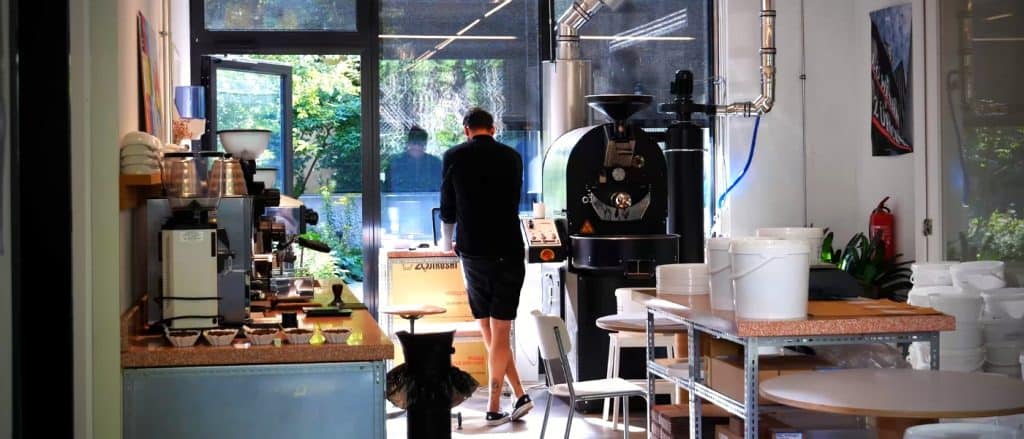
Today, Alfonso roasts with the 5kg Probatone roaster. Alfonso comes from southern Italy and grew up with dark, Robusta-heavy espressos. "When I bring coffee from here to my family, they wave it off. They say it's not coffee, it's nothing," Alfonso jokes and laughs. Coffee is a cultural asset, and our origins shape how we all understand coffee.
The roastery is separated from the café by a glass wall and offers insights into the craft. There are no secrets, and that's why I visited Miro. They see themselves as craftspeople, not artists.
Next to the roastery is the office, which is gradually filling up. Here, David, Daniel, and the growing team take care of the café, green coffee sourcing, marketing, and the company's further development.
"We're not stressed," Daniel tells me, "and we don't have to grow at all costs. But we do want to grow, however: organic is the keyword."
Daniel Sanchez
And they want to stay open – and continue to focus on the people they see daily. They're now new at Zurich's main train station, where they'll meet commuters – and there are incredibly diverse coffee preferences there. Just as we as coffee makers at Basel station or Adrianos at Bern station offer specialty coffee, Miro is now joining in Zurich.
 David Sanchez in conversation with Philipp Schallberger
Not loud, but present and composed
I've known Daniel since 2014, when we met at the World Barista Championship in Rimini. Then, in 2015, he served me a coffee at the Swiss Filter Coffee Championships. He was a competitor, I was on the jury. That's when I got to give him feedback, and tell him he would be disqualified because he had exceeded the time limit.
Championships are an emotional matter, and not everyone manages to stay composed in such moments – especially when you've actually served a good coffee but then get disqualified anyway. Dani did. He accepted it, stayed cool, and said it was about the coffee anyway, not about him.
His words stuck with me. After my last visit in September, I noticed that he didn't just mean it, but that Miro Coffee operates that way. Miro Coffee puts good coffee and craftsmanship front and center. Without attitude, and yet trendy – it's great that you're helping shape the Swiss coffee scene.