





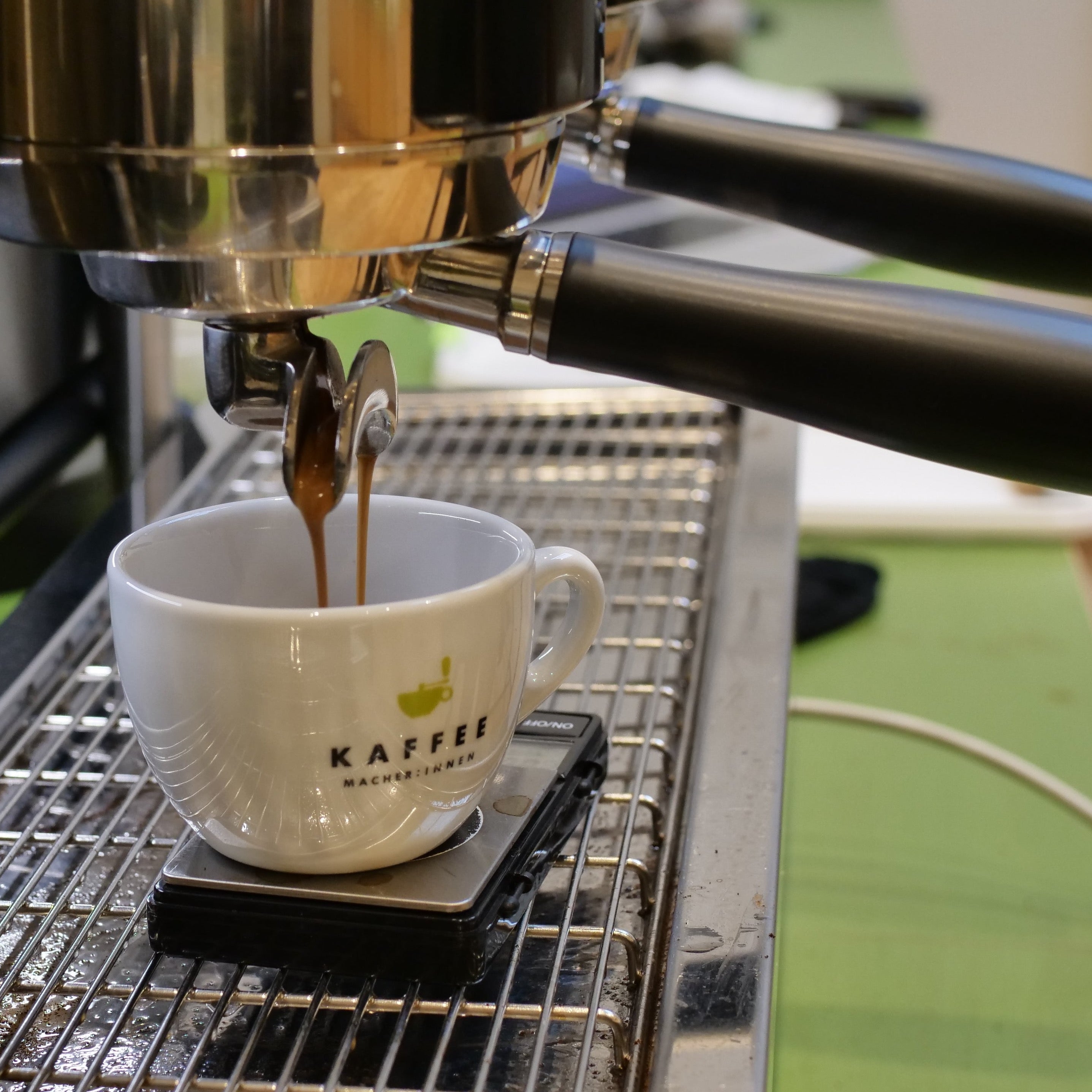


The La Marzocco GS3 AV is considered by many to be one of the best espresso machines for home use – and as "the GS3," as it's affectionately called in expert circles. We as testers were curious too: Michel had a GS3 model in his kitchen for many years, and I use a GS3 AV for coffee catering on our coffee bike. So we tested the machine both in everyday home use and under demanding real-world conditions at events. To give you a preview: In many respects, the GS3 lives up to its legendary reputation, but it can't convince across the board. In the following experience report, we examine the strengths and weaknesses of the GS3 AV and take a close look at who this machine is really suitable for.
Buy La Marzocco GS/3 AV
The following specialist retailers stock the La Marzocco GS/3 AV, and we can recommend purchasing a machine from these businesses. They all offer to adjust the machine's offset.
Germany: [Partner links] Stoll Espresso
Switzerland: [Partner links] deon
We search for specialist partners who we know provide good work and service. We're in close contact with the retailers. These are affiliate links. If you order through this link, it won't cost you any more, but we'll receive a small commission that we put toward new test equipment. We're continuing to work on this and looking for competent partners in the German-speaking countries.
Build Quality and Workmanship
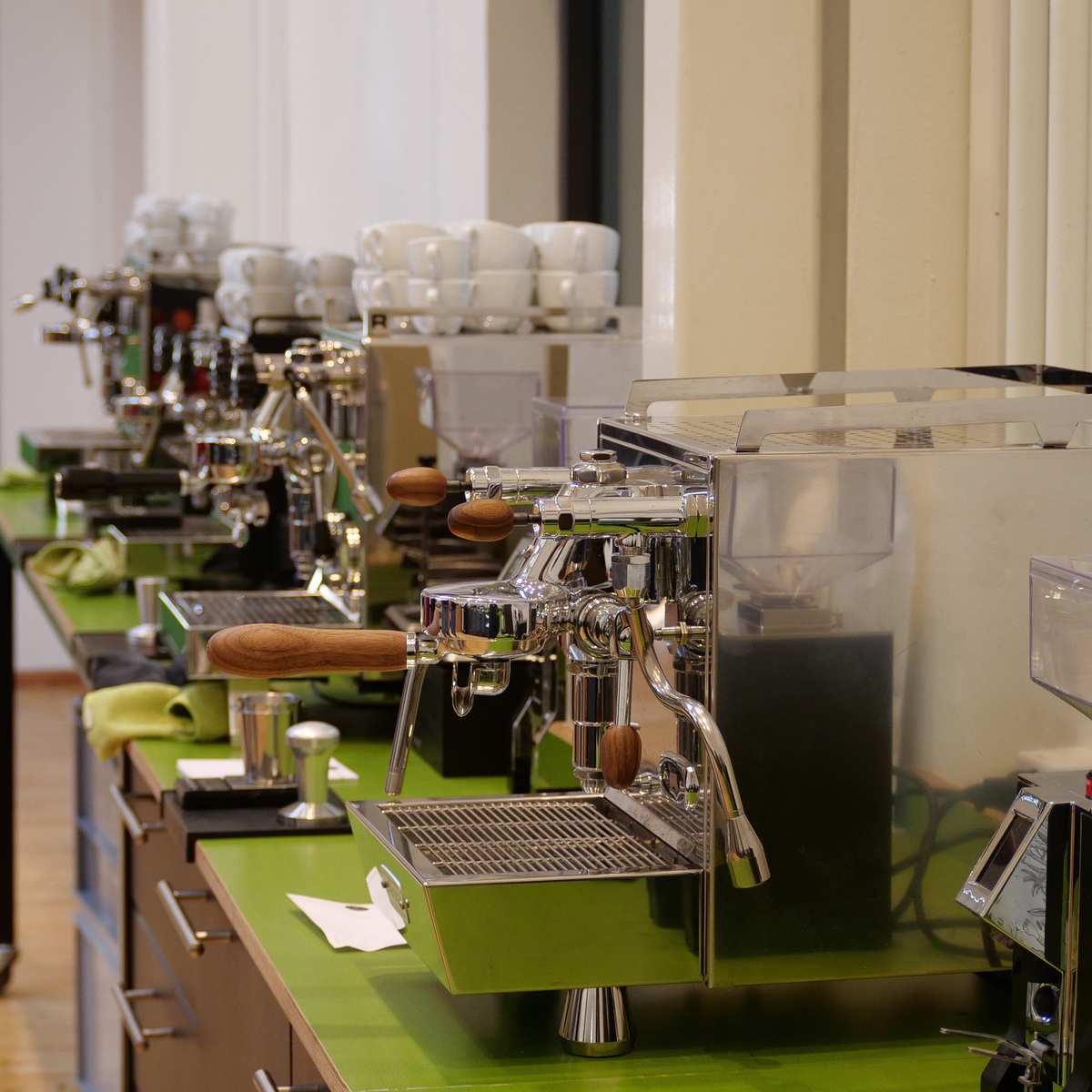
The build quality of the GS3 AV leaves little to be desired. La Marzocco has consistently relied on professional components in its construction – precisely those parts that are also used in their gastro machines like the GB5 or Strada. Compromises? Not a trace. The result is a single-group espresso machine that feels more like a full-fledged gastro powerhouse. The frame and chassis are predominantly made of solid stainless steel, which you not only see but also feel: The GS3 weighs around 33 kg – you immediately notice that quality sometimes means weight.
Inside, the technology works like a professional's: two generously sized stainless steel boilers (brew boiler 1.5 liters, steam boiler 3.5 liters) and a saturated brew group for optimal temperature stability. This dual-boiler configuration comes directly from its larger sibling the Strada and ensures consistent temperatures and plenty of steam power. The housing feels robust and durable. A small caveat regarding build quality are perhaps the side panels: In the standard version, these are made of black plastic. Given the price, we would have preferred full metal here – though La Marzocco does optionally offer sleek glass sides or wooden panels. Be that as it may: there's little to fault regarding the fundamental build quality of the GS3. Everything feels solid and high-quality, from the smooth valves to the thick stainless steel drip tray with plastic insert. This machine is clearly built to last decades and produce thousands of espressos.

Side view of the La Marzocco GS3 AV.
Usability and New IoT Control
The usability of the GS3 AV is a double-edged sword. On one hand, it offers experienced baristas numerous setting options: via the digital display, you can comfortably configure brew temperature (PID-controlled) and extraction volume, and a shot timer helps with extraction control. The AV variant (Auto-Volumetric) allows you to precisely program the desired water amount per shot – then a button press always delivers the same espresso amount reproducibly. This volumetric dosing control is invaluable when steaming milk in parallel or preparing multiple drinks in sequence. In hectic catering operations, we enjoyed being able to briefly attend to other things thanks to the automation, while the GS3 stopped the extraction automatically.
On the other hand, you notice that the GS3's concept dates from the 2000s. The menu navigation on the small display is functional but somewhat outdated. Anyone used to modern touchscreens will initially scroll through nested menus – it's not intuitive. In its favor, the machine responds promptly to inputs and changes, and thanks to PID, you can adjust the temperature in fine increments. What's new (and which we naturally tested) is IoT control via the La Marzocco app. Via WiFi and smartphone, you can now remote control the GS3 – for example, program timers for switching on and off. We immediately took advantage of this: being able to turn on the machine from bed early in the morning is a luxury you quickly come to appreciate. So the GS3 is preheated when you shuffle groggily into the kitchen – and you save yourself the wait time. Temperature settings and extraction parameters can also be comfortably changed via the app. However, we must be clear: this new IoT gadget only marginally improves usability and doesn't fundamentally change the machine's basic concept. The GS3 remains no high-tech toy despite the app, but rather a work machine. If you were previously comfortable navigating the menus, you'll appreciate the app as a nice add-on; however, if you fundamentally found the machine tedious to operate, IoT won't convert you into a fan either. At least: programming and preheating via app somewhat cushions one of the biggest criticisms – the long preheating time.

Preheating Time and Power Consumption
Now let's get to the concrete drawbacks of the GS3 AV: energy hunger and preheating time. Here the machine's professional heritage shows its downside. Our GS3 required approximately 30 minutes in testing to reach full operating temperature (brew group, both boilers, housing warmed up). La Marzocco officially advertises around 15 minutes preheating time, but this figure is probably overly optimistic – perhaps it refers to the time until the boiler reaches its target temperature. In practice, it takes about twice as long until the temperature in the saturated brew group stabilizes and the machine is truly shot-ready. A half hour of warm-up is an eternity in home barista everyday life, especially since many modern machines (e.g., thin film heaters or lighter dual boilers) are ready to go much faster. You pay the price for the massive metal components and large boilers. If you want to spontaneously make an espresso in the morning, you need to plan ahead – or keep the GS3 running continuously.

However, this isn't ideal advice either, because in testing the GS3 AV had the highest power consumption of all single-group espresso machines we've tested so far. For preheating and extracting 5 double shots: 0.6 kWh, which is roughly six times that of a smaller thermoblock machine like the Ascaso Steel Duo PID. Even at idle, it continuously draws power to keep the 1.5 liters of brew water and 3.5 liters of steam water hot. The GS3 is thus a true power guzzler – it takes what it needs without sparing a thought for your electricity bill. At least there's a programmable Eco mode or Half Power mode that, for example, only heats one boiler or reduces power. In everyday use, however, even this only helps to a limited extent: either you accept the increased consumption, or you consistently turn off the machine after use and use timers/IoT to preheat it in time. We struck a middle ground – planning and preheating – because keeping the GS3 running all day would be an expensive pleasure at today's electricity prices. In our rating, this thirst is reflected accordingly: preheating time and power consumption are among the weak points (30 minutes ~ 3.5/10; very high consumption ~ 2/10 points).

Graph from 2021
Temperature Stability During Espresso Operations
Let's turn to more gratifying aspects: the temperature stability and espresso potential of the GS3. Thanks to its saturated brew group design and PID control, the GS3 maintains brew temperature impressively consistently – especially across many extractions. In our stress test, we pulled 30 espressos back-to-back at one-minute intervals. The result: no noticeable performance fluctuations; the temperature rose by a maximum of 1°C across all extractions. The 1.5-liter brew boiler doesn't falter even under continuous heavy use. In short: the GS3 is a workhorse that delivers nearly consistent temperature even in continuous operation. In quantitative measurements according to WBC protocol, temperature variation was tiny 0.61°C, and according to our KM protocol an excellent 0.84°C immediately after preheating. These are values we rate as "very good." When it comes to temperature consistency, the GS3 plays in the top league of espresso machines.
But, and here comes the critical barista perspective: within a single extraction, the GS3 shows a slight tendency toward temperature-related "drift." We could confirm what we'd heard before – during an espresso extraction, the water temperature in the shot rises slightly, by up to about 1°C from first to last drop. Now we must be fair: 1–1.5°C is no drama in everyday use – most coffee drinkers won't notice it. We mention it for the perfectionists and tech nerds who want to have every aspect under control. Bottom line: for consecutive extractions, the GS3 is unbeatable stable; only those who scientifically analyze each shot individually will discover this minimal increase.
In the espresso cup the GS3 AV thus delivers what you'd expect from a machine in this class: excellently extracted shots with rich aroma and finely nuanced flavor profiles. The combination of consistent brew temperature, solid 9-bar pressure from the internal rotary pump, and volumetric precision ensures café-quality reproducible results.
Every espresso we prepared with the GS3 was at least very good, many excellent. Crema, texture, sweetness – all present as long as the bean and grinder cooperate.
So why only 9/15 points in espresso potential? Well, the final points toward absolute espresso perfection don't go to the GS3 AV because there are still machines that offer additional refinements. An example: the GS3 MP (Manual Paddle) or other high-end devices with pressure profiling that allow you to manually control the pressure curve and pre-infusion. This lets you squeeze a few more extraction percentage points from some coffees – something the purely volumetrically working GS3 AV with its flat 9-bar profile can't do. Plus, the mentioned slight temperature increase during the shot remains a minor blemish. Don't misunderstand – the GS3 AV makes grandiose espresso, and in 99% of cases the limiting factor is the person at the portafilter, not the machine. But compared to truly uncompromising "espresso labs," it's missing that final polish to reach the full 15 points. The GS3 AV is the gold standard for consistent extraction with a 9-bar profile. In flexibility, however, it can't compete with profile-controlled machines.
Steam Unit and Milk Steaming
When it comes to milk steaming, the GS3 AV shows what it can do with its massive steam boiler. A full 3.5 liters – a capacity no other single-group machine achieves. In practice, this means: steam galore, and it's powerful and dry. The GS3 forces steam through the four-hole steam wand with such force that it's a joy. We were genuinely amazed at how fast even larger 0.6-liter milk pitchers get up to temperature and into the finest microfoam texture – in 19 seconds. Steaming a 300-ml milk pitcher? The GS3 does it in seconds, and there would still be room for more. This steam power is absolutely "at gastro level" – blasting through large quantities of milk back-to-back is child's play for this machine. In home use, you need to be careful: if you come from a smaller machine, you'll be surprised by the force of the steam. This means practicing or turning down the pressure to avoid accidentally overheating or over-foaming the milk because the GS3 works relentlessly efficiently. Once you get the hang of it, the GS3 conjures up dream milk foam in barista quality: silky, finely textured, and beautifully glossy – perfect for latte art.
A nice bonus is the premium construction of the steam wand itself. It's made of stainless steel, fully articulated (360° swivel), and designed as a "No-Burn" wand with insulation. This means you can safely touch it even after steaming without burning your fingers – a blessing for clumsy people like me who sometimes inadvertently touch the wand when cleaning during steaming. Of course, the GS3 also has a hot water outlet that mixes hot boiler water with some fresh water via a mixing valve. This gives you, for example, about 90°C for tea or Americano instead of boiling water, which works very well in practice. Such details show that the GS3 thinks things through and wants to offer the user comfort.
In sum, we award 8/10 points for steaming quality. The performance of the steam unit is unique. So why not 10/10? Because in 2025 we've arrived at the age of automatic steam wands with temperature sensors in the tip that independently deliver very good milk foam quality. They're less forceful and generally struggle, but for home use this is still an interesting additional option for many home baristas. We additionally rate the power and performance of the GS3 AV's steam extraction in the category of gastro, volume, and catering performance.
Volume Potential and Catering Suitability
Now we come to the core topic of the GS3 AV: its area of application. Already in the title, we've hinted that this machine plays its greatest strengths outside the usual home barista routine. The GS3 wasn't originally conceived as a classic household machine, but as a compact gastro or catering machine. All components, volumes, and performance data are designed to produce many espressos back-to-back in consistent quality. And that's exactly what it does – virtually unfazed. Our own GS3, which we use for events, is the best example: for almost 8 years we've taken it to trade shows, weddings, and street festivals. There it has to easily pull 300–400 espressos in a single day – and it does so as reliably as on day one. That's impressive, and the machine shows no significant signs of aging. We haven't noticed any significant performance loss, nor have we needed major repairs. And if a component does give up the ghost, it can be quickly replaced thanks to modular design – the GS3 is built to last forever.
We honor this volume and catering potential with 10/10 points. In practice, this means: for the small coffee truck, the coffee bar at the farmers market, or as a second machine in a small roastery, the GS3 is ideal. It can be operated with mains water (or via the internal 2.5 L tank if needed) and, thanks to the rotary pump, can also be connected to a drain – a real relief in continuous operation so you don't have to worry about water tanks and drip trays. Temperature remains stable across dozens of extractions; the steam supply seems inexhaustible. With a GS3, we can prepare so many drinks in a short time that we run out of energy before the machine does. In our coffee mobile, it has shown many an astonished guest what a single brew group can do when it comes from La Marzocco.
However, all this praise has one decisive catch: at home, few people will ever need this potential. In the home barista context, the GS3 AV is simply and plainly oversized. If you make two espressos in the morning and perhaps a cappuccino in the afternoon, you're barely scratching the surface of what this machine was built for. The biggest weakness of the GS3 thus actually lies in a misallocation: it can do incredibly much – more than a home user will ever need – and must make compromises for it (power consumption, preheating time, price). You pay a high price for capabilities you'll rarely use. Exactly for this reason, our conclusion is also differentiated: for ambitious home baristas with a big budget and professional aspirations, the GS3 AV can certainly be a dream. It's also fun to operate such a precision tool and you feel the reserve and stability hiding in the machine with every shot. But viewed purely rationally, it's often "too much" for pure home use.
Accessories and Included Extras
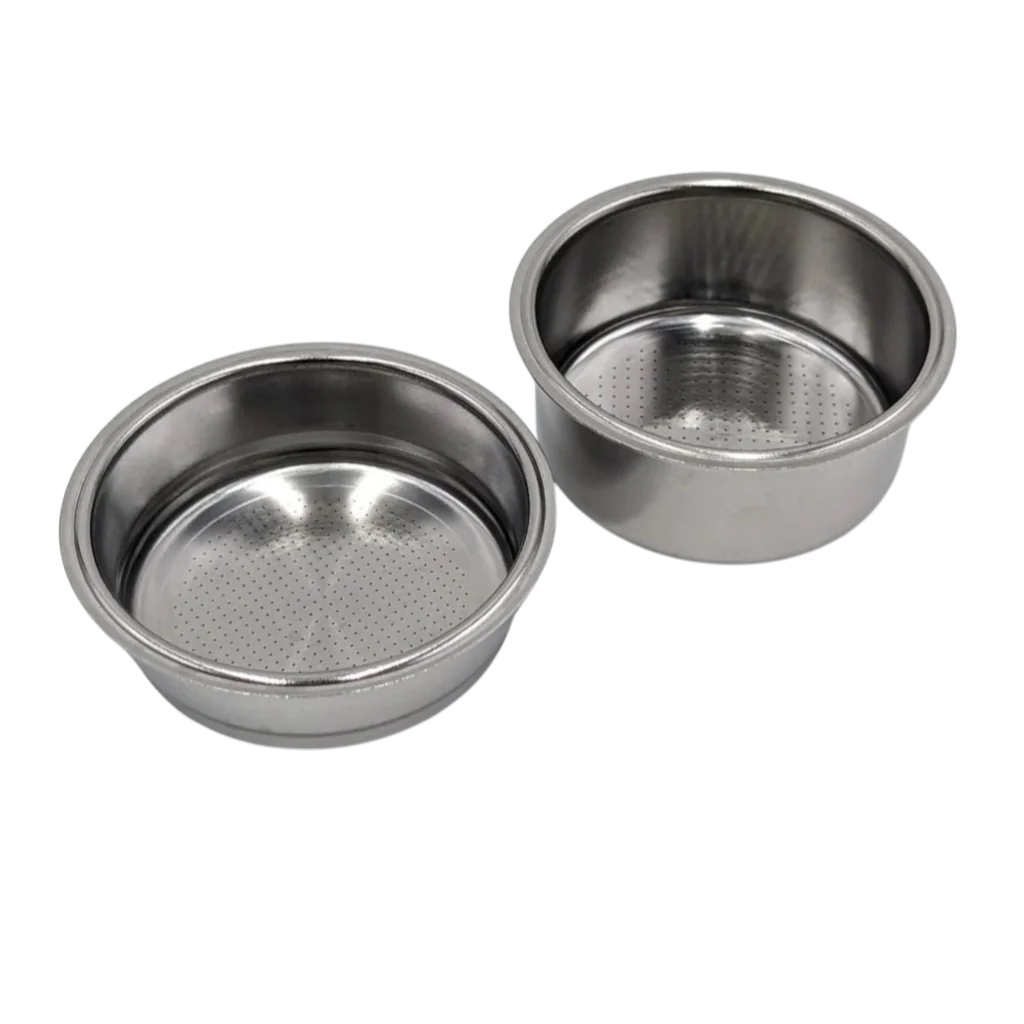
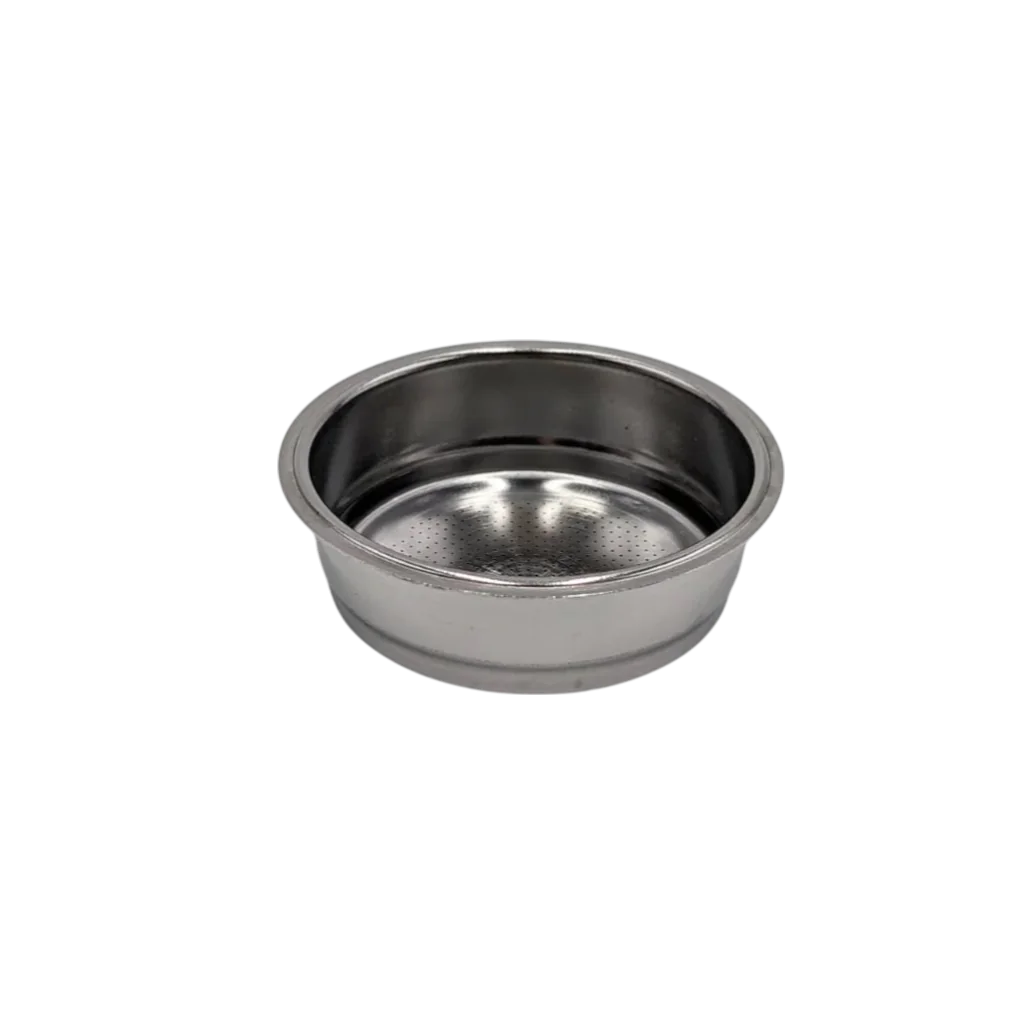
A brief look at the topic of accessories: here La Marzocco unfortunately shows itself stingy – and this factors into our rating with only 3/10 points. Given the purchase price of starting at 6,900 Swiss francs or 7,600 euros for the GS3 AV, we would have expected a somewhat more comprehensive or higher-quality accessory package. In the box you'll find only the essentials: a double and single spout portafilter, four basket inserts (7 g, 14 g, 17 g, 21 g), a blind basket for backflushing, a simple stainless steel tamper, cleaning powder, a water hardness test kit, and a mains water connection kit. Don't misunderstand – this is solid and leaves no essential component missing. But "premium" feels different. For example, you'll look in vain for a bottomless portafilter, which other manufacturers in this price range often include. The included tamper is also made of metal, but it's rather simple and nothing compared to the elegant precision tamperers many home baristas use nowadays. No milk pitcher, no knock box, no other gimmicks – here La Marzocco could certainly have been more generous to give the buyer a complete, care-free package. So you'll need to buy a few extras to round out your setup.
Conclusion: Who Should Get the GS3 AV?
The La Marzocco GS3 AV is without question an exceptional machine. In our real-world testing, it impressively demonstrated what it's capable of: first-class espresso quality, incredible performance across long extraction series, robust construction, and professional-level steam power. As a home barista, using the GS3 makes you feel almost like a small café owner – if you want, you can supply a whole gathering with cappuccinos in a short time, without the machine batting an eye. This machine conveys the pleasant feeling of unwavering stability and reserve. This also fits its charming retro design with modern internals, which will certainly enhance many a kitchen setup (assuming the massive unit has space).
At the same time, you must soberly acknowledge that the GS3 AV only makes real sense in home use in very specific cases. The machine's greatest strengths – its throughput capacity and durability under heavy load – rarely come into play in normal household use. Instead, you have the mentioned drawbacks to manage: you need patience with preheating, accept very high power consumption, and invest a huge sum of money. Our price-to-performance ratio for home use consequently comes out harshly: we only award 1.2/10 points. In other words: you're paying primarily for the brand name and professional reserves, less so for your espresso being better than with a machine costing half as much. If you focus purely on espresso quality for a few cups a day, you'll be nearly on par with significantly cheaper machines – simply because the GS3 can't flex its muscles for lack of opportunity.
Nevertheless, there's a niche where the GS3 AV shines: semi-professional applications. For passionate hobby baristas who regularly supply larger coffee gatherings (think: the whole family and neighbors on weekends), or for business operators with limited space (e.g., gourmet shops, bars, or mobile coffee stands), the GS3 is a fantastic solution. It combines the performance capability of a commercial espresso machine with the size and handling of a household machine. In this context, the investment also pays for itself much more quickly – we ourselves have experienced our GS3 paying for itself through catering revenue within a year. And the lifespan of a GS3 is measured in decades, not years.
Our tip: Think carefully about what "coffee type" you are. If your heart races at the thought of using a genuine La Marzocco to explore every facet of espresso preparation, and if the mentioned weaknesses play minor roles for you, then you'll be very happy with the GS3 AV. It does demand something from you (electricity, space, money, and engagement), but it also gives you incredibly much in return. Daily use simply feels professional – and that has its own special appeal. If, on the other hand, you're primarily interested in results with reasonable effort and perhaps only drink a few cups a day, then the GS3 can even feel somewhat frustrating because its potential goes unused and it seems cumbersome in everyday life. In that case, you'd probably be better served by a smaller dual-boiler machine or a good two-group system.
Summary Rating La Marzocco GS3 AV: (as of 2025 test)
- Build quality: 8/10
- Accessories: 3/10
- Usability: 5.5/10 (without IoT)
- Volumetric (automatic dosing): 9/10
- Temperature consistency: excellent (WBC protocol: 0.61°C; KM protocol: 0.84°C)
- Preheating time: approx. 30 min. (3.5/10)
- Power consumption: very high (2/10)
- Steaming quality: 8/10
- Espresso potential: 9/15
- Noise level: 3/5 (~60 dB)
- Price-to-performance: 1.2/10
- Volume/catering potential: 10/10