



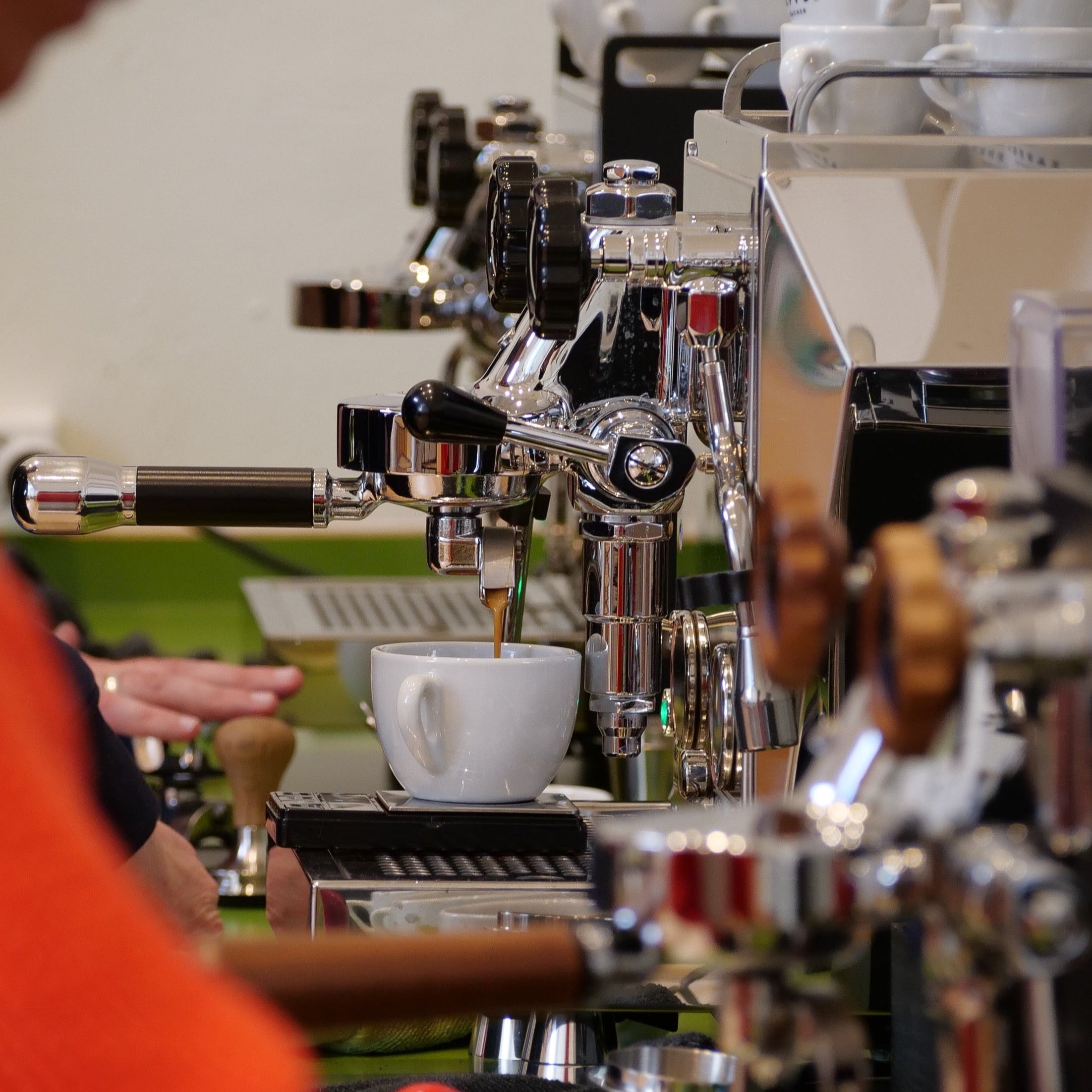
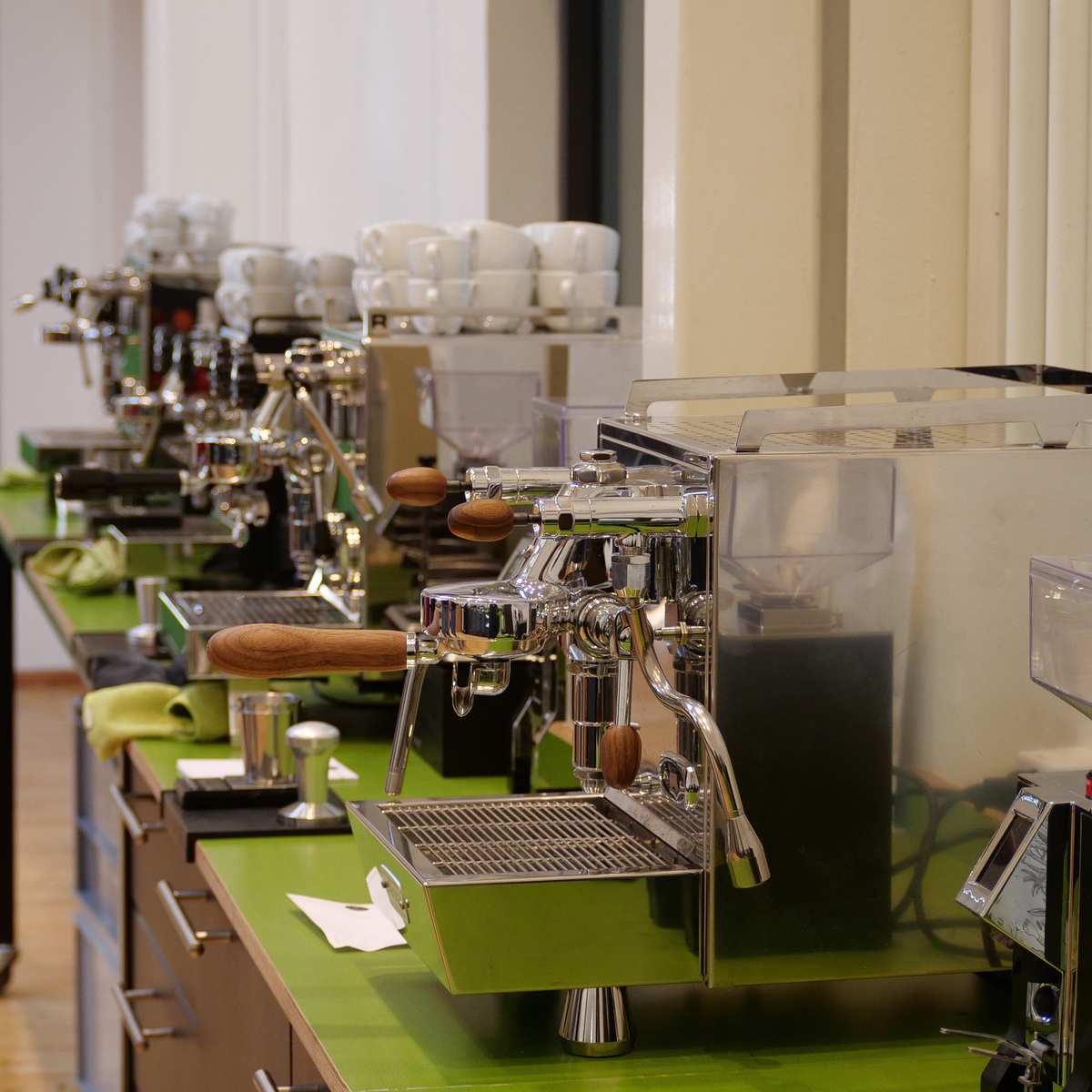


We tested the La Basilea Uno in 2019. A href="https://kaffeemacher.ch/blogs/kaffeewissen/zweikreiser-espressomaschinen-vergleich"dual-boiler machine with the ideas of href="https://prokaffeemaschine.ch/"Viktor Schuler from Basel, built near Venice. Viktor is a long-time friend and advisor when it comes to machine concepts. His philosophy is built into this machine. Back then it cost 2,200 euros, today the price is 2,450 euros (without wood application) or 2,750 euros (with wood). Is the premium worth it compared to cheap entry-level machines? We tested it thoroughly.
Design & Construction: Deep, not tall
The machine has different proportions than most portafilter machines. Exact dimensions: 295 × 510 × 430 mm (width × depth × height). 51 centimeters deep – for comparison: a href="https://www.youtube.com/watch?v=quoDt811NXg"Rocket Appartamento or href="https://kaffeemacher.ch/blogs/kaffeewissen/quick-mill-rubino-im-test"Quick Mill Rubino is 43 centimeters. That's almost 10 centimeters more. In return, just 43 centimeters tall. The footprint is about the size of an A4 sheet of paper.
At 28 kilograms, the machine brings substantial weight to the table. It sits solidly on the counter, no wobbling. The housing is entirely stainless steel, the frame as well – corrosion protection included. The build quality is solid, uniform gaps, no sharp edges. Two gauges are installed – one for brew pressure, one for boiler pressure. Plus LED lights and on the right the PID controller with integrated shot counter. During extraction, the time runs alongside – this is now standard for machines with PID control in this price range.
The wood version costs 300 euros more, bringing it to 2,750 euros. Small detail: a protective cover shields the cup warmer on top.
Technology: 3-liter boiler installed horizontally
The heart is an insulated 3-liter boiler. Unusual: it's installed horizontally in the housing, not vertically as is typical. Probably because the height didn't allow for it. With the depth they had enough space. The heat exchanger holds 0.3 liters.
This is a href="https://kaffeemacher.ch/blogs/kaffeewissen/zweikreiser-espressomaschinen-vergleich"dual-boiler with PID control. What does that mean? You set the boiler temperature and indirectly influence the brew temperature. You can fine-tune this via the PID.
Special feature: a rotary pump is installed. It runs quietly, consistently, and allows connection to a water line. This is definitely a plus over vibration pumps. The machine runs at 1,500 watts at 230 volts.
Practical feature: a stop function when the tank is empty. The machine shuts off before the pump runs dry.
The steam wand and hot water wand are stainless steel with cold-touch insulation – you won't burn your fingers if you accidentally touch them. The feet are also stainless steel.
When you open the machine – the cover simply comes off – you immediately see the large boiler with the second circuit. The hot water probe goes in nicely visible. Behind it the 2-liter water tank, at the bottom the pump. Very organized, like most machines of this type. What's really impressive: the sheer size of the boiler in relation to the total volume. 3 liters is significantly more than the typical 1.6 or 1.8 liters on comparable machines.
The water tank is easy to remove – just lift it slightly, pull it out, done. Very well thought out.
Temperature Management: A flatline
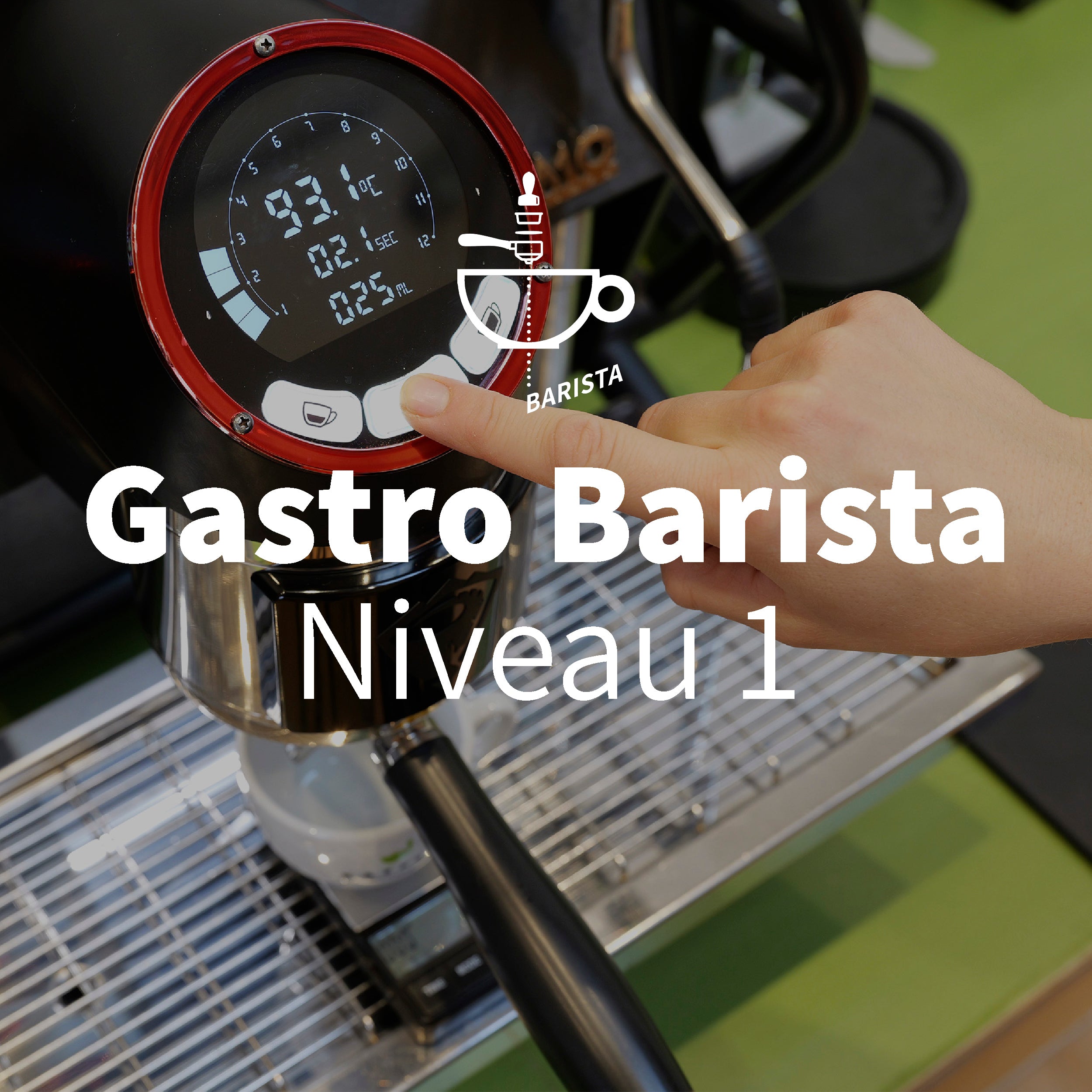
Here it gets interesting. We tested the machine with a temperature portafilter. The result? Incredibly temperature-stable. At 93.1 to 93.2 degrees throughout the entire extraction – like a flatline. No fluctuations, no drop, no rise. With most href="https://kaffeemacher.ch/blogs/kaffeewissen/faema-e61-bruehgruppe"E61 machines we see 0.8 to 1 degree temperature drift during extraction, often falling. Here: consistent from start to finish, as if drawn with a ruler.
The 3-liter boiler pays off. More mass means more thermal stability. The second circuit constantly returns to the correct temperature, even during extraction. That's impressive.
When starting up, we initially set it at 123 to 124 degrees boiler temperature – that produced almost 98 degrees. Way too hot. We then turned it down to 113 to 114 degrees and hit a perfect 93 degrees brew temperature. The PID can be adjusted precisely, a calibration offset is quickly done.
Espresso Quality: Balanced and stable
At 93 degrees brew temperature we pull balanced espressos. The balance is right: sweet, slightly fruity, without disturbing bitterness. The href="https://kaffeemacher.ch/blogs/kaffeewissen/faema-e61-bruehgruppe"FAEMA E61 brew group does what it always does – it delivers solid results, provided the conditions are right.
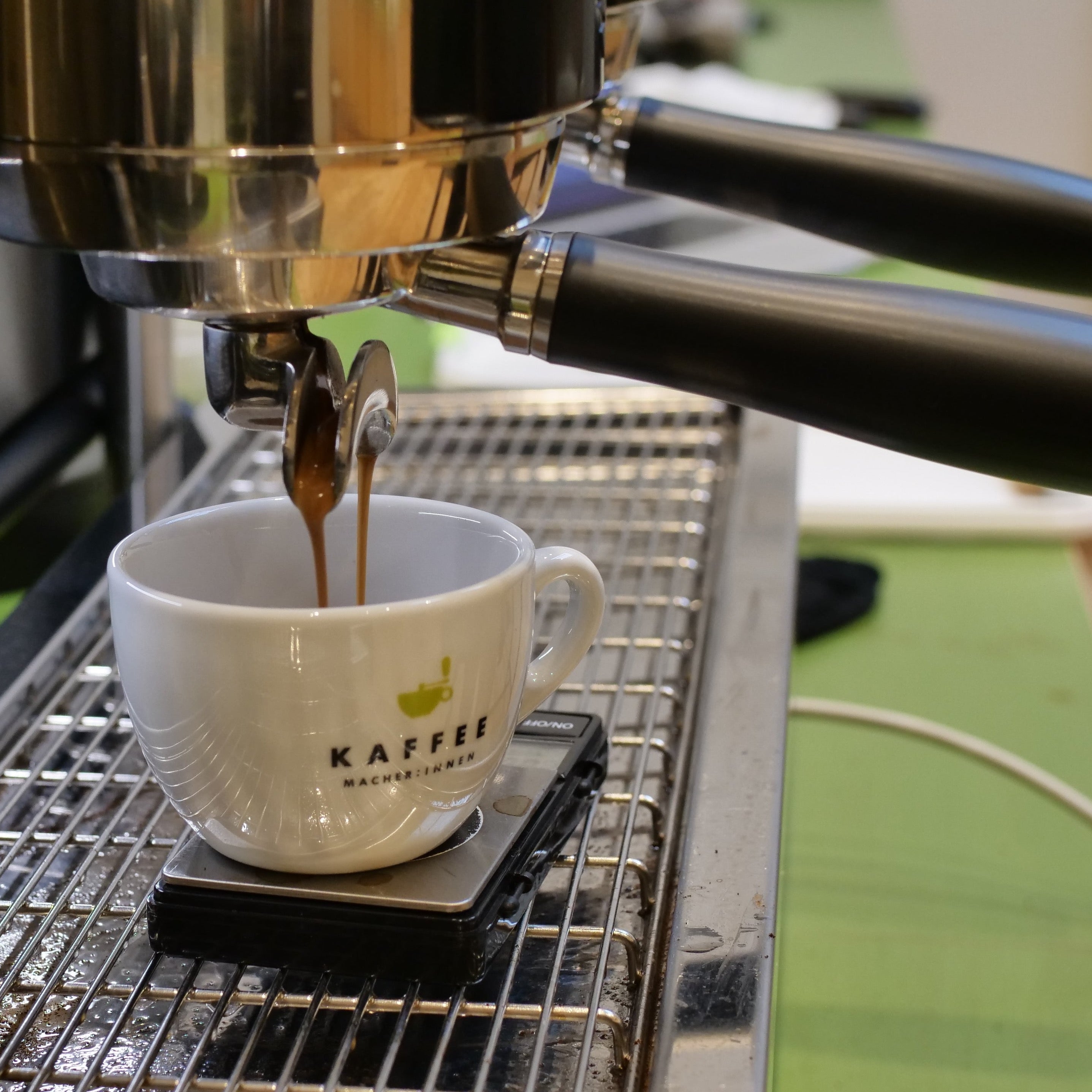
We used 18.5 grams input, ground with the Eureka Perfetto. The extraction runs cleanly through, no signs of channeling or uneven saturation. The shot counter ticks along, about 40 grams of espresso land in the cup. The taste? Delicious. Sweet, balanced, complex. The temperature stability is noticeable in the taste – no burnt notes, no under-extraction.
For a machine without flow control, this is a very good result. The consistency is the highlight.
Milk Foam & Steam: A compromise
Here it gets a bit complicated. At 113 to 114 degrees boiler temperature (which corresponds to 93 degrees brew temperature), the steam wand has decent power, but could use a bit more punch. We get rotation, the foam becomes fine-pored and creamy, but it takes a bit longer than with commercial machines.
Then we increased the boiler temperature to 116 to 117 degrees. Immediately: significantly more power, faster steaming, more force on the wand. But: the brew temperature rises by about one degree. That's then somewhat too hot for lighter coffees.
This is the classic dual-boiler compromise. You have to decide: do you want optimal brew temperature or maximum steam power? It depends on your preferences. Lighter coffees handle higher temperatures better, dark roasts you brew cooler. At 93 degrees brew temperature, the steam performance is adequate for home use – it's not a speed record, but absolutely workable.
We steamed the milk with UHT milk – for practical reasons in the courses, not because we recommend it. The foam turns out well anyway.
Workflow & Operation
Operation is simple. Turn it on, wait, go. The display is easy to read, the PID control intuitive. The shot counter starts automatically with extraction – handy if you want to keep track of your extraction times.
The portafilter locks cleanly into the E61 group, no wobbling. The water tank with 2 liters capacity is enough for several days, can be filled from above. That's convenient.
Small criticism: the drip tray grate. Depending on how it sits, it vibrates from the rotary pump. You can hear it. That's because there's no magnetic function to hold the grate stable. On many machines, the slide-in box sits tighter in place due to magnets and vibrates less. That would be good feedback for Viktor – should be easy to fix.
Otherwise, the machine is fun in everyday use. No frills, everything reduced to the essentials.
Special Features: Rotary pump & horizontal boiler
The rotary pump is a real plus. It runs quietly and allows for a mains water connection – for anyone who wants to operate the machine permanently without constantly refilling water. Plus, the pressure is more consistent than with vibration pumps.
The horizontal 3-liter boiler is unusual, but cleverly solved. It provides the thermal mass needed for temperature stability, but fits in the flat housing. That's engineering – Viktor knows what he's doing.
Price-Performance: 2,450 euros vs. 200 euros?
Now the question we need to ask ourselves: why spend 2,450 euros on this machine when the href="https://kaffeemacher.ch/blogs/kaffeewissen/delonghi-dedica-ec685"DeLonghi Dedica EC685 makes a decent espresso for 200 euros?
The answer has several layers:
Aesthetics and presence: A machine like the La Basilea doesn't belong in the kitchen, it belongs in the living room. It's a statement. That shouldn't be the decisive argument, but it is part of the equation.
Error forgiveness: With the Dedica you need to know exactly what you're doing. The machine forgives little. Anyone with lots of experience can still get good espresso from it. Anyone with little experience struggles. That's almost silly – it should really be the other way around. Beginners need good equipment to gain confidence and learn what good espresso tastes like. The La Basilea gives you that confidence. It's temperature-stable, it forgives mistakes, it delivers consistent results.
Capacity: With a 3-liter boiler you're a workhorse. The machine doesn't break a sweat. You can pull espresso for the whole family, steam milk until the cows come home, the machine stays stable. The Dedica is great for one espresso in the morning. For more it gets tight.
Longevity: Components like the rotary pump, the large boiler, the E61 group – these are parts that last for years, that are repairable, that you understand. This is an investment, not disposable goods.
Our goal isn't for you to spend 10,000 euros on a coffee machine. Our goal is for you to make good coffee at home. No matter what method. A machine like the La Basilea gives you the confidence that you're on the right path.
Conclusion: Swiss precision, Italian craftsmanship
The La Basilea Uno is a solid dual-boiler machine with clear strengths: temperature stability is outstanding, build quality is good, operation is simple. The 3-liter boiler makes the difference – more thermal mass, more stability, more capacity.
Strengths:
- Temperature stability like a flatline (93.1 to 93.2 degrees consistently)
- 3-liter boiler for high capacity
- Rotary pump (quiet, mains water connection possible)
- PID control with shot counter
- Solid build quality
Weaknesses:
- Drip tray grate vibrates (no magnetic function)
- Steam power could use a bit more punch at low boiler temperatures
- Dual-boiler compromise between brew temperature and steam power
Who is this machine suitable for?
For enthusiasts who want a reliable, temperature-stable machine without spending 3,000 euros. For anyone who needs capacity – multiple espressos in a row, milk coffee for the family, no problem. For people who like it simple: turn it on, wait, go. No complicated menus, no gimmicks.
For absolute beginners? Not really. The href="https://kaffeemacher.ch/blogs/kaffeewissen/gaggia-new-classic"Gaggia Classic or the DeLonghi Dedica are enough to learn. But if you know what you want and value consistency, you'll find a good partner here.
Would we buy it? If temperature stability and capacity are priorities: yes. If we only pull one espresso in the morning: no, something cheaper would do. The La Basilea is for anyone who means business, but doesn't want to go to extremes.
Tastes like Basel. Tastes like Italian craftsmanship. Fun to use.
Further reading:
- href="https://kaffeemacher.ch/blogs/kaffeewissen/espressomaschine"Which espresso machine is right for me?
- href="https://kaffeemacher.ch/pages/espressomaschinen"Espresso machine overview & tests
- href="https://kaffeemacher.ch/blogs/kaffeewissen/espresso-zubereiten"How to prepare espresso correctly