






The Fiorenzato Allground Sense Plus is the updated version of a grinder we now know very well. We tested the version without an integrated scale (without "Sense" in the name), the model sold as the Sense until June 2025, and the Plus version, which is the latest iteration of this grinder.
The Allground Sense Plus is a hopper grinder with an integrated scale featuring Grind by Weight technology and 64 mm flat steel burrs. Costing just under €850 at Stoll Espresso and around CHF 900 in Switzerland, it positions itself in the premium home segment. As always, we bought this grinder ourselves—several times over by now, I might add. The differences from its predecessor: a new, better-integrated oval display and a subtle software update. Mechanically—burrs, grinding chamber, flapper—the Plus version is identical to the older non-Plus version. That means: the strengths remain, and so do the weaknesses. The changes are so marginal that some retailers don't even advertise the new grinder as a "Plus" version. However, the Plus version from June 2025 has completely replaced the previous iteration. If you own the version launched before June 2025—don't worry. From our perspective, there are no quality-relevant differences.
Design & Build Quality
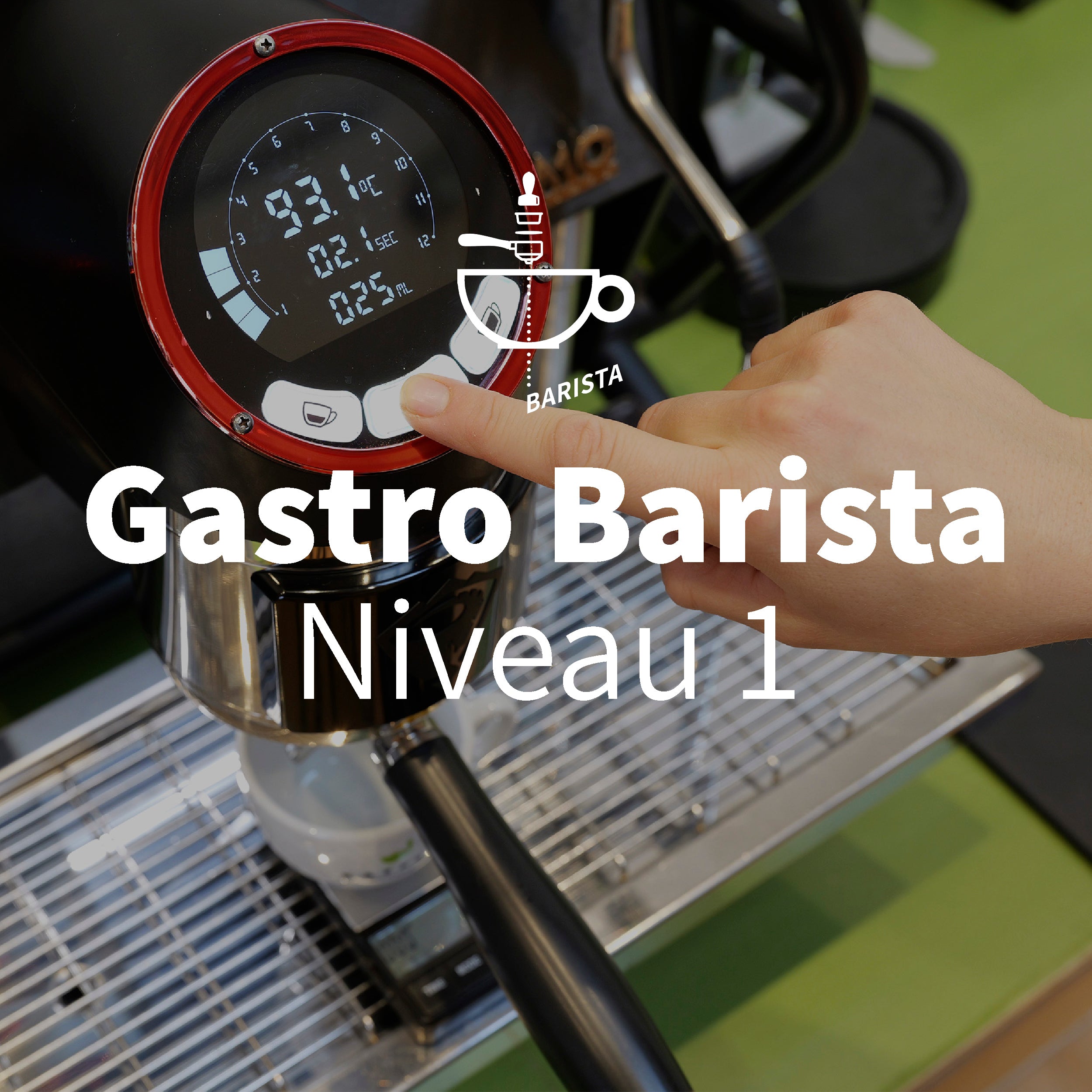
Weighing 9 kg and standing 44 cm tall, the Allground Sense Plus has a solid, massive presence on the countertop. Metal housing, high-quality finishing, no wobbling, and no cheap gap dimensions. The portafilter fork holds securely: lock in, firm, reliable. The new display is an aesthetic step forward compared to the previous version. It adopts the physical shape of the display housing and mirrors it as an oval screen. The IPS panel is easier to view from different angles and offers clearer color reproduction.
One concrete software update is worth noting: Doses can now be programmed up to 50 g—on the previous model, single doses were capped at 12 g. Not a gamechanger, but if you want to experiment with larger doses or filter coffee, you now have more flexibility.
The visual grind adjustment indicator is even coarser than the grinder's physical steps. This remains a genuine weakness, and it is hard to understand why Fiorenzato hasn't improved this easily fixable display since the release of the original Allground. The vertical red indicator line is as wide as 1.5 dots on the dial, and the dots themselves are quite wide. They correspond to the adjustment steps. Because there is no numerical scale, you have to count dots when adjusting the dial if you want to return to a specific grind setting.

The community has found workarounds—marking stickers, 3D-printed indicators, homemade scales. The fact that users have to search 3D printing platforms for solutions the manufacturer failed to deliver in five years doesn't speak well for the brand's responsiveness to feedback.
Cleaning accessibility is exemplary. Access the grinding chamber without tools, brush it out, done. Three seconds and you're in. It sets a benchmark that other manufacturers should study. We rate the grinder's cleanability "only" as light green because adjusting it requires resetting the grind size, meaning it doesn't automatically return to the previous setting after cleaning. Nevertheless, how quickly you can reach the heart of the grinder—the grinding chamber—is sensational.

Germany: Stoll Espresso, Bohnendealer, Lücke Technik
Switzerland: Adrianos
Austria: Bohnendealer
We recommend specialty partners who we know deliver great work and reliable service. Ordering via our affiliate links costs you no extra, but provides us with small support that goes directly into purchasing new testing equipment.
Burrs & Technology
The core of the Allground Sense Plus: 64 mm flat burrs running at a fixed 1,600 RPM. There is no variable RPM control. The grinder is designed for hopper operation with an integrated scale; single dosing is technically possible, but it is not its core value proposition.
The grind size adjustment mechanism uses stepped clicks. A notched wheel glides over a metal pin during adjustment, which physically locks the setting and provides an audible click. Without this pin, the adjustment mechanism would be stepless. With the pin in place, you can still position the dial between notches on the ridge of the detent, though this requires a delicate touch.
Staying strictly within the notched clicks results in shot time jumps of three to four seconds. In practice, this means it is difficult to dial in an espresso precisely when staying strictly on the clicks. Positioning the dial between clicks tricks the mechanism and gets you much closer to your ideal grind size.
Our criticism of the manufacturer remains. If you always grind the same coffee and find your setting once, you'll get along fine. If you switch beans often or like to adjust your grind size actively, you will find it frustrating—unless you target the spaces between the click steps.

Grinding Speed & Noise Level
8 seconds for 18 g—that's fast and more than sufficient for home use. In 10 seconds of continuous grinding, 23.8 g comes out. Those are numbers that make serving multiple guests in a row a breeze. Its speed is one key reason why we can easily see this grinder performing well in light commercial environments.
The noise level measures 84.1 dB(A) at a distance of 20 cm. That sits at the upper limit of what we classify as "medium": noticeable, but not unpleasant. The sound profile is even, without high-pitched whines or a struggling motor. It's a louder sound, but of an elegant frequency. Eight seconds of operation—then silence.
Grinding Temperature & Consistency
Grinding temperature starts at 29.6 °C and rises to 32.0 °C after five consecutive doses. There are no thermal issues here, even during back-to-back extractions.
Now to consistency: The standard deviation across 10 doses is an impressive 0.067 g. Individual dose outputs look like this: 17.9 – 18.0 – 17.9 – 18.0 – 18.0 – 18.0 – 17.9 grams. The GbW system delivers on its promise: the programmed dose comes out shot after shot, even when changing beans, without needing a "settling in" period. A reading of 17.9 g falls within the margin of error of the reference scale. No misreads, no portafilter detection issues, no outliers.
A key quality marker for Grind-by-Weight grinders is how they handle countertop vibrations. In the early days of GbW grinders, we tested a unit that stopped grinding whenever a tram passed by outside the building.
The Fiorenzato Allground Sense displays slightly different behavior across the two versions we tested. The Plus model pauses grinding during stronger vibrations and resumes once the movement stops. The pre-June model grinds through, showing fluctuating values on screen during vibrations, but settles as soon as they stop. Provided vibrations aren't continuous, both versions achieve accurate target weights.
Retention
Retention stands at 7.1 g total—of which 6.6 g is exchange retention and 0.5 g is permanent retention. This hasn't changed in the Plus version. Grinding chamber, flapper, wipers—everything is identical. And 6.6 g of exchange retention is simply too high. That remains our verdict.
Let us explain more clearly why—and for whom it matters:
In practice, this means: Always purge when changing grind size. We program the single-shot button to 6 grams and purge 6 grams consistently after every grind adjustment.
If you pull several espressi daily, retention is rarely an issue because ground coffee doesn't sit in the chamber for long.
Grind Repeatability
In the adjustment repeatability test—espresso (T4), ristretto (T5), lungo (T6), and back to espresso (T7)—the Allground Sense Plus shows clear strength: The x50 value varies by only ~11 µm between baseline (262.3 µm) and return (273.2 µm). For a stepped grinder, that's impressive. The mechanism locks in precisely—once you find your spot, returning to it works reliably.
The paradox remains: Repeatability works. Finding the sweet spot between two clicks remains the challenge.

Particle Size Distribution
We analyze particle size distribution in partnership with the ZHAW using the Retsch Camsizer X2.
Espresso Setting (T4):
x50: 262.3 µm – Fines ratio (Qf <100 µm): 31.8% – 60% Peak Width: 177.7 µm
A fines ratio of 31.8% is high: providing more body, texture, and extraction resistance in the puck. Higher fines ratios are typical either of poorer grinders or exceptional ones with a narrow primary peak—which is the case with the Fiorenzato Allground Sense. The primary peak at 177.7 µm is narrow. Very narrow. That means despite high fines, extraction remains uniform and structured.
The grinder grinds precisely—and you taste it in the cup. Putting it together: The Allground Sense Plus isn't limited to one roast style. It handles a wide range—from light specialty roasts (like our Purple Line) to traditional, dark Italian profiles like our Compadre.
Tasting Notes
In a blind tasting with our Apas Espresso (18 g in, 42 g out, 25 seconds), the Allground Sense Plus reveals a clear signature: pronounced sweetness, velvety texture, and rich body. The finish is long and persistent, with cocoa notes lingering unusually long. A bright stone-fruit note also emerged clearly, which rarely presents so distinctly in this coffee.
This matches our particle analysis: high fines, tight peak, body-forward extraction with structured clarity. A very versatile profile for both specialty and traditional roasts.
A practical tip: A WDT tool isn't necessary with this grinder. The grounds fall fluffy and well-distributed into the portafilter—with 18 g and centered dosing, distribution is naturally clean.
Verdict
The Fiorenzato Allground Sense Plus is a very good grinder. That is the core takeaway—and we should have highlighted it more clearly in our initial video review.
It has two flaws that the manufacturer hasn't addressed in years. One can be solved with a user mod, one can be worked around (grind adjustment steps), and if you pull many shots daily, retention won't bother you—unless you buy expensive specialty coffee...
Both flaws are unnecessary. The coarse adjustment steps are hard to excuse at this price, and we hope Fiorenzato delivers a true factory fix rather than relying on community mods.
Pros
Cons
Who is it for?
Anyone grinding daily who sticks to a favorite bean, dials it in carefully, and leaves the setting alone. Anyone wanting a rock-solid GbW system that delivers exact doses shot after shot. Anyone prioritizing easy, tool-free cleaning. And anyone wanting a durable, premium grinder that delivers excellent cup quality at a fair price point.
Hidden gem for light commercial use? Worth considering. We plan to test it in commercial conditions soon. Its speed is a major asset, retention matters less in high-volume settings, and we'll evaluate how workable the stepped adjustment is in a busy cafe environment.
Who is it NOT for?
If you switch beans frequently and tweak grind sizes constantly, the coarse steps will frustrate you—though a single-dosing grinder would be a better choice anyway. If you only pull one or two espressi a day with long breaks between shots, you will taste the exchange retention. With 6.6 g of retention, always purge before evaluating grind adjustments.
Price-Performance:
At around €850 / CHF 900 for an outstanding GbW system, excellent particle distribution, benchmark cleaning access, and robust build quality—it's very fairly priced. The unaddressed retention and adjustment scale are missed opportunities, but not dealbreakers. The potential is immense. If Fiorenzato addresses these two points, this grinder would have no serious competition in its class.
See how the Allground Sense Plus compares against other GbW grinders in our Grind-by-Weight Comparison.

Technical Specifications Overview
| Feature | Value |
|---|---|
| Price | €1,099 / CHF 950 (MSRP). Currently approx. €850 / CHF 900 |
| Burr Size | 64 mm |
| Burr Type | Flat Steel Burrs |
| Operating Mode | Hopper (GbW) |
| Grinding Speed | 23.8 g / 10 sec (Hopper) / 8.0 sec for 18 g |
| Noise Level | 84.1 dB(A) |
| Grinding Temperature | 29.6–32.0 °C (first to fifth dose) |
| Total Retention | 7.1 g (6.6 g exchange, 0.5 g permanent) |
| Consistency (Std. Dev.) | 0.11 g |
| x50 (Espresso Setting) | 262.3 µm |
| Fines Ratio Qf <100 µm | 31.8 % |
| 60% Peak Width | 177.7 µm |
| RPM Control | No (Fixed 1,600 RPM) |
| Weight | 9.0 kg |
| Bean Hopper Capacity | 500 g |
| Grind Adjustment | Stepped (Detents, no numerical markings) |
| Key Features | Integrated GbW scale, tool-free cleaning |