




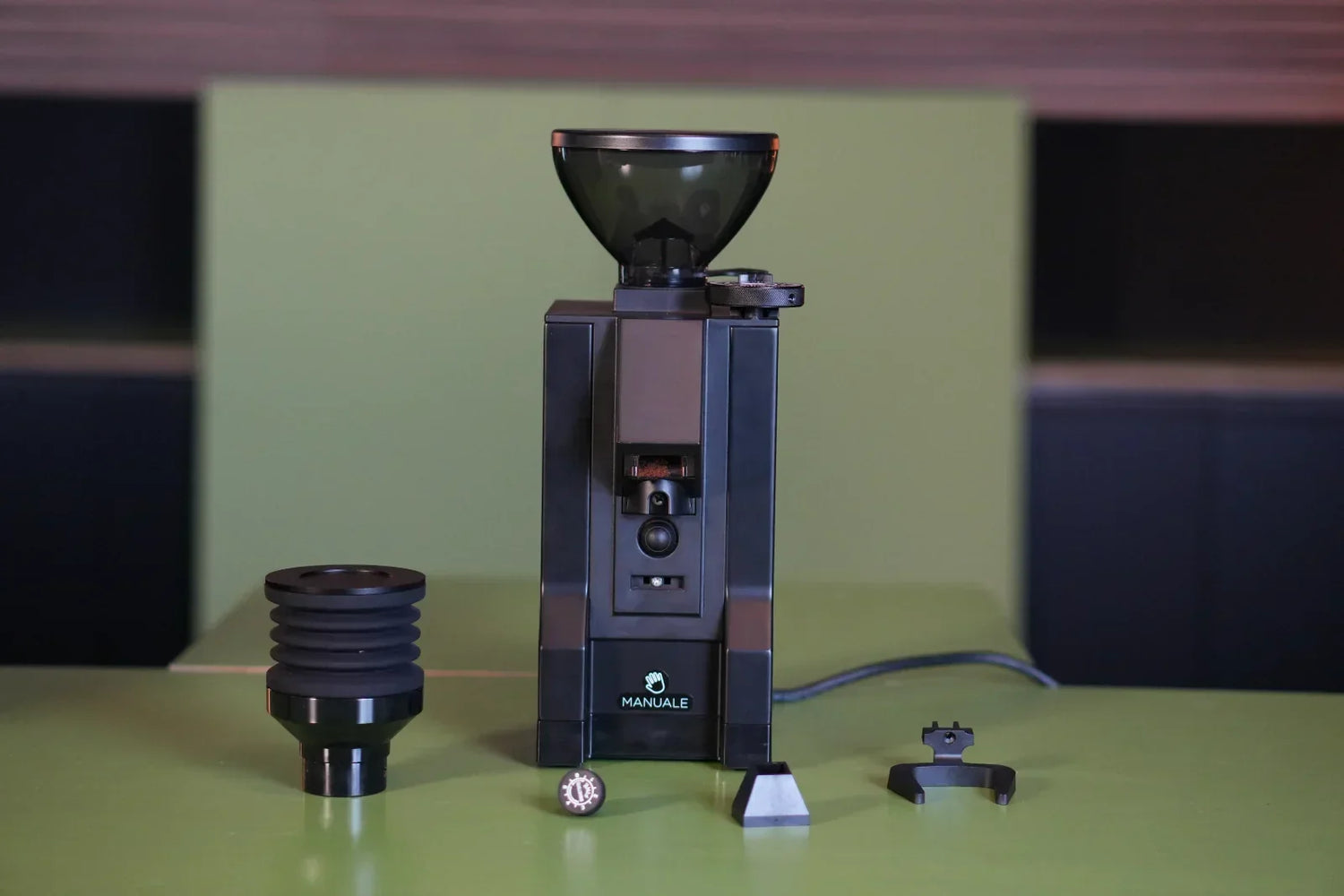
Eureka Mignon Manuale Test: Budget-Friendly Espresso Entry and Hidden Gem with Upgrades

Eureka's product range is often as opaque as a poorly extracted espresso. There's the Silenzio, the Specialita, the Perfetto – and at the very bottom of the price hierarchy stands the Eureka Mignon Manuale. With a street price of around 240 francs (or euros), it's the cheapest entry ticket into the world of Italian traditional grinders.
The grinder was developed at a time when single dosing wasn't yet a topic for the mass market. Actually, mechanically it works exactly like such a grinder: it has an on and off switch – and that's it. No programmable time, no portions. That's exactly how modern single dosing grinders work, except they've been further optimized, mainly to reduce retention.
Retention is the area of a grinder that fills up with ground coffee residue that doesn't come out directly during extraction. Without optimization, we measure around 3 grams of retention on the Manuale. That's quite typical for an old-school "dosing grinder". However, if we make optimizations ourselves, this value drops significantly.
That's why this test report is also a guide on how to turn the classic Mignon Manuale into a budget-friendly single dosing grinder with Eureka quality. Why is it worth it? Because the particle distribution and espresso quality absolutely speak for this grinder!
Still unsure if the Manuale is the right Eureka for you? Our overview of all Eureka grinders helps with the choice.
Working classically with the Mignon Manuale
Without timed dosing and with a simple bean hopper, many of the cheaper espresso grinders came equipped that hit the market as "grinding on demand" became popular both at home and in gastronomy. Instead of into a dosing chamber, the coffee is ground directly into the portafilter. Home baristas used to control the amount by eye. A few actually weighed the output.
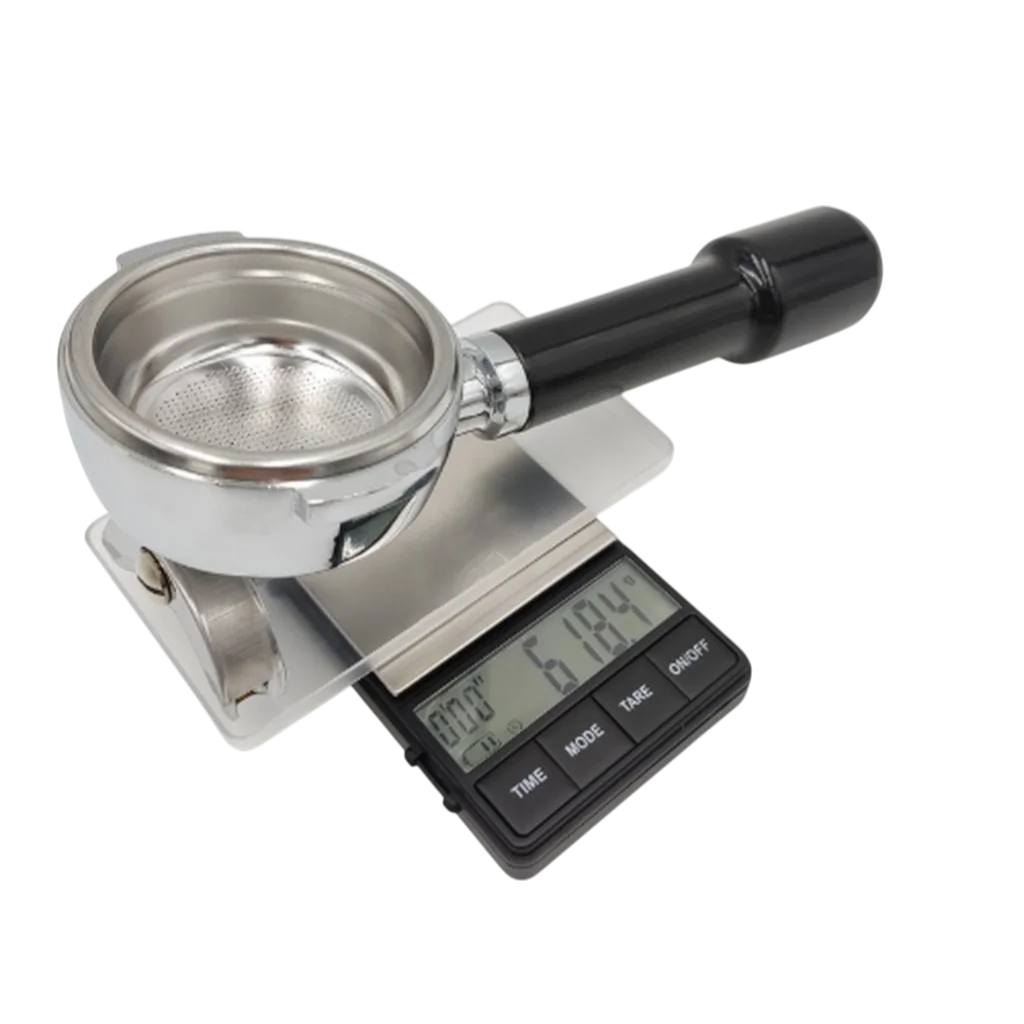
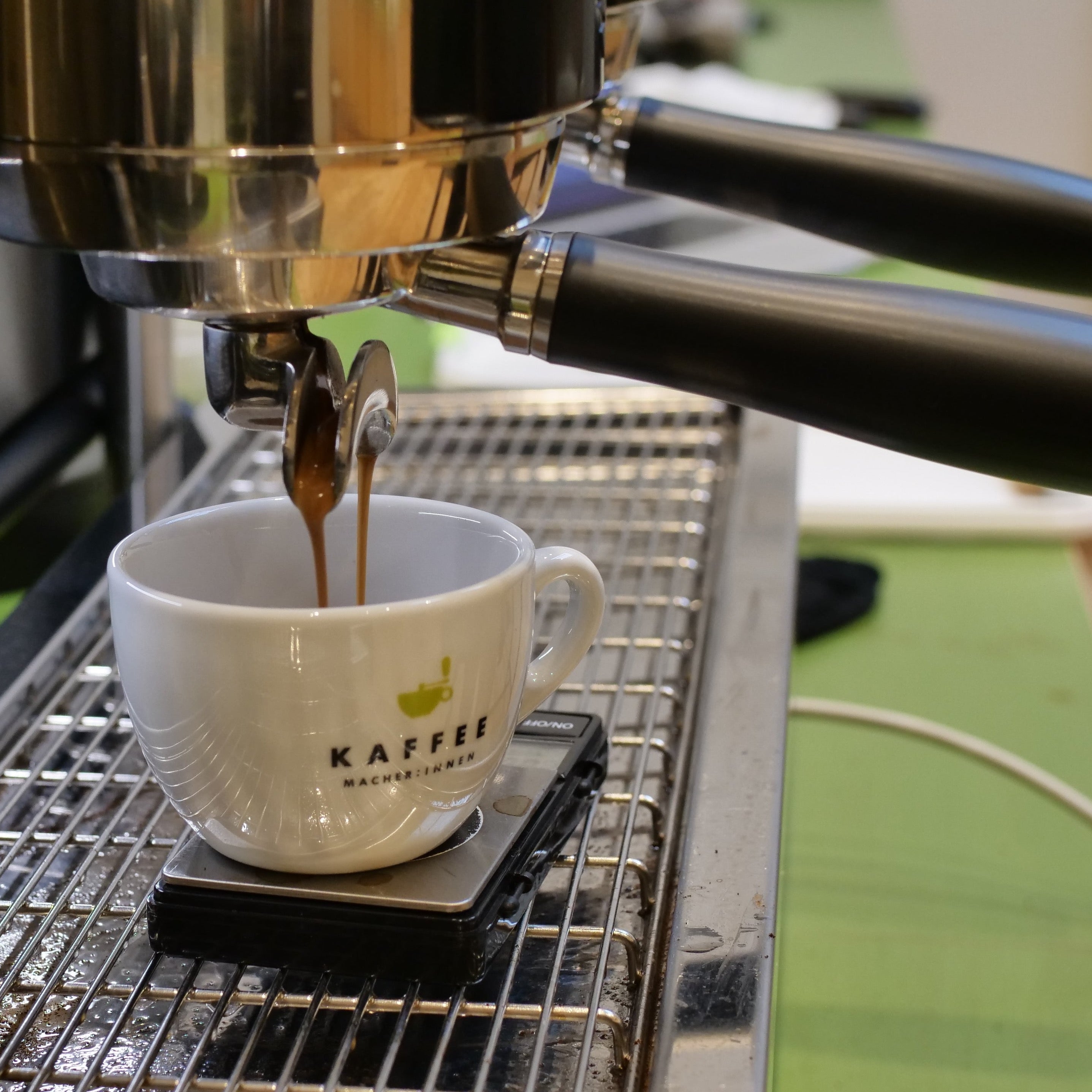
Since the amount dispensed is crucial for adhering to the brewing recipe, we teach strict weighing in our home barista courses. This works quite easily with the Eureka Mignon Manuale: we position a scale in front of the grinder and grind directly into a dosing container sitting on the scale. When the target amount is reached – let's say 18 grams of coffee for a double espresso – we manually stop the grinding.
The coffee is transferred from the dosing container into the portafilter, tamped, and then the espresso is extracted.
Haptics: The solid Eureka foundation
An Eureka is, in almost every price range, an Eureka. And yes, the Mignon series with its solid, milled aluminum body differs hardly at all in basic quality from the Manuale to the expensive Oro XL.
However, the Manuale unfortunately comes with the small, tiny adjustment dial that we've repeatedly criticized. If you only want to make one upgrade to the grinder, make it this one: swap the dial for a larger one. Precise espresso adjustment is otherwise virtually impossible. The larger the diameter, the more finely and precisely you can control the adjustment, and especially make notes about it.
The adjustment is basically stepless. However, you only notice that with a different dial. When you adjust the grind with the small original dial, you automatically keep jumping in larger increments. There's no orientation whatsoever, and returning to a previous recipe is simply impossible.
Otherwise, the Manuale has the aforementioned on switch, 50 mm flat parallel burrs, and a bean hopper with a capacity of around 300 grams. One detail is annoying in daily use: when you push the slider in and remove the hopper, about 11.5 grams of coffee remain in the chute and would have to be tediously removed before switching beans.
The Mignon Manuale is 35 cm tall, 14 cm deep (with plug 16 cm), 12 cm wide, and weighs 5.6 kilograms. The burrs rotate at a fixed speed of 1350 revolutions per minute.
In operation: Not for sensitive ears
Before we talk about the quality of the ground coffee, we need to talk about noise. The name "Silenzio" on the more expensive models is no coincidence, because the Manuale doesn't have any of the sound dampening found there. In our test, we measure a proud 86.6 decibels. That's loud. Really loud. For comparison: the dampened Specialita is more around 78 decibels. Anyone who wants to make espresso in the morning without waking the whole house won't make friends with the Manuale.
The speed is also rather leisurely. For 18 grams of espresso beans, the grinder needs about 17.4 seconds. Without countermeasures, the grinder also scatters quite a bit, and the coffee grounds don't just land in the portafilter but, due to static charge, also like to end up on the countertop.

The lab: Surprising inner values
We opened up the grinder and took measurements. Inside work 50-millimeter hardened steel burrs, classically bolted through the burr. A critical point in any grinder is retention. When we use the grinder with the standard bean hopper, it retains a total of about 3.2 grams of coffee grounds internally. That's relatively little for a dosing grinder, but in the age of single dosing quite a lot – especially if you want to use the grinder that way.
For example, if we put 18 grams of coffee into the empty grinder, we lose up to 2.4 grams in the so-called exchangeable retention. The permanent retention, which practically never sees the light of day, accounts for another 0.8 grams.
The particle distribution: The secret star
We had the Manuale's ground coffee measured in collaboration with ZHAW (Zurich University of Teacher Education). In this standardized measurement procedure, which we've already conducted on over 90 grinders, the small 50mm burrs show a surprisingly homogeneous picture.
We get a main peak of 200.8 microns, which is very narrow and good. Many particles are similar in size and are extracted accordingly evenly. This is contrasted by a rather higher fines peak, meaning fine particles that provide good resistance in the portafilter (puck).
Interestingly, the budget Manuale grinds here "cleaner" and with a narrower peak than, for example, a Niche Zero, which costs significantly more. The burr system thus delivers a quality that far exceeds what the price would suggest. That's a real statement to the competition.
The upgrade: From beginner to single dosing expert
The good particle distribution invites further optimization of the grinder – and thanks to many available third-party accessories, this is possible. We ourselves have identified the three most sensible upgrades:
- The larger grind adjustment dial ("King Size")
- The single dosing bellows (hopper)
- Better guidance for the ground coffee (funnel/chute)
Since the small adjustment dial and the retention bothered us, we modified it. First, we replaced the tiny original dial with a larger one, which Eureka itself calls the "King Size" dial. This finally allows you to adjust the grind setting with sensitivity and precision.
The real breakthrough is the conversion to single dosing. We removed the standard hopper and replaced it with a bellows attachment. When you activate the bellows toward the end of the grinding process, you actively press the coffee residue out of the grinding chamber.
The lab result is impressive: retention reduces to 0.1 to 0.2 grams. Suddenly, the 240-franc grinder plays in the same league as dedicated single-dosing grinders that often cost double or triple. Anyone who makes this small modification massively upgrades the machine.
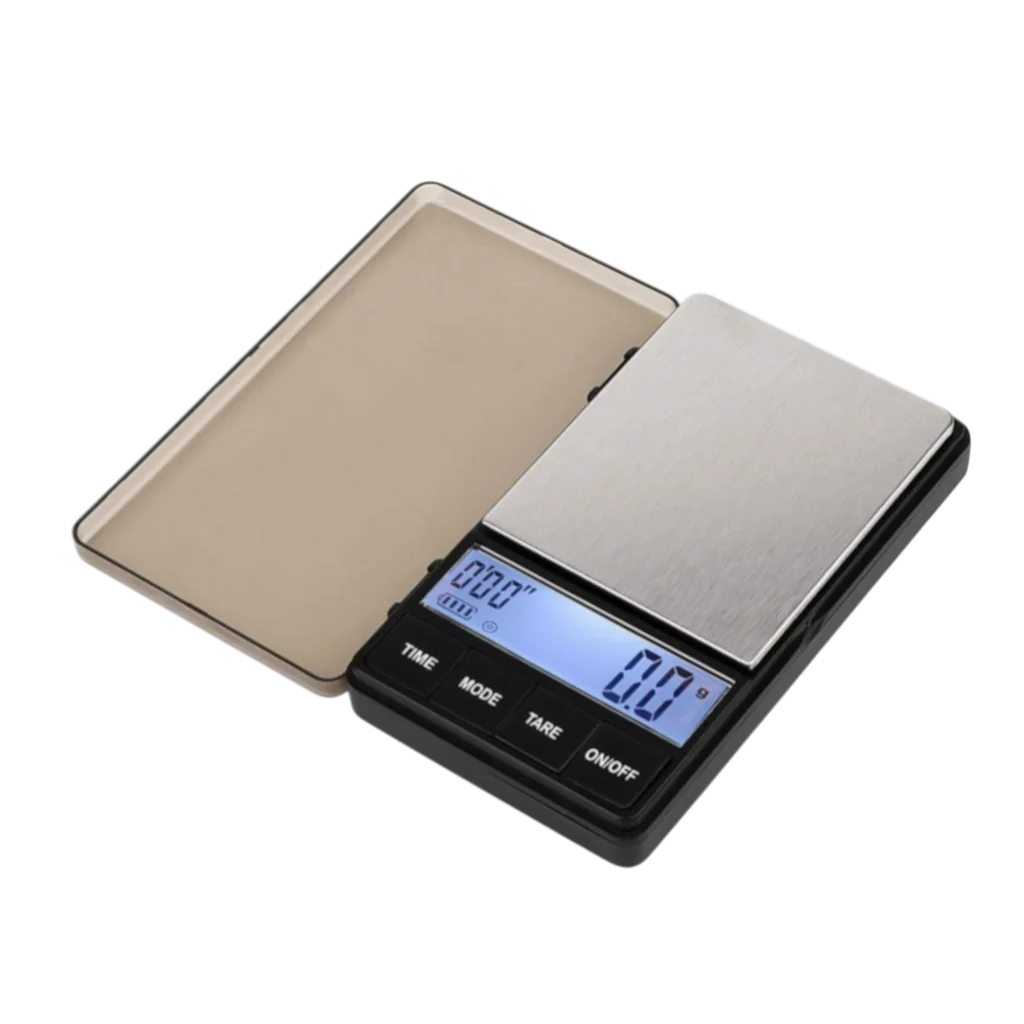
The small, attachable dispensing chute also ensures that the ground coffee lands better in the dosing container. Yes, one of these is also a worthwhile investment, as is a small scale for weighing the coffee powder.
Taste in the cup
Measurements are important, but does the espresso taste good too? We've tasted various roasts, including our dark Apas and medium roasts. Since the particle distribution is very homogeneous, we achieve espressos with nice texture and round body.
The grinder is excellent for classic, dark to medium roasts. Here it fully plays to its strengths and delivers results barely distinguishable from much more expensive grinders.
However, anyone who primarily drinks very light, fruity roasts could hit limitations. We often couldn't set the grinder fine enough – lighter roasts require an even finer grind to develop sufficient resistance in the portafilter. In our experiments, we even heard the burrs grinding against each other before the espresso flowed slowly enough. Light roast lovers should stay away. We switched back to medium roasts like Toca or Apas, where the grinder shines.

Conclusion: The best grinder under 300 francs?
The Eureka Mignon Manuale is a fascinating device. Out of the box, it's loud and somewhat awkward to use. But in its heart – in the burr system and motor – waits good Eureka quality.
The grind adjustment in the base version is challenging, which can be solved by upgrading the dial. Then it also becomes possible to switch reproducibly between recipes and coffees. The grinding speed is slow, and to thoroughly clean the grinder (cleaning), you first have to loosen some screws. That's impractical.
And yet: especially the espresso in the cup convinces thanks to very good grind homogeneity. And that's why the Eureka Mignon Manuale is an interesting grinder that – especially as a single dosing grinder with some upgrades – offers a very exciting entry into the world of espresso.
We think that with the right upgrades, the grinder definitely doesn't have to hide behind hyped models like the Varia VS3 or the DF54. You just have to put in some work yourself, but then the grinder is fun and makes damn good coffee!