







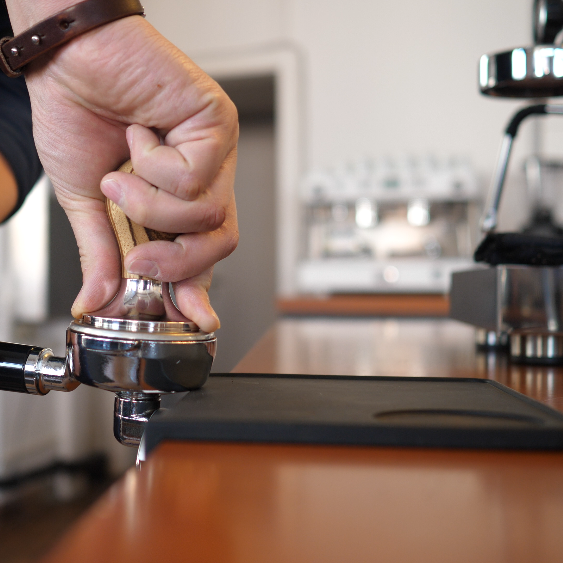
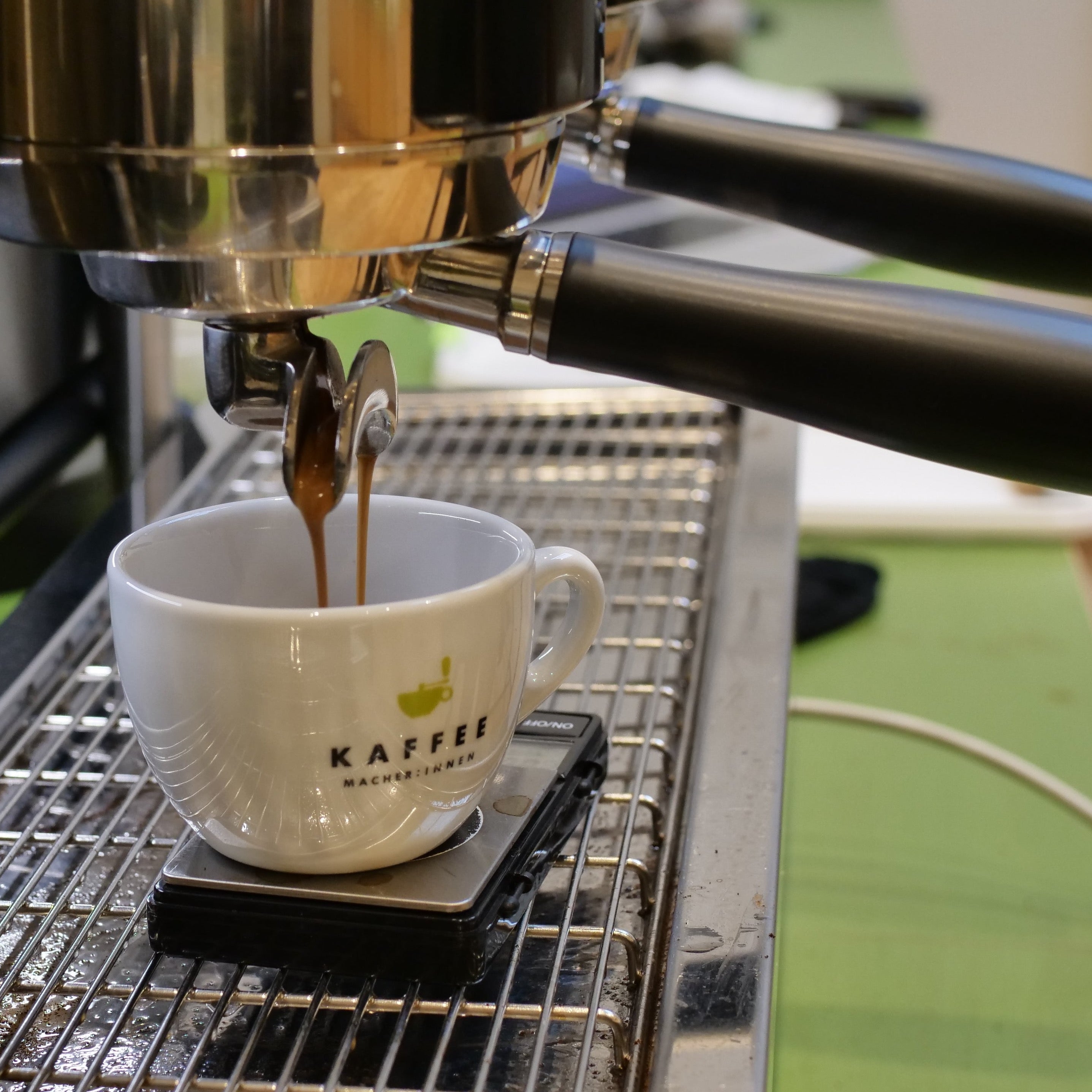


Today I greet the readers of coopzeitung with a wry smile from the cover of the printed edition. And in the online edition you can also read a detailed article and watch some short video tips from Demian and me. We're thrilled to be able to represent our pet topic in such a large forum.
The author of the article, Stefan Fehlmann, spent many hours with me at the academy and together we explored the depths of coffee. It was a lot of fun. Thank you for your interest and great questions!
Lucia Hunziker captured it all in brilliant images as photographer. Many thanks Lucian!
An article is always a compilation of many topics and not everything fits in full scope. That's why there's, for example, a brewing course that spans several days rather than just a few hours. In that sense, an article is also a compromise. This article in coopzeitung touched on many different areas.
However, there is one small note that is important to me, because the graphic shown about beverages is not quite precise on a topic that is central to me. No, it's not about the amount of milk foam to heated milk. That's certainly debatable.
With cappuccino and latte macchiato, a single espresso is typically used in each case, as is the case here in the article's graphic. That is correct. However, the ratio of dissolved coffee solids (TDS) to water changes when milk is added. If we assume that cow's milk consists of approximately 87.5% water, plus carbohydrates, milk fat, protein, etc., then the total proportion of dissolved coffee solids in relation to water and other new components of the beverage is of course no longer 7–10% TDS. The milk should be seen here as a "bypass," which changes the percentage ratio.
You can calculate it as follows:
(current espresso coffee weight x current espresso strength)/total beverage amount (including "bypassed" milk/water) = final TDS of dissolved coffee solids in relation to total beverage volume
Example: espresso = 25 g, TDS % = 8, milk volume added = 130 ml
((25 g espresso * 8 (% TDS)/155 g total beverage volume = 1.29 % TDS
So at the end, the cappuccino is nothing more than a filter coffee with milk flavor when you look at strength. 🙂
If you want to account for the TDS of the milk or added water, the formula looks like this:
((current espresso coffee weight x current espresso strength) + (added liquid amount (milk/water) * TDS milk/water))/total beverage amount/100 = final TDS of dissolved coffee solids to total volume
"Bypass" is actually a super exciting topic. It's always liquid that doesn't flow through the coffee during extraction, but is added afterward. It can be water, milk, or even spirits. But more on that another time. For now, we're just happy to keep celebrating the article in coopzeitung.