





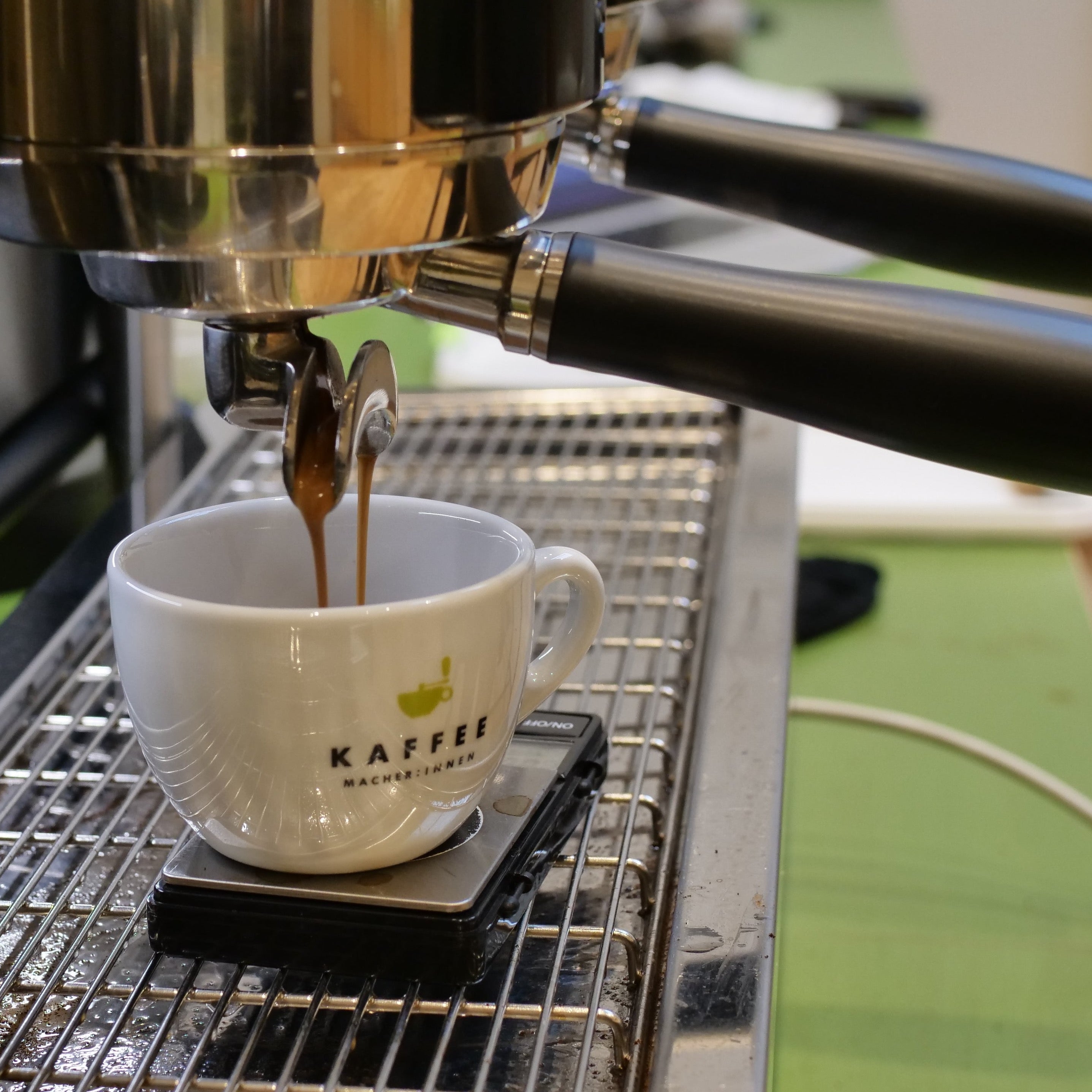
Are bacteria in coffee machine water tanks dangerous?

Bacteria can form in a coffee machine's water tank, which can potentially be dangerous to humans. In collaboration with Bern University of Applied Sciences, we wanted to find out what effect heating in the boiler has on bacteria. Since different types of coffee machines heat for different lengths of time and intensity, the three most common heating types of coffee machines were examined.
- Boiler espresso machine, dual boiler (Quickmill Lucca)
- Thermoblock capsule machine (Nespresso capsule machine)
- Thick film heater (Sage Barista Pro)
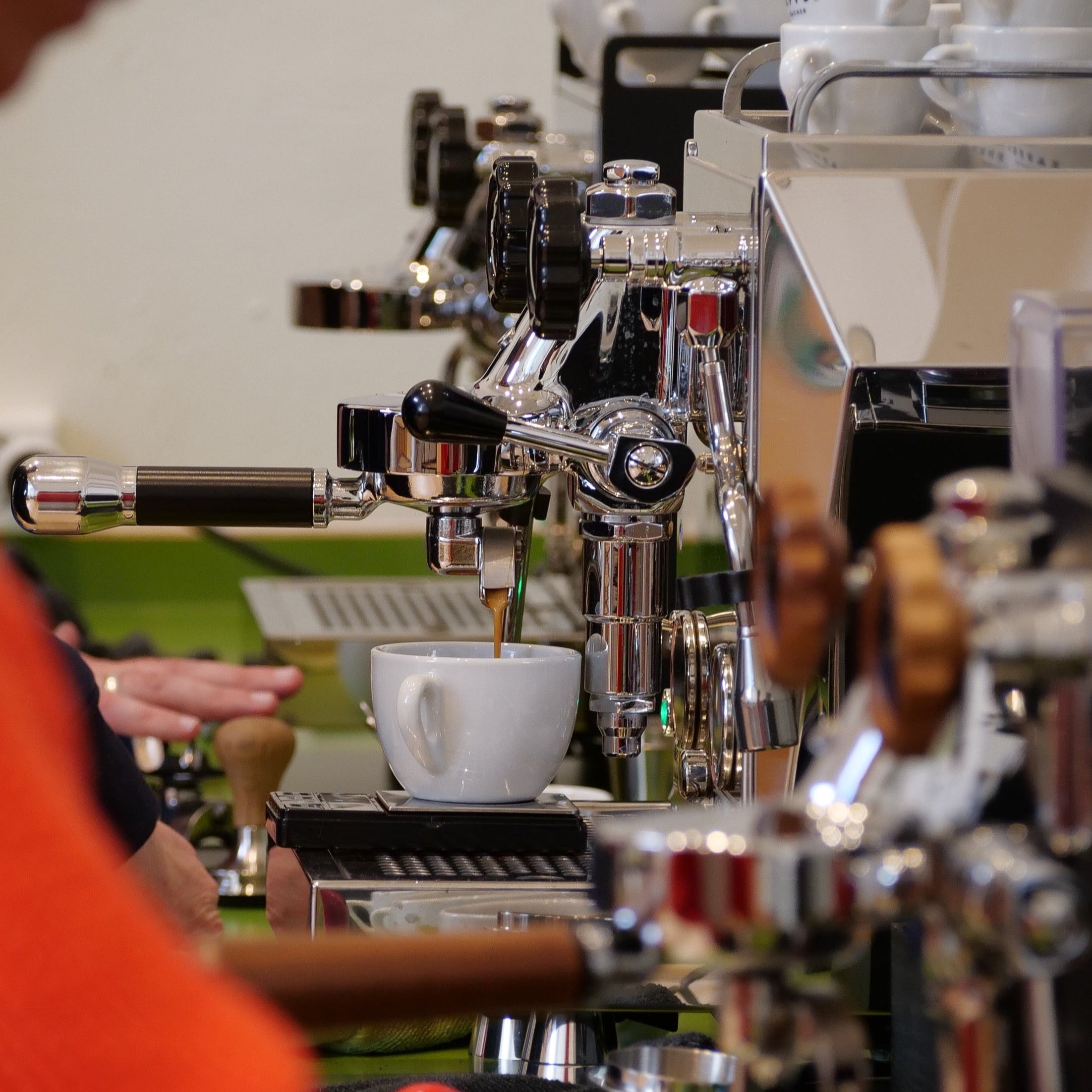
The three types of coffee machines differ in their heating method. The boiler espresso machine heats the brewing water over an extended period in a boiler. Depending on the machine, this holds between 150 ml and 1 liter of water. Since the brewing temperature should typically be between 90 and 94 degrees, the brewing boiler is also heated to this temperature.
A thermoblock heats coffee via flow-through heating. The block itself is usually made of aluminum because it has high thermal conductivity. The outside of the block is wrapped with electrical heating elements. Pipes run through the block, through which the brewing water flows. In the thermoblock, heating occurs indirectly.
The thick film heater is also a flow-through heater, but differs from the thermoblock in its construction. These consist of a thin ceramic or metal plate onto which a layer of conductive material (the "thick film") is applied. This film forms the heating elements and is capable of transferring heat very efficiently. Water flows over or through the plate with the thick film, which is electrically heated. Heat transfer occurs directly from the heated surface to the water. This allows for very rapid and efficient heating.

Comparison of thermal kill rates in different coffee machines
Summary of the semester project by Lucien Guerdat, supervised by Prof. Dr. Raymond Place (Bern University of Applied Sciences)
You've probably wondered whether bacteria in a coffee machine's water tank are sufficiently killed by the brewing units.
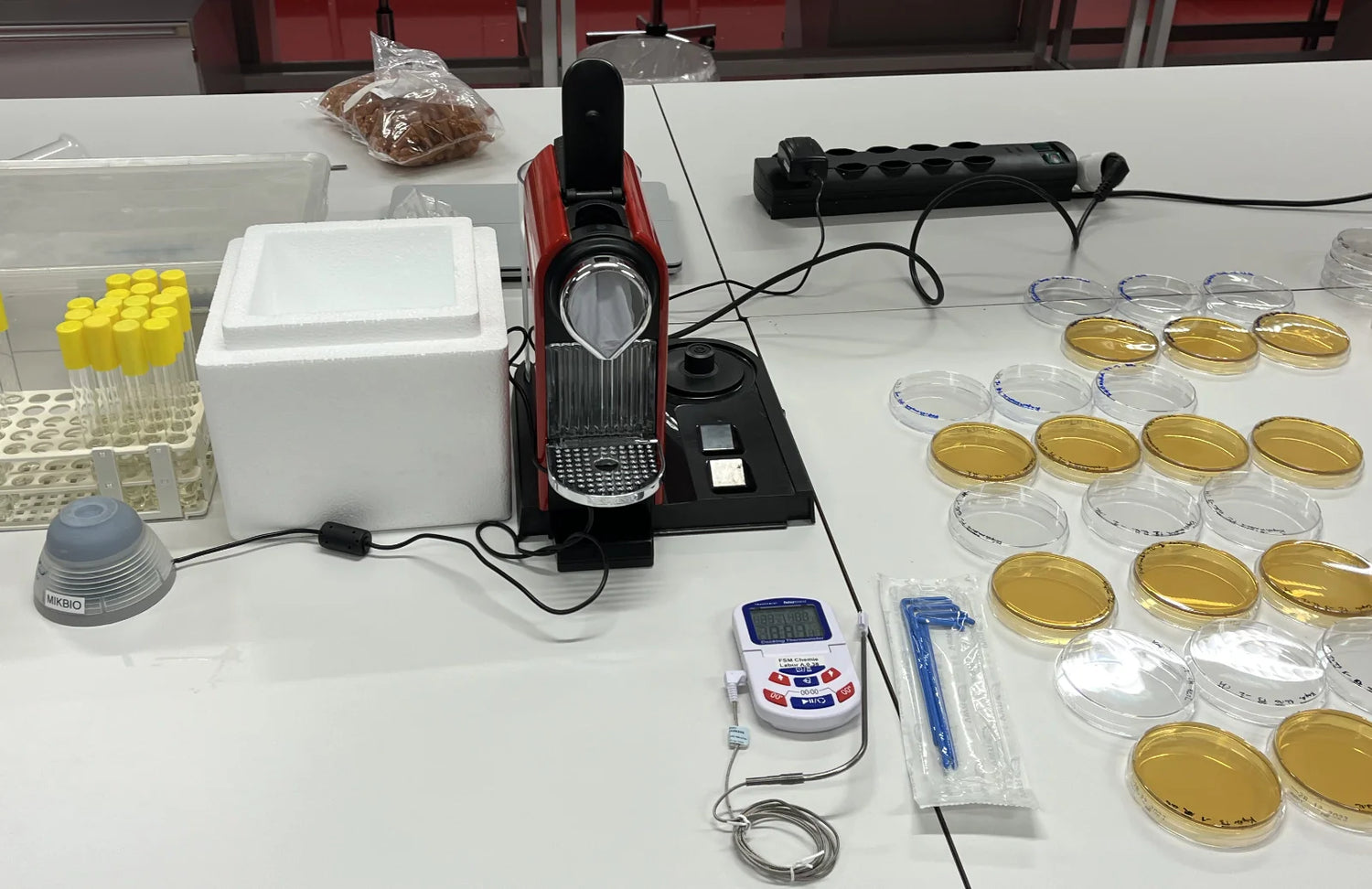
To answer this question, the coffee makers and Bern University of Applied Sciences conducted scientific experiments together. The kill rates of three different bacterial species were investigated in a thermoblock capsule machine, a boiler machine, and a thick film heater. Since the coffee machines were to be used again after the tests and no one could be endangered, only bacterial strains were used that showed no pathogenicity factors (Escherichia coli, Streptococcus thermophilus, and Lactobacillus bulgaricus).
These three species have comparable heat sensitivity to bacteria that effectively occur in water tanks but could be pathogenic (e.g., Pseudomonas aeruginosa). It turned out that the boiler machine had the highest kill rate, followed by the thermoblock coffee machine and the thick film heater. In summary, in all machine types bacteria are killed many times more than typically occurs in water tanks of household and commercial coffee machines. It was also found that bacteria were only detected, if at all, in the first cups drawn. Therefore, it is recommended to discard these.
It should be noted that biofilm formation was not investigated with regular use of the coffee machines. Due to the potential formation of biofilms, it is therefore essential that coffee machines (including water tank) be cleaned regularly and thoroughly, regardless of the design type. Additionally, it is advisable to regularly replace the water in the tank with fresh water to brew the most delicious coffee possible.

Table 1 Escherichia coli contamination of the boiler machine

Table 2 Escherichia coli contamination of the capsule machine (thermoblock)

Table 3 Escherichia coli contamination of the thick film machine
Coffee maker commentary on the results
In the thick film heater, traces were sometimes found in the first cup drawn. A slightly lower temperature was also detected in the cup. With thick film heating, water flows relatively quickly through a highly heated channel in the pressed-together metal plates. It appears that the temperature of the thick film heater was not yet high enough on first draw. However, it should be noted that the water was drawn without resistance from the espresso, so it tended to flow through the portafilter faster than it would in everyday use.
For almost all machines, however, we recommend using the first draw to heat the portafilter and only the second draw for espresso extraction. If done this way, according to the study results, no bacterial residue remains in the coffee or brewing water.
The semester project did not investigate what effects contaminated water has on the taste of the coffee. While the water and espresso are safe to drink according to the studio, we cannot comment on any taste effects.