




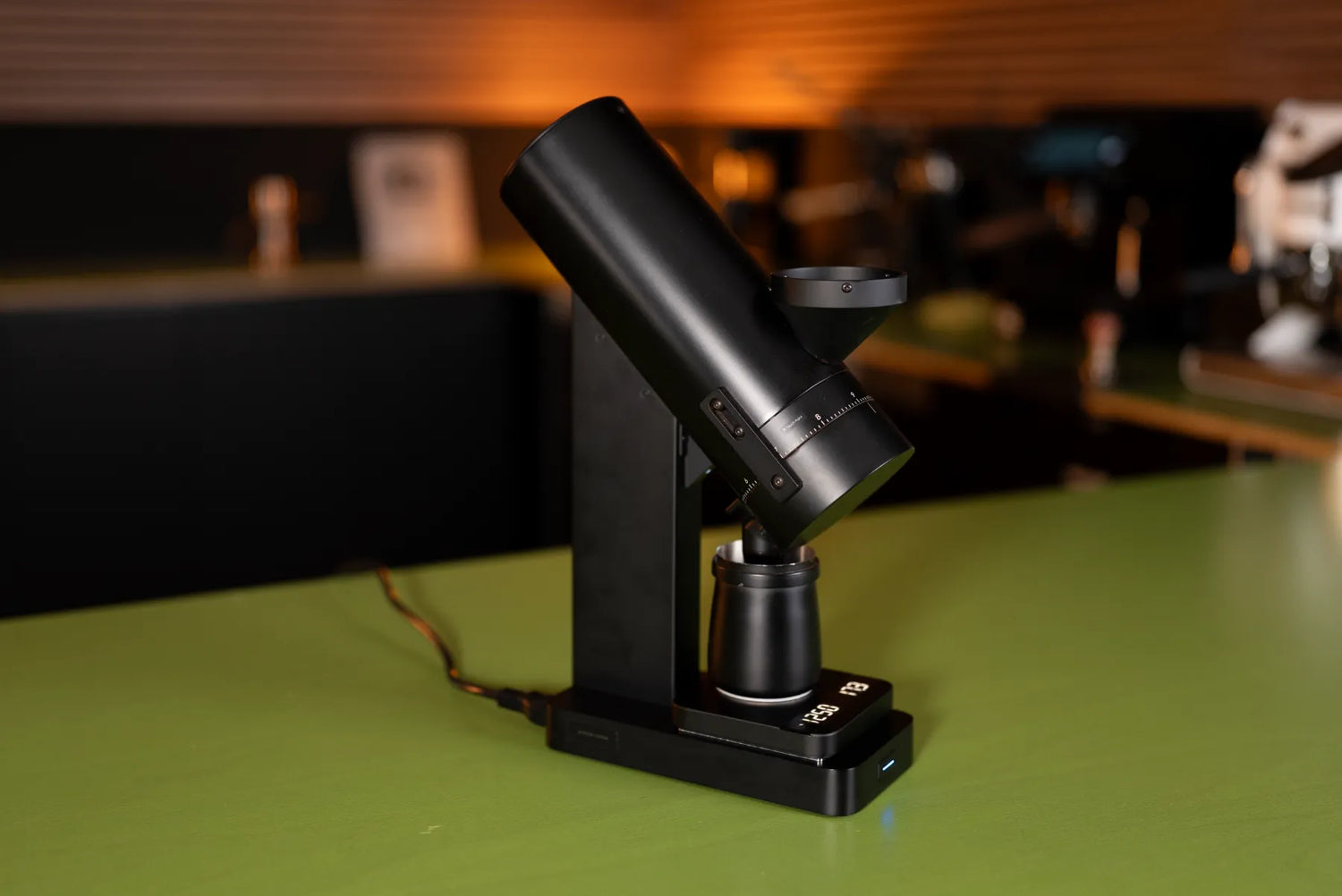

The Acaia Orbit is a very good single dosing grinder. It convinces us in terms of taste, it delivers repeatability in extractions and does many things right in other respects as well. It is also innovative and introduces new features that we like.
As good as the grinder is, however, it struggles to integrate Acaia's specialty. These have always been high-priced, sensitive and fast scales. And of course, an Acaia grinder must also include scale integration. And here Acaia completely fails. And no, this time it's not the Acaia app that raises eyebrows. It's actually the combination of scale and grinder.
Why the Acaia is nonetheless a grinder we can recommend and what unfortunately doesn't work is the subject of this test video and article.
Buy Acaia Orbit
The following specialty retailers distribute the Acaia Orbit and we can recommend purchasing from these businesses. All offer the option to adjust the machine's offset.
Germany: [Partner links] Stoll Espresso
We search for specialist partners on your behalf, partners we know provide excellent work and service, and we maintain close contact with the retailers mentioned. The links are so-called affiliate links. If you order through one of these links, you don't pay a cent more – however, we receive a small commission that we invest directly in new test equipment.
We continue to search for competent partners in the DACH region on your behalf.
How the Acaia Orbit Works
The Orbit is a single dosing grinder. This means that coffee is first weighed and then added to the grinder. The single dosing grinder then grinds out the amount entered. And the Acaia Orbit does the same. Additionally, it can be connected to an app, which in turn can be connected to an Acaia Luna. With the help of the app, the grinder can be started. Additional settings can be made, such as the grinder's rotations per minute.
Thanks to the scale, the grinder can also be repurposed from a single dosing grinder to a grind by weight grinder. "Grind by Weight" means that the grinder stops when the target weight is reached on the scale. For this, Acaia's own Luna scale is necessary. The coffee is added to the bean hopper and the grinder grinds until the scale reaches the target coffee amount.
That's all for the operating principle. How well this works in practice fills its own chapter in this test report.
Technical Specifications
- Burr set: 64mm flat burrs (optional Mazzer 33M or SSP Multi-Purpose)
- Motor: 200W brushless DC motor
- Speed range: 600-1500 RPM, adjustable
- Grind adjustment: Stepless
- Capacity: Single dosing up to 20g3
- Dimensions: 394 mm (H) x 108 mm (W) x 266 mm (D)
- Power supply: 100-240V, 200W, 50/60Hz
Gadgets, Accessories and Price
In addition to the Acaia Lunar Bluetooth scale for 250 dollars, which is also logically sold as a bundle with the grinder, there are other accessories for the grinder.
Four bean containers with sizes from 250 grams to 2 kilograms support grind by weight functionality (cost: 50 to 200 dollars). An external ion generator called "Ion Beam" is designed to reduce the grinder's static problem. This is available for 165 dollars.
The Acaia Orbit itself costs between 1600 and 1700 dollars depending on the burr set.
High Precision, Low Speed
The Acaia Orbit can be set to rotation speeds of 600 to 1500 revolutions per minute. We used it primarily at the preset standard speed of 1000 revolutions per minute, but of course also tested faster and slower speeds. At 1000 RPM, the grinder grinds 18 grams of coffee in 18.5 seconds. This makes the grinder one of the slower models. This doesn't change even with a full hopper. In ten seconds, 14 grams of coffee are ground.
While grinding, there is no significant temperature rise in the grinding chamber and thus on the ground coffee. We measure 32.6 °C. The grinder achieves this with a relatively quiet noise level. We measure 76 decibels when grinding coffee.
Controls and Operation
Operating the single dosing grinder feels very well-coordinated and smart. It's intuitive at first glance. Those willing to spend a bit more time with the controls will quickly discover that there are also other useful shortcuts and functions that make the Acaia stand out in the single dosing grinder market.
The grinder is controlled via a button. This can also be adjusted in the app. A single press grinds the last set profile. A double press causes the grinder to grind for a fraction of a second more, releasing any remaining coffee particles or increasing the amount of coffee in the dosing cup. A triple press causes the grinder to grind first in one direction and then in the other. This excellently removes the temporary retention from the grinding chamber. A truly outstanding function!
By pressing the button longer, the grind profile is changed. A color code indicates which profile you're currently in. If we press for 10 seconds, the grinder enters standby mode, which it also does automatically after a while.
What also distinguishes the grinder is automatic detection of the end of grinding.
If no coffee is ground for 3 seconds, the grinder stops automatically. Many users of other grinders would wish for such a function.
The grinder also uses this function at the end of grinding. As soon as it detects that no more beans are being ground, the grinder "purges." In the case of a grinder, this means it grinds backward and then forward once. This releases much of the temporary retention in the grinding chamber.
The Lunar is not only excellently built, but also stylish. And those who enjoy "floodlit grinding" can even have their ground coffee illuminated while grinding.
It's also positive that the grinder can be consistently operated from the front, making it usable for people in wheelchairs.
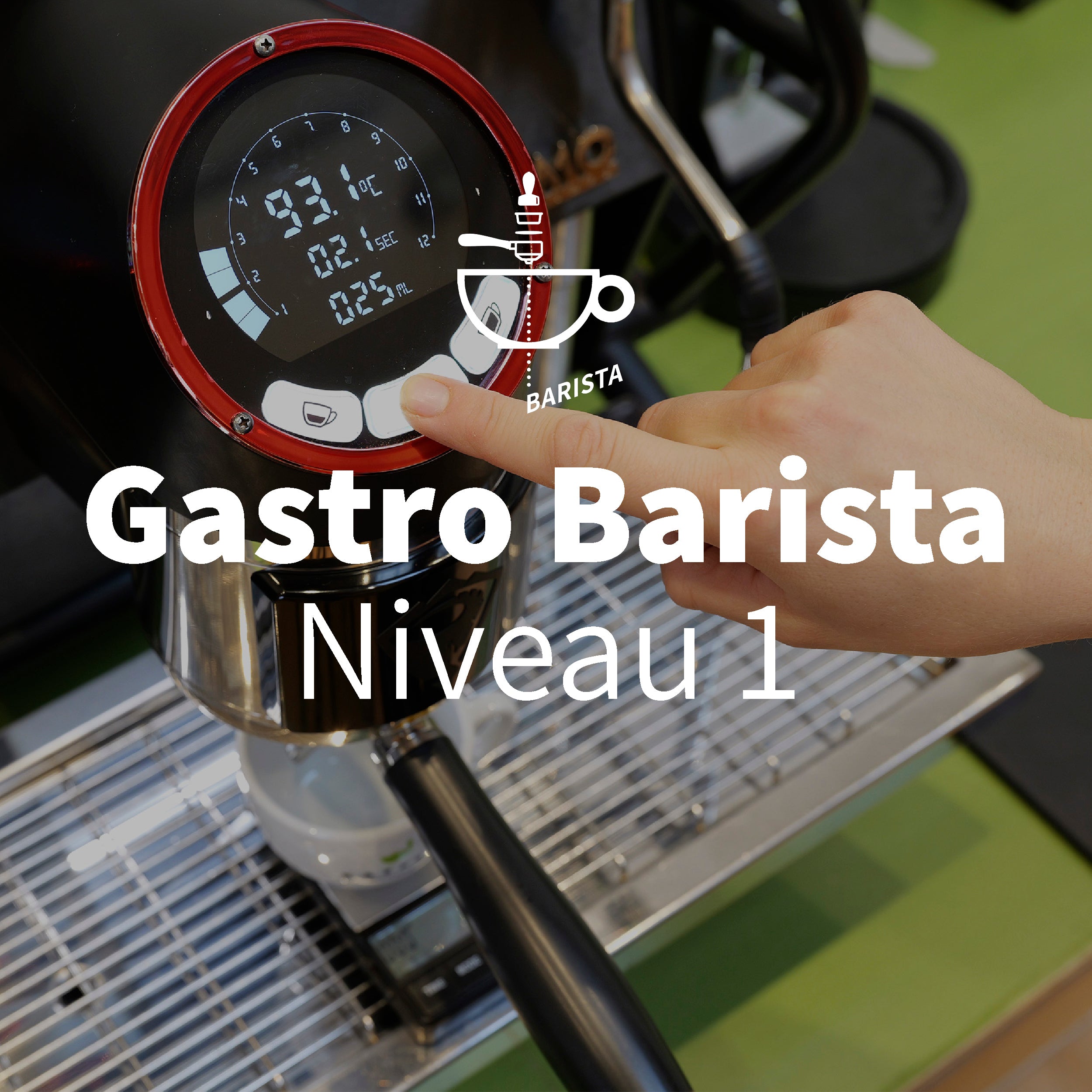
This excerpt shows the current RPM measurement, the grinding time, as well as the effective measured amount in the dosing cup. You can see the target values for rotation speed (RPM) and weight in small print respectively.App Control
Many functions can be performed in the app. In addition to remote control, you can also trigger the grinding pulse or purging here. Additionally, you can define grinding profiles, which can be saved as presets A, B, C.
The app is available in the app store and requires no login information. It connects to the scale via Bluetooth. The app can display the grinding time, the actual RPM (revolutions per minute), and, when connected to the Lunar, the real weight.
A completely new feature to explore is RPM control. This function is reminiscent of pressure profiles in espresso brewing. During the grinding process itself, the RPM can be adjusted. For example, you can grind at 600 RPM initially and increase to 1200 RPM after 10 seconds.
Verdict on Usability
What the Acaia Orbit delivers and enables up to this point is unique. The automatic regrinding to empty the grinding chamber is particularly excellent. But beyond that, operating the grinder is a pleasure, and it's simply a joy to work with. RPM profiling opens up entirely new possibilities for coffee enthusiasts. And yet, one thing stands out: up to now, we've managed without a scale. We've saved this topic because we need to first talk about retention.
Retention and Grind by Weight
Retention, that is, the residue of coffee in the grinder after grinding, is not pronounced at first. With a temporary retention of 0.2–0.3 grams and a permanent retention of 0.4 grams, the Acaia Orbit performs well, but not very well. The absolute retention of 0.7 grams is excellent compared to most bean hopper grinders. This retention applies only to the grinding chamber! However, among single dosing grinders, there are some with less retention.
The Acaia Orbit has pronounced static charge, which is why the manufacturer optionally sells a tool called "Ion Beam" to reduce static. We tested the grinder in its basic version without the Ion Beam. Without the tool, working with water spray is definitely recommended – as with many grinders.
Let's come back to retention once more. If we use the grinder with a scale as a grind-by-weight grinder, we have a different retention problem. In the grinding outlet, an additional 0.7–1 gram of coffee remains, depending on whether we work with water spray or not.
This completely undermines the performance of the grinder's scale control. The grinder stops when a defined amount reaches the dosing cup on the scale. However, since the mentioned 0.7 gram of coffee still hangs in the chute, the amount of ground coffee does not match the target amount. If I now – which I naturally do in the single dosing process – remove the remaining powder with the provided tap-out tool, the remaining 0.7 grams fall into the dosing container.
And as the coffee falls, the entire concept of a grind-by-weight grinder collapses. Grind by weight only works if a grinder independently outputs all its ground coffee.
We understood grind by weight as a principle to weigh more precise coffee amounts. With the Acaia Orbit, we have to program 17.3 grams as the target amount to tap out the remaining 0.7 grams of coffee from the chute and arrive at 18 grams of coffee. That makes no sense to us! Many grinders with time control are far more precise in this regard.
What we do like, though, is the dosing cup. It sits on the portafilter, doesn't slide too deep on the sides, and is less prone to causing channeling.
One more tip: Quite a bit of permanent retention accumulates over time on the relatively large drives of the grinder. Regular cleaning makes sense. Unfortunately, several screws have to be loosened for this. The accessibility of the burrs is not ideally designed.

Particle Distribution and Espresso
The article so far somewhat shows symptoms of what a grinder with an app and extensive adjustment options offers. We've written about the multitude of options and got lost in the app. But this is really supposed to be about espresso and coffee quality.
And the Acaia Orbit convinces us across the board. We used the 33M burrs and found very good results both in the cup and in the particle distribution.
We measure a narrow main peak of only 209 microns and are able to easily return to the original grind size after adjusting the grinder in between. The stepless adjustment is precise, and replicating different recipes works very well.
Acaia Orbit Verdict
The Acaia Orbit is without question a very good grinder. Even with the more affordable standard burrs, it achieves a particle distribution with a narrow main peak and is capable of producing very good espresso results and surprisingly good filter coffees.
The grinder is high-quality, elegant and relatively quiet. Its ease of operation is unmatched. The most important functions can be used intuitively with a button press. Those who engage with the grinder and dive into the app will discover many more adjustment options. A playground for an espresso grinder that no other grinder offers.
We particularly like the pulse and purge functions: this is really cleverly implemented, and the automatic forward and backward rotation after each grind would be a great addition to any grinder.
The fact that a tool to reduce static has to be purchased separately is frustrating. Without it, the grinder performs significantly better when used with water spray.
The range of functions becomes problematic where Acaia attempts to live up to its own name and market leadership and integrate its own scale into a meaningful grind-by-weight workflow. This doesn't work for us at all because the grinder doesn't fully empty, instead retaining 0.7 grams of coffee in the chute. This means the scale reading is also incorrect, and a scale for better precision becomes an illusion. Acaia stumbles here over its own legacy, as it appears to us in testing. It would have been smarter to use the scale only as a display for rotation speed and for profile control. While not quite as flashy as also being a grind-by-weight grinder, it would have rounded off the good grinder nicely without trying to do too much.