



Sage Smart Grinder Pro – the best beginner espresso grinder?
 Benjamin Hohlmann
Reading time 5 minutes: This is a short blog post, the more detailed version can be found here on our Swiss website.
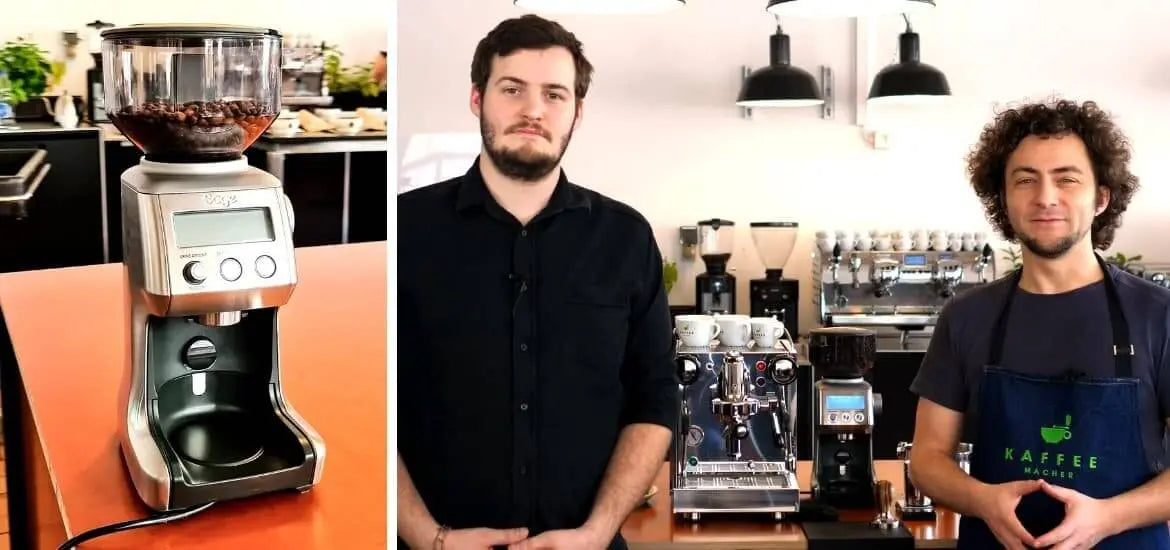
A good grinder for getting started in the espresso world. There's a lot to suggest that we've found it in the Sage Smart Grinder Pro. We're answering many inquiries that have reached us by email with this test. Our community is looking for an affordable grinder for beginners that is easy to use and delivers the joy of freshly and properly ground espresso. In April 2020, we already tested the Sage Smart Grinder Pro and included it in our large espresso grinder comparison in 2022.
And in both tests, the Smart Grinder Pro impressed us. For us, it remains one of the most interesting grinders for getting started.
What criteria are important for assessing the quality of an espresso grinder?
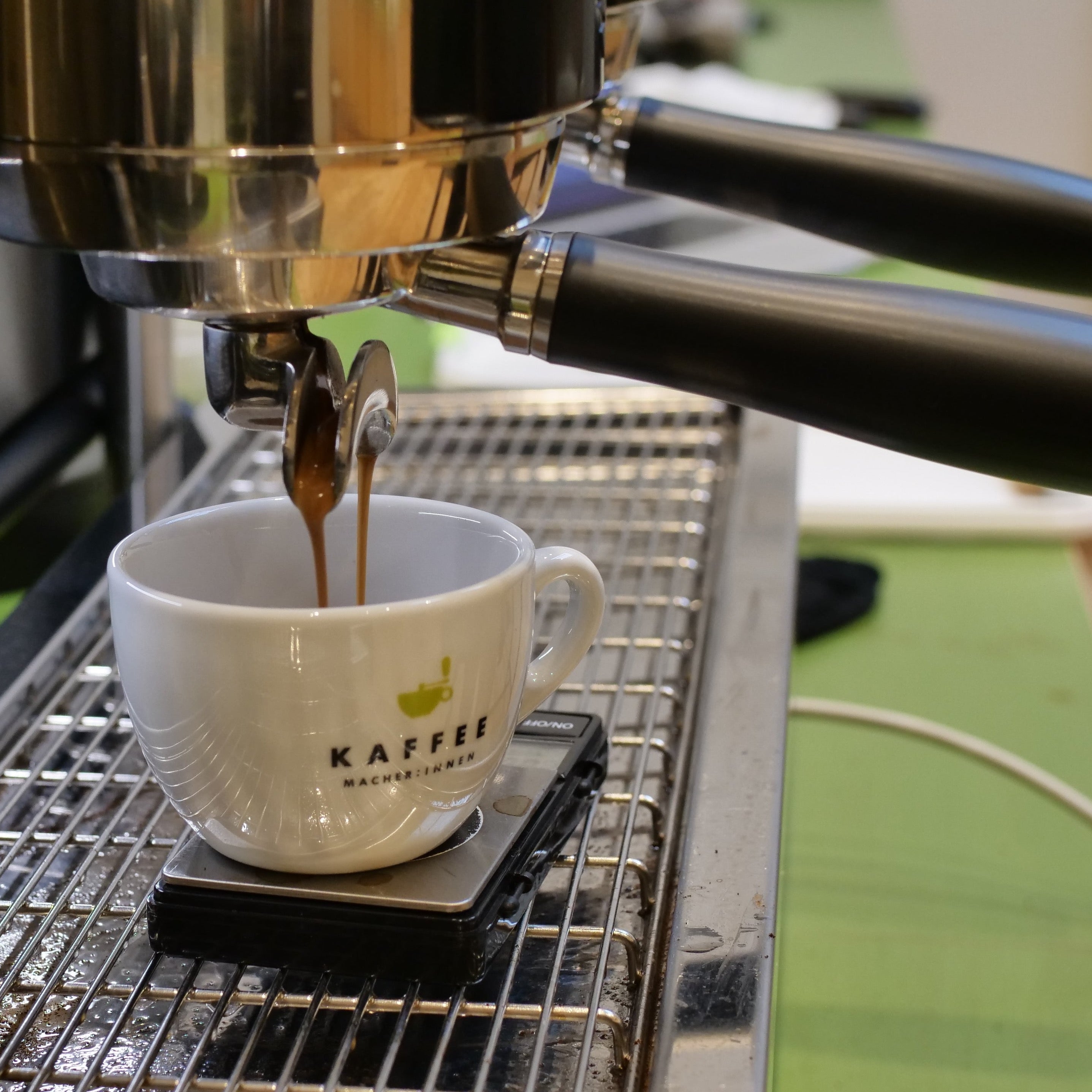
- Does the grinder produce espresso-fine grinds? This is important to build enough resistance for the water and achieve the desired flow time of approximately 25 seconds.
- Is the ground coffee homogeneous? Ideally, the vast majority of the ground coffee is in the set range with few outliers above or below. Too many outliers make the espresso taste too bitter or too sour.
- Easy operation: Can the grind setting be adjusted simply and, if possible, infinitely?
- Consistency: Does the machine deliver consistent grinding results or is every grinding process a gamble?
- Dead space: How much coffee grounds remain in the machine after grinding? If too much, the next espresso will taste stale after just a few minutes.
- Heating during regular use? If the burrs heat up, this can affect the taste.
- Does the grinder produce espresso-fine grinds? This is important to build enough resistance for the water and achieve the desired flow time of approximately 25 seconds.
Espresso-fine!
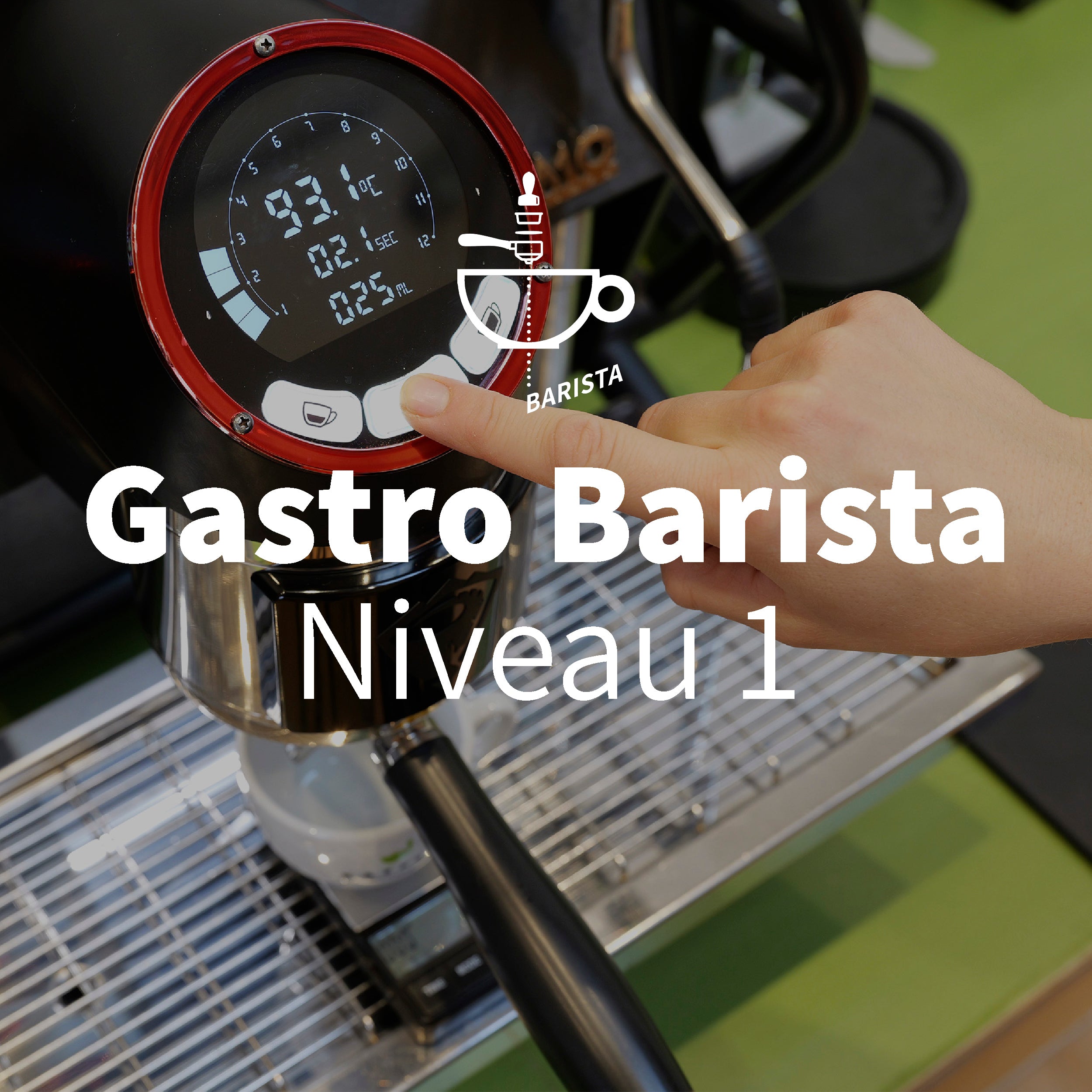
The machine does this without any problems. You can brew an espresso in 25 to 30 seconds. The grind setting is adjusted via a dial located on the front of the grinder. The digital display shows the grind setting and what it's suitable for (filter, espresso, etc.). This is very clear and well-designed.
What is somewhat irritating, however, is that the felt clicks of the dial don't directly correspond with the display. It happens that we adjust three levels on the dial but only advance two levels on the display. So you shouldn't rely too much on the large display. Since coffee is a natural product and is never exactly the same, it's normal that the grinder occasionally needs fine-tuning.
The matter of espresso grinder consistency
We made 40 espresso shots in a row. Yes, 40 of them. And the consistency of the machine was impressive. We set the target amount to 18 grams, which is achieved by the grinding time on the Sage Smart Grinder Pro. For us, it was 16 seconds. In these 40 shots, the coffee amount deviated by a maximum of 0.4 grams from the target value. That's really good!
How does the espresso taste and how consistent was it?
Thanks to the easily adjustable grind setting, we were able to quickly and reliably set a good flow time for our espresso. The espressos tasted balanced and delicious. Oddly enough, the flow time changed from shot to shot. If we started at 29 seconds, the tenth shot ran significantly faster at only 22 seconds. The ground coffee also heated up noticeably over the rapid shots. In defense of the grinder: it's a home barista machine and not a commercial one. It's rare that you pull 30 or more espressos in a row in your home. If the flow time becomes too short, you should simply fine-tune the grinder a bit.
We're pleased with the particle distribution of the Sage Smart Grinder Pro. The main peak of the ground coffee in our diagram is high and narrow. This means the vast majority of the ejected ground coffee is the same size as you've set it. Only a small proportion is larger or smaller. This ensures that most of your coffee puck in the portafilter is extracted with the correct measure and won't be too sour (under-extracted) or bitter (over-extracted). You can taste that in the cup!
Operating the Sage Smart Espresso Grinder Pro
As described above, the machine is easy and simple to adjust. The side dial and the feedback on the display give you the feeling of knowing exactly what the grinder is doing. Compared to its smaller sibling, the Sage Dose Control, the display proves to be a very helpful tool for beginners, something you can rely on when finding the right grind setting.
The default setting in the Sage's shipped condition is good. The vast majority of espresso beans can be ground well with it. However, it can happen that particularly light roasts fall outside the adjustable range of the grinder. In this case, it's necessary to pre-set the grind setting coarsely. To do this, you'll need to pre-set the burrs from above. We show you how in a separate video.
Dead space is the coffee residue remaining in the grinder
After each grinding, a small amount of coffee grounds remains in your grinder. It sits in the shaft, in small screw openings, or in crevices. Since ground coffee loses its aroma very quickly, this so-called dead space negatively affects your espresso. The smaller this dead space, the better. Part of our test also includes determining this dead space as precisely as possible by disassembling the machine and weighing every little bit of grounds.
According to our measurement, the Sage Smart Grinder Pro has a dead space of 2.7 grams of coffee. A grinder like the Niche Zero comes in at almost zero grams, but a Graef CM800 can be as high as 8 grams of coffee powder in the dead space. Since the Smart Grinder Pro is priced more in the Graef league, you can see that the size of the dead space is acceptable. Still, we recommend that if the grinder hasn't been used for more than 15 minutes, you should grind a few grams of coffee and discard it before starting a new shot.
Build quality and conclusion on the Sage Smart Grinder Pro
With its 22 cm width, 38 cm height, and 15 cm depth, the grinder fits almost anywhere. The housing is made from a combination of stainless steel and plastic and is manufactured to a high standard. Everything feels pleasant to the touch and appears solid. In the price segment where the Sage Smart Grinder Pro sits, we haven't tested a better grinder yet. So we can recommend it for beginners.
Finally, it should be noted that we don't sell Sage products in our shop and are not paid by Sage for our test reports. We give our honest and as unbiased an opinion as possible. When we say the grinder is good, it's because that's how we tested it.