



SAGE Barista Pro - the espresso machine with grinder in the test
 Benjamin Hohlmann
Reading time: 4 minutes. This article is a short blog. You can find the detailed blog post here.
A delicious espresso for €650 or 800 francs? That sounds interesting. The Sage Barista Pro promises an affordable entry into the espresso world with its espresso machine and grinder combination.
The Barista Pro was temporarily available in Switzerland under the Solis brand and in the German-speaking area under the Gastroback label. In the English-speaking world, it is distributed by Breville. A standardization process in Europe is now meant to eliminate this naming chaos and the resulting confusion among customers.
Compact but packed with features
The dimensions of the espresso machine and grinder are compact since both are built into the same housing:
- Grinding burrs: Conical grinding burrs
- Width: 395 mm
- Height: 422 mm
- Depth: 392 mm
- Bean hopper: 250 grams
- Water tank with 2 liters
- Retractable tamper included
- Includes milk pitcher
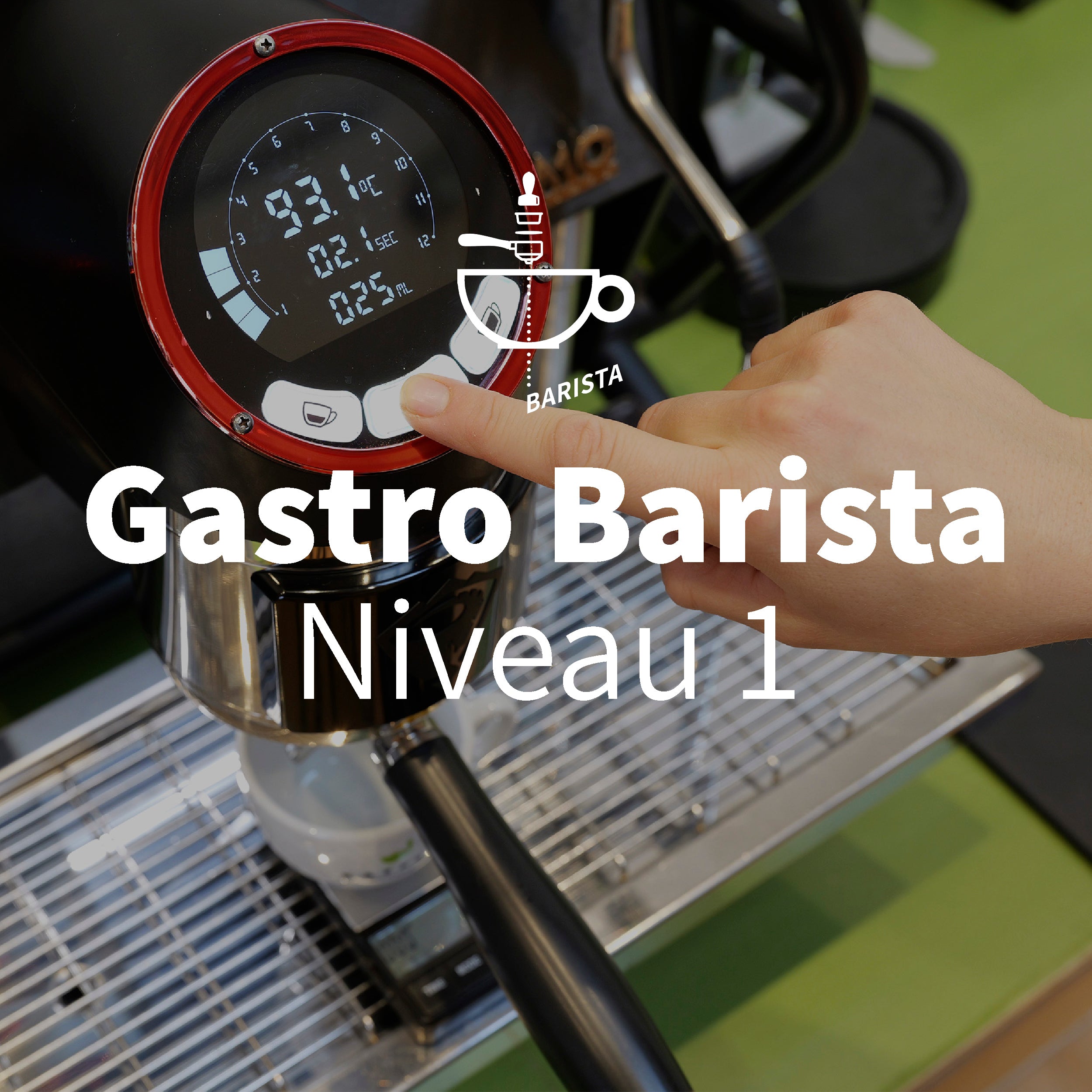
The Barista Pro can be operated with a clear LCD display, illuminated buttons, and a separate dial for grind size adjustment. A complete espresso setup on 40 cm². That's enough space even in the smallest kitchen.
The conical espresso grinder
A good grinder is one of the most important criteria for good espresso. It determines the extraction speed, and its particle distribution affects the taste. So it's bold that Sage has built in an integrated grinder. The duo machine avoids the risk of the grinder heating up and thus impairing the coffee aroma through its Thermo-Jet system. This means that neither the cups on the top plate nor the grinder or the ground coffee are warmed up.
The grinder is adjusted via a 30-stage dial. The grind size is displayed on the screen, as is the grinding time. The time can only be changed in 0.5-second increments. This can result in having either slightly too much or slightly too little ground coffee in the portafilter. A finer adjustment would be desirable here. In the test, the consistency of the ground coffee output was in the averagely good range.
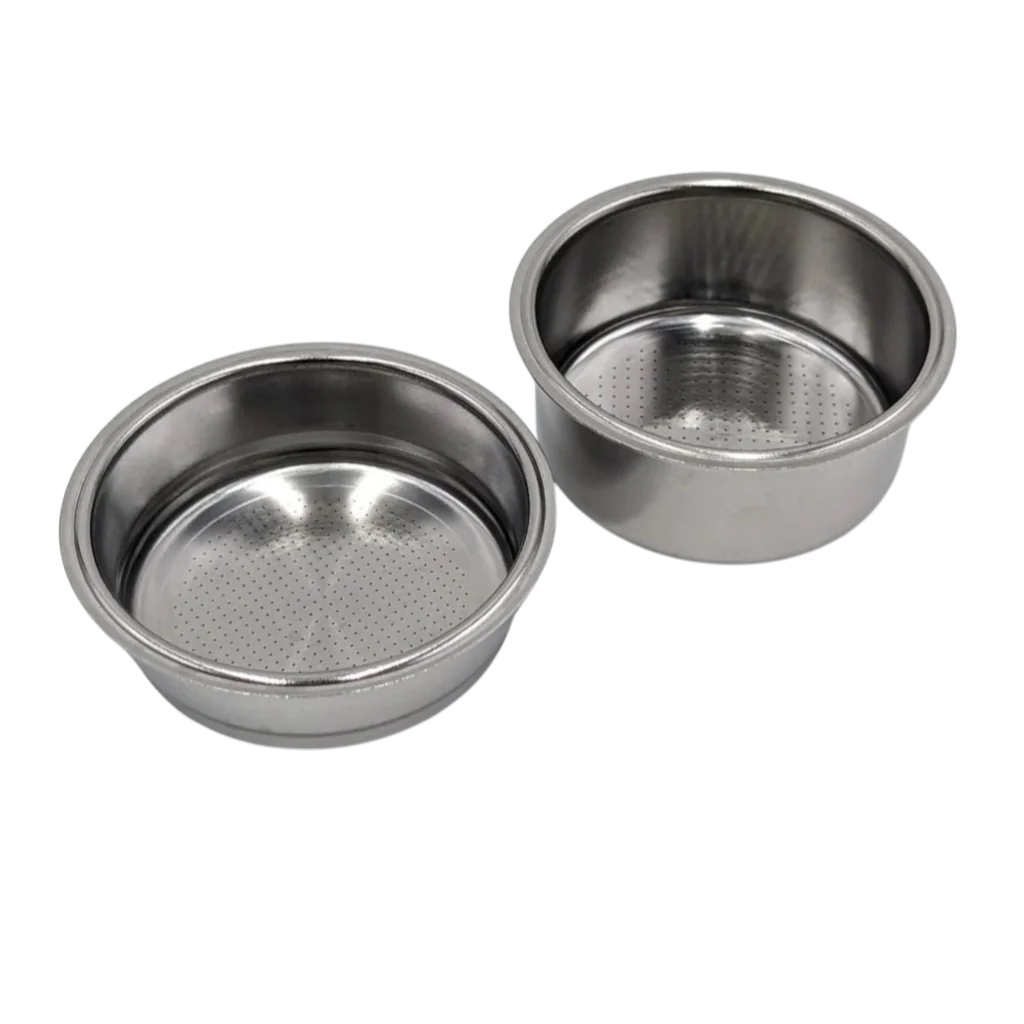
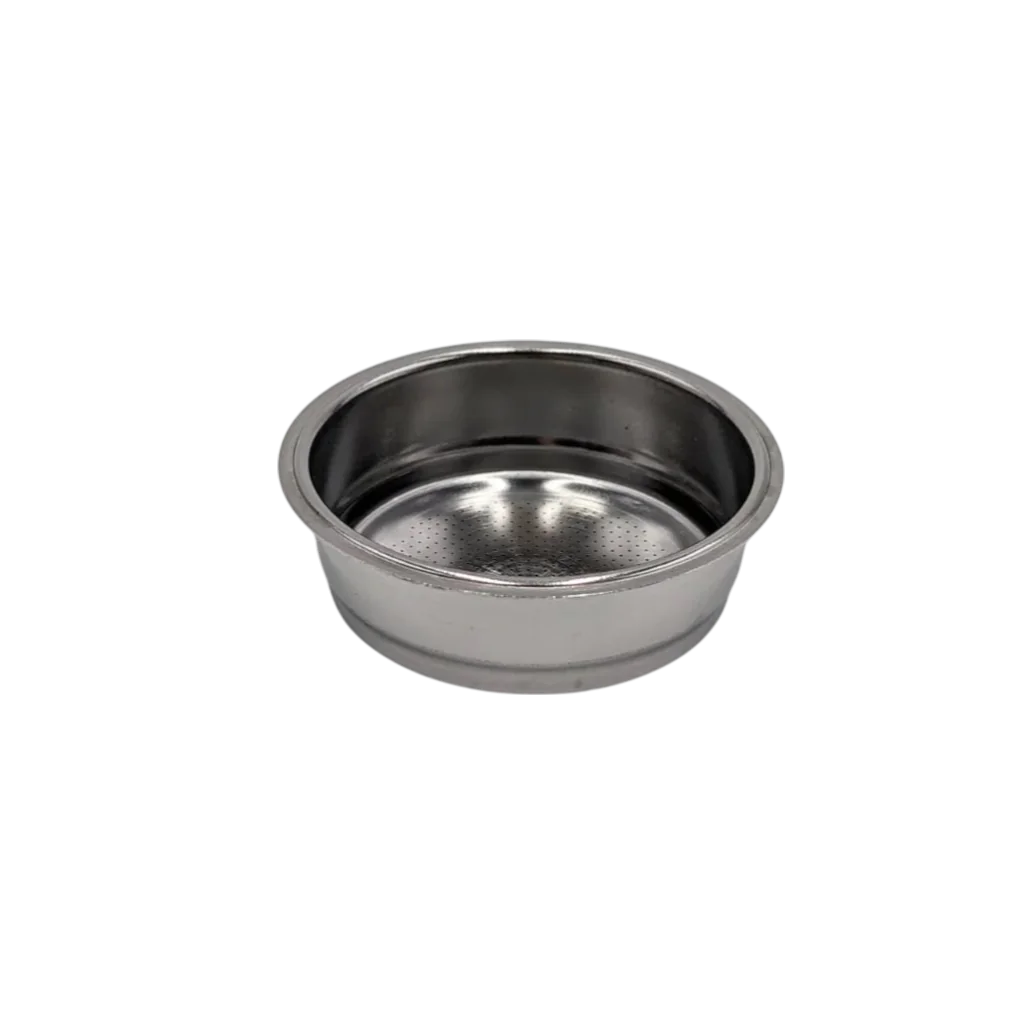
Espresso baskets and fake baskets
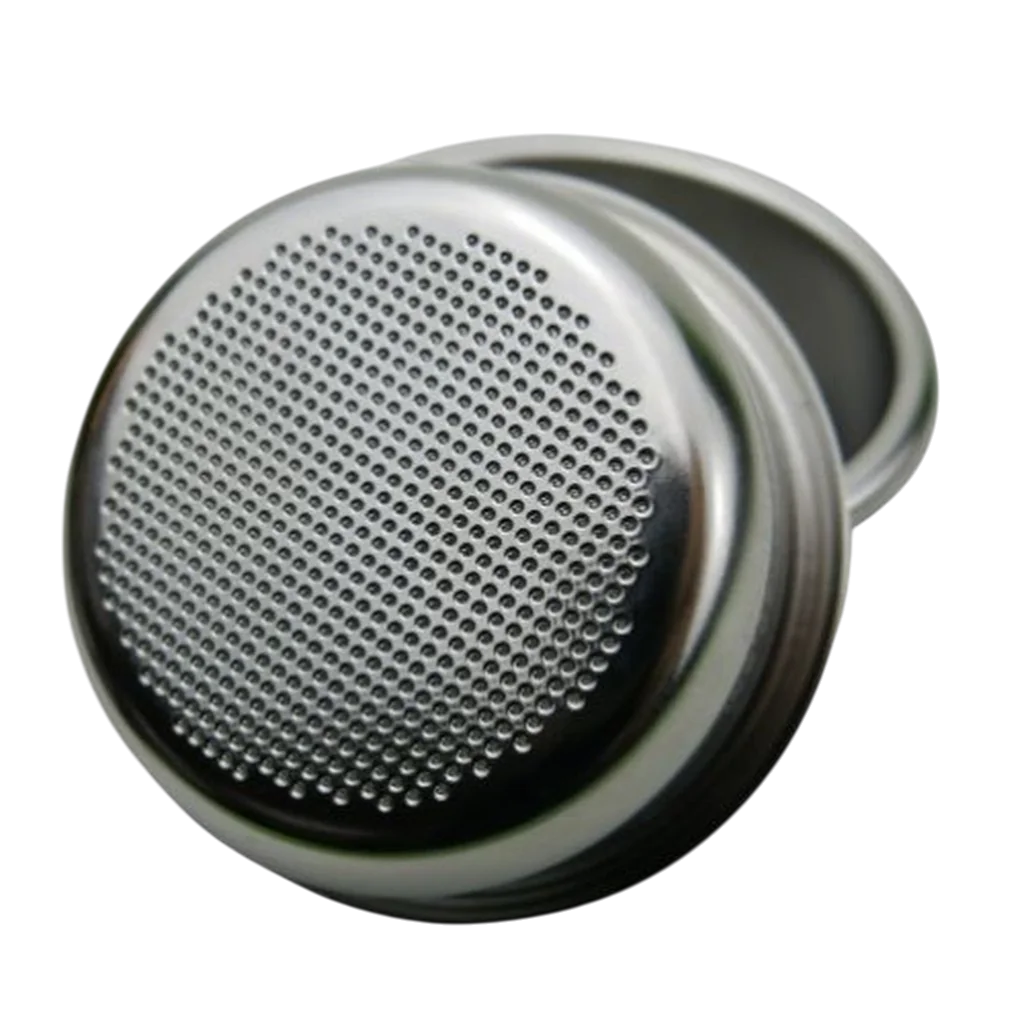
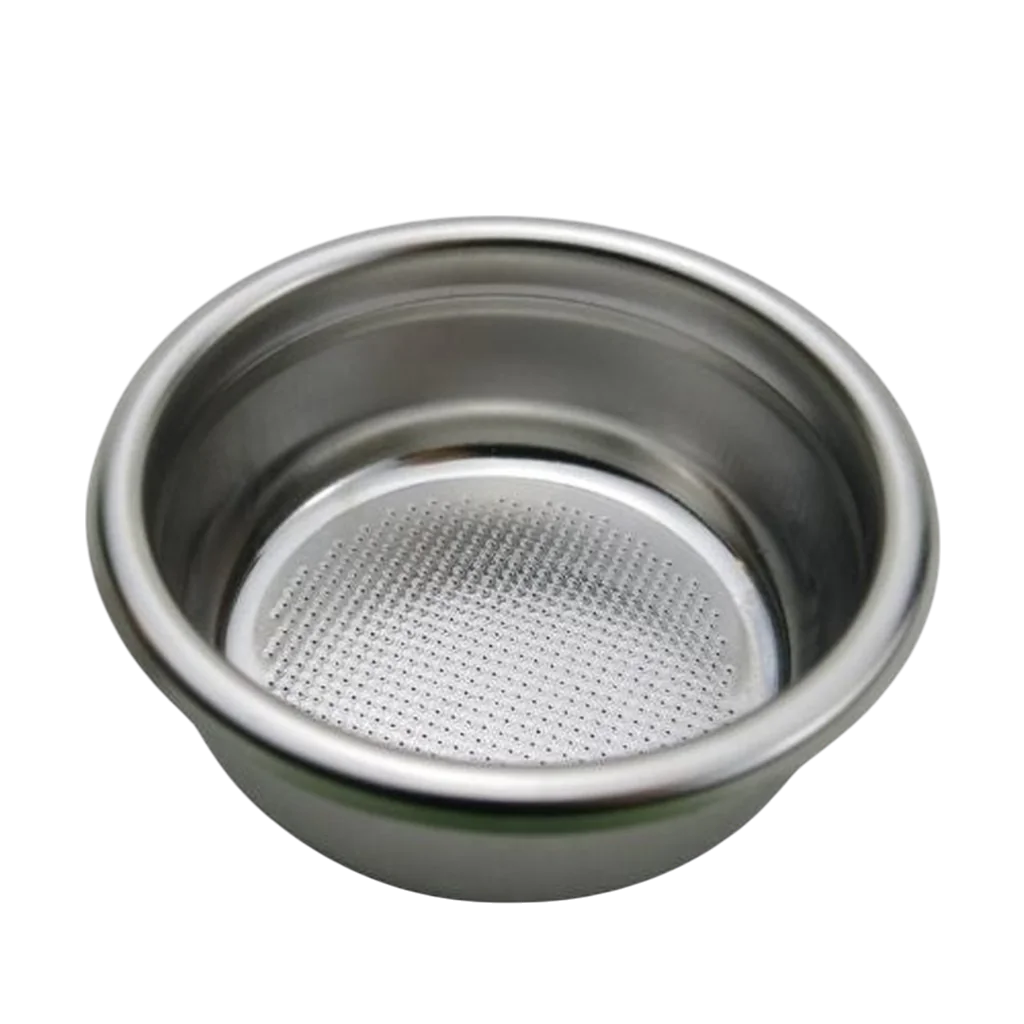
The Sage comes with four espresso baskets. Two of them have only a tiny opening instead of a basket. They are designed for use with pre-ground coffee and create a fake crema through excessive pressure buildup. Since the Barista Pro already has a grinder built in, true coffee enthusiasts stick to the two "real" baskets. For those new to the espresso world, we recommend the "standard" double basket.
Mastering the dose amount
In our experience, the double basket holds 18g, or better yet 17.5g of ground coffee, even though Sage specifies up to 22g. With too much ground coffee, there's not enough space to the shower head, and the risk of channeling increases with overfilled portafilters.
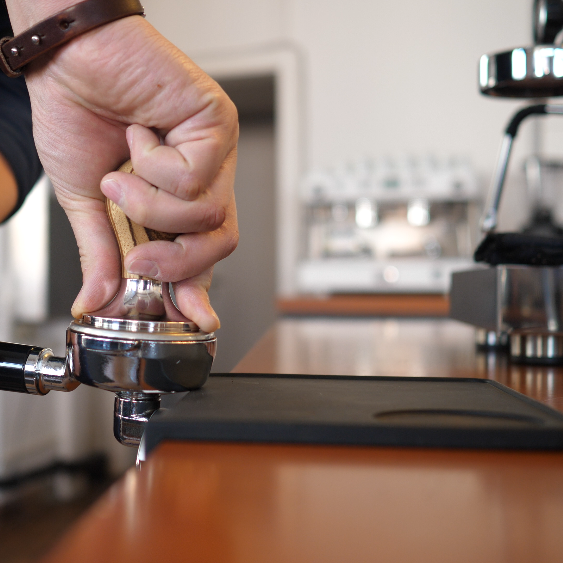
By pushing the portafilter against the trigger on the grinder, grinding begins. Due to the slightly small portafilter (53mm instead of the 54mm specified by Sage), some ground coffee sometimes spills beside the portafilter. A fairly large mound also forms in the portafilter. To prevent this, we recommend programming not one long grind of 13 seconds, but rather 3 short grinds of 4 seconds. This way you can tap the portafilter on the table between grinds to better distribute the powder and compress it vertically.
Now the powder is tamped down and extraction can begin.
Brewing and coffee quality
The Barista Pro works with a pre-infusion. A small amount of brewing water runs onto the ground coffee without pressure. Whether this pre-infusion brings a taste advantage is controversial. It's worth experimenting a little with the brew temperature. We got our best results with the lowest temperature setting, which settles at about 96 degrees.
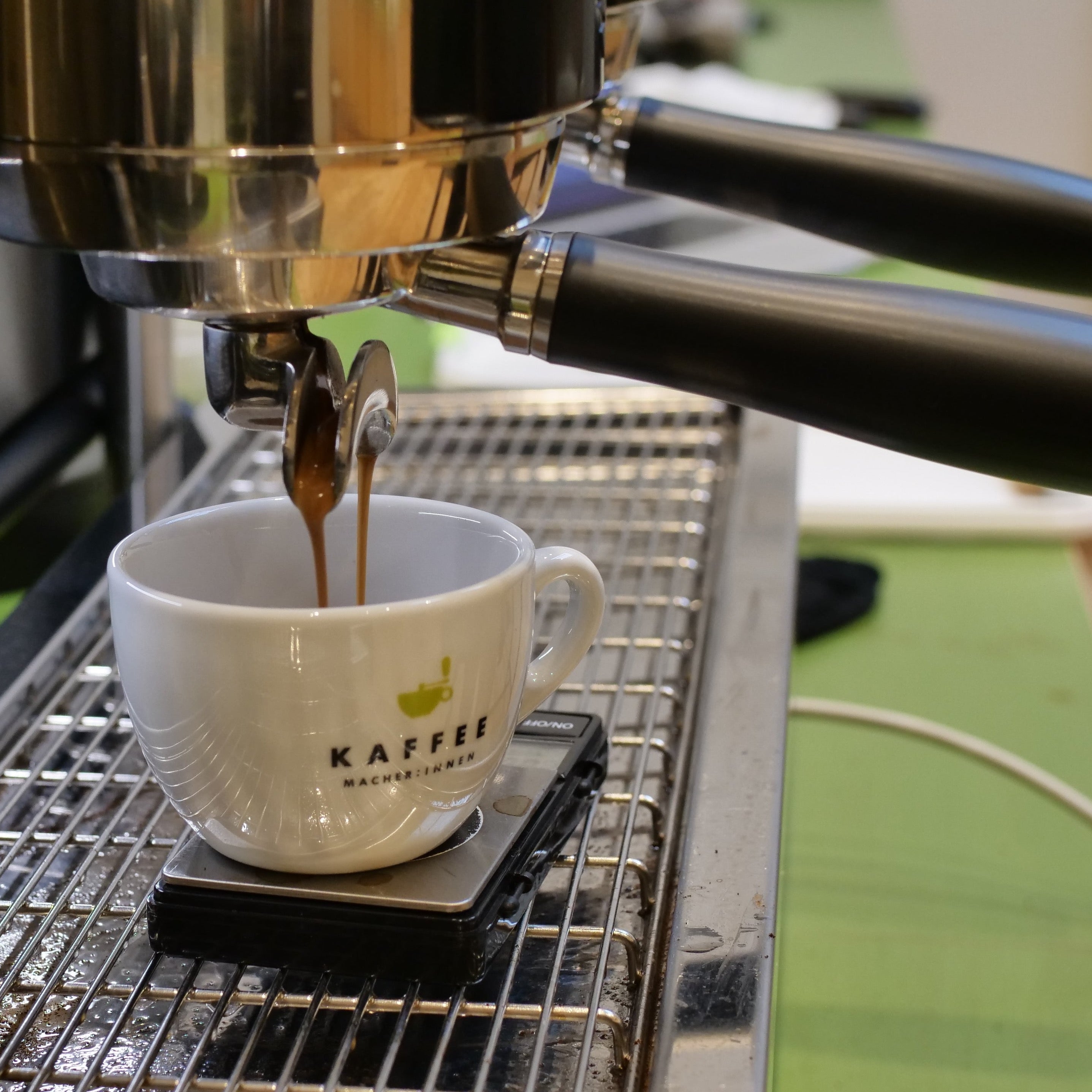
The water amount can also be adjusted on the Barista Pro. This is important for the so-called "brew ratio". This is about how much ground coffee is extracted into how much liquid espresso. For our coffees, we recommend a brew recipe of 1:2.5. That means, for example, 17g of ground coffee should become 42.5g of finished espresso in the cup.
The machine heats up extremely quickly. After just 3 seconds, it signals that it's ready to operate. However, since the portafilter and brew group cannot heat up as quickly, we recommend at least one blank shot before the first espresso.

Cappuccino, Americano, and other coffee drinks
The machine also provides steam for frothed milk after a short time. Once the dial on the right side is activated after pulling the espresso shot, the machine heats up very quickly to steam temperature. With the steam wand, you can create good milk foam with some practice, although it has rather little power.
You can also prepare tea or an Americano using the separate hot water outlet.
Conclusion on the Sage SES 878 Barista Pro
The Barista Pro does a surprising amount right in a surprisingly small space. Both the grinder and the machine work solidly and consistently, and enable decent coffee quality in little space.
Our negative points about the machine are the small portafilter and the resulting overflow problems when grinding, the cold cups since the machine doesn't heat up on top, and the inconsistent brew temperature.
Transparency disclaimer: We bought the Sage Barista Pro ourselves to be able to test it as independently as possible. We borrowed the Barista Express needed for the comparison test from Sage for the test period.