









A double espresso, 120 grams of creamy steamed milk, a 160 ml cup – and you've got yourself a Flat White. Sounds simple. It's not. What makes this drink special is precisely the ratio: more espresso, less milk than a cappuccino, and milk foam that doesn't pile up on top but integrates into the drink. We'll explain what makes a real Flat White authentic, how it came about, how it differs from a cappuccino, and how you can make it at home.
Espresso base: Double espresso or double ristretto · approx. 30–42 ml
Milk quantity: approx. 100–140 g (ours: 120 g)
Cup size: 150–220 ml (depending on café and country; ours: 160 ml)
Milk foam: Microfoam, creamy, maximum 0.5 cm thick
Special feature: Higher espresso ratio than cappuccino, no stiff foam crown
What makes a Flat White a Flat White?
The name tells you a lot. "Flat" means flat. The milk foam sits flush with the rim of the cup, it doesn't dome up like a classic cappuccino. "White" stands for the milk that lightens the espresso. What sounds like a simple stylistic description is actually a philosophy: the Flat White should let the espresso shine through. The milk complements it; it doesn't cover it up.
In our cafés, we interpret the Flat White like this: a double espresso shot, 120 g of organic milk (regional, 3.5% fat), a 160 ml cup. The cup size is no accident: it's chosen so that the Flat White fills it exactly to the rim. No room for foam mountains. For comparison: in the same cup, we use just a single espresso shot for a cappuccino with about 140 g of milk. Here the espresso recedes noticeably into the background. With the Flat White, it's the opposite: the espresso takes center stage.
You taste the difference. The fine aromas of the bean – fruitiness, acidity, sweetness – are much more present than in a cappuccino. If you like good espresso, you'll love a Flat White. If you hate espresso, you should order a Latte Macchiato instead.
Where does the Flat White come from?
The honest answer: nobody knows for sure, and anyone who claims they do is fibbing a bit. Australia and New Zealand have been arguing about the invention for decades, and both countries have good arguments.
What's clear: the Flat White emerged in the 1980s in the context of espresso culture that developed in the major cities of Australia and New Zealand. Many Europeans – especially British and Italians – had emigrated to Oceania after World War II and brought their coffee habits with them. In cities like Sydney and Melbourne, cafés with real portafilter machines and trained baristas emerged in the 1980s, long before that became standard in Germany.
The most commonly told story: a barista serves a guest who ordered a cappuccino a poorly steamed coffee – the foam was too flat, the milk hadn't built up enough. Instead of apologizing, he says: "Sorry, it's a flat white." Whether that happened in Sydney or Wellington, in 1985 or 1989, whether the barista was named Derek Townsend or someone else entirely – depending on who you ask, the story changes.
What happened next is clearer: the Flat White traveled from Oceania to Great Britain, then to Europe. In the 2000s, it appeared in more and more cafés, and once Starbucks added it to their global menu in 2015, it had arrived for even the last skeptics. Today it's a permanent fixture on every serious coffee menu.
Whether Australia or New Zealand, that's irrelevant for the cup in front of you. What matters more is this: the Flat White is based on a craftsmanship idea that has stood the test of time. More espresso, less foam, more coffee flavor. That was innovative, and it's what makes it good to this day.
Flat White, Cappuccino, Latte – what's the difference?
These three drinks confuse many people because at first glance they look similar. All three consist of espresso and milk. But the ratios and foam consistency differ significantly – and you can taste it.
| Drink | Espresso base | Milk quantity | Foam thickness | Cup size | Espresso ratio |
|---|---|---|---|---|---|
| Flat White | Double espresso | approx. 100–130 g | Microfoam, <0.5 cm | 150–180 ml | High |
| Cappuccino | Single espresso | approx. 100–140 g | 1–2 cm foam | 150–180 ml | Medium |
| Latte Macchiato | Single espresso | approx. 200–250 ml | Little | 300–400 ml | Low |
| Cortado | Double espresso | approx. 30–40 g | Hardly any foam | 80–100 ml | Very high |
* Our interpretations from café practice. Variations depending on café and interpretation are normal.
Flat White vs. Cappuccino
This is the comparison most people are interested in. In our cafés, we use the same 160 ml cup for both. The difference: with a cappuccino it's a single espresso shot, with a Flat White it's a double. This means: in the cappuccino, the espresso recedes more into the background. With the Flat White, it defines the drink. If you want a milder, milkier cup, choose cappuccino. If you want to taste the coffee, choose Flat White.
One more difference: the cappuccino traditionally has a firmer foam crown. With the Flat White, we steam less and create a microfoam that's so fine and creamy it blends seamlessly with the milk and doesn't form a noticeable foam layer.
Flat White vs. Latte Macchiato
Here the difference is more drastic. The Latte Macchiato is a large drink – 200 to 400 ml, lots of milk, a single espresso. The coffee flavor is subtle to barely noticeable. The Flat White is smaller, more concentrated, more intense. If you want a strong coffee taste in the morning, the Flat White is your better choice.
The Flat White Recipe – Step by Step
The espresso base: double espresso or ristretto?
A question that sparks discussion in the coffee community: some baristas – especially in Australia and Great Britain – swear by the ristretto as a base. A double ristretto is ground with the same amount of coffee as a normal espresso but pulled with less water: approximately 15–20 ml instead of 30–40 ml. The result is a more concentrated, sweeter shot, ideal with darker roasts where the shorter pull smooths out the bitter notes.
A second option increasingly chosen by cafés deliberately: pulling the double espresso at 1:2 – for example, drawing just 34 g of espresso from 17 g of ground coffee instead of the usual 40–42 g at 1:2.5. This sits between ristretto and standard espresso: more volume than a ristretto but more concentrated than the classic 1:2.5 shot. This option makes particular sense when using a slightly larger cup and wanting to maintain coffee intensity.
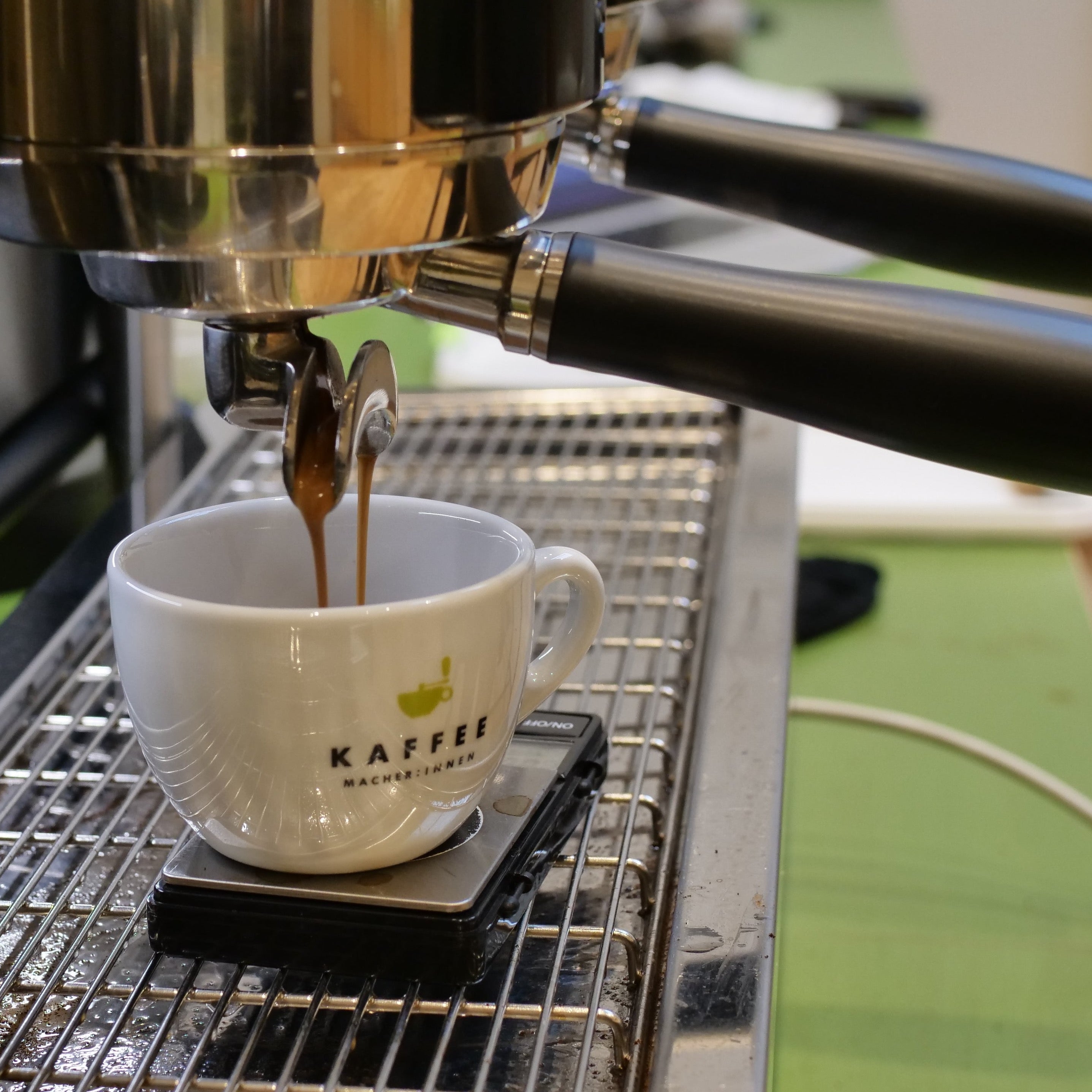
In our cafés, we use the double espresso with 1:2.5 – so 17 g to 40–42 g in the cup, flow time 25–30 seconds. This works well with our light, fruity beans, where the fruitiness comes through nicely in the standard shot too. Feel free to try all three variations: ristretto, 1:2, and 1:2.5. The differences are noticeable, and which works best depends on the bean, the roast, and your cup size.
On grind size: if the espresso flows through too quickly, it's underextracted and sour – then adjust the grind finer. Too slow, too bitter – set it coarser.
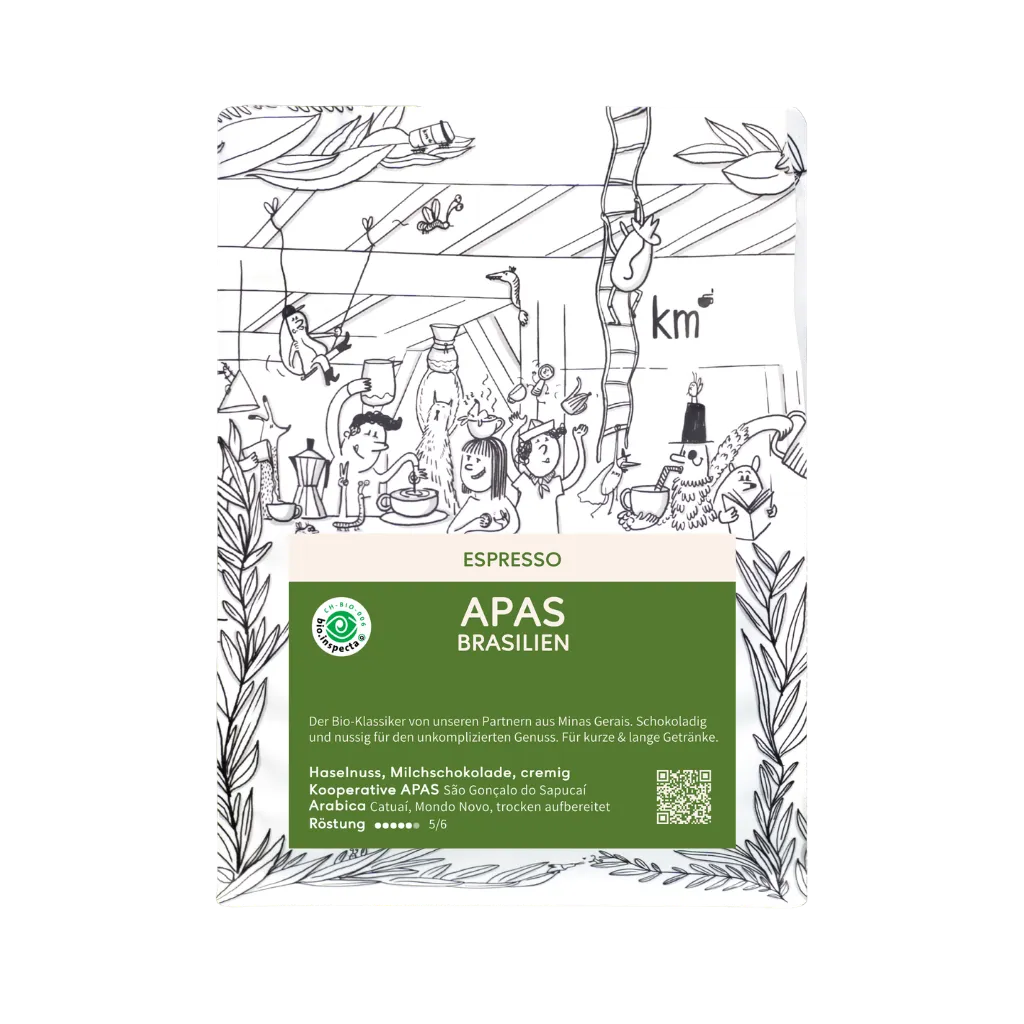
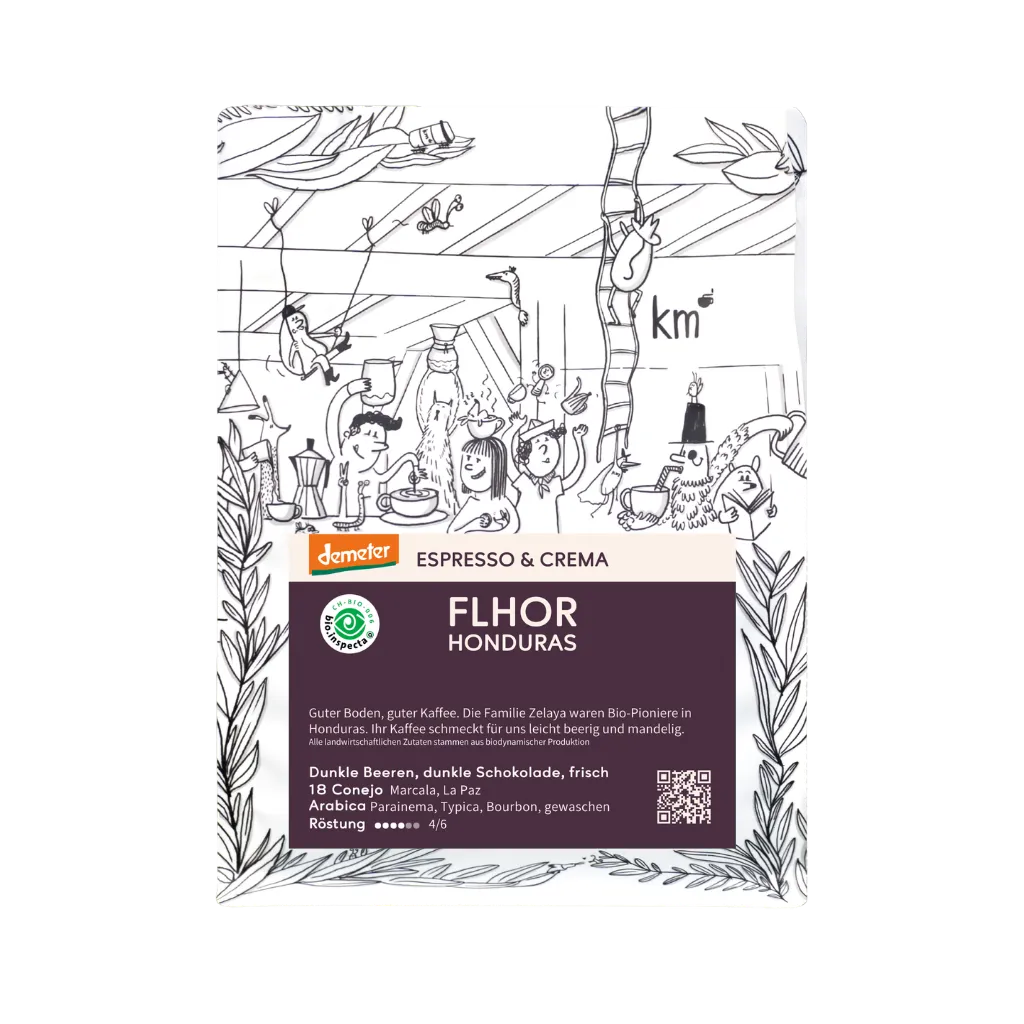
For the Flat White we recommend our fruity, lighter-roasted beans from our purple or orange line. The floral, slightly fruity note blends harmoniously with the reduced milk amount. No intrusive coffee flavor, no overwhelming intensity. Our APAS Organic Espresso is also excellent. Dark roasted beans work but then the Flat White quickly feels heavy.
How large is a Flat White? Cup size in international comparison
The 160 ml we use falls at the traditional-artisanal end of the spectrum – and that's where it belongs. In Australia and New Zealand, where the Flat White originated, 160–175 ml is considered standard. Many European specialty cafés that adopted the drink from there now tend toward 180–200 ml. With a slightly larger cup, the Flat White becomes more accessible without losing its character, as long as the espresso shot and milk quantity are adjusted accordingly.
Starbucks serves their Flat White in 354 ml. That's a different category. It's called a Flat White but follows different logic: more milk, more volume, broader accessibility. That's not a benchmark for the original idea of the drink and shouldn't be.
Why we stay with 160 ml: it's the most direct implementation of the original idea. The espresso defines the drink. In a 200 ml cup with the same proportions, you quickly drift toward latte territory. The 160 ml cup makes the ratio unmistakable. If the drink seems too small on your first try, give it a taste. Most people are convinced after their first sip.
Steaming milk: pull and roll phases
This is where most people struggle, not because it's that difficult, but because you need to understand the logic behind it. The goal is microfoam: milk as creamy as melted vanilla ice cream. No firm foam, no visible bubbles.

It works in two phases:
Pull phase: Fill the pitcher about one-third to halfway with cold milk. Briefly blow out the steam wand (the condensation inside shouldn't get into the milk). Then hold the wand tip just below the milk surface and apply steam. The milk pulls in air and increases its volume. You'll hear a soft hissing sound – that's correct. Once enough air is incorporated (you can see the pitcher has noticeably increased in volume), switch phases.
Roll phase: Now immerse the wand slightly deeper and position it so a rolling circular motion forms in the milk. The large bubbles from the pull phase are destroyed and the air is worked in homogeneously. Continue steaming until the pitcher is so hot you can barely hold it – that corresponds to about 65 °C. After that, blow out the wand and wipe it clean immediately.
The result should be creamy and smooth. No visible bubbles. When you gently shake the pitcher, the milk should flow like thick cream.
Assembly and pouring
The espresso goes into the cup first. Then add the steamed milk steadily, with a small circular motion, so the milk and espresso blend well. If you want to make latte art, start with that while pouring. It takes practice, but the right milk consistency is the prerequisite. Latte art works with microfoam, not with firm foam.
You can find our tutorial on steaming and pouring latte art here.
Flat White with oat milk – does it work?
Yes. But not every oat milk is suitable.
The problem is protein structure. Regular oat milk steams poorly and tends to curdle when it comes into contact with hot, acidic espresso. Barista oat milk has a higher fat content and is specially formulated so it can be steamed and stays stable. Brands like Oatly Barista, Alpro Barista, or Minor Figures work well.
The preparation barely changes: oat milk froths best at a slightly lower temperature than cow's milk – around 55–60 °C instead of 65 °C. Steaming it too hot makes oat milk watery. The flavor in the Flat White is milder and sweeter than with cow's milk, which harmonizes very well with fruity beans.
For those looking at vegan alternatives: soy milk (barista version) and almond milk are also possible, the latter with less volume and thinner consistency.
For more details on various plant-based milk options and which are best for steaming, check out our comprehensive barista oat milk comparison.
What equipment do you need to make a Flat White at home?
The Flat White doesn't forgive mistakes in the espresso base – the espresso ratio is too high for that. This means: you need equipment that lets you consistently pull good espresso.
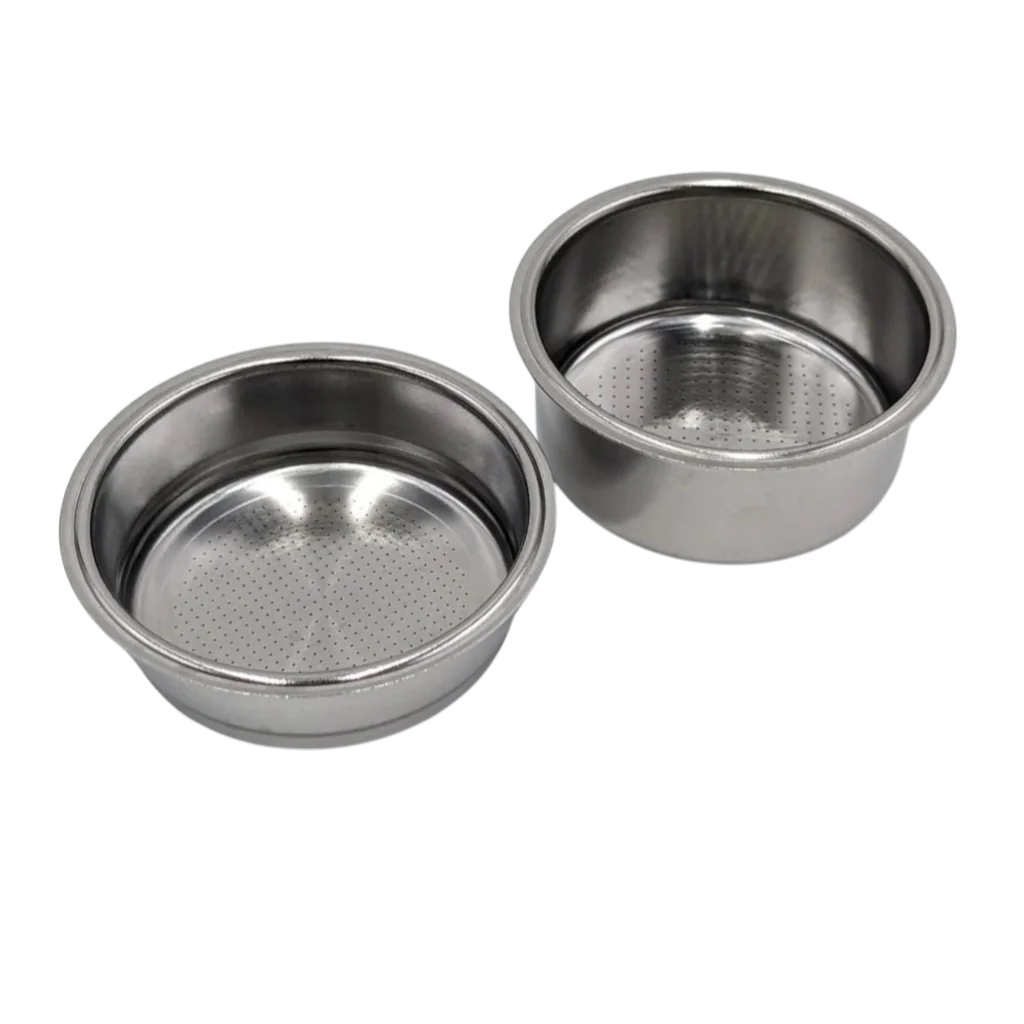
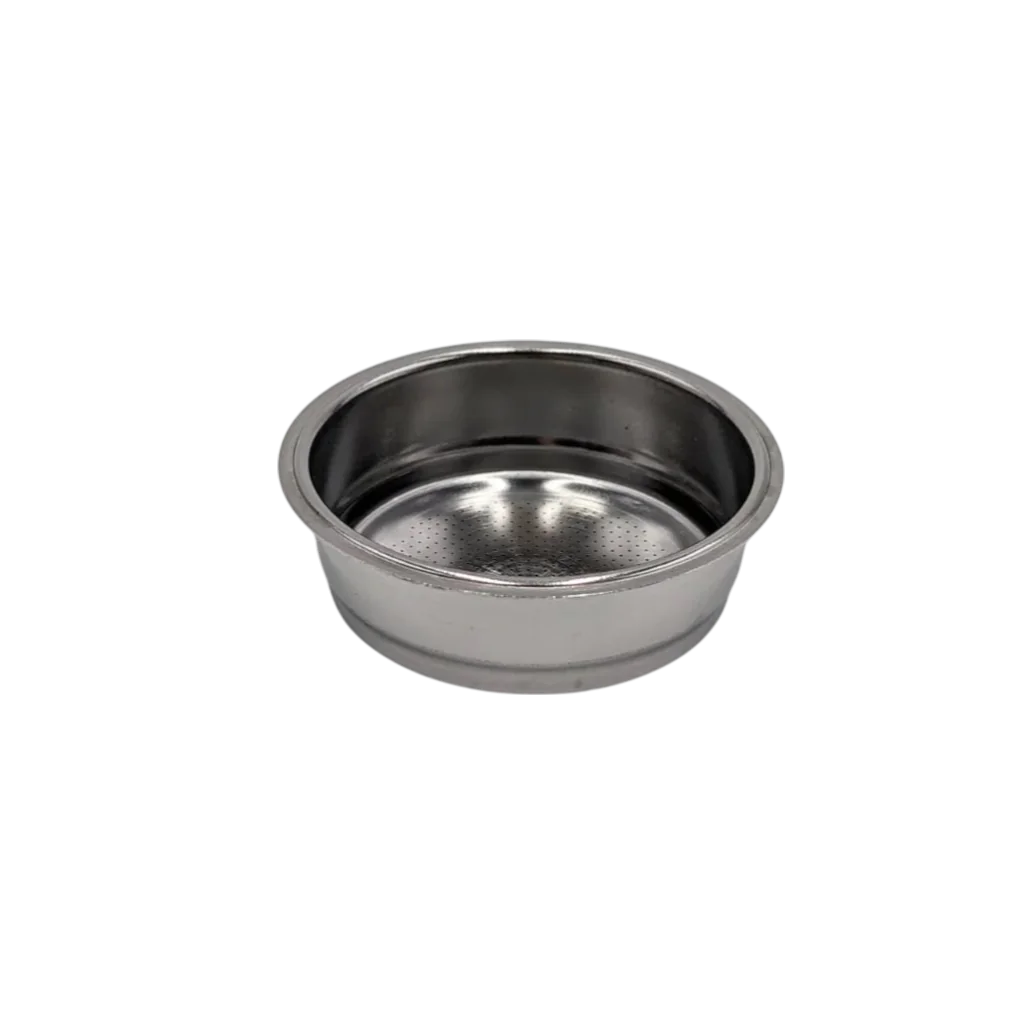
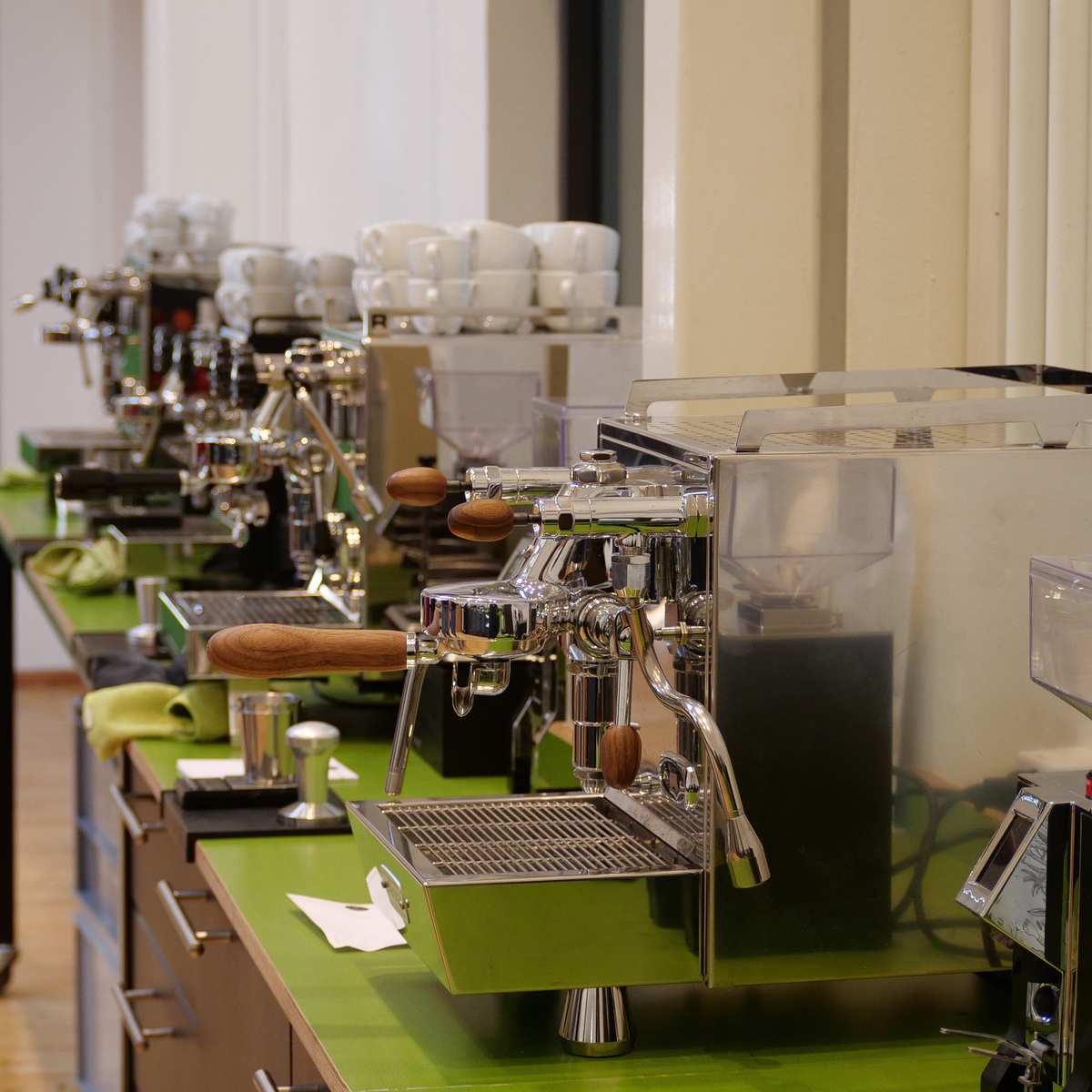
Portafilter machine: You need a machine that delivers stable brewing temperature and 9 bar brewing pressure and has a steam wand you can use to steam milk. A good entry point is the DeLonghi Dedica (starting around 200 euros). All the espresso machines we've tested can be found here.
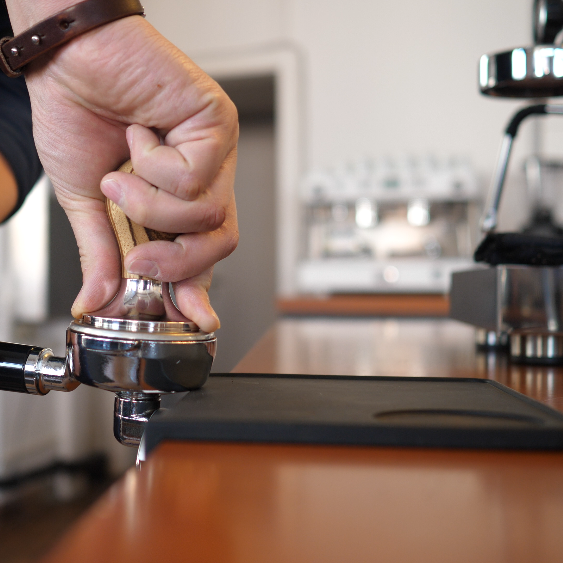
Espresso grinder: This is the most important piece of equipment. Without a decent grinder that can be finely adjusted and grinds uniformly, you won't get consistently good espresso. Hand grinders for espresso are possible but tedious for everyday use. Check out our grinder reviews here.
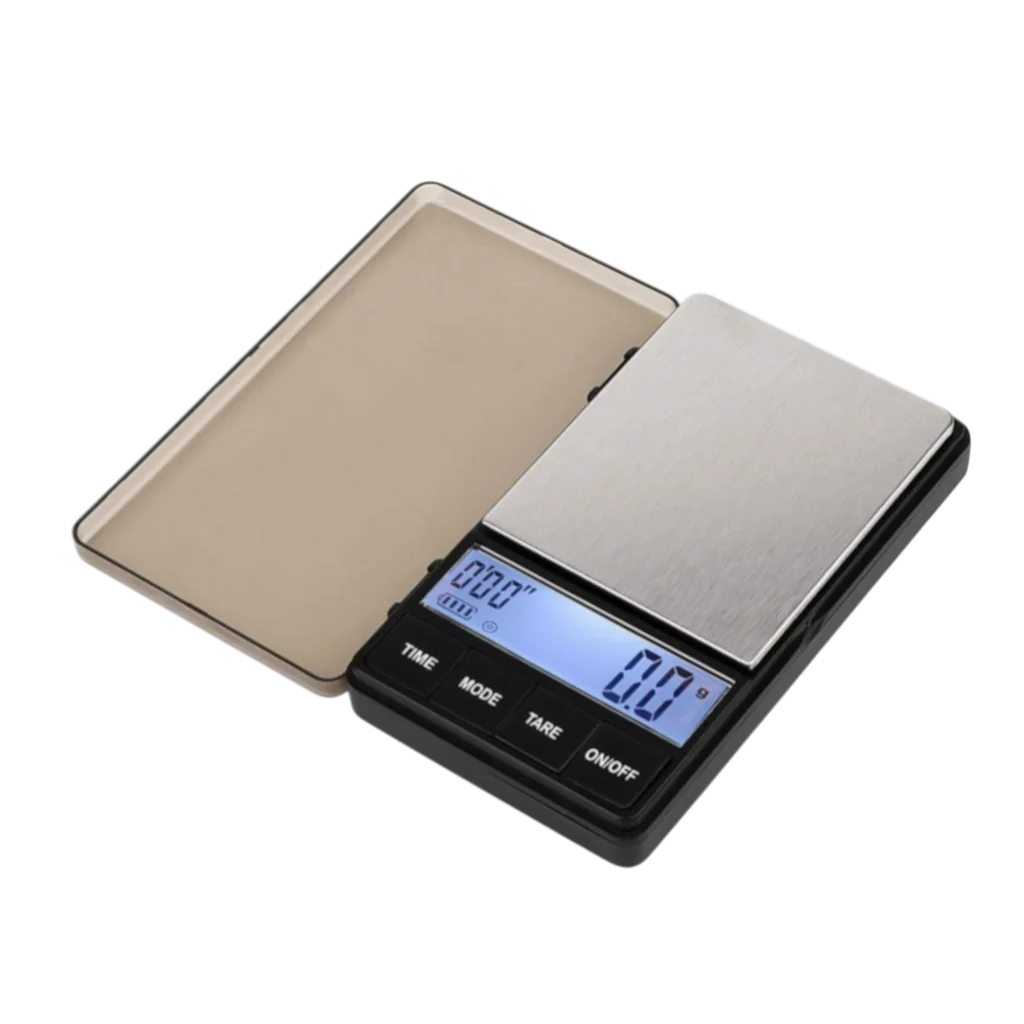
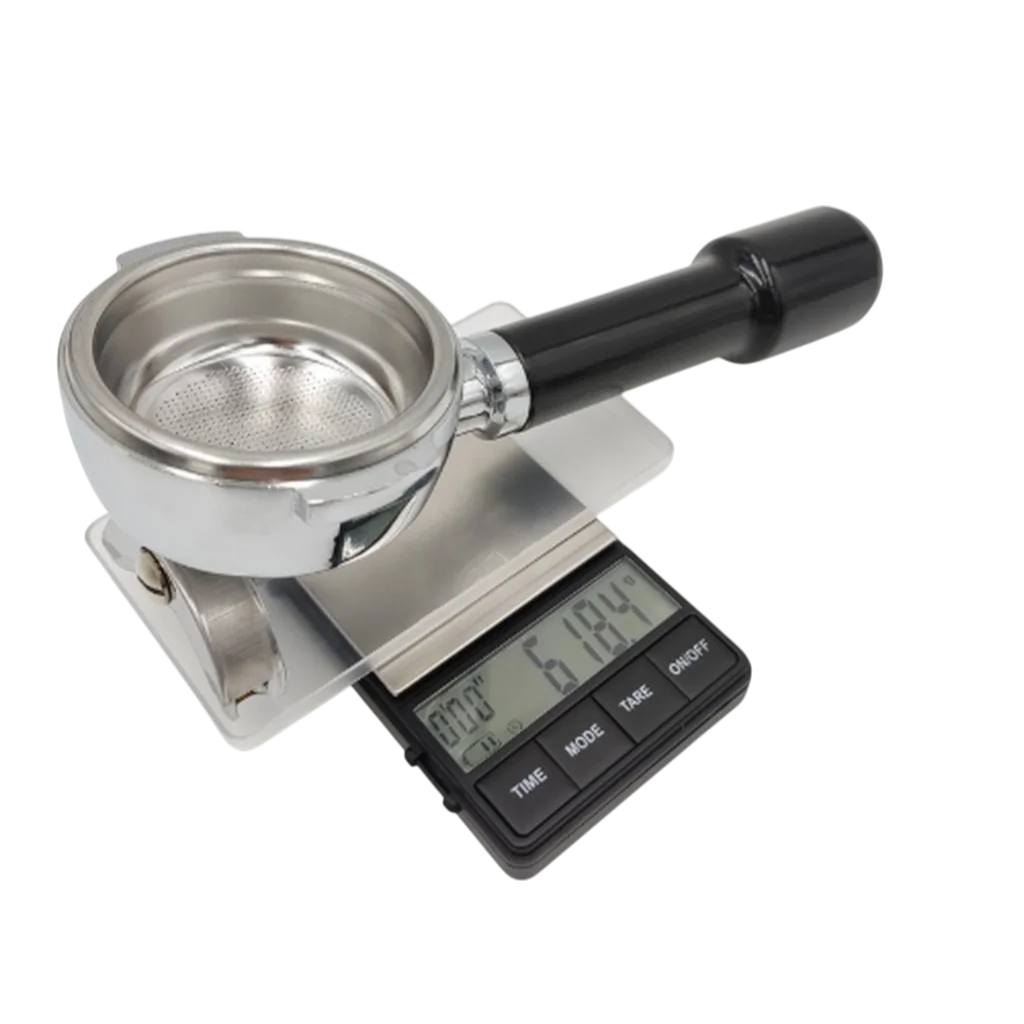
Scale: For your brew recipe (17 g ground coffee → 40–42 g espresso), you need a scale that measures to 0.1 g accuracy. When pouring the milk, it also helps measure out the 120 g.
Milk pitcher: We recommend steaming and pouring with two pitchers. Milk is first steamed in the larger pitcher. Some firmer foam is poured into a smaller one. Many people pour latte art with the larger pitcher. Our barista professionals have developed two pitchers with different pouring characteristics, each perfected for different patterns and techniques.
Flat White without a portafilter machine – is it possible?
With limitations. You absolutely need a steam wand or milk frother that can produce microfoam. Nanofomers or similar electric frothers come closest to the result if you don't have a portafilter machine.
As an espresso base without a portafilter: a Moka pot (not true espresso, but acceptable), an Aeropress with finer settings, or a capsule machine with Nespresso compatibility. The result won't be the same as with a portafilter machine, but it's fine for getting started.
Common Flat White mistakes
Espresso too sour: Underextraction. The grind is too coarse, the espresso flows through too quickly. Adjust your grinder finer.
Espresso too bitter: Overextraction. The grind is too fine, the espresso flows through too slowly. Adjust your grinder coarser.
Milk steamed too hot: Above 70 °C, milk loses its natural sweetness. You'll notice. Goal: 60–65 °C.
Too much air in the pull phase: The Flat White then develops a thick foam layer instead of creamy microfoam. Pull shorter, switch to the roll phase earlier.
Too dark beans: With very dark roasts, the Flat White becomes intense and bitter. For this drink, lighter, fruitier roasts are worth it. They blend harmoniously with the reduced milk amount instead of overwhelming the drink.
Wrong cup size: In a 250 ml cup, a Flat White becomes too thin and cold. Use a 160 ml cup. The ratio will be automatically correct.

Flat White – frequently asked questions
What is a Flat White?
A Flat White is an espresso-based milk drink made from a double espresso and approximately 100–130 g of creamy steamed milk. Depending on the café, the cup holds 150–220 ml, with 160–180 ml being closest to the artisanal original from Australia and New Zealand. The milk foam is fine and creamy (microfoam) and sits flush with the cup rim, hence the name. Compared to a cappuccino, the Flat White has a higher espresso ratio and less foam.
What's the difference between a Flat White and a cappuccino?
In an equally sized cup: the Flat White has a double espresso shot, a cappuccino usually a single. The cappuccino has more milk, thicker and firmer foam. The Flat White tastes noticeably more of coffee as a result. Our cappuccino in the same 160 ml cup has about 140 g of milk and a single shot, the Flat White has 120 g of milk and a double shot.
How much milk does a Flat White have?
Approximately 100–130 g, depending on the café and cup size. In our cafés, it's 120 g in a 160 ml cup. Combined with the espresso (approximately 40 ml), this creates a drink that fills the cup exactly.
How many calories does a Flat White have?
With whole milk (3.5% fat): approximately 80–90 kcal per cup (120 g milk + double espresso). With barista oat milk: approximately 60–75 kcal. These values vary depending on milk quantity and fat content. With oat milk, the calorie content is somewhat lower, but the carbohydrate proportion is higher than with cow's milk.
How much caffeine does a Flat White have?
A double espresso contains approximately 100–140 mg of caffeine depending on bean and roast. That's more than a cappuccino with a single shot (approximately 60–80 mg) and significantly more than a Latte Macchiato. If you tolerate caffeine well and want an intense coffee, the Flat White is a good choice.
Can you drink a Flat White cold?
As an iced Flat White: yes. Pour the espresso over ice cubes and add cold milk. No steaming needed. The ratio stays similar: more espresso, less milk. A solid alternative in summer.
Conclusion
The Flat White isn't a trend that's had its day; it's a delicious drink with a clear concept. Once you've had a proper one, you understand why: the espresso comes through, the milk makes the mouthfeel rounder, and there's no foam mountain in the way.
If you want to make it at home, investing in a decent grinder pays off more than investing in an expensive machine. The rest – steaming milk, adjusting your recipe, finding the right grind – you learn with a bit of patience.
And if you'd rather learn live: in our coffee classes, we practice exactly that. Dialing in espresso, steaming milk, latte art – working directly with our baristas.