



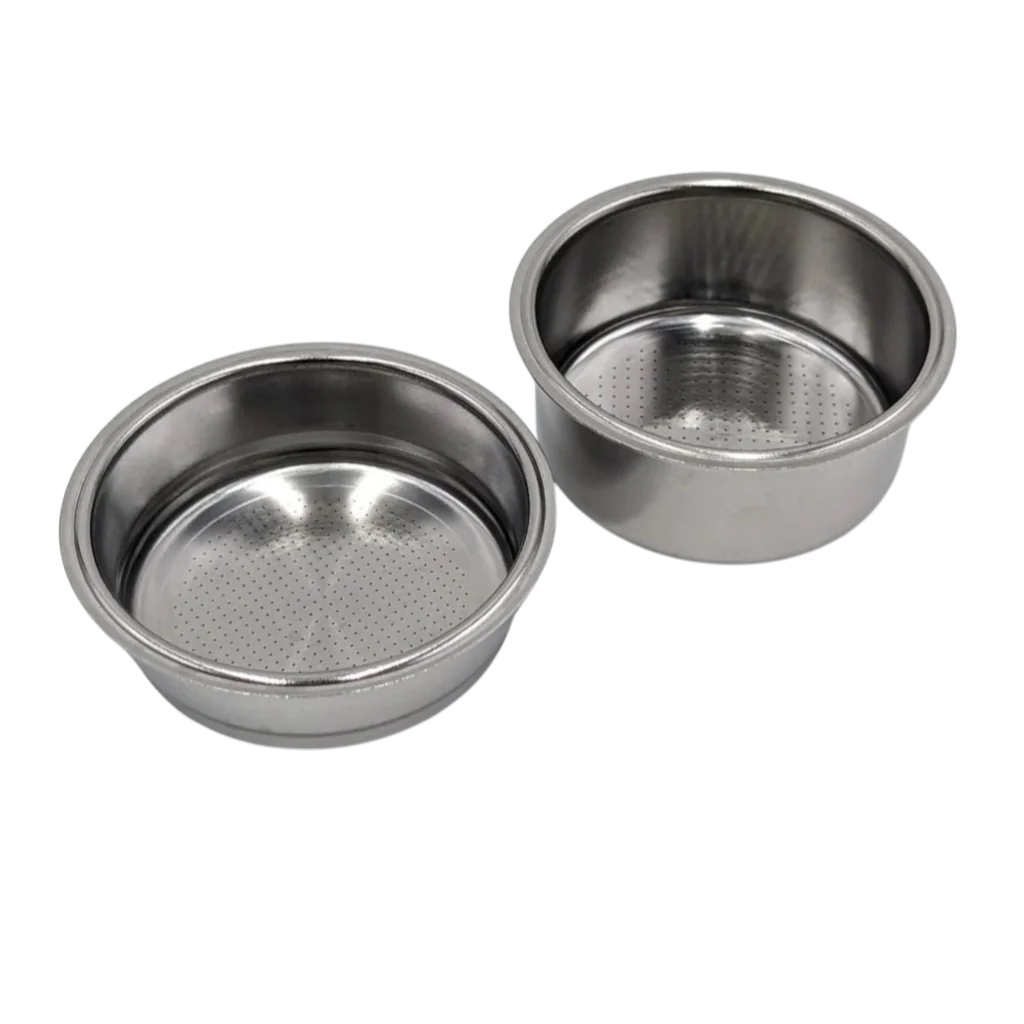
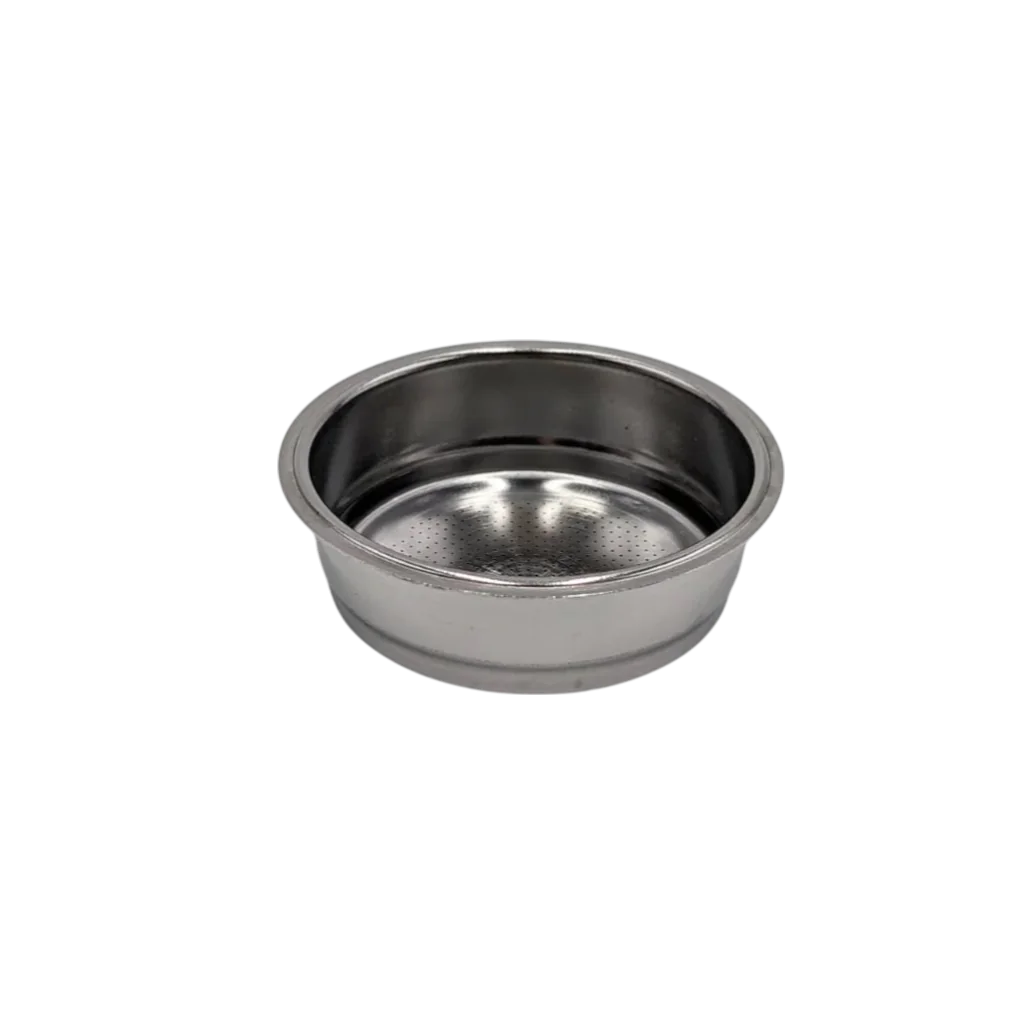




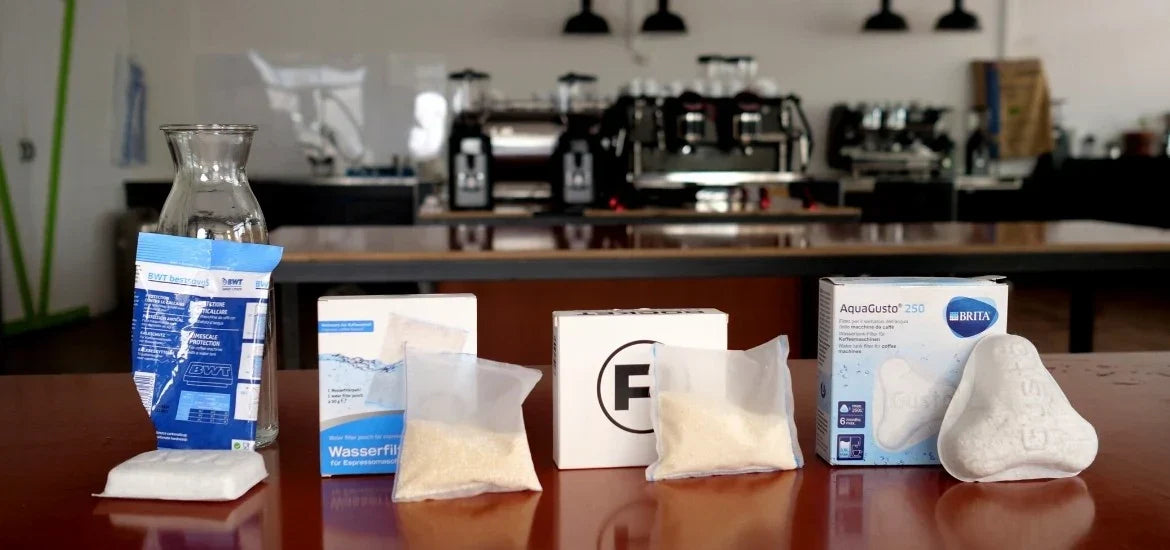
Water filter pads have one purpose: they are meant to filter hard water. The risk of limescale buildup in espresso or coffee machines should be reduced and the water should also be improved in terms of taste. We tested four water filter pads and the conclusion is disappointing: all four fail to achieve both objectives when used according to the dealer's instructions, or achieve them only insufficiently.
We tested the water filter pad from ECM, Rocket O.SCA.R 90, BRITA Aqua Gusto 250, and BWT Bestsave S.
Good water for brewing coffee
In many places, tap water at home is too hard to brew sensorially good coffee. Equally problematic is that even moderately hard water causes limescale buildup. We explained what good water for brewing coffee is in a detailed article and video. Here are the key parameters again:
Perfect water for filter coffee:
Total hardness: 2 – 3 °dH
Alkalinity: 1 – 2 °dH
Perfect water for espresso:
Total hardness: 3 – 6 °dH
Alkalinity: 2 – 4 °dH
How to measure these values at home, what they mean, and how to change them is also in the linked article. https://kaffeemacher.ch/kaffeewasser/
We were often asked whether this water could also be achieved with water filter pads or water filter cartridges.
The use of water filter pads
Water filter pads are rinsed according to manufacturer's instructions and then placed in the water tank of an espresso machine or fully automatic coffee maker. There, the water filter pads soften or decarbonize the water over time.
Different manufacturers provide different specifications.
ECM recommends, for example, a soaking time of 15 hours for water hardness of 15. BWT recommends use overnight (8 – 10 hours according to the instruction brochure). None of the four manufacturers take into account the starting hardness of the water. It is only mentioned for the durability of the pad (maximum number of liters that can be filtered over time).
In any case, the pads need time to develop their filtering effect. This is where we stumble for the first time. When do we usually refill the water? When the espresso machine complains about low water level or the fully automatic coffee maker beeps annoyingly.
So we add water and then brew the coffee. Nobody waits overnight until the next brew or even 3 – 4 days, which our measurements suggest.

How effective are water filter pads?
We placed one filter pad from each manufacturer in a water tank that we filled with 2 liters of water. After 3 hours, 5 hours, 20 hours, and 100 hours, we took measurements of total hardness, alkalinity, and conductivity.
The total hardness developed as follows.

Total hardness development water filter pad
With all four pads, after 20 hours we had not yet reached the target range desired for espresso, and with an initial hardness of 16 °dH we were still far from it. After 100 hours, all water filter pads had sufficiently reduced the total hardness, but not the alkalinity.

While the water filter pads from BWT and BRITA had also sufficiently reduced the alkalinity after 100 hours, this value remained constantly too high for the water filter pads from ECM and Rocket. These two pads do soften the water, but do not replace bicarbonate to the same extent.
While the water is thus protected against limescale formation, it remains sensorially problematic. High alkalinity sensorially leads to a strong reduction of any acidity in the coffee. However, this is necessary for a coffee to be balanced and not taste bland.
Both manufacturers do not communicate this on their packaging.
NOTE: As long as the water filter pad is in contact with the water, the water is in the process and continues to be decarbonized or softened. An exact determination of water hardness is only possible if you let fresh water come into contact with the pad for a certain amount of time. Once you top up water, as usually happens in the water tank, the values become inaccurate again.
Michel Aeschbacher
Water filter pads as misleading packaging
The slow filtering effect of the pads requires targeted use if they are to make sense at all. Used as described by the manufacturers in the instructions, they are not effective and endanger your espresso machine while also ensuring that the coffee does not taste good.
The water filters from Rocket and ECM are, in our view, not suitable sensorially for brewing good coffee. While they protect your machine if left in water for a long time, they do not reduce alkalinity.
The water filter pads from BRITA and BWT are theoretically usable, but must be used differently than described by the manufacturers. It works best to use a separate water pitcher, which you place with a water filter pad in the refrigerator and keep in contact for as long as appropriate depending on your starting hardness. We have described here how you can determine your starting hardness.
Inline filters and water filter cartridges that are inserted directly into the water canister perform better. Due to the flow-through effect, the filtering performance is significantly better. We have written a test article about this.
---
Backup information
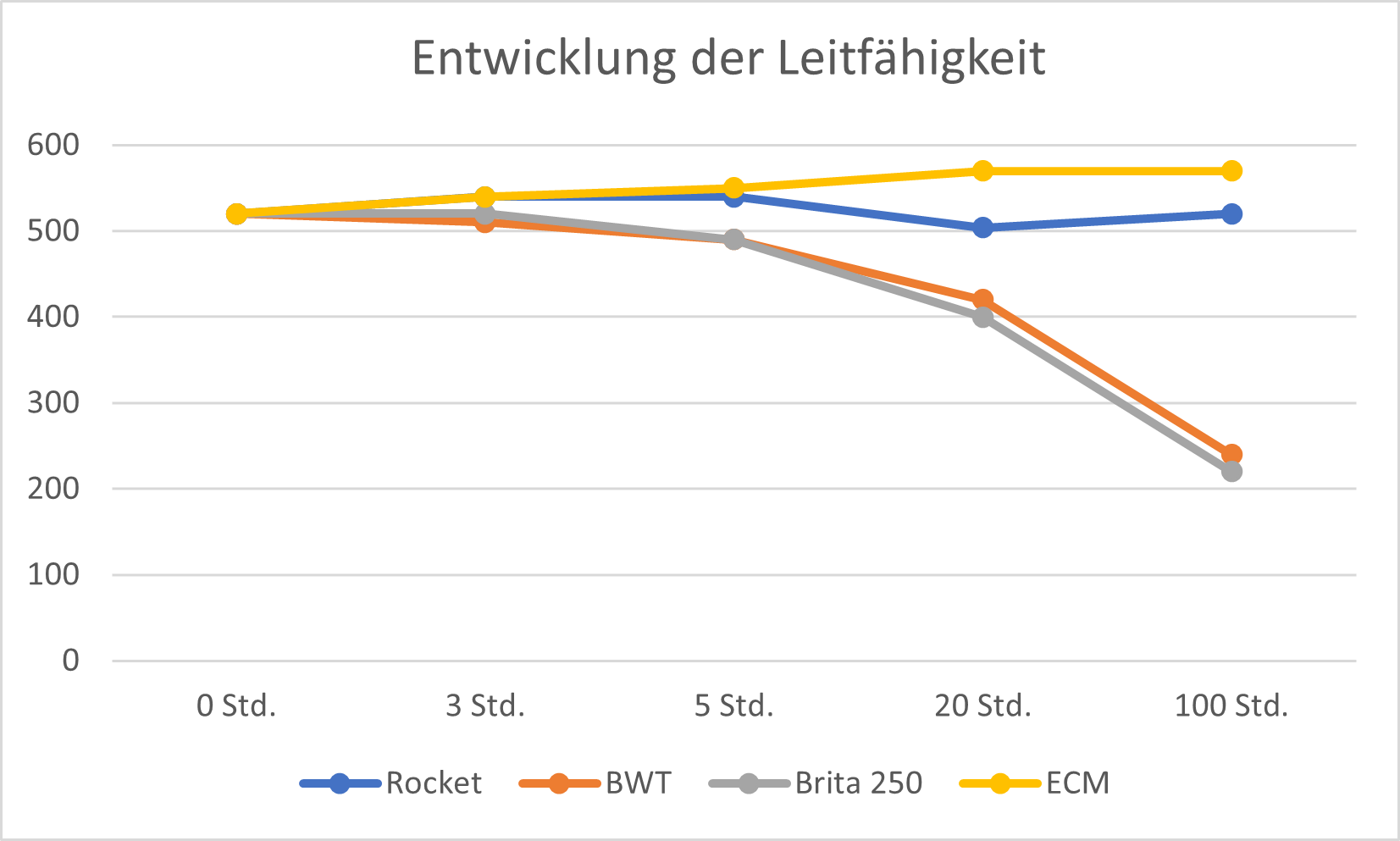
Alkalinity and total hardness were measured with titration drop tests from BWT. 2 liters of water were used each time and kept at room temperature in the water tank with water filter pad. Conductivity was also measured. The starting total hardness of our water is: 16 °dH total hardness, 13 °dH alkalinity, 520 conductivity
Development of total hardness, water sample taken from the bottom.
| °dH GH | 0 hrs | 3 hrs | 5 hrs | 20 hrs | 100 hrs |
| Rocket | 16 | 16 | 13 | 9 | 3 |
| BWT | 16 | 14 | 13 | 11 | 6 |
| Brita 250 | 16 | 15 | 14 | 10 | 4 |
| ECM | 16 | 14 | 13 | 10 | 3 |
Development of alkalinity, water sample taken from the bottom.
| °dH Alkalinity | 0 hrs | 3 hrs | 5 hrs | 20 hrs | 100 hrs |
| Rocket | 13 | 12 | 12 | 11 | 10 |
| BWT | 13 | 11 | 11 | 8 | 3 |
| Brita 250 | 13 | 12 | 10 | 7 | 2 |
| ECM | 13 | 11 | 10 | 11 | 11 |


Conductivity development.
| Conductivity | 0 hrs | 3 hrs | 5 hrs | 20 hrs | 100 hrs |
| Rocket | 520 | 540 | 540 | 504 | 520 |
| BWT | 520 | 510 | 490 | 420 | 240 |
| Brita 250 | 520 | 520 | 490 | 400 | 220 |
| ECM | 520 | 540 | 550 | 570 | 570 |