





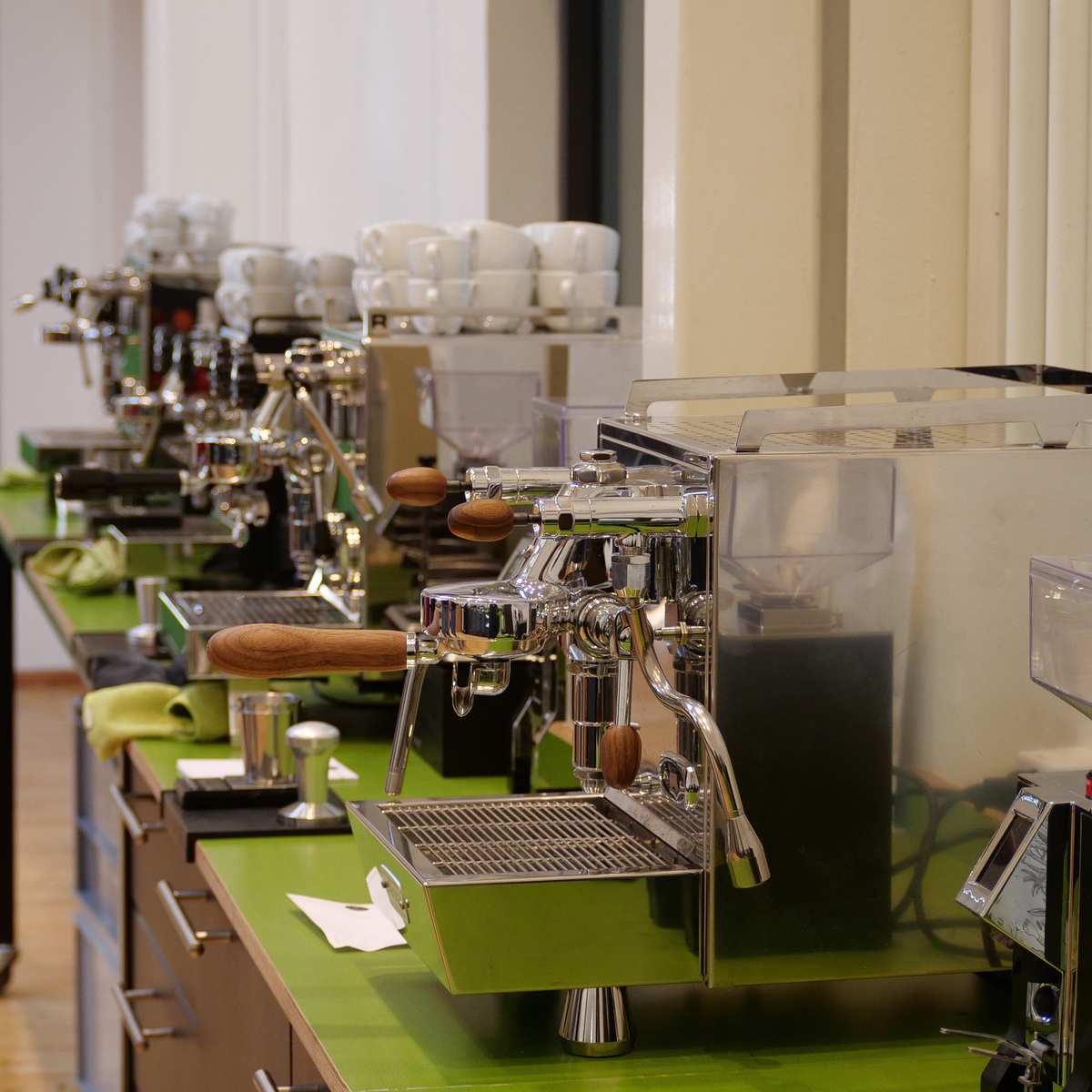

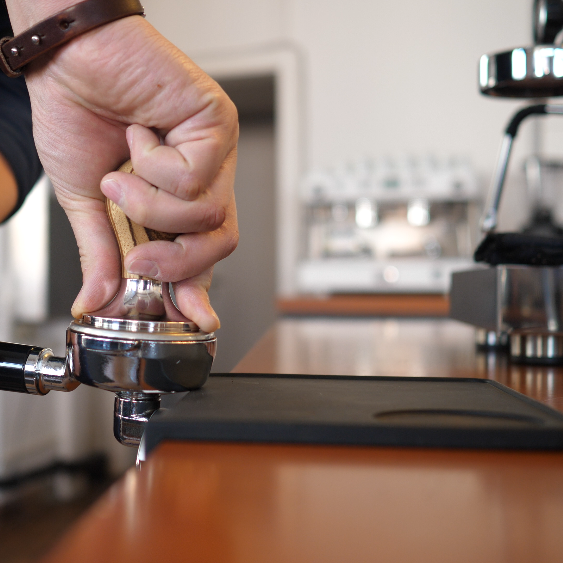
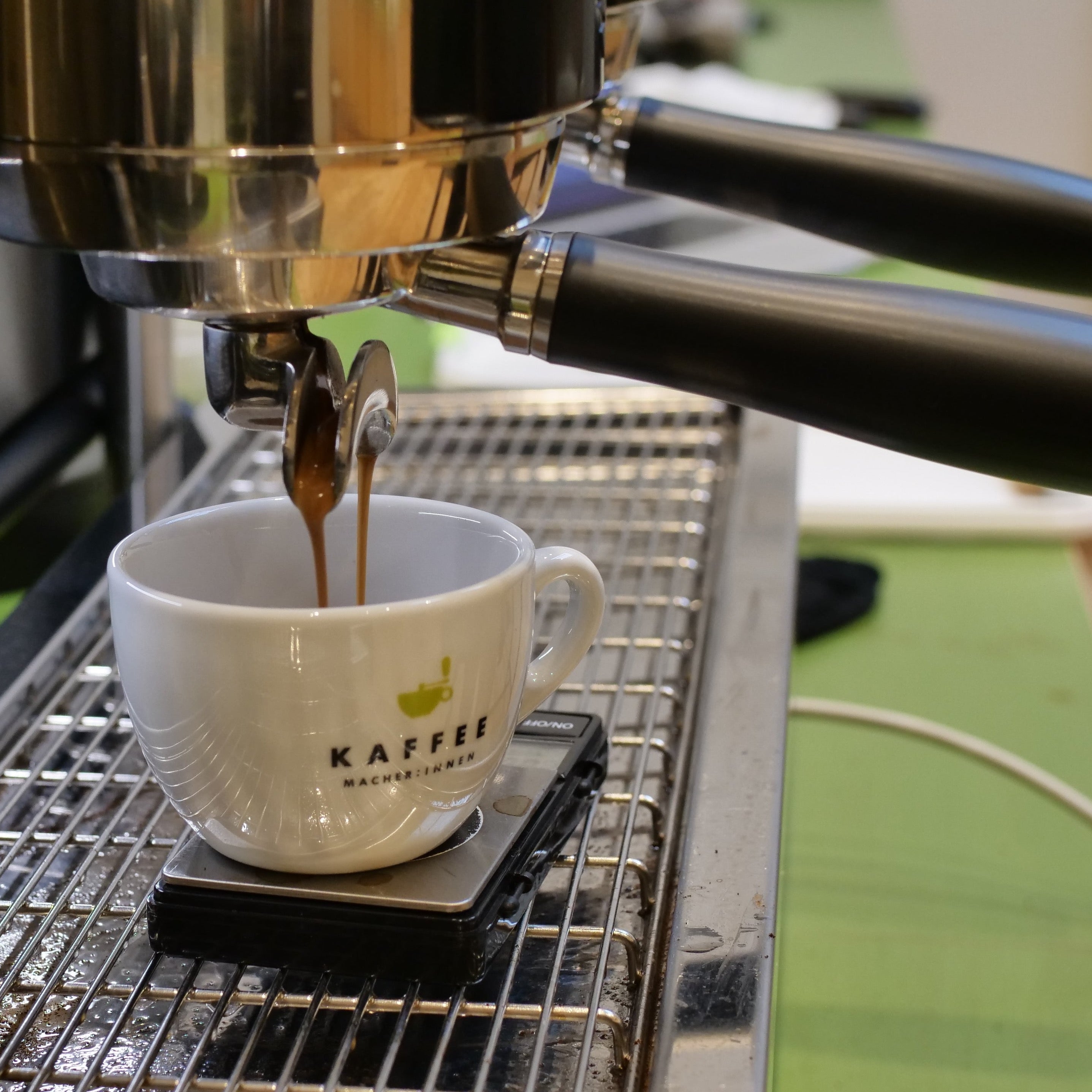
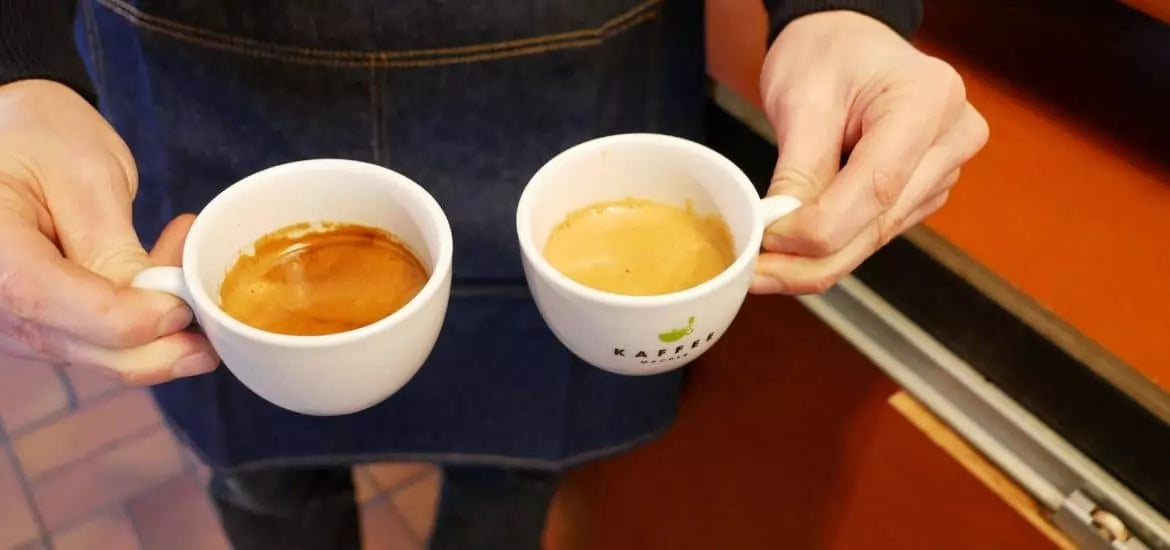

As part of our espresso grinder and machine tests, we regularly taste espresso. We use a protocol that is based on the fundamentals of espresso tasting from the World Barista Championship.
The WBC form focuses on comparing the espresso description provided by the presenting barista with the judge's perception.

In our tasting, we concentrate on the two basic attributes "Taste Experience" (flavor balance) and "Tactile Experience" (tactile experience). These are evaluated on a scale of 0-6 points within the WBC form.
As the basis for flavor balance, sweetness, acidity, and bitterness are evaluated, but not differentiated individually.
"Tactile experience" encompasses weight, texture, and aftertaste and combines these into a single score.
In our evaluation, we examined and rated these attributes in a differentiated manner and expanded the point range to ten. The espresso protocol was applied to the tasting of espressos as part of the espresso grinder test series.
Flavor Balance
In the context of sweetness, the presence of perceived sweetness is evaluated. This particularly affects the balance of the coffee. Sweetness in the evaluation of green coffees is a sign of well-ripened coffees. In the evaluation of espresso extractions, the consistency of extraction can contribute to sweetness. Sweetness is generally to be rated positively as it has a balancing effect on bitterness and acidity. Complex coffees exhibit high sweetness for balance.
Positively rated acidity directly contributes to the liveliness and clarity of a coffee. Various organic acids such as malic, tartaric, and citric acid are present in green coffee, as well as phosphoric acid. What is evaluated is transparency, clarity, and complexity. Acidity is fundamentally different from sourness. In the English language, this is made clearer through the distinction between "acidity" and "sourness." "Sourness" is a negative attribute.
Bitterness can, like acidity, contribute positively or negatively to flavor balance. As a rule, pronounced bitterness in coffees is to be rated negatively. There are also chemical components, such as phenylindanes, that contribute to a harsh-metallic bitterness. Bitterness perceived as unpleasant can also be intensified by extraction. We rate the absence of such bitterness positively in our evaluation. Bitterness that integrates positively into the coffee and is in balance we rate positively.
Tactile Experience
Weight is the heaviness of the espresso in the mouth and on the tongue. Such heaviness is rated positively regardless of quality when it is pronounced. Texture is not considered in this evaluation.
Texture is the tactile perception of the quality of the "weight." This can be described as creamy, oily, silky, dusty, or otherwise. Heavy coffees often have a biting or sandy texture and would then be downrated in terms of texture quality, while they may have achieved higher points in the weight category.
Aftertaste incorporates a dimension of flavor balance as well as the presence of weight and texture over time into the evaluation. If this is assessed as long and positive, the rating is higher. Short and unpleasant aftertaste leads to lower ratings.
Descriptive Evaluation and Notes
In addition to point-based evaluation, the evaluating judges provide a descriptive evaluation. This substantiates the points and explains them in greater detail.